Integrated Monitoring in Bird Conservation Regions eNewsletter |
|
|
Welcome to the IMBCR e-newsletter! With this outlet, we will showcase IMBCR data applications for management and conservation efforts, highlight the many partners that make IMBCR possible, and provide updates and outreach materials. Please forward the newsletter to any interested colleagues who might find the material useful. If you have examples you would like to share using IMBCR data or would like to get involved in this monitoring effort, please contact Jen.
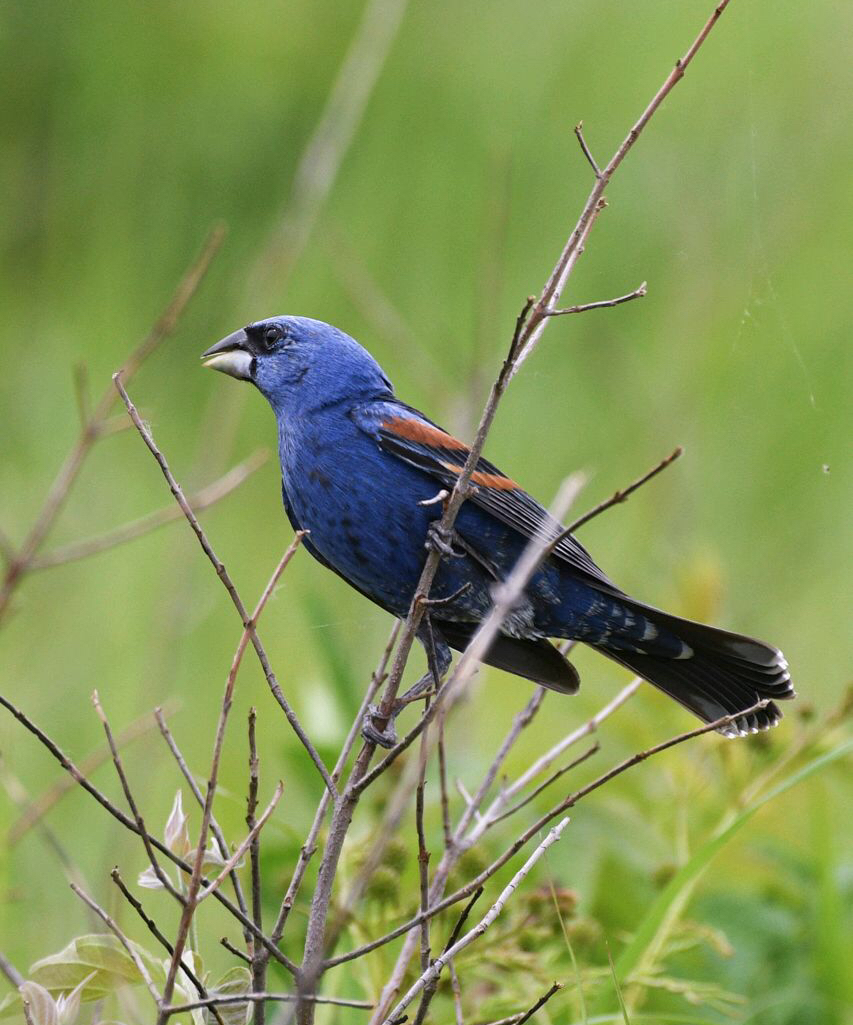
Blue grosbeak by Julia Snieder
|
|
|
Integrated Monitoring in Bird Conservation Regions (IMBCR) is a breeding landbird monitoring program led by Bird Conservancy of the Rockies that spans the Great Plains to the Intermountain West. A nested, probabilistic sampling design allows us to make inference about bird populations at multiple scales across public and private lands. Click here for more information about the program including the IMBCR vision and mission statement.
|
|
That's a wrap! We finished the 2024 field season with a slightly higher effort compared to last year, but a high completion rate of 97%. We surveyed across the whole Southwest Region for the US Forest Service for the first time this year, and new overlay projects included a CRP pollinator study in the Southern Plains and a wet meadow restoration project in eastern Montana, among others. Overall, there were fewer challenges this year in terms of weather, wildfires, and technician hiring and retention. Most of the data have been entered and we have begun the proofing process for data quality, after which we will begin the analyses for trend, density, and occupancy estimates.
Thank you to everyone who made the season successful!!
|
|
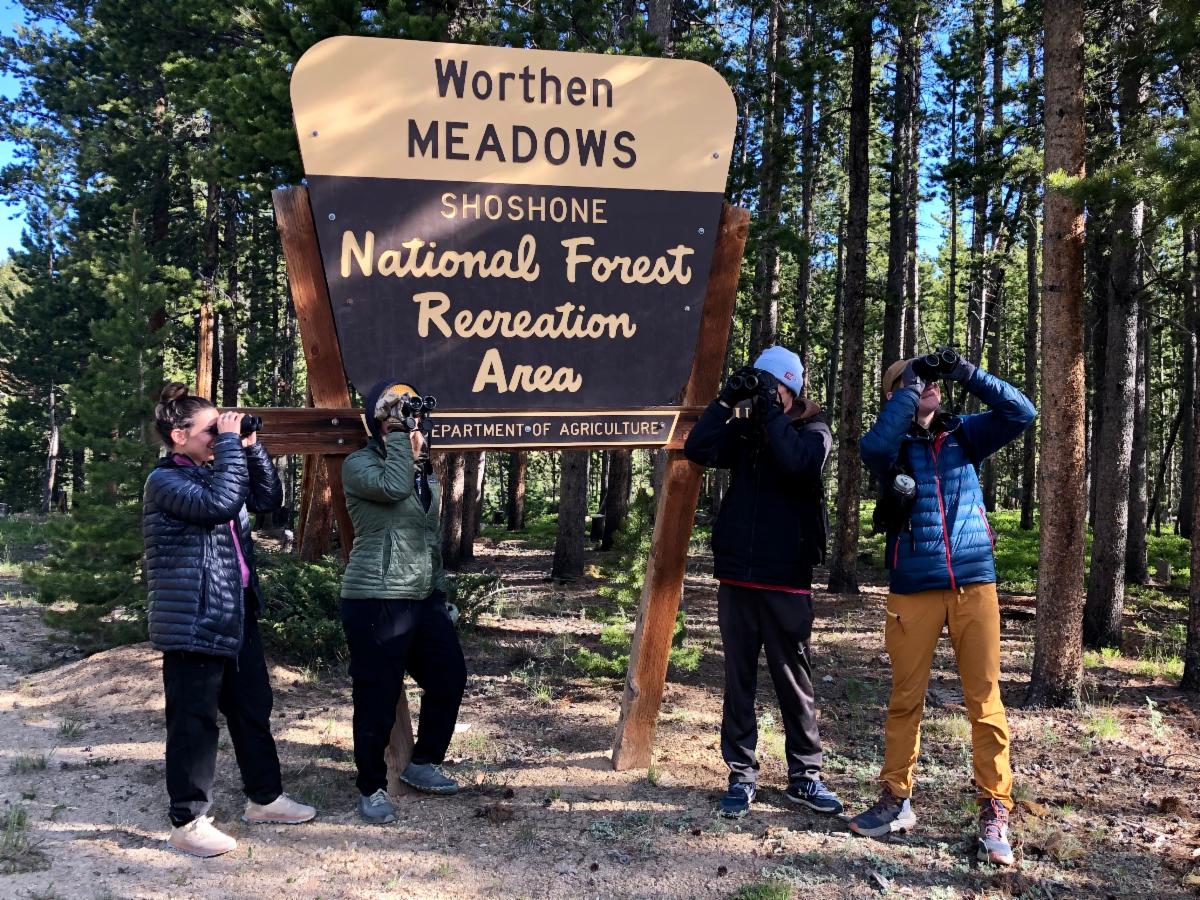
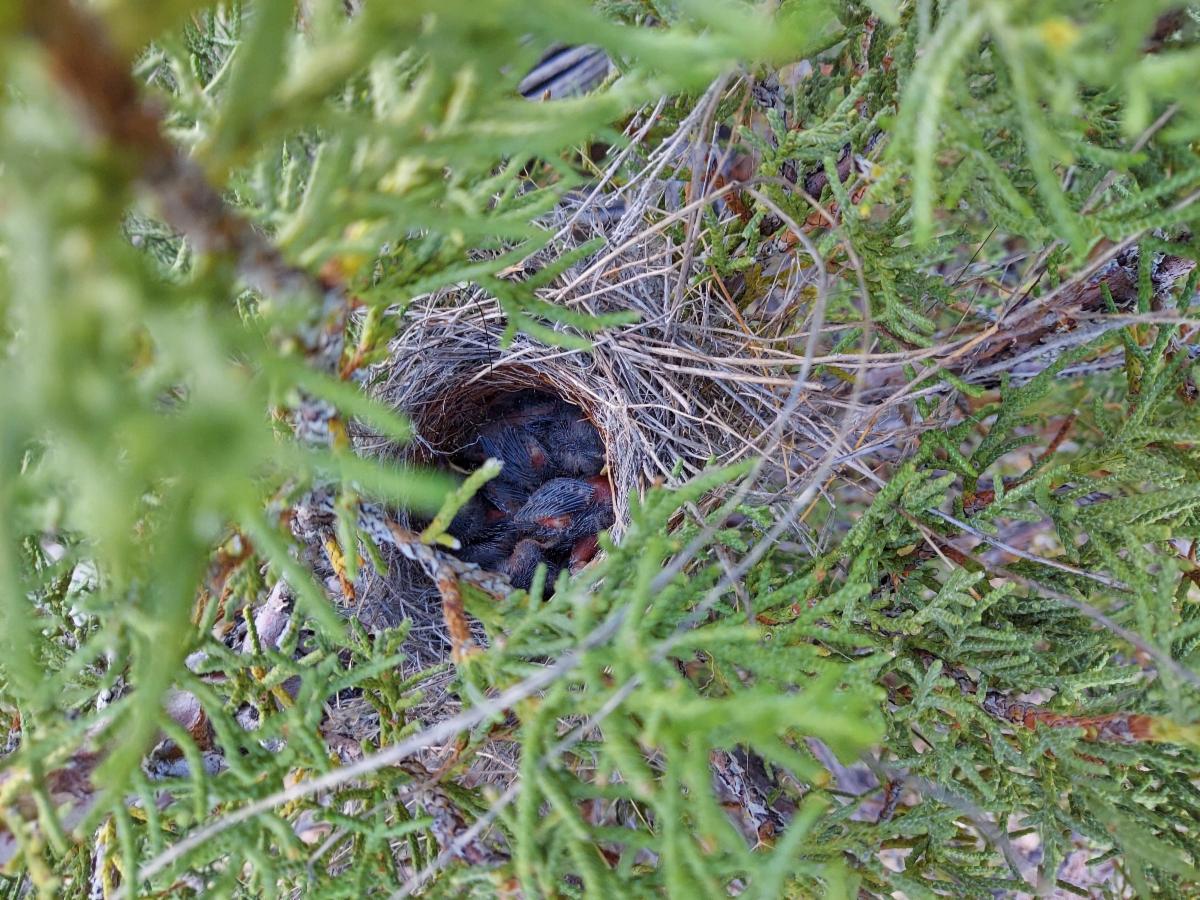
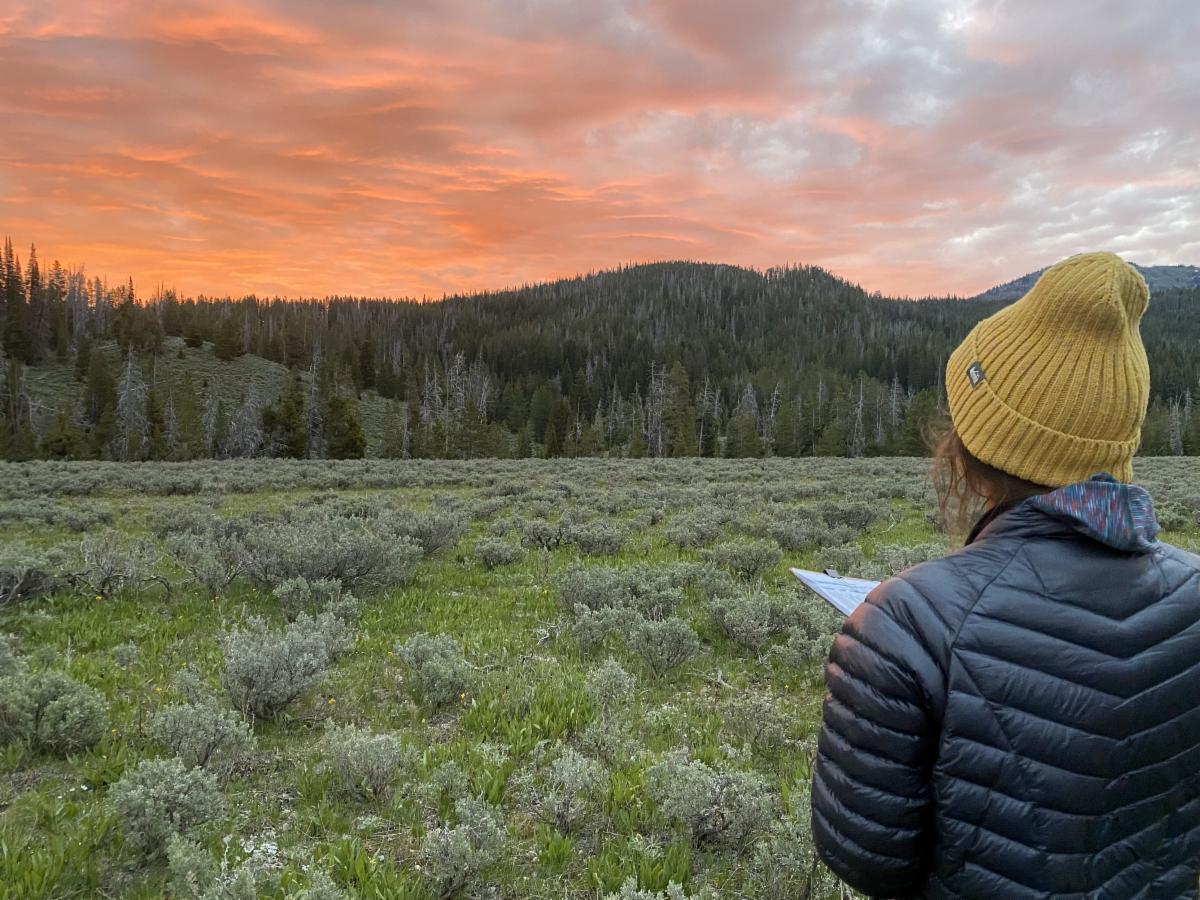
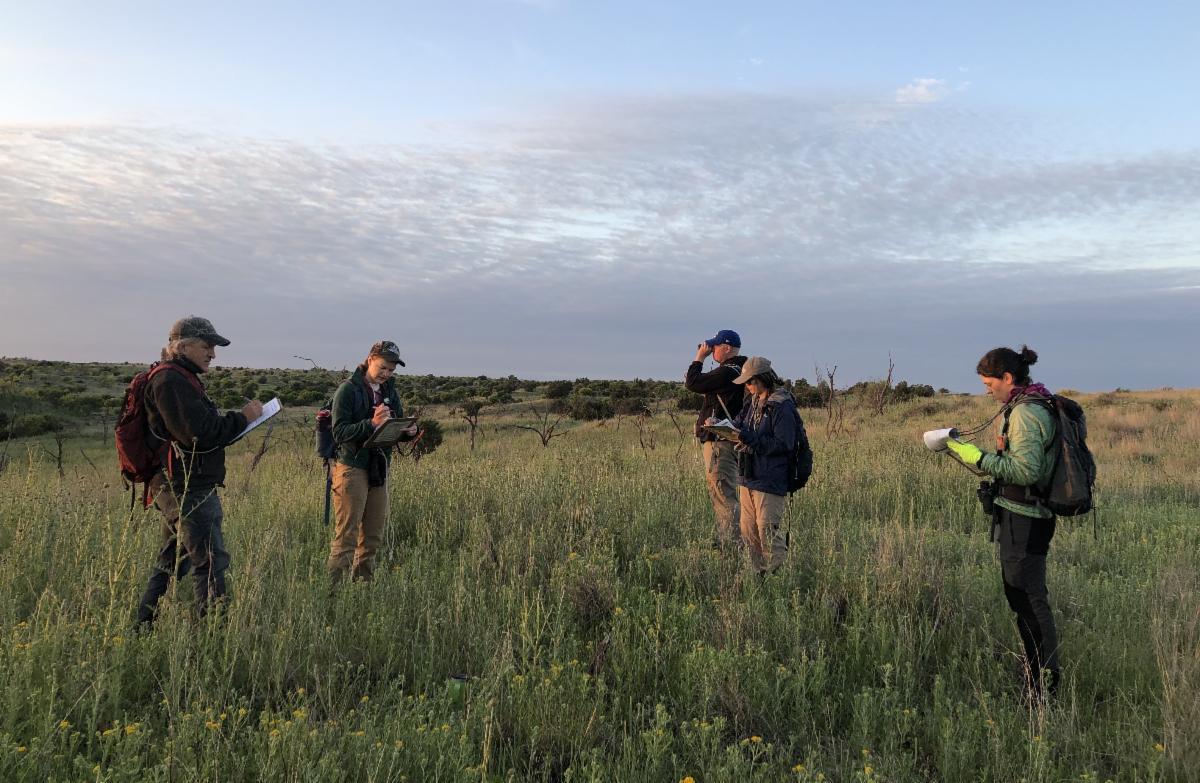
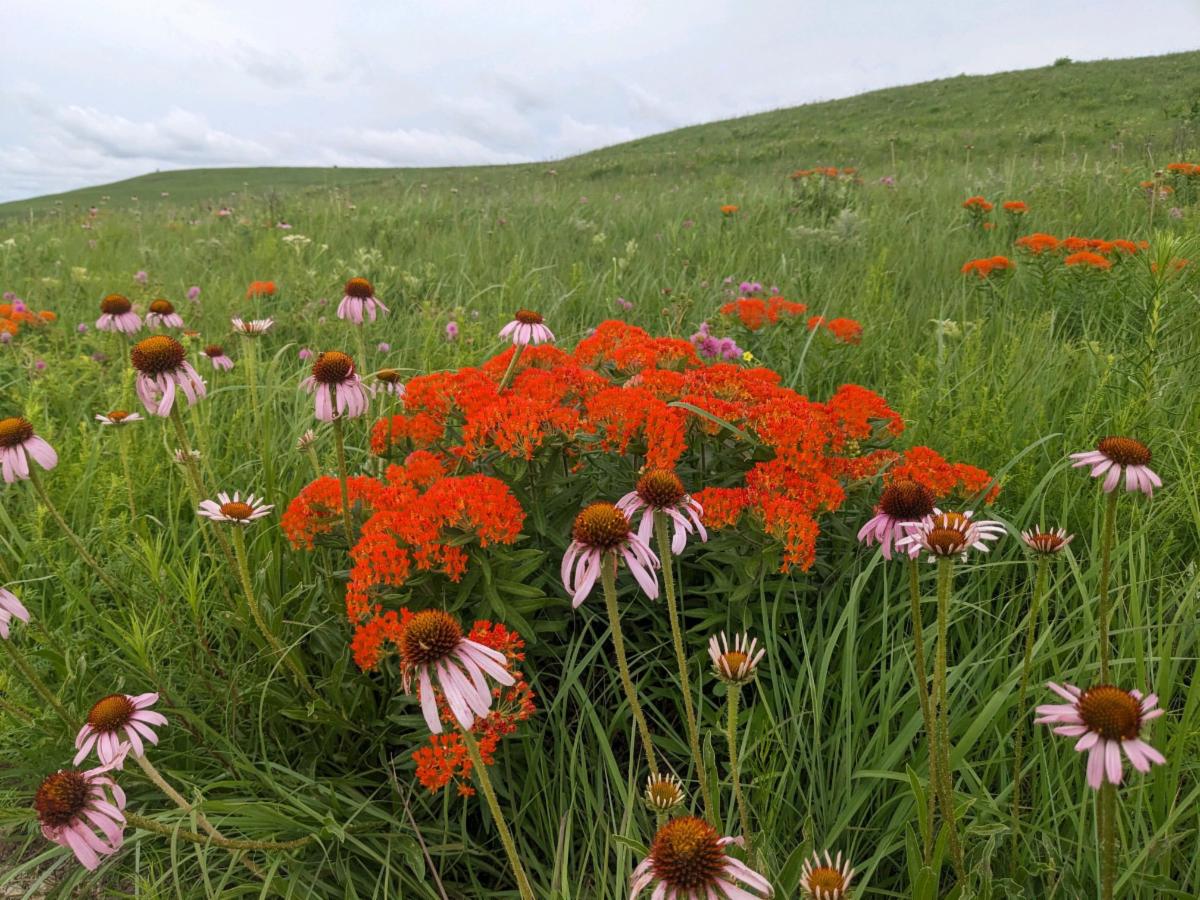
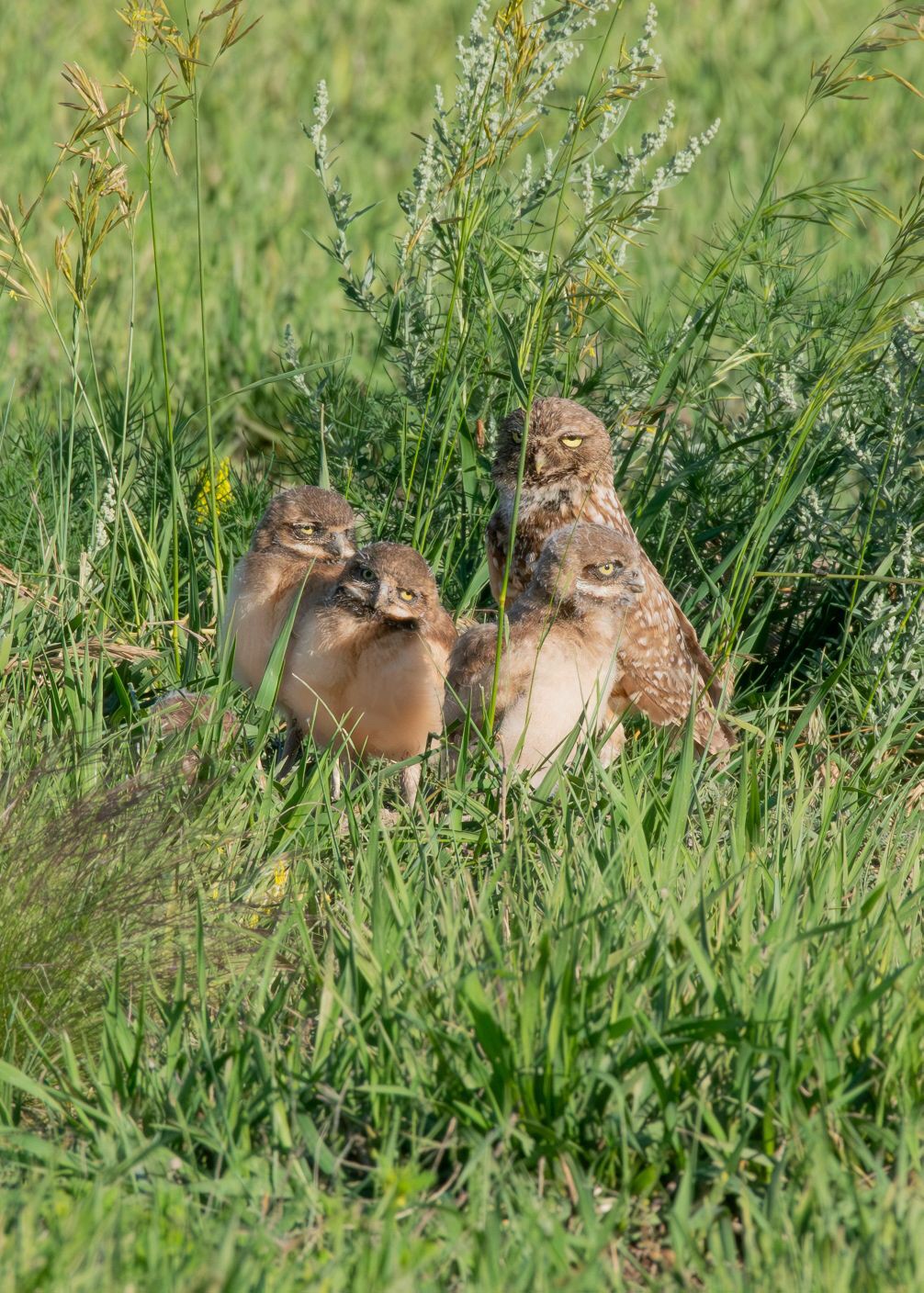
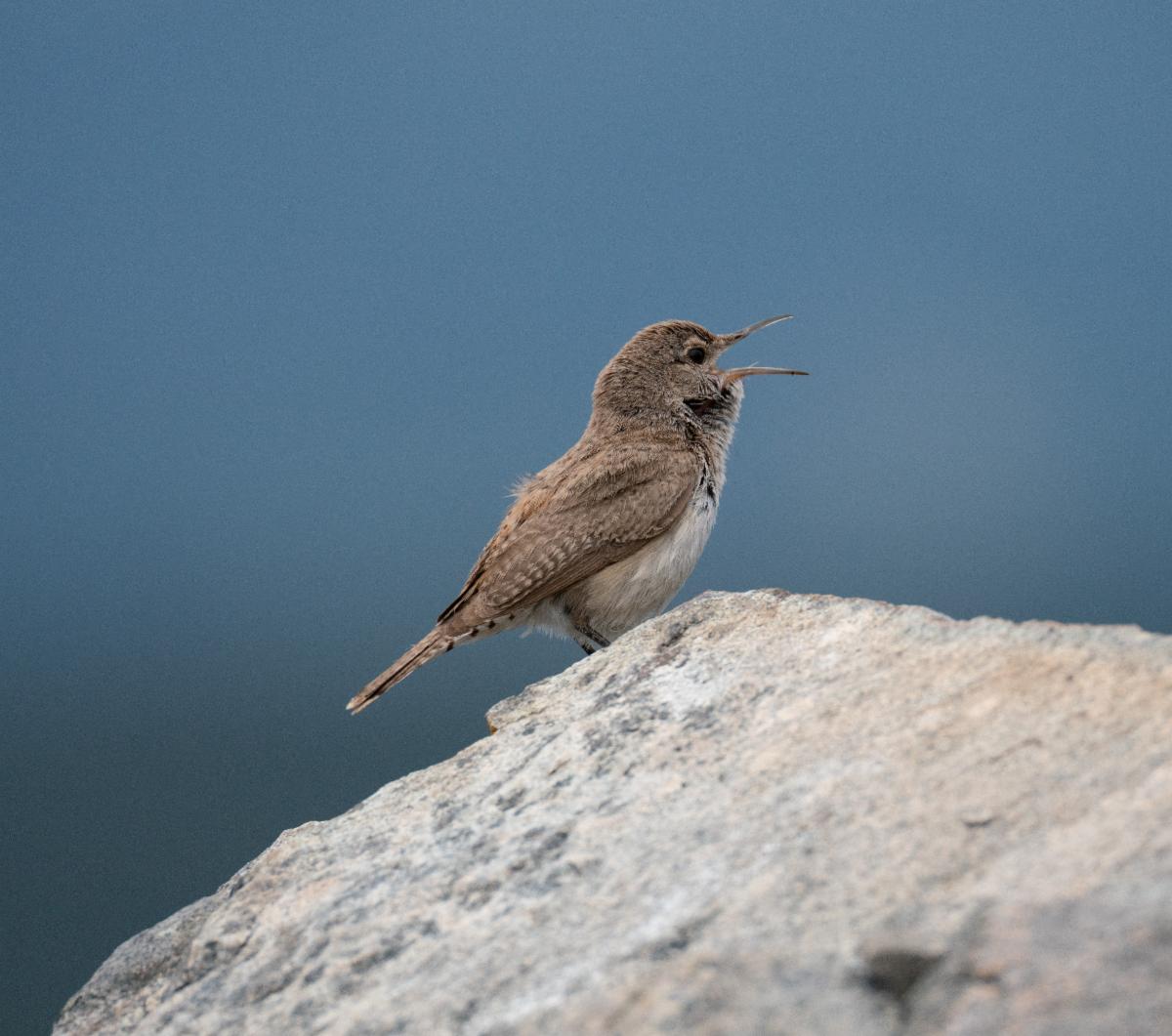
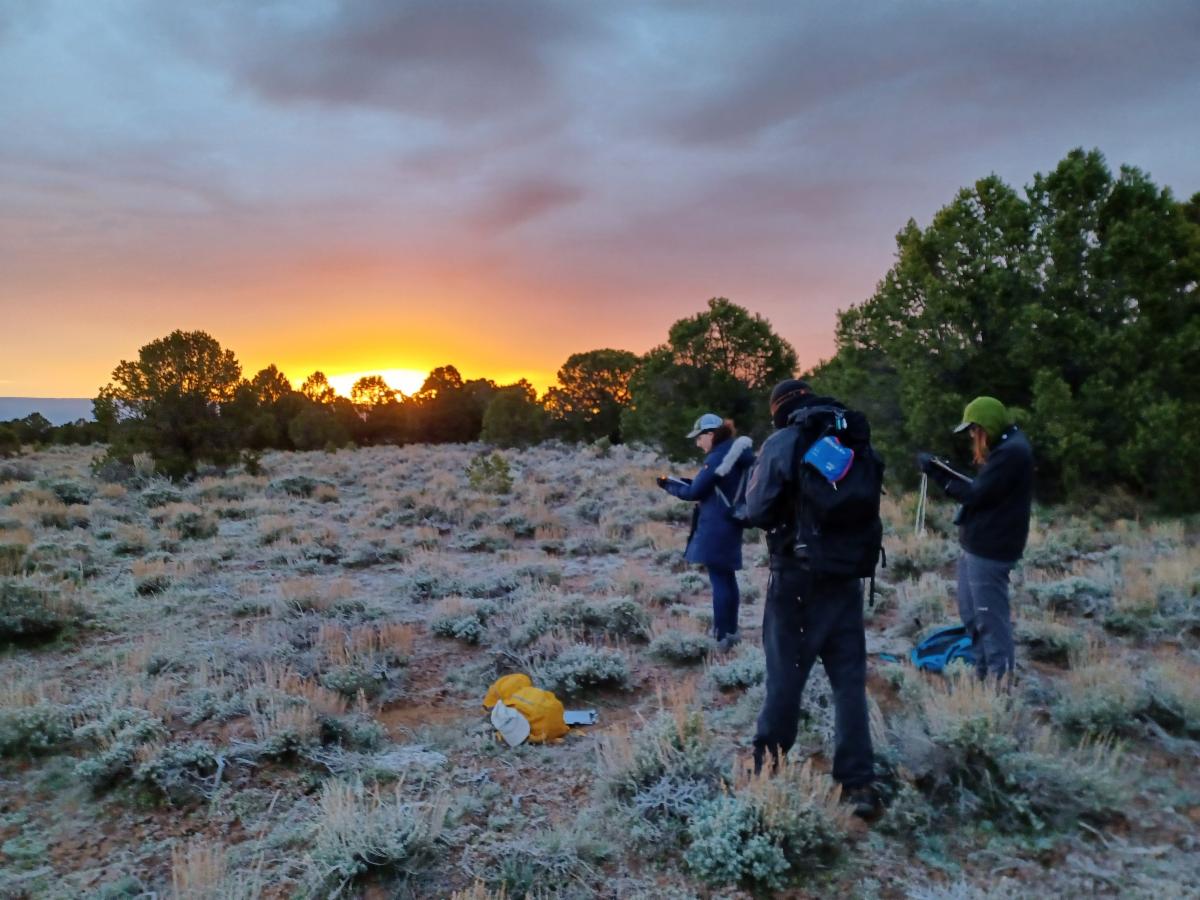
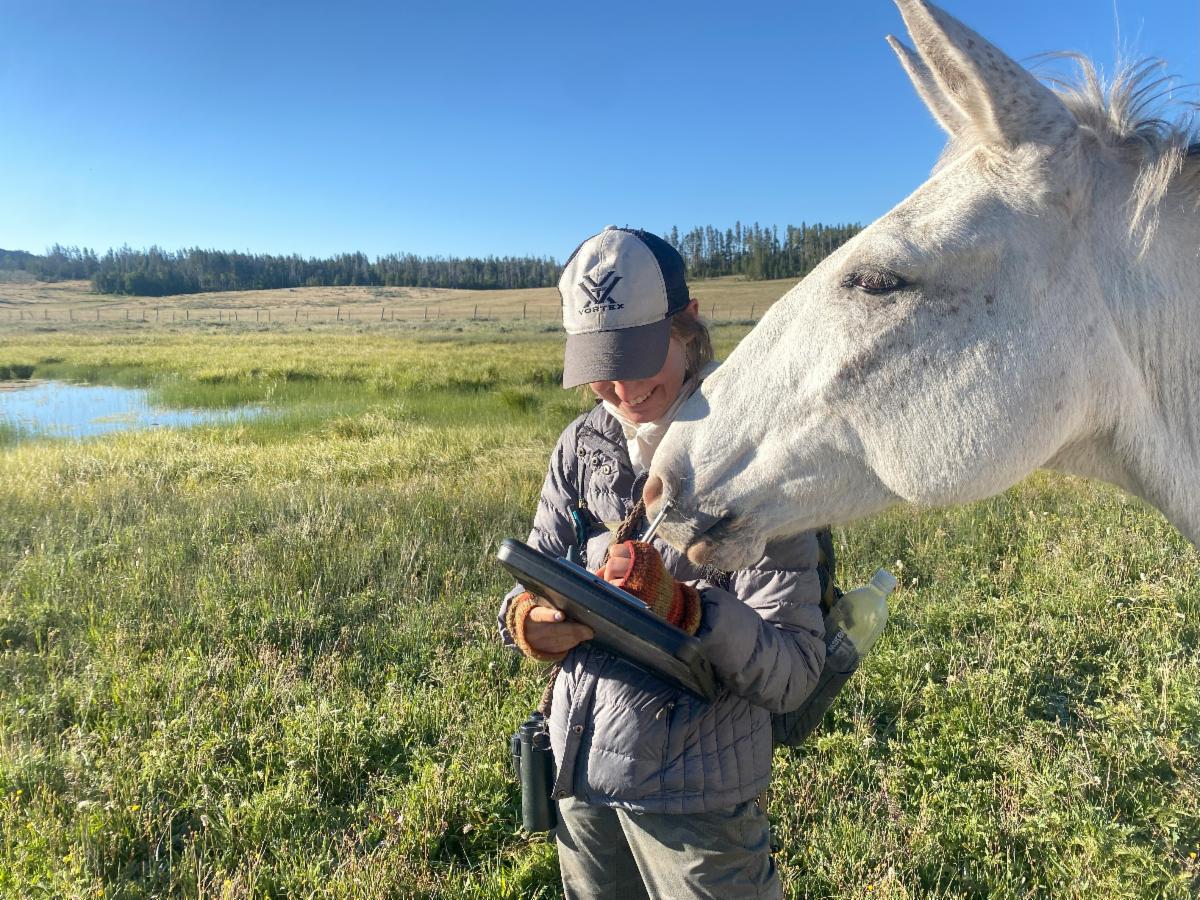
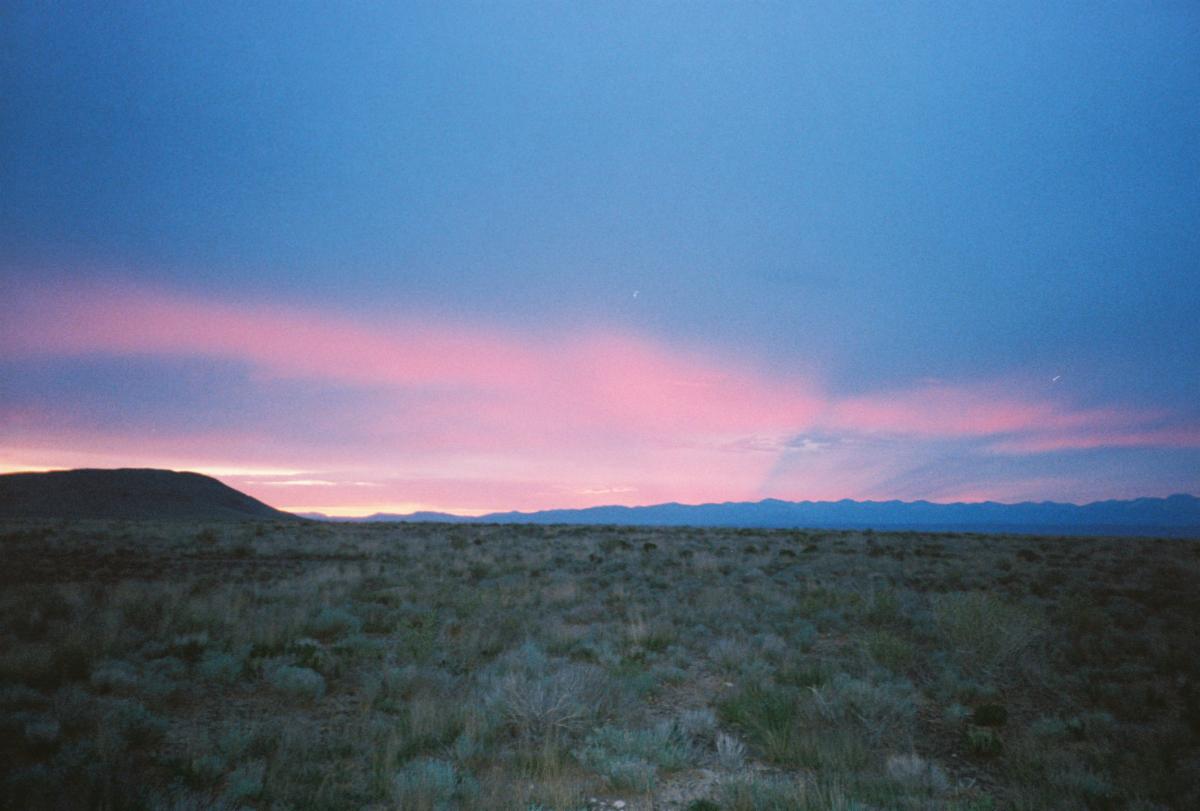
Enjoy some pictures from the 2024 season below: |
|
Photo credit clockwise starting in upper left: Jessie Reese, Julia Snieder, Jen Timmer, Finn Ward, Cameron Huynh, Joseph Webber, Joseph Webber, Jessie Reese, Finn Ward, Tyler Kerr, Julia Snieder. |
|
Save the date! The American Ornithological Society is having their annual meeting in Estes Park, Colorado October 1-5. On Tuesday the 1st, we will host a workshop on the new and improved Rocky Mountain Avian Data Center. On Saturday the 5th, David Pavlacky and Adrian Monroe are leading a symposium, "Collaborative sampling and analysis to inform avian conservation across scales" to highlight numerous IMBCR data applications across collaborators. There will of course be lots of other great talks on avian research topics. We hope to see you there! |
|
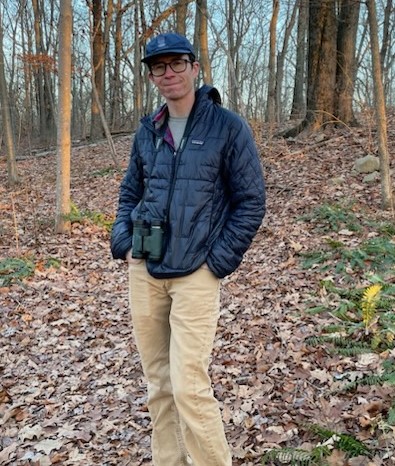
Tom McLaren
Biologist & Point Count Project Lead,
Klamath Bird Observatory
Tom McLaren is a biologist and project lead with Klamath Bird Observatory (a non-profit conservation organization focused on bird monitoring and research). KBO is housed in Ashland, Oregon and has a wide footprint of operation, from Northern California to the Washington-Canada border. Tom’s role at KBO is to lead the point count program, which includes a wide variety of projects across several ecosystems.
Since 2019, KBO has conducted IMBCR surveys in partnership with the Bureau of Land Management to monitor bird populations of eastern Oregon’s shrub-steppe ecosystems. Tom has been involved with IMBCR as a project lead for the last two years since his start with KBO. In that time, he has planned and coordinated surveys, hired seasonal surveyors, conducted trainings, and managed survey data.
|
|
Tom and KBO work closely with land managers and Partners in Flight collaborators to use results informed by IMBCR work to inform best practices for conservation of birds in our region. |
|
 |
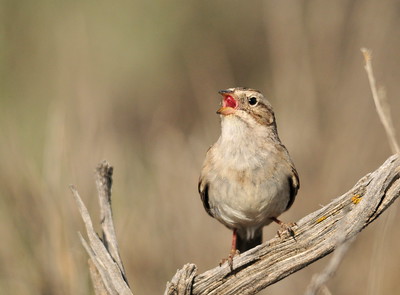
Brett Walker, an avian researcher with Colorado Parks and Wildlife, led a study to determine if Brewer's sparrows were breeding in alpine habitats in western Colorado, and if so, did they belong to the "sagebrush" subspecies or the more northern "timberline" subspecies? He used data from IMBCR, numerous other monitoring efforts, and museum specimens to inform sampling locations. His team discovered that Brewer's sparrows were indeed breeding in alpine habitats in Colorado and these birds belonged to the "sagebrush" subspecies. These results indicate a wider distribution of the "sagebrush" subspecies in Colorado than previously thought.
Read the publication here or watch a video on the project here. |
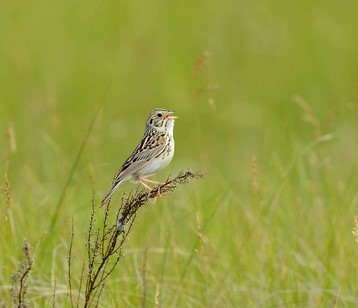
Above: Brewer's sparrow by Tom Koerner/ USFWS, right: Baird's sparrow by Rick Bohn
|
|
|
|
Knowing what drives population losses in birds is critical to conservation and management efforts. However, monitoring birds across their range and throughout their life cycle is difficult and costly. This led Qing Zhao, and other researchers at Bird Conservancy, to develop a model that overcomes these challenges by integrating data from IMBCR, the Breeding Bird Survey, and eBird. They focused the model on Baird's sparrow, a grassland bird of conservation concern, and learned that population growth is influenced by mean maximum monthly summer temperatures. This relationship was most evident when using an integrated model across all three datasets.
Check out the publication here, as well as a blog on this study here. |
|
|
|
Want to know the difference between density and occupancy or how to apply these estimates? Check out a 1-pager on interpreting and applying the annual estimates we provide each year from the IMBCR effort.
And check out the IMBCR Applications webpage for other IMBCR-related resources. For example, we created several trend reports to help state BLM offices identify species of concern. |
|
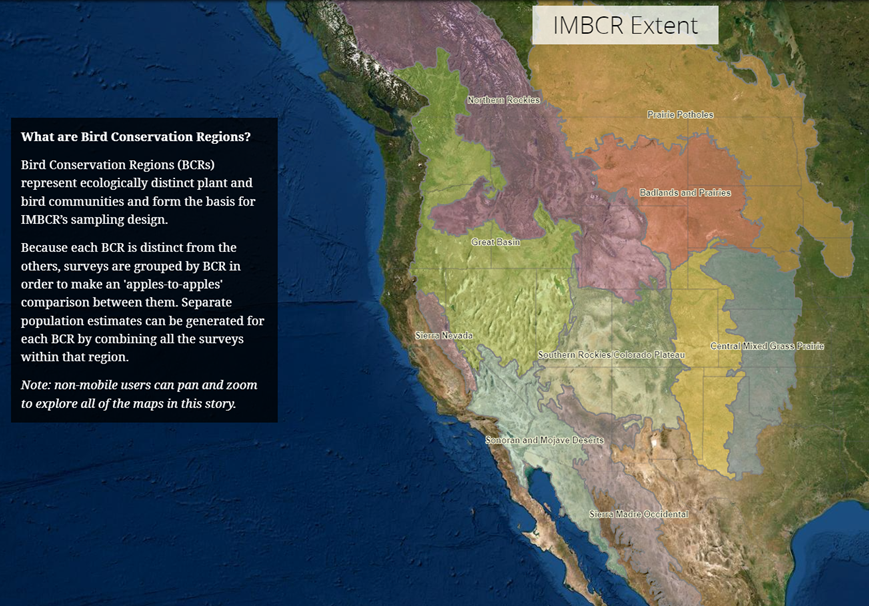
We have an IMBCR Story Map! Learn about the IMBCR program including its objectives, the sampling design, field methods, and how the results are used to inform management and conservation decisions. You can pan in and out of the IMBCR footprint to view various strata within each state. Please share the Story Map with anyone who might be interested in learning about the program!
|
|
|
|
Stay in touch!
Contact Jen Timmer (jennifer.timmer@birdconservancy.org) with questions, example applications of IMBCR data, pictures, or any other contributing material for future IMBCR e-newsletters.
|
|
birdconservancy.org/IMBCR |
|
|
|
|
|
|