Graphic by Ariella Mayer ('23) |
|
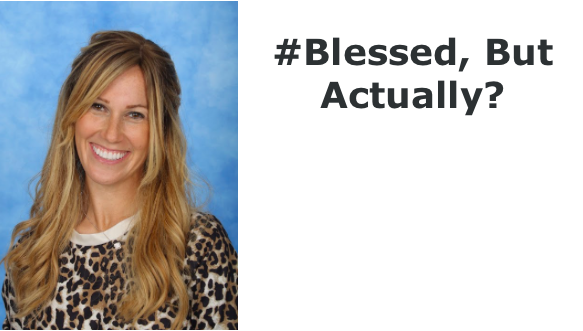
In this week’s parsha, Parshat Vayechi, Yaakov, on his deathbed, gathers his children around and blesses them individually. In fact, at the conclusion of all the tribes’ blessings, the Torah tells us that Yaakov “blessed them, each according to their blessings” (Bereishit 49:28). A closer look at the actual blessings, though, begs us to wonder, what kind of blessings are these?! For Reuven, the eldest is told that he is “unstable as water, you shall excel no longer” (49:4). Shimon and Levi too are shamed, as Yaakov recalls their actions in killing out the city of Shechem, “Their weapons are tools of lawlessness, Let me not be included in their council ” (49:5-6). Is Yaakov blessing his children or cursing them? And if the latter is true, then why does the Torah explicitly say that Yaakov blessed them?
Perhaps we must step back and understand the concept of a bracha. Traditionally, we think of a bracha as a positive well wish, something happy that we wish a fellow friend or loved one. According to Rav Hirsch though, a bracha is meant to be understood as an individual recognition. Yaakov gathered his children around his bed and turning to each of them, he delivered a personal message. Sure not all were just positive, for each individual son had a different set of qualities unique to them, which Yaakov understood. Rav Hirsch continues to explain that not only did Yaakov recognize the tribes’ individual qualities but he celebrated their uniqueness. Yaakov looked around at the future of the nation of Israel, and he realized that while his sons each had their individual characteristics, together they all formed a nation, one replete with unique traits.
May we all merit to be like Yaakov and look at our friends and those around us, and bless them, recognizing and valuing them for their individuality, their input and what they bring to the table.
Shabbat Shalom,
Mrs. Goldenberg
|
|
Keeping Track of Our Digital Footprint
KYHS Students Learn How to Be Good Digital Citizens
|
|
Graphic by Matthew Eichenholz ('23) and Aaron Newman ('24)
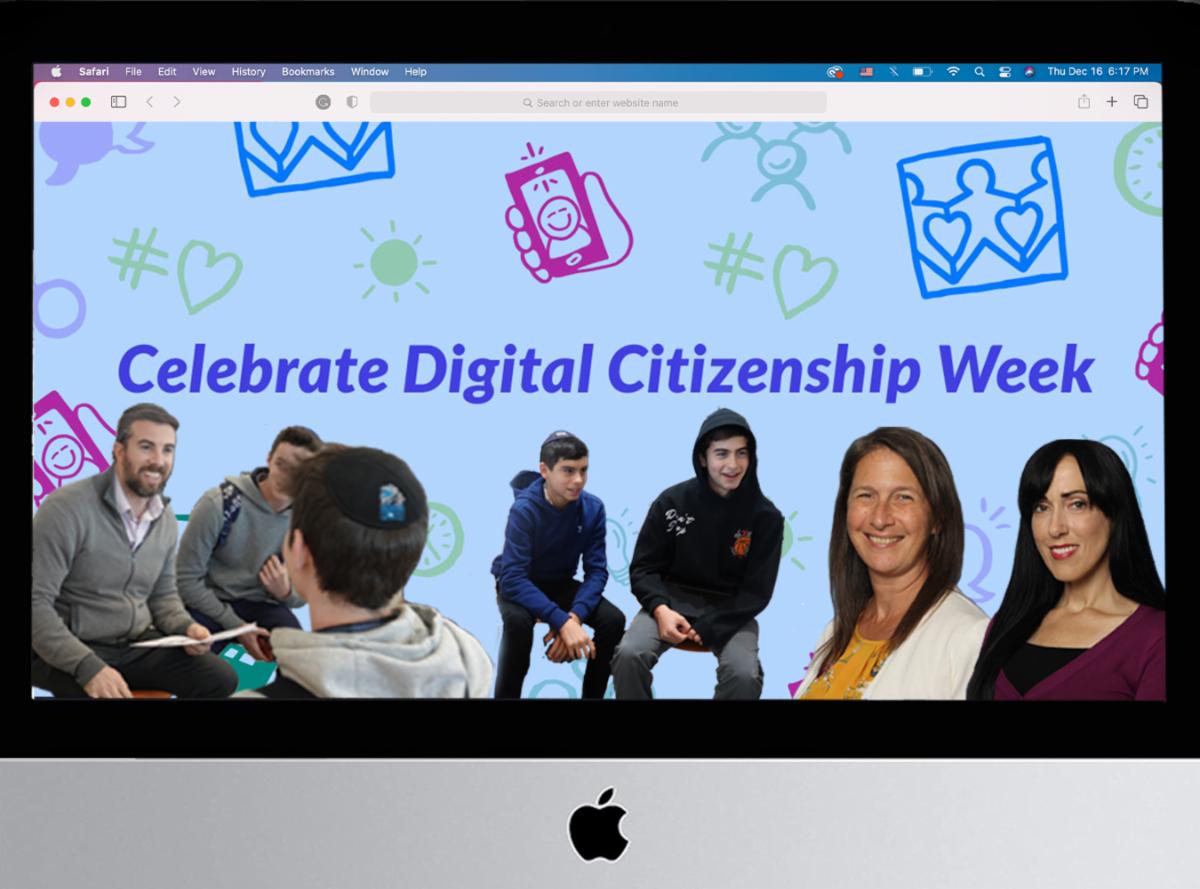
On Tuesday, November 16th, each grade participated in a digital citizenship program. The purpose of the program was to bring awareness to the ramifications of our words and foster better citizenship online.
We began by collectively defining hate speech and discussing its tension with free speech. Mrs. Groveman presented the legal perspective on hate speech and the limitations on speech online. We listened to a podcast that presented a scenario in which the legality of speech was called into question.
It was interesting to actively step back and think about the dynamics that we are engaged in on a day to day basis. Oftentimes, we forget that our moral interpersonal responsibilities extend beyond face-to-face interactions to our online interactions. It served as an important reminder that we must be mindful of our words online.
Then, we broke up into groups for an interactive activity. We had to determine whether students should not be admitted to college based on the immorality of their digital speech. Students debated the moral severity of digital hate speech and the impact it should have on perpetrators’ lives. The program was very informative and sparked interesting discussions about how we can act as better digital citizens.
Article by Avigail Levine ('22)
|
|
Live Love Math
KYHS Gets First Place in Yale Math Team Competition
|
|
Graphic By Dan Himelstein ('24)
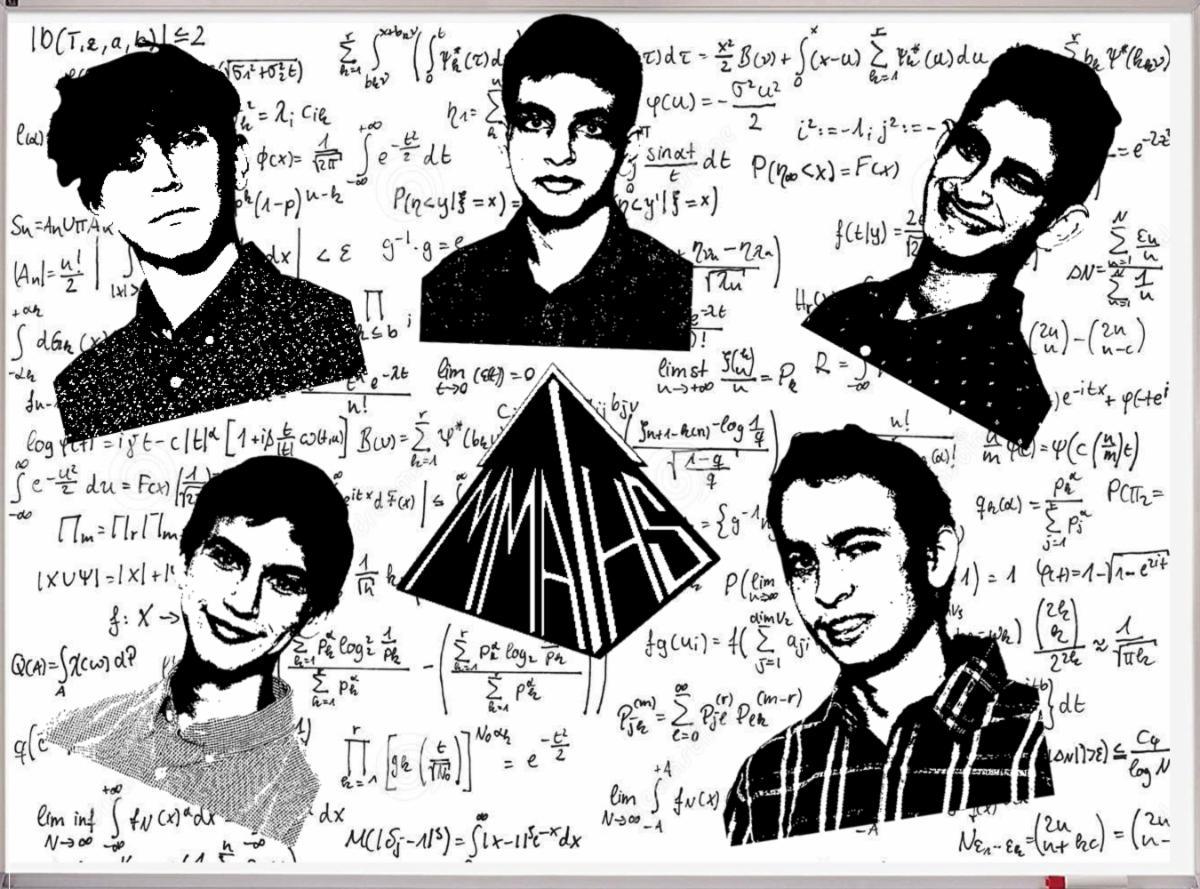
On Sunday November 14th, the MMATHS team math competition was held. The Math department chair, Mrs. Epstein, headed the competition at school in addition to bringing a similar competition to school this year where students could participate by taking a rigorous math test. I spoke to Josh Haik, one of the students who competed in the competition, to hear about his experience.
Judah: What was the math competition you competed in, and how did it work?
Josh: The math competition we competed in is called MMATHS and was organized by Yale and took place on zoom. Each team was put into a breakout room and sent a Google form of all the questions. There were seven sets of questions, each comprising three sub-questions. The further you got into the google form, the harder the questions became. While we worked, the Yale students who organized the competition were updating a scoreboard each time a team submitted a set. We were given an hour to finish all the questions on the google form.
Judah: Why did you decide to join the competition and who was on a team with you?
Josh: I decided to join the competition because I thought it would be fun and I figured it couldn’t hurt to try. I never thought we would win though! I was on a team with Amir Rindsberg, Aaron Newman, Ariel Gedz, and Mordechai Marcus, all 10th graders.
Judah: Was the overall experience fun and would you do it again?
Josh: The overall experience was fun and exciting, and I learned some things too. I think that I may do it again in the future
Judah: Did you get anything for winning the competition or gain any knowledge?
Josh: We were emailed a certificate from the Yale students congratulating us and I learned a few new math formulas which will probably be helpful in the future.
Article By Judah Frohlich ('23)
|
|
#FreeHadar
Students Hear from Ayelet Goldin, Sister of Hadar Goldin Z”L
|
|
Graphic By Orly Dimont ('23)
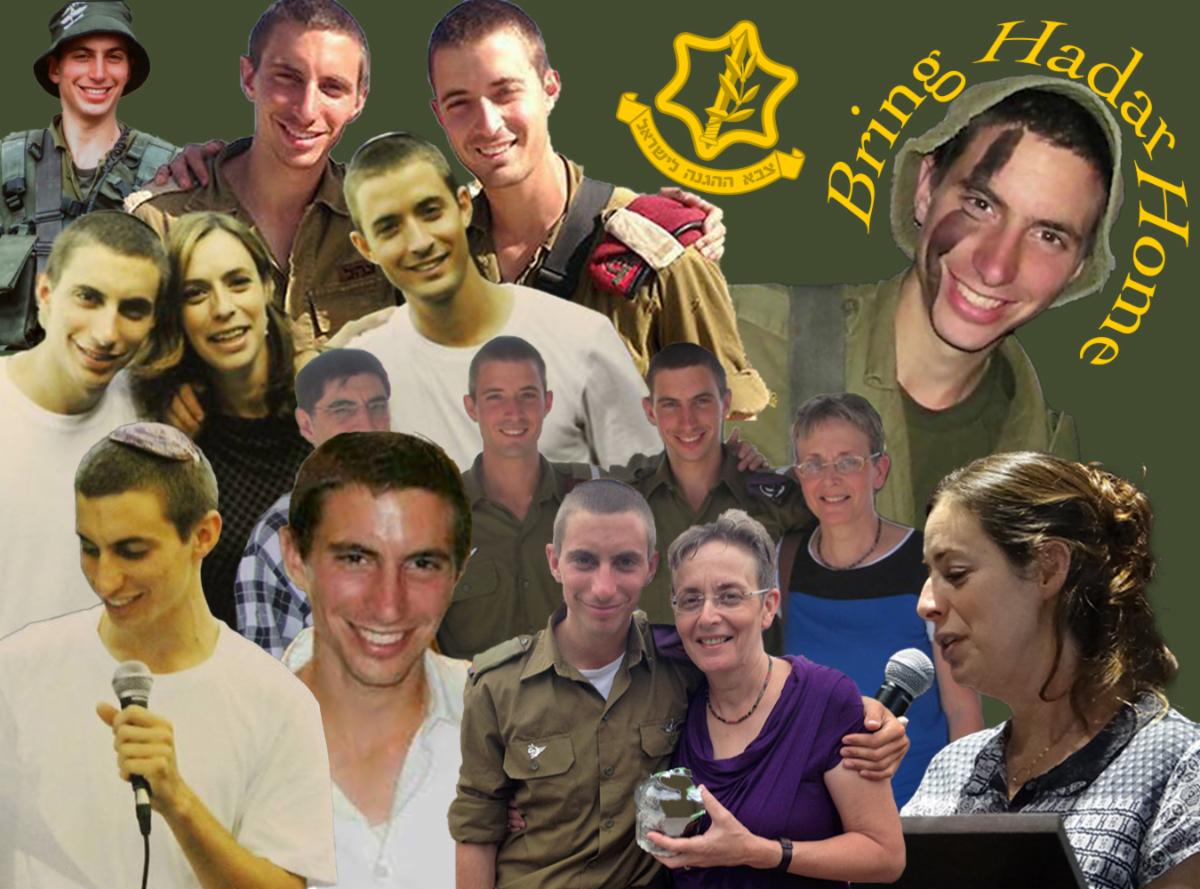
On Tuesday December 7th during first period, a special speaker named Ayelet Goldin came to speak to KYHS students and faculty about her brother, Hadar Goldin. He grew up in Raanan with his siblings and parents. He was dearly loved by both his family and friends.
Hadar Goldin was a soldier in the IDF during the 2014 war. During the war, he was assigned to go down into the tunnels as part of an operation. When he and his unit went to check the tunnels, a horrifying tragedy occured. While they were checking the tunnels, Hamas was planning a terrorist attack. Hammas killed two men from the unit, one of whom was Hadar. Hamas has kept his body in order to use it as leverage against the Israeli army in conflicts. Hadar is presumed as dead because they found his uniform and hat, but some uncertainty still exists. His family ended up burying his uniform and hat.They are still fighting for the body of their beloved son and brother.
Hadar was an incredibly kind person. Ayelet shared the anecdote that once he found out people didn’t have challah and resources to make Shabbat properly. After telling his teacher about the situation, they baked challah and he and his friend went to houses to deliver it to those in need. Hadar had a huge heart and he cared for others tremendously. He put others before himself and he made a big impact on this world. He had a beautiful neshama and his neshama should have an aliyah.
Article By Miriam Marcus ('25)
|
|
Whiteout Soccer Game
Students Gather to Cheer on the Boys Soccer Team Motzei Shabbos
|
|
Graphic By Eitan Kaminetzky ('25)
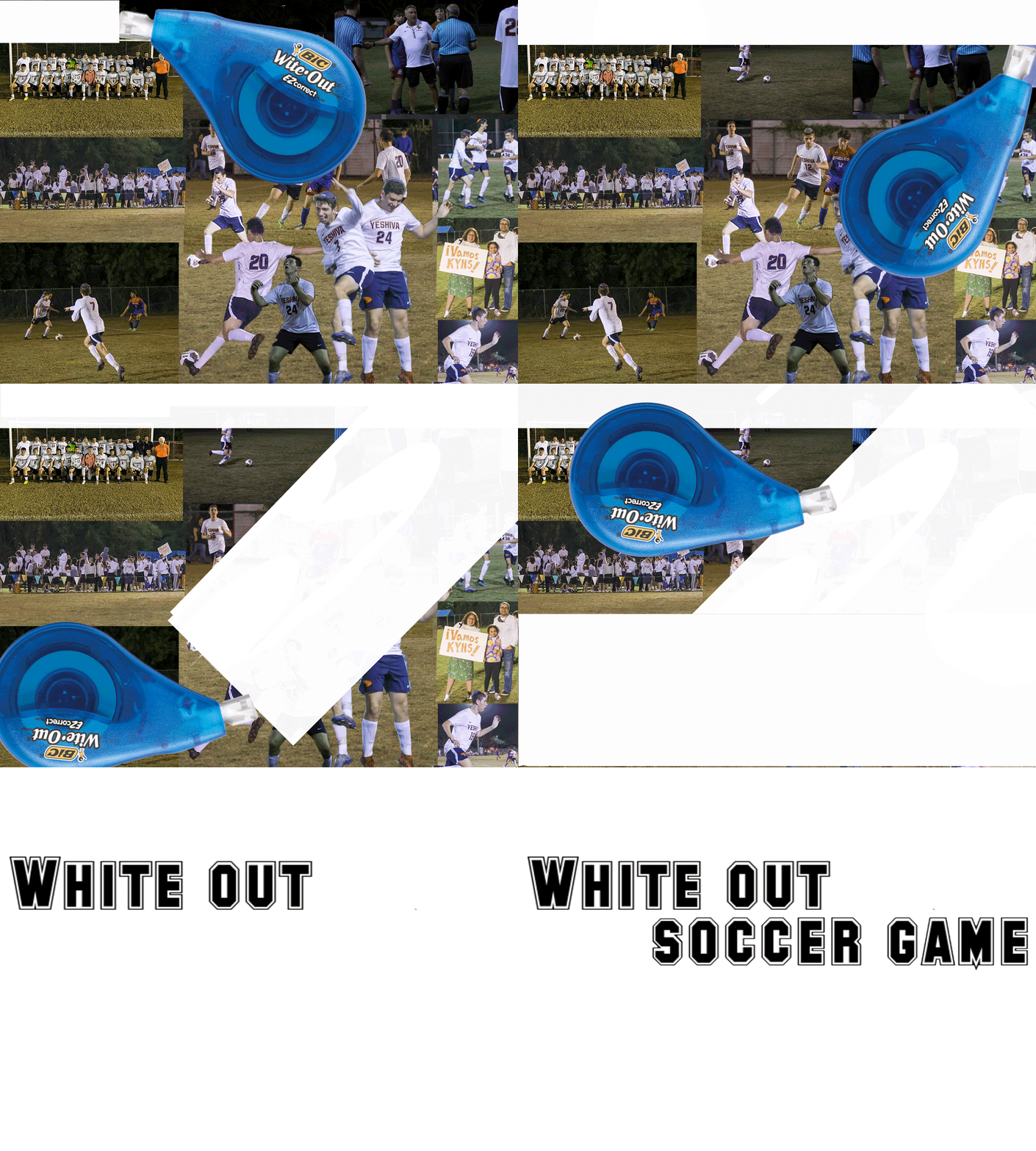
One of the most anticipated school events is the annual soccer game against neighboring Donna Klein. Both KYHS and Donna Klein students fill up the surrounding areas of the field to watch their soccer teams play against each other. Although the game can get intense, the joy from the fans overrides any tension that exists.
This game was a whiteout game so our students came decked out in white clothing. This year, Leila Brown (‘22) and Emma Schenker (‘22) sold Krispy Kreme doughnuts. Emma says, “people were eager to contribute to the cause of Tomchei Shabbos and were excited to snack on yummy treats!”
Meir Lanner (‘23), a midfield player on the soccer team shared that “I was inspired to play better because of all the fans that came to support me and made me a poster. The sign said ‘go Meir!’”
Even teachers came to support their students. Jonah Schenker (‘23), a junior on the soccer team, says “it was touching to see how many people cared to show their school spirit, even on a Saturday night.”
While watching the game, some students schmoozed and caught up, others were laser focused on the game. Our team won 6-2 and there was a big celebration of water splashing and balloons. After the game, many students went to Jon’s Pizza Place and bonded together. No one does school spirit like KYHS!
Article By Liad Mussafi ('22)
|
|
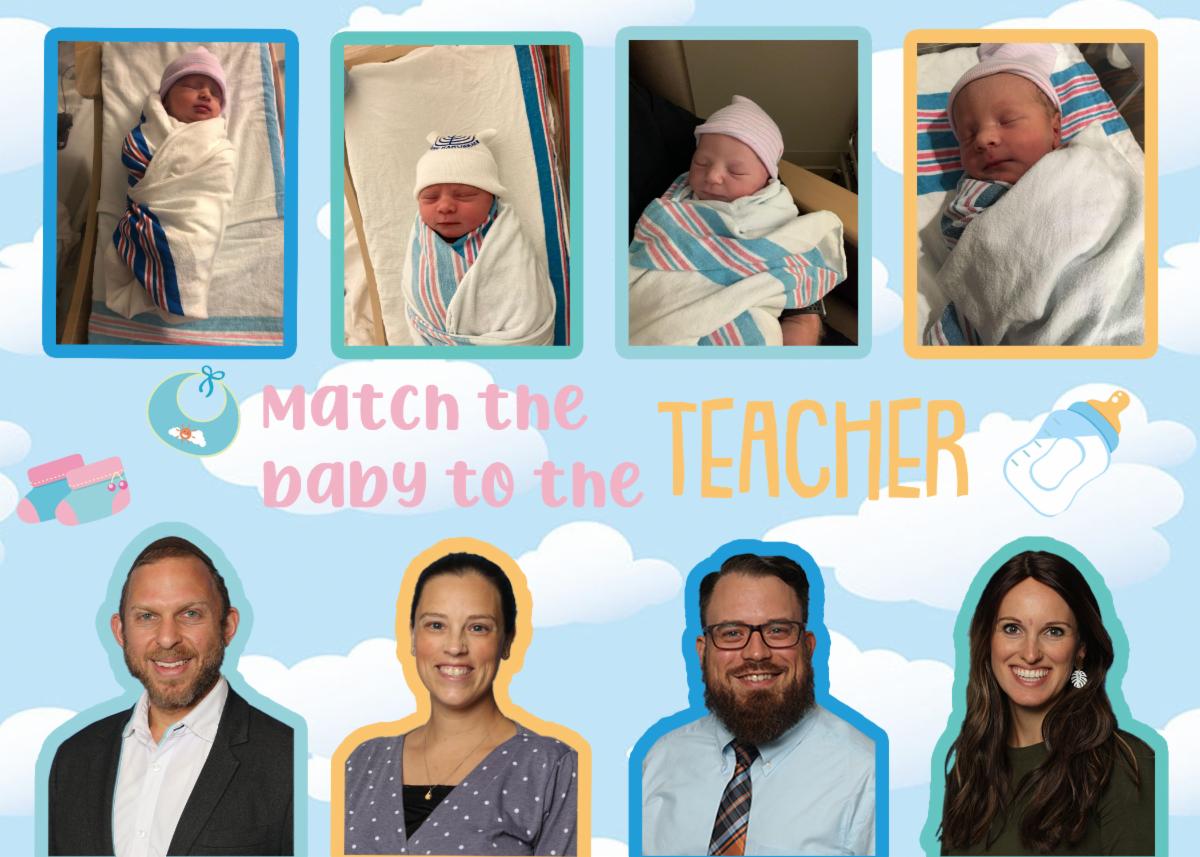
Guess Who
Astronomical Amount of Teachers Had Babies This Week; Guess Whose Baby is Whose
|
|
Graphic By Olivia Kahane ('23) |
|
Three Choshuv Ideas in Forty Five Choshuv Minutes
Rabbi Levitt Addresses Seniors in a JEDTalk
|
|
Graphic By Rebecca Adler ('23) and Rivka Reich ('24)
This past Friday, seniors were privileged to hear from our very own Rabbi Levitt for our JED Talk. JED Talks are a fantastic opportunity for seniors to hear not only from speakers outside of KYHS, but to hear from faculty members and members of the administration within KYHS who don’t usually get the opportunity to present to students in the way they can during a JED Talk, as well.
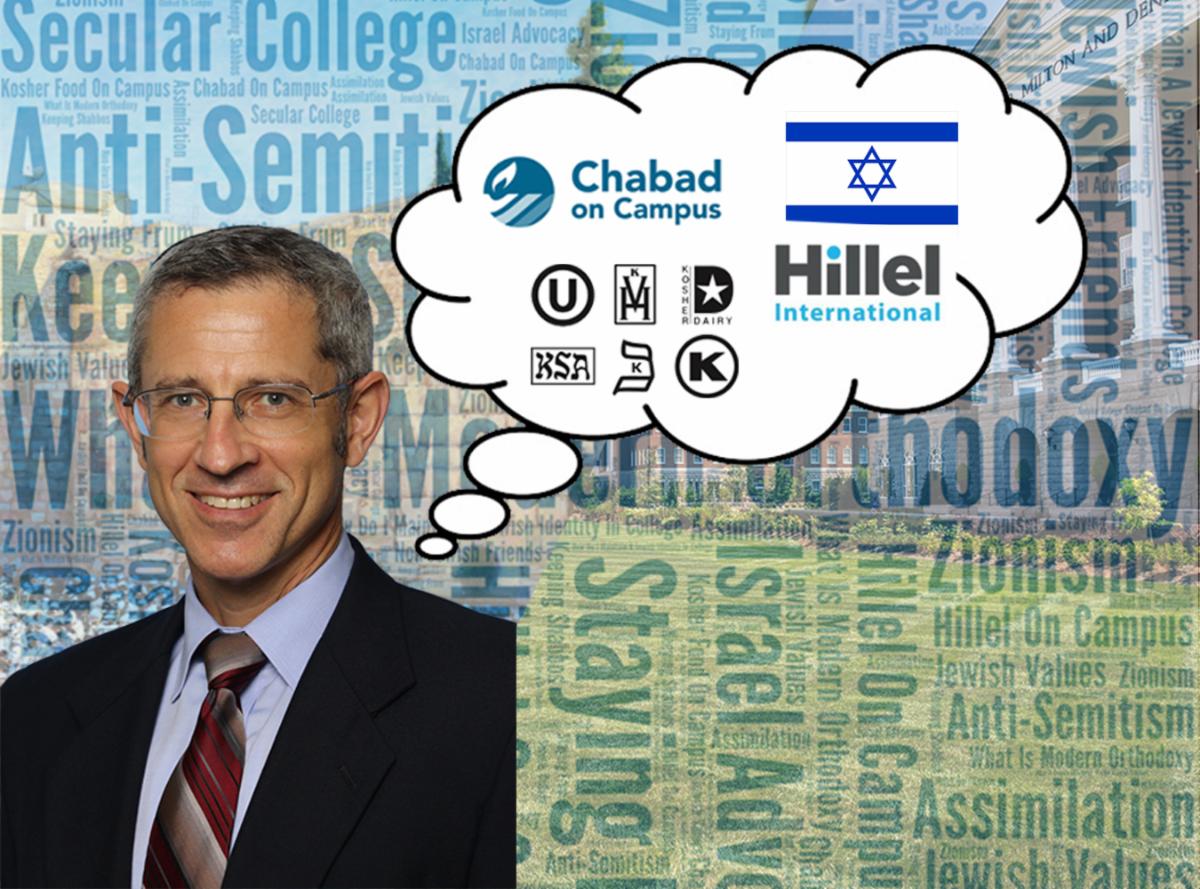
Rabbi Levitt’s JED Talk covered three incredibly important topics. The first topic that was discussed was life as a Jew on a secular college campus. We did an interactive exercise during which students wrote down two possible challenges that one could face as a Jew on a college campus. Students then shared their answers with our neighbors and discussed why we had written down what we had. Rabbi Levitt then asked a few students to share their ideas aloud. He discussed the importance of building a strong foundation and beginning to answer all of the “why” questions that we will be forced to confront when our beliefs are potentially challenged in a secular, academic environment.
The next part of the JED Talk was a discussion of the “75 Year Plan”. Rabbi Levitt emphasized the idea that we need to be careful not to take the period of prosperity that the Jewish people are currently enjoying for granted. He discussed the immense blessing that Israel is, as not only a center of Judaism but as a center of technological advancement, education, and democracy. This part of the JED Talk was particularly thought provoking for students, as it encouraged us to think about the larger picture of the time period in which we are living in the grand scheme of history.
The final topic that Rabbi Levitt spoke about was what it means to be Modern Orthodox. Many of us students who have been a part of Modern Orthodox institutions for the entirety of our lives are still unable to clearly articulate what Modern Orthodoxy really is, and how it is distinct from other branches of Judaism. Rabbi Levitt covered five defining aspects of Modern Orthodoxy which set it apart.
Senior Avigail Levine remarked that, “Rabbi Levitt’s JED Talk was both thought provoking and fundamental. I am grateful that our school is providing the forum to discuss and learn about these topics which will play a fundamental role in all of ours lives.”
Article By Ariella Mayer ('25)
|
|
How to Be Your Best Self
Senior and Junior Girls Hear from Special Speaker Mrs. Raquel Kirszenbaum
|
|
Graphic By Abby Rosenthal ('23)
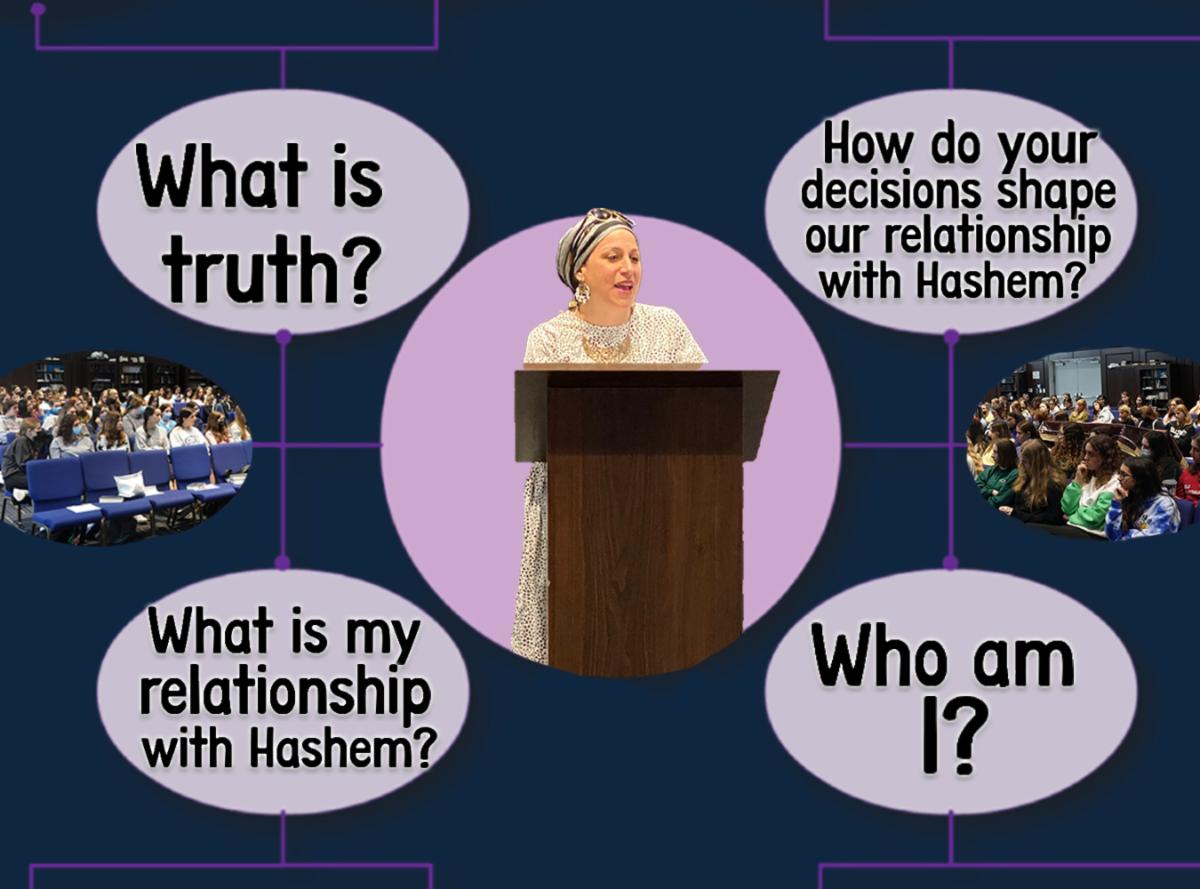
On Wednesday, junior and senior girls had the privilege of hearing from Raquel Kirszenbaum, a witty and inspirational speaker from Panama. She discussed the ideas of staying true to yourself and the importance of distinguishing personal values from the values that are imposed on us by society. Mrs. Kirszenbaum asked thought provoking questions that caused many in the audience to introspect and ruminate on what values they hold dear in their hearts, and how they can conduct themselves in a way that is in line with those values. The ideas she discussed were often followed by humorous anecdotes, making the speech entertaining and engaging.
“What she said really made me think about things from a new and larger perspective. It actually made me think deeply about what I consider to be my core values that I will carry with me throughout my life. I also really enjoyed her stories. I found them to be very interesting”, commented Marielle Askenazi(‘23) about Mrs. Kirszenbaum’s speech.
After the speech, students and teachers were given the opportunity to ask Mrs. Kirszenbaum questions and seek her advice. To top off the amazing start to the day, the girls were surprised with a delicious breakfast of donuts and coffee as they were exiting the Beit Midrash. Thank you Mrs. Kirszenbaum for the amazing speech!
Article By Zohara Lam ('23)
|
|
|
|
|
|
|