Learning Together, Strengthening Community Schools:
The Central Coast RTAC Learning Exchange (Deep Dive)
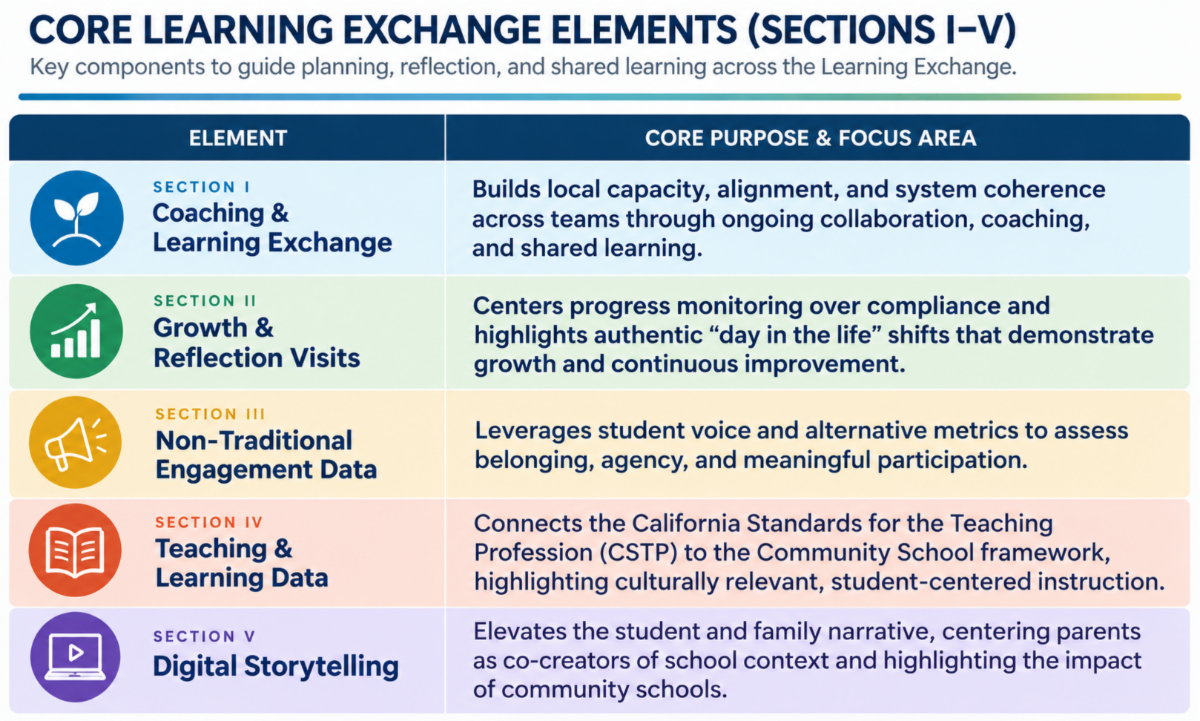
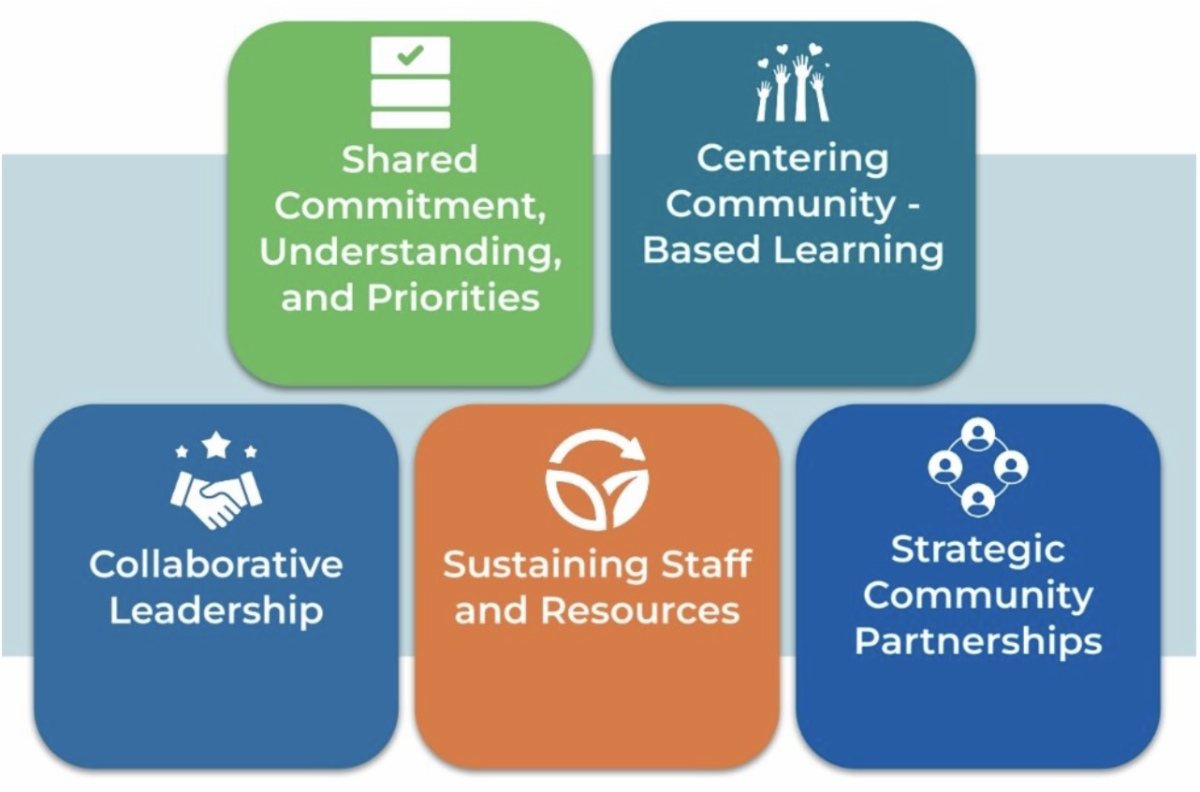
| | Caption: A summary of the core elements of a year-long Learning Exchange with the Central Coast RTAC. | | |
The Central Coast Regional Technical Assistance Center (RTAC) is launching its 2026–27 Community Schools Learning Exchange, a school-year-long, district- and site-driven partnership designed to support participating districts and schools as they reflect on their California Community Schools Partnership Program (CCSPP) implementation journeys, share effective practices, and learn from one another.
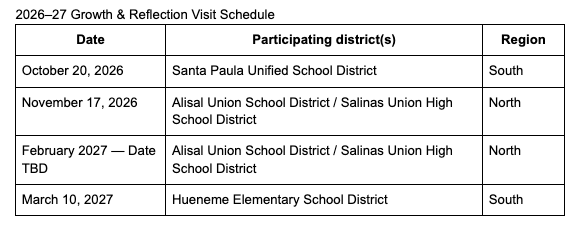
This year's participating districts include Santa Paula Unified School District and Hueneme Elementary School District in the southern region, and Alisal Union School District and Salinas Union High School District in the northern region. Guided by each district's and school's identified priorities, strengths, and implementation needs, the Learning Exchange will highlight promising approaches, explore common challenges, and identify strategies that may be adapted and strengthened across California. At its core, this effort recognizes that meaningful Community Schools transformation happens through collaboration, shared leadership, and a commitment to continuous improvement.
Throughout the school year, the Learning Exchange opportunity will bring together district and school leaders, Community School Coordinators, educators, and regional partners through individualized coaching, regional learning opportunities, and on-site Growth and Reflection visits. Participating teams will help shape the focus and pace of their engagement, including coaching sessions with Manuel Colón of Inflexion, designed to strengthen alignment across school and district systems, address locally identified implementation challenges, and build local capacity. District-led, site-supported presentations will be featured at regional capacity-building convenings to highlight implementation experiences, share lessons learned, and foster peer learning and collaboration.
| Caption: Dates of the Growth and Reflection Site Visits for the 26-27 Learning Exchange with the Central Coast RTAC. | |
A distinguishing feature of the Learning Exchange is its emphasis on looking beyond activities and services to understand how Community Schools are strengthening systems and improving experiences for students and families. Participating teams will explore evidence of progress through nontraditional student engagement measures, teaching and learning practices, and digital storytelling that elevates student and family perspectives. This approach also aligns with CCSPP Annual Performance Report (APR) priorities by helping schools document implementation, demonstrate continuous improvement, and strengthen the evidence and narratives that communicate their progress. By connecting data with authentic experiences, the Learning Exchange encourages schools to examine not only what they are doing, but what they are learning, what is changing, and where opportunities for growth remain.
Above all, the Learning Exchange is a learning opportunity—not an evaluation, competition, or expectation of perfection. As a yearlong partnership, it is intentionally designed to be responsive to each district's and school's context, readiness, and evolving needs. The Central Coast RTAC recognizes that the most valuable insights often emerge from honest conversations about both successes and challenges, with district and site teams taking an active role in guiding the learning process. Through ongoing collaboration among school, district, county office of education, and statewide partners, the Learning Exchange creates opportunities to reflect together, share emerging practices, and strengthen leadership and systems across all levels. Ultimately, the goal is to build a connected community of learners whose collective experiences contribute to more sustainable and equitable implementation of Community Schools throughout California.
Check out the Central Coast RTAC one-page summary of the Learning Exchange Opportunity.
If you have any questions about this learning opportunity, please email your RTAC Program Coordinator.
| | |
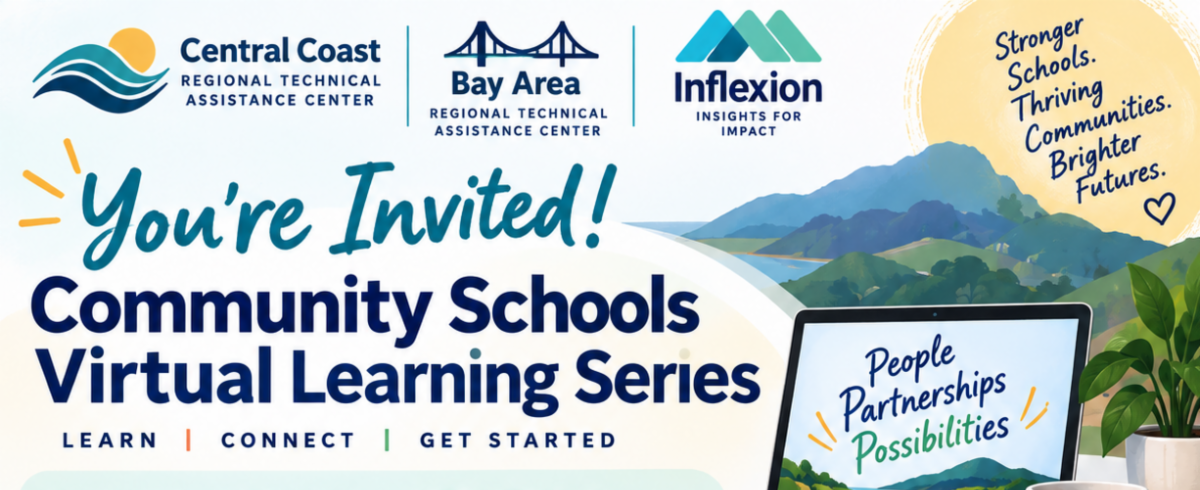
The Central Coast RTAC will offer three virtual learning opportunities to support districts and schools that OPT IN to the new
Community Schools opportunity!
In partnership with the Bay Area RTAC and Inflexion, the Central Coast RTAC is excited to share three upcoming virtual Community Schools sessions designed to support school and district teams opting into the new CCSPP opportunity beginning in 2026–27 and beyond.
Please see the document linked here for session details and registration information. Session recordings will also be linked to the document for future reference
Current CCSPP grant team members who would benefit from attending the sessions are encouraged to register.
Our goal is to build on the information shared by CDE and STAC through these three follow-up learning opportunities, so teams can continue learning together, ask questions, connect with others beginning this journey, and have support available from the start.
If you have any questions, please email your RTAC Program Coordinator.
| | CCSPP Framework (17 pgs) The California Community Schools Partnership Program (CCSPP) Framework is a guiding document created by the California Department of Education (CDE) and the State Board of Education (SBE). It was adopted in July 2022 to help schools, districts, and counties design, implement, and sustain high-quality Community Schools across California. | |  | CCSPP Capacity Building Strategies (25 pgs). This resource will support Community School Coordinator/Leads' understanding of the Capacity Building strategies to support APR conversations with Advisory Council members and other stakeholders/educational partners. | | | |
The Central Coast RTAC team is excited to share our 2026–27 Calendar of Events, now available as both a Canva presentation and a Sheet format.
All core Inflexion facilitated session details are included in the calendar. Some details for optional training and STAC-led sessions are still being finalized. The Canva presentation will be updated as new information becomes available, and we will keep you informed of any significant updates:
| | |
CCSPP Site Leads, Coordinators, and Specialists are encouraged to contact their
CCSPP District Lead with any questions about training opportunities.
| |
Central Coast RTAC Learning Exchange | Growth & Reflection Site Visit
Growing Together: A Look Inside Barbara Webster Elementary's Community Schools Journey
| | |
At Barbara Webster Elementary Academy of Sports and Health Science, the community schools approach is helping bring together academic learning, student wellness, family engagement, and strong partnerships to support the whole child. Located in Santa Paula, a community in Ventura County's Santa Clara River Valley with deep agricultural roots and a rich cultural heritage, Barbara Webster serves students and families whose experiences and strengths help shape the school's approach to teaching, learning, and student support.
As part of the Central Coast Regional Technical Assistance Center's (RTAC) yearlong Learning Exchange, Barbara Webster hosted a Growth & Reflection site visit. Participants included school and district teams from Hueneme Elementary School District, a representative from the UCLA/Statewide Technical Assistance Center (STAC) team, and Central Coast RTAC. These school- and district-guided visits provide opportunities for educators and partners to learn from one another, celebrate progress, reflect on challenges, and identify opportunities for continued growth.
The visit highlighted how Barbara Webster and Santa Paula Unified School District are working together to strengthen systems, build a culture of continuous improvement, and make student and family well-being a shared responsibility. It also provided an opportunity for visiting teams to exchange ideas, share experiences, and reflect on practices they could bring back to their own schools and districts.
|
Student Voice and Wellness: Preparing Students for Life
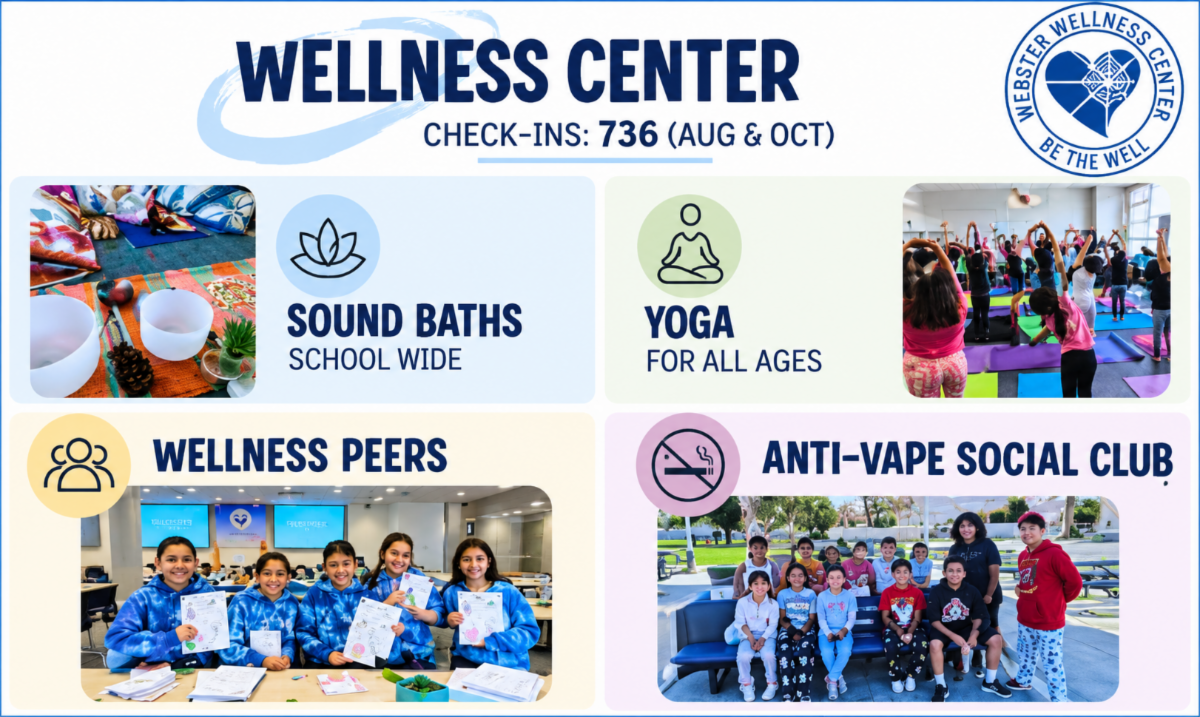
One of the highlights of the visit was learning about Barbara Webster's Student Wellness Ambassadors, a student leadership opportunity that builds confidence, responsibility, and communication skills. Students participate in an application and interview process, with academic performance and behavior also considered. At the visit, a group of student ambassadors shared how the experience helps prepare them for life beyond elementary school, particularly through public speaking, meeting new people, and developing leadership skills. Families have been enthusiastic supporters of the opportunity. The Wellness Center provides students with a welcoming space to access social-emotional support, while also offering staff a place to pause, reset, and recharge. Together, these practices reflect a commitment to creating a school environment where students feel supported, connected, and empowered.
Strengthening Academic Support Through Collaboration
Barbara Webster has developed an integrated approach to academic intervention that makes additional learning opportunities part of the regular school day. During Universal Access time, all students receive instructional support, with three days dedicated to English language arts and two days to mathematics each week. The school's Learning Center plays an important role in this process, providing targeted support before students are considered for additional interventions through the Student Study Team (SST). Teachers and instructional leaders also work together to strengthen English Language Development (ELD) instruction through classroom walkthroughs and support from Teachers on Special Assignment (TOSAs). Literacy engagement extends beyond the classroom. A school literacy committee helps coordinate monthly reading challenges, incentives, a Reading Is Fundamental (RIF) partnership, and visits from a community mobile library. School leaders shared encouraging progress in CAASPP performance associated with their ongoing instructional improvement efforts. These efforts demonstrate how academic support, student engagement, and community partnerships can work together rather than operate as separate initiatives.
Creating a Culture Where Data Supports Growth, Not Blame
Another important takeaway was the school's approach to using data as a tool for learning and improvement. Four times a year, grade-level teams participate in full-day data discussions. Teachers review common assessment and screening results, identify student strengths and needs, and plan targeted small-group instruction based on students' current learning levels. School and district leaders emphasized that building a strong culture of data use has been a journey spanning nearly a decade. The community schools approach is helping elevate and strengthen this work by connecting academic data with a broader understanding of student needs. The guiding message is simple: Data is one piece of the puzzle. It is not about blame, but about understanding what students need and how adults can respond.
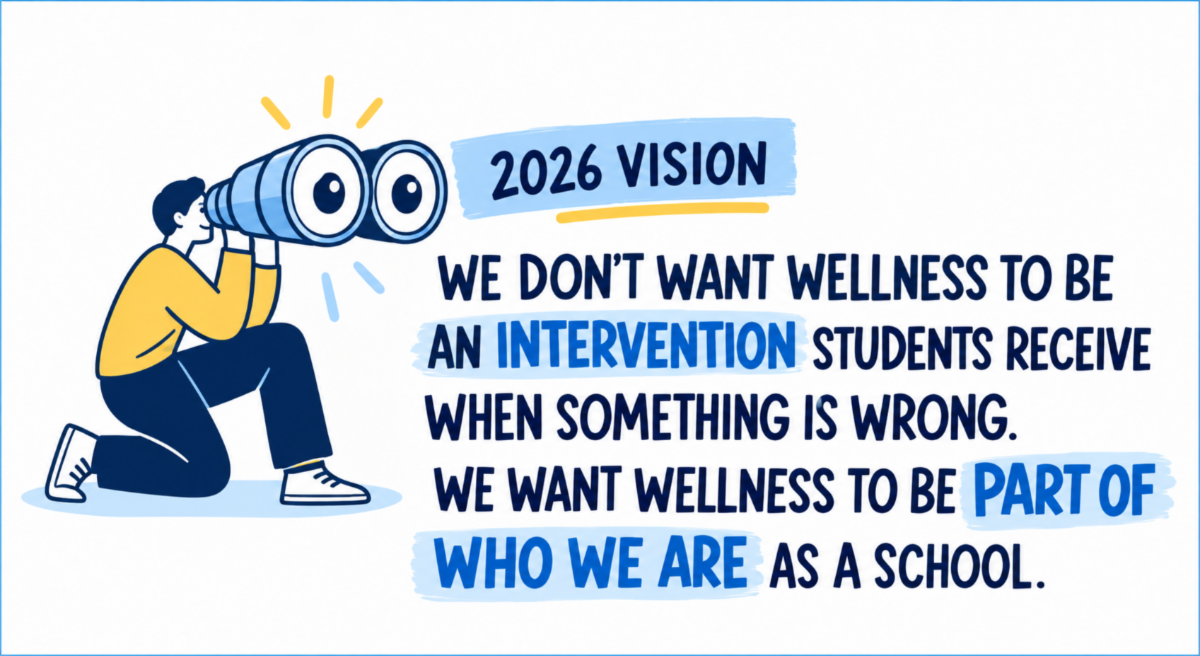
| | Caption: The vision statement for Barbara Webster's commitment to wellness! | | | |
Expanding Family Engagement and Integrated Student Supports
The district is currently exploring opportunities to establish an on-site health clinic in collaboration with Ventura County Public Health and other community partners. With the anticipated closure of Santa Paula’s only hospital, this proactive effort reflects the district’s commitment to responding to emerging community needs, addressing potential service gaps, and improving access to essential resources and support.
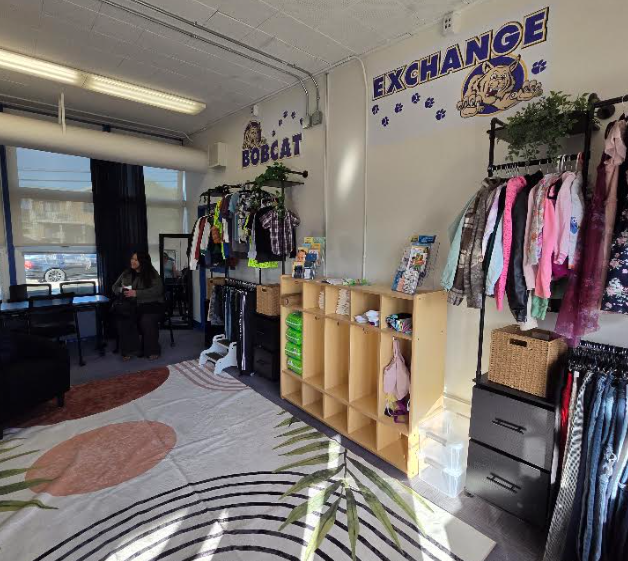
Through data analysis and ongoing engagement with families, the school identified a need for a welcoming space where parents and caregivers could gather, connect, and build relationships, as well as a clothing closet to support families with essential needs. These efforts reflect the school's commitment to listening to its community, responding to identified needs, and creating an inclusive and supportive environment where families feel welcomed, valued, and connected to the school. In response, the school brought these ideas to life by creating both spaces, turning community feedback into meaningful action.
Leadership That Builds Trust and Shared Ownership
A consistent theme throughout the visit was the importance of leadership in creating the conditions for meaningful change. Barbara Webster's principal emphasized listening, learning, welcoming ideas, and leading by example. School and district leaders described a team-centered approach that recognizes individual strengths, encourages creative thinking, and supports staff in trying new strategies.
The school's Community Schools Core Team meets regularly to discuss implementation priorities, progress, and areas for growth. Leadership is also shared through presentations and conversations with teachers, instructional leadership teams, school staff, and families.
District leaders are helping extend these lessons beyond one campus, supporting greater alignment and shared understanding across schools. Rather than viewing community schools as another initiative or additional workload, the goal is to help staff see how existing efforts can become more connected, intentional, and effective. This work is grounded in a shared understanding that sustainable improvement requires trust, collaboration, and a willingness to learn together.
| | Caption: In response to data, the school created a multi-use space that includes its community clothing closet, known as the Bobcat Exchange, and a parent center. | | | |
Barbara Webster's Growth & Reflection visit offered an important reminder: community schools transformation is not simply about adding programs, services, or positions. It is about connecting people, practices, and resources around a shared vision for student success. From student wellness ambassadors and targeted academic supports to collaborative data discussions and emerging family partnerships, the school is demonstrating how existing strengths can become part of a more connected system of support. Perhaps the greatest takeaway was the spirit of collaboration across the school and district. Leaders and staff are encouraged to think creatively, share what they are learning, and approach challenges as opportunities for growth. The work is not about doing more. It is about working together more intentionally so that every student has the opportunity to learn, grow, and thrive.
As Barbara Webster prepares for the third year of implementation, school and district leaders are focused on strengthening their Community Schools Implementation Plan and deepening staff understanding of the four pillars of the California Community Schools Framework. Priorities include strengthening chronic absenteeism supports, expanding family engagement, securing a new Community Schools Coordinator, and more intentionally bringing a whole-child approach into everyday classroom practices.
The school is also exploring how relationships, student voice, and proactive support can help address academic delays and strengthen student success. A key next step is to continue building shared ownership across the school community, including creating more opportunities for staff voice and leadership.
Learn more about Barbara Webster Elementary Academy of Sports and Health Science.
| | |
Transforming Education from the Inside Out:
Highlights from the 2026 CCSPP EMPOWER Summit
| | |
The 2026 California Community Schools EMPOWER Summit, hosted by the State Transformational Assistance Center (S-TAC) in Ontario, California, brought together educators, community school coordinators, administrators, students, families, and community partners from across the state. Grounded in California’s four community school pillars, integrated student supports, expanded learning opportunities, collaborative leadership, and family and community engagement, the summit highlighted the power of community schools to transform public education through a whole-child approach.
Throughout the summit, participants explored how community schools are strengthening relationships, addressing barriers to learning, elevating student and family voice, and building sustainable systems that support student success. From statewide evaluation findings to innovative district practices, the gathering offered opportunities to learn from one another, celebrate progress, and consider how community school strategies can move beyond individual programs toward lasting systems change.
Centering Youth and Family Leadership
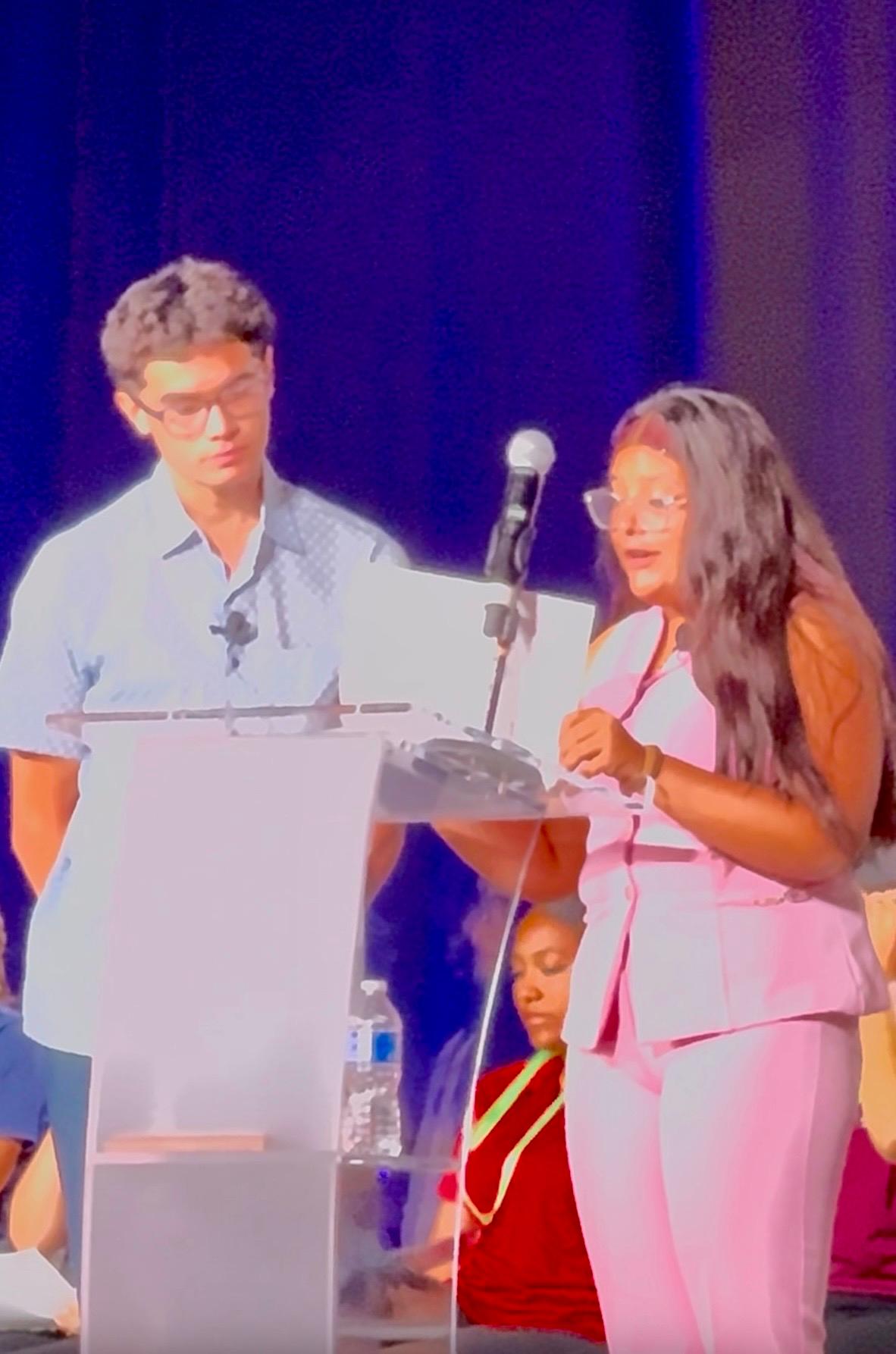
Student and family voice were at the heart of the summit, reinforcing a fundamental principle of the community school approach: those most affected by school decisions must have meaningful opportunities to help shape them. Student master of ceremonies (MCs) led key plenary sessions, bringing energy, authenticity, and firsthand perspectives to the main stage. Their leadership demonstrated the importance of moving beyond simply inviting students to participate and creating meaningful opportunities for young people to influence decisions that shape their educational experiences.
The Statewide Student Advisory (SSA) further elevated student and family perspectives through a panel featuring students and parents from across California, including Kenia Salcedo, a student from Salinas Union High School District, and her parent, Alejandra Nuño. Panelists shared reflections on how coordinated student supports, strong community school infrastructure, and inclusive decision-making can strengthen a sense of belonging and create meaningful opportunities for family voice and advocacy.
These voices served as a powerful reminder that students and families are not simply recipients of services. They are essential partners in identifying needs, shaping solutions, and building school communities that reflect their strengths, experiences, and aspirations.
Central Coast in Action: Local Innovation, Shared Learning
The Central Coast region was well represented at the summit, with districts and educational partners sharing promising practices, innovative approaches, and lessons from their community school journeys. Their contributions highlighted the expertise, creativity, and commitment emerging across our region as local educational agencies continue to strengthen community school systems.
Presentations and workshops featured the following Central Coast districts and educational partners:
-
Pajaro Valley Unified School District: Kendra Fehrer Founder & Principal of Heartwise Learning and Peggy Pughe, Executive Director of Student Support Services at PVUSD, presented Beyond Compliance: Working Smarter to Turn the APR into a Strategic District Lever. The workshop explored opportunities to move beyond compliance and leverage the Annual Performance Report (APR) as a strategic tool to inform district planning and strengthen community school implementation.
-
Alisal Union School District: Alisal presenters shared innovative approaches to building belonging, strengthening literacy, and advancing authentic family and community engagement. Workshops included Building Belonging through Día del Niño, presented by Margarita Camacho and Janelle Garcia; Advancing Strategic Community Partnerships through Inclusive, Literacy-Centered Systems, presented by Griselda Reyes, Maria Valladares, Wes Baker of Raise Readers, and Abbygale Gonzalez of the Read to Me Project; and From Silos to Solidarity: Daily Connection Points Driving Authentic Engagement for All, presented by Sylvia Perez. Together, these presentations highlighted the district’s commitment to student agency, meaningful relationships, and literacy-centered community partnerships.
-
Salinas Union High School District and Soledad Unified School District: Students Angel Santiago Orozco-Zavala (Salinas Union High School District) and Severiano Flores (Soledad Unified School District) were among six student highlighted in Beyond the Headlines: Amplifying Community Voices Through a Digital Storytelling Partnership, alongside Leyda Garcia, Project Lead with the State Transformational Assistance Center (S-TAC) at the UCLA Center for Community Schooling. Their participation highlighted the power of digital storytelling to amplify student perspectives and elevate community voices.
-
Monterey Peninsula Unified School District (MPUSD): District representatives shared their approach to building coherence through community schools in Trajectory-Changing Schools: Building Coherence Through Community Schools (From Vision to Transformation). Delia Gomez, Ed.D., Katie Barthelow, and Justin Stokes highlighted the importance of connecting vision, leadership, and implementation to advance transformational change. MPUSD also facilitated learning walks, offering opportunities to observe practices, reflect collectively, and strengthen implementation.
-
Monterey County Office of Education / Central Coast RTAC: Herminia Cervantes presented From Roots to Revenue: Sustaining CYBHI from the Ground Up, exploring sustainability strategies for community-based youth behavioral health initiatives. Additionally, the Central Coast RTAC team joined Inflexion and WestEd in Making Community Schools Work: What the Data Tell Us. Matt Coleman, Junnue Zarrouk, Manuel Colon, and Ashley Boal contributed perspectives on the role of data in understanding and advancing community school implementation.
-
Statewide Student Advisory Board: Student leaders Andrea Mota, Kenia Salcedo a Salinas Union High School District student, and Charli’von Daily contributed to the conversation through Literacy: Why Are Rates Declining and How Can We Help?, bringing student perspectives to an important statewide discussion about literacy and student success.
Together, these contributions demonstrated the value of sharing learning across districts and county offices of education. From literacy and family engagement to student agency, strategic partnerships, sustainability, and data-informed implementation, Central Coast presenters showcased the many ways community schools are strengthening systems and creating opportunities for students and families.
For Central Coast CCSPP educators, the summit was also a reminder that meaningful transformation is already underway in our own communities. By sharing local innovations, elevating student and family voices, and learning from one another, we can build on existing strengths, strengthen partnerships, and identify new opportunities to deepen the impact of community schools.
Moving from Implementation to Transformation
The 2026 EMPOWER Summit reinforced that community schools are not simply a collection of programs or services. They represent a commitment to transforming how schools listen, lead, collaborate, and partner with their communities.
Several key lessons emerged for CCSPP educators:
- Center student and family leadership. Create meaningful opportunities for students and caregivers to shape needs assessments, school site advisory councils, improvement plans, and decisions that affect their communities.
- Shift from compliance to connection. Use personalized outreach, trusting relationships, and intentional student check-ins to understand and address barriers to attendance and engagement.
- Strengthen collaboration across systems. Align school and district leadership, integrated student supports, expanded learning opportunities, and community partnerships around shared goals.
- Use data for collective learning. Engage students, families, and staff in interpreting data, identifying root causes, and co-designing solutions.
- Plan for sustainability from the beginning. Embed community school strategies within leadership structures, district priorities, community partnerships, and long-term funding plans.
As California’s community school teams look ahead, the EMPOWER Summit reinforced the importance of learning together, sharing promising practices, and remaining grounded in the strengths and aspirations of the communities schools serve. A special recognition goes to Alisal Union School District and Salinas Union High School District for bringing an outstanding number of students and families to this year’s summit. Their strong representation exemplified the importance of authentic student and family engagement and demonstrated what meaningful partnership looks like in action.
Transforming education from the inside out means changing not only what schools provide, but how they listen, lead, collaborate, and build relationships. When students, families, educators, and community partners share ownership of this work, community schools can help create the conditions for every student to belong, learn, and thrive.
The work continues in every school, every partnership, and every conversation that brings us closer to that vision.
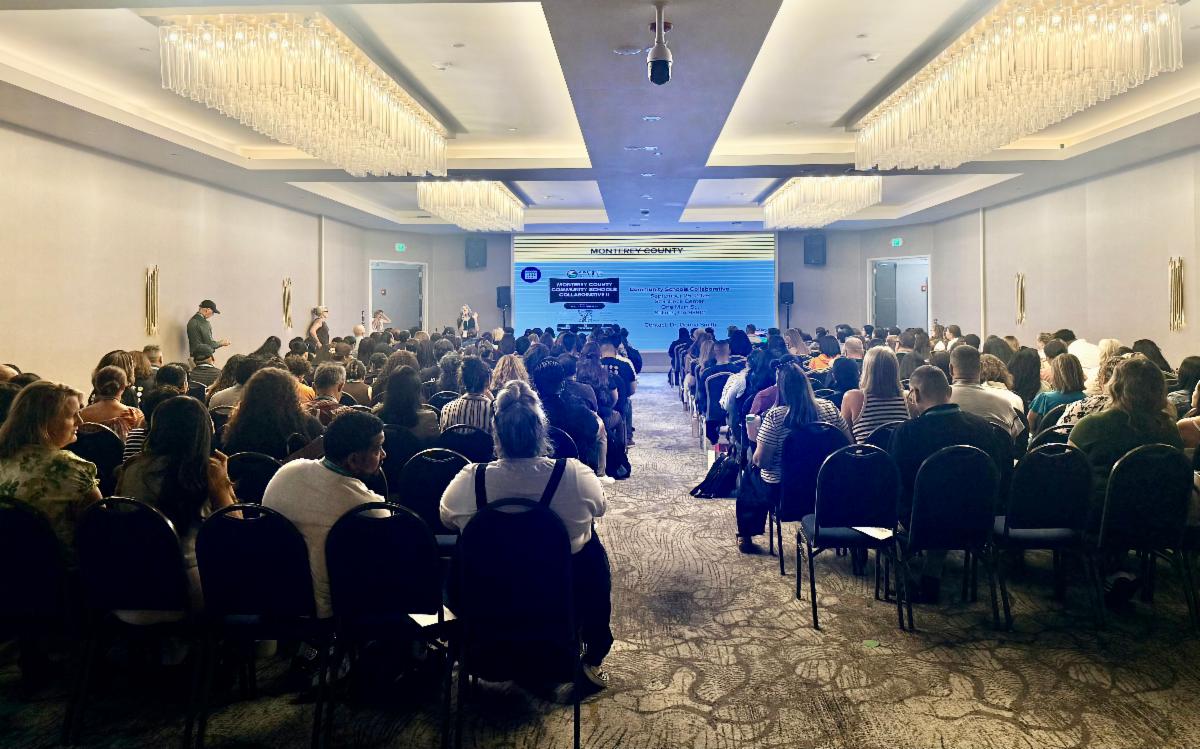
| | Caption: Over 250 participants attending the Central Coast RTAC breakout session. | | | Caption: Statewide Student Advisory Council board members and Emcees Arthur Innes and Kenia Salcedo. | | | |
Resources of the Month:
Readiness / Meet the STAC
| | |
CDE Webinar: California Community Schools Partnership Program: Transforming Outcomes Together – Celebrating School Success and Impact.
On October 27, 2026, the California Department of Education (CDE) hosted a webinar that highlighted how three community schools are improving attendance, family engagement, student support, and college and career readiness by making meaningful changes to their school systems and practices. Presenters emphasized that community schools are not simply about adding programs or services, but about rethinking how schools operate, make decisions, coordinate supports, and share leadership. Through stronger partnerships, meaningful student and family involvement, data-informed planning, and continuous improvement, schools are building more connected and sustainable systems that lead to better student outcomes.
If you or a colleague were unable to attend, we're happy to share the presentation slides and webinar recording.
CLICK HERE to access both resources
The recording is 1 hour and 26 minutes.
The slide deck is 56 slides.
Getting started: Community Schools Readiness Reflection (5 pgs)
This document was developed by the Central Coast Regional Technical Assistance Center (RTAC) for district and site leadership teams interested in learning more about the California Community Schools Partnership Program (CCSPP) and exploring how the Community Schools strategy can support their local priorities.
CCSPP funding is not required to begin engaging in this work. Districts and schools can access Central Coast RTAC technical assistance, professional learning opportunities, tools, and resources to strengthen their understanding of the California Community Schools Framework and explore how it can align with and enhance existing systems and initiatives.
Teams are encouraged to participate in RTAC professional development and regional learning opportunities and access STAC resources aligned with the California Community Schools Framework. These supports can help teams build foundational knowledge, assess readiness, strengthen existing practices, and identify opportunities to integrate Community Schools principles into their current work—whether or not they ultimately receive CCSPP funding.
Explore California’s Statewide Community Schools System of Support
These resources can help teams better understand the State Transformational Assistance Center (STAC), the statewide partners supporting Community Schools implementation, and the tools and learning available to schools and districts.
Visual representation of CCSPP Systems of Support and contact information for CCSPP COE Coordination grant team leads
STAC Digital Commons
The Digital Commons is a central hub for California Community Schools resources, tools, professional learning materials, examples, and implementation guidance. Teams can use it to deepen their understanding of the California Community Schools Framework and find resources to support their local work.
website: https://cadigitalcommons.org/
STAC Advisory Board for Community Schools
Learn about the organizations and partners represented on the STAC Advisory Board and the expertise they bring to California's Community Schools work. The Advisory Board reflects the collaborative nature of the strategy and brings together perspectives from across the education and community-school landscape.
website: https://cadigitalcommons.org/home/about-us/advisory-board/
Meet the Organizations That Make Up STAC
STAC brings together organizations with expertise in Community Schools, research, technical assistance, professional learning, and systems change. Exploring these partners can help teams understand the breadth of expertise available through California's statewide system of support and how that support connects to local implementation.
Take a look at the organizations that make up the State Technical Assistance Center (STAC)
| | |
Growing Student Leaders at Kermit McKenzie Intermediate School:
The Student Empowerment Academy
| | |
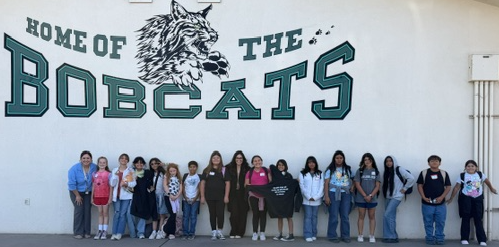
Kermit McKenzie Intermediate School (KMIS) is located in the small community of Guadalupe, with an approximate enrollment of 410 students in grades 4–6. As part of its Community Schools journey, KMIS is working to strengthen students’ sense of belonging, safety, and connection while creating more meaningful opportunities for students to develop confidence, advocate for themselves and others, and take an active role in their school community.
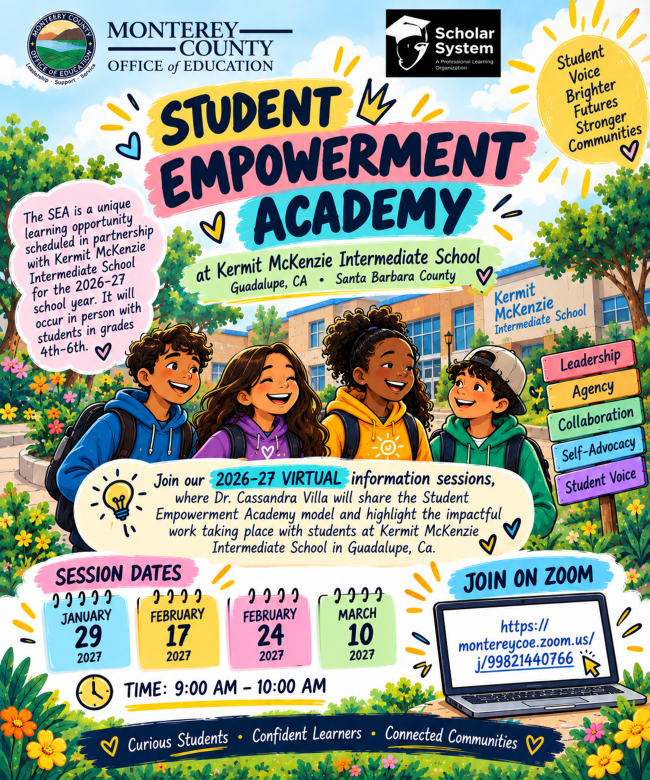
Recognizing that opportunities for elementary student leadership and engagement can be limited, KMIS recently launched a pilot Student Empowerment Academy in partnership with Scholar System and the Central Coast Regional Technical Assistance Center (RTAC). The Academy brings together 20 students in grades 4–6, including students who previously ran for Associated Student Body (ASB) positions and others interested in developing their leadership skills. Through six in-person sessions during the 2026–2027 school year, students will explore leadership, communication, teamwork, self-advocacy, and the importance of using their voices to positively influence their school community.
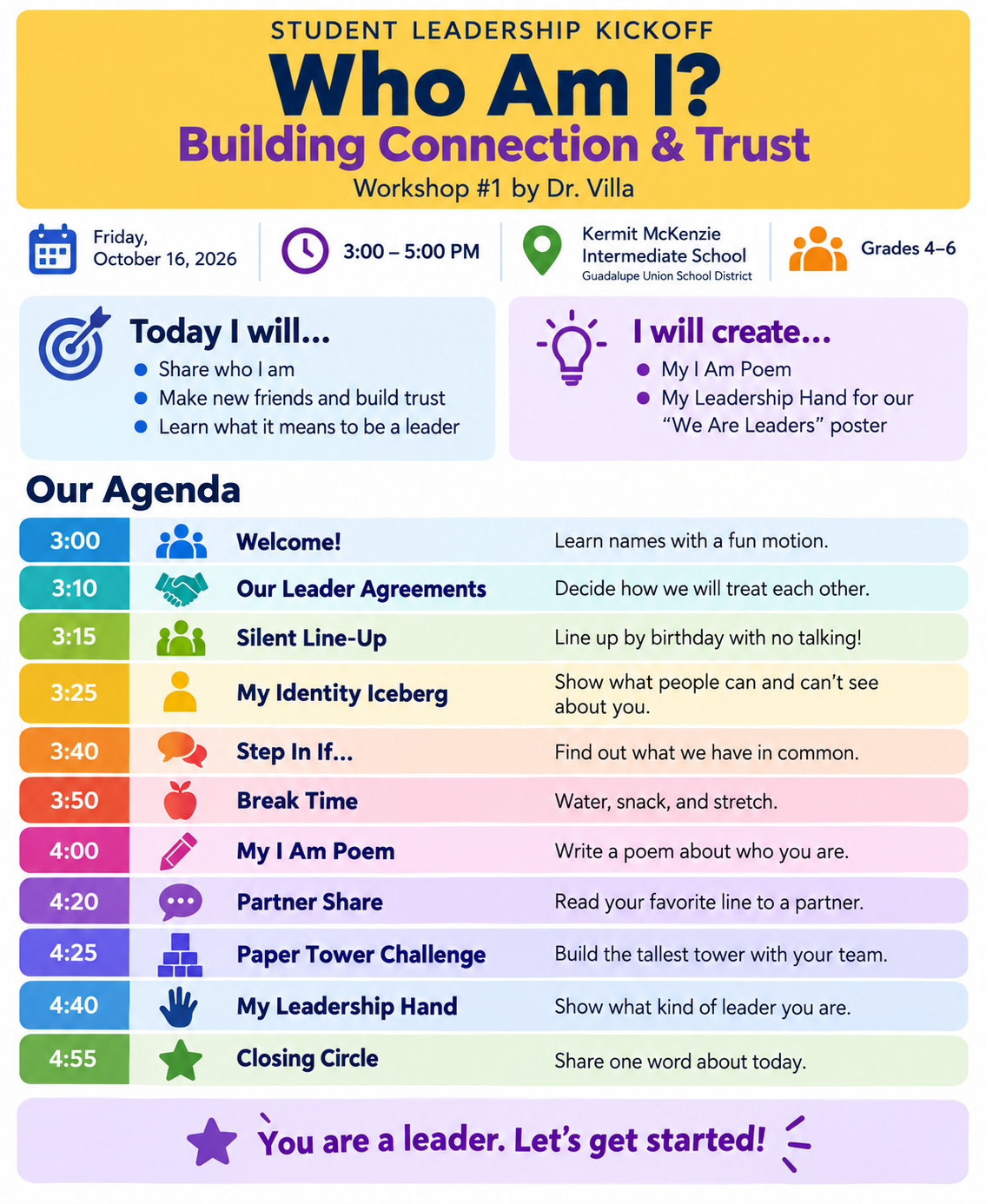
The Academy kicked off in October with its first session, facilitated by Dr. Cassandra Villa of Scholar System. Through interactive activities and group discussions, students explored what it means to be a leader, identified their individual strengths, and discovered shared experiences and interests. The session created opportunities for students across different grade levels to connect, build relationships, and practice working together. These early experiences are helping establish a foundation of trust, confidence, and collaboration that students can continue building throughout the year.
The Academy also reflects several important elements of the California Community Schools Framework, including the commitment to shared decision-making and participatory practices, collaborative leadership, and expanded learning opportunities. Central to the framework and to modeling these concepts at KMIS is the belief that students are not simply recipients of school programs and services but valuable partners whose experiences, ideas, and perspectives should help shape their educational environment.
| | | Caption: The first session featured an engaging, interactive agenda that encouraged students to connect with one another, explore their leadership potential, and build confidence through meaningful discussions and collaborative activities. | | | | | |
By investing in student leadership development at the elementary level, KMIS is helping students build the skills and confidence needed to participate more meaningfully in school life. The Academy also supports the framework's emphasis on creating relationship-centered school environments where students feel valued, connected, and empowered. These conditions are especially important as students prepare for the transition to middle school and eventually high school, where self-advocacy, positive relationships, and leadership skills can play an important role in their success.
Beyond developing individual leadership skills, the Academy represents an opportunity to strengthen how student voice is included in the school's broader Community Schools efforts. The long-term goal is not simply to develop student leaders, but to create a school culture where student perspectives are consistently welcomed, valued, and considered in decisions that affect their learning experiences. As students build their skills, the school has an opportunity to explore how their ideas and feedback can inform school activities, strengthen relationships, and contribute to ongoing school improvement.
This approach aligns with the State Transformational Assistance Center's (STAC) emphasis on shared power, collaborative leadership, and continuous improvement. It also reflects an important shift in the Community Schools strategy: moving beyond individual activities and programs toward building lasting practices and structures that support meaningful participation and shared responsibility.
As the Academy continues throughout the school year, KMIS looks forward to seeing students grow in confidence, strengthen their relationships, and begin applying their leadership skills within their school community. The experience will also provide valuable learning for the school and its partners as they explore ways to sustain and expand student leadership opportunities in the future.
Through the partnership of Guadalupe Union School District, KMIS, Scholar System, and the Central Coast RTAC, the Student Empowerment Academy is helping KMIS take another step toward building a school community where students are not only encouraged to speak up, but are supported in developing the skills and opportunities to help shape their school's future.
| | Caption: Kermit McKenzie Intermediate School and Scholar System will share their experiences and lessons learned from the Student Leadership Academy during four virtual sessions scheduled for 2027. Click the link below to access the flyer with session dates and registration information. | | | |
Central Coast RTAC Partners
| | | | |
Inflexion is committed to ensuring EVERY
student receives what they need to succeed, recognizing that the playing field remains inherently unequal. An equitable education system respects students as individuals, plays to students’ strengths, values students’ unique cultures and perspectives, and allows for the individual ownership of learning along a path driven by students’ interests and aspirations.
Lead Facilitator: Manuel Colón
Manuel Colon: teacher, mentor, coach, administrator. AUHSD - future talks featuring Manuel Colón (27 min.)
| | | | | |
At the foundation of the Scholar System program is an educational approach focused on fostering deep learning, critical thinking, and a love for knowledge.
Programs aim to cultivate scholars who are not just knowledgeable but also possess the skills and mindset to become lifelong learners, engaged citizens, and future leaders.
Lead Facilitator: Dr. Victor Rios
Dr. Victor Rios: professor, author, speaker, mentor, and founder of the Scholar System. A teacher that tapped into his soul (video, 11 min)
| | | |
Subscribe to Site Community School Newsletters!
Stay connected and informed about what’s happening across
our regional Community Schools
| | |
Thank you to the schools and districts below for generously sharing their Community Schools news and updates with others across our region!
By generously sharing resources, stories, and promising practices, you are helping sustain staff and resources, strengthen community engagement, build collective capacity, and ensure strong Community Schools implementation is not limited to individual sites—but shared and strengthened across our region.
If your school or district would like to be highlighted in this section of the RTAC newsletter, please email your RTAC Program Coordinator.
| | |
Central Coast High School
(Monterey County)
Website
Implementation Plan - LINK
Subscribe to the CCHS Instagram page!
Subscribe to the CCHS Newsletter
| | |
School Name
(County)
Website
Implementation Plan - LINK
Subscribe to the SCHOOL Instagram page!
Subscribe to the SCHOOL Newsletter
| | |
School Name
(County)
Website
Implementation Plan - LINK
Subscribe to the SCHOOL Instagram page!
Subscribe to the SCHOOL Newsletter
| | | |
School Name
(County)
Website
Implementation Plan - LINK
Subscribe to the SCHOOL Instagram page!
Subscribe to the SCHOOL Newsletter
| | | |
State Technical Assistance Center team (STAC)
Updates
| | |
Coherence Webinar - The CCSPP California Department of Education (CDE) team and the S-TAC, are hosting a series of six webinars focused on coherence to support the long- term sustainability of the CCSPP. You can revisit the past webinars here.
We look forward to connecting with you at our next webinar taking place on November 4th from 3:00-4:30pm around the CYBHI Fee Schedule and Community Schools. Registration
2027 CA Community Schools EMPOWER Summit - Save the Date
September 16th-17th 2027
SAFE Convention Center, Sacramento, CA
| | |
STAC - Submit your resources to the STAC Digital Commons!
Sharing resources across the local and state levels helps educators learn from one another, use proven strategies, and strengthen community school efforts. By submitting your own resources, you support a more connected, effective system that improves schools and student success statewide.
To learn more about how to submit your resources to share on the STAC Digital Commons website, click here!
| | | |
State Technical Assistance Center team (STAC)
Members
| | |
CDE - The California Community Schools Partnership Program (CCSPP) California Department of Education (CDE) team supports the community school, “whole-child” school improvement strategy, where the district and school work closely with teachers, students, families, and partners.
To subscribe to the CCSPP-Info listserv, send a "blank" message to: join-CCSPP-Info@mlist.cde.ca.gov
The Sacramento County Office of Education (SCOE) is the County representative on the State Transformational Assistance Center (STAC) team for the California Community Schools Partnership Program (CCSPP). This means SCOE, in partnership with Californians for Justice, the National Education Association, and the UCLA Center for Community Schooling, works closely with the California Department of Education to build content and an overarching methodology for CCSPP technical assistance.
Focus:
- Implementation rubric development
- Community of practice facilitation
- Coherence and sustainability
- Coach and advise regional technical assistance center teams (RTACs)
| | | | |
Californians for Justice.
The mailing list option is at the bottom of their website.
Focus:
- Student Engagement
- Relationship Centered Schools
- Equity
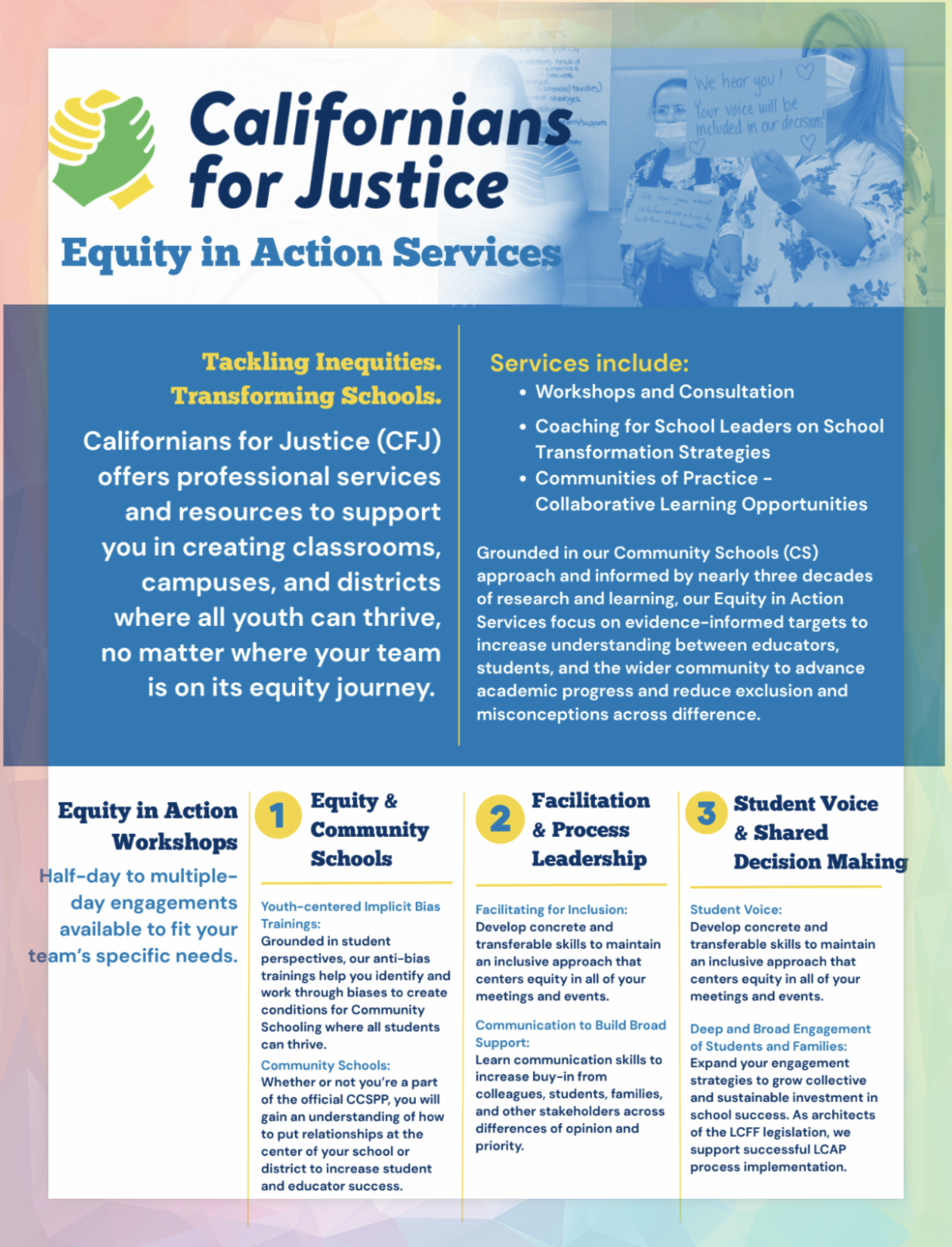
- PDF
| | |
National Education Association
The mailing list option is at the bottom of their website.
Focus:
- Professional Learning
- Leadership Development
- Just and Equitable Schools
- PDF
| | |
UCLA Center for Community Schooling.
The mailing list option is at the bottom of their website.
Focus:
- University Assisted Community Schools
- Research and Data
- Equity
- PDF
| | |
Monterey County Office of Education
901 Blanco Cir, Salinas, CA 93901
Central Coast RTAC | Website
Sign up for the RTAC newsletter, link here
email: centralcoastrtac@montereycoe.org
| | | | |