|
This spring, three Environmental Law Clinic alumni — two still enrolled in law
school, one recently graduated — took on an unexpected emergency task in helping Director Claudia Polsky file litigation against the Trump Administration (Thakur v. Trump, Northern District of California, filed May 2025). This lawsuit, for which
the alumni research help was critical, challenges unconstitutional and otherwise
unlawful executive orders and administrative agency actions that abruptly
terminated hundreds of University of California research grants. Many of these relate to climate change, access to safe drinking water, air pollution reduction, and other environmental topics. Indeed, lead plaintiff Neeta Thakur, MD, is a UCSF pulmonologist whose illegally terminated EPA grant research explored how best to protect vulnerable communities from health effects of wildfire smoke.
Our core pro bono litigation team consists of partners and other attorneys from Lieff, Cabraser, Heimann and Bernstein, and Farella, Braun, Martell (including many UC Berkeley Law alums!); UC Berkeley Law’s Dean (who has argued our motions) and ELC’s Director; additional pro bono counsel; and associates at other law firms actively fighting to preserve the rule of law. But given the velocity of Fast Fascism, we’ve also leaned heavily on ELC alumi. On short deadlines, these former ELCers prepared top-notch legal memos and other work products to assist the lawsuit. In June, the suit yielded a preliminary injunction requiring reinstatement of hundreds of grants across the 10-campus UC system, and restoring tens of millions of dollars to UCs! And in mid-August, we were able to restore 300 National Science Foundation grants worth $81 million to UCLA.
Environmental Law Clinic alums reflect on their litigation tasks, and how the work connected to their clinic experience:
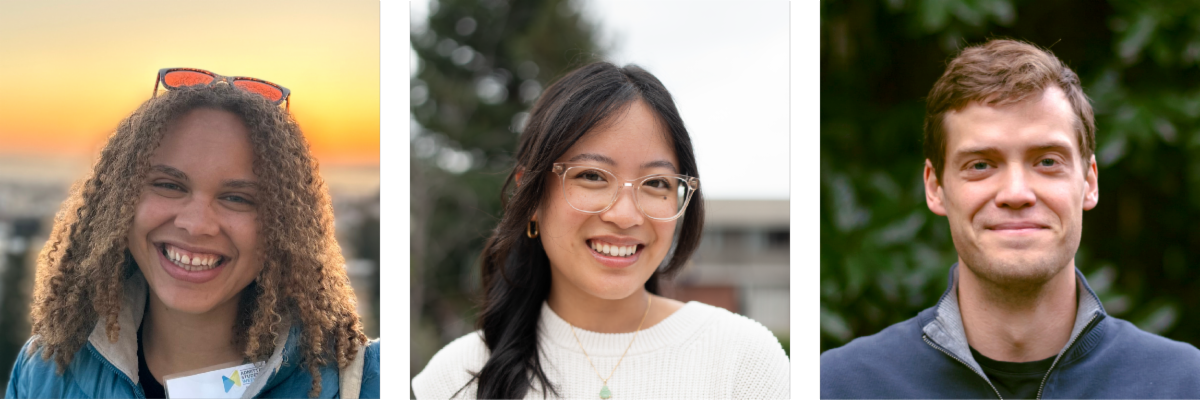
3L Jordan Perry
“I wrote a memo on whether the National Science Foundation could refuse to dispense money appropriated by Congress for reasons specified by Congress. The Environmental Law Clinic helped me prepare for this by providing practice with quickly tackling research tasks on a deadline. When you really care about the people and causes you’re fighting for, it makes the law feel tangible, relevant, and urgent in a way that reading torts cases from the 1800s does not. I worked in the clinic for three semesters — two for credit and one for about 70 pro bono hours. Each semester required responding to different circumstances. Whether it’s a new Navy report or an unconstitutional executive order, I hope to face current and future challenges with the ‘Bring it on!’ attitude I learned in the Environmental Law Clinic."
3L Cindy Nguyen
“For the lawsuit, I researched the purpose and structure of the Department of Government Efficiency, as well as its constitutionality. Given the project’s tight timeline, I relied on my ability to quickly research complex questions and understand nuanced legal arguments — all honed in the Environmental Law Clinic. I’ve participated in the clinic for three semesters since 1L, spending my entire 2L on the Hunters Point litigation. The Environmental Law Clinic has been my most defining experience in law school, and the best foundation for an environmental justice career. It has taught me how to continually advocate and fight for your community, even when the odds are stacked against you.”
Connor Hughes ’25
“I worked on research assignments related to canceled grants — specifically, identifying the different language used in termination letters, and if AI was a part of the termination process. Additionally, I was able to draft a declaration for one of the researchers who lost grant funding. Having gained research skills in the legal and non-legal context in the Environmental Law Clinic was definitely beneficial. Sometimes you need to look for evidence and answers outside of a court system — articles, blogs, social media —
and that was true in the clinic and on this task. I was in the clinic for a full year. My takeaways include: putting your client’s needs first, understanding where your work/labor is part of the bigger picture, and communicating as a team. Most of all, it’s easier to work on hard projects when you believe in them.”
The case has been extensively covered by NBC News, Science, the LA Times, CalMatters, and elsewhere. It’s now on appeal to the Ninth Circuit, where we hope to preserve our victory.
|