Attorney General Josh Shapiro argues that PA's school funding system violates State Constitution in lawsuit court filing |
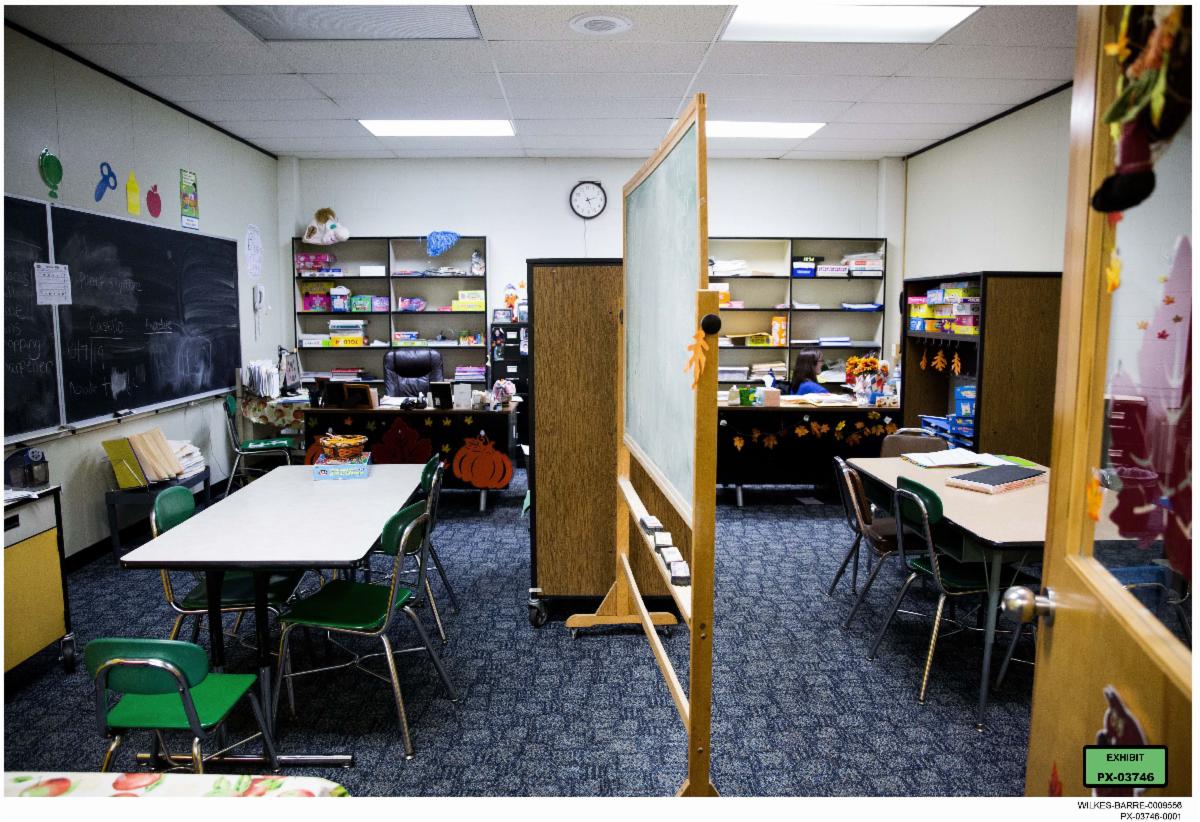
A classroom in Kistler Elementary in Wilkes-Barre divided with classroom furniture--a white board and a coat rack--so that two classes can be held at once. This photo was shown during trial testimony.
In an amicus brief filed May 16, Attorney General Josh Shapiro, the state’s top law enforcement officer, argues that the Pennsylvania State Constitution guarantees all students the right to receive a high quality public education, and that Pennsylvania’s current school funding system fails to meet that standard. Read the brief here.
“The Court’s decision may determine the future of public education in Pennsylvania, and consequently, the strength of our economy, government, and community for generations to come,” the brief reads. “The Court should find that the Education Clause requires the General Assembly to provide all Pennsylvania children with a comprehensive, effective, and contemporary public education and rule in favor of Petitioners.”
“This is a big deal. The people of the Commonwealth know that Pennsylvania students deserve better, and that our State Constitution demands it,” said Law Center staff attorney Dan Urevick-Ackelsberg. “The Attorney General has made clear that our state legislature has failed to live up to this standard set by our state Constitution, and that students have paid the price.” The Philadelphia Inquirer covered the filing.
Five other amicus briefs were filed in support of our case, from constitutional law professors, child advocacy organizations, teacher unions, and business and civic leaders. Read more about these amicus briefs here.
Amicus briefs will be followed by post-trial briefing on legal issues from both parties, with the final brief due July 15, 2022. Commonwealth Court will hold oral argument on the legal issues on July 26, 2022, at 9:30 a.m. in Courtroom 3001 of the Pennsylvania Judicial Center in Harrisburg. The court’s decision could come several months after the July 26 oral argument.
|
|
We vow to appeal court decision upholding PA preemption of local gun regulations |
|
In a 3-2 decision released May 27, the Commonwealth Court of Pennsylvania dismissed our case taking on Pennsylvania's Firearm Preemption Laws. These laws block municipalities from enacting most local gun safety regulations, and we believe that this violates the Pennsylvania State Constitution’s fundamental right to life and liberty for residents of communities like Philadelphia that face high rates of gun violence. We, along with the City of Philadelphia, filed the case in October 2020. We represent residents of Philadelphia and Allegheny County who have lost family members to gun violence and CeaseFirePA with co-counsel from the City of Philadelphia law department and Hogan Lovells US LLP.
We plan to appeal to the Pennsylvania Supreme Court.
“Our clients and hundreds of thousands of Philadelphians face the escalating threat of gun violence every day,” said Law Center legal director Mimi McKenzie. “And every day, community organizations, churches, and families are making herculean efforts to stem the tide in the neighborhoods hit hardest by gun violence: working class and poor Black and Latino communities that have faced disinvestment for decades. It is shameful for our state legislature to handcuff local lawmakers, preventing them from even enacting gun safety laws their residents are demanding with a unified voice. Firearm preemption must end in Pennsylvania. We will appeal.”
|
|
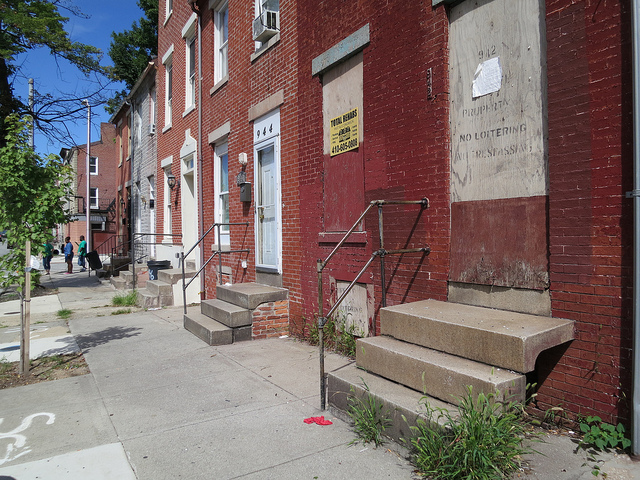
A safer Philadelphia: Our testimony at the Dept. of Licenses & Inspections budget hearing |
|
"I have been in houses that are ready to collapse," RUP member Todd Abney said. "It brings tears to my eyes because people are paying rent and landlords are doing absolutely nothing. It’s time for the city to step in to increase inspectors for proactive inspections, but without displacing renters."
|
|
What we proved in court: We make the case for full and fair public school funding in sweeping post-trial filing |
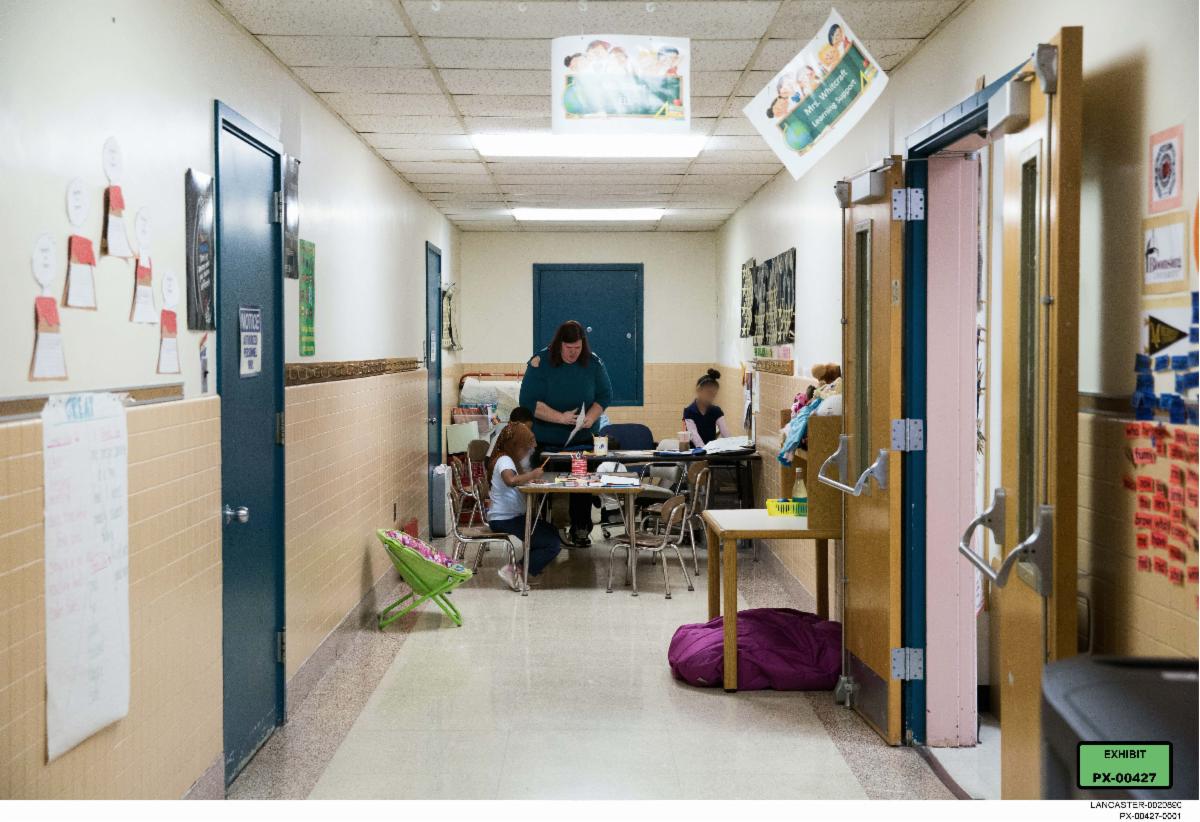
Students learn in a converted hallway classroom in a School District of Lancaster elementary school. This photo was shown during testimony in the school funding trial.
In a 540 page post-trial submission filed May 2, school districts, parents and statewide organizations who brought the case challenging Pennsylvania’s school funding system detailed the evidence they provided during the four-month trial, and what conclusions they believe Commonwealth Court should reach in the historic case.
"Rather than live up to the constitutional mandate of a single high-quality system, the General Assembly has created two systems. One for those who can afford it, and one for those who cannot," the submission reads. "As was proven from the first witness to the last, with a raft of evidence that is barely in dispute: the Constitution demands more."
|
|
Law Center in the News: Voting by mail is more than a convenience for many voters, like our clients. |
|
Hundreds of thousands of Pennsylvanians voted by mail in the May 17 primary election. For many voters, like our clients, voting by mail is more than a convenience--it can make the difference between being able to vote or not.
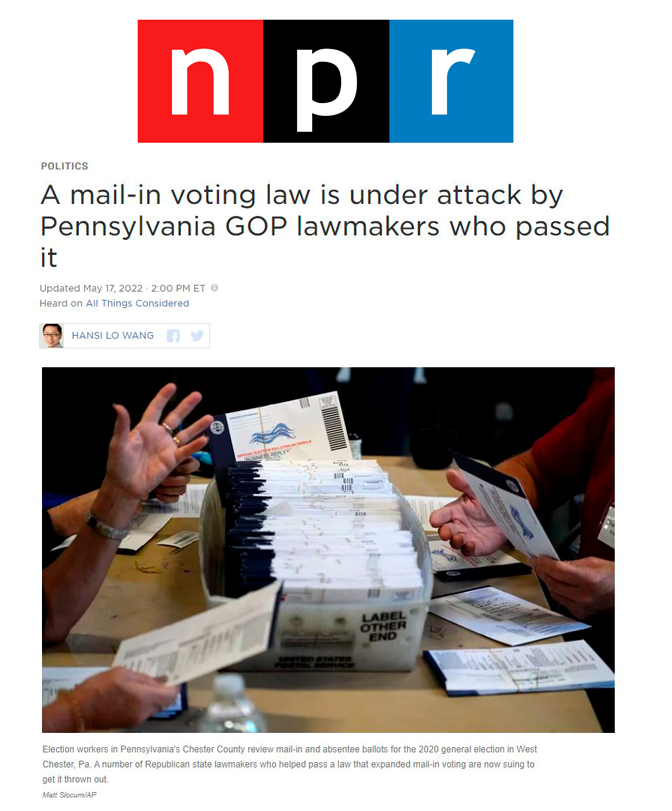
NPR's "All Things Considered" reported on a lawsuit from Republican state representatives seeking to overturn Pennsylvania's Act 77, a 2019 law, passed with bipartisan support, that allows voters to chose to vote by mail without requiring an excuse. In an amicus brief filed with the ACLU-PA, we are representing a group of voters who would face difficulty casting their ballot if Act 77 is overturned: voters in pre-trial detention, voters with disabilities, and more.
"As a nurse at Children's Hospital of Philadelphia's Newborn/Infant Intensive Care Unit, [our client Molly] Mahon often has to work 12-hour shifts on election days. The mail-in ballots she's been able to receive through Act 77, she says, have been 'game-changing,'" reporter Hansi Lo Wang wrote.
"It took the stress out of me having to schedule myself around Election Day and just ensured that I could vote," says Mahon, who remembers once rushing back to her neighborhood after work in an Uber only to find election workers closing down the local polling place." Read or listen to the report here.
|
|
Thank you to our departing board members! |
Clockwise from top left: Tom Chapin, Lisa Clark, Shannon McClure, Brian Feeney.
All of us at the Law Center would like to recognize and thank the members of our board of directors who completed their terms at our annual meeting on May 25. Clockwise from top left: Tom Chapin (board treasurer, 2018-2022), Mill Creek Capital Advisors; Lisa Clark, Haas Associates; Shannon McClure, Reed Smith; and Brian Feeney (board chair, 2015-17), Greenberg Traurig. Each of them has been indispensable to the work of the Law Center, and they made our organization better. Thank you all, and best wishes! Help us appreciate them by liking their post on LinkedIn.
|
|
Welcome Kaitlyn Maxwell to our Board of Directors! |
We would like to welcome Kaitlyn Maxwell to our board of directors! Kaitlyn was elected at our May 25 annual meeting. She is a shareholder at Greenberg Traurig, specializing in environmental litigation, and serves as the vice chair of the Philadelphia Bar Association's Environmental and Energy Law Committee. Congratulations, and welcome Kaitlyn! |
|
|
|
|
|
|