Visit Wise Pool & Spa at 8341 Old Leonardtown RD in Hughesville today!

Think Your Pool Is Leaking?

Check Out These Helpful Tips!

The Importance of Correct Operational Pool Water Level


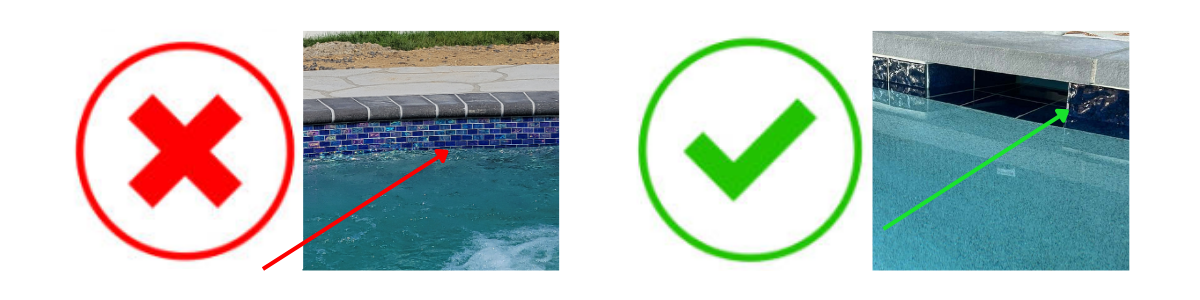
It is important to keep your pool water at the correct level. Correct operational pool water level is to the middle of the skimmer/tile line.


If the pool water is too high, the water cannot circulate properly inside of the skimmer and it will not be able to draw in floating debris such as leaves and bugs for collection in the skimmer basket and easy removal. Decaying plant and animal material left in the pool for extended periods of time can cause negative effects to pool water balance, as they emit ammonia, nitrate, and phosphate, which can cause inefficient chlorine, resulting in an unhealthy swimming environment.


If the pool water is too low, the skimmer can draw in too much air, which can damage the pump motor.

Waterline

Pool Leak or Evaporation?


Evaporation of swimming pool water is most frequently seen in our region on fall nights, when the pool water temperature is higher than the air temperature. Other sources of evaporation can include humidity levels, wind, sunlight, etc. Pools without heaters or water features can experience water loss of approximately 1/4" per day, potentially more for those that do.


To help determine a pool leak or evaporation, you can perform a visual inspection, the Mini Bucket Test, and the 24 hour on/off test. During a visual inspection, look around the pool and the equipment pad for wet ground, puddles in the yard, and leaking pipes, valves, unions, etc. If no leak is found, perform a bucket test. The Mini Bucket Test is available in-store now. It helps you compare water levels inside and outside of the tester, indicating evaporation or a leak. If a leak is indicated, perform the 24 hour on/off test which helps professionals determine if the leak is on the suction or return side of the plumbing system. During stable weather conditions, fill the pool to the correct operational pool water level. Mark this level with tape. Run the pool for 24 hours and record the amount of measured water loss. Fill the pool to the correct operational pool water level again. Mark this level with tape. Turn the pool off for 24 hours and record the amount of measured water loss. Maintain the correct operational pool water level and resume normal filtering cycles at all times after your tests are complete.


If you still believe your pool is leaking, please contact our Service Department at 301-932-4547 or by email to discuss your findings and options. Remember to maintain correct operational water level at all times and it is best to run your pool 24/7 during swim season for best performance.

Mini Bucket Test

Think You Have A Hole In Your Vinyl Liner?


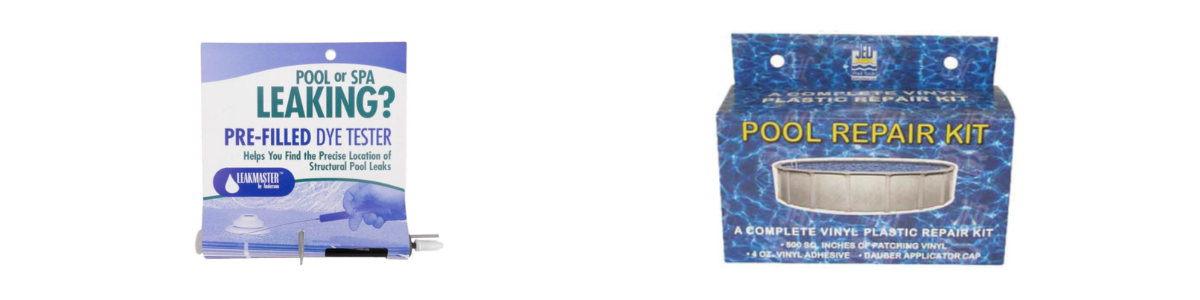
A dye tester and vinyl pool repair kit can help! Available in-store now!


Search out the hole with a convenient syringe style dye tester. The dye tester is pre-filled with a special concentrated dye that holds together underwater. A six inch plastic "needle" allows for precise dye placement without creating unwanted currents as you search for holes.


Once you have found the hole, use a specialized vinyl pool repair kit to patch it. The kit contains 500 sq. in. of vinyl patch, 4 oz. vinyl adhesive, and dauber applicator cap. Can be used underwater - no need to drain pool water. Remember to cut patches with rounded corners.


Need help? Please contact our Service Department at 301-932-4547 or by email to discuss your findings and options.

Dye Tester and Vinyl Repair Kit

Leak At The Heater Or Condensation? And Ice Over.


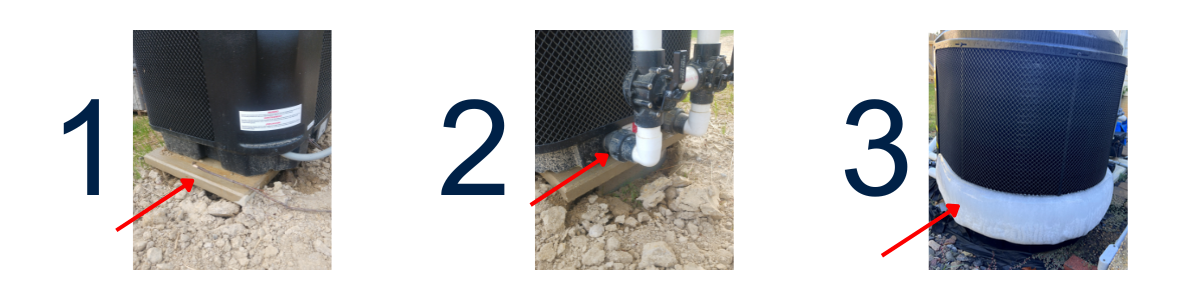
Heat pump style swimming pool heaters condensate. The amount of condensation depends on weather conditions. More humidity equals more condensation. These heaters can condensate 3 to 10 gallons PER HOUR. It is important to keep the drain holes in the base of the heater free of debris so the condensation can escape the heater housing. It is also a good idea to keep the area around the base of the heater free of debris and use ground material that promotes good drainage. Condensation of these heaters is frequently mistaken for a leak. Condensation is not pool water. See picture 1 below.


If a heat pump style swimming pool heater has a leak, it is most likely the unions at the in/out ports near the base of the heater. Sometimes after your pool is opened they need to be tightened again. See picture 2 below.


Ice over can happen on older model heat pump style swimming pool heaters that do not feature heat reversing technology. See picture 3. Ice over occurs when the temperature in the heat pump heat exchanger is 18 degrees colder than the outside air temperature. When the outside air temperature drops below 50 degrees, the condensate starts freezing. This is normal and not a malfunction. If this occurs, turn the heater off until the ice thaws and the outside air temperature is above 50 degrees. Then, you may turn the heater back on. Outside air temperatures in the low 50s does not have enough heat in the atmosphere to transfer efficiently, so you may want to consider only turning the heater on during the day for better efficiency and to prevent ice over.


Some newer model heat pump style swimming pool heaters feature heat reversing technology which activates when internal sensors detect ice formation that can form on the outside coil while transferring heat into your pool. The heater will automatically redirect the heat to melt the ice — allowing it to seamlessly continue heating your pool water.


If you still believe your heater is leaking or you have an issue relating to ice over, please contact our Service Department at 301-932-4547 or by email to discuss your findings and options.

Heaters Group
 
[Caption]
Facebook  Pinterest  Youtube  
[Caption]