A five-minute summary of AAI, regulation, and industry activities for members of the largest state agribusiness association in the nation. | |
AAI Encourages Ag Retailer Cooperation With INREC Survey | |
The Iowa Nutrient Research & Education Council (INREC) is finishing its seventh year of surveys for measuring progress for the Iowa Nutrient Reduction Strategy. The survey is a collaboration with ag retailers and Iowa State University and utilizes a first-of-its-kind approach to using ag retailer records to track progress made by Iowa farmers with the adoption of in-field conservation practices such as cover crops, nutrient management, and reduced tillage.
Four INREC survey liaisons are traveling across the state to visit 150 randomly selected ag retail locations to conduct the survey. Ag retailer cooperation is critical to ensure a statistically significant number of surveys are completed. The survey visits are short - usually about 30 minutes - which should be manageable even with the busy schedules of ag retail staff and unseasonably warmer weather. Please return any phone calls from the INREC survey liaisons!
“INREC greatly appreciates the cooperation of ag retailers to spend time with our survey liaisons to conduct the survey and ensure statistical targets are met,” said Roger Zylstra, farmer and chair of the INREC board of directors.
Curious about results from past surveys? Visit the INREC website:
INREC Survey Results
| |
Register By March 18 For Upcoming Certified Crop Adviser Testing Window | |
The Iowa Certified Crop Adviser (CCA) board would like to provide reminders of the testing timeframes for taking the CCA exams. In recent years, the CCA testing has changed from in-person testing to online window testing to on-demand testing. In the last year, the national CCA board has determined on-demand testing was not the best method for the CCA exam. As a result, it has moved back to online window testing.
The exam is offered three times per year, and it can be taken at any scheduled time in a two-week window. There is a registration period before each window to schedule the test. The deadline for registration of the next testing period of 2024 is March 18. The exam can be scheduled to be taken any time between March 27 and April 8.
The registration can be completed on the national CCA website:
https://www.certifiedcropadviser.org/exams
The Iowa CCA exam and the exam's performance objectives recently have been updated. The board recommends reviewing the updated performance objectives at:
Iowa Performance Objectives PDF Download
Updates to other study materials are being reviewed at this time. Links and recommendations for other methods to study for the exam will be coming through future reminders. If you or one of your agronomy employees have any questions about studying for or registering for the CCA testing, feel free to contact the Exam Committee Chair, Cody Ostendorf at cody.ostendorf@plantpioneer.com.
| |
Grain Inspection Advisory Committee Seeking Applicants | |
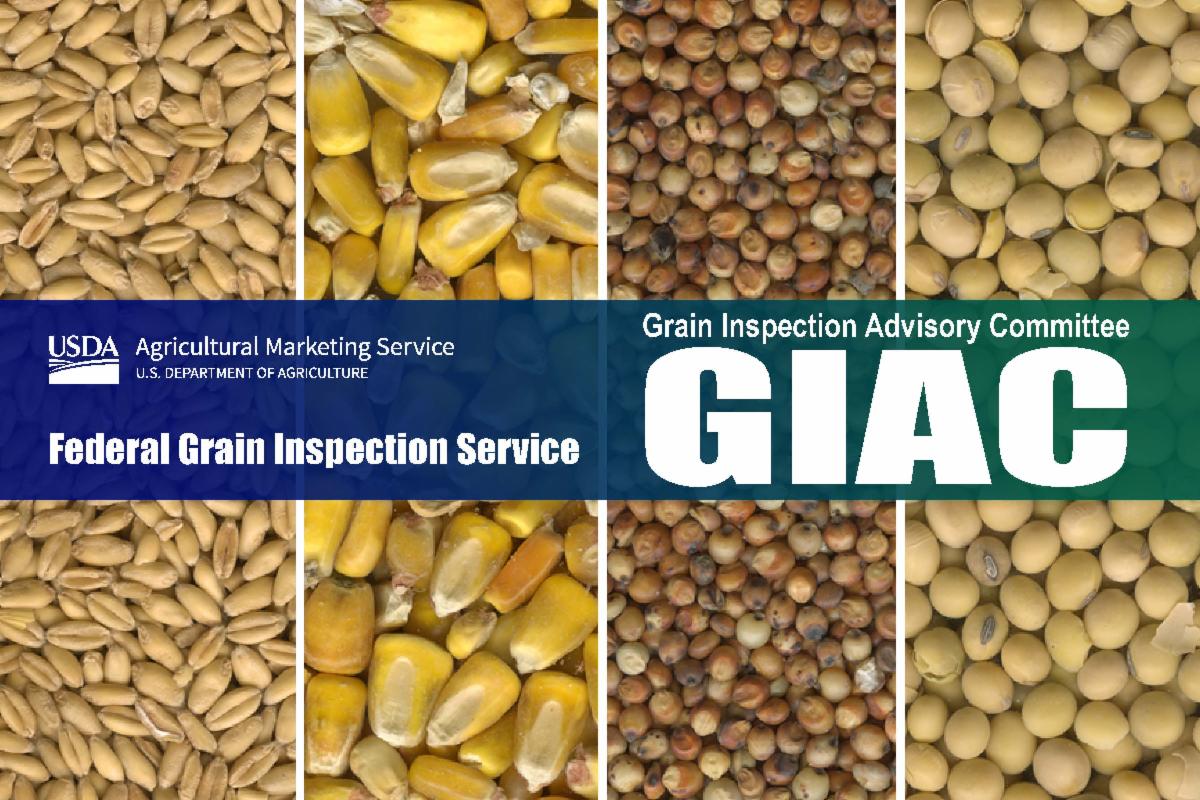
The Grain Inspection Advisory Committee (GIAC) represents all segments of the grain industry such as grain producers, processors, merchandisers, handlers, exporters, consumers, grain inspection agencies, and scientists. The GIAC provides recommendations to the U.S. Department of Agriculture on programs and services provided under the U.S. Grain Standards Act. The GIAC meets twice a year and travel costs are reimbursed. Recent recommendations involve soybeans of other colors, fumigation policy, inspection technology, and inspection lab scales.
More information can be found on the GIAC’s website. If interested in applying for the GIAC please contact Kendra.C.Kline@usda.gov.
| |
|
Pig Farmer Batch & Build farmer meeting
Rockwell City
Attended By:
Ben Gleason, INREC executive director
Member Visit - Mid Iowa Cooperative
Visit By: Heath DeYoung, Membership Director
Member Visit - Innovative Ag Services
Visit By: Heath DeYoung, Membership Director
| |
|
March 18
Showcase Committee Meeting
1:00 PM | Northey Building Board Room
April 4
AAI Board of Directors Meeting
10:00 AM | Northey Building Board Room
July 25
AAI Golf Outing - Okoboji
Emerald Hills Golf Club
August 15
AAI Golf Outing - Amana
Amana Colonies Golf Club
September Golf Outing On The Way - Stay Tuned!
| |
4-H Survey of Ag Industry Workforce Needs | |
For more than 100 years, 4-H has been helping youth to be prepared members of the workforce. To continue that effort, Iowa 4-H is excited to be a part of a multi-state, multi-year grant through USDA-NIFA to build awareness of the full range of career pathways in the food and agriculture sector. You can help by completing this anonymous, 10-minute survey on job recruitment practices, retention, and training needs in your industry.
Click link below to participate in the survey:
Iowa Food, Agriculture, & Related Businesses Workforce Needs Survey
Please complete this survey by March 31. The employer survey is important and will help us better understand the agricultural workforce needs. Information gathered from the survey will enhance 4-H Youth Development initiatives to promote agricultural careers, and help 4-H programs better prepare youth to be successful in the agricultural industry. For questions or to stay informed about the study results, contact Cayla Taylor at cayla@iastate.edu.
| |
FMCSA Safety Advisory For Certain American Welding and Tank Nurse Tanks | |
The Federal Motor Carrier Safety Administration (FMCSA) and the Pipeline and Hazardous Materials Safety Administration (PHMSA) issued a safety advisory to provide notice of the possibility of catastrophic failure of certain nurse tanks.
RECOMMENDATION SUMMARY
It is strongly advised that owners of American Welding and Tank (AWT) nurse tanks manufactured between January 1, 2007, and December 31, 2011 that are exempted from periodic inspection and testing requirements conduct voluntary periodic visual inspection in accordance with 49 CFR §173.315(m)(2)(i); thickness testing in accordance with 49 CFR §173.315(m)(2)(ii), and pressure testing in accordance with 49 CFR §173.315(m)(2)(iii). Note these dates reflect the years of manufacture that failed testing.
View the full advisory with links to relevant code and additional resources below:
FMCSA Nurse Tank Safety Advisory
| |
|
Most people can agree that the 2023-24 winter has been warmer than most. It was predicted that this winter would be warmer due to El Niño, which is a periodic warming of parts of the Pacific Ocean. This changes weather patterns and increases temperatures globally. So far, much of the country (and especially the upper Midwest) has experienced one of the warmest winters on record. This also means low ice coverage on lakes and low snow totals across the country.
This warmer winter might be nice to experience in the moment, but it also has a big impact on agriculture.
Here are some of the ways warmer winter can affect agriculture.
Warmer weather can bring out insects earlier. In Minnesota, deer ticks have already made their presence known. Deer ticks are the tick species that carries Lyme disease and many other illnesses. Lyme disease is most likely to affect people and animals who are outside more often, which tends to include agricultural workers. Other insects that have a more direct impact on crops and livestock are also more likely to make an early appearance when the weather is warmer. Some insects and parasites could also survive more easily over winters. This could also mean an increase in the use of pesticides and parasiticides for crops and livestock.
Plants also enter dormancy in winter due to both day length and temperature. Plants can experience cold damage if temperatures are too warm and they start to de-acclimate from dormancy too early. This isn’t a problem for most crop farmers, but a warmer winter could cause major trouble for those who have fruit trees and vineyards. If a plant or tree already has buds and there is a late-spring freeze, there can be major impacts on fruit crops. For example, temperatures of 28 degrees Fahrenheit will result in about a 10 percent flower loss and 24 Fahrenheit will result in a 90 percent flower loss.
[...] Read Full Story
| |
|
Bunge and Chevron announced this week the approval of a final investment decision for their joint venture Bunge Chevron Ag Renewables LLC to build a new oilseed processing plant adjacent to its existing processing facility located on the Gulf Coast in Destrehan, Louisiana. The announcement was celebrated with a groundbreaking event at the site.
The plant features a flexible design, intended to allow it to process soybeans as well as softseeds, including novel winter oilseed crops, such as winter canola and CoverCress, among others. Expected to be operational in 2026, the processing facility aims to add scale and efficiencies to Bunge Chevron Ag Renewables, that will allow the company to better meet the increased market demand for renewable fuel feedstocks. The plant is also intended to support the growing feed and protein markets through the production of meal products.
“This new facility is another step in our long-term strategy to improve our capabilities at scale for the renewable fuels market and to reduce the carbon intensity of our own and our customers' value chains,” said Luciano Salvatierra, Bunge’s senior vice-president of renewable fuels.
The expansion is expected to create more than 150 construction jobs and add 30 new jobs when the plant is operational.
[...] Read Full Story
| |
Source: Visual Capitalist
|  | |
Over the last 50 years, the world’s human population worldwide has grown exponentially.
And this population explosion brought greater food production needs with it, through livestock breeding, cropland expansion, and other increases in land use.
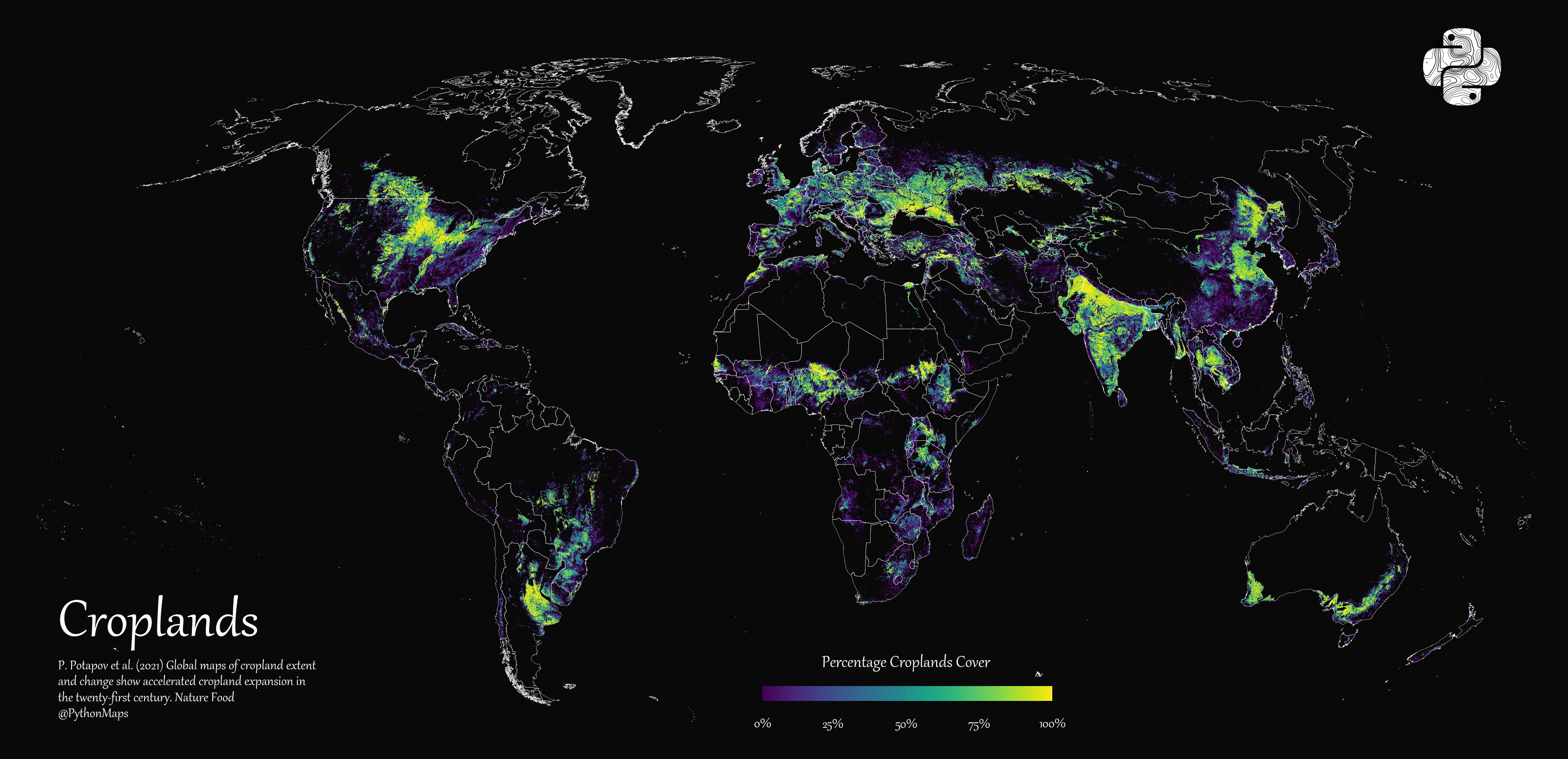
But how evenly is this land distributed globally? In this graphic, Adam Symington maps global croplands as of 2019, based on a 2021 scientific paper published in Nature by Peter Potapov et al.
Croplands are defined as land areas used to cultivate herbaceous crops for human consumption, forage, and biofuel. At the start of the 21st century, the world’s croplands spread across 1,142 million hectares (Mha) of land.
Some of these croplands have since been abandoned, lost in natural disasters, or repurposed for housing, irrigation, and other infrastructural needs.
Despite this, the creation of new croplands increased overall cropland cover by around 9% and the net primary (crop) production by 25%.
Africa and South America Lead Croplands Expansion
In 2019, croplands occupied 1,244 Mha of land worldwide, with the largest regions being Europe and North Asia and Southwest Asia at around 20% of total cover each.
[...] Read Full Story
| |
|
USDA’s latest set of grain export sales data, out Thursday morning and covering the week through February 29, held mixed but mostly positive data for traders to digest. Corn again led the way in total volume but was near the middle of analyst estimates. Soybeans jumped above the entire set of trade guesses, meantime, while wheat posted mostly lackluster results.
Corn exports reached 43.7 million bushels last week, which was 3% higher than the prior week’s results and very close to the prior four-week average. It was also a bit toward the lower end of analyst estimates, which ranged between 31.5 million and 59.1 million bushels. Cumulative sales for the 2023/24 marketing year are still moderately higher than last year’s pace so far after reaching 840.8 million bushels.
Corn export shipments improved 18% versus the prior four-week average, with 45.6 million bushels. Mexico, Japan, Colombia, Honduras and Panama were the top five destinations.
Sorghum export sales tilted 38% below the prior four-week average, with 3.1 million bushels. That was due to increases to China being partially offset by reductions to unknown destinations. Cumulative totals for the 2023/24 marketing year are still substantially above last year’s pace so far, with 137.6 million bushels.
Soybean export sales reached 25.0 million bushels last week, which was noticeably higher than the prior four-week average. It also bested the entire set of trade guesses, which ranged between 6.4 million and 23.9 million bushels. Cumulative sales for the 2023/24 marketing year are still tracking moderately below last year’s pace so far, with 1.246 billion bushels.
[...] Read Full Story
| |
NOTE: If you unsubscribe below you will no longer receive ANY emails from AAI, including important member specific information and notices. To unsubscribe from just this type of email (i.e. newsletter or event marketing), select Update Profile below. | | | | |