August 2025

What is CAD and why does it matter?


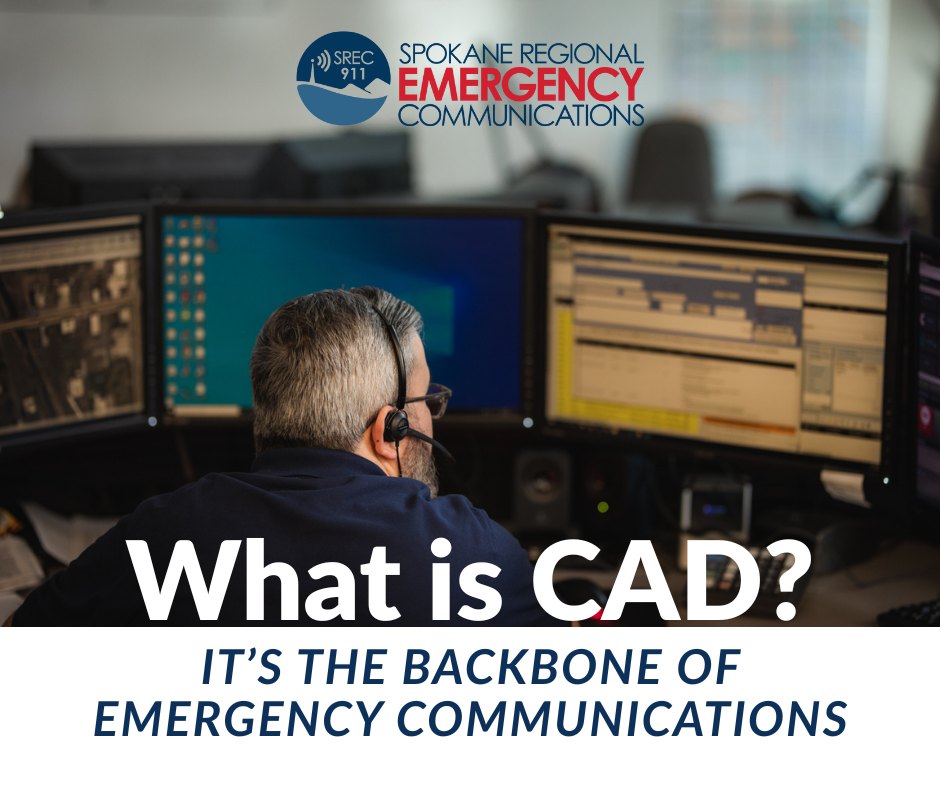
When you call 911, your emergency doesn’t just stay on the phone line—your information is entered into CAD (Computer Aided Dispatch), a critical tool that links call takers, dispatchers, and first responders in real time.


CAD allows dispatchers to see your call details instantly and begin sending help even while you’re still speaking with 911. That same information goes directly to the computers in responder vehicles, giving law enforcement, firefighters, and EMS teams the details they need to act quickly and effectively.


A First for Spokane County

For the first time in Spokane County history, all SREC law enforcement and fire agencies will be on a single CAD platform, thanks to the upcoming launch of our new Hexagon CAD system. This state-of-the-art platform was selected by a SREC-led collaborative team of law enforcement and fire professionals.


Why It Matters

This is more than a technology upgrade—it’s a leap forward in public safety:

  • Improved interoperability between all SREC member agencies
  • Reduced risk of system failure by eliminating outdated integrations
  • Real-time coordination across multiple disciplines
  • Better, faster service for our community


Looking Ahead

Our teams are working diligently toward a March 2026 go-live. Between now and then, we’ll be focused on extensive training, system testing, and close collaboration with our agency partners to ensure a smooth and seamless rollout.


This major investment is part of our 2021–2026 Strategic Plan, reflecting our ongoing commitment to public safety, innovation, and community trust.

Abandoned 911 Calls--Why Staying on the Line Matters

In July, our 911 center received 3,208 abandoned calls—that’s when someone dials 911 but hangs up before speaking to a Communications Officer. We call each one back to make sure the caller is safe.


Every callback takes 60–90 seconds, adding up to as much as 4,812 minutes—about 80 hours—per month. That’s time our Communications Officers could be answering other emergency calls.


If you hang up, it not only delays help for you—it can also delay responses for others. If you call 911 by accident, please stay on the line and tell us. It’s the quickest way to confirm you’re safe and keep lines open for true emergencies.


Bottom line:


✅ In an emergency DON'T HANG UP: Stay on the line until we answer.


✅ If you misdial: Don’t hang up—just let us know it was accidental.


Together, we can make sure help reaches those who need it—fast.

Teaching Kids About 911 with Loci: The Helping Yeti

Parents and caregivers play a vital role in preparing children for emergencies. One of the most important lessons you can share is how—and when—to call 911. Even young kids can be lifesavers with a little practice, and our friendly yeti, Loci, is here to help.


In the children’s story Loci: the Helping Yeti, families can explore together how to:


  1. Share your location — Kids learn why it’s important to know their home address and how to tell 911 where they are.
  2. Stay on the line — Even if they dial by accident, staying on the call ensures help can be sent if it’s needed.
  3. Recognize real emergencies — Understanding when to call 911 helps prevent accidental or unnecessary calls.


These simple lessons take only minutes to practice but can make all the difference in an emergency.


On our Kids & 911 page, you’ll find the full story of Loci: the Helping Yeti along with practical tips to guide conversations at home. You can also watch the inspiring KREM 2 News story about 8-year-old Jackson from Spokane Valley, who saved his mom’s life because he knew how to call 911 and share his address.


📌 Take a few minutes today to make sure your child is 911-ready—it’s a small step that could save a life.

Spotlight on Raegan Hays: Leading with Knowledge and Compassion

With over 11 years in emergency communications, Raegan Hays has become a cornerstone of SREC’s training program. As a Certified Training Officer, she is known for her dedication, operational excellence, and the rare ability to mentor with both empathy and precision. Her approach blends hands-on instruction with real-world scenarios, giving trainees the skills and confidence to navigate the high-pressure world of 911 call-taking.

Raegan’s impact reaches far beyond SREC. She plays an active role in statewide and national training, providing specialized instruction on domestic violence response and autism awareness at the 911 Academy and through state conference sessions. Her expertise in autism awareness is deeply personal—Raegan is the parent of two children with autism, a perspective that enriches her teaching with authenticity, compassion, and a practical understanding of how to best serve all members of the community.


In recognition of her exceptional work, Raegan was named the 2024 Trainer of the Year by the Washington State Chapter of APCO / NENA, an emergency communications advocacy and resource group. Her achievements have also been highlighted nationally in the International APCO Magazine Public Safety Communications.


📖 Read more about this important issue on our website.


📰 Read the full APCO feature article about Raegan.


Through her work, Raegan is not only shaping skilled and resilient 911 professionals—she’s fostering a culture of understanding and inclusivity that strengthens emergency response for everyone.