Rail Workers Weekly News Digest
Number 40 - December 24th, 2019
|
|
Below is a series of articles compiled over the previous week.
They are of interest to railroad workers.
_____________________________________________
|
|
Article 1
FRA Launches Webpage to Report Blocked Crossings
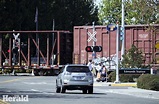
The Federal Railroad Administration (FRA) has launched a new webpage for the public and law enforcement to report blocked highway-rail grade crossings
(
Editor's Note
:
RWU is issuing this announcement as an Alert to our members and supporters. Please report blocked crossing as they occur. More importantly, forward this email to your local city council, police and fire departments, citizen's groups and others to make them aware of this venue to document these events, which are becoming more and more frequent due to longer and longer trains and the railroads' disregard for community and public safety.)
The new FRA Blocked Crossing webpage -
www.fra.dot.gov/blockedcrossings -
requests specific information from users reporting blocked crossings - including date, time, location and duration. The agency expects it will take an average of three minutes for users to complete the report. FRA notes that this should only be done in a manner that is consistent with the safe operation of a vehicle.
FRA will use the information collected to gain a more complete picture of where, when and for how long such obstructions occur at the nation’s approximately 130,000 public grade crossings, and what impacts result from this. FRA will share the information with stakeholders, using it to help facilitate local solutions to blocked crossing issues.
Blocked crossings occur when stopped trains impede the flow of motor vehicle or pedestrian traffic at railroad tracks for extended periods of time. Communities have long dealt with the issue of blocked crossings, and FRA is now seeking broad public input to better understand the scope of the problem and engage with affected parties to identify potential solutions.
Blocked crossings pose potential safety risks, specifically in locations where trains routinely hinder roadway and pedestrian movement for extended periods. Frustrated drivers may attempt to clear the crossing before a train arrives. Likewise, pedestrians may be tempted to crawl between stopped railcars. Further, blocked crossings make people late for work, school and appointments, and contribute to roadway congestion....
|
|
Article 2 - PASSENGER RAIL
CSX, Virginia reach $3.7 Billion deal to expand passenger-rail service
CSX Corp.
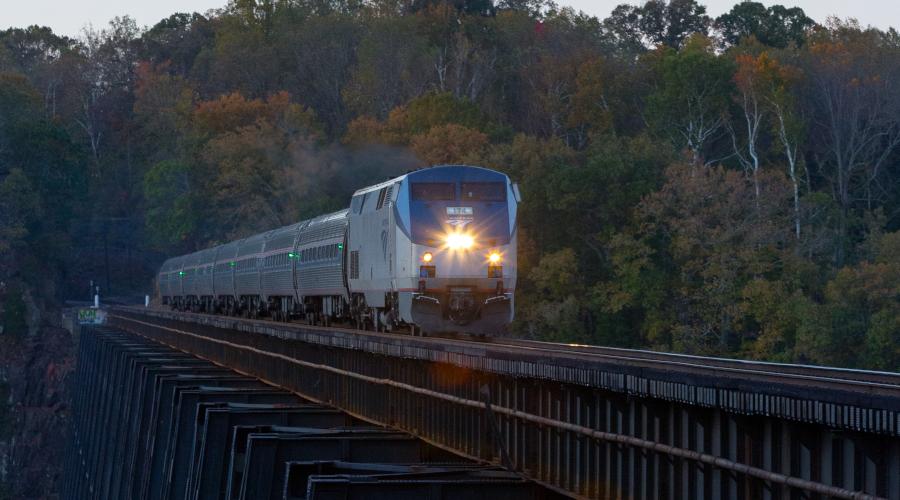
and Virginia officials have reached a 10-year, $3.7 billion agreement that calls for expansion of passenger-rail service, construction of a new bridge over the Potomac River and the acquisition of more than 350 miles of railroad right-of-way and 225 miles of track.
The agreement aims to expand reliability and service on Virginia's rail lines, creating a pathway to separate passenger and freight operations between Richmond, Virginia, and Washington, D.C., Virginia officials said yesterday in a press release issued by Gov. Ralph Northam's office.
"We have a once-in-a-generation opportunity to make our rail system work better for everyone, both in Virginia and along the entire East Coast," Northam said. "This agreement will change the future of transportation in Virginia, improving our ability to move people and goods across the state, and opening up potential rail service in underserved parts of the commonwealth."
The agreement with CSX outlines a $3.7 billion investment that includes building a new Long Bridge across the Potomac, with tracks dedicated exclusively to passenger and commuter rail; the acquisition of the rail right-of-way and track; and 37 miles of new track improvements, including a Franconia-Springfield bypass..
|
|
Article 3
CN moving traffic controller jobs from Montreal to Edmonton, union says
Over the past several weeks,
CN
supervisors have been telling workers that the Class I has plans to move its rail traffic control center in Montreal to Edmonton, Teamsters Canada officials announced late last week.
More than 100 rail traffic controller positions in Montreal are at risk at the center, union officials said in a press release. CN already has begun transferring 20 positions to Edmonton, Alberta, they said. Nearly all rail traffic controllers in Canada are represented by Teamsters Canada Rail Conference (TCRC).
CN risks losing experienced workers since some employees may not be able to leave their communities, said TCRC President Lyndon Isaak. “CN will end up losing experienced staff and their knowledge of the rail network, which could lead to dangerous situations for railroaders, track maintenance crews and the general public," Isaak said.
Rail traffic coordinators coordinate train movements across a given territory and protect personnel working on the tracks. CN has three rail traffic control centers in Canada: one in Montreal, one in Edmonton, and one in Toronto, which the company is in the process of closing.
The Edmonton and Montreal centers control the majority of rail traffic in western and eastern Canada, respectively, union officials said.
|
|
Article 4 - RAIL SAFETY NEWS
FRA seeks to delay implementation of training for safety-related railroad workers
Washington — In response to a petition for rulemaking, the Federal Railroad Administration is seeking to
further delay
by 16 months the implementation dates of its proposed Training, Qualification, and Oversight for Safety-Related Railroad Employees regulation.
In November 2014, FRA published a final rule establishing minimum training standards for all categories and subcategories of safety-related railroad workers. The rule also required railroad carriers, contractors and subcontractors to submit training programs to FRA for approval. The rule was required by the Rail Safety Improvement Act of 2008.
In a
notice of proposed rulemaking
published in the Nov. 22 Federal Register, FRA is seeking an amendment to the proposal, extending the implementation deadlines for all contractors, as well as Class II and Class III railroads that are not intercity or commuter passenger railroads with 400,000 or more total annual employee work hours. Railroads would have to submit their training programs to FRA by May 1, 2021 – instead of Jan. 1 – under the proposed amendment.
In addition, FRA is proposing a deadline of Jan. 1, 2022, for designating a worker’s occupational category or subcategory (the current proposed deadline is Sept. 1, 2020), and the start of the first three-year refresher training cycle would be Dec. 31, 2025 (currently marked for Dec. 31, 2024).
In July, the American Short Line and Regional Railroad Association and the National Railroad Construction and Maintenance Association Inc. filed a petition seeking a two-year delay or for FRA to indefinitely suspend the implementation dates while the agency considers a previous petition filed by the two associations, but FRA did not grant the request.
|
|
Article 5 -
PSR NEWS
Rail Union Launches Survey on PSR
This February, BMWED Director of Safety Roy Morrison will have an in-person meeting with Federal Railroad Administration officials, including FRA Director Ron Batory, concerning the operating philosophy of “Precision Scheduled Railroading” and its effect on railroad workers.
This is a serious issue and we are appreciative to have the audience of the FRA. We endeavor to make this a productive meeting. In order to accomplish that, we value and need your input on PSR and its effect on your work.
Please consider filling out the
survey on PSR
listed below. We need a candid and earnest response so that we can tell Director Batory and the FRA officials exactly how PSR is shaping the railroad workplace. Anonymity is assured; no names are needed or collected.
With your help, we will personally take your voice to the head of the FRA. This is a chance to speak directly to the top railroad regulatory official. Please fill out our survey and assist us in this important opportunity.
|
|
Article 6 -
LNG BY RAIL
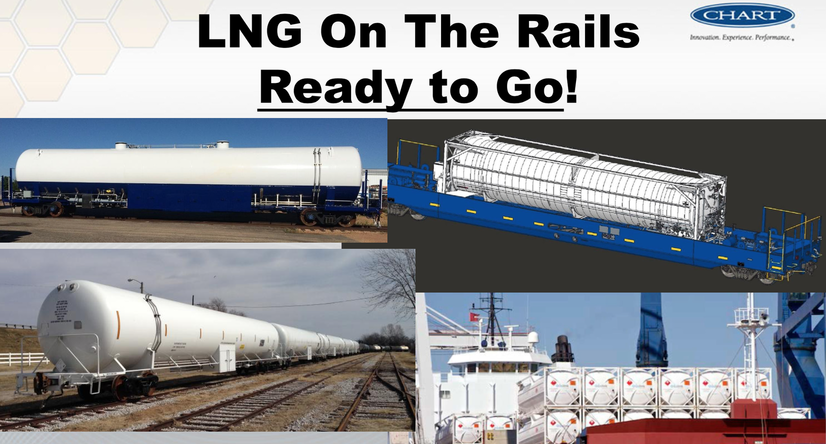
Liquefied natural gas can now ship to N.J. by train, despite explosion concerns
The Trump administration has approved the shipment of liquified natural gas from the fracking fields of Pennsylvania to a port on the Delaware River in South Jersey.
The decision is a boost for one company’s proposal to use a Gibbstown port for LNG exports, and a blow to Democratic lawmakers and environmental groups who have raised concerns about the safety of using a largely untested method of transporting the potentially volatile product.
The approval came in the form of
a special permit
issued last week by the Pipeline and Hazardous Materials Safety Administration to the Florida-based Energy Transport Solutions, LLC. Energy Transport Solutions is a subsidiary of New Fortress Energy,
according to a Yahoo report.
The permit only allows for LNG rail transportation between Wyalusing, Pennsylvania and Gibbstown in Gloucester County, with no intermediate stops. It is unclear what exact routes Energy Transport Solutions plans to use for moving LNG. The permit expires on November 30, 2021.
Opponents of using trains to move LNG fear that in an accident, like a derailment, the LNG tanker cars could rupture and explode. U.S. Rep. Tom Malinowski, D-N.J. 7th Dist., is one of multiple Democratic lawmakers who have raised concerns about allowing LNG to be shipped by train.
“The movement of LNG by rail tank car presents unique and substantial risks to public safety and the environment," Malinowski said in a statement last week. "This decision by the Department of Transportation to allow LNG to move in large volumes without adequate safeguards is irresponsible, and yet another example of the Administration putting corporate interests over the safety of the American public.”
EMPOWER NJ, a coalition of environmental groups opposed to the development of fossil fuel projects in the Garden State, called the PMHSA approval a “a reckless decision that endangers the lives and safety of millions of people in New Jersey and Pennsylvania.”
|
|
Article 7 - PASSENGER NEWS
NJ Transit trains are the nation’s worst again, feds say
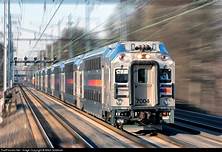
NJ Transit trains are the worst in the nation, racking up the most breakdowns of any transit system during 2018.
For commuters, the figures are bad news, and meant NJ Transit trains returned to the dismal ranking it had in 2015 as worst in the country based on
FTA National Transit Database information
. Those statistics are reported to the FTA annually by transit agencies.
NJ Transit was ranked first for 375 total mechanical failures in 2018, which meant the train could not complete or start a trip. Denver Regional Transportation District trains were a close second with 373 breakdowns. The “T” placed third with 273 and the Long Island Rail Road placed fourth with 168 breakdowns. The Southeastern Pennsylvania Transportation Authority placed fifth with 165 breakdowns, followed by Metro North with 116 trains that broke down.
This represents a decline for NJ Transit, which showed slight improvement in 2017 and 2016.
|
|
Article 8 - LABOR & ENVIRONMENT
Labor Network for Sustainability Newsletter #36
Transportation is a primary source of the greenhouse gases that are destroying our climate. And a transportation system designed to serve elites unjustly deprives a high proportion of us the ability to get where we want and need to go. Many local campaigns around the country are fighting for just transit systems that reduce climate pollution and at the same time reduce transportation injustice. They have proclaimed February 4—Rosa Parks’ birthday—as Transit Equity Day. And they have issued a statement of Transit Equity Day Principles to lay out their demands. Find out below how you can join them.
Many of us worry about climate change, but also worry that the Green New Deal and other programs for fighting climate change may threaten workers’ jobs. LNS’s new briefing paper for unions “No Worker Left Behind: Protecting Workers and Communities in the Green New Deal" lays out detailed—and actionable—proposals for making the “just transition” to a climate-safe economy real.
|
|
|
|
|
|
|