The Proactive Technologies Report newsletter is a free service of Proactive Technologies, Inc.
Important stories and information you might have missed
|
|
News from Worker Development, Industry, the Economy, Education, Science, and much more! |
|
Have a Great, Safe and Prosperous New Year!
From the Staff of Proactive Technologies, Inc.
|
|
|
Standardizing “Best Practices” |
by Dean Prigelmeier, President of Proactive Technologies, Inc.
When it comes to the term “best practices” for process-driven tasks, there seems a wide range of understanding of the concept; some better than others. According to Wikipedia, “A best practice is a method or technique that has consistently shown results superior to those achieved with other means, and that is used as a benchmark. In addition, a "best" practice can evolve to become better as improvements are discovered…Best practices are used to maintain quality as an alternative to mandatory legislated standards and can be based on self-assessment or benchmarking. Best practice is a feature of accredited management standards such as ISO 9000 and ISO 14001 - the framework for industry quality programs such as AS9000 and IATF16949. ISO 30414 broadened its focus on best practices with its “ Human Resource Management – Guidelines for Internal and External Human Capital Reporting” in an effort to secure an organization's sustainability with regard to worker technical expertise through establishing documented best practices.
This credible definition of the concept is representative of a consensus opinion that I have seen in the field at organizations who strive for high quality performance. However, how many individual interests derive their best practices, or what they display as their best practices, seems often to operate at the edge of the definition yet close enough to claim that best practices have been achieved. In truth, proclaiming a process as a best practice may be soothing to the locals, it may not have the same credibility with clients, potential clients or auditing agencies.
There are few steps that can help any organization achieve a best practice, which is related to the quality assurance notion of “repeatability.” Each systematic step is important to ensure credibility of use of the title. In addition, this approach helps to minimize the tendency to over-analyze a procedure and dwell on the least important aspects for benchmarks and metrics.
-
Define the Task or Procedure - In order to analyze a task/procedure, it must be targeted at the task level, which means: “A unit of work that has a beginning point, ending point and a series of steps in between, and when the steps are performed correctly and in the right order a desired outcome is achieved.” Without clarity of the target task, the process of defining each step of the task as a best practice component may be difficult and/or the sequence can become convoluted.
-
Determine Best Practice(s) – If the desired outcome is accurately known, it is easier to define the steps, or “inputs,” that lead to that outcome. Read More
|
Your “Resident Expert” May Not Be an Expert Trainer, But Easily Could Be |
by Stacey Lett, Director of Operations - Eastern U.S. - Proactive Technologies, Inc.
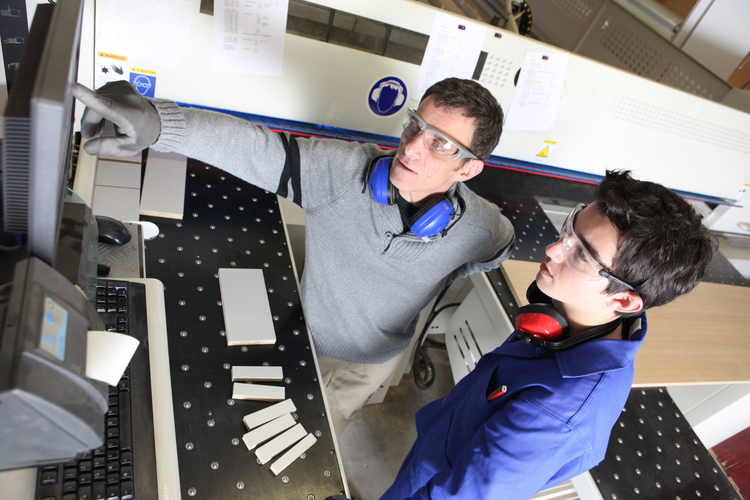
Just because a worker is informally recognized as a “star performer,” it doesn’t necessarily follow that they can be an effective trainer. Employers like to think it is as easy as that, but seldom does it turn out to be the case. However, with a little structure, some tools and a little guidance these resident experts can, and often do, become expert trainers.
If one thinks about how an expert is measured and recognized, it is usually by subjective, mostly anecdotal measures. The worker performs job-related tasks quickly, consistently and completely. This implies few mistakes, performance that is mostly within specifications and standards of performance, and no one can remember anything rejected or returned as scrap or rework.
Thinking it through a little further, one might struggle to explain how the expert performer developed these traits. Someone showed them how to perform a task, and repetitive performance developed new, retained skills. They are now operating as a “robot” while performing a task, seldom thinking about the subtleties and nuances of each task (filed in memory long ago), which makes them fast, consistent workers – something the employer can notice an appreciate.
But if we ask “who trained this expert,” “how was he or she trained,” or “what specifications and standards were emphasized,” we come up empty. By just playing the role of a trainee, and allowing one of these experts to train you on a task, will reveal a lot as to what the new-hire or cross-trainee can expect. If we compare this expert’s task performance to other peer experts, we probably will notice slight differences in performance between them, which means workers that each trained may be trained differently on the same task. Sometimes these differences can be subtle and of no consequence, sometimes they become a point of contention, lead to confusion and/or unsafe and incorrect task performance.
Every work environment is less than ideal for learning. Production pressures, personality clashes, learning style and teaching style differences, and departmental boundary incursions do not make it easy for a trainer to train or a trainee to learn without structure and guidance. If any of our experts train the next wave of new-hires or cross-trainees without structure, tools and standards – the building blocks of “best practice” performance – some of the expertise might not transfer and the differences between them become more obvious with each wave. This can often lead to frustrating confrontation between shifts, with one shift declaring the other two shifts as incompetent. Read More
|
Increasing Worker Capacity - An Alternative to Cutting Workers for Short-term Cost Savings |
by Stacey Lett, Director of Operations - Eastern U.S. - Proactive Technologies, Inc.
In business, if you encounter market "softness" and believe that the business level that you were previously operating at is now unsustainable - even if for a limited period - you might be tempted to first "cut labor costs" to extend short-term cash flow and/or make the balance sheet appear healthier in pressured by investors. It often becomes a slippery slope that can lead some organizations struggling to get off. Sometimes the pundits' forecasts were inaccurate or the recovery is swifter than anticipated. Regardless, what appear as a benign short-term solution can have long-term repercussions as the market recovers and the employer is now struggling to regain the capacity the workers afforded, while watching opportunity slip by.
Sometimes investments are made in machinery and technology during the lulls to get ready for the economic up-turn, but too rarely is any effort made to determine the level of each worker’s current capacity (i.e. what percent of the tasks they were hired to "expertly" perform) relative to the job they are currently in and what could be done to increase it to handle not only existing technology and processes, but the new technology and processes as well. One might even think about cross-training workers to build "reserve capacity."
Too often, in this age where every quarterly report has to be as good or better than the one before – actually earnings per share – even if the economy currently doesn’t allow it, well-run businesses are pressured to cut into the bone; driving down wages, cutting benefits and ultimately eliminating workers. Investment in worker training isn't permitted. It doesn’t take an accounting genius to make sweeping, ill-informed cuts, but it does take a pretty savvy leader to recognize and avoid this perilous track or, worse yet, pick up the pieces after these mistakes have been made. Read More
|
Enterprise Expansion/Contraction and Worker Development Standardization |
by Dean Prigelmeier, President of Proactive Technologies, Inc.
One challenge faced when expanding, contracting or acquiring an enterprise is adjusting the scale of the workforce development strategy(ies) that already exist(s) to the increase/decrease in the number of workers while maintaining a consistent ratio of output, quality yield, safe performance and process compliance. Contrary to an accountant’s perspective on staffing level adjustment, there should be serious consideration given to the range and depth of each worker’s acquired skills; an “inventory” of each employee prior to the official act of expanding or contracting. We take a physical inventory of product, equipment, parts, etc. to assess value, so why would we treat a human asset any different?
Obviously, an expansion strategy is different than a contraction strategy, but when it comes to determining the value of a worker it is similar for both strategies. How an organization addresses the development, measurement and maintenance of that value may differ widely. Let’s look at both scenarios.
For companies expanding, if a sound structured on-the-job training infrastructure is in place it is simply a matter of scaling. More work means more employees that have to be trained before adding value to the operation. Sometimes expansion includes a segway from straight-line scaling, such as new products and services requiring new equipment, which in turns requires new/improved core skills before structured, task-based on-the-job training can be implemented to build upon incumbent worker skill sets. A solid structured on-the-job training infrastructure can easily adapt to new work, new tasks, new technologies and new trainees.
For companies contracting, one would think this would just be scaling but in a negative direction. It usually ends up more complicated than that when work for three different areas are consolidated on top of the work performed by the workers in the fourth area. If left alone this will produce an obvious bottleneck to say the least. With consolidation of the jobs, and therefore the consolidation of the tasks required of workers in each, intuitively it would stand that recipients of these tasks should be trained on the best practice of these new processes and necessary compliance. Otherwise, contraction of an enterprise will continue as overall capacity dwindles and decreasing output results.
In a third scenario, when a company acquires another site or other sites, the acquiring enterprise usually brings in an expert who can unify HR and HRD strategies and already knows how to analyze what is needed. An effective expert will make sure inventories are taken at each site to formulate a strategy on how to consolidate differing systems and policies into one unified system - hopefully flexible enough to accommodate the uniqueness of each site. The process flow follows a logical track: Read More
|
|
IN THIS ISSUE:
Proactive Technologies, Inc. Worker Development News
Industry News
Financial News
International News
International Trade News
Education and Workforce Development News
Training and Organizational Development News
Quality News
Science
Cyber and IT News
Human Resources Management News
Environmental, Health & Safety News
|
Proactive Technologies, Inc.™ -
capturing worker expertise to build and support job specific, task-based worker development programs (with metric-based solutions) since 1986.
Experience the power of the
Develop all the expert workers you need in a fraction of the time, with a fraction of the investment! Increased worker capacity, work quality and quantity, and worker compliance (ISO9001:2015, AS9100D, IATF16949, engineering and quality specifications, and safety requirements)."
|
Sign-up for our free monthly newsletter
It's easy. Just click on the "Join Our Mailing List" button below. Scroll down to the "Sign-Up" section on the right.
Make sure you continue to receive news that matters to you, your industry and the world from many credible sources..
|
Proactive Technologies' Publications Archive
While at our website, check out past newsletters, articles and more. Helping employers to unlock worker value since 1986!
|
Free - Live Online Presentation Schedule
If interested in attending one of the presentations below, click on the title, then select a date/time and press "Send." An online presentation invitation and link will be sent to you. On the date and time of the event, just click on link in email invitation and it will connect you to the presentation. No special equipment required.
Click here for descriptions of all of the available presentations. Click on a specific title for that specific description and schedule or to schedule a date and time that works for you.
APPLIES TO ANY ORGANIZATION:
-
PTI Promo - (Recorded - Available Any Time): A Preview of an Upcoming Presentation (13 minutes)
FOR FORMER EMPLOYER CLIENTS:
FOR ANY EMPLOYER:
FOR EDUCATION, WORKFORCE AND ECONOMIC DEVELOPMENT ORGANIZATIONS
If you would like more information or would like to discuss these presentations or anything else, click on the "View Live Upcoming Presentations/Calendar" button below and fill in the "Contact Us" with your request including information specifying an alternative date/time you prefer and how many will be attending. An invitation and link will be sent to you.
|
Onsite and group presentations
are being scheduled for the following states, and a representative will be in your area, in the month of:
January, 2023
Proactive Technologies is currently scheduling stops in the following areas:
ARIZONA
COLORADO
ILLINOIS – Southern, I-80 Corridor
INDIANA
KANSAS – I-70 Corridor, Wichita
MISSOURI
NEVADA
NORTH CAROLINA
OHIO
WISCONSIN
ONLINE VIDEO PRESENTATIONS - If you are interested in attending one of our regularly scheduled videoconferences, select from the schedule above or visit our website and select a videoconference from the calendar. An email invitation will be sent to you confirming your selection. This videoconference will be to your computer and no other equipment is required. This can be followed by an onsite presentation, at your request.
If you would like more information or would like to schedule a custom briefing and presentation videoconference for you and your staff, click on the "contact us" link below.
Contact Us to express your interest in an onsite or group presentation.
|
|
U.S. Department of Commerce - Bureau of Economic Analysis |
Gross Domestic Product (Third Estimate), GDP by Industry and Corporate Profits (Revised), Third Quarter 2022
Real gross domestic product (GDP) increased at an annual rate of 3.2 percent in the third quarter of 2022, in contrast to a decrease of 0.6 percent in the second quarter. The increase in the third quarter primarily reflected increases in exports and consumer spending that were partly offset by a decrease in housing investment.
Profits decreased less than 0.1 percent in the third quarter after increasing 4.6 percent in the second quarter.
Private services-producing industries increased 4.9 percent, government increased 0.6 percent, and private goods-producing industries decreased 1.3 percent. Overall, 16 of 22 industry groups contributed to the third-quarter increase in real GDP. Read Report
Personal Income and Outlays, September, 2022
Personal income increased $80.1 billion, or 0.4 percent at a monthly rate, while consumer spending increased $19.8 billion, or 0.1 percent, in November. The increase in personal income primarily reflected increases in compensation and personal income receipts on assets. The personal saving rate (that is, personal saving as a percentage of disposable personal income) was 2.4 percent in November, compared with 2.2 percent in October. Read Report
|
|
|
U.S. Department of Commerce - Bureau of the Census |
Advanced Report on Durable Goods Manufacturers’ Shipments, Inventories, and Orders
New orders for manufactured durable goods in November, down following three consecutive monthly increases, decreased $5.8 billion or 2.1 percent to $270.6. November 2022: -2.1° % Change; October 2022 (r): +0.7° % Change. Read Report
Manufacturers’ Shipments, Inventories, and Orders
New orders for manufactured goods in October, up twelve of the last thirteen months, increased $5.8 billion or 1.0 percent to $556.6 billion. October 2022: +1.0° % Change; September 2022 I: +0.3° % Change. Read Report
Household Pulse Survey
What is the Household Pulse Survey?
The U.S. Census Bureau, in collaboration with multiple federal agencies, is in a unique position to produce data on the social and economic effects of coronavirus on American households. The Household Pulse Survey is designed to deploy quickly and efficiently, collecting data to measure household experiences during the coronavirus pandemic. Data will be disseminated in near real-time to inform federal and state response and recovery planning. Read Data
Small Business Pulse Survey
The Small Business Pulse Survey (Business Pulse) measures the effect of changing business conditions during the Coronavirus pandemic on our nation's small businesses. Business Pulse complements existing U.S. Census Bureau data collections by providing high-frequency, detailed information on the challenges small businesses are facing during the Coronavirus pandemic as well as their participation in federal programs such as the Paycheck Protection Program. Read Report
Monthly State Retail Sales
The Monthly State Retail Sales (MSRS) is the Census Bureau's new experimental data product featuring modeled state-level retail sales. This is a blended data product using Monthly Retail Trade Survey data, administrative data, and third-party data. Year-over-year percent changes are available for Total Retail Sales excluding Nonstore Retailers as well as 11 retail North American Industry Classification System (NAICS) retail subsectors. These data are provided by state and NAICS codes beginning with January 2019. The Census Bureau plans to continue to improve the methodology to be able to publish more data in the future. Access Tables
Economic Indicators
A composite of many of the requested domestic facts and figures. Visit Table
|
|
|
U. S. Department of Labor Statistics |
Consumer Price Index
The Consumer Price Index for All Urban Consumers (CPI-U) rose 0.1 percent in November on a seasonally
adjusted basis, after increasing 0.4 percent in October, the U.S. Bureau of Labor Statistics reported today. Over the last 12 months, the all items index increased 7.1 percent before seasonal adjustment.
The index for shelter was by far the largest contributor to the monthly all items increase, more than offsetting decreases in energy indexes. The food index increased 0.5 percent over the month with the food at home index also rising 0.5 percent. The energy index decreased 1.6 percent over the month as the gasoline index, the natural gas index, and the electricity index all declined. Read Article
Producer Price Index
The Producer Price Index for final demand advanced 0.3 percent in November, seasonally adjusted, the U.S. Bureau of Labor Statistics reported today. Final demand prices also rose 0.3 percent in both October and September. (See table A.) On an unadjusted basis, the index for final demand moved up 7.4 percent for the 12 months ended in November.
In November, most of the increase in the index for final demand is attributable to a 0.4-percent advance in prices for final demand services. The index for final demand goods inched up 0.1 percent.
Prices for final demand less foods, energy, and trade services moved up 0.3 percent in November after rising 0.2 percent in October. For the 12 months ended in November, the index for final demand less foods, energy, and trade services increased 4.9 percent. Read Article
Job Openings and Labor Turnover
Unemployment Rate for States
Unemployment Rates for States, Seasonally Adjusted. Read Report
Civilian Labor Participation Rate
For a 20 year chart of the U.S. Civilian Labor Participation Rate. Read Report
|
|
|
U.S. Private Sector Job Quality Index |
University of Buffalo - School of Management
The U.S. Private Sector Job Quality Index (JQI) assesses job quality in the United States by measuring desirable higher-wage/higher-hour jobs versus lower-wage/lower-hour jobs. The JQI results also may serve as a proxy for the overall health of the U.S. jobs market, since the index enables month-by-month tracking of the direction and degree of change in high-to-low job composition.
By tracking this information, policymakers and financial market participants can be more fully informed of past developments, current trends, and likely future developments in the absence of policy intervention. Economists and international organizations have in recent years developed other, complementary conceptions of job quality such as those addressing the emotional satisfaction employees derive from their jobs.
For the purposes of this JQI, “job quality” means the weekly dollar-income a job generates for an employee. Payment, after all, is a primary reason why people work: the income generated by a job being necessary to maintain a standard of living, to provide for the essentials of life and, hopefully, to save for retirement, among other things. Read Report
|
|
|
Apple Downsizes, Delays its Autonomous Car Plans: Report |
MarketWatch – Mike Murphy
Apple Inc. has scaled back its autonomous electric-car plans and delayed its target date until 2026, according to a new report.
Bloomberg News on Tuesday reported Apple’s Project Titan has been in a state of limbo at the tech giant in recent months, upon realization that the ambitious self-driving-car plan is not currently technologically feasible.
Citing sources with knowledge of the matter, Bloomberg said the project is being reworked to include a steering wheel and pedals, and autonomous capabilities only while driving on highways. Previously, Apple had sought to build a car with “Level 5” autonomy, Bloomberg said, referring to a high level of autonomy that no auto maker has yet been able to achieve. Read Article
|
|
|
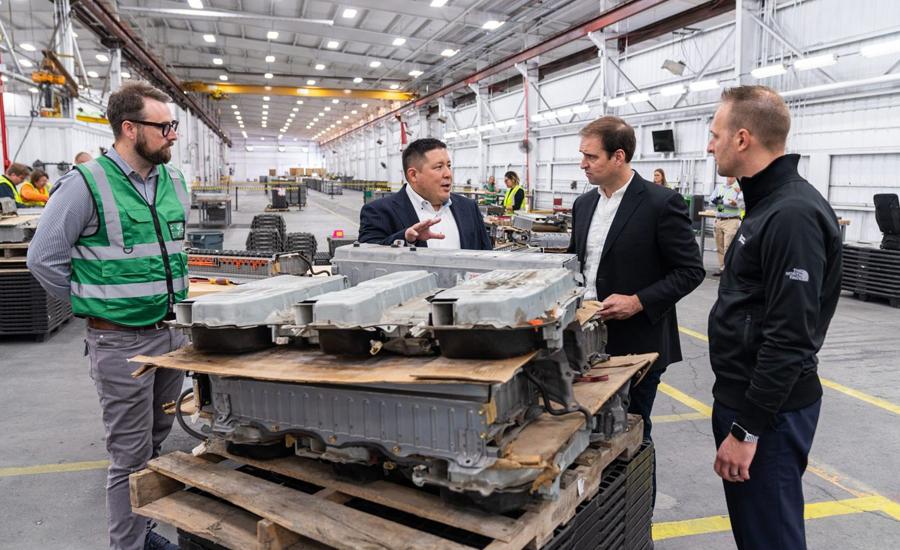
UAW Wins Election at GM/LG Battery Plant in Ohio |
IndustryWeek – Robert Schoenberger
Ultium Cells LLC’s plant is only a few miles from the former GM Lordstown facility now owned by Taiwan’s Foxconn.
Workers making batteries for Chevy Bolt Evs and other General Motors electric vehicles will be represented by the United Auto Workers. The UAW announced the overwhelming 710-to-16 vote victory early Friday morning for Ultium Cells LLC, a joint venture between GM and LG Energy Solution.
“Our entire union welcomes our latest members from Ultium,” says UAW President Ray Curry. “As the auto industry transitions to electric vehicles, new workers entering the auto sector at plants like Ultium are thinking about their value and worth. This vote shows that they want to be a part of maintaining the high standards and wages that UAW members have built in the auto industry.”
The battery plant is only a few miles from GM’s former Lordstown Assembly Plant, a facility famous for its radical, sometimes violent labor activism in the 1970s that evolved through many decades into a cooperative relationship by the early 2000s. The plant built the Chevy Cruze from 2008 until its closure in 2019 as GM exited the small car business in the U.S. Read Article
|
|
|
Behind the Snark, Counsel for Laid-off Twitter Staff Promises Musk a Rough Ride |
CFO Dive – Robert Freedman, Lead Editor
A clause saying ex-employees aren’t third-party beneficiaries of the merger agreement won’t hold up if challenged in court, attorney Akiva Cohen says.
The lawyer representing a group of employees laid off shortly after Twitter changed hands is attracting media attention for a December 1 letter to Elon Musk that coats its legal threats in a layer of snark that the social media site’s new owner might appreciate.
“I’m sure you’ve been expecting this,” Akiva Cohen of Kamerman, Uncyk, Soniker & Klein said in the letter asking Musk to honor laid-off employees’ severance agreements. “Ever since you took over Twitter, you’ve been attempting to tap-dance your way out of Twitter’s binding obligations to its employees.” Read Article
|
|
|
Japan-Based Envision AESC Plans Florence, South Carolina, Gigafactory |
Area Development – News Desk
Envision AESC, a world-leading Japanese electric vehicle battery technology company, will build a battery cell gigafactory in Florence, South Carolina. The $810 million project is expected to create 1,170 jobs.
Located in the Technology and Commerce Park the approximately 1.5 million-square-foot facility will support the company’s multi-year partnership with the BMW Group. AESC currently operates a battery manufacturing plant in Tennessee and has a plant under construction in Kentucky. Read Article
|
|
|
The US Is Loaning GM and LG $2.5 Billion For Three Battery Plants |
Area Development – Jalopnik, Owen Bellwood
President Joe Biden announced a $2.5 billion loan for GM and LG to build a new battery plant here in the U.S., Geely’s premium EV maker Zeekr wants to go public, and the results of the United Auto Workers’ leadership election might not be clear until January 2023. All this and more in The Morning Shift for Monday December 12, 2022.
1st Gear: GM and LG Awarded $2.5B for Battery Plants
In the continuing trend for massive amounts of cash being spent on Evs, $2.5 billion will soon be spent on a new battery plant here in the U.S. After Hyundai and BMW announced they would plow millions into stateside battery plants, the U.S. government has upped the stakes by announcing a massive loan for General Motors and LG. Read Article
|
|
|
Why the US Needs Manufacturing to Succeed |
IndustryWeek – Anders Sjoelin
Leadership focus on sustainability, nearshoring and DE&I is critical to manufacturing’s future, writes the CEO of Chicago-based grid manufacturer S&C Electric.
Who can forget those early, confusing, and scary days of the COVID-19 pandemic? Overnight, our world changed. In the midst of this unknown world with very real fears, everything screeched to a halt.
The COVID-19 pandemic was a wakeup call in many ways. When the factories, flights, people and systems that power our global supply chain and economy stopped, our dependency on this logistical ecosystem became a vulnerability. Many who had never given a second thought to where our basic appliances came from were Googling “supply chain problems,” making this phrase among the most searched terms in 2021.
With newly focused attention on supply-chain availability and resilience, U.S. manufacturing is at an inflection point. The recently passed infrastructure and CHIPS acts enable direct investment of billions of dollars into the manufacturing sector responsible for critical components, again to improve capacity and supply certainty. According to an analysis by the McKinsey Global Institute, the manufacturing sector was already on an upswing between 2010 and 2019, adding 1.3 million manufacturing jobs to the economy, following the loss of 5.8 million jobs over the previous 10 years. Read Article
|
|
|
Front Line: Taking a Deep Dive into Suppliers’ Labor Force |
Area Development - Dan Emerson, Staff Editor
Heightened supply chain visibility will let manufacturers know if their suppliers are using forced labor.
As international trade makes supply chains more complex, one potential pitfall for companies is unknowingly obtaining goods made with forced or slave labor. In recent years governments, including the United States, have stepped up their enforcement in this area, which the U.S. has been regulating since 1890.
According to the International Labor Organization (ILO), more than 28 million people worldwide were in forced labor in 2021, generating $150 billion for those bad actors in the global supply chain. Eighty-six percent of forced labor occurred in the private sector, and 3.3 million of those forced into labor were children. Read Article
|
|
|
Nucor’s Relative Negativity an Outlier Among Steel Companies |
IndustryWeek - Geert De Lombaerde
Several manufacturers have recently said pricing and/or demand have bounced off their bottoms.
A market shift can be quite messy. There’s lots of noise and conflicting data points but much less in the way of clear signals.
However, the steel sector seems to be marking an unusually unambiguous bottom as we wrap up 2022. Executives at Nucor Corp., U.S. Steel Corp., Stelco Holdings Inc. and Steel Dynamics Corp. last week updated investors on their fourth-quarter outlooks and only one sang a tune that was at times notably different when discussing demand, pricing and the risks of a recession. To recap: Read Article
|
|
|
Battery Recycler to Build $3.5 Billion Factory in South Carolina |
Assembly Magazine
CHARLESTON, SC—Redwood Materials is spending $3.5 billion to build a new factory here to recycle batteries from electric vehicles (EVs).
Redwood recycles and refines the many precious materials—like lithium, nickel and cobalt—found in used lithium-ion batteries from EVs and consumer electronics, then sends them back into the supply chain.
Construction of the new plant, the company’s second, is set to begin in the first quarter of 2023. The plant is expected to be up-and-running by the end of 2023 will have enough capacity to supply 1 million EVs annually. Read Article
|
|
|
Proactive Technologies' Project Partners |
|
Proven Solutions for Employers and Education
- Apprenticeship Program Design and Technical Implementation Support
- Employer - Educational Institution - Community Partnership Program Development and Support
- Employee Pre and Post-Hire Assessment Design, and
- Administration Management Consultation, Training and Support
about K & D Consulting, LLC
Copyright © 2019-22 K & D Consulting, LLC
ALL RIGHTS RESERVED
|
|
Classes alone will not close the "skills gap," but structured on-the-job training can...every time! |
Under-capacity of workers is an enormous source of untapped value and unrealized return on worker investment. In addition, standardizing expert task performance -between workers and shifts - can add to worker ROI through lower scrap and rework.
- Increased worker capacity, productivity, work quantity, work quality and compliance (specifications, ISO/AS/IATF programs and safety mandates);
- Decreased internal costs of training
-
Higher return on worker investment! You would be surprised how small of an investment is needed to unlock enormous returns.
If budgets are tight, Proactive Technologies, Inc. can be an extension to your training department, with our technical implementation support - included with every project!
There's nothing to lose by taking a minute to contact us to learn more. Copyright © 2019-22 Proactive Technologies, Inc.™
ALL RIGHTS RESERVED
|
|
Core Skill Development and Enhancement |
- Skill, Knowledge and Behavioral Assessments
- Intro and Advanced Blueprint Reading Courses Geometric Dimensioning and Tolerancing
- Courses Front Line Supervisor Training
- Training Materials and Online Courses
Copyright © 2019-22 Lifetime Learning
ALL RIGHTS RESERVED
|
If your institution is interested in becoming a Proactive Technologies, Inc. project partner, contact a representative for more information. |
|
Banks Are Short More Than $1 Trillion in Capital, This Analyst Says, Who Fears the Shortfall will Only Get Worse |
Market Watch – Steve Goldstein
The new year is nearly upon us, and one idea for where to invest is the banking sector, whose margins benefit from the high interest rates, at not terribly demanding valuations.
Here to counter that view is Christopher Whalen, the chairman of Whalen Global Advisers, who makes the bold case that banks were short over $1 trillion in capital at the end of the second quarter, and that it’s only going to get worse as the Fed keeps hiking interest rates.
That claim may surprise those who think the U.S. banking industry has some $2.2 trillion in capital. But he whittles that figure in several ways. First, he notes, there’s a difference between book equity and tangible equity, the latter of which is used by banking regulators to evaluate solvency. It’s a narrower definition, excluding items like goodwill and deferred tax assets, that brings the total down to $1.49 trillion from $2.22 trillion. Read Article
|
|
|
Break the Bad Habit of Overreacting to Metrics |
CFO.com – Mark Graban
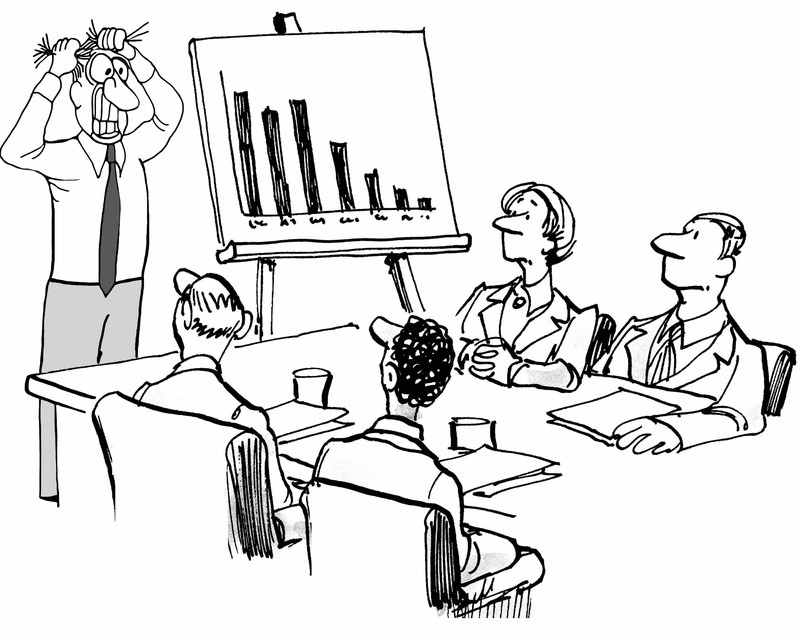
Quarter-to-quarter fluctuations may be no reason to pull out your hair, and other tips for evaluating metrics.
CFOs, of course, play a key role in overseeing financial metrics and, increasingly, operational performance measures. They pay a great deal of much-needed attention to the question of what to measure. But an opportunity typically remains for getting better at evaluating metrics.
The methods and mindsets mentioned in this article should save time, improve focus, and thereby drive greater performance this year and beyond.
A common challenge arises when a CFO overreacts to the latest data point. Say, for example, that the “inventory turns ratio” has decreased from 4.1 for the previous quarter to 3.9 for the just-ended one. Is it time to look for a root cause, or to read someone the riot act? Does this decrease indicate a meaningful trend? Read Article
|
|
|
Hertz Says It Will Pay $168 Million for Lawsuit by Customers Arrested for Driving Their Rental Cars – More Payments are Likely in the Long-running Hertz Lawsuits |
Inc.Magazine – Minda Zetlin
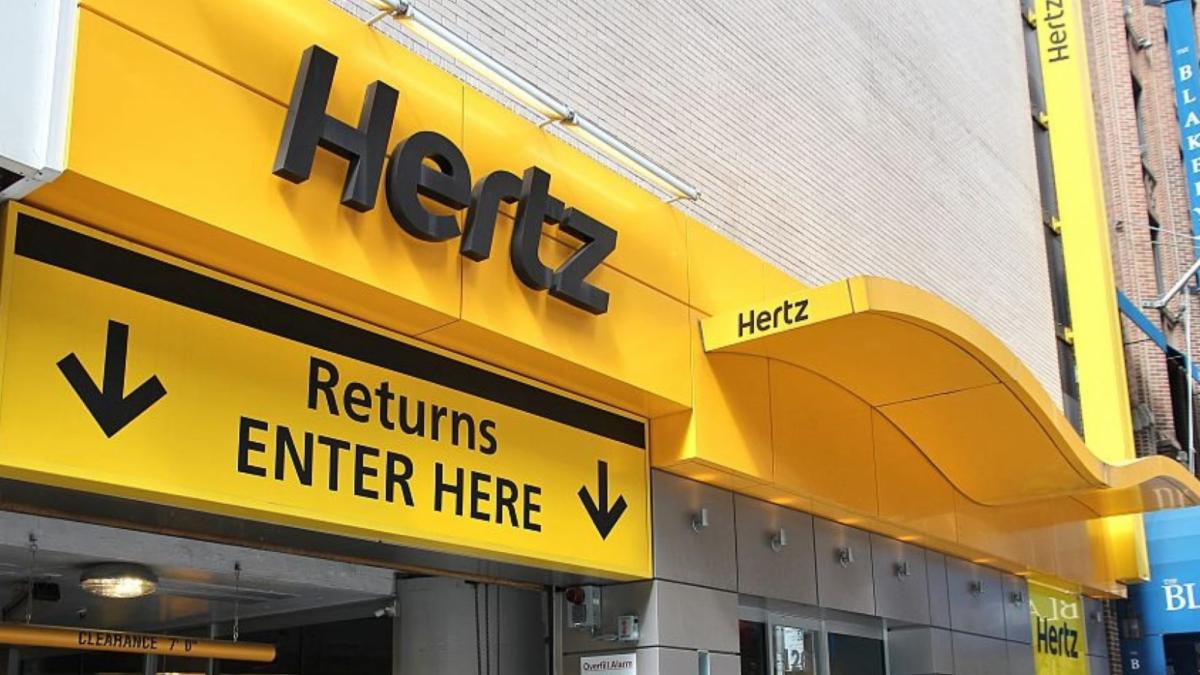
Hertz announced Monday that it will pay $168 million to 364 customers who have sued the company after being arrested for driving their rental cars. It says that it will make these payments in the next three-and-a-half weeks (that is, before the end of the year) and that they will settle “95 percent of its pending theft reporting claims.” But the company’s very brief statement leaves a lot of questions unanswered.
“My intention is to lead a company that puts the customer first. In resolving these claims, we are holding ourselves to that objective,” Stephen Scherr, Hertz CEO since February, said in a statement about the settlement. Both the statement and the settlement itself seemed intended primarily to reassure investors about these rapidly multiplying lawsuits. Although the announcement offers no details at all about the settlements, it does make a point of saying that it expects its insurance carrier to absorb the bulk of the costs. “The Settlements and related payments are not expected to have a material impact on the Company’s capital allocation plans for the balance of 2022 or 2023,” the announcement says. Read Article
|
|
|
A Congressional Report Says Financial Technology Companies Fueled Rampant PPP Fraud |
NPR – Austin Fast, Sacha Pfeiffer
A congressional report found financial technology companies, or fintechs, largely fueled PPP loan fraud. Bluevine, a fintech noted in the report, told NPR it adapted to threats of fraud better than other companies mentioned.
A sprawling congressional report accuses several little-known financial technology companies, or fintechs, of reaping “billions in fees from taxpayers while becoming easy targets for those who sought to defraud the PPP,” or Paycheck Protection Program.
PPP provided more than 11 million potentially forgivable low-interest loans to small businesses to help them keep employees on the payroll as COVID-19 shutdowns decimated profits. Congress hastily rolled out the program in spring 2020, eventually racking up a price tag of nearly $800 billion. Read Article and Hear Podcast
|
|
|
Hidden Audits Reveal Millions in Overcharges by Medicare Advantage Plans |
NPR – Fred Schulte, Holly Hacker of Kaiser Health News
Newly released federal audits reveal widespread overcharges and other errors in payments to Medicare Advantage health plans, with some plans overbilling the government more than $1,000 per patient a year on average.
Summaries of the 90 audits, which examined billings from 2011 through 2013 and are the most recent reviews completed, were obtained exclusively by KHN through a three-year Freedom of Information Act lawsuit, which was settled in late September.
The government’s audits uncovered about $12 million in net overpayments for the care of 18,090 patients sampled, though the actual losses to taxpayers are likely much higher. Medicare Advantage, a fast-growing alternative to original Medicare, is run primarily by major insurance companies. Read Article
|
|
|
U.S. Watchdog Sanctions Three KPMG Global Firms |
CFO Dive – Jim Tyson, Senior Reporter
Dive Brief:
- The Public Company Accounting Oversight Board (PCAOB) imposed $7.7 million in fines and sanctioned KPMG firms in the U.K., India and Colombia for several alleged violations, including exam cheating, signing off on blank work papers and improper use of an unregistered auditing firm.
- The PCAOB penalties — including suspending or barring four auditors from auditing public companies — stemmed from alleged breaches of standards for auditing and quality control as well as PCAOB rules, the board said.
-
“These actions should send the message to KPMG and all other registered firms that the PCAOB is committed to rooting out misconduct wherever it occurs and will employ all sanctions at its disposal to protect investors and improve audit quality,” PCAOB Chair Erica Williams said in a statement. Read Article
|
|
|
Blackstone Limits Investor Redemptions on $70 billion Real-estate Fund: Shareholder Letter |
MarketWatch – Joy Wiltermuth
Blackstone’s mega fund focused on U.S. rental properties limits redemptions.
A mammoth $69 billion Blackstone BX, -1.38% real-estate fund has placed limits on investor redemptions after requests exceeded the fund’s monthly and quarterly limits, according to a Dec. 1 shareholder letter.
Blackstone Real Estate Income Trust fund, which has a focus on U.S. residential rental properties, saw redemptions of about $1.8 billion in October, or more than the 2% of its monthly net asset value limit, according to the letter. Read Article
|
|
|
CFOs Must Sharpen Storytelling Skills for Boards |
CFO Dive – Grace Noto
CFOs must take on the role of storyteller when communicating with their boards as their focus shifts from growth and towards long-term sustainability in a pre-recession environment.
Geopolitical factors such as the Russia-Ukraine war, supply chain disruptions, lingering talent retention and labor struggles will continue to impact economic policy into 2023, according to a recent S&P Global report. This is putting pressure on CFOs tasked both with steering their companies through economic upheaval and keeping key players, such as their board, appraised of shifts in strategy as they are buffeted by economic headwinds.
The CFO has a very important role to play during meetings with the board — what they do or don’t say matters a lot, said Christina Ross, “serial CFO” turned CEO and founder of FP&A software provider Cube. Read Article
|
|
|
Canadian Regulator Raises Banks’ Domestic Stability Buffer to 3% |
U.S. News & World Report – Reuters
OTTAWA – The amount of capital that Canada’s biggest lenders must hold as a stability buffer will rise to 3.00% from 2.50% of risk-weighted assets on Feb.1 in response to increased economic uncertainty, the country’s financial regulator said on Thursday.
The Office of the Superintendent of Financial Institutions (OSFI) said persistent inflation and rising interest rates along with political tensions had exacerbated vulnerabilities.
“Systemic vulnerabilities remain elevated – with some, namely Canadian household indebtedness and asset imbalances, edging upwards – as well as the results of recent stress tests,” it said in a statement. Read Article
|
|
|
PBGC Approves SFA Application for Teamsters Local 966 Plan – Teamsters Plan Averts Insolvency and Reduction of Benefits Through Receipt of Special Financial Assistance |
Pension Benefit Guarantee Corporation
WASHINGTON, D.C. — The Pension Benefit Guaranty Corporation (PBGC) announced today that it has approved the application submitted to the Special Financial Assistance (SFA) Program by the Teamsters Local 966 Pension Plan (Teamsters Local 966 Plan). The application was submitted and approved under provisions of PBGC’s SFA interim final rule. The plan, based in Cresskill, New Jersey, covers 2,356 participants in the transportation industry.
The Teamsters Local 966 Plan will receive approximately $54.1 million in Special Financial Assistance, including interest to the expected date of payment to the plan. The plan was projected to run out of money in 2023. Without the SFA Program, the Teamsters Local 966 Plan would have been required to reduce participants’ benefits to the PBGC guarantee levels upon plan insolvency, which is roughly 10 percent below the benefits payable under the terms of the plan. SFA will enable the plan to continue to pay retirement benefits without reduction for many years into the future. Read Release
|
|
|
PBGC Approves SFA Application for Central States Plan – Central States Plan Averts Insolvency and Reduction of Benefits Through Receipt of Special Financial Assistance |
Pension Benefit Guarantee Corporation
WASHINGTON, D.C. — The Pension Benefit Guaranty Corporation (PBGC) announced today that it has approved the application submitted to the Special Financial Assistance (SFA) Program by the Central States, Southeast & Southwest Areas Pension Plan (Central States Plan). The application was submitted and approved under provisions of PBGC’s SFA final rule. The plan, based in Chicago, Illinois, covers 357,056 participants in a number of industries, including transportation, construction, food processing, and more.
The Central States Plan will receive approximately $35.8 billion in Special Financial Assistance, including interest to the expected date of SFA payment to the plan. The Central States Plan is the largest plan expected to receive SFA. The plan was projected to run out of money in 2025. Without the SFA Program, the Central States Plan would have been required to reduce participants’ benefits to the PBGC guarantee levels upon plan insolvency, which is roughly 60% below the benefits payable under the terms of the plan. SFA will enable the plan to continue to pay retirement benefits without reduction for many years into the future. Read Article
|
|
|
Is the United States Having a Manufacturing Boom? |
Area Development – Wisconsin Public Radio, Joe Tarr
Jobs in manufacturing are growing in the United States, leading to comparisons of the 1970s manufacturing heyday. We talk to a reporter from The New York Times about why companies are adding manufacturing jobs, where the growth is occurring and what it means for the Rust Belt and our economy. List and Download Transcript
|
|
|
SEC Calls for Disclosure on Crypto Risks, Citing ‘Financial Distress’ |
CFO Dive – Jim Tyson’s, Senior Reporter
Dive Brief:
- The Securities and Exchange Commission (SEC) called on companies to fully disclose crypto asset risks, citing “financial distress” and joining efforts by lawmakers, investors and creditors to gauge the losses and market vulnerabilities following the collapse last month of crypto exchange FTX.
- “Companies should evaluate their disclosures with a view towards providing investors with specific, tailored disclosure about market events and conditions, the company’s situation in relation to those events and conditions, and the impact on investors,” the SEC’s Corporation Finance Division said Thursday.
-
The FTX bankruptcy has jarred scores of creditors, prompting the SEC to partly focus its guidance on risks at public companies from dealings with crypto-market participants. The agency requires companies to disclose direct or indirect exposure to counterparties that filed for bankruptcy, are deemed to be insolvent, suffered excessive redemptions or failed to account for their customers’ crypto assets. Read Article
|
|
|
What Happened to Crypto Giant FTX? A Detailed Summary of What We Actually Know So Far |
Forbes
What happened to the cryptocurrency exchange FTX? We look at what happened to FTX and how the company filed for bankruptcy after a colossal collapse.
Key Takeaways
- FTX, a crypto exchange, went from being worth $32 billion to filing for bankruptcy in what many are calling the “Lehman Brothers Moment” for crypto.
- Sam Bankman-Fried, the founder of FTX and Alameda Research, became a prominent figure in the crypto space while becoming one of the wealthiest people by the age of 30.
-
The collapse of FTX has shaken up the entire crypto space. This has led to Congress and the SEC investigating what happened. Here is a step-by-step breakdown of what happened. Read Article
|
|
|
UK Pension Fund Near-Collapse Is A Warning For America’s Pensions |
Forbes – Edward Siedle, Contributor, Pension forensics expert and record-setting whistleblower award winner
The near-collapse of UK pensions may be a warning for pensions globally.
Around the world, there are millions of workers and retirees who are counting upon pensions set up by corporations and governments to provide for their retirement security. These individuals believe they have been “promised” certain benefits and that promises made will be kept.
Unfortunately, many pensions are severely underfunded, i.e., not enough money has been set-aside to pay benefits promised. Further, the money in these pensions is all-too-often grossly mismanaged—what I refer to as “gross malpractice generally practiced.” Read Article
|
|
|
Changes Make it Easier for SEC to Go After Insider Trading |
CFO Dive – Robert Freedman, Lead Editor
Executives and officers will be in a much tighter box when it comes to when they can trade in their company stock under modified 10b5-1 rules.
The Securities and Exchange Commission earlier this year fined the CEO and president of Cheetah Mobile for insider trading even though they had each executed a 10b5-1 plan.
The plan gives executives and officers an affirmative defense for making an advantageous trade, but as a result of its investigation, the SEC concluded the executives had timed their trades knowing bad news was about to drop: their biggest advertiser was pulling back in its spend with the company. The two were fined $556,580 and $200,254, respectively. Read Article
|
|
|
Private Equity Exits Down 57% in 2022 |
CFO.com - Vincent Ryan
A stuck IPO market, firms reluctant to sell at lower valuations, and cautious corporate buyers limit exit routes for PE firms.
For private equity firms, 2022 has been a rough year. Take-private purchases of public companies have come to a virtual halt, as large transactions struggle to find debt financing. Funds are having to take markdowns on their investments. And sponsors are stuck holding companies that they would have rather sold off — to a corporate, another sponsor, or the stock market.
The inability to exit an investment is particularly troublesome. According to PitchBook’s 2023 U.S. Private Equity Outlook, the exit-to-investment ratio for PE firms stood at 0.38x at the end of the third quarter, the lowest since the global financial crisis in 2008. The number of exits was down 57%, as of September 30. The macro headwinds are likely to persist into 2023, said PitchBook. Read Article
|
|
|
Wells Fargo to Pay $3.7 Billion Settlement Over Latest Allegations of "Illegal Activity" |
CBS News MoneyWatch – Kristopher J. Brooks
Federal regulators ordered Wells Fargo to pay $3.7 billion in fines and refunds to customers, marking the largest fine to date against the nation's third largest bank.
The fines come after the Consumer Financial Protection Bureau (CFPB) alleged Wells Fargo has illegally assessed fees and interest charges on auto loans and mortgages, wrongly repossessed customers' cars and misapplied payments to auto and mortgage loans. The consumer watchdog agency also accused Wells Fargo of charging consumers illegal surprise overdraft fees and adding incorrect charges to checking and savings accounts. Read Article
|
|
|
IndustryWeek – MIT News
A modest tax could help combat the effects of automation on U.S. income inequality.
What if the U.S. placed a tax on robots? The concept has been publicly discussed by policy analysts, scholars and Bill Gates (who favors the notion). Because robots can replace jobs, the idea goes, a stiff tax on them would give firms incentive to help retain workers, while also compensating for a drop-off in payroll taxes when robots are used. Thus far, South Korea has reduced incentives for firms to deploy robots; European Union policymakers, on the other hand, considered a robot tax but did not enact it.
Now a study by MIT economists scrutinizes the existing evidence and suggests the optimal policy in this situation would indeed include a tax on robots, but only a modest one. The same applies to taxes on foreign trade that would also reduce U.S. jobs, the research finds. Read Article
|
|
|
Investigation: Many U.S. Hospitals Sue Patients for Debts or Threaten Their Credit |
NPR - Kaiser Health News, Noam Levey
An investigation of more than 500 U.S. hospitals show that many use aggressive practices to collect on unpaid medical bills. More than two-thirds have policies that allow them to sue patients or take other legal actions against them, such as garnishing wages. This includes high-profile medical centers such as the Mayo Clinic.
Despite growing evidence of the harm caused by medical debt, hundreds of U.S. hospitals maintain policies to aggressively pursue patients for unpaid bills, using tactics such as lawsuits, selling patient accounts to debt buyers, and reporting patients to credit rating agencies, a KHN investigation shows.
The collection practices are commonplace among all types of hospitals in all regions of the country, including public university systems, leading academic institutions, small community hospitals, for-profit chains, and nonprofit Catholic systems.
Individual hospital systems have come under scrutiny in recent years for suing patients. But the KHN analysis shows the practice is widespread, suggesting most of the nation’s approximately 5,100 hospitals serving the general public have policies to use legal action or other aggressive tactics against patients. Read Article
|
|
|
Mexico, Latin America, South America and the Caribbean |
Peru’s President Castillo Ousted After Trying to Dissolve Congress
MarketWatch – AP News
LIMA, Peru — The president of Peru was ousted by Congress and arrested on a charge of rebellion Wednesday after he sought to dissolve the legislative body and take unilateral control of the government, triggering a grave constitutional crisis.
Vice President Dina Boluarte replaced Pedro Castillo and became the first female leader in the history of the republic after hours of wrangling between the legislature and the president, who had tried to prevent an impeachment vote. Read Article
A Resilient Private Sector Puts Forward an Ambitious Plan for Sustainable and Inclusive Growth in the Americas
InterAmerican Development Bank – Fabrizio Opertti – Rodrigo Andres Contreras Huerta
The Americas were still recovering from the multiple economic and social challenges triggered by the Covid-19 pandemic when war broke out in Ukraine, increasing global tensions. These two vastly distinct types of disasters underline how important human resilience is.
Resilience was on our minds when we began examining the private sector’s role during this disruptive and challenging phase. The current context calls for firm, decisive action that will lead to a pragmatic agenda for reform.
These reforms need to be firmly grounded, and the strategies for implementing them should involve everyone: governments, the private sector, multilateral organizations, and civil society. These stakeholders each have their own focus, but ultimately, they are all trying to get to the same place. Read Article
Tourists Stuck in Machu Picchu Due to Peru Protests Airlifted Out
BBC News – Vanessa Buschschlüter
Stranded tourists who were visiting the Inca citadel of Machu Picchu trek after being evacuated by train to Ollantaytambo, Peru, on December 17, 2022.
Some of the most vulnerable tourists were airlifted but many others had to go on foot part of the way.
Peruvian authorities have airlifted vulnerable stranded tourists from the Inca mountain-top citadel of Machu Picchu to the city of Cusco.
Thousands of visitors and Peruvians were stuck for days in various locations as protesters blocked roads and forced airports to close.
A wave of protests has been sweeping through Peru following the impeachment of President Pedro Castillo. Read Article
Bolivia Protests: Opposition Governor's Arrest Stirs Anger
BBC News - Vanessa Buschschlüter
Violent protests have broken out in Bolivia following the arrest of a powerful opposition politician.
Luis Fernando Camacho, the right-wing governor of Santa Cruz province, was detained by armed police in an operation that his supporters said resembled "a kidnapping".
Mr Camacho spearheaded the protests which led to the resignation of left-wing former president Evo Morales. Read Article
|
|
|
Canada, Europe and Great Britain |
What is Needle Spiking, What Travelers Should Know: ‘You Always Think it Won’t Happen to You’
USA Today – Nicole Fallert
Micaela looked alarmed when she turned to me at the bar and told me she thought she might have been needle spiked, or injected with drugs.
Prior to her move to London in September for graduate school, my friend Micaela, 27, received a warning from a friend in Germany about the prevalence of spiking throughout Europe – either by slipping a drug into a drink or injecting drugs into someone’s body with a hypodermic needle.
The phenomena of needle spiking gained attention across the United Kingdom during a “sudden increase across the country in October 2021,” according to a recent report by the House of Commons Home Affairs Committee. Read Article
German Police Arrest 25 Suspects in Plot to Overthrow State
DeutscheWelle
Police have arrested 25 suspected members or supporters of a “domestic terrorist organization” aiming to topple the German state. Justice Minister Marco Buschmann said the network was part of the “Reichsbürger scene.”
In a nationwide raid, 25 suspected members and supporters of a terrorist organization in Germany were arrested early Wednesday.
Officials said the network, part of a wider right-wing movement, was already well established with a concrete plan to overthrow the German state by force and install a new government. Read Article
Bank of England Calls for ‘Urgent’ Global Action After Near-collapse of UK Pension Funds
CNBC – Elliot Smith
KEY POINTS
A number of pension funds were hours from collapse when the central bank intervened in the long-dated bond market.
The Bank emphasized the need for regulators across jurisdictions to strengthen the resilience of the sector, saying that “there is a need for urgent international action to reduce risks in non-bank finance.” Read Article
|
|
|
U.S. Will Require Travelers From China to Show Negative COVID Test Before Flight
NPR – Askley Ahn
The United States will require travelers from China, Hong Kong and Macau to show a negative COVID-19 test before entering the U.S. as restrictions lessen and cases surge in China.
The U.S. Centers for Disease Control and Prevention announced the measure Wednesday to go into effect on Jan. 5 for all passengers over the age of 2. Passengers must show a negative PCR or monitored antigen test no more than two days before their departure, whether it is a direct flight or an indirect one through another country. Read Article
What's in Store for Emerging Asian Economies in 2023?
DeutscheWelle - Srinivas Mazumdaru
Many economies in the region could be in for a bumpy ride next year, but some may also be set to benefit as companies diversify investments from the Chinese market.
South and Southeast Asian economies have had a challenging 2022, a year when the global economy was supposed to have recovered from the ill effects of the COVID-19 pandemic.
Instead, the Russian invasion of Ukraine, coupled with continued supply chain snags, recurring COVID lockdowns in China and soaring inflation, among other problems, have dampened growth prospects and caused economic pain to businesses and households. Read Article
|
|
|
Asia, India and Australia |
Bangladesh: Densely-populated Dhaka Gets First Metro Line
BBC News - Antoinette Radford
Some commuters in Bangladesh's capital, Dhaka, now have an easier route to work after the first phase of a long-awaited metro system finally opened.
The car-clogged roads infuriate locals in one of the world's most densely-populated cities, where more than 20 million people live.
On Wednesday Bangladeshi Prime Minister Sheikh Hasina described the new railway as a "matter of pride". Read Article
India's Online Gaming Boom Prompts Fears of Gambling Surge
DeutscheWelle - Adil Bhat
India is expecting its multibillion-dollar online gaming industry to more than triple in size over the next four years. Officials and mental health professionals fear addiction and gambling will become more widespread.
B. Bhavani, a 29-year-old resident of India's southern city of Chennai, used to sneak out from her bed in the middle of the night to play online card games like rummy. She promised her husband several times she would quit, but she was already hooked.
As her addiction worsened, Bhavani's savings started to disappear and debts began to mount.
She and her husband Bhagyaraj Rajena, parents of two young children, suffered losses of more than 2 million Indian rupees (€22,700/$24,200), as well as gold jewelry Bhavani had borrowed from her sisters.
|
|
|
Africa, Middle East, Eastern Europe and Russia |
ABB to Pay $35 Million to Settle US Charges Over South Africa Bribes
IndustryWeek – Agence France-Presse
Between 2014 and 2017, ABB secured “multiple” government contracts through its subsidiaries, syphoning illicit payments through subcontractors associated with an official at Eskom, South Africa’s state-owned power company, the DOJ said.
Swedish-Swiss industrial company ABB agreed to pay $315 million to settle U.S. criminal charges that it bribed state-owned Eskom of South Africa over government contracts, the Department of Justice (DOJ) announced Friday.
Two affiliates of ABB each pleaded guilty to one count of conspiracy to violate the U.S. Foreign Corrupt Practices Act as part of a three-year deferred prosecution agreement, the U.S. agency said of a settlement that was coordinated with government authorities in Switzerland, Germany and South Africa. Read Article
South Africa’s Ramaphosa Clears Way for Second Term
DeutscheWelle – Cristina Krippahl
By reelecting Cyril Ramaphosa as party leader, the ANC has shown it trusts him to win the 2024 presidential election. But Ramaphosa faces an uphill struggle to convince voters the ruling party is still their best bet.
South African President Cyril Ramaphosa has been reelected to the African National Congress’ (ANC) leadership, despite being mired in a financial scandal and facing a strong campaign by his opponents within the party.
In the race against his rival, former Health Minister Zweli Mkhize, Ramaphosa increased his share of the vote from 51% in 2017 to 56% on Monday, a development that came as no surprise to most analysts. Read Article
How Qatar Turns its Cash Into Foreign Policy Power
DeutscheWelle – Cathrin Schaer
For years, Qatar has pursued a “soft” foreign policy that helped make international friends and influence the powerful. It includes spending billions on everything from fashion, art and sport, to charities and industry.
The glamorous event was covered in all the best magazines. The exhibition in Qatar, coming shortly before the start of the football World Cup and featuring Italian brand Valentino was described as “panoramic.” At the exhibition’s opening, former supermodel Naomi Campbell was “the belle of ball,” journalists enthused.
But it was not just the fine weather in Qatar drawing high profile fashion names to the small Persian Gulf state. Read Article
|
|
|
Proactive Technologies' Project Partners |
|
Frank J. Gibson Consulting |
"One thing is certain... nothing is certain!"
The rate of change affecting work, the worker, management and the educational institutions that service all three has been accelerating - made worse by the unexpected Covid-19 pandemic. The economy, the consumer, supply chains and operational strategies have all been disrupted in the short-term, casting doubt on the long-term.
Rapid adaptation is the key to survivability, sustainability and growth. Sometimes an experienced outside advisor can help facilitate needed improvements to take the worry out of change and the fear out of growth. Frank J. Gibson Management and Workforce Excellence Advisor
- Business Development & Growth
- Workforce Development and Optimization
- Training and Cross-Training
- Local,/Regional Workforce Development Projects and Community Development
- Facilitated Problem Solving
- Process Improvement Cross-Functional Leadership Coaching and Mentoring
- Internship and Apprenticeship Projects
- Strategic Doing/Strategic Planning
Copyright © 2022 Frank J. Gibson
ALL RIGHTS RESERVED
|
|
PTI Systems
International, Inc.™
|
- Affiliated with Proactive Technologies, Inc. for projects outside the United States;
- Workforce development partner for employers, and education/ training providers who support employers, to ensure every worker can be trained to full job mastery;
- Experienced with governmental, IDB, GIZ and economic development agency sponsored projects;
- Experienced in assuring multinational employers expanding to the U.S. have the skilled workforce they need.
- PTI Systems International sets-up complete worker development and performance management systems, and provides technical implementation support;
- We provide strategies for our project's transition to local management.
- Speakers for seminars and conferences.
Don't complain about a "skills gap," deliberately develop every worker to full job mastery!
© 2018-22 PTI Systems International, Inc.™
|
|
"A common disease that afflicts management and government administration the world over is the impression that “Our problems are different.” They are different, to be sure, but the principles that will help to improve quality of product and of service are universal in nature.”
American engineer, statistician,
professor, author, lecturer, and
management consultant
1900 - 1993
“I'm not upset that you lied to me, I'm upset that from now on I can't believe you.”
German philosopher, cultural critic and philologist
1844 – 1900
“The businessman is only tolerable so long as his gains can be held to bear some relation to what, roughly and in some sense, his activities have contributed to society.”
English economist, whose ideas fundamentally changed the theory and practice of macroeconomics and the economic policies of governments
1883 - 1946
|
|
U.S. Department of Commerce - Bureau of Economic Analysis |
U.S. International Trade in Goods and Services, October, 2022
The U.S. monthly international trade deficit increased in October 2022 according to the U.S. Bureau of Economic Analysis and the U.S. Census Bureau. The deficit increased from $74.1 billion in September (revised) to $78.2 billion in October, as imports increased and exports decreased. The goods deficit increased $6.1 billion in October to $99.6 billion. The services surplus increased $2.1 billion in October to $21.4 billion. Read Report
U.S. International Transactions, Third Quarter 2023
The U.S. current-account deficit narrowed by $21.6 billion, or 9.1 percent, to $217.1 billion in the third quarter of 2022, according to statistics released today by the U.S. Bureau of Economic Analysis. The revised second-quarter deficit was $238.7 billion. The third-quarter deficit was 3.4 percent of current-dollar gross domestic product, down from 3.8 percent in the second quarter. Read Report
New Foreign Direct Investment in the United States
The statistics on new foreign direct investment in the United States provide information on the acquisition, establishment, and expansion of U.S. business enterprises by foreign direct investors. Read Reports
BEA International Trade and Investment Country Facts
|
|
|
U.S. Department of Commerce - Bureau of the Census |
Monthly Wholesale Trade
October 2022 sales of merchant wholesalers were $700.8 billion, up 0.4 percent (+/- 0.5 percent)* from last month. End-of-month inventories were $923.8 billion, up 0.5 percent (+/- 0.4 percent) from last month. October 2022: +0.5 % Change in Inventories; September 2022 don’t: +0.6 % Change in Inventories. Read Article
Manufacturing and Trade Inventory and Sales – October, 2022
U.S. total business end-of-month inventories for October 2022 were $2,468.3 billion, up 0.3 percent (+/- 0.1 percent) from last month. U.S. total business sales were $1,859.5 billion, up 0.8 percent (+/- 0.2 percent) from last month. October 2022: +0.3 % Change in Inventories; September 2022 I: +0.2 % Change in Inventories. Read Report
|
|
|
Organisation for Economic Co-operation and Development |
U.S. Data versus the World
Find, compare and share the latest OECD data: charts, maps, tables and related publications. Access Data
|
|
|
International Trade in Services
Trade in services records the value of services exchanged between residents and non-residents of an economy, including services provided through foreign affiliates established abroad. This indicator is measured in million USD and percentage of GDP for exports, imports and net trade. Services include transport (both freight and passengers), travel, communications services (postal, telephone, satellite, etc.), construction services, insurance and financial services, computer and information services, royalties and license fees, other business services (merchanting, operational leasing, technical and professional services, etc.), cultural and recreational services, and government services not included in the list above. Trade in services drives the exchange of ideas, know-how and technology, although it is often restricted by barriers such as domestic regulations. All OECD countries compile their data according to the 2008 System of National Accounts (SNA). Access Data and Tables
|
|
US Trade Deficit Rose in October on Exports Dip |
IndustryWeek – Agence France-Presse
Decreases in industrial supply and consumer goods pushed the overall trade deficit $4 billion to $78.2 billion in October, Commerce Department data showed.
A drop in exports helped widen the U.S. trade gap in October, government figures showed Tuesday, with decreases seen in shipments of industrial supplies and consumer goods.
Exports have weakened in recent months as global economies grapple with inflation and higher interest rates, while a stronger US dollar has made American goods more pricey for foreign consumers. Read Article
|
|
|
Boats, Cars, Computers Lead Mexico’s Export Boom to US |
Bloomberg
US demand for Mexico’s industrial products continues to grow. Nearshoring leading companies to turn toward Mexico production
Shipments of boats, vehicles and computer parts are leading Mexico’s export boom, showing growing US demand for industrial products from its southern neighbor. Read Article
|
|
|
US Quartz Manufacturers Want Tariffs Enforced |
IndustryWeek – Marty Davis
OPINION
Overseas producers have simply moved their factories and equipment from China to India to circumvent the law.
As inflation continues to rise due to supply chain shortages, there is now widespread consensus on the need to rebuild domestic U.S. manufacturing. But even as the Biden administration looks to boost domestic production of electric vehicles and other emerging technologies, U.S. manufacturers are struggling against heavily subsidized imports.
My industry—which produces quartz slabs for countertops, tiles, and other home products—has seen this firsthand. Overseas quartz producers continue to sell large volumes of product in the U.S. at far below the cost of production. If Congress and the president are serious about rebuilding domestic American industry, it’s time to tackle such predatory practices and enforce U.S. trade laws. Read Article
|
|
|
Deutsche Gesellschaft für Internationale Zusammenarbeit (GIZ) GmbH – World Trade Organization
The WTO Annual Report 2022 provides a comprehensive account of the WTO’s activities in 2021 and early 2022. It also covers the 12th Ministerial Conference (MC12), originally scheduled for end-2021 but postponed until June 2022.
The Report opens with a message from Director-General Ngozi Okonjo-Iweala, who looks back at the successful conclusion of MC12, the role of the WTO in addressing COVID-19 and the challenges facing world trade. This is followed by an overview of the WTO’s activities in 2021 and early 2022, a snapshot of MC12 and in-depth accounts of the WTO’s main areas of activity. Download Report
|
|
|
U.S. Manufacturing Orders From China Down 40% in Unrelenting Demand Collapse |
Area Development – CNBC, Lori Ann LaRocco
KEY POINTS
U.S. manufacturing orders in China are down 40% in what a logistics manager described to CNBC as an unrelenting demand collapse.
Asia-based shipping firm HLS recently told clients it is a “very bad time for the shipping industry.”
Chinese factories are shutting down two weeks earlier than usual ahead of Chinese New Year.
As the Federal Reserve and other central banks around the world attempt to fight inflation by raising interest rates and cooling the economy, there is significant risk that a slowdown in demand turns into a recession. Read Article
|
|
|
Could Mexico Replace China as Top Global Manufacturing Exporter? |
Area Development – Freightwaves, Noi Mahoney
Nearshoring represents ‘lifetime opportunity’ to invest in Mexico, experts say
Mexican Economy Minister Raquel Buenrostro said last month over 400 companies were currently looking to move operations from Asia to Mexico. Pictured is the World Trade Bridge in Laredo, Texas.
While the world economy continues to face multiple headwinds, such as the Russia-Ukraine war, lingering pandemic effects and inflationary pressures, many trade professionals remain bullish about the prospect of more companies nearshoring operations to Mexico over the next decade.
A growing number of global shippers view Mexico as an alternative sourcing location to China and other Asian nations by either relocating manufacturing operations just south of the border or choosing to expand existing production in Mexico, experts said.
Nearshoring is the relocation of production and manufacturing operations from one country to another that is closer to the final consumer. Read Article
|
|
|
Why Europe and Latin America Need Each Other |
Deutsche Gesellschaft für Internationale Zusammenarbeit (GIZ) GmbH – European Union External Action
In the more dangerous and unpredictable multipolar world in which we now live, trade relations remain of seminal importance. But they cannot be separated from geopolitics. Many Europeans long believed that they could be, but Russia’s war of aggression against Ukraine has highlighted the risks raised by the European Union’s dependence on Russian gas and shown us that this approach is no longer tenable.
If the EU wants to be recognized as a true geopolitical actor, strengthening our internal unity will not be enough. We must also recalibrate our strategic compass, using our political and economic instruments more coherently and identifying not only risks but also opportunities more effectively. This is why I have argued from the beginning of my mandate that Europe must deepen its ties to the countries of Latin America and the Caribbean.
To make the qualitative leap we need, we will have to strengthen political dialogue at the highest level. But to ensure that our efforts are credible, we must also complete the modernization of existing association agreements with Mexico and Chile, sign the negotiated post-Cotonou agreement with the African, Caribbean, and Pacific community, ratify the association agreement with Central American countries, and finalize the EU-Mercosur agreement. Read Article
|
|
|
Canada Says War, Climate Concerns Show Need for Supply Chain Shift |
Deutsche Gesellschaft für Internationale Zusammenarbeit (GIZ) GmbH – Reuters, Steve Scherer
The Russian invasion of Ukraine shows that authoritarian regimes are not reliable trade partners and future supply chains should run through countries like Canada that are concerned about carbon emissions and human rights, Canadian Prime Minister Justin Trudeau said on Wednesday.
Trudeau recently returned from an official trip to the G20 and other summits in Asia, where he pitched Canada as a dependable global supplier of critical minerals and energy. Canada also launched an Indo-Pacific strategy on Sunday meant to counter Chinese power in the region. Read Article
|
|
|
USMCA Auto Decision Is Major Setback for United States |
IndustryWeek – Charles Benoit
The ruling in favor of Mexico and Canada could bring an estimated 8% to 33% loss of North American content in cars.
OPINION
This week, Mexico and Canada won a major lawsuit against the United States before an international trade panel. At issue was the question of “how much of a car needs to be made in North America to be considered North American”—and thus receive tariff-free treatment through the United States-Mexico-Canada Agreement (USMCA).
According to the Office of the U.S. Trade Representative, the ruling in favor of Mexico and Canada will mean an estimated 8% to 33% loss of North American content in cars produced by the three countries. That’s a major defeat for America’s auto parts manufacturers and their workers. But it also hurts supply chains and workers throughout North America—something Mexico and Canada should have considered before bringing a trade case on behalf of global auto producers.
Under the longstanding North American Free Trade Agreement (NAFTA), 62.5% of a car was required to be made in North America to receive tariff-free treatment in the U.S. But this ended up being watered-down substantially because NAFTA contained a “deeming” provision—if a car part wasn’t specifically listed in the agreement, automakers could “deem” it as being made in North America. Read Article
|
|
|
Manufacturers Prepare for Risks in Foreign Currency Markets |
IndustryWeek - Mary Henehan
A look at the significant challenges that lie ahead for US firms with suppliers and customers abroad.
Event risk has been extreme in the foreign exchange (FX) markets for some time now. Global manufacturers operating in multiple markets around the world are facing an especially complex FX landscape.
Consider just a few events from the past year that are impacting FX markets, beyond the pandemic-induced supply-chain disruptions that have resulted in cash flow uncertainty:
- The U.S. Federal Reserve has moved faster and more aggressively than many of our trading partners to lift interest rates to reduce inflationary pressures
- The war in the Ukraine has sparked an energy crisis, hitting European nations hard
-
Geopolitical tensions have created uncertainty across a spectrum of asset classes, include FX Read Article
|
|
|
Education And Workforce Development News |
|
Employers Rethink Need for College Degrees in Tight Labor Market |
KaneBridge News – Wall Street Journal, Austin Hufford
The tight labour market is prompting more employers to eliminate one of the biggest requirements for many higher-paying jobs: the need for a college degree.
Companies such as Alphabet Inc.’s Google, Delta Air Lines Inc. and International Business Machines Corp. have reduced educational requirements for certain positions and shifted hiring to focus more on skills and experience. Maryland this year cut college-degree requirements for many state jobs—leading to a surge in hiring—and incoming Pennsylvania Gov. Josh Shapiro campaigned on a similar initiative.
U.S. job postings requiring at least a bachelor’s degree were 41% in November, down from 46% at the start of 2019 ahead of the Covid-19 pandemic, according to an analysis by the Burning Glass Institute, a think tank that studies the future of work. Degree requirements dropped even more early in the pandemic. They have grown since then but remain below pre pandemic levels. Read Article
|
|
|
A Closer Look at General Studies Degrees |
Community College Daily News – Hans A. Andrews
Many students stop short of achieving their community and technical college associate degrees. There are many reasons, such as dropping out of college to work, raise a family, running out of personal funds and/or being unable to master one or more required courses. The associate in general studies (AGS) is an option worth considering by colleges to help guide many more students to their degree completion.
What is the AGS degree?
The AGS degree is not necessarily designed for transfer to universities. Counselors can guide students carefully through courses for the AGS degree that will meet transfer requirements. It provides a way for students who have attended other colleges to have their previous college courses brought into an “umbrella” type of format toward graduation. Read Article
|
|
|
Workforce Partnerships Missing Their Full Potential |
Community College Daily News – Mathew Dembicki
New research by the Harvard Business School in partnership with the American Association of Community Colleges (AACC) shows a significant disconnect between community colleges and business and industry when it comes to collaborating on workforce development.
Community colleges have been lauded as critical engines to U.S. workforce and economic development, and recent education partnerships between public two-year colleges and large technology companies such as Dell Technologies, Intel, Google and Amazon, have grabbed national headlines, but lukewarm responses from businesses found in surveys for the Harvard research indicate many still don’t see community colleges as part of their workforce development plan.
In response to how important they believe it is for employers and community colleges to partner to produce a work-ready workforce, 59% of employers and 98% of community colleges said it was “very important,” with 32% of employers and 2% of community colleges saying it was “somewhat important.” Read Article
|
|
|
Sizing Up the Competition |
Community College Daily News – Jonelle Knox
Across the country, community college leaders are trying to stabilize declining enrollments while enticing students to their doors. Over the last decade, community colleges have worked with legislators to create state-subsidized free tuition and dual-enrollment/dual-credit programs, while others have begun to work closer with workforce partnerships to increase short-term micro-credentials, all in hopes of increasing student enrollment.
While community colleges have seen some success with these programs, it has not been enough to keep the momentum of students wanting to enroll in community colleges. In fact, between 2010 and 2017, community college enrollment declined by more than 1 million students. Decreases during the Covid pandemic compounded the challenge. In spring 2022, community colleges lost another 351,00 students, which equated to a 7.8% decline in enrollment from spring 2021. Read Article
|
|
|
New College Programs to Fill Skills Gap in Manufacturing (slideshow) |
IndustryWeek – Adrienne Selko
Universities, colleges and companies are joining together to create programs that directly address current skills needed.
If there is one statistic that manufacturers know by heart it’s the fact that by 2020 the skills gap could result in 2.1 million unfilled jobs. This figure, released in 2021 from a study done by Deloitte and The Manufacturing Institute, said the cost of this be $1 trillion in 2030.
This study spurred educational institutes to offer programs to close the skills gap. Many colleges and universities partnered with companies to ensure the right curriculum.
|
|
|
Why Jonny Can’t Read: The Great Disconnect Between Reading Science and Policy |
Brookings Institution – Kathy Hirsh-Pasek, Senior Fellow – Global Economy and Development, Center for Universal Education Stanley and Debra Lefkowitz Faculty Fellow, Department of Psychology, Temple University; Roberta Michnick Golinkoff, Unidel H. Rodney Sharp Professor of Education – University of Delaware Director – Child’s Play, Learning, and Development Lab
In the spring of 2022, reports showed that only 67 percent of third graders were reading at grade level in the aftermath of the pandemic. Following on the heels of the recently released National Assessment of Educational Progress (NAEP) report, the U.S. now witnesses the largest decline in reading outcomes since 1980. Children from underserved communities have lost as much as half a year of traditional normal reading progress. Learning loss has become a well-worn term for an international crisis prompting governments to seek ways to accelerate learning.
This context has ignited a major reckoning with educational policy and methods. As it turns out, reading scores were not impressive even before the pandemic. According to the 2019 NAEP scores, just 34 percent of students were proficient at reading. By “proficient,” these scores suggest that students can only not just sound out a word, but also gain meaning from text. This low starting point pre-pandemic is the real problem. Someone, something, must be to blame. According to a recent New York Times article and a widely heard podcast, “Sold a Story,” Professor Lucy Calkins of Columbia University seems to be descending to that mantle. Read Article
|
|
|
Training And Organizational Development News |
|
Your Team Doesn’t Need You to Be the Hero |
IndustryWeek - Kellogg Insight
Rather than swooping in and trying to fix the problem, step aside and let the people you hired show their knowledge and expertise
What do you do when a high-priority project doesn’t go as planned?
Whether your team fails to deliver on its sales targets, your latest high-visibility product launch is riddled with glitches or your marquee product faces a recall, you as a leader have a responsibility to respond to problems as they arise.
One common instinct is to put your regular responsibilities on the back burner, roll up your sleeves and immerse yourself in operational details. You may begin to question your team members and doublecheck their work as if it were your own. Read Article
|
|
|
Bumper Sticker Values Will Be the Death of Your Company |
IndustryWeek – Steven L. Blue
An organization’s real values are manifested by how they act, not how they claim they act. Many CEOs live in a delusional, fantasy world of what I call “bumper sticker values.” Bumper sticker values that look good on a boardroom wall. Or in an annual report.
My favorite examples of bumper stickers gone wild is always the airlines. Here as an excerpt of United Airlines bumper sticker values: “that includes treating everyone with dignity and respect.”
When is the last time you were treated with dignity and respect on United Airlines? On any airline?
But I bet the CEO of United believes his own bumper sticker values. That is why every time there is a galactic blunder by a flight attendant against a passenger, the CEO jumps to defend the flight attendant-even before he has the facts. Read Article
|
|
|
The Rise of Human-Centric Management |
CFO.com – Adam Zaki
How three CFOs are putting the people-first approach to employee management into action.
A CFO Action Plan for 2022
Variations in management styles have been around for as long as business has been done. The relationship between managers and their employees can have direct impacts on production, productivity, morale, and revenue. Experience, upbringing, education, or culture can determine the management styles of a person when they are put in a position of power.
As the labor market remains tight and people express the widespread desire to no longer work, a human-centric approach or a “people first” attitude is necessary. It’s a culture change executives can implement overnight to improve executive and employee morale. Read Article
|
|
|
When Leaders Show They Trust Their Workers, a Positive Culture Takes Root |
IndustryWeek – Carl Livesay
Trust starts at the top and trickles down through the organization, not the other way around.
People are a manufacturing business’s greatest asset. They are also the only asset that appreciates in value in direct proportion to investment. We can purchase most anything our businesses need, provided we have the financial resources. Anything except trust.
A positive corporate culture requires trust at its core, and trust must be earned. In a corporate environment, leaders must demonstrate they trust the workforce before the workforce will consider trusting the leadership.
|
|
|
Growing Apprenticeships Among Small Businesses |
Community College Daily News – Mathew Dembicki
Speaking Wednesday at an Urban Institute event, U.S. Labor Secretary Marty Walsh says it is time to scale apprenticeships. (Screenshot of streamed event)
U.S. Labor Secretary Marty Walsh this week emphasized the Biden administration’s support for using registered apprenticeships as a key workforce development strategy to fill job openings — particularly in technology — and as a way to grow diversity in the sector.
Walsh, who spoke Wednesday at an Urban Institute event to discuss how registered apprenticeships can help small- and medium-sized tech businesses, said the U.S. needs to scale up its use of apprenticeships for them to have the same impact as in Europe. Apprenticeship advocates are helping to develop and expand apprenticeship programs through high schools and community colleges as alternative career pathways, he said. Read Article
|
|
|
Access Proactive Technologies' Recent "Proactive Technologies Workforce News" Article Quicklinks |
Located on the left panel below, this includes articles on structured worker development, achieving worker "full job mastery," engineering/quality/safety compliance, ISO/TS/AS quality program support and compliance, and many other contemporary worker development and management topics. |
|
|
Recent Proactive Technologies News Article Quicklinks |
December
by Dean Prigelmeier, President of Proactive Technologies, Inc.
by Stacey Lett, Director of Operations - Eastern U.S. - Proactive Technologies, Inc.
by Dr. Dave Just, formally Dean of Corporate and Continuing Education at Community Colleges in MA, OH, PA, SC. Currently President of K&D Consulting
by Dean Prigelmeier, President of Proactive Technologies, Inc.
November
by Dean Prigelmeier, President of Proactive Technologies, Inc.
by Stacey Lett, Director of Operations - Eastern U.S. - Proactive Technologies, Inc.
by Frank Gibson, Workforce Development Advisor, retired from The Ohio State University – Alber Enterprise Center
by Dean Prigelmeier, President of Proactive Technologies, Inc.
October
by Dean Prigelmeier, President of Proactive Technologies, Inc.
by Stacey Lett, Director of Operations – Eastern U.S. – Proactive Technologies, Inc
by Dr. Dave Just, formally Dean of Corporate and Continuing Education at Community Colleges in MA, OH, PA, SC. Currently President of K&D Consulting
by Dean Prigelmeier, President of Proactive Technologies, Inc.
September
by Dean Prigelmeier, President of Proactive Technologies, Inc.
by Stacey Lett, Director of Operations - Eastern U.S. - Proactive Technologies, Inc.
By Randy Toscano, Jr., MSHRM, Executive Director of Human Resources, Paris Regional Medical Center
by Dean Prigelmeier, President of Proactive Technologies, Inc.
August
by Dean Prigelmeier, President of Proactive Technologies, Inc.
by Stacey Lett, Director of Operations - Eastern U.S. - Proactive Technologies, Inc.
by Dean Prigelmeier, President of Proactive Technologies, Inc.
by Dean Prigelmeier, President of Proactive Technologies, Inc.
by Proactive Technologies, Inc. - Staff
|
|
Proactive Technologies, Inc. Partners With Educational Institutions, Workforce/Economic
Development Groups, Government Agencies
|
Structured on-the-job training attracts and engages employers in workforce development partnerships...some projects sustainable for more than 18 years!
This creates a steady need for your related technical instruction, services and a pathway for employment.
These partnerships:
- enhance your institution's opportunity to market your products and services to incumbent workers;
- allow your organization to include structured on-the-job training as a capstone to preemployment preparation;
- document a trainee-to worker's increasing value to the employer - the key to retention - rather than leaving it to chance;
- properly aligns workforce development resources and maximizes the impact and results; allows you to engage an employer's facility, equipment and staff in the training process;
- provides the best, sustainable infrastructure for apprenticeships and internships that last!
- is a win for the trainee, win for the worker, win for the employer, win for the institution and win for the community!
This approach has continued to prove itself since 1988, and does not compete with your school's or agency's products and services; it adds to your efforts the clear, tangible, measurable advantage that employers seek.
Copyright © 2022 Proactive Technologies, Inc.™ ALL RIGHTS RESERVED
|
|
Tri-Rivers Career Center - Adult Education provides lifelong, continuous learning for a diverse adult population. We utilize practical skills with an eye toward technological advancement.
We partner with state agencies and employers to provide targeted skill development to future and incumbent workers.
Our RAMTEC (Robotic and Advanced Manufacturing Technology Education Collaborative) facility - one of many throughout the state - offers advanced technical training in specialized areas such as robotics, robotic welding, and engineering technology.
Copyright © 2022 Tri-Rivers Career Center - Adult Education - RAMTEC ALL RIGHTS RESERVED
|
PROACTIVE TECHNOLOGIES, INC. CLIENT SERVICES |
To supplement onsite PROTECH™ system of managed human resource development classes, these regularly scheduled webinars are available to the registered staff of clients:
- Structured On-The-Job Training Instructor Certification
- Structured On-The Job Training Checklist Administrator Certification
- Management Structured On-The-Job Training Project Support Briefing
- Integrating Support for Plant-Wide ISO/AS/IATF Quality and Safety Systems with PROTECH Workforce Development System
- Supporting "Pay-For-Value" Systems
- Promoting Continuous Process Improvement While Implementing the PROTECH System for the Accelerated Transfer of Expertise™
- PROTECH Onsite Lead Trainer and System Administrator Certification
Contact US t o attend one of these seminars and we will send you an e-reservation. Include your client ID, name and user ID number and which webinar you would like to attend.
Copyright © 2019-22 Proactive Technologies, Inc.™ ALL RIGHTS RESERVED
|
|
Why ISO 9001 Still Matters |
Quality Magazine – Denise Robitaille
There’s no one single right way to apply the standard – as long as there is conformance to requirements.
Do you know that if you Google ISO 9001:2015 you get over 76 million hits? If you just type in ISO 9001 (without the date) you get about 209 million hits. That’s not too shabby for a document that’s only 29 pages long and has been around for about 35 years.
Why do organizations even today continue to embark on an ISO 9001 implementation project, joining the 1.2 million others around the globe who are certified to this extraordinary quality management system (QMS) model? What’s the staying power? What’s the value – the appeal? Why does the ISO 9001 certificate still resonate with companies as the qualifying benchmark for managing their supply chains? Read Article
|
|
|
Quality Magazine – Genevieve Diesing
Some benefits of quality standards are obvious, while others don’t get enough fanfare. The pandemic may have impacted how these standards are implemented.
According to experts, the benefits of today’s quality standards are not well known.
Take ISO 9001, ISO 14000, and ISO 17021. These standards reinforce quality in any management system, says Steven Wilson, ASQE chair elect.
“ISO 9001 is all about quality management; ISO 14000 deals with the environment aspect of the business, and ISO 17021 tells the business what to expect to get certified in any standard,” Wilson says. “Even if these standards are not used to register or certify a business, they provide a strong operating foundation.” Read Article
|
|
|
The Problem With PDFs: It’s an Accessibility Thing |
Community College Daily News – Jackie Watson
The letters P, D and F – which stand for “portable document format” – changed the world back in 1991, and they have become a common source of information on college websites. Rather than creating a page with web-based content, someone simply uploads a PDF.
PDFs are great for lots of things: If someone sends a flier or ad to an outside organization, prints event invites or writes an article, a PDF guarantees the document will look the same on any computer. All the images will be just where they should, and things like footnotes will be presented in the correct way. Plus, a PDF can be exported from just about every application and read on any device released in the last few decades. Read Article
|
|
|
U.S. Opens Probe into GM Cruise Vehicles’ Autonomous Driving System |
Automotive News – David Shepardson
NHTSA says it received notices of Cruise vehicles abruptly braking or becoming immobile.
U.S. auto safety regulators said Friday they have opened a formal safety probe into the autonomous driving system in vehicles produced by General Motors’ robotaxi unit Cruise LLC.
The National Highway Traffic Safety Administration (NHTSA) said it has received notices of incidents in which vehicles operated by Cruise “may engage in inappropriately hard braking or become immobilized.” Read Article
|
|
|
India Drug Maker Aurobindo Keeps Getting Poor Grades by the FDA |
Coalition for a Prosperous America – Kenneth Rapoza
It’s been a rough end of 2022 for Indian pharmaceutical manufacturer Aurobindo. It may not be a household name, but there is no doubt that millions of Americans have taken generic drugs manufactured in an Aurobindo lab somewhere in India. In fact, Aurobindo is the largest supplier of dispensed generic drugs in the U.S.
Aurobindo manufactures hundreds of drugs. It is one of the largest producers of active pharmaceutical ingredients (API) in the world. And this year, their manufacturing facilities in India have come under intense scrutiny by the Food and Drug Administration (FDA)—and not for good reasons.
In October, Aurobindo voluntarily recalled two lots of a blood pressure medication called Quinapril and Hydrochlorothiazide from the U.S. market due to the presence of a Nitrosamine Drug Substance Related Impurity above the allowable limit. Aurobindo’s U.S. distributor began shipping those two batches nationwide in May, but only discovered the impurity in October. Read Article
|
|
|
Stromboli and Mount Semeru Erupt on Same Day, a Week After Mauna Loa |
Newsweek – Robyn White
Two volcanoes, Italy’s Stromboli and Mount Semeru in Indonesia, erupted on the same day, a week after Mauna Loa in Hawaii.
Mount Semeru, which lies 400 miles southeast of Indonesia’s capital, Jakarta, began erupting Sunday at 2:46 a.m. (2:46 p.m. ET). Volcanic ash has rained down on nearby communities, triggering evacuations of nearly 2,000 people, Indonesia’s disaster management agency, BNPB, reported.
About five hours later, Stromboli—a volcano lying within the Tyrrhenian Sea off the north coast of Sicily—began erupting. By 2 p.m. (8 a.m. ET), lava was overflowing from the volcano’s northern crater, Italy’s National Institute of Geophysics and Volcanology said in a statement. A bigger explosion then began on the central-southern crater,
This comes a week following the eruption of Mauna Loa on November 27. The Hawaiian volcano is the largest in the world and, until now, has not erupted for nearly 40 years. Read Article
|
|
|
Access to Basic Education: Almost 60 million Children of Primary School Age are Not in School |
Our World in Data – Max Roser
The world has made a lot of progress in recent generations, but millions of children are still not in school.
How different would your life be if you never went to school and never learned how to read and write?
Of the world’s 787 million children of primary school age 8% do not go to school.1 That’s 58.4 million children. The chart shows where they live in the world.
This is UNESCO data for the year 2019. During the pandemic this number increased temporarily, but even at pre-pandemic levels – to which the world will hopefully return soon – the number was much too high. 58 million children out of primary school means 58 million who don’t even have the chance to learn how to read and write. Read Article
|
|
|
A Tiny Wisconsin Town Tried to Stop Pollution from Factory Farms. Then it Got Sued. |
Area Development – The Grist, John McCracken
“This is standard operating procedure for the Big Ag boys.”
The small community of Laketown, Wisconsin, home to just over 1,000 people and 18 lakes, is again at the center of a battle over how communities can regulate large, industrial farming operations in their backyards.
The town, which is half an hour from the Minnesota border, is the target of a lawsuit supported by the state’s largest business lobbying group, which claims the town board overstepped its role when it passed a local ordinance to prevent pollution from concentrated animal feeding operations, or CAFOs*. Read Article
|
|
|
The Dead Sea is Dying. These Beautiful, Ominous Photos Show the Impact |
NPR – Ofir Berman, Daniel Estrin
DEAD SEA — It is an unparalleled wonder of the world: the lowest exposed spot on Earth, its therapeutic waters are so full of salt that bathers float right to the top. This natural spa is a source of rich minerals used by the ancient Egyptians for mummification, and fabled to be the biblical site of Sodom and Gomorrah.
But today the Dead Sea is dying, and its banks are collapsing. The water level is dropping close to 4 feet every year. The main part of the lake is now around 950 feet deep — about 15% shallower, and a third of the surface area, compared to its shape half a century ago.
“You’ve seen a living disaster in front of your eyes,” says Jake Ben Zaken, an Israeli who says he operates the only passenger boats on the Dead Sea. Read Article
|
|
|
The Keystone Pipeline Leaked in Kansas. What Makes This Spill so Bad? |
NPR – Jaclyn Diaz
It's been over a week since TC Energy announced its Keystone pipeline leaked into Mill Creek in Washington County, Kan. Nearly 600,000 gallons of oil spilled into the waterway as well as the land surrounding it.
Environmental advocates say this is just the beginning to a cleanup that will likely take years.
Operators were alerted to an issue with the pipeline on Dec. 7. As of Friday morning, TC Energy says, 4,125 barrels of oil from the creek have been recovered of the estimated 14,000 barrels (about 588,000 gallons) reportedly lost in the spill. Read Article
|
|
|
Artificial Intelligence is Transforming Our World — It Is On All of Us to Make Sure That it Goes Well |
Our World in Data – Max Roser
How AI gets built is currently decided by a small group of technologists. As this technology is transforming our lives, it should be in all of our interest to become informed and engaged.
Why should you care about the development of artificial intelligence?
Think about what the alternative would look like. If you and the wider public do not get informed and engaged, then we leave it to a few entrepreneurs and engineers to decide how this technology will transform our world.
That is the status quo. This small number of people at a few tech firms directly working on artificial intelligence (AI) do understand how extraordinarily powerful this technology is becoming. If the rest of society does not become engaged, then it will be this small elite who decides how this technology will change our lives.
To change this status quo, I want to answer three questions in this article: Why is it hard to take the prospect of a world transformed by AI seriously? How can we imagine such a world? And what is at stake as this technology becomes more powerful? Read Article
|
|
|
‘My Power’s Really Low’: Nasa’s Insight Mars Lander Prepares to Sign Off From the Red Planet
|
The Guardian - Samantha Lock
Robot says it might be sending its last message from Mars as dust chokes out its power supply
Nasa’s InSight lander has delivered what could be its final message from Mars, where it has been on a history-making mission to reveal the secrets of the Red Planet’s interior.
In November the space agency warned the lander’s time may becoming to an end as dust continued to thicken and choke out the InSight’s power.
“The spacecraft’s power generation continues to decline as windblown dust on its solar panels thickens,” Nasa wrote in an update on 2 November. “The end is expected to come in the next few weeks.” Read Article
|
|
|
Three Giant Asteroids Will Have Close Encounter with Earth on Christmas Day |
Newsweek – Jess Thomson
Not one, not two but three huge asteroids are paying us a holiday visit, and are due to speed relatively near the Earth on Christmas Day. Relative to distances in the universe that is, so there is no reason to panic.
The three asteroids are named 2022 YL1, 2013 YA14 and 2022 TE14, and are estimated to measure between 124 and 278 feet, between 167 and 360 feet and between 312 and 689 feet in diameter, respectively. Read Article
|
|
|
Cyber Security And IT News |
|
Google Warns About Commercial Heliconia Spyware Hitting Chrome, Firefox and and Microsoft Defender |
The Register – Thomas Claburn
Meanwhile NSO faces new lawsuit over Pegasus flying onto journalists’ phones.
Google’s Threat Analysis Group (TAG) said on Wednesday that its researchers discovered commercial spyware called Heliconia that’s designed to exploit vulnerabilities in Chrome and Firefox browsers as well as Microsoft Defender security software.
Google’s researchers said they became aware of the framework after an anonymous Chrome bug report that included instructions and source code with the names “Heliconia Noise,” “Heliconia Soft” and “Files.”
Their analysis of the bug submissions showed that they contained tools for delivering exploit code and included references to a possible developer of the frameworks, Variston IT, a security firm based in Barcelona, Spain. Variston IT did not immediately respond to a request for comment. Read Article
|
|
|
This New Windows Malware Scans Your Phone to Steal Data |
TechRadar – Sead Fadilpašić
Cybersecurity researchers have discovered a new malware strain for Windows that’s capable of stealing sensitive data from any connected device, including mobile phones, and is apparently being used by groups connected to the North Korean government.
Experts from ESET said to have stumbled upon a previously unknown infostealer called Dolphin. Apparently, Dolphin is being used by a threat actor known as APT 37, or Erebus, a group with known ties to the North Korean government. The group, the researchers are saying, has been active for roughly a decade.
Dolphin was first spotted in April 2021, but has since evolved into quite the beast. Nowadays, it is capable of stealing information from web browsers (stored passwords, credit card data, etc.), taking screenshots of the infected endpoints, as well as logging all keystrokes. Read Article
|
|
|
Rulemaking in Privacy Legislation Can Help Dial in Ad Regulation |
Brookings Institution – Cameron F. Kerry, Ann R. and Andrew H. Tisch Distinguished Visiting Fellow – Governance Studies, Center for Technology Innovation and Mishaela Robison, Research Assistant, Center for Technology Innovation – The Brookings Institution
In the debate over federal privacy legislation, advertising and marketing loom large. Social psychologist Shoshana Zuboff coined the term “surveillance capitalism” to describe the advertising business model as built on monetizing the collection, use, and sharing of digital information and testified to a House committee that the model is “founded on the premise that privacy must fall.” Her concept has been echoed by the Federal Trade Commission (FTC) in their privacy rulemaking notice last August, which framed its inquiry as about “commercial surveillance.”
Regardless of how it is characterized, digital advertising is a significant factor in the unbounded spread of personal information. Under the status quo, most companies can set the rules for what data they collect and what they do with it. Read Article
|
|
|
43% of Audit Executives Rank Cybersecurity Controls as 2023’s Lead Risk |
CFO.com – Adam Zaki
Auditors also see challenges in ESG implementation, business transformation, and attracting talent.
As company financial performance is becoming increasingly scrutinized going into the new year, recent data from Jefferson Wells reveals the expected auditing and controls hurdles corporate finance teams face. As risk management, data integrity, and unpredictable markets are impacting the decisions of most companies at the moment, auditors are preparing themselves for a significant workload over the next twelve months.
Communication Is Cybersecurity’s Remedy
Data privacy and cybersecurity was ranked as the top audit concern for the second year in a row. Tim Leitz, national practice leader of risk and compliance at Jefferson Wells, believes collaboration within the C-suite is the best remedy for issues surrounding cybersecurity. Read Article
|
|
|
Elon Musk Threatens To Sue Twitter Staff for Leaking Information—Reports |
Newsweek – Brendan Cole
Twitter CEO Elon Musk has reportedly demanded his employees to pledge not to leak confidential information about the company to the press, otherwise they would face legal action, according to an email which has been circulated on his platform.
Zoë Schiffer, managing editor of Platformer which has done extensive reporting on Musk’s tenure in charge of the social media giant, tweeted on Saturday that the Twitter CEO had “threatened to sue employees at his company” if they revealed such information to the media.
Schiffer shared what she said was the letter that employees had been given which referred to how “detailed leaks” had shown that “a few people at our company continue to act in a manner contrary to the company’s interests and in violation of their NDA (non-disclosure agreement). Read Article
|
|
|
Up to 254,000 Medicare Beneficiaries are Getting New ID Cards Due to Data Breach at Subcontractor. What They Need to Know |
CNBC - Sarah O’Brien
KEY POINTS
The 254,000 beneficiaries whose personal information may have been compromised should receive a letter from the Centers for Medicare & Medicaid Services about the data breach.
Those impacted will be issued new Medicare cards and ID numbers in the coming weeks. Free credit-monitoring services also is available to beneficiaries who are affected. Read Article
|
|
|
Nio Blackmailed for Millions in Bitcoin by Data-stealing Hackers |
Automotive News - Bloomberg
EV maker received email this month in which the sender demanded $2.25 million in Bitcoin in return for not releasing hacked data.
Hackers have stolen Nio Inc. user and car-sales data and are now blackmailing the Chinese electric-vehicle maker.
Nio received an email this month in which the sender demanded $2.25 million in Bitcoin in return for not releasing the data, the automaker said Tuesday. An internal investigation revealed that part of Nio’s user and vehicle sales information prior to August 2021 had been compromised. Read Article
|
|
|
Human Resource Management News |
|
How to Deal with Harassment in the Workplace |
EHS Today – Adrienne Selko
Learn to recognize, understand and mitigate risks of workplace threats and violence.
Increasingly, employees are looking to their employers to handle workplace violence situations that can be considered safety risks, such as threats, altercations, sexual harassment, and others. And the legal system is willing to address these issues even if employers are not.
For example, in October 2022, a jury awarded $250,000 to a former Sam’s Club employee who alleged that the company fired her in retaliation for complaining about sexual harassment. The jury found that the employee had made the complaint to someone she believed had the authority to investigate her complaint, but she was fired for doing just that.
Incidents of this type are growing. Between 2018 and 2021, 98,411 charges were made alleging harassment under any basis, and 27,291 charges alleged sexual harassment, according to the U.S. Equal Employment Opportunity Commission (EEOC). Read Article
|
|
|
Army Reserve Soldiers Are Overlooked Source of Talent |
IndustryWeek – Adrienne Selko
First-of-a-kind partnership between the city of Fayetteville, N.C., and the Army Reserves helps companies and army reserve soldiers find each other.
While separating veterans have long been, and continue to be, an excellent source of talent for the manufacturing industry, often overlooked is the army reserve population.
“Many employers haven’t thought about this population, but they are a great source of talented people who possess skills beneficial to the civilian sectors,” explains Alecia Grady, who is the Private Public Partnership Manager at the U.S. Army Reserves. In this role, she provides employment and education opportunities to the military and their families.
Also looking to find talent for employers was Rob Patton, who is the executive vice president of the Fayetteville Cumberland Economic Development Corporation (FCEDC). Joining the organization, a couple of years ago after retiring as an army colonel with 25 years of active-duty experience, he developed a communication system between his office and area employers. Part of his focus is to increase the advanced manufacturing footprint of the area. Read Article
|
|
|
Warning: The Workplace Could Be Hazardous to Your Mental Health |
EHS Today – Dave Blanchard
The Surgeon General is urging companies to be proactive in protecting their workers’ well-being.
When I was a kid, I used to think that the U.S. Surgeon General was a doctor who treated all the senior officers in the U.S. Armed Forces. As I got a little older, and I figured out there was no connection to the military in the role, I got a clearer idea of who the Surgeon General was—namely, the person who put all those warning labels on cigarette packages. Those warnings, in fact, were quite effective in keeping me from smoking; not so much, unfortunately, in my dad’s case.
According to the Department of Health and Human Services, the US Surgeon General is “the nation’s doctor, providing Americans with the best scientific information available on how to improve their health and reduce the risk of illness and injury.” That job description is even more impressive than the imaginary one I concocted in my youth. Read Article
|
|
|
Environmental, Health & Safety News |
|
When Lean and Safety Meet |
EHS Today - Sjoerd Nanninga
Learn how applying continuous improvement principles to safety can help a company achieve operational safety excellence.
When lean is introduced into a safety project, most people want to end the conversation. Safety, they think, is totally different from lean. Most people still associate lean methodologies with reductions of resources and people — neither of which is good for improving workplace safety or culture.
However, the reality is that lean methodologies are holistic and all-encompassing; lean actually improves business operations to achieve operational excellence. Therefore, lean is essential to, and works in tandem, with safety.
Integrating lean methodologies with workplace safety opens up a whole new conversation about operational excellence, which now becomes operational safety excellence. To better understand this symbiotic relationship, let’s look at how lean and safety domains work together, why mindset matters and what changes help to achieve operational safety excellence. Read Article
|
|
|
Amazon Fined for Failure to Record and Report Worker Injuries and Hazards |
US Department of Labor
Investigation ongoing in Colorado, Florida, Idaho, Illinois, New York.
The U.S. Department of Labor today announced that its Occupational Safety and Health Administration has cited Amazon during inspections at six warehouse facilities in five states for failing to properly record work-related injuries and illnesses. The findings are part of an ongoing investigation.
Following referrals from the U.S. Attorney’s Office for the Southern District of New York, OSHA opened inspections on July 18, 2022, at Amazon locations in Deltona, Florida; Waukegan, Illinois; and New Windsor, New York; and on Aug. 1, 2022, at locations in Aurora, Colorado; Nampa, Idaho; and Castleton, New York.
OSHA issued Amazon citations for 14 recordkeeping violations, including failing to record injuries and illnesses, misclassifying injuries and illnesses, not recording injuries and illnesses within the required time, and not providing OSHA with timely injury and illness records. Amazon faces $29,008 in proposed penalties. Read Release
|
|
|
What Neuroscience Says About Hybrid Work |
EHS Today- Staff
Studies are looking at what's happening in employees' brains when they perform tasks in different locations.
There is a science behind how people work together. “Many employees are paid to think for a living, but there’s been little consideration given to what’s happening in our brain when we perform certain tasks in different scenarios,” says Ben Hamley, Future of Work Lead, APAC at JLL, in an article.
To tap into this knowledge researchers scanned the brains of volunteer employees at JLL's office in Singapore, while they performed tasks they would do on a normal working day.
“Now we’re able to get insights into the science of when, where and why the best kind of work gets done – but we’re not stopping there,” Hamley says. “We’re interested in how the design of the physical space affects cognition, and how we might be able to design more inclusive spaces for neurodivergent groups or spaces that help nudge people into a state of flow.” Read Article
|
|
|
 |
Having trouble finding, selecting, training and keeping the skilled workers you need? Are your employee turnover costs a concern?
Let's start with what we already know:
- Classes alone will not train workers to perform your tasks...
- Quality Control policies and Process Documents are not a substitute for task training...
- Putting 2 people together and hoping for the best is not a training strategy...
- Wishing and hoping won't develop the skilled workers you need...
The cost of one worker malperformance or one worker's under-capacity or under-performance - due to lack of proper training - can more than justify the investment to train all your workers properly!
AND, unstructured, uncontrolled, undocumented task training is going on all day, every day. But if you cannot explain the process, you surely cannot measure and improve it.
Proactive Technologies's approach to structured on-the-job training takes place where, and while, the work is performed. You need no additional staff and structured on-the-job training does not interrupt your work schedule like unstructured, haphazard and ad hoc training or classroom learning does.
You probably have most of the pieces are already in place; they just need structure around them to make the training experience work for everyone through the accelerated transfer of expertise™.
As part of every project, Proactive Technologies provides the support to set-up, implement, manage, document and revise the worker development system so you can stay focused on business.
Copyright © 2019-22 Proactive Technologies, Inc.™ ALL RIGHTS RESERVED
|
|
|
|
EMPLOYERS!
If your organization sees training as a cost, not as an investment, maybe you should consider another approach!
- Cuts the employer's internal costs of training;
- Lowers the costs associated with turnover;
- Drives new-hires and incumbent workers to "full job mastery;"
- Increases worker capacity, work quality, productivity and compliance (ISO/AS/IATF training and records requirement, engineering specifications and safety mandates);
- Creates framework for cross-training, retraining and worker certification;
- Establishes the framework for employer specific/job-specific apprenticeships and internships - registered or not;
- Builds career development tracks and succession plans for hourly (and salary) workers;
- Ensures the increased and maintained "Return on Worker investment" through any type of change...
ALL OF THIS FROM ONE APPROACH!
This structured on-the-job training is performed where, and while, the work takes place!
You need no additional staff, and this will not disrupt your work schedule or burden your existing staff!
If your firm is partnered with local career and technical educational institutions, use of shared employer's equipment, facilities and paid wages of trainer(s) and trainee(s) are attractive match for potential grant assistance.
for more information.
Copyright © 2019-22 Proactive Technologies, Inc.™
ALL RIGHTS RESERVED
|
|
|
|
|
|
Copyright © 1988 - 2022 Proactive Technologies, Inc.TM
ALL RIGHTS RESERVED
|
|
|
|
|
|
|