The X waiver is gone, but clinicians may need new training to renew their DEA license.
When the Biden administration killed the X waiver late last year, all clinicians registered with the Drug Enforcement Administration (DEA) learned they would need 8 hours of training on substance use disorder (SUD) management in order to renew their licenses.
The DEA has now issued a deadline for that requirement, and it's less than 3 months away.
Starting on June 27, all clinicians will have to check a box on their online DEA registration form -- whether they're renewing or initiating a license -- affirming they've completed that training, according to the DEA's announcement from last week.
It's a one-time requirement that won't be part of future registration renewals, the DEA said.
|
|
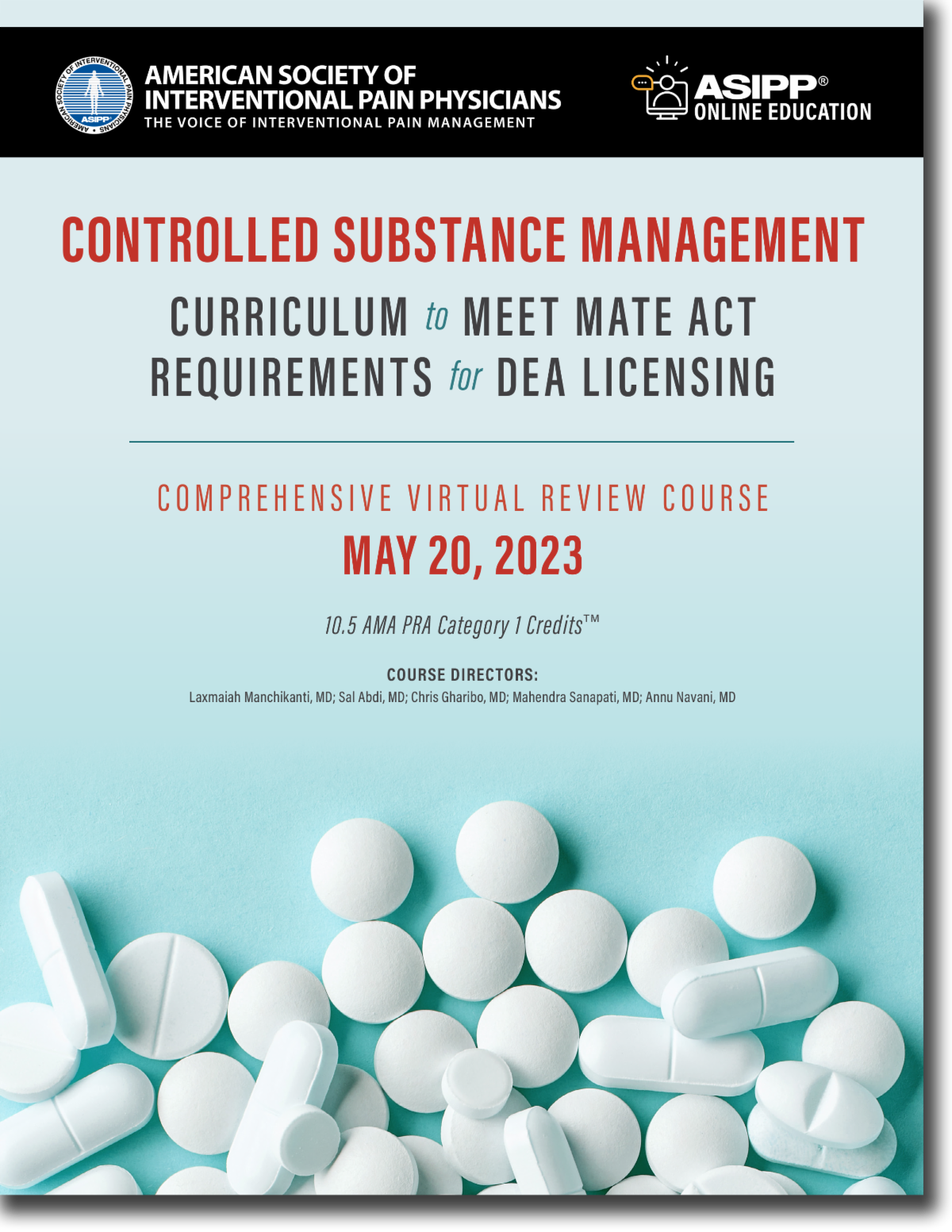
ASIPP Conducting Comprehensive Virtual Review Course with Curriculum to meet MATE Act
On December 29, 2022, the Consolidated Appropriations Act of 2023 enacted a new one-time, eight-hour training requirement for all Drug Enforcement Administration (DEA)-registered practitioners on the treatment and management of patients with opioid or other substance use disorders (Medication Access and Training Expansion (MATE) Act).
Beginning on June 27, 2023, practitioners will be required to check a box on their online DEA registration form—regardless of whether a registrant is completing their initial registration application or renewing their registration—affirming that they have completed the new training requirement.
The deadline for satisfying this new training requirement is the date of a practitioner’s next scheduled DEA registration submission—regardless of whether it is an initial registration or a renewal registration—on or after June 27, 2023.
In response to this need, ASIPP has developed the virtual review course Controlled Substance Management Virtual Review Course: Medication Access and Training Expansion (MATE) Act.
This virtual review course will be held on May 20, 2023. In addition to covering the required Curriculum to Meet MATE Act Requirements for DEA Licensing, it will also provide 10.5 AMA PRA Category 1 CreditsTM
The agenda coming soon!
|
|
Intensive healthcare education also tied to better OUD treatment engagement
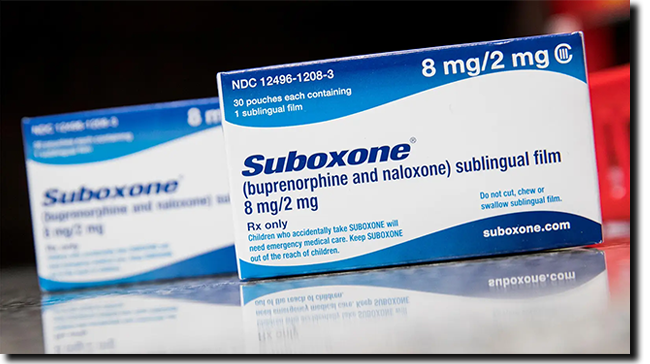
A 6-month intensive education program bolstered usage rates of buprenorphine for opioid use disorder (OUD) in the emergency department (ED), a non-randomized trial found.
Compared with a 60-minute grand rounds lecture, centers that underwent the implementation facilitation (IF) strategy increased the rate of ED-initiated buprenorphine from 0.5% to 14.6% among patients meeting criteria for moderate to severe OUD, said Gail D'Onofrio, MD, MS, of Yale School of Medicine in New Haven, Connecticut, and colleagues.
This represented two patients who received this treatment after the grand rounds lecture versus 53 patients during the IF program, out of a total of more than 700 study patients, they reported in JAMA Network Open.
|
|
*Please note: Discounted room rate ends May 17, 2023* |
|
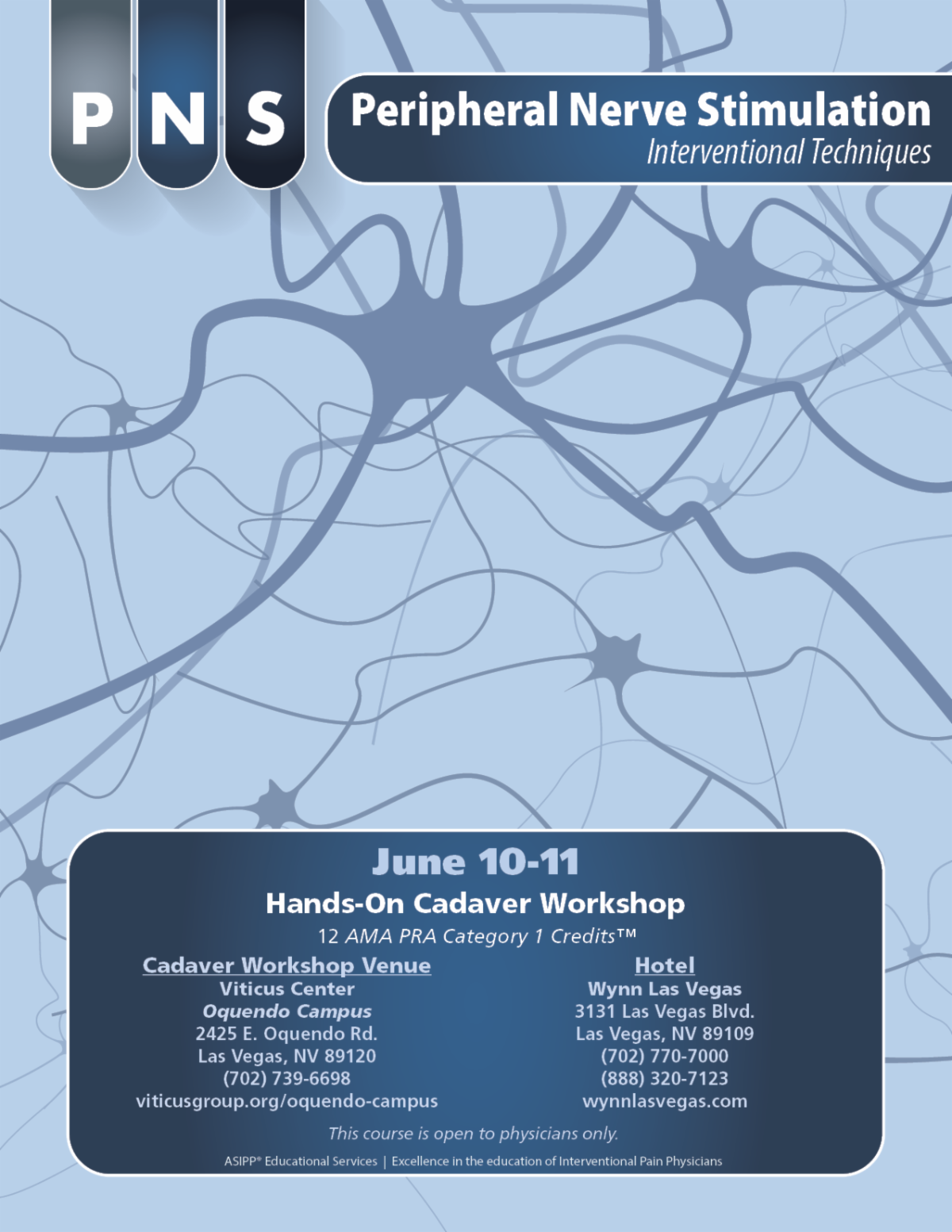
Peripheral Nerve Stimulation |
|
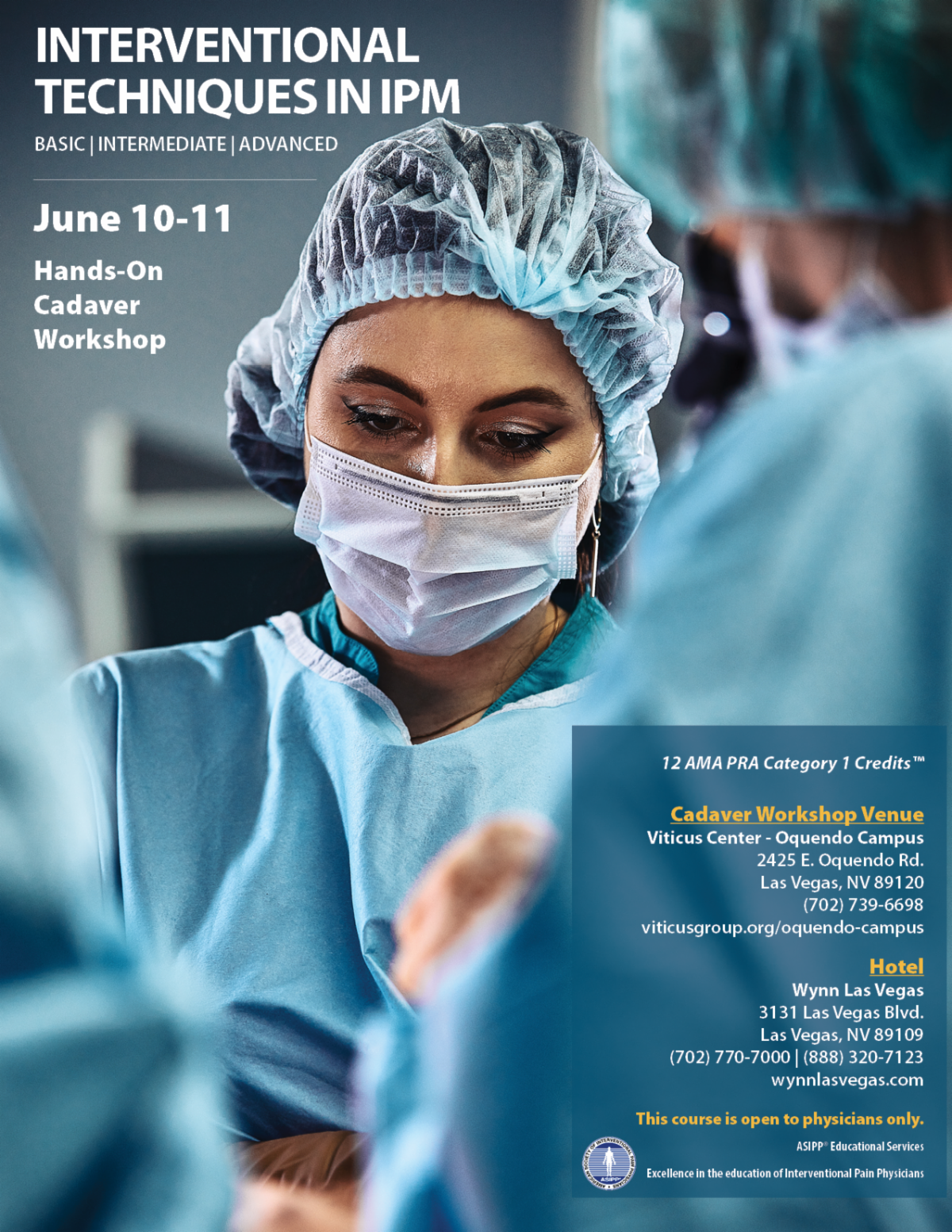
Interventional Techniques in IPM |
|
|
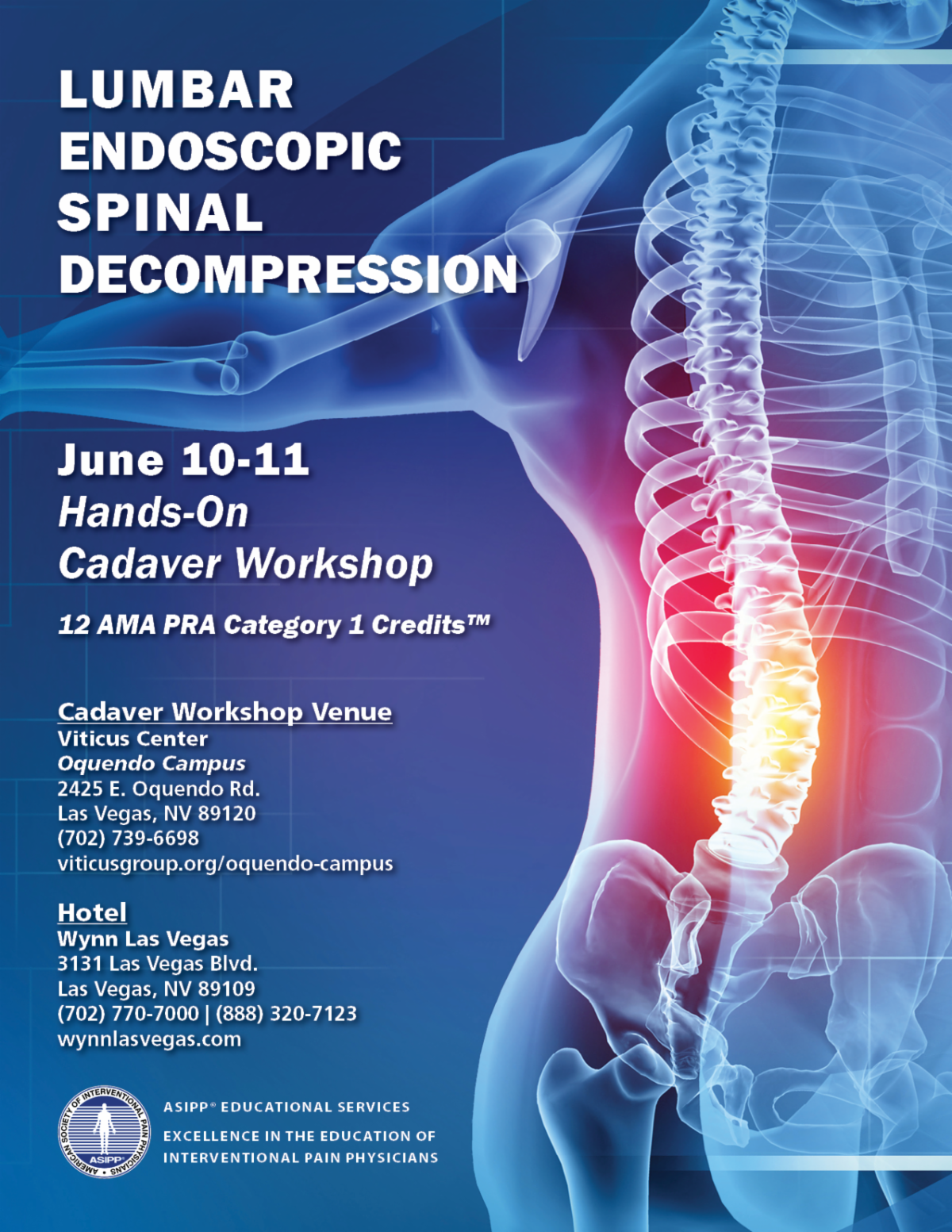
Lumbar Endoscopic Spinal Decompression |
|
|
|
Recently, Dhruva, et al published an article on Long-Term Outcomes in Use of Opioids, Nonpharmacologic Pain Interventions, and Total Costs of Spinal Cord Stimulators Compared with Conventional Medical Therapy for Chronic Pain, showing no difference (click here to read the full article).
In response Drs. Manchikanti, Sanapati, and Hirsch sent a Letter to the Editor pointing out various issues related to this study and potential reasons (click here to read the letter).
|
|
The Office of Inspector General for the United States Department of Health and Human Services has conducted yet another audit on facet joint interventions, this is the third audit. There have been extensive audits from UPICs, SMRC, Nordian, and RAC, and MAC contractors.
In this study (click here to read), OIG looked at 120 sample sessions, with only 54 complying with Medicare requirements.
The overall estimated overpayments appear to be $29.6 million for facet joint interventions for an audit period of August 1 through October 31, 2021, with new LCDs in effect.
Obviously, there will be even more audits and there will be recoupment from multiple providers on these claims.
It is crucial that we follow appropriate algorithmic approach and utilize checklists to avoid such issues.
|
|
Controversies on the effectiveness of spinal cord stimulation continue. Recently Drs. Manchikanti, Sanapati, and Hirsch wrote a response to the JAMA article (Response), JAMA Randomized Controlled Trial Comparing Spinal Cord Burst Stimulation Versus Placebo Stimulation with Lack of Effectiveness (Full Article).
Drs. Manchikanti, Sanapati, and Hirsch describe multiple issues that limit the generalizability of this randomized clinical trial, specifically in the United States.
|
|
ABIPP Part I; ABIPP Path - Combined DCCPM/CSM virtual exam; ABIPP Competency Exam in IPM; ABIPP Competency Exam in Regenerative Medicine
ABIPP Part II; ABIPP Competency Exam - Practical Portion; ABIPP Regenerative Medicine Competency Exam - Practical Portion
|
|
In-person visit requirements could lead to unfilled prescriptions and overdose deaths, some say
After the Biden administration announced they were planning to end the public health emergency in May, the Drug Enforcement Administration (DEA) released a proposed rule for the prescribing of controlled substances with the use of telemedicine, making some pandemic-era telehealth flexibilities permanent, while also establishing certain guardrails.
However, some medical organizations and stakeholders concerned about disruptions in access to critically needed medications argue that the new rule could do more harm than good.
Pandemic Flexibilities
Early in the pandemic, the Trump administration waived the in-person requirement for the prescription of controlled substances, which was passed by Congress in 2008, explained Kyle Zebley, senior vice president of public policy for the American Telemedicine Association.
|
|
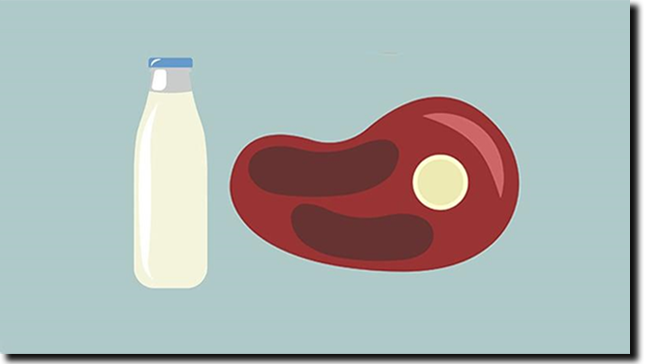
In our Western diet, dairy and beef are ubiquitous: Milk goes with coffee, melted cheese with pizza, and chili with rice. But what if dairy products and beef contained a new kind of pathogen that could infect you as a child and trigger cancer or multiple sclerosis (MS) 40-70 years later?
Researchers from the German Cancer Research Center (DKFZ) suspect that such zoonoses are possibly widespread and are therefore recommending that infants not be given dairy products until they are at least age 1 year. However, in two joint statements, the German Federal Institute for Risk Assessment (BfR) and the Max Rubner Institute (MRI) have rejected such theories.
In 2008, Harald zur Hausen, MD, DSc, received the Nobel Prize in Medicine for his discovery that human papillomaviruses cause cervical cancer. His starting point was the observation that sexually abstinent women, such as nuns, rarely develop this cancer. So it was possible to draw the conclusion that pathogens are transmitted during sexual intercourse, explain zur Hausen and his wife Ethel-Michele de Villiers, PhD, both of DKFZ Heidelberg.
|
|
ASIPP has been actively addressing recent coverage issues through letter correspondence to various agencies. The issues and letters include the following:
AIM published new guidelines effective 04/09/2023. Owned by Anthem, Inc (ANTM), the AIM guidelines are utilized by multiple insurers. ASIPP has addressed the guidelines with a comment letter on the guidelines for Appropriate Use Criteria: Interventional Pain Management. Our comments were related to paravertebral facet joint injection/medial branch nerve block/neurolysis/therapeutic facet joint interventions.
We are requesting LCD reconsideration requests to all of the Medicare Contractors for the LCD covering Facet Joint Interventions for Pain Management.
ASIPP immediate past president, Amol Soin, sent a letter to Cigna on February 7 addressing their Medical Policy Update on Peripheral Nerve Block Procedures (for trigeminal and occipital neuralgia) which considering them experimental, investigational, or unproven, with an efficacy date of April 18th, 2023. In the letter, we ask that the policy update restricting the use of peripheral nerve blocks be re-evaluated and modified. We recommended that these procedures continue to be covered and we find the characterization of these procedures to be experimental or investigational to be inaccurate.
|
|
Instead of adding more beneficial chores, take away distractions
I am naturally a problem solver, and I share this characteristic with most of my fellow physicians. When I felt burned out at one point in my career, I was certain that a literature search would help me solve the problem by giving me answers I could use to make my burnout a thing of the past.
My research, within the academic literature and information on the web, led to some disheartening conclusions. While we have good definitions for burnout, we also have a very poor understanding of what exactly causes it. We do know some risk factors for burnout and that it is at an all-time high.
The results of my search, however, were nebulous at best. Even worse, much of the conversation is framed around making physicians, already incredibly resilient people, even more resilient. The burden of solving burnout has been laid on problem-solving doctors.
|
|
- ASIPP Members Only Site Information - |
|
-
To log in for the first time you will need to click “forgot password” at the bottom of the login window.
- Check your email and then log in as directed.
-
If you have problems logging into your account, click here.
|
|
Paramedics or ER docs may someday revive dangerously drunk people by injecting them with a big dose of a liver hormone, according to researchers who saw promising results in mice.
It's yet another indication that fibroblast growth factor 21 (FGF21), a liver-produced peptide hormone, can be a weapon in fighting various afflictions. Encouraging results have been seen in nonalcoholic fatty liver disease treatment, and scientists have also investigated potential benefits in weight loss and insulin control in humans.
In the newest study, severely "drunk" mice injected with FGF21 regained their balance and alertness more than twice as fast as those who didn't get the shot. The scientists say the hormone stimulated the brain to release norepinephrine, a neurotransmitter that increases alertness.
If this reminds you of the naloxone spray used to counteract opioid overdoses, you're not far off.
|
|
New clinical practice guidelines for cannabis in chronic pain management have been released.
Developed by a group of Canadian researchers, clinicians, and patients the guidelines note that cannabinoid-based medicines (CBM) may help clinicians offer an effective, less addictive, alternative to opioids in patients with chronic non-cancer pain and comorbid conditions.
"We don't recommend using CBM first line for anything pretty much because there are other alternatives that may be more effective and also offer fewer side effects," lead guideline author Alan Bell, MD, assistant professor of family and community medicine at the University of Toronto, Toronto, Ontario, Canada, told Medscape Medical News.
"But I would strongly argue that I would use cannabis-based medicine over opioids every time. Why would you use a high potency-high toxicity agent when there's a low potency-low toxicity alternative?" he said.
|
|
Pain Medicine Case Reports (PMCR) and Editor-in-Chief Alaa Abd-Elsayed, MD, PhD would like to invite you to submit case reports and case series to the PMCR journal. Your article will be published free of charge.
Open access journals are freely available online for immediate worldwide open access to the full text of published articles. There is no subscription fee for open access journals. Open access journals are no different from traditional subscription-based journals: they undergo the same peer-review and quality control as any other scholarly journal.
Interested in becoming a member of the PMCR Editorial Board?
Editorial board members are asked to review 2-6 manuscripts per year. Please submit your most up-to-date CV to sgold@asipp.org for consideration.
For more information or to submit your articles, click here.
|
|
| CASE REPORT |
Longjam Darendrajit Singh, MD, Dhruv Jain, MD, Heena Garg, MD, Jay Prakash Thakur, MD, Gaurav Gomez, MD, and Jyotsna Punj, MD
Abstract
BACKGROUND: Pharmacological treatment alone is found inadequate for patients of fibromyalgia (FM) syndrome. For prolonged pain relief, either injections of lidocaine or botulinum toxin A were previously injected at tender points of FM with varied results.
CASE REPORT: We present a case where a mixture of lidocaine and botulinum A was injected at tender points in a young woman patient with FM, which resulted in immediate and extended pain relief with improvement in quality of life.
CONCLUSIONS: Mixture of lidocaine and botulinum toxin injections at tender points in FM may provide immediate and long-lasting pain relief.
KEY WORDS: Fibromyalgia, lidocaine, botulinum, injection
|
|
| SYSTEMATIC REVIEW |
Jin Meng, MD, Hong-yan Zhao, MD, Xiao-jun Zhuo, MD, and Qi-hong Shen, MD
Abstract
BACKGROUND: Postoperative pain is a concern after thoracic and breast surgeries. Recent studies have demonstrated that ultrasound-guided serratus anterior plane block (SAPB) could provide postoperative analgesia.
OBJECTIVE: The objective of this systematic review and meta-analysis was to examine the effects of SAPB on postoperative analgesia in thoracic and breast surgery.
STUDY DESIGN: A systematic review and meta-analysis of randomized control trials (RCTs).
METHODS: We systematically queried the PubMed, Embase, Web of Science, and Cochrane Library online databases from their establishment through Mar 31, 2022. Eligible RCTs were selected for the purpose of conducting the meta-analysis. The risk of bias of the included trials was assessed by Cochrane Review Manager. The level of certainty was examined utilizing the GRADE (Grade of Recommendations Assessment, Development, and Evaluation) scale to determine whether the evidence was of high quality or not.
RESULTS: During the process of the meta-analysis, a total of 27 pieces of literature was included in the present research. SAPB significantly reduced the intraoperative opioid consumption (mean difference [MD] = -9.52 mg of morphine equivalent, 95% CI, -15.50 to -3.54; P < 0.01, I2 = 98%) and postoperative pain opioid consumption (MD = -23.12 mg of morphine equivalent, 95% CI, -30.59 to -15.65; P < 0.01, I2 = 100%. Also, patients in the SAPB group had lower pain scores during the first postoperative 24 hours. Furthermore, SAPB attenuated the occurrence of postsurgical nausea and vomiting, as well as chronic postsurgical pain.
LIMITATIONS: Double-blinding was not performed in some trials, also some assessors were not blinded; the included sample sizes of eligible trials which reported the incidence of chronic postsurgical pain were relatively small; the comparisons between SAPB and other types of blocks were not performed in our meta-analysis.
CONCLUSION: Our findings suggest that SAPB not only relieves acute pain after thoracic and breast surgery, but also reduces the incidence of chronic postsurgical pain.
KEY WORDS: Thoracic and breast surgery, serratus anterior plane block, meta-analysis
|
|
| RANDOMIZED TRIAL |
Tarek M. Ashoor, MD, Eman M. Zain, MBBCh, Mostafa K. Reyad, MD, Ahmad M. Hasseb, MD, and Ibrahim M. Esmat, MD
Abstract
BACKGROUND: Ultrasound-guided regional anesthesia techniques for perioperative analgesia in pediatric patients scheduled for lower abdominal surgeries can be achieved either by quadratus lumborum block (QLB) or caudal block (CB). Neostigmine was co-administered with caudal bupivacaine to shorten the onset and extend the duration of analgesia.
OBJECTIVES: This study aimed to compare between 2 ultrasound-guided techniques used for perioperative analgesia (QLB with bupivacaine vs. CB with bupivacaine/neostigmine) regarding the total amount of rescue analgesic (acetaminophen mg/kg) used for pain relief at 24 hours postsurgery in pediatric patients undergoing lower abdominal surgeries in a developing country and to discuss existing barriers during the implementation of both techniques.
STUDY DESIGN: A randomized, double-blind, prospective, single-center study.
SETTING: Ain-Shams University Hospitals
METHODS: Eighty pediatric patients scheduled for lower abdominal surgeries under general anesthesia were randomly allocated to receive either ultrasound-guided QLB using bupivacaine or ultrasound-guided CB using a bupivacaine/neostigmine mixture. The total amount of rescue analgesic (acetaminophen mg/kg) 24 hours postsurgery was considered as the primary outcome while the time to first rescue analgesia, pain score, postoperative nausea and vomiting, bradycardia, hypotension, and urinary retention were considered as secondary outcomes.
RESULTS: In the QLB group, the time to first rescue analgesia was longer whereas the total analgesic dose (mg/kg) was lower than the CB group (P < 0.001, P = 0.007, respectively). While, on the other hand, in CB group, the time to perform the block was shorter and Parents Satisfaction Score 24 h postsurgery was lower than the QLB group (P < 0.001, P < 0.001, respectively). Side effects were infrequent and comparable between the study groups.
LIMITATIONS: First, the researchers did not assess the dermatomal level before or after the operation in either group. Second, the investigators should have noticed the first voiding time to demonstrate accurately the incidence of urine retention. Third, a cost-effectiveness analysis of perioperative costs (drugs, staff, resources being used) of these regional anesthesia techniques when applied in an ambulatory setting should have been done, which would be helpful for those in resource-limited settings.
CONCLUSIONS: Postoperative analgesia for pediatric patients undergoing lower abdominal surgeries can be safely and effectively achieved by QLB with bupivacaine and a CB with a bupivacaine/neostigmine mixture with priority given to CB, especially in resource-limited settings.
KEY WORDS: Quadratus lumborum, caudal, bupivacaine, neostigmine, ultrasound, pediatric, postoperative, pain
|
|
ASIPP is now in collaboration with Curi Medical Liability Program
Since this malpractice insurance program officially launched in November 2018, ASIPP has signed up hundreds of providers with an average savings of 30%. This is professional liability insurance tailored to our specialty and will stand up for us and defend our practices.
Curi is a full-service advisory firm that serves physicians and their practices. Their valued advice is grounded in your priorities and elevated in your outcomes. They are driven by a deep understanding of your specific circumstances in medicine, business, and life. To read a few important points to keep in mind about the program, including discounts, administrative defense, cyber coverage, aggressive claims handling, and complimentary risk management CME activities, visit our website.
|
|
ASIPP® has formed a partnership with Henry Schein and PedsPal, a national GPO that has a successful history of negotiating better prices on medical supplies and creating value-added services for independent physicians. Working with MedAssets, PedsPal provides excellent pricing on products like contrast media that alleviate some of the financial pressures you experience today.
|
|
ASIPP® is now offering our members the benefit of a unique revenue cycle management/ billing service.
We have received a tremendous amount of interest in the ASIPP® billing and coding program.
Click here to learn more about the negotiated rate for practices and more!
|
|
|
up-to-date news related to you, your practice, and your patients!
|
|
|
|
|
|
|