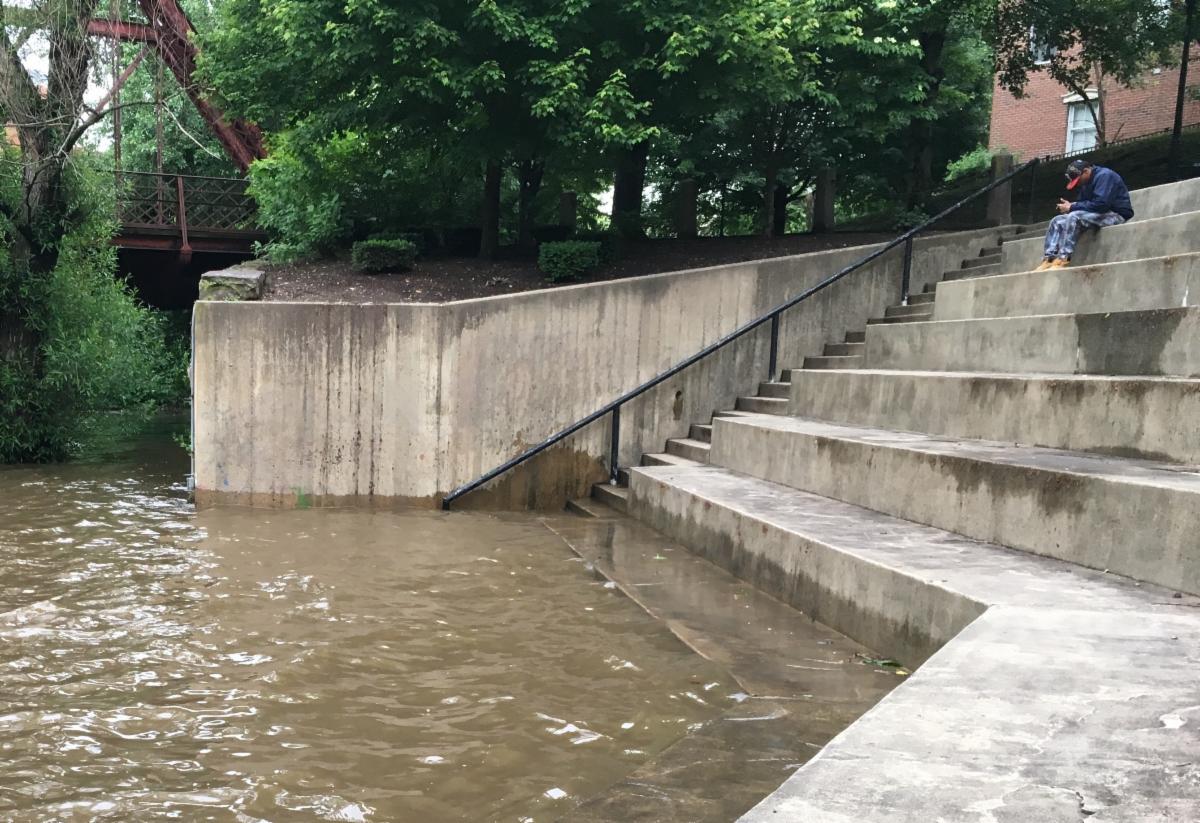
Decisions about the Combined Sewer Overflow (CSO) Long Term Control Plans (LTCPs) are being made at a time when issues of racial injustice are at the forefront of our country, from the disproportionate impacts of COVID-19 on communities of color to the urgent call that Black lives matter. Important decisions and investments in infrastructure have historically been made in front of a backdrop of systematic racism. It is therefore critical that the conversation about CSO solutions carefully consider how these new decisions can help promote equity in our cities. Communities of color who have disproportionately been impacted by pollution from industry and CSOs must have a say in these plans.
The next three months are a crucial period for selecting the projects that will be implemented over the next two to three decades. Learn which projects are being
considered
in this newsletter, on the
Sewage-Free Streets and Rivers website
and by contacting your municipality or utility. Let your mayor, city council,
water and sewer directors, and utility directors
know what you and your community want or do not want in these plans. Let them know that they must consider environmental justice concerns, local jobs, green space, flooding, climate change, as well as the costs, affordability, and equity.
|
|
Updates on the Combined Sewer Overflow (CSO) Long Term Control Plans
|
|
Two CSO LTCPs were submitted to the New Jersey Department of Environmental Protection (NJDEP) on June 1, 2020, ahead of the extended October 1, 2020 deadline. North Hudson Sewerage Authority submitted CSO LTCPs for the Adam Street Treatment Plant and River Road Treatment Plant which service Hoboken, Union City, West New York, and Weehawken. The plans will be posted on the
NJDEP website
in the next few weeks.
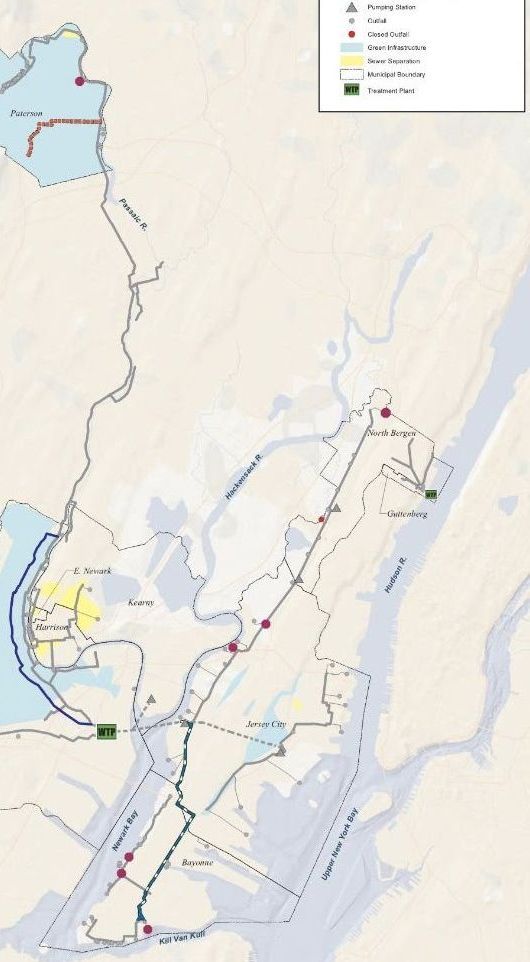
The eight CSO municipalities in the Passaic Valley Sewerage Commission region (Bayonne, East Newark, Guttenberg, Jersey City, Kearny, Newark, North Bergen, Paterson) are deciding between collaborating on
regional alternatives
like large storage tanks and a parallel interceptor or municipal alternatives like sewer separation and green infrastructure (GI). If the municipalities agree to collaborate on the regional alternatives they will still implement some of the municipal alternatives. All of the alternatives that are under consideration can be viewed in
this virtual room
.
The plans for Bayonne and Kearny are entirely gray, and the other six municipal plans are mostly gray with some GI. The municipal plans with the most GI are Paterson with 75 acres of impervious surface managed with GI, Jersey City with 188 acres managed with GI, and Newark with 213 managed with GI.
Camden County Municipal Utilities Authority will be providing an update at next month’s Community Collaborative Initiative meeting on July 8 from 2 to 2:45pm.
|
|
In 21 NJ communities, CSO LTCP decisions are being made alongside a flood of other political, social, and environmental storms. On June 9, NewarkDIG, in partnership with Sewage-Free Streets and Rivers and the Jersey Water Works Combined Sewer Overflow (CSO) Committee, held a workshop to help community advocates around the state prepare for reviewing the CSO LTCPs now due on October 1, 2020. Click
here
to watch the workshop.
Learn more here.
|
|
The coronavirus crisis has reminded us of the vital role of our water infrastructure and, accordingly, has highlighted the impact of when it fails. Regardless of a contagious and deadly virus, public health is threatened without safe and reliable water services, both drinking water and wastewater. Along with reminding us how important water infrastructure itself is, the pandemic has also underscored that the water workforce is composed of essential workers. Although office managers may be able to work from home, that flexibility is not afforded to plant operators and others who must work in the field to keep unseen, but critical, functions running.
Learn more here.
|
|
Strong Infrastructure, Healthy New Jersey
Monday, July 20 from 1:30 – 3:00pm (Virtual event!)
The COVID-19 outbreak has highlighted many challenges the water sector has been facing for years, and has emphasized just how essential clean, safe, affordable water; water and wastewater utility workers; and reliable infrastructure are to public health.
For the first time, JWW will host its annual Membership Meeting in a virtual format.
Here is what you can expect:
- State leaders’ COVID-19 response stories and ideas for getting ahead of the next crisis;
- A sneak peek of Jersey WaterCheck and a chance to shape its creation and launch;
- Hot-off-the-press member updates (email us to add yours to the list); and
- Top highlights from JWW working committees.
|
|
Get Involved and spread the word!
|
|
Got something we should include in this newsletter?
|
|
Sewage-Free Streets and Rivers is an action-oriented campaign that empowers community organizations to engage residents and small business owners to shape the
solutions
that will be adopted in July 2020 to reduce localized flooding and the raw sewage dumped into our waterways. It
is organized by its
partners
and an
advisory board
, with the support of
New Jersey Future
.
|
|
Join us on Facebook and Twitter!
|
|
|
|
|
|
|