Can't sleep? When slumber doesn't come naturally, some are turning to melatonin, an over-the-counter sleep aid that often is mistaken for a supplement. This powerful hormone plays an important role in human biology, and specialists are questioning whether increasing levels could be doing more harm than good.
A new investigation launched by the American Academy of Sleep Medicine is looking into the safety of melatonin. And while the health advisory checking the evidence is underway, the academy is recommending that melatonin not be used for insomnia in adults or children.
But what is insomnia, and how is it different from a few bad nights of sleep? Insomnia disturbs sleep at least three times a week for more than 3 months, often causing people to feel tired during the day as well.
|
|
Please only complete if you are an MD or DO
As you know, your feedback is essential to ASIPP’s advocacy efforts for interventional pain management. We are conducting a survey on “Practice Patterns of Facet Joint Interventions.” The survey is simple and easy and will take less than five minutes to complete.
Your responses will be analyzed, posted on the ASIPP website, and published in a peer-reviewed journal.
Thank you for taking the time to complete the survey.
If you already have completed it – Once again, Thank you very much!
|
|
|
|
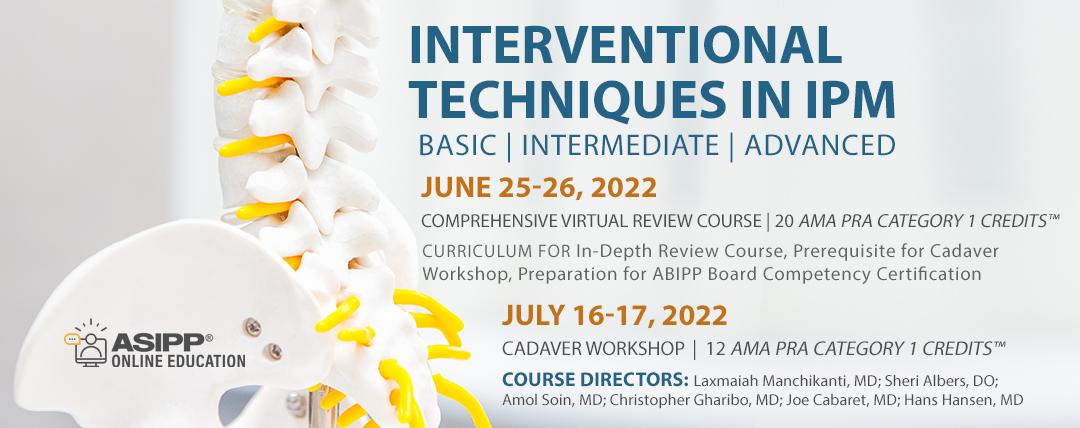
ASIPP 24th Annual Meeting
May 5-7, 2022 | Las Vegas, Nevada
|
|
24 YEARS & COUNTING!
Focusing on Fundamentals to Build the Future of IPM
Discussion on health policy with three prominent members of congress:
- The Honorable Ed Whitfield
- The Honorable Larry Buschon
- The Honorable James Comer
Raj/Racz Distinguished Lectures:
- Neuromodulation
- Documentation of medical necessity to perform epidural and facet joint intervention LCDs and evaluation and management services
Multiple General Session Topics:
- Various types of solutions in epidural injections
Keynote speech by Harsha Shanthanna, MD
- Facet joint interventions
- The opioid/illicit drug epidemic
- Compassionate prescribing
|
|
Discordant QCT, DXA results confuse patients and doctors, "How can they both be right?"
Which test should the doctor and patient believe?
This journalist can corroborate concerns about the accuracy -- or at least the confusing summary interpretation -- of the quantitative computed tomography (QCT) technique for measuring bone mineral density.
During my annual checkup, I asked my doctor to order a bone density scan for me, which at age 73, would be my first. But for reasons that aren't clear, the order was for a QCT rather than the dual-energy x-ray absorptiometry (DXA), which has been the gold standard screening strategy for decades. I am neither petite nor obese, have not fallen or fractured a bone, and do not have degenerative disease or any other red flags that are said to justify the higher radiation dose of the QCT.
|
|
NEXT EXAM DATES:
Part I
May 28, June 18, July 30, August 27, September 17, October 22, November 19 & December 17
Part II
July 15 & September 23
|
|
State budget removes need for formal, documented relationships between NPs and MDs, facilities
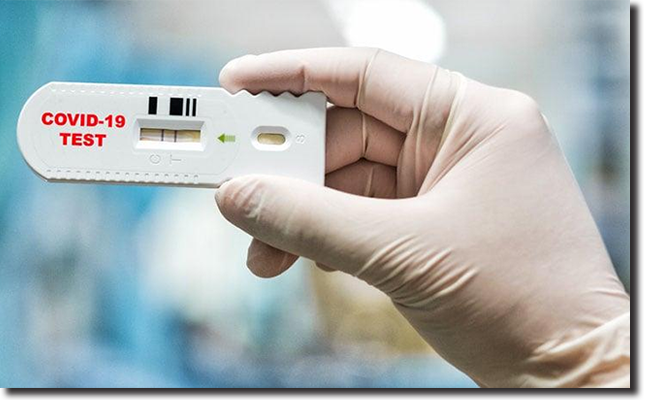
It's become all too familiar in recent years: People gather for holidays, COVID-19 cases rise, and hospitalizations follow.
Now, just beyond our first batch of holidays since Christmas and New Year's Eve — which led to a massive Omicron spike — the medical community is watching closely for a potential rise in cases.
The expectation? There may be a small increase in cases tied to last weekend's Easter and Passover celebrations, but nothing like what we have seen in the past, doctors predict. It will likely be another week, at least, before we know for sure, as cases tend to come in the days after a holiday.
|
|
Individuals with substance use disorders are at higher risk of being infected by and dying from COVID-19 — even if they are fully vaccinated — compared with the general population. Such are the findings of a line of research led by Mexican psychiatrist Nora Volkow, MD, director of the US National Institute on Drug Abuse (NIDA).
A pioneer in the use of brain imaging to investigate how substance use affects brain functions and one of Time magazine's "Top 100 People Who Shape Our World," she led the Inaugural Conference at the XXXI Congress of the Spanish Society of Clinical Pharmacology, "Drugs and Actions During the Pandemic." Volkow spoke about the effects that the current health crisis has had on drug use and the social challenges that arose from lockdowns. She also presented and discussed the results of studies being conducted at NIDA that "are aimed at reviewing what we've learned and what the consequences of COVID-19 have been with respect to substance abuse disorder."
As Volkow pointed out, drugs affect much more than just the brain. "In particular, the heart, the lungs, the immune system — all of these are significantly harmed by substances like tobacco, alcohol, cocaine, and methamphetamine. This is why, since the beginning of the pandemic, we've been worried about seeing what consequences SARS-CoV-2 was going to have on users of these substances, especially in light of the great toll this disease takes on the respiratory system and the vascular system."
|
|
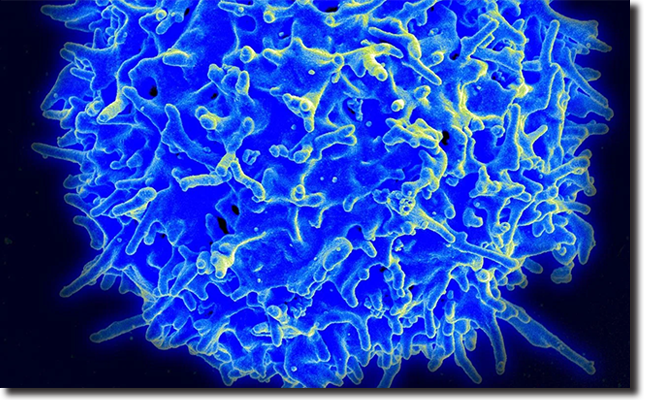
Vaccine experts aren’t certain who under 65 years should get a second booster–and when–because the response of T cells is poorly understood
The mystery surrounding a key immune defense is behind much of the uncertainty around who should get a second Covid-19 booster and when.
People 50 years and older can now get the additional booster at least four months after their first. The Centers for Disease Control and Prevention isn’t pushing those eligible to get the shots, however, and many vaccine experts say healthy people under 65 years old can wait.
|
|
- ASIPP Members Only Site Information - |
|
-
To log in for the first time you will need to click “forgot password” at the bottom of the login window.
- Check your email and then log in as directed.
-
If you have problems logging into your account, click here.
|
|
Pain Medicine Case Reports (PMCR) and Editor-in-Chief Alaa Abd-Elsayed, MD, PhD would like to invite you to submit case reports and case series to the PMCR journal. Your article will be published free of charge.
Open access journals are freely available online for immediate worldwide open access to the full text of published articles. There is no subscription fee for open access journals. Open access journals are no different from traditional subscription-based journals: they undergo the same peer-review and quality control as any other scholarly journal.
Interested in becoming a member of the PMCR Editorial Board?
Editorial board members are asked to review 2-6 manuscripts per year. Please submit your most up-to-date CV to sgold@asipp.org for consideration.
For more information or to submit your articles, click here.
|
|
| CASE REPORT |
Gozde Dagistan, MD, Babur Dora, MD, and Mert Akbas, MD
Abstract
BACKGROUND: Although intracranial hypotension is a relatively frequent problem after spinal taps, spontaneous intracranial hypotension is a rare disease. The most common cause is spontaneous spinal leak. Conservative treatment is usually the first option for these patients. If conservative measures fail, the treatment of choice is administration of an epidural blood patch (EBP).
CASE REPORT: In our case a 44-year old female patient was admitted to the emergency department with the complaint of severe throbbing pain in the back of her neck that radiated to the frontal region. The transverse T2 space imaging scans at the cervical level showed flow void in the anterior side of the dura in the cross-section passing through the upper plateau of the cervical vertebra 7.
The patient was hospitalized with the diagnosis of intracranial hypotension. After one week of conservative treatment, her symptoms did not regress so an epidural blood patch was considered.
Nineteen mL of homologous blood was injected into the epidural space. She was kept in prone Trendelenburg position for 30 minutes. At post-operative hour 2, she told that her headache was relieved and the nausea stopped. She was headache free on her control examinations at week 1 and 1, 3, 6 month.
CONCLUSION: There are cases where EBP was applied primarily from the lumbar region for dural leakage in the cervical region, but then EBP was applied from the cervical region because the symptoms did not resolve. Our patient’s symptoms have completely resolved. In this result, we think that keeping the patient in the Trandelenburg position for about half an hour after EBP is effective.
KEY WORDS: Intracranial hypotension, epidural blood patch, Trandelenburg position
|
|
| SYSTEMATIC REVIEW |
Zeyu Fang, MD, Chenghua Yuan, MD, Lei Cheng, MD, Qingyu Yao, MD, Can Zhang, MD, Xinyu Wang, MD, Jian Guan, MD, and Fengzeng Jian, MD
Abstract
Background: Selective nerve root block has been widely used to treat degenerative disc disease (DDD), but no detailed research data is provided to compare the efficacy of epidural injection of anesthetics with or without steroids on the DDD treatment.
Objectives: This study aimed to provide the first comparison of steroids + local anesthetic (LA) or LA alone for the treatment of DDD.
Study design: We systematically searched PubMed, Medline, Embase, and Cochrane. A systemic review and meta-analysis were performed to assess the clinical efficacy of both the steroids + LA group and the LA alone group, and subgroup analysis was also adopted.
Setting: A systematic review and meta-analysis using a random effects model on randomized controlled studies (RCTs).
Methods: After reviewing titles, abstracts, risk of bias, and full texts of 15,889 studies that were chosen following removal of duplicates after the initial database search, finally, 19 RCTs were included. Pain rating, functional score, follow-up period, and other-related data were extracted from these included works, and the effect size and statistical significance were calculated by the random effects model. The quality and level of the derived evidence were assessed by means of the Grading of Recommendations Assessment, Development and Evaluation method.
Results: In terms of the Numeric Rating Scale (NRS-11) and Oswestry Disability Index (ODI) at one year, the combination of steroids + LA was obviously superior to LA. Subgroup analysis suggested that the combination of steroids + LA was more effective than LA alone in regard to the ODI in the lumbar group within 2 years. The opioids intake of patients treated by LA alone was less than that of the steroids + LA group within 3 months, and LA alone was more effective in pain score reduction, with more than 50% within 6 months in the interlaminar injection group. However, the combination of steroids + LA was more effective when alleviating the NRS-11 within 18 months in the caudal injection group.
Limitations: Firstly, this analysis was inconsistent in technique, dosage, injection frequency, and follow-up period of epidural injections. Such differences may compromise the reported efficacy. Secondly, adverse reactions arising out of the 2 groups were not examined in that the included RCTs did not provide the data. Thirdly, different injection methods would compromise the outcomes, and no subgroup analysis was performed on different injection methods. Finally, these included articles that were mainly sourced from Manchikanti's team, and thus biased to some extent.
Conclusions: The addition of steroids to anesthetic injectates was associated with a better NRS-11 and ODI compared with LA alone within one year in patients with DDD. Furthermore, the improvement of the ODI was observed within 2 years in patients with lumbar DDD.
Keywords: degenerative disc disease; epidural injection; local anesthetics; meta-analysis; Steroids.
|
|
| SYSTEMATIC REVIEW |
Shuang Liang, MD, Manyu Xing, MD, Shasha Jiang, MD, and Wangyuan Zou, MD, PhD
Abstract
Background: Postoperative pain after total knee arthroplasty (TKA) is intense and remains an unsolved problem. Some studies show that perioperative, multimodal analgesia, including intravenous dexamethasone, can provide a better analgesic effect; however, the validity of studies has raised concerns and questions remain around the efficacy, dosing, and safety of dexamethasone in patients undergoing total knee arthroplasty.
Objectives: The purpose of this systematic review and meta-analysis was to evaluate the impact of intravenous dexamethasone on postoperative pain among patients undergoing TKA.
Study design: Systematic review and meta-analysis.
Setting: Web of Science, Embase, PubMed, and the Cochrane Central Register of Controlled Trials were searched to identify relevant randomized controlled trials. The last search was in August 2021.
Methods: The risk of bias of the included trials was assessed by the Cochrane Risk of Bias Tool. The primary outcome was postoperative visual analog scale (VAS) pain scores and secondary outcomes included cumulative equivalent intravenous morphine consumption, number of patients requiring rescue analgesic, length of hospital stay, and adverse events. We assessed the certainty of evidence according to the Grading of Recommendations Assessment, Development, and Evaluation (GRADE) approach.
Results: Eleven studies with 1,671 patients were included. The pooled results indicated that patients receiving dexamethasone had lower VAS pain scores at rest (24 h, MD = -0.68, [95% CI: -0.87 to -0.49]; 48 h, MD = -0.33, [95% CI: -0.46 to -0.21]) and at movement (24 h, MD = -0.74, [95% CI: -1.10 to -0.37]; 48 h, MD = -0.46, [95% CI: -0.66 to -0.26]), required less morphine (24 h, MD = -2.84 mg, [95% CI: -5.13 to -0.54]; 48 h, MD= -4.16 mg, [95% CI: -5.55 to -2.78]) and rescue analgesics, and had shorter hospitalization. There was no increase in infection, gastrointestinal hemorrhage, wound healing problems, or blood glucose levels with dexamethasone. Subgroup analysis did not observe difference between single dose and repeat dose groups.
Limitations: The perioperative multimodal analgesia measures were varied throughout the studies. The sample size was small for some outcomes and high heterogeneity was observed.
Conclusions: Our results supported the addition of perioperative intravenous dexamethasone to multimodal analgesia in total knee arthroplasty to reduce postoperative pain, opioids consumption, and length of hospital stay. Current evidence did not support the superiority of repeated-dose dexamethasone over single-dose dexamethasone; thus, we recommended perioperative 8-10 mg intravenous dexamethasone to be used based on adequate basic analgesia; however, the results may have been affected by small sample sizes and heterogeneity.
Keywords: intravenous; meta-analysis; postoperative pain; randomized controlled trial; systematic review; total knee arthroplasty; total knee replacement; Dexamethasone.
|
|
Since this malpractice insurance program officially launched in November 2018, ASIPP has signed up hundreds of providers with an average savings of 30%. This is professional liability insurance tailored to our specialty and will stand up for us and defend our practices.
Norcal Mutual is A-Rated by AM best and is licensed in all 50 states. To read a few important points to keep in mind about the program, including discounts, administrative defense, cyber coverage, aggressive claims handling, and complimentary award-winning risk management CME activities, click here.
|
|
ASIPP® has formed a partnership with Henry Schein and PedsPal, a national GPO that has a successful history of negotiating better prices on medical supplies and creating value-added services for independent physicians. Working with MedAssets, PedsPal provides excellent pricing on products like contrast media that alleviate some of the financial pressures you experience today.
|
|
ASIPP® is now offering our members the benefit of a unique revenue cycle management/ billing service.
We have received a tremendous amount of interest in the ASIPP® billing and coding program.
Click here to learn more about the negotiated rate for practices and more!
|
|
|
up-to-date news related to you, your practice, and your patients!
|
|
|
|
|
|
|