The Institute for Health Equity Research, Evaluation & Policy | |
IHE Celebrates National Minority Health Month | |
Leadership in Health Equity: April 2024 | |
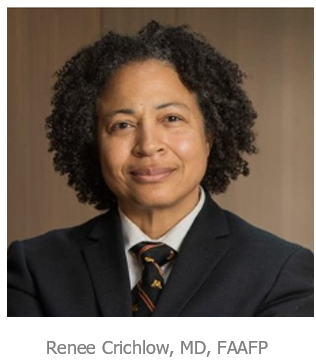
To celebrate National Minority Health Month, the IHE asked Dr. Renee Crichlow to share her perspectives on leadership in health equity. Renee Crichlow, MD, FAAFP, is the Chief Medical Officer of Codman Square Health Center in Boston.
The discussion explored Dr. Crichlow's work, the importance of diversity in the health care workforce, and recommendations she has for the future.
You can read the full discussion below.
| |
April is National Minority Health Month (NMHM), a time to raise awareness about the importance of improving the health of racial and ethnic minority communities and reducing health disparities. | |
|
National Minority Health Month:
An Interview with Dr. Renee Crichlow
| |
|
IHE: Why is it important to have a diverse and inclusive workforce in healthcare?
RC: The imperative for a diverse and inclusive workforce in healthcare is not merely a matter of ethical prerogative or social justice; it is fundamentally intertwined with the core mission of healthcare itself—to deliver compassionate, effective, and equitable care to all segments of the population. Studies have shown that healthcare providers from diverse backgrounds are more likely to treat minority patients, who historically have faced barriers to accessing care. This congruence between the provider and patient can lead to enhanced communication, higher levels of trust, and greater patient satisfaction.
In the words of Sir William Osler, a founding father of modern medicine, "the value of experience is not in seeing much, but in seeing wisely." A diverse workforce embodies this principle, bringing a wealth of experiences that enrich the collective wisdom of the healthcare community, driving excellence and advancements in patient care.
| |
The healthcare sector does not operate in a vacuum; it reflects and influences the broader societal context. A diverse and inclusive healthcare workforce sends a powerful message about the values of equity, respect, and human dignity. It challenges the structural inequalities that permeate our societies and contributes to a more just and equitable world.
From an ethical standpoint, diversity and inclusion in healthcare are imperative to uphold the principles of beneficence, non-maleficence, autonomy, and justice. These ethical principles demand a healthcare system that acknowledges and addresses the unique needs of all individuals, fostering an environment where every patient feels valued and understood.
IHE: Could you tell us more about The Ladder program you founded, and how the program contributes to diversity in community health care leadership?
| RC: The number of Black men in medical school did not rise between 1978 and 2014, about 1500. Since 2014 the number of Black students applying to medical school has increased significantly. Yet the percentage of Black students accepted to medical schools has remained at only 35% of those that apply and is almost the same percentage of Black students admitted to medical schools as in 1978. | |
When I was at the University of Minnesota, we decided to do something about this, something different, to expand the pool of applicants by creating a supportive community of purpose called The Ladder. The Ladder is a structured environment of service learning, leadership development, and cascading mentorship. It is designed to mentor kids who are interested in health careers.
We began in 2012, and so much has happened since then. The Ladder works. Three of the most recent URM, Under-Represented in Medicine, recruits to the University of Minnesota School of Medicine faculty were and are participants in The Ladder, two of whom are men. We have had numerous Black and Brown students who started with us in their college and medical school years express that working with The Ladder was a crucial support system for them as they faced the challenges of healthcare education.
Now we have expanded to Dorchester, a collaboration has developed between Codman Academy Charter School, BMC Family Medicine Residency program, and Tufts Family Medicine Residency Program. We have monthly meetings on the third Saturday of each month.
Imagine what we can accomplish when we have the funds to continue to grow a more diverse and equitable healthcare education for all.
IHE: Who has inspired your work or shaped the healthcare field as we know it today?
| |
RC: Reflecting on the influences that have shaped my path in healthcare, it's clear that my family, my patients, and my teachers have been pivotal. My family instilled in me the values of empathy and service, teaching me that healthcare is not merely a profession but a calling to serve with compassion. This foundational belief has guided my approach to patient care, emphasizing the importance of seeing the person beyond the illness.
My patients have been my greatest teachers, each story enriching my understanding of the human experience of health and disease. They've taught me resilience, hope, and the critical importance of personalized care. Their diverse backgrounds and life stories remind me daily that effective healthcare requires a deep understanding and respect for the cultural and personal contexts of each individual's life.
Together, these influences have shaped my approach to healthcare, embedding within me a profound commitment to improving the human condition through compassionate, patient-centered care.
IHE: What recommendations do you have for leaders in community health to advance health equity?
| |
RC: Advancing health equity in community health requires a multifaceted approach that encompasses strategic leadership, policy reform, community engagement, and continuous learning. Leaders in community health are uniquely positioned to spearhead these efforts, leveraging their influence, resources, and networks to catalyze change. The journey towards health equity is complex and challenging, yet deeply rewarding, offering the promise of a more just and healthy society.
To make a difference, leaders should cultivate an organizational culture that prioritizes equity and values diversity. We should implement ongoing training programs on cultural competence, implicit bias, and social determinants of health for all staff members. We must strive to recruit, retain, and promote a diverse workforce that reflects the community served. We should also develop and enforce policies that promote inclusion and equitable treatment for all patients and staff. Importantly, we should partner with local organizations, schools, faith-based institutions, and businesses to co-create health programs that address specific community needs.
Health equity cannot be achieved without addressing the root causes of health disparities. Leaders should work across sectors (housing, education, transportation, etc.) to develop initiatives, direct resources and funding that address the broad range of factors affecting health.
As Nelson Mandela once said, "Health cannot be a question of income; it is a fundamental human right." In the spirit of this vision, let us move forward with purpose, guided by the principles of equity and justice, to create a healthier, more equitable future for all.
| |
Renee Crichlow, MD, FAAFP, is the Chief Medical Officer, CMO, of Codman Square Health Center in Boston, the Vice-chair of Health Equity at the Boston University Department of Family Medicine, has practiced full-spectrum Family Medicine with Obstetrics for more than 20 years, and serves as the Medical Editor for Diversity, Equity, and Inclusion at the journal, American Family Physician. She is also the President for the Society of Teachers of Family Medicine 2023.
Learn more about The Ladder program at theladdermn.org.
|
|
Black Maternal Health Week | |
|
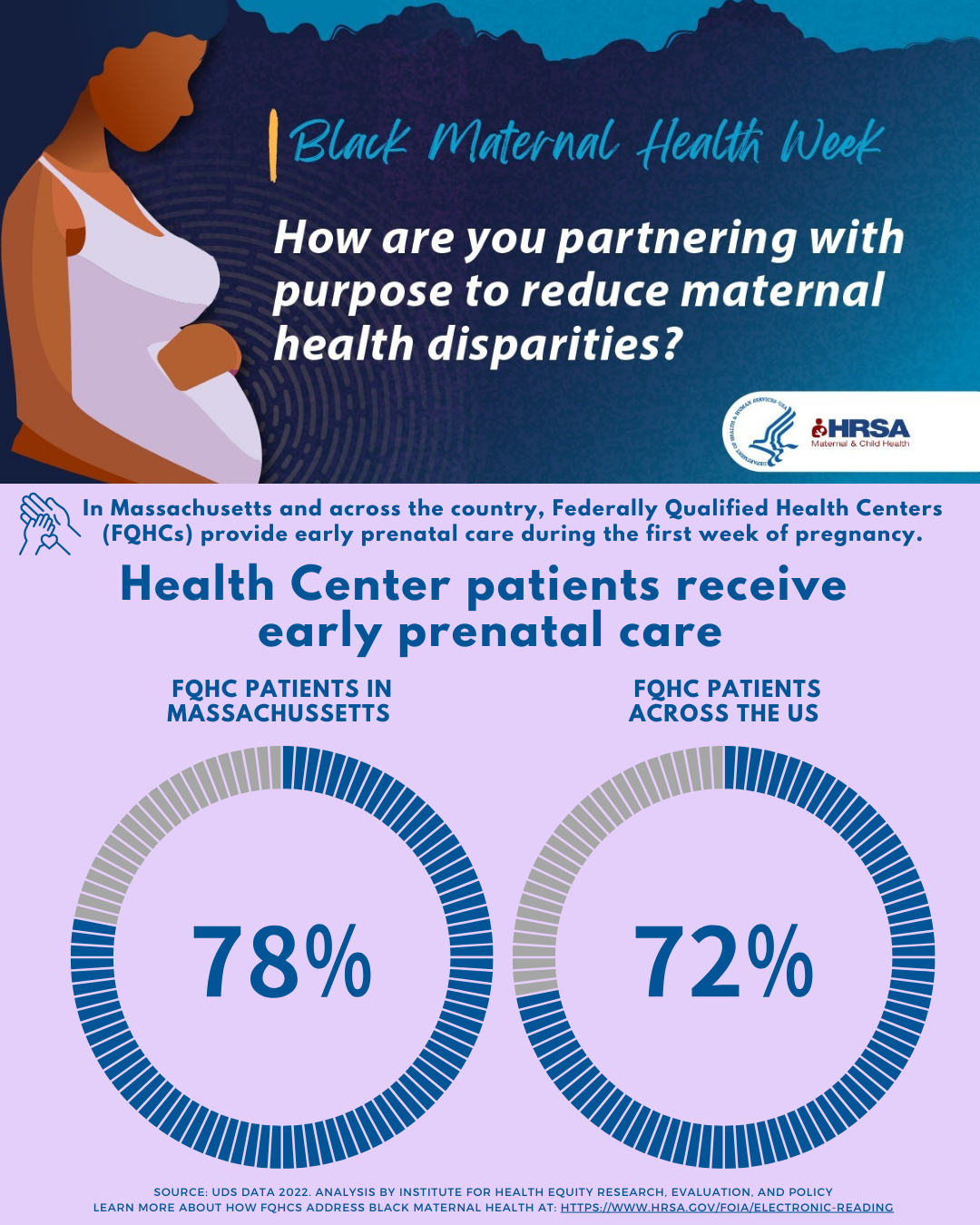
As Black birthing individuals face deeply disparate pregnancy-related health outcomes as a result of systemic racism and deep-rooted inequities, responsive and community-centered care programs are key to closing these racial and ethnic gaps.
Learn more at HRSA.gov.
| |
April 2024 marks National Cancer Prevention Month | |
|
Black and Latine residents have long faced disproportionate colorectal cancer mortality rates, compounded by a rise in morbidity and mortality rates among young people nationwide. Increasingly, adolescents and young adults are dying of colorectal cancer even before they reach the recommended screening age of 45.
Amidst these concerning trends, we thank and congratulate the Boston Public Health Commission and Colon Cancer Coalition for their new campaign to increase health literacy and awareness around colorectal cancer.
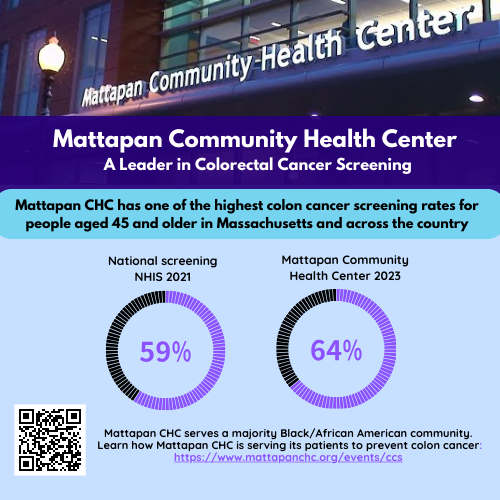
Community health centers like Mattapan Community Health Center are leaders of the movement to end colon cancer disparities. Mattapan is partnering with BPHC to connect patients to preventive screenings. Responsive campaigns like this are vital to creating healthier communities and ultimately advancing health equity.
| |
|
IHE highlights in the media
"Boston Medical Center Researchers Receive $19 Million to Advance Treatment of Hypertension and Equitable Care Outcomes," Boston Medical Center News, April 24, 2024:
Over the next five years, IHE is excited to work with the Boston Medical Center research team to analyze the effectiveness of health system strategies in improving patient outcomes for hypertension management and mitigating disparities. This work is funded by the Patient-Centered Outcomes Research Institute (PCORI).
| |
"Advocates, city look to independent pharmacies to fill access gaps," Bay State Banner, March 20, 2024:
IHE spoke with Avery Bleichfeld about the concerning trend of pharmacy closures in communities of color as an issue of health equity.
| |
The Institute for Health Equity Research, Evaluation, and Policy | |
In 2023, The Massachusetts League of Community Health Centers (Mass League) created the Institute for Health Equity Research, Evaluation and Policy, Inc. (IHE), a 501(c)(3) non-profit organization designed to support Emancipatory research driven by community health centers.
IHE convenes communities and supports the scientific infrastructure, implementation, program evaluation and training needed to identify and sustain the most effective strategies for attaining equity in health and healthcare, as defined by those with lived experience of health inequities.
Learn more about IHE on our webpage of the Mass League website and on our LinkedIn page.
| |
Shine Lecture:
Community Health Centers and the Social Determinants of Health
| |
On April 9, 2024, Boston University School of Public Health’s Center for Health Law, Ethics & Human Rights presented the annual Cathy Shine lecture.
The lectureship honors the memory of Cathy Shine and her dedication to the rights of all those in need of care. This year’s event featured Cheryl Clark, MD, ScD. as guest speaker followed by a moderated Q&A with Professor George Annas. Dr. Clark addressed the connections between social determinants of health and the intersection of health, law, ethics, and human rights.
Check out the Shine Lecture feature profile in the Boston University Public Health Post from April 5, 2024.
| |
|
IHE March feature:
Women's History Month
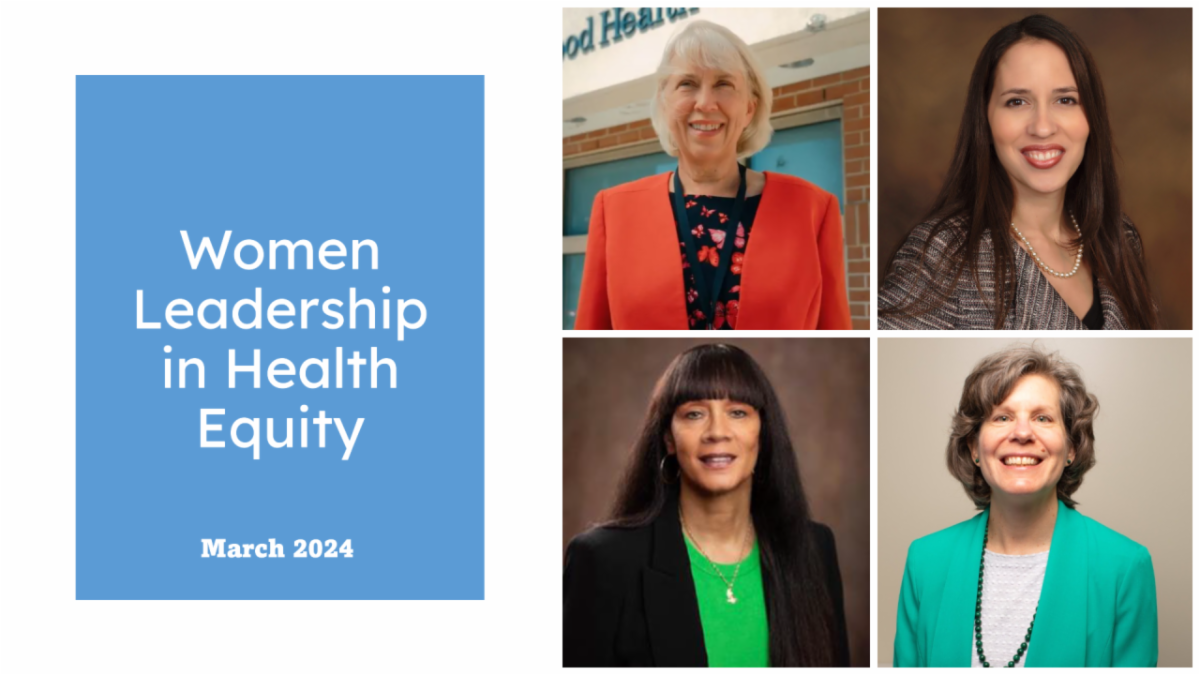
For Women's History Month, Dr. Cheryl Clark asked four amazing women leaders of community health centers in Massachusetts to share their perspectives on women’s leadership:
Read the article on LinkedIn.
| |
| | | |