|
|
The Newsletter of Fig Tree Books | |
August 2024: Issue #57 --- Fredric D. Price, Founder & Publisher | |
|
COMING SOON: It Takes Two to Torah,
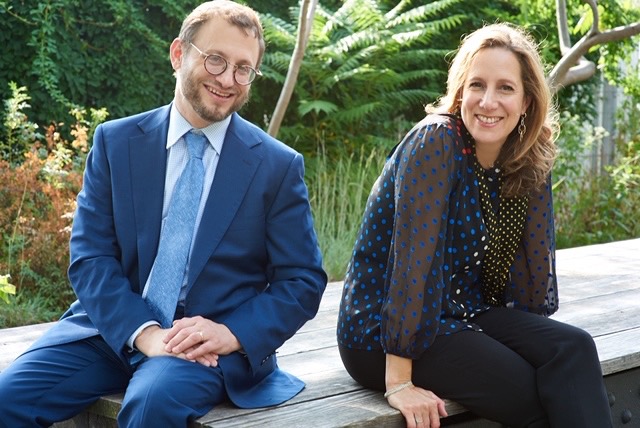
by Abigail Pogrebin and Rabbi Dov Linzer
| |
For the first time, in one volume, readers can take a tour of the entire Torah through the medium of one challenging, instructive, irreverent, animated conversation. Between 2018-2020, an Orthodox rabbi and Reform journalist talked through the Five Books of Moses with candor, humor, emotion, personal revelation, and scholarship. Rabbi Dov Linzer and Abigail Pogrebin recorded these short dialogues—ten minutes per parsha—for a podcast for Tablet Magazine, and they have now been collected and edited by Fig Tree Books LLC so that the full exploration can be found in one place. | |
“This unlikely, inspired pairing leads to some of the most spontaneous, moving exchanges about our tradition’s foundational text.” - Rabbi Angela Buchdahl, Senior Rabbi, Central Synagogue | |
|
ABIGAIL POGREBIN is the author of My Jewish Year: 18 Holidays, One Wondering Jew—a National Jewish Book Award finalist—and Stars of David: Prominent Jews Talk About Being Jewish. She’s written for the Atlantic, the Forward, and Tablet, and moderates conversations for the Streicker Center and the Jewish Broadcasting Service.
RABBI DOV LINZER is the President and Rosh HaYeshiva (Rabbinic Head) of Yeshivat Chovevei Torah, an Orthodox rabbinical school and Torah center, which promotes a more open and inclusive Orthodoxy. He has written for the Forward, Tablet and the New York Times, published widely, and hosted highly popular Torah podcasts.
| “Each chapter also touches on hidden interpretation and insight into Divine meaning.” From the Foreword, by Mayim Bialik | |
MEMOIR: In Bad Faith, by Dassi Erlich | |
As a young girl growing up in a strict ultra-Orthodox family, Dassi's life was preordained - marry young, live a devout life and raise children within the Adass community's religious rules. This righteous path would keep her safe from the immodest, secular world just a few blocks away in suburban Melbourne.
But the Adass community was not safe for Dassi.
She was fifteen when her revered school principal, Malka Leifer, started to single her out. Dassi's cloistered and harsh upbringing meant she didn't have the words for what was happening to her, but she knew it was very, very wrong. It would take her years to break free of the secrecy which pervaded the community and tell the police of her betrayal. And only then would she find out others, including two of her sisters, had also been abused, and would learn some in the Adass community had helped Leifer flee to Israel. With the only world she knew crumbling around her, Dassi found the strength to fight, leading a brave fifteen-year campaign to bring Leifer back to face Australian courts.
This is Dassi's story.
| |
'What a story . . . Heart-wrenching . . . What is remarkable about Dassi Erlich and her sisters is that somewhere they found the courage to confront what was going on, in their own lives and in other lives'
SYDNEY MORNING HERALD
'Raw and revealing . . . Beautifully written and eloquently sheds light on the dark times Dassi experienced, breaking down stigmas by openly discussing abuse and mental health'
AUSTRALIAN JEWISH NEWS
| |
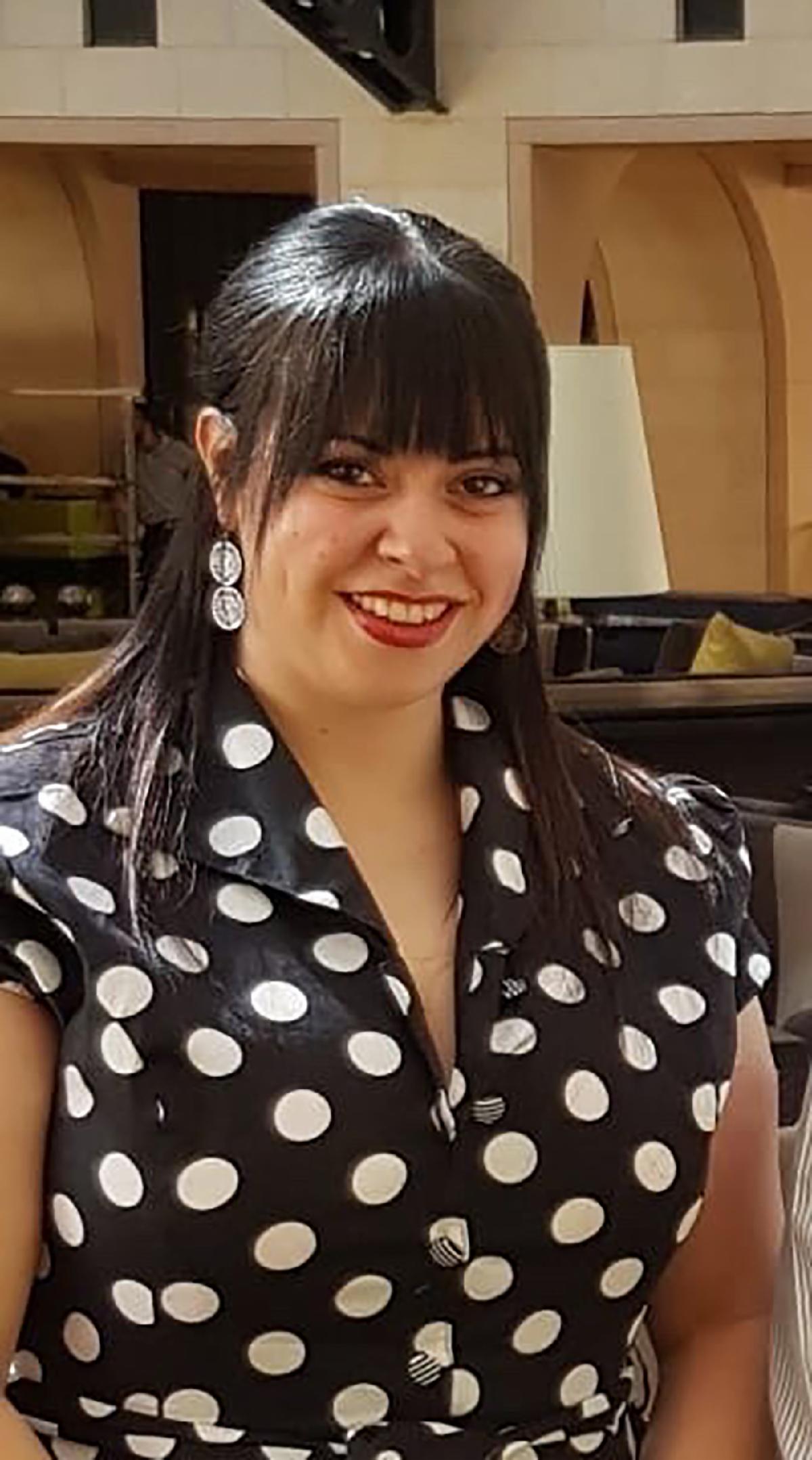
"I am a sexual abuse survivor, but I am also more than a survivor. I will continue fighting for justice for all victims." Dassi Erlich is a high-profile lobbyist, justice campaigner and advocate for sexual abuse survivors. Given the hardships she has faced, her trajectory is extraordinary. In Bad Faith is Dassi's powerful memoir. | |
BOOK EXCERPT: The Moon in a Paper Bag, by Lila Kalick | |
Northern Germany, fall, 1936: The soles of a pair of boots trample lattices of beige and ochre leaves covering the ground. The fallen leaves crunch and fracture as a yellow-haired, 15-year-old boy tears through an orchard toward a grove of taller trees ahead. His pack beats against him and he grips the top of its straps: the skin on his hands, usually pearl white, flushes with blood; his knuckles darken. He glances back over his shoulder and hears the distant but deep barks of Shepherds ringing out. His knees pull up closer and closer to his chest. He sprints. | | |
|
Author Lila Kalick has an MFA from Mills College and her writing has appeared in various publications, most recently in BUST and HuffPost, where she worked as an associate editor. This book is Lila Kalick's tribute to her Great-Uncle Fred, inspired by his life as a gay, Jewish refugee who left the safety he found in the United States to return to Europe to help fight the Nazis as one of the Ritchie Boys — a key World War II intelligence group made up mostly of German-speaking immigrants who fled the Nazis only to return and fight them. Lila lives in Oakland, California where she works as a freelance writer, editor, and visual artist. | |
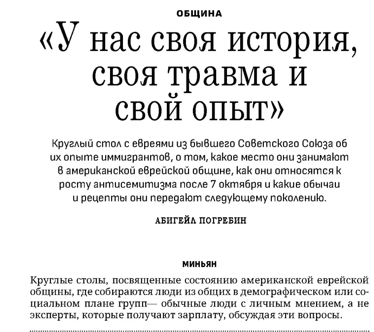
A roundtable discussion with Jews from the former Soviet Union about their experience as immigrants, where they fit into the American Jewish community, how they view rising antisemitism after Oct. 7, and which customs and recipes they’re passing down to the next generation. | |
|
The Russian Empire had the largest Jewish population in the world by the late 19th century. In the closing decades of the czars’ rule, however, waves of violent pogroms spurred massive emigration; more than 2 million Jews left, the vast majority going to the U.S. Under Soviet rule, the Jews who remained were forbidden to leave, even as they were routinely persecuted for practicing their religion, and denied educational and employment opportunities. Jewish kids learned early to hide their Jewish identity; some were never told they were Jewish. Individuals who dared to apply for exit visas were typically denied; known as refuseniks, their families were then subjected to additional prejudice, particularly in the workplace.
| |
PARSHA: On Leadership - Pacing Change, by Rabbi Sacks
| |
|
BOOK REVIEW: 100 Jewish Brides:
Stories from Around the World
by Barbara Vinick & Shulamit Reinharz
| |
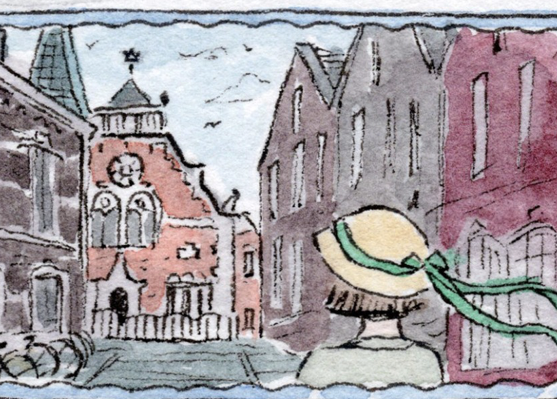
100 Jewish Brides: Stories from Around the World features stories of Jewish brides from six continents, highlighting diverse customs and rituals related to weddings now and in the past. The stories, written by brides, their relatives, clergy, and other intimates, cover similarities and differences across the Jewish diaspora, from courtship and betrothal to pre-wedding customs, the wedding ceremony, and beyond. | | A Jewish wedding after conversion in Madagascar, a reunion of Holocaust survivors in Sweden, a shipboard romance initiated by a celebrity, these stories from 83 countries describe Jewish wedding traditions, some familiar and others eye-opening, in a multitude of cultures and settings, past and present. | |
CONVERSATION: The Diary Beyond Anne Frank: A Conversation with Nina Siegal and Yael van der Wouden | |
|
By Becca Kantor
Diaries play a unique role in Dutch World War II history. While Anne Frank’s The Diary of a Young Girl is known worldwide, Frank was only one of thousands of Dutch citizens who saved their wartime diaries. They did so at the urging of the Dutch Minister for Education, Arts, and Sciences, who believed that journals and letters would be essential to painting “the picture of our struggle for freedom … in its full depth and glory.”
Two recent books — one nonfiction, the other fiction — add new detail to this picture by shedding light on overlooked diaries. Nina Siegal’s The Diary Keepers interweaves excerpts of journals written by people who had a wide range of professions and political leanings. Yael van der Wouden’s debut novel, The Safekeep, depicts a relationship between two women in the 1960s that is profoundly changed by the discovery of a wartime diary.
In the following conversation, the authors discuss long-held beliefs about Dutch resistance questioned in their books, the antisemitism that still lingers in the Netherlands, and a cultural shift that might change the way the country will remember the Holocaust in the future.
| |
BLOG: With commentary and Guest Blogs on culture & current events, plus mini-reviews of books not published by Fig Tree Books
CLICK on the BLOG image to READ, REPLY to what we've written, COMPOSE something on your own about the state of literature (Jewish or otherwise), book publishing in general, culture & current events, or a specific book that you want to let others know about. And to SIGN UP, so you don't have to wait to read our blogs once a month when Fig Tree Lit is published.
| | | | |