Signals Consortium Gathers to Develop New Maintenance Training Materials | | |
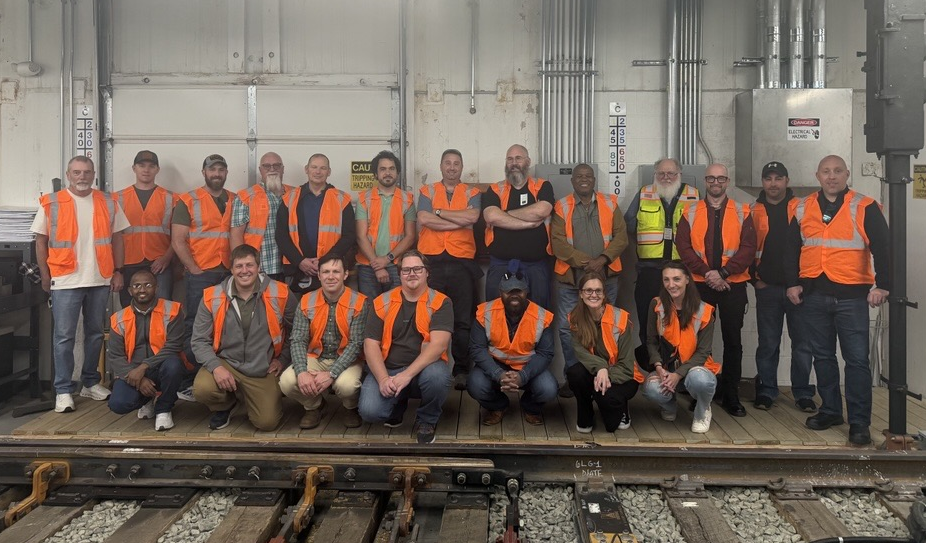
In mid-October, ITLC welcomed 18 Signals Consortium subject matter experts (SMEs) from transit agencies across the country to its offices in Silver Spring, MD. ITLC Consortium Program Manager Kristen Ribaudo led a team of instructional designers, including Allie Franklyn, Frank Burnett, and Shawna Bowker, as the group reviewed draft courses, settled technical questions, and shaped new training for signal maintainers across the transit industry.
Transit agencies and unions participating in the meeting were: CATS (Charlotte, NC); GCRTA and ATU Local 268 (Cleveland, OH); Metra Rail and BRS Local 183 (Chicago, IL); Metro Transit and ATU 1005 (Minneapolis, MN); Metro Transit/Bi-State (St. Louis, MO) and IBEW Local 2; NFTA and ATU Local 1342 (Buffalo/Niagara, NY); SacRT and IBEW 340 (Sacramento, CA); VTA and SEIU Local 521 (Santa Clara, CA); Sound Transit (Seattle, WA); and WMATA and ATU Local 689 (Washington, D.C.)
| ITLC Signals Consortium Members and Instructional Designers | |
The group worked on three projects: Interlocking, Print Reading, and Relays. On Interlockings, Allie led SMEs as they reviewed drafts of Introduction to Interlocking and Advanced Interlocking. They confirmed technical content, updated terms to match current industry practice, and shaped hands-on field activities for new maintainers. For Print Reading, Shawna led SMEs in building a detailed outline for a new course on reading signal prints. The course will use real print sets shared by member agencies and cover how to navigate a print set, read symbols, trace circuits, and use prints to troubleshoot. Kristen led the work on Relays, and SMEs reviewed the three course modules. They also agreed on a learning path for signal maintainers, starting with Relays first, followed by Logic, and then Interlocking.
Members enjoyed the process of collaborating on these projects and shared positive feedback on productivity and teamwork. One SME stated, “I think this was one of our best meetings.” Another SME reflected that “the team-building activity was really great for getting to know each other.”
Members also helped plan next year’s work, ranking possible 2027 projects, with Logic, Instructional Videos, and Specialty Tools as priorities. They also shared ideas for a signals video library, including a signal house tour, switch inspection, and battery maintenance. Weekly SME webinars start in mid-November, so members can keep giving input as the courses are revised and developed. In addition, planning for course pilots is under way with Metro Transit/Bi-State and VTA.
ITLC’s national training consortiums bring transit agencies together to develop standardized technical training materials in Signals, Rail Car, and Traction Power maintenance. ITLC is also exploring the development of a Track Maintenance Consortium. To learn more about the consortiums, including opportunities to participate in the proposed Track Maintenance Consortium, contact Kristen Ribaudo at kribaudo@transportcenter.org.
| | ATU Bus Safety and Innovation Summit | | |
Executive Director Jack Clark was invited to attend the Amalgamated Transit Union’s (ATU) Bus Safety and Innovation Summit in Toronto on October 22. The event brought together more than 200 transit leaders, union members, agency officials, manufacturers, and academics to learn about ATU’s Bus Design Innovation Program (BDIP), which addresses bus safety and innovation. In addition to ATU International, BDIP partners include the Toronto Transit Commission (TTC), ATU Local 113, and Toronto’s Centennial College.
Opening the gathering, ATU International President and ITLC Board of Directors Chair John A. Costa recalled being a newly hired subway car cleaner in Newark, NJ, and his work with the union to make that work safer. He spoke about the range of safety issues he continued to address as a local union official and now as International President, and highlighted the critical importance of involving workers as full partners early and throughout safety design and decision-making.
| | |
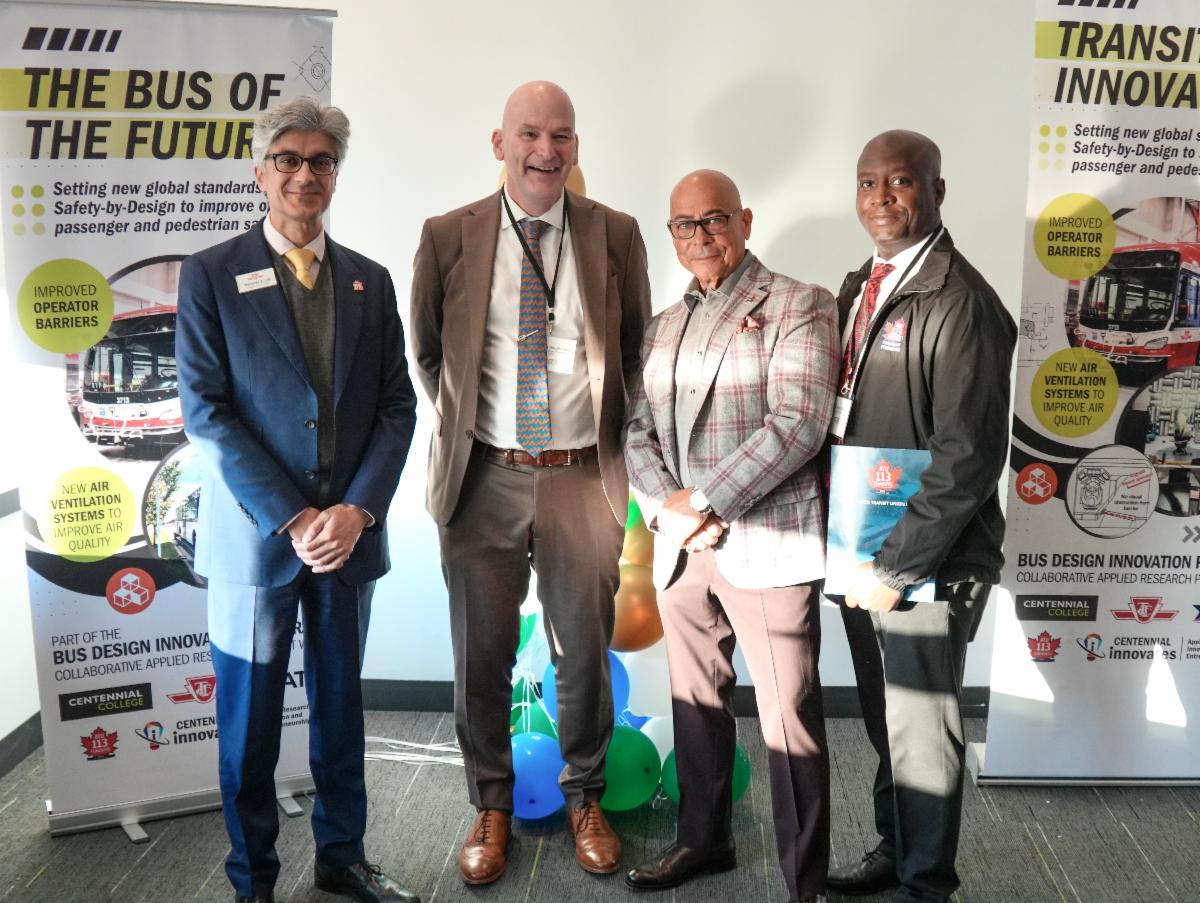
TTC CEO Mandeep S. Lali, Centennial College President Craig Stephenson,
ATU International President John A. Costa, and Local 113 Toronto President Marvin Alfred
| | |
Under BDIP, Local 113’s Health and Safety Committee worked to ensure workers were fully involved in developing new bus prototypes with built-in barriers and other safety improvements. Centennial College President Craig Stephenson echoed the call for “human-centered design,” noting that 1,900 bus operators reviewed and rated prototype designs, and said that TTC has committed to incorporating those operator preferences in its next bus procurement.
ATU International’s Director of Health and Safety Andrew Falotico spoke about a vision of BDIP that can reshape bus safety across North America. He noted that BDIP was continuing work from the FTA-funded Bus of the Future project that ATU International and the International Transportation Learning Center ran from 2021 to 2023, exploring areas such as improved airflow, eliminating the blind spot, and improving ergonomics. BDIP will move these and many other safety ideas forward, using the approach described in this resource, including ATU’s BDIP webpage and a video shown at the conference.
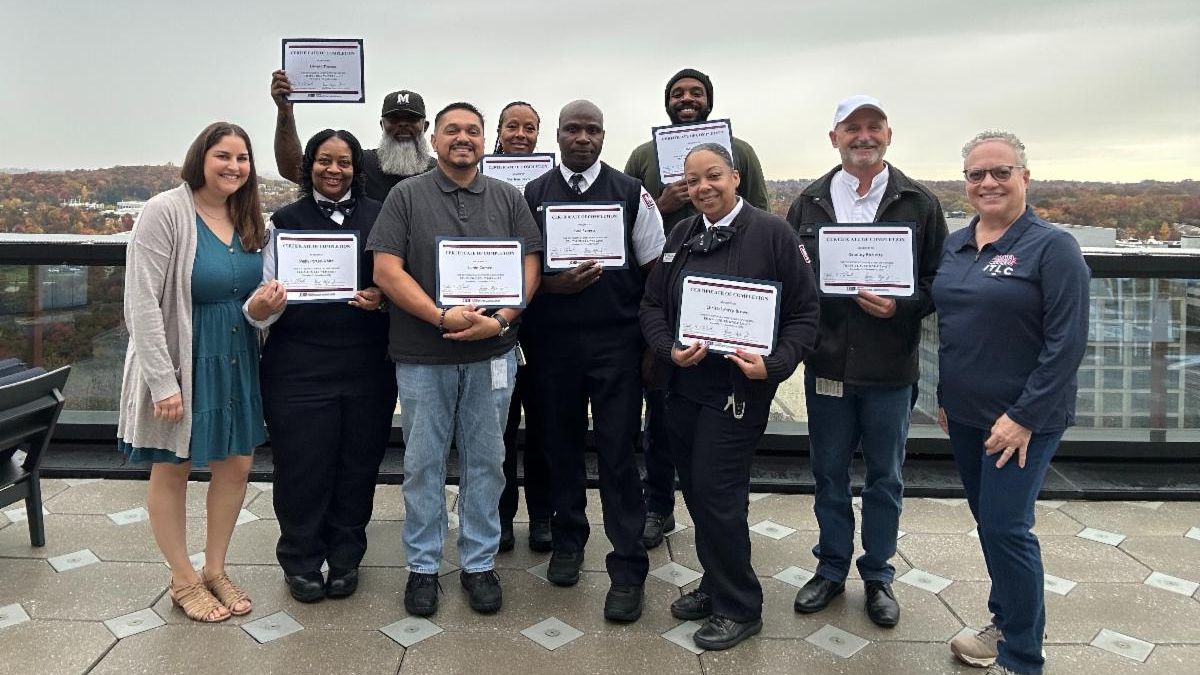
| | ITLC Facilitates 10th Train-the-Trainer Session With WMATA | As part of an ongoing partnership with Washington Metropolitan Area Transit Authority (WMATA, Washington, D.C.), ITLC facilitated its 10th Train-the-Trainer session with the agency. Since launching its partnership in April, ITLC has worked with 74 WMATA trainers to help strengthen their instructional and facilitation skills. | Train-the-Trainer course participants with facilitators at WMATA | |
Peer learning is an important part of each week-long session, which brings together participants with a wide range of training experience. Trainers can share current techniques, practice new ones in a supportive setting, and leave with skills they can use right away in their own trainings.
Participants continue to find the course useful and provide consistent positive feedback. One attendee said the class was “engaging and a refreshing experience,” while another emphasized how ITLC instructors were “very helpful and knowledgeable and created a great learning experience.”
Sessions will continue at WMATA through March 2027. For any questions about Train-the-Trainer, contact Kristen Ribaudo at kribaudo@transportcenter.org.
| | Transit Workforce Center Activities | | |
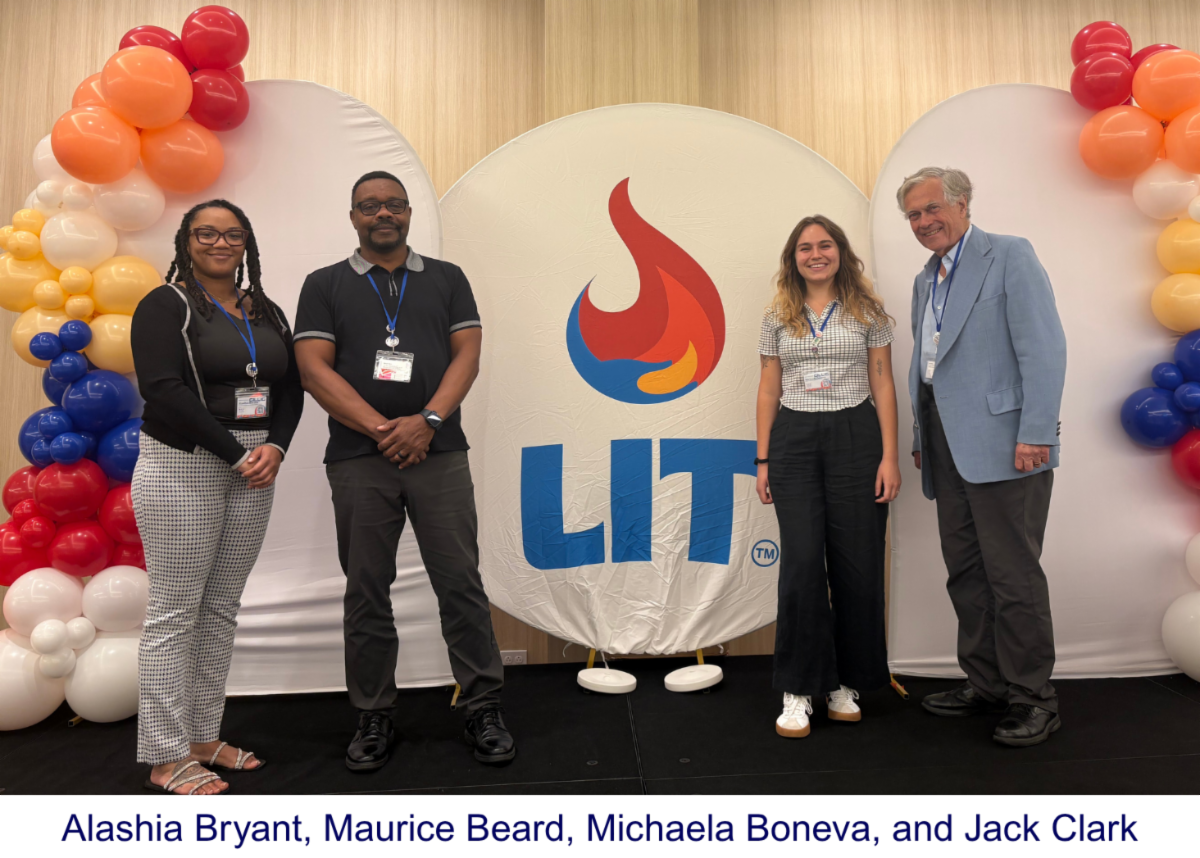
In September, Executive Director Jack Clark, Senior Workforce Development Advisor Maurice Beard, Research Associate Michaela Boneva, and Technical Assistance and Outreach Associate Alashia Bryant attended the 2026 LIT Leadership Summit in Columbus, Ohio, hosted by the Central Ohio Transit Authority (COTA).
The team presented “Workforce Development that Works: Strategies and Initiatives that Support Recruitment, Retention, and Advancement for Your Frontline Workforce.” The session covered the workforce “ecosystem,” from recruitment and outreach to streamlined hiring, skills development, and career advancement initiatives such as mentorship and apprenticeship. It also highlighted TWC resources that support agencies in a variety of workforce development initiatives. Maurice then led a separate session, “Mentorship Matters: Improving Bus Operator Retention and Reducing Absenteeism Through Peer Support.”
The team also participated in two technical tours of COTA facilities.
| | TWC Shares Driver Recruitment and Retention Strategies in Oklahoma | | |
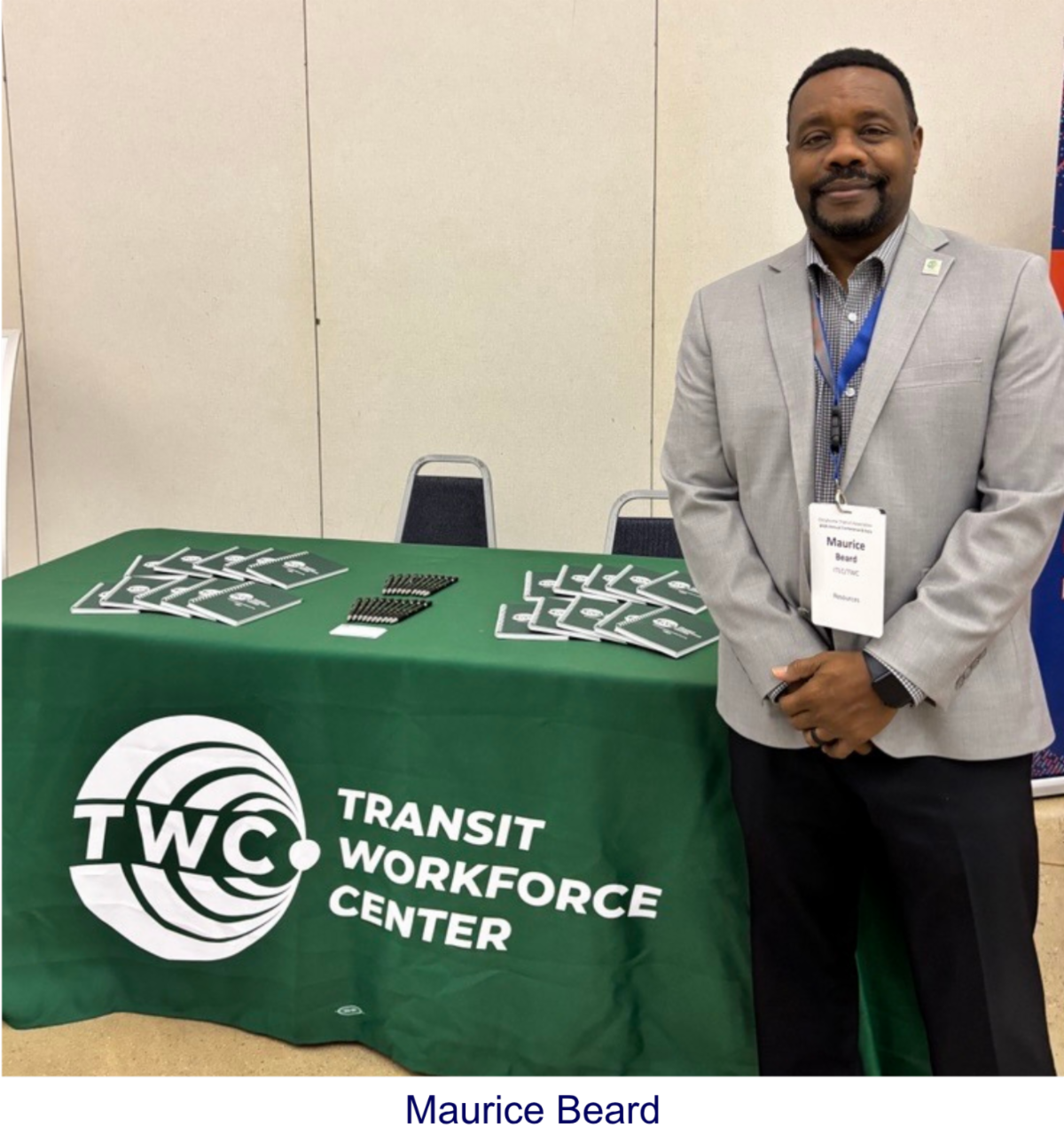
Senior Workforce Development Advisor Maurice Beard attended this year’s Oklahoma Transit Association Conference and Expo, October 19-21 in Ardmore, OK. TWC was joined by Star Transit’s (Terrell, TX) Transportation Director Antonio Harris to co-lead a session titled “Driver Recruitment & Retention: What Is Working Today?” The session highlighted impactful outreach strategies, promising target audiences for recruitment, effective messaging, tips for successful hiring practices, and structured mentorship programs to strengthen both recruitment and retention.
Maurice also connected with attendees at TWC's exhibitor table and directed them to its workforce development resources.
| | TWC Presents at Inaugural Mobility Transformed Conference | | |
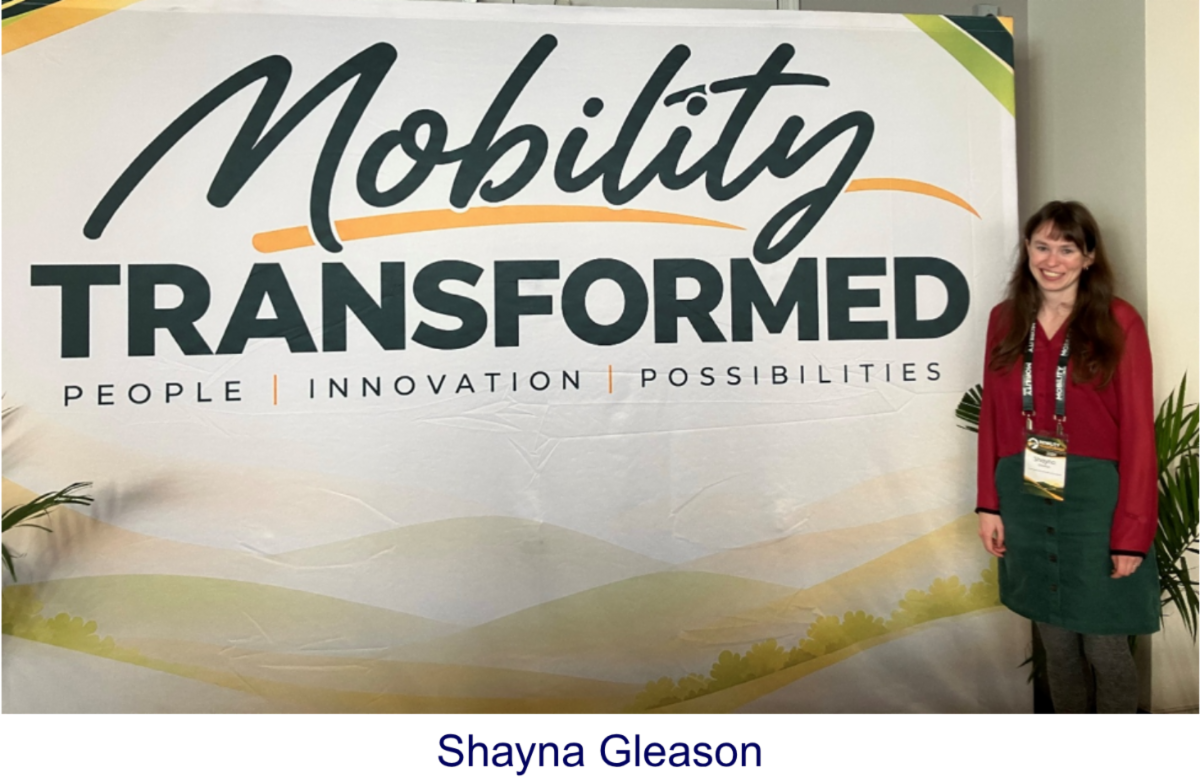
In early November, TWC Senior Researcher Shayna Gleason participated in the inaugural Mobility Transformed conference, a new and grassroots meeting in Santa Rosa, CA, focused on contemporary issues in paratransit.
Shayna moderated and presented in the breakout session, “Promising Practices for Building a Strong Accessible Transit and Paratransit Workforce.” In addition to remarks from TWC, the session featured presentations from: Lewis Lowry (Bi-State Development, St. Louis, MO) on the first-ever registered paratransit operator apprenticeship; Nicholas Davidson (Greater Cleveland Regional Transit Authority) on creating the earliest structured labor-management mentorship program for paratransit operators; and Daniel Whitehouse (SMART, Southeast MI) and Mary Liz McNamara (Asset Based Consulting) on comprehensive customer service training for call-center staff.
Additionally, Executive Director of San José State University's Mineta Transportation Institute (MTI) and ITLC Board Member Karen Philbrick facilitated a plenary panel on key issues facing the field. Attendees left the conference energized about solutions that can help paratransit realize its full potential and motivated to highlight the importance of this often-overlooked mode of public transportation.
| | TWC Shares Resources at LPTA | | |
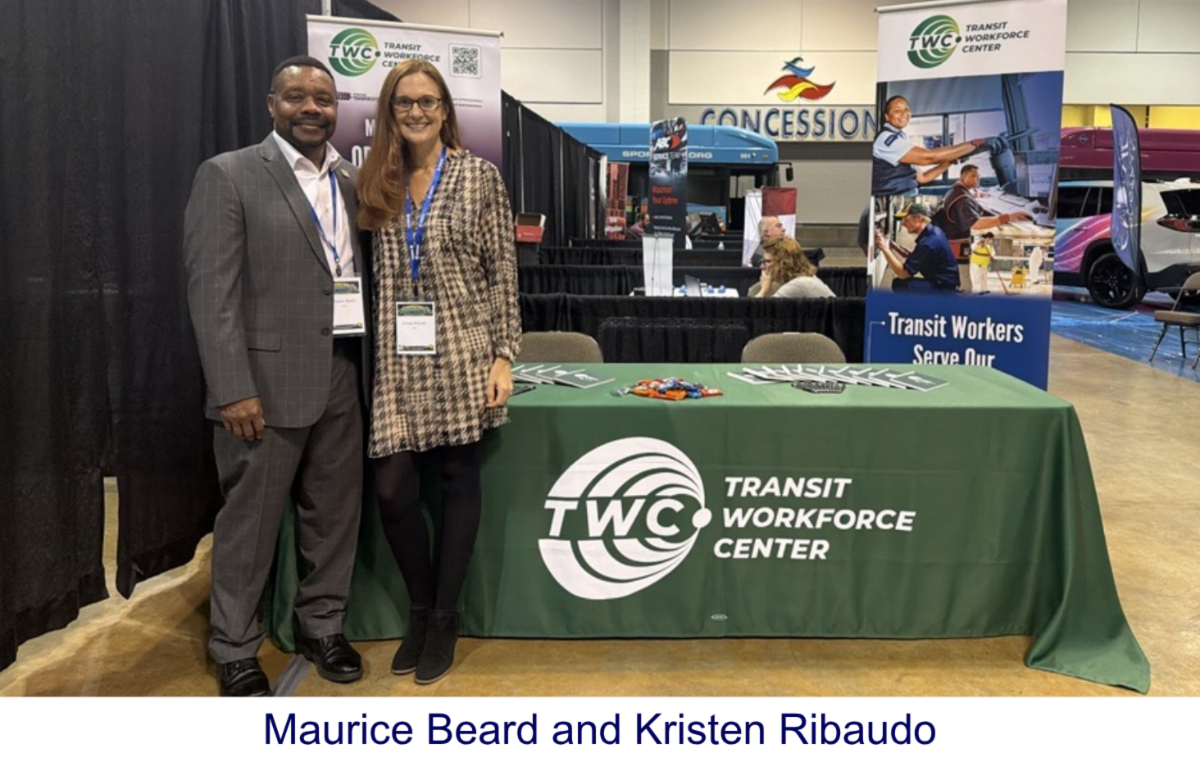
In early November, Senior Workforce Development Advisor Maurice Beard and Program Manager for Instructional Design Kristen Ribaudo attended this year’s Louisiana Public Transit Association Conference, in Shreveport, LA. The two-day event brought together transit leaders, professionals, and advocates from across Louisiana to discuss ways to build and strengthen transportation. Dinero Washington, President and CEO of Shreveport’s SporTran, kicked off the conference with a welcome to the attendees.
Kristen and Maurice led the session, "Foundational Skills-Supporting and Strengthening the Workforce," highlighting the ongoing challenge transit organizations face in ensuring strong foundational skills and effective workforce training. They presented TWC’s Transit Core Competencies Curriculum (TC3), a set of freely available course materials developed by transit organization subject matter experts nationwide to support the growth and development of the frontline transit workforce. Maurice and Kristen also connected with attendees at the TWC exhibitor table, sharing key resources to help agencies strengthen workforce development.
| | See what's happening on our social sites: | | | | |