NewsletterHeader5.png

Weekly Analyst Review

12 November 2026


Bottom Line Up Front

Coordinated Bombing, Arson & Sabotage Campaign Strikes Eight Locations Across Yala Province, Thailand


On 10 November 2026, suspected separatist insurgents launched a coordinated wave of bombings, arson attacks and sabotage across eight locations in five districts of Yala Province, southern Thailand. The attacks targeted government facilities, emergency response vehicles, telecommunications infrastructure and surveillance systems, demonstrating the continued ability of militant networks to execute synchronised operations across Thailand's Deep South.


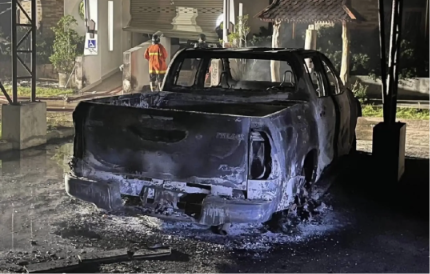
The most significant assault occurred in Mueang Yala, where armed assailants restrained five security guards before detonating improvised explosive devices (IEDs) and setting fire to a Subdistrict Administrative Organisation compound. The attack caused extensive damage, destroying surveillance cameras and several government vehicles, including a fire engine, garbage truck and pickup truck. Elsewhere, militants burned telecommunications towers, destroyed CCTV cameras near a school and mosque, and set fire to tyres along roads and outside government offices.


TRAC's assessment is that the selection of targets reflects a deliberate effort to disrupt local security and emergency response capabilities. The destruction of surveillance equipment and telecommunications infrastructure could impede monitoring and communications, while attacks against emergency vehicles and the creation of road obstructions could delay security deployments. By striking multiple districts simultaneously, the perpetrators demonstrated their ability to coordinate geographically dispersed attacks, stretch security resources and generate widespread disruption.


Of significance is the timing of the attacks, which occurred on the final day of a heightened security alert in effect from 24 October to 10 November following intelligence warnings of planned insurgent operations. The successful execution of multiple attacks despite these precautions raises concerns over the ability of security forces to detect and prevent coordinated militant activity.


While responsibility remains unconfirmed, TRAC highlights operational similarities with established separatist insurgent tactics in Thailand's Deep South, particularly those associated with the Barisan Revolusi Nasional (BRN). TRAC has also previously examined the potential involvement of Islamic State East Asia (ISEA)-Pattani networks and possible cooperation with BRN-linked militants, although no evidence currently establishes their involvement in this operation.


The latest attacks follow a major coordinated campaign on 22 August 2026, when 78 bombings and arson attacks struck more than 70 locations across southern Thailand. Together, these incidents highlight the persistent operational capabilities of insurgent networks and their continued reliance on synchronised, multi-target attacks to challenge state authority and undermine security across the region.

Other Developments

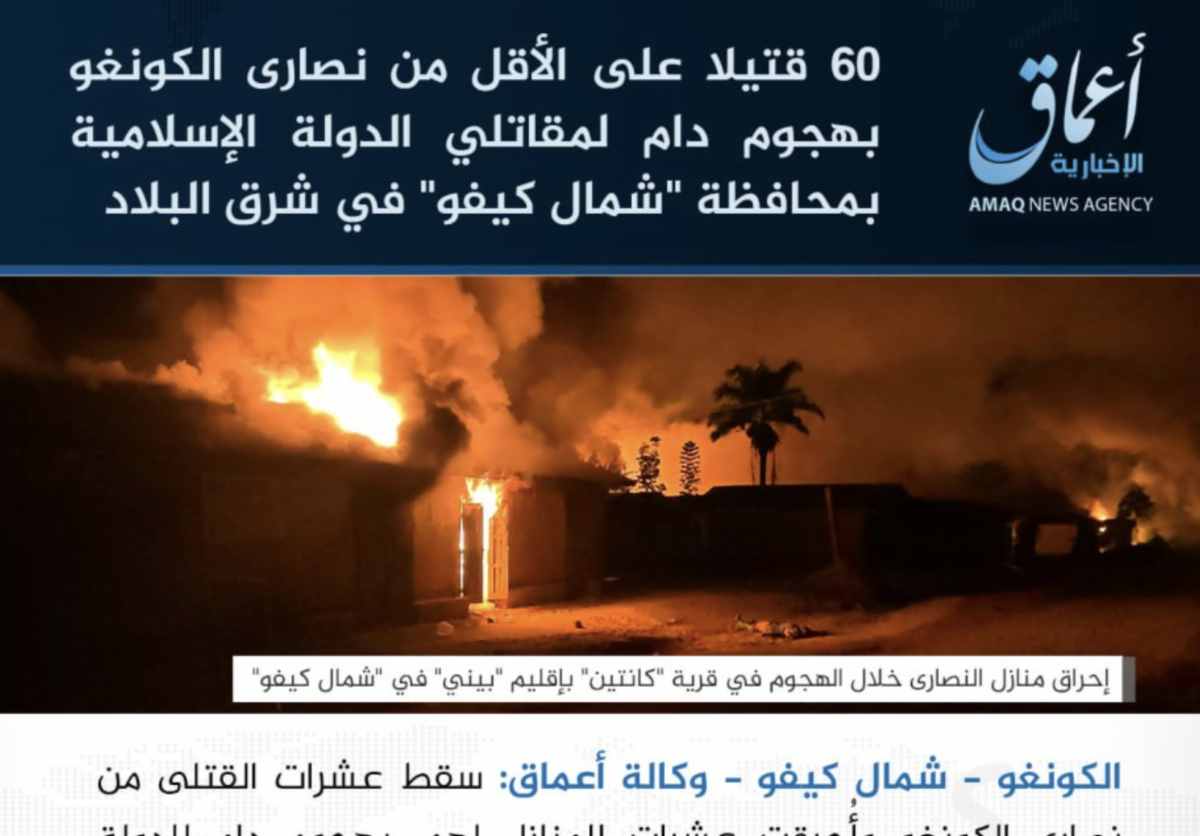
Islamic State Central Africa (ISCA/Wilayat Wasat Afriqiyah) Militants Led an Armed Assault on Christians, Killing 60 in Kantin, Beni District, North Kivu Province, Congo (DR)

On 6 November 2026, ISCA militants led an armed assault on Christians in Kantin, Beni District, North Kivu Province, Congo (DR). The militants killed 60 Christians in the assault and burned dozens of homes and vehicles. This incident marks an escalation in Islamic State Central Africa (ISCA) behaviour, as this is the largest-scale attack since they returned to North-Kivu province just days prior.


After a relative period of absence, ISCA's return to North-Kivu Province marks a potentially significant shift in the group’s operational posture in eastern DRC, particularly given its previous concentration of activity there. This movement could reflect the group’s apparent withdrawal or reduced presence in Haut-Uele, suggesting a possible redistribution of personnel and resources as militants seek more favourable operating environments, but it remains unclear at this stage. Despite this lack of clarity, the renewed activity in North-Kivu warrants attention, particularly given the district’s history of militant activity and the opportunities it may offer for ISCA to reassert its presence.


Additionally, ISCA has historically demonstrated a peripatetic operational approach, frequently shifting between districts and localities depending on security conditions, available resources, and opportunities to carry out attacks. Rather than maintaining a consistently concentrated presence in a single area, the group appears willing to vacate or reduce its footprint in one location before re-emerging elsewhere when conditions are more favourable. Its return to North-Kivu may therefore reflect this broader pattern of operational flexibility, allowing ISCA to exploit gaps in local security coverage while avoiding prolonged exposure to counterterrorism pressure. This mobility also complicates efforts to contain the group, as a reduction in activity in one district does not necessarily indicate a corresponding decline in its overall operational capacity.


Messaging from the Islamic State, particularly its affiliates ISWA, IS-M, and ISCA, increasingly reflects an effort to reframe Christian populations as active participants in the conflict rather than civilian communities. Across the groups’ propaganda and operational messaging, Christians are more frequently characterised as “combatants” or “fighters,” despite those targeted often being unarmed civilians. This rhetorical shift is significant as it provides an ideological justification for violence against otherwise noncombatant populations, effectively blurring the distinction between civilians and perceived enemies while normalising attacks against Christian communities.

Neo-Nazi Channel Shares Ku Klux Klan (KKK) Propaganda Poster ‘Defund The Police. Get Them Out of Our Way’

On 7 November 2026, a Neo-Nazi channel shared a propaganda poster depicting a hooded member of the Ku Klux Klan (KKK) alongside the slogans “Defund the Police” and “Get Them Out of Our Way”. The imagery deliberately appropriates the language of the Defund the Police movement, originally associated with protests against police brutality, and reframes it through a white supremacist lens. The juxtaposition of these slogans with KKK imagery suggests a far more sinister interpretation of police defunding: the removal of law enforcement as an obstacle to racist violence. By invoking the KKK's historical involvement in lynchings, extrajudicial killings and racial intimidation, the poster implicitly glorifies a period in which white supremacist groups exercised violence and terror against Black communities.


This poster exemplifies how Neo-Nazi propaganda exploits contemporary political debates to normalise historical racial terror through irony, provocation and extremist humour. The use of meme-style imagery trivialises the KKK's legacy of lethal violence while reinforcing the notion that state institutions obstruct white supremacist objectives. Although the poster does not constitute an explicit operational threat, its messaging promotes hostility towards law enforcement and implicitly legitimises racist vigilantism.

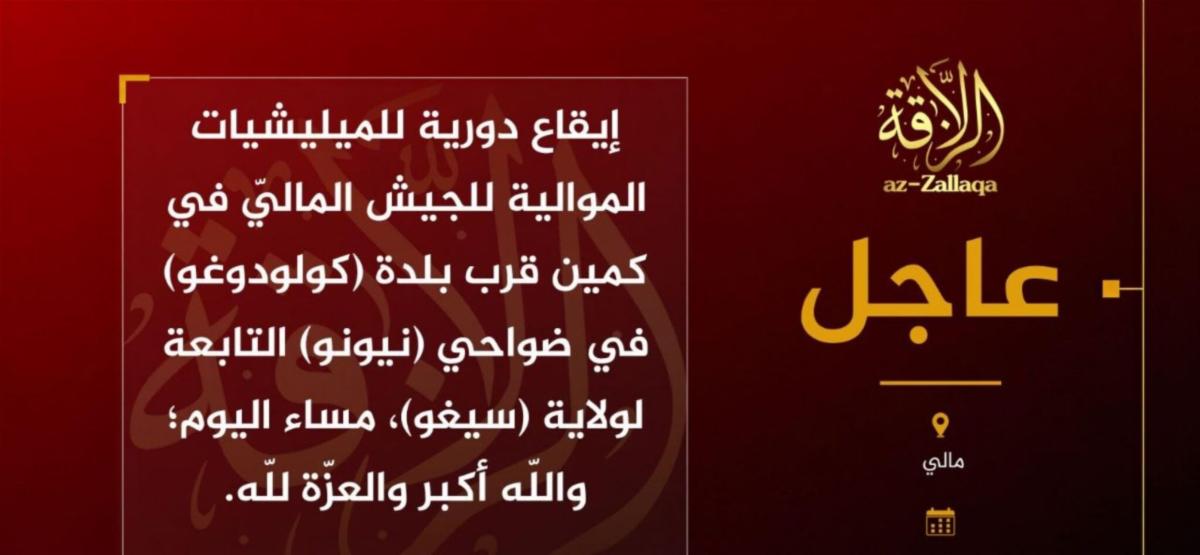
Jama’a Nusrat ul-Islam wa al-Muslimin (JNIM) Militants Ambush Dozo Militiamen in Kolodougou Coro Area, Niono, Ségou Region, Mali

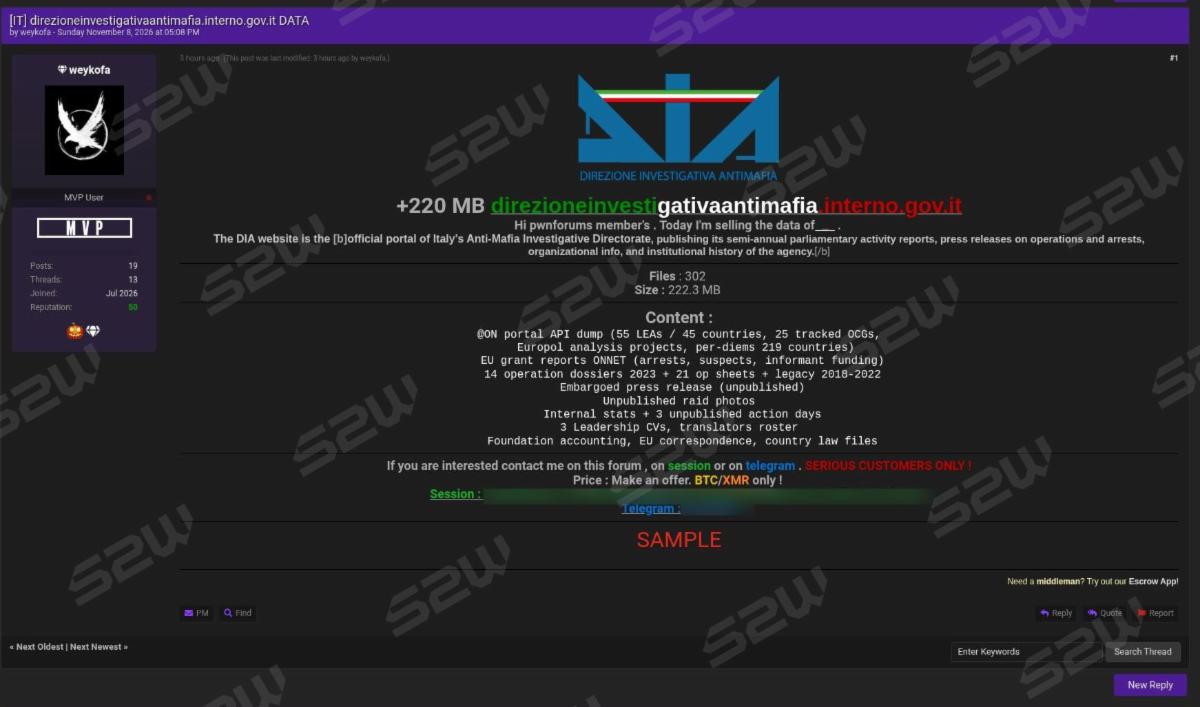
Dark Web Actor “Weykofa” Claims to Have Breached Anti-Mafia Investigation Directorate (DIA), Italy

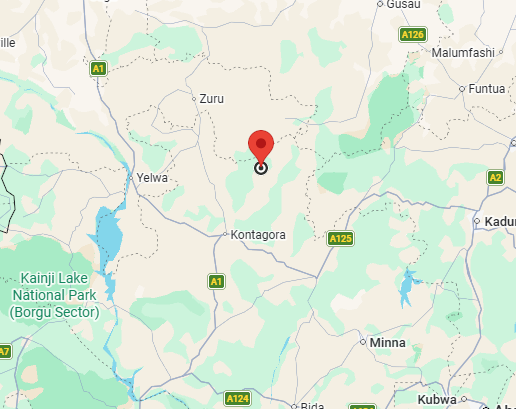
Soldiers & Vigilantes Engage Over 100 Lakurawa Fighters Going into the Forest Near Mangoro Town, Mariga LGA, Niger State, Nigeria

TRACFusion_Newsletter2.png

CLICK HERE FOR PAST WEEKLY BRIEFINGS

TRAC Logo_Primary_TransparentWhite.png
Facebook          X          Instagram