Continuing Education Opportunity for the Practical Structural Engineer: | | | | Structural Decisions That Shape Building Envelope Performance
WEBINAR SERIES - 3.0 SEAMASS or NCSEA Diamond PDHs | | |
WEBINAR SERIES - 3 Consecutive THURSDAYS:
MAR 19 & 26, APR 2, 2026 | Noon - 1 p.m. ET
MARCH 19: Structural Engineers, Envelopes, and the Energy Code
MARCH 26: Connection Design and Best Practices for Specifying Thermal Break Materials in Structural Connections
APRIL 2: Enhancing Building Performance through Coordination: Ten Key Flashing Details for Structural and Envelope Teams
Your opportunity to learn from practicing experts who will share their firsthand experience and insights via three comprehensive presentations.
| | |
Can't make the LIVE presentations? REGISTER to receive the webinar recordings.
Only "live" attendees receive PDH credits.
| | Weekly Topics & Overviews: | | |
MARCH 19, 2026 | Noon - 1:00 P.M. ET:
Structural Engineers, Envelopes, and the Energy Code
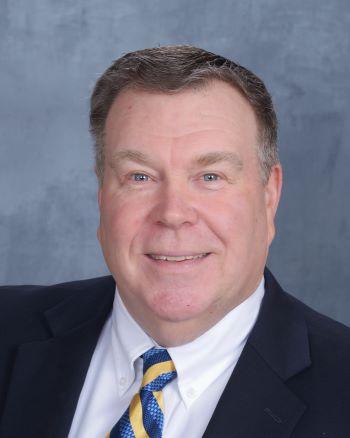
Presenter: Jim D’Aloisio, PE, LEED AP
Principal | Klepper, Hahn & Hyatt
| | | | |
PRESENTATION OVERVIEW:
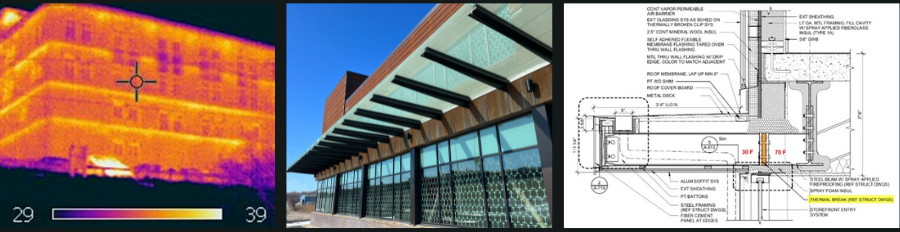
Structural engineers who work on buildings should understand the basics of thermal envelope performance and local Energy Codes.
Aspects of their work can significantly affect a building’s energy usage. We'll review basic code requirements and clarify compliance path options.
We’ll also look at foundation and slab insulation requirements, considerations for wall and roof systems, air barrier requirements, and details to minimize structural thermal bridging.
Finally, we’ll identify code trends that affect structural details. Bring your questions, insights, and ideas.
| | |
MARCH 26, 2026 | Noon - 1:00 p.m. ET:
Connection Design and Best Practices for Specifying
Thermal Break Materials in Structural Connections
Presenter: Robert Haley, BSMT
Founder & President | Thermal Bridging Solutions
| | |
PRESENTATION OVERVIEW:
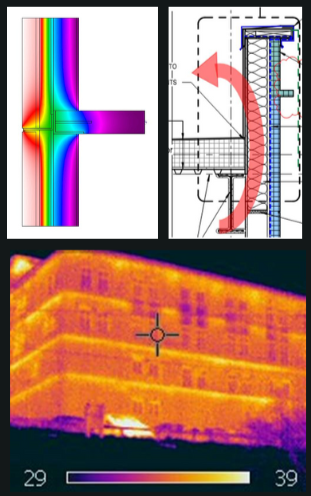
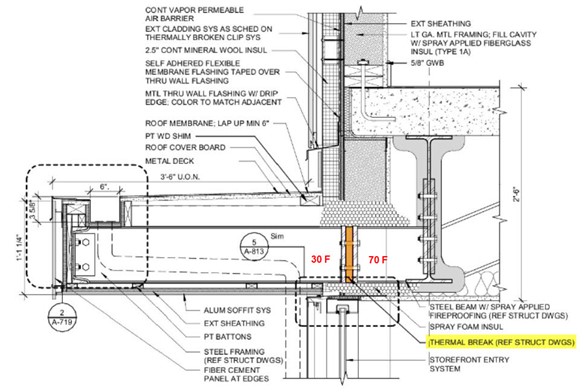
The goal of this presentation is to assist structural engineers with understanding the impact of thermal bridging in bolted, steel connections and provide best practices for specifying thermal breaks to reduce conductive heat loss. The focus is primarily on bolted steel connections in opaque roof and wall assemblies.
LEARNING OBJECTIVES:
- Recognize where thermal bridging can exist in the building envelope
- Understand the effects of thermal bridging on continuous insulation
- How thermal break materials can be used to reduce heat loss in bolted, steel connections.
- Connection design using thermal break materials.
- Understand how the effective U-value of an assembly is changed (or not) as a function of thermal break R-value
| | |
APRIL 2, 2026 | Noon - 1:00 p.m. ET:
Enhancing Building Performance through Coordination:
Ten Key Flashing Details for Structural and Envelope Teams
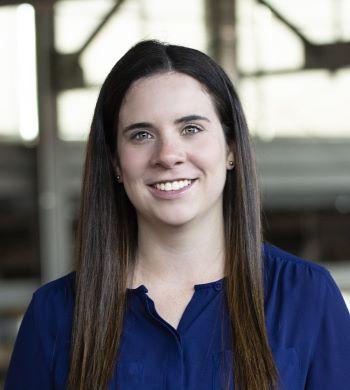
Presenter: Kim M. Sabatino, PE
Senior Consulting Engineer | Simpson Gumpertz & Heger Inc.
| | | | |
PRESENTATION OVERVIEW:
Achieving a durable, high performing building enclosure requires thoughtful coordination between the structural design and the envelope.
This presentation highlights ten important details where early collaboration can make a meaningful difference in keeping water out and maintaining continuity across the enclosure.
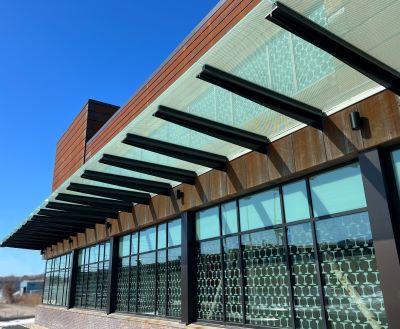
| | We’ll look at common areas where structure and envelope intersect—such as penetrations, expansion joints, cladding attachment, parapets, canopies, plazas and terraces—and discuss how proactive coordination can improve the overall design and performance of the building. | | EVENT TIMING & REGISTRATION | | |
WHEN: Thursdays: MARCH 19 & 26, APR 2, 2026 | Noon - 1:00 p.m. (ET)
WHERE: Online via Zoom Webinar; Registrants will receive access links prior to events
| | |
INVESTMENT:
SEAMASS-Certified PDHs:
$30 per webinar (1.0 PDH) OR $75 for ALL 3 Webinars (3.0 PDHs)
NCSEA Diamond-Certified PDHs:
$35 per webinar (1.0 PDH) OR $90 for ALL 3 Webinars (3.0 PDHs)
| | | |
Register for the full series OR individual events
Can't make the LIVE presentation? Register to receive the webinar recordings.
Only "live" attendees receive PDH credits.
| | |
Thermal Bridging Solutions has served Architects, Engineers, and Contractors for more than 13 years by assisting with design of building enclosure details that reduce heat loss due to thermal bridging. Connect with TBS for recommendations on which thermal break material to use for your transition and interface details.
LEARN MORE: ThermalBridgingSolutions.com
| | |
Jim D’Aloisio, PE, LEED AP | Principal
Klepper, Hahn & Hyatt
Jim is a Principal with Klepper, Hahn & Hyatt in East Syracuse, NY. He has over 30 years’ experience as a consulting structural, building envelope, and forensic engineer, and is an Urban Green Council- trained Energy Code instructor. His specialties include thermal envelope performance, specializing in the intersection of envelopes and structures.
Jim is a graduate of Rensselaer Polytechnic Institute, a Registered Professional Engineer (NY), and a LEED Accredited Professional (LEED AP). He is on the SEI Sustainability Committee’s Thermal Bridging Working Group, has written over 20 articles on the relationship between building structures and sustainability and has presented over 500 times.
| |
| |
Robert Haley BSME | Founder & President
Thermal Bridging Solutions
Rob has over 13 years of experience solving thermal bridging problems and is the founder and president of Thermal Bridging Solutions.
Prior to starting TBS, Rob was a partner at Armadillo NV where he was responsible for the research, development and marketing of Armatherm™ thermal break materials. During this time, he received a US patent for a thermally broken Z girt cladding attachment.
He is a member of IIBEC (RCI), CSI and a former member of NIBS BETC. He is a reviewer of the ASHRAE 90.1 addendum av, which is addressing thermal bridging not currently regulated by the standard.
| |
| |
Rob holds a degree in mechanical engineering from Northeastern University. Rob was the engineering and marketing manager at Fabreeka International where he worked for 28 years specializing in vibration isolation for industries from mining to aerospace. He worked on several major aerospace test programs for the Hubble and James West space telescopes.
The dynamics of structural connections in buildings and thermodynamics led Rob to investigate the existence of thermal bridging in commercial construction. He has a keen interest in thermal modeling and hygrothermal analysis which look at the effects of thermal bridging and air, vapor and heat movement in building walls and roof assemblies. His goal is to help keep the heat in and push the dew point out by designing solutions that create a more energy efficient thermal envelope.
| | |
Kim M. Sabatino, PE | Senior Consulting Engineer
Simpson Gumpertz & Heger Inc.
Kim is a Senior Consulting Engineer in the Building Technology Group of Simpson Gumpertz & Heger. Kim has extensive experience investigating building enclosure failures, particularly roofing and waterproofing systems, and providing consulting services for enclosure design, rehabilitation, and investigation projects. She has led numerous investigations to evaluate deterioration and performance issues within existing systems, developed repair strategies for a wide range of buildings, and collaborated with owners and architects on enclosure design for new construction projects.
| |
|
ANNUAL CORPORATE SPONSORS
SEAMASS is grateful to these Annual Corporate Sponsors
for their support and dedication to our organization
Click logos to view websites
| | | | |