Q: After clay pavers are laid “ hand tight”, should they be bedded into the sand using a vibrating compactor? Thanks. Peter in Massachusetts
A.
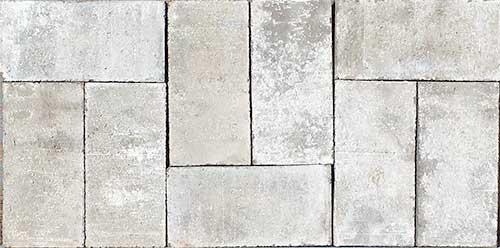
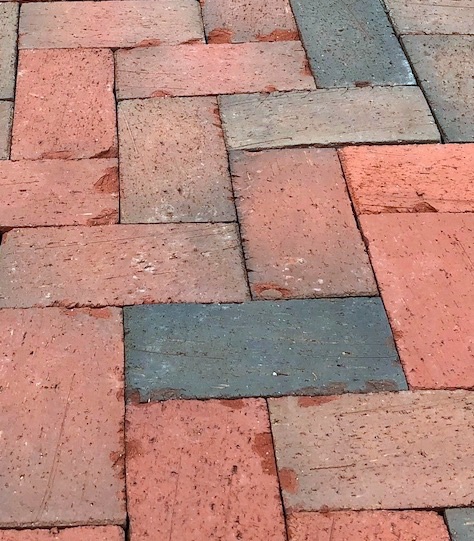
The first thing I want to address is the issue of “hand tight” because it is a term widely misunderstood. Laying a paver with spacer nibs hand tight is OK because the nib creates space between the units for joint sand. With non-nibbed units, like our standard Pathway paver, the biggest mistake made is the suggestion to lay them "hand tight". If there is no space, there is no interlock and even under foot traffic, the pavers will chip as pictured in the image below.
There are several methods to get proper spacing with non-nibbed units. The first method is to understand the sizing of the pavers to be laid. To often, the installer assumes that the pattern repeats on 8" increments. But, if you have a true 4X8" paver on the job then the laying module (location of string or chalk lines) needs to accommodate the 1/8" joint. It is important that the laying module be established according to the largest paver in the package. The second method is called the "click and drop" method of laying pavers to create natural spacing.
With proper paver spacing, clay pavers can then be compacted by a vibrating compactor. Compaction helps to “bed” the pavers into the sand below, encouraging sand to rise up into the joint and begin the interlock process. On nibbed clay pavers, it is best that the compactor be equipped with a rubber pad or some type of cushioning material to avoid excessive chippage. While all pavers, clay or concrete, will chip some during initial compaction, the compactor pad helps keep it to a minimum on clay pavers as clay pavers tend to have higher compressive strengths (due to vitrification at 2000 degrees) and tend to chip more in this part of the process. On non-nibbed pavers, a special compactor called a roller compactor actually works the best.