Rampant inflation doesn’t just mean a spike in everyday expenses like gas and groceries. It’s also bound to have a significant impact on the cost of healthcare — and on your practice. A recent report from McKinsey & Company predicts that the current inflationary spiral will force healthcare providers to charge higher reimbursement rates, and those costs inevitably will be passed along to both employers and consumers. Bottom line: Your patients will likely have to pay more out of pocket.
How, precisely, will inflation affect your practice, and what’s the best way to minimize the damage? Here are seven steps that you, as a physician, can take right now to make the ripple effects of inflation easier for all concerned.
Step 1: Maintain Operational Standards
“Based on the conversations we’ve had with our physician clients that own practices, we see the potential for cost inflation to outrun revenue inflation over the next year,” says Michael Ashley Schulman, CFA, partner and chief investment officer at Running Point Capital in El Segundo, California. “Staff wages, as well as office equipment and medical supply costs, are increasing faster than insurance and Medicare/Medicaid reimbursement amounts.” Even so, topflight employees are essential to keep your practice running smoothly. Prioritize excellent nursing. Instead of adding a new hire, compensate your best nurse as well as possible. The same goes for an efficient office manager: On that front, too, you should go the extra mile, even if it means trimming expenses elsewhere.
|
|
The deadline to receive the ASIPP Room Block Discount has been extended until July 22!
|
|
|
Canadian patients who receive most of their healthcare from physicians who speak the same language have better quality and safety outcomes, according to a new report.
When older allophone patients (that is, those who spoke a primary language other than English or French) were admitted to the hospital, they benefited from having a doctor who could speak their language.
“These are staggering findings that make a strong case for providing care in the same language for linguistic minorities in hospitals,” senior study author Peter Tanuseputro, MD, an associate professor of palliative care at the University of Ottawa, Ottawa, Ontario, Canada, told Medscape Medical News.
|
|
Hospital-related infections, deaths rose at least 15% in 2020
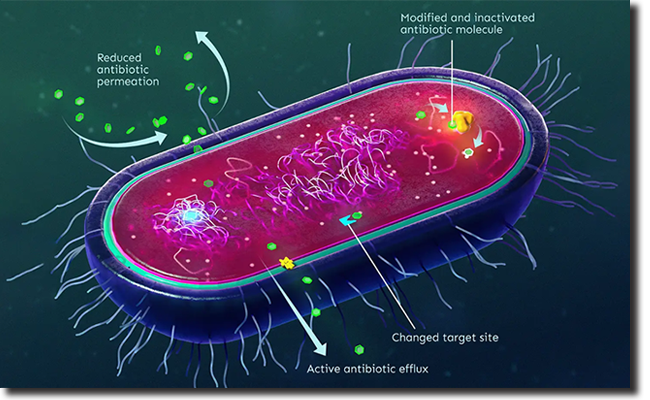
A new CDC report warned that progress against deadly antimicrobial-resistant infections reversed course during the first year of the COVID-19 pandemic.
After years of steady declines, antimicrobial-resistant hospital-related deaths and infections from seven pathogens grew 15% from 2019 to 2020, including increases of:
- 78% for carbapenem-resistant Acinetobacter infections
- 35% for carbapenem-resistant Enterobacterales infections
- 32% for multidrug-resistant Pseudomonas aeruginosa infections
- 32% for extended spectrum beta-lactamase (ESBL)-producing Enterobacterales infections
- 14% for vancomycin-resistant Enterococcus (VRE) infections
- 13% for methicillin-resistant Staphylococcus aureus (MRSA) infections
- 10% for drug-resistant Salmonella serotype Typhi infections
|
|
NEXT EXAM DATES:
Part I
July 30, August 27, September 17, October 22, November 19 & December 17
Part II
September 23
|
|
We must better manage the suffering of patients with a history of substance use disorder
I still recall the look on my patient's face and her words 2 years later.
"I am done with this life," she told me. "Don't let me die in pain," she added as she folded her hands to physically plead with me.
I simply cannot convey in words how painful it was to witness the agony of this patient.
Here is what happened: My hospital requested a consultation for cancer pain management involving a relatively young patient with metastatic pancreatic cancer. Making matters worse, she was admitted with a severe apparent infection and displayed signs of failure to thrive with anorexia/cachexia. And then there was the pain, which doctors called intractable.
|
|
Hint: they work for attendings, too!
This is a very special time of year as freshly minted doctors begin their residency training. It also marks the time that junior residents transition to their senior training years. So, to all of you, congratulations!
With this time of year in mind, I would like to share some financial advice for residents (even though the same can go for attendings!). But this is not your usual financial advice. My goal here is to distill things down to their most important and basic components.
I was a resident just a few years ago. So, I haven't forgotten what it is like. The hours are long, and your focus is, rightfully so, exclusively honed on becoming the best doctor you can become.
|
|
Milton Packer considers the origins of pain, both scientifically and emotionally
In 1982, at the age of 31, I was diagnosed with a small-fiber length-dependent sensory peripheral neuropathy. Despite extensive laboratory assessments (including genome sequencing), the cause is unknown. Most patients with small-fiber peripheral neuropathies do not have an identifiable cause. When the diagnosis was first made 40 years ago, I was told the disorder would be progressive, but I did not know what that might mean.
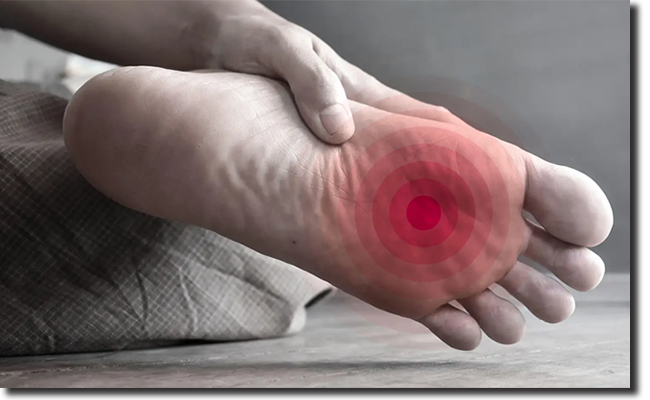
At first, the neuropathy was emotionally scary, but not physically discomforting. I could not discern temperature or pinpricks in my feet, and when I touched things, my hands and feet would tingle. It was uncomfortable to keep my shoes on for long periods. Friends would notice that I would take my shoes off whenever I sat down, and they would give me a hard time about it. But life went on.
With the passage of years, the neuropathy progressed, as was predicted. The sensory loss became more profound, and my feet and ankles felt numb all the time. I felt I was wearing socks, even when I wasn't. I developed spontaneous uncontrollable agonizing cramping in my toes, feet, calves, and hands, and the spasms required a concerted physical effort to "break" them apart. Then, autonomic imbalances emerged and took their toll. It is hard to keep my balance, and with the loss of proprioception, I would never trust myself to walk any distance in the dark.
|
|
|
|
Please plan to join us at the
2023 ASIPP Annual Meeting
March 16-18 National Harbor, Maryland
Register Early
More details will be posted on our website at asipp.org.
Registration begins November 2022.
|
|
For meeting or exhibitor/sponsor information:
|
|
- ASIPP Members Only Site Information - |
|
-
To log in for the first time you will need to click “forgot password” at the bottom of the login window.
- Check your email and then log in as directed.
-
If you have problems logging into your account, click here.
|
|
Pain Medicine Case Reports (PMCR) and Editor-in-Chief Alaa Abd-Elsayed, MD, PhD would like to invite you to submit case reports and case series to the PMCR journal. Your article will be published free of charge.
Open access journals are freely available online for immediate worldwide open access to the full text of published articles. There is no subscription fee for open access journals. Open access journals are no different from traditional subscription-based journals: they undergo the same peer-review and quality control as any other scholarly journal.
Interested in becoming a member of the PMCR Editorial Board?
Editorial board members are asked to review 2-6 manuscripts per year. Please submit your most up-to-date CV to sgold@asipp.org for consideration.
For more information or to submit your articles, click here.
|
|
| CASE REPORT |
LCDR Henry R. Deyoung, MD, LT Blake A. Morgan, MD, and LCDR Jacob H. Cole, MD
Abstract
BACKGROUND: Sickle cell disease (SCD) is a predictor of both chronic pain and acute pain crises (APC). Vaso-occlusive APC typically require an escalation of home analgesic therapy, often requiring inpatient large doses of opioid pain medications. The analgesia and distal vasodilation provided by regional anesthesia could be of theoretical benefit when treating patients with SCD who present with vaso-occlusive APC.
CASE REPORT: This case describes the treatment of a patient with SCD who presents with upper extremity APC. Her pain crisis was otherwise refractory to medical analgesic therapy and was successfully treated using continuous supraclavicular regional anesthesia. The patient remained pain-free even after discontinuation of the supraclavicular catheter 72 hours after placement.
CONCLUSION: Regional anesthesia could be considered as a reasonable non-opioid treatment modality for refractory APC in patients with SCD.
KEY WORDS: Sickle Cell Disease, regional anesthesia, pain management, vasoocclusive, local anesthesia, inpatient, opioid sparing
|
|
New Edition Now Available |
|
| SYSTEMATIC REVIEW |
Yeow Leng Tan, MBBS, MRCP, Edmund Jin Rui Neo, MBBS, MMed, and Tze Chao Wee, MBBS
Abstract
BACKGROUND: Ultrasound-guided (ULSD-g) genicular nerve blocks (GNB) using pharmacological agents for pain control in chronic knee osteoarthritis (OA) are gaining in popularity. There lacks a systematic review to evaluate the ULSD techniques and pharmacological agents used during the intervention, and to assess the knee’s function postintervention.
OBJECTIVES: Our study aimed to determine the clinical characteristics of patients with chronic knee OA selected for ULSD-g GNB, describe the various ULSD-g techniques and pharmacological agents used to target the genicular nerves, and evaluate the primary outcomes of pain and function.
STUDY DESIGN: Systematic review.
METHODS: We looked at patients with chronic knee OA with symptoms or disease features of at least 3 months and the use of ULSD guidance for GNB using either local anesthetic agents and/or corticosteroids or alcohol. Two major electronic databases (Medline/PubMed and EMBASE) were searched from their inception through August 2021, without language restriction.
After removing duplicates, 2 reviewers independently reviewed the abstracts of 340 records. Nine of the 10 full texts that were reviewed were selected for inclusion. A third reviewer was involved in resolving disagreements.
Two reviewers extracted relevant information pertaining to study types, patient characteristics, intervention details, outcome measures, and adverse effects. This was followed by independent verification for accuracy.
RESULTS: Data synthesis: Nine studies were included with a total of 280 patients who had symptoms or disease features of at least 3 months. The National Institute of Health’s Study Quality Assessment Tools were used for quality appraisal, of which 8 studies were at least of fair quality. All studies involved targeted at least the superior medial, superior lateral, and inferior medial genicular nerves. ULSD techniques relied on bony, soft tissue, or periarterial landmarks; either local anesthetic agents and/or corticosteroids or alcohol were used in the injections. Follow-up intervals for pain and functional assessments were heterogeneous, ranging from one week to 6 months postprocedure. Sustained improvements in both pain and knee function were observed for up to 6 months regardless of the choice of pharmacological agents. Minimal adverse effects were reported.
LIMITATIONS: Meta-analysis was not performed due to heterogeneity of study designs, ULSD techniques, pharmacological agents used, and dosages administered. Only one study targeted additional genicular nerves; conclusions regarding the therapeutic blockade of these nerves could not be made.
CONCLUSIONS: There is fair evidence to at least target the superior medial genicular nerve, inferior medial genicular nerve, and Inferior medial genicular nerve using local anesthetics, corticosteroids, or alcohol to reduce pain and to improve knee function in patients with chronic knee OA under ULSD guidance. The procedure is safe but more research is needed to determine the optimal interventional approach.
KEY WORDS: Ultrasonography, genicular nerve block, neurolysis, knee osteoarthritis
|
|
| SCOPING REVIEW |
Helen W. Karl, MD, Standiford Helm, MD, and Andrea M. Trescot, MD
Abstract
BACKGROUND: The superior and middle cluneal nerves are sources of low back, buttock, and leg pain. These nerves are cutaneous branches of the lateral branches of the dorsal rami of T11- S4. Pain arising from entrapment or dysfunction of one or more of these nerves is called “cluneal nerve syndrome.” A clear understanding of the anatomy underlying cluneal nerve syndrome and its treatment has been hampered by the very small size of the cluneal nerves and their complex, varying anatomy. Because of differing methods and foci of investigation, the literature regarding cluneal nerves has been confusing and even contradictory.
OBJECTIVES: This paper provides a thorough critical literature review of cluneal nerve anatomy and implications for therapy.
STUDY DESIGN: A modified scoping review.
METHODS: The bibliographic trail of English language papers on the anatomy and treatment of cluneal nerve syndrome was used to resolve the contradictions that have appeared in some of the anatomic descriptions and, where applicable, to examine their implications for therapy.
RESULTS: Recent anatomic and surgical investigations confirm a wider than previously realized range of central nervous system origins of these peripheral nerves, explaining why cluneal nerve dysfunction can cause a wide array of symptoms, including low back, buttock, and/or leg pain or “pseudosciatica.”
CONCLUSIONS: Cluneal nerve syndrome is characterized by a triad of pain, tender points, and relief with local anesthetic injections. The pain is a deep, aching, poorly localized low back pain with variable involvement of the buttocks and/or legs. Tender points are localized at the iliac crest or caudal to the posterior superior iliac spine. Muscle weakness and dermatomal sensory changes are absent in cluneal nerve syndrome. If the pain returns after injections, neuroablation, nerve stimulation, or surgical release may be needed.
KEY WORDS: Low back pain, buttock pain, leg pain, superior cluneal nerves, middle cluneal nerves, entrapment neuropathy, pseudosciatica
|
|
Since this malpractice insurance program officially launched in November 2018, ASIPP has signed up hundreds of providers with an average savings of 30%. This is professional liability insurance tailored to our specialty and will stand up for us and defend our practices.
Norcal Mutual is A-Rated by AM best and is licensed in all 50 states. To read a few important points to keep in mind about the program, including discounts, administrative defense, cyber coverage, aggressive claims handling, and complimentary award-winning risk management CME activities, click here.
|
|
ASIPP® has formed a partnership with Henry Schein and PedsPal, a national GPO that has a successful history of negotiating better prices on medical supplies and creating value-added services for independent physicians. Working with MedAssets, PedsPal provides excellent pricing on products like contrast media that alleviate some of the financial pressures you experience today.
|
|
ASIPP® is now offering our members the benefit of a unique revenue cycle management/ billing service.
We have received a tremendous amount of interest in the ASIPP® billing and coding program.
Click here to learn more about the negotiated rate for practices and more!
|
|
|
up-to-date news related to you, your practice, and your patients!
|
|
|
|
|
|
|