|
Dear SRNT Health Equity Network Members,
It’s Just Coffee! (IJC) is a mentoring initiative hosted by the SRNT HEN Scholarship & Development Subcommittee to facilitate professional interactions and networking among SRNT members. Each year, the program pairs mentors and mentees for a one-time virtual or in-person conversation over coffee (or another preferred non-alcoholic beverage) during or shortly after the SRNT Annual Meeting. These informal meetings have served as the starting point for ongoing collaborations, career guidance, and fruitful partnerships that strengthen the field of tobacco-related health disparities research.
As part of our Spotlight series, different mentor-mentee teams share insights into how they were connected and their experiences from both the mentee's and the mentor's perspectives.
The SRNT HEN is now hosting the Spotlight series to support wider communication with Network members and to highlight mentor-mentee pairs and professional development.
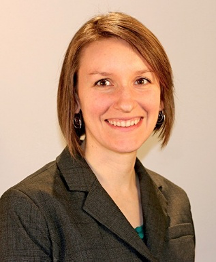
In this Spotlight series, we feature one such “mentor-mentee” team, Dr Rebecca Evans-Polce and Meman Diaby.
Meman Diaby (mentee)
How has the IJC mentorship program contributed to your professional growth?
Meman: The IJC mentoring program has greatly contributed to my personal growth by providing me with the opportunity to connect with experienced researchers and excellent mentors in the field. My mentors have taken the time to meet with me, share their personal experiences, and offer valuable advice for an early-career researcher in the field. I am grateful for this opportunity and for the support of my mentors.
What advice would you give your peers regarding how to build their professional network?
Meman: My advice is to take advantage of programs such as the IJC mentoring program within their respective societies and to meet with their mentors. Additionally, attending conferences, seminars, or networking events could help them build their professional network.
How has your mentor supported your growth as a nicotine/tobacco researcher?
Meman: My mentor supported my growth as a nicotine/tobacco researcher by sharing their personal experience in the field and answering all my questions related to the topic. They assured me that they are available whenever I have questions or want to collaborate on projects that align with our mutual interests.
What advice would you give to someone considering seeking a mentor but unsure about the process or when to seek one?
Meman: The application and matching process for the IJC mentoring program is simple. Participants can also reach out to the committee team for more information about the process. Additionally, signing up for the network listserv will keep them informed about opportunities to make valuable connections.
Dr Rebecca Evans-Polce (Mentor)
How has the IJC mentorship program contributed to your professional growth?
Rebecca: It has been a great experience to connect with earlier career researchers and learn about where they think the field of nicotine/tobacco research and the important research questions for our field to address. And of course, it has expanded my network of colleagues at SRNT.
What is your approach to mentoring scholars who are new to nicotine/tobacco research?
Rebecca: For someone who is brand new to nicotine/tobacco research, I think it can be really helpful to be a part of a larger team of researchers so that they can see diverse perspectives and ways of conducting research. It can also be helpful for them to connect with researchers at various career stages, including those earlier in their career who may have been where the new scholar is fairly recently, as well as more senior researchers. I try to provide those opportunities for my mentees. I also think it is important to provide an atmosphere that encourages questions and open discussion to maximize opportunities for learning and growth.
What are the most satisfying aspects of serving as a mentor?
Rebecca: One of the most satisfying parts of being a mentor is being able to support a mentee as they grow in their research abilities and confidence. It is very rewarding to be a part of their journey to becoming independent, thoughtful researchers and be able to see the next generation of scholars take on new and interesting research questions.
What advice would you give to someone considering volunteering as a mentor for the IJC program?
Rebecca: It is a great opportunity to meet new emerging scholars interested in nicotine and tobacco research that you may not have the chance to meet them otherwise.
Thank you to Dr Rebecca Evans-Polce and Meman Diaby for sharing about your experiences!
For more information on signing up as a mentee, please use this sign-up link or email the point of contact for your desired Network track:
|