Faulkner County Agriculture Update

June 13, 2025


General Conditions

Weather


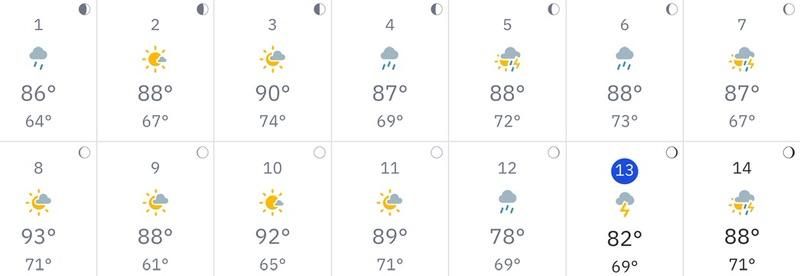
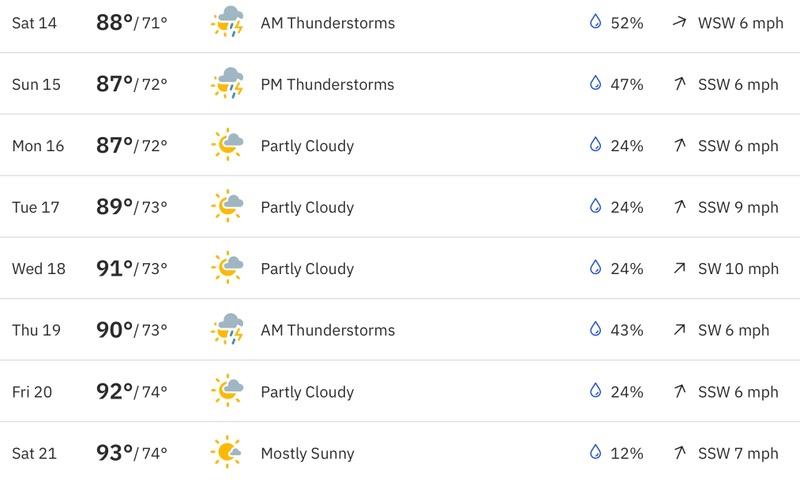
Same story different week. We started to dry up enough that some hay was put up, soybeans planted and wheat harvest started, then Thursday the rain started all again. Some places have already gotten 2 inches since yesterday. The forecast doesn't look any better. We have good rain chances all the way into next Friday. For the month of June we have received 3.28 inches at the hay verification field at Saltillo so far.

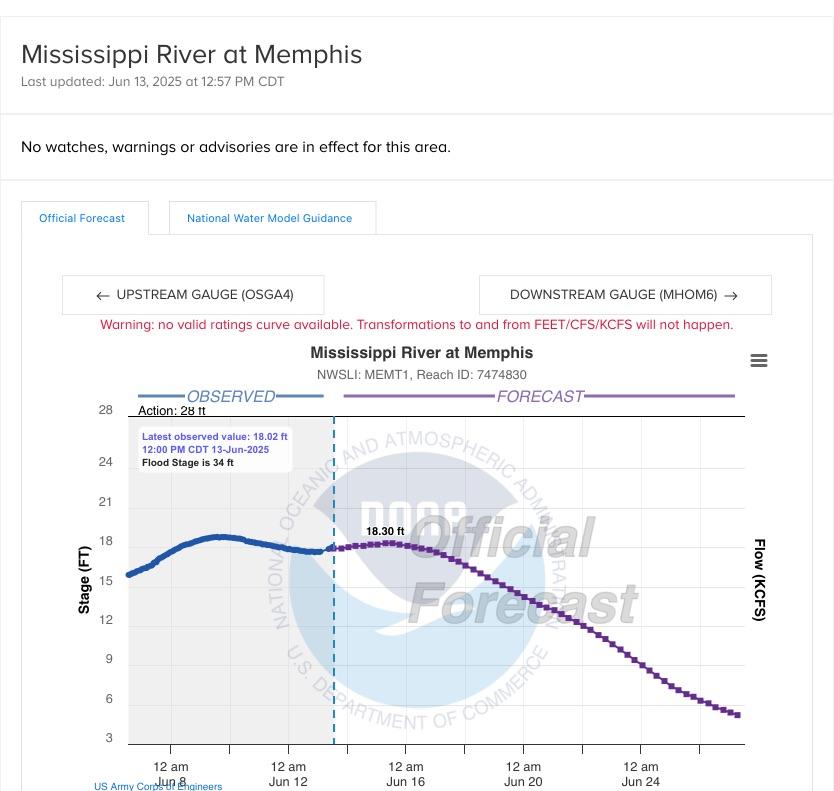
Arkansas and Mississippi River


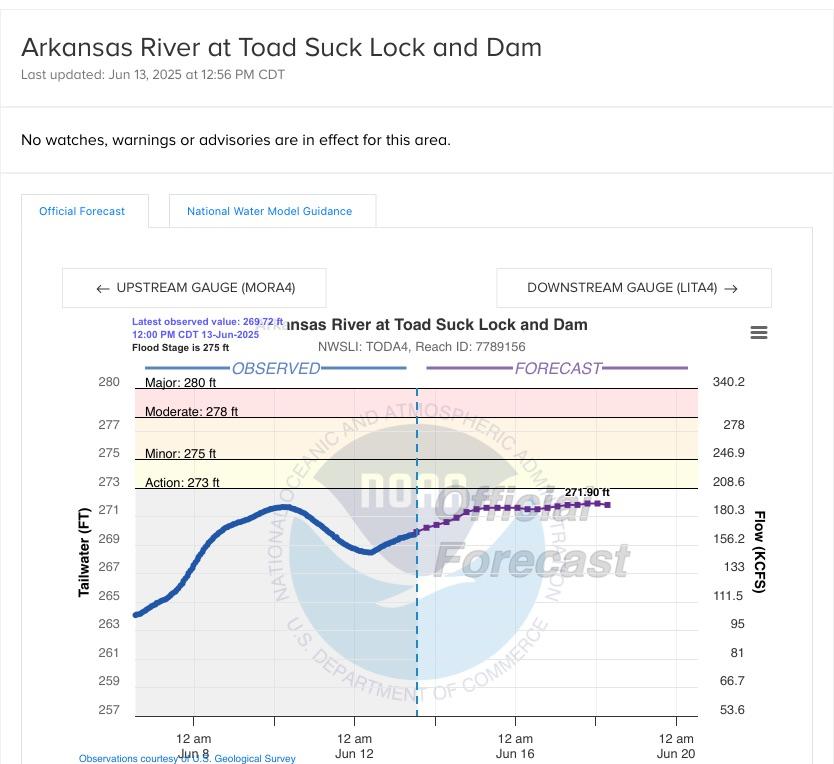
The river is being kept at a high level and we are looking at it rising to 272 feet. The gates were open for a little bit and hopefully can stay open long enough to let water drain, but as the river rises and the gates are closed, these downpours are going to flood several acres.

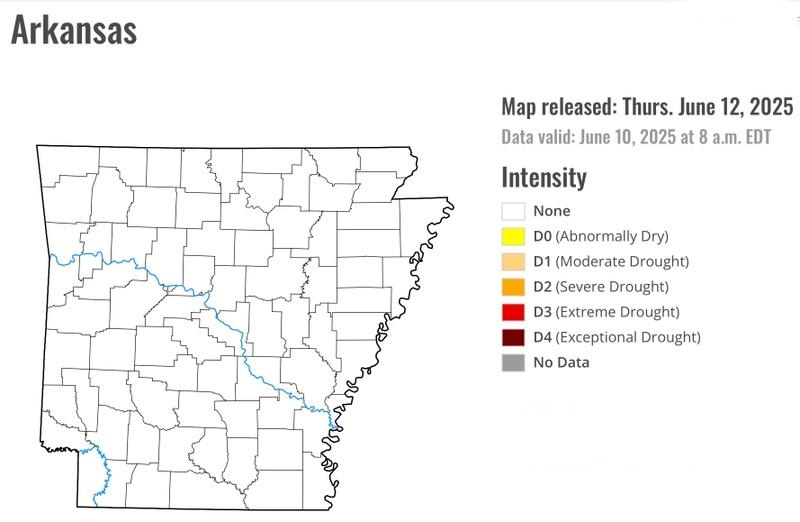
Drought Monitor

Row Crop

Wheat


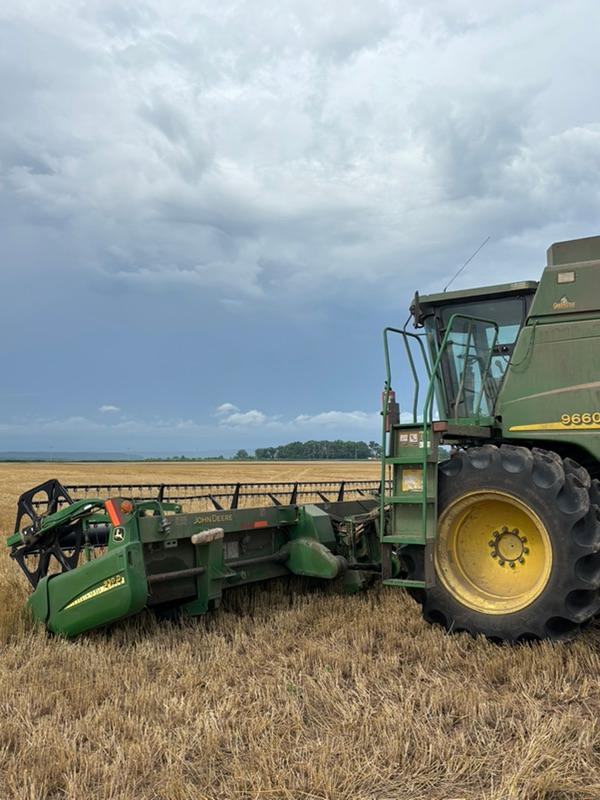
Wheat harvest has officially started in Faulkner County, but it didn't last long. Producers worked late into Wednesday night harvesting as many acres as they had truck space and baling up the wheat straw. Now we wait to see how test weights are as producers haul off the first loads.

Corn


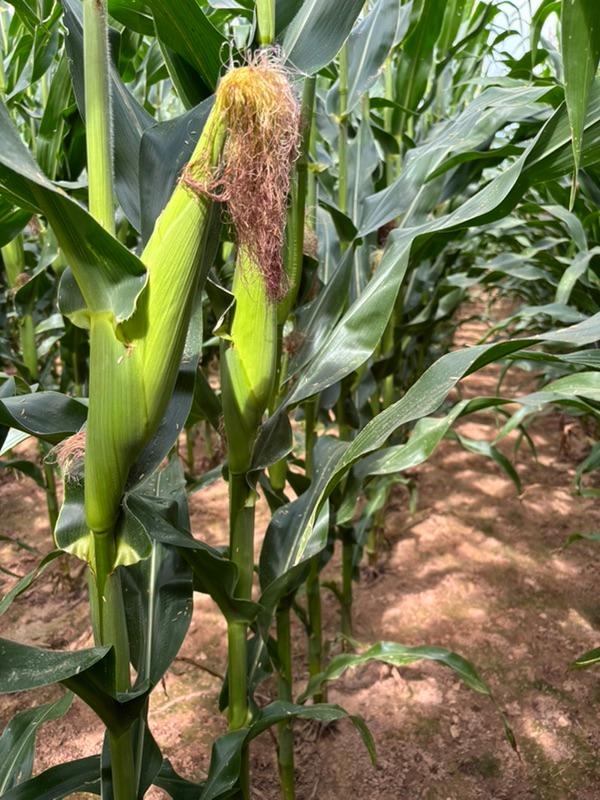
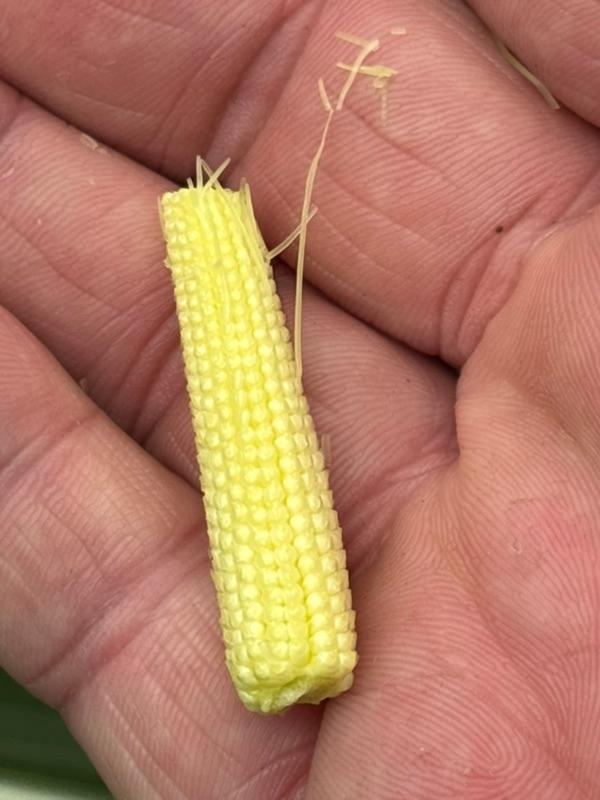
Early planted corn has reached R2 which is the blister stage. I pulled several ears and shucked them to check pollination. It looks like the first fields pollinated nicely and rows varied from 20 to 14 rows around. I am not seeing any disease right now, but there are a ton of rice stink bugs out there. Of course these don't do any damage to our corn, but it looks like we will have a nice crop of rice stink bugs going into rice heading later on.


The picture I have here of the baby ear is from a field that was planted around April 15. That field will be tasseling soon.


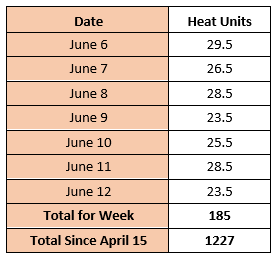
This week we really racked up the heat units. When we accumulate heat units like this it usually means I am miserable but the rice and corn are loving it. We accumulated 185 heat units this week for a total of 1227 for corn planted on April 15.

Rice


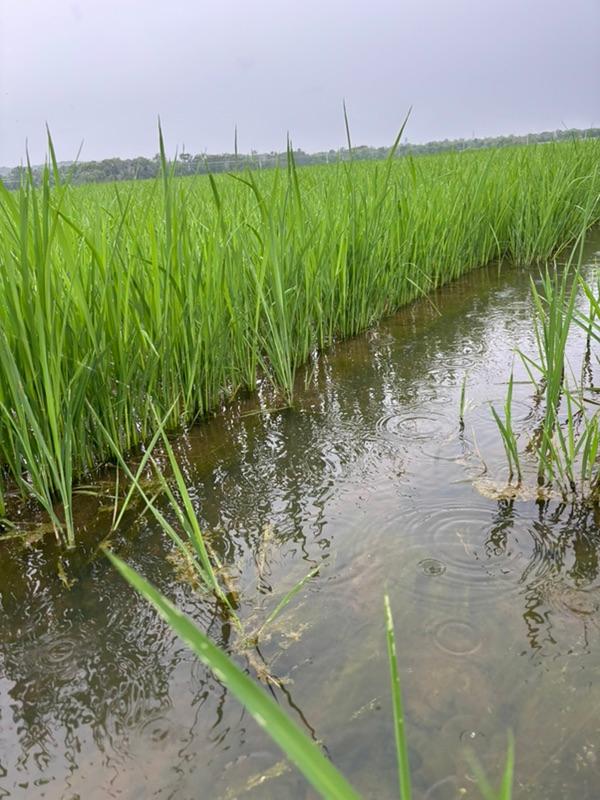
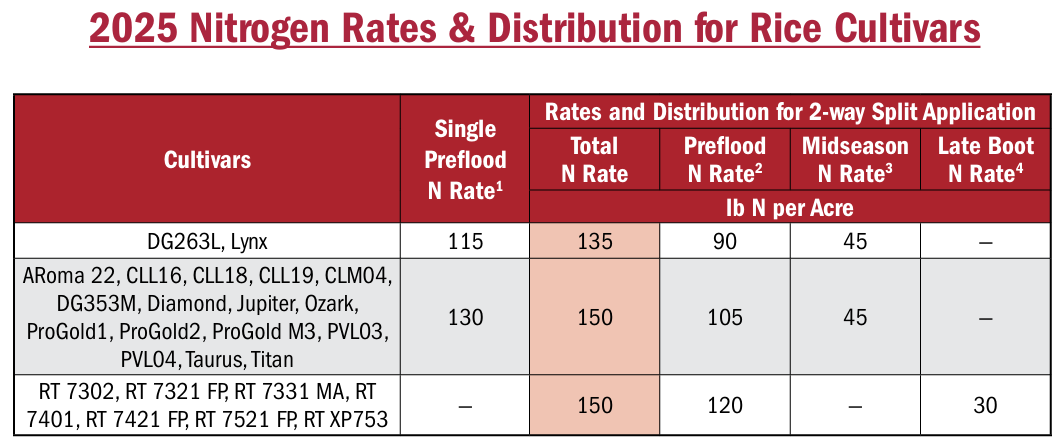
More fields got fertilized this week and second applications of provisia went out on our PVL04 varieties. Floods are going on following the fertilize applications. Remember that at this stage rice is trying to tiller and tillering makes yield. At this stage we want to keep the flood low. Just enough to cover the ground to keep weeds from emerging, but shallow enough that most of the plant is exposed. This is going to be important if we are applying one last application of provisia because we want that weedy rice exposed. Once the field has tillered good and getting taller then we can increase the flood height.

Here is Dr. Jarrod Hardke's latest Arkansas Rice Update.

Soybeans


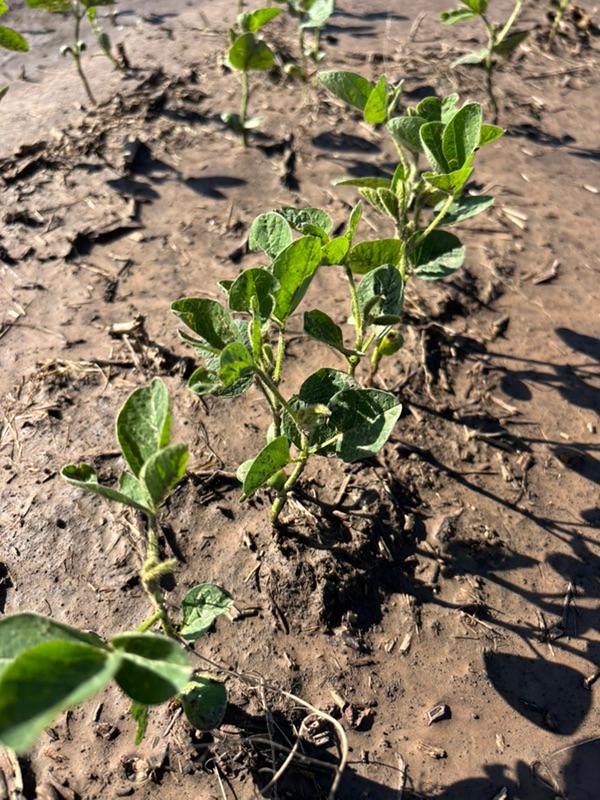
More soybeans went in the ground this week. We are slowly getting there but it is taking time. I have two demonstrations that I am still trying to plant. Several producers wanted to see varieties planted on clay ground. We are trying to get it in, but this weather just isn't cooperating. Watch small beans for defoliation. I haven't seen anything out there yet, but we do have high corn earworm moth numbers.

Rice Disease and Insect Training


You're invited to attend the 2025 Rice Disease and Insect Training, which will be held at the Rice Research and Extension Center (RREC) in Stuttgart on July 14th, from 9:00 AM to 3:00 PM.


Please use the link below to register and indicate any dietary restrictions:

🔗 Registration Form

Corn Earworm Moth Traps


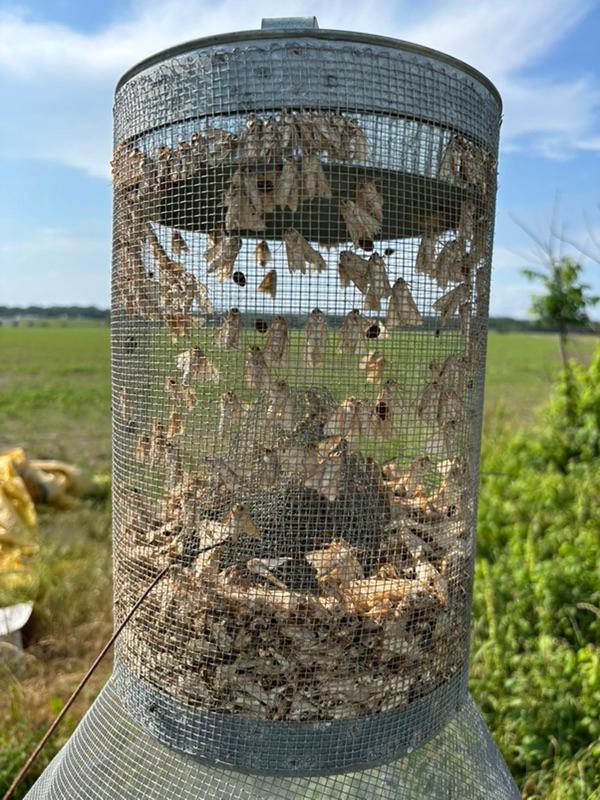
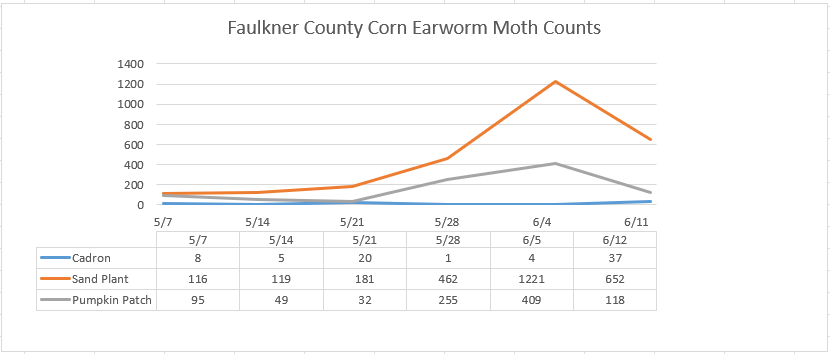
Numbers went down in the Sand Plant and Pumpkin Patch traps this week, but they are still high. The Cadron trap came up significantly. It is still lower than threshold numbers but it is highest it has been all year.


Cadron - 37 moths

Sand Plant - 652 moths

Pumpkin Patch - 118 moths

Global Market Prospects for U.S. Long-grain Rice for the Upcoming Marketing Year

Dr. Alvaro Durand-Morat, Associate Professor and L.C. Carter Endowed Chair, Agricultural Economics and Agribusiness


The global rice market in the last two years has been a rollercoaster driven mostly by India’s export restrictions and, since October of last year, by its massive rice crop. India’s production performance has been remarkable, breaking a new production record every year for the last ten years. USDA (2025a) estimates that production in marketing year 2024 (still in progress in India with the smaller rabi crop) will reach 147 million metric tons (MMT), milled basis, and exports could go as high as 24.5 MMT, significantly above the record 22 MMT exported in 2021.


Indonesia is also contributing to the bearish tone of the global rice market. While total rice consumption and production have followed a downward trend in the last decade, consumption rebounded in 2023 and 2024 while production kept falling, which created a surge in imports. Indonesia was the second-largest rice importer in 2023 and the largest in 2024, when imports reached 4.7 MMT. Weather is supporting the growth of production in 2025, which, together with ample stocks bought at competitive prices, suggests that Indonesia will need less than 1 MMT of imports this year (USDA, 2025a).


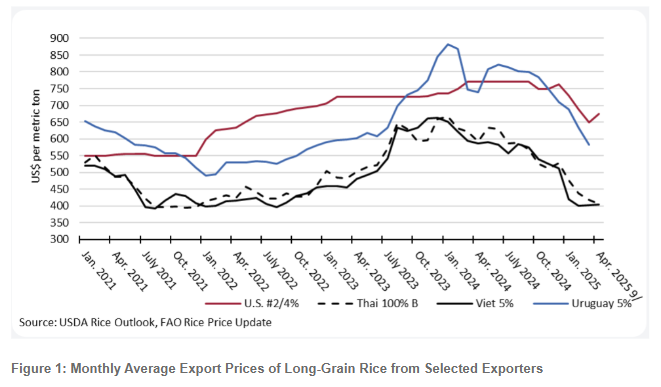
From the above, we can infer why long-grain rice prices have been under pressure since last October (Figure 1). Export prices out of Thailand and Vietnam have decreased by over $160/MT or 29% in the last six months, although they seem to have found a floor at around $400/MT in the last few weeks. Export prices out of Mercosur (Argentina, Brazil, Paraguay, and Uruguay) have also decreased sharply; for example, the export price of Uruguayan 5% long-grain rice averaged $582/MT in March relative to $800/MT in October, according to FAO (2025). The export price of U.S. long-grain #2/4% decreased but to a smaller extent (12%) over the last six months and seems to have found a floor at around $650/MT. Interestingly, amid decreasing long-grain prices across the board, U.S. export prices remain more resilient, even when the low milling quality of the U.S. crop has been a significant concern. Of particular concern for the milling industry is the fact that U.S farm prices have remained mostly unchanged: USDA average farm price decreased only 3% from $14.5/cwt in August to $4.2/cwt in April (USDA, 2025b). Lower export prices and steady domestic paddy prices put the squeeze on milling margins. 


Nine months into the 2024/25 marketing year, the U.S. has exported 2.29 MMT (paddy basis) of long-grain rice, a 21% smaller amount relative to last year, driven by a decrease in paddy exports to all major markets (Mexico, Central America, and Colombia). Paddy rice from Mercosur continues to gain market share in core U.S. paddy markets. Exports of long-grain milled rice are at par with the previous year’s performance, thanks to the growth of exports to Iraq, which helps offset a sizable market loss in Haiti. U.S. exports will face higher competition from Mercosur in 2025, driven by a significant increase in production in Brazil and, to a lesser extent, Argentina, Paraguay, and Uruguay, which will result in more rice available for export.


Given the global and regional situation described above, what can we expect for the upcoming marketing year? USDA’s March 2025 prospective plantings (USDA, 2025c) suggest a similar crop than last year (2.24 million acres in 2025 relative to 2.28 million in 2024). Excessive rains in Arkansas early April have complicated crop establishment and caused significant infrastructure damage. Despite that, as of May 4th planting progress was almost 80%, but with a mix of situations depending on location (UADA, 2025a). The USDA projects the 2025 long-grain rice production at 167.2 million cwt, around 3% below the 2024 crop, and exports at 68 million cwt, slightly higher than in 2024. As discussed earlier, lower export prices have not caught up with farm prices so far, but a bearish global market will indicate that farm prices will adjust downward. For example, FAPRI (2025) projects that long-grain farm prices will drop below the reference price in 2025/26 to $13.28/cwt, while USDA’s WASDE report (USDA, 2025b) estimates an average farm price of $12/cwt for long grain rice. Looking at the University of Arkansas Rice Enterprise Budgets (UADA, 2025b) with those farm prices, the picture that emerges is worrisome, as all budgets yield negative returns above operating costs.

Beef, Small Ruminants, & Forages

Fertilizer Prices


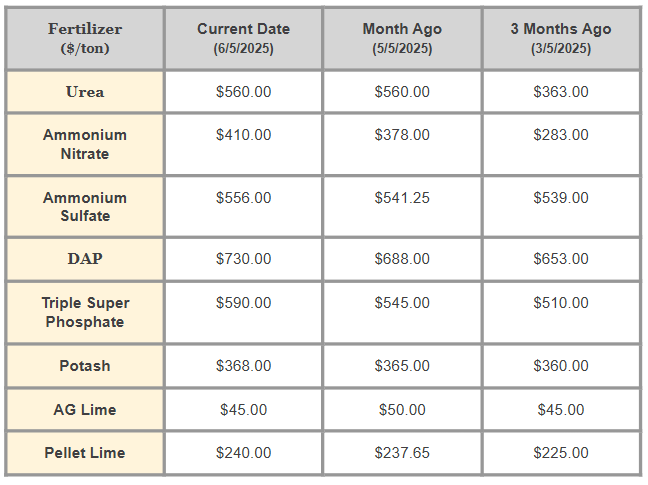
I have had some questions about fertilizer and fertilizer prices lately. One of the things I have heard is urea has gotten so high that the supplier has switched urea for cheaper ammonium nitrate.


I have no issue with using ammonium nitrate as a nitrogen source over urea. It works just as well as urea. But what everyone needs to understand is that ammonium nitrate is 34-0-0 so it is 34% nitrogen. 100 pounds of ammonium nitrate will give you 34 pounds of actual nitrogen. Urea is 46-0-0 which is 46% nitrogen. 100 pounds of urea will give you 46 pounds of actual nitrogen. That means if I recommend 100 pounds of urea per acre you would have to apply 135 pounds of ammonium nitrate to get the same amount of actual nitrogen in the soil.


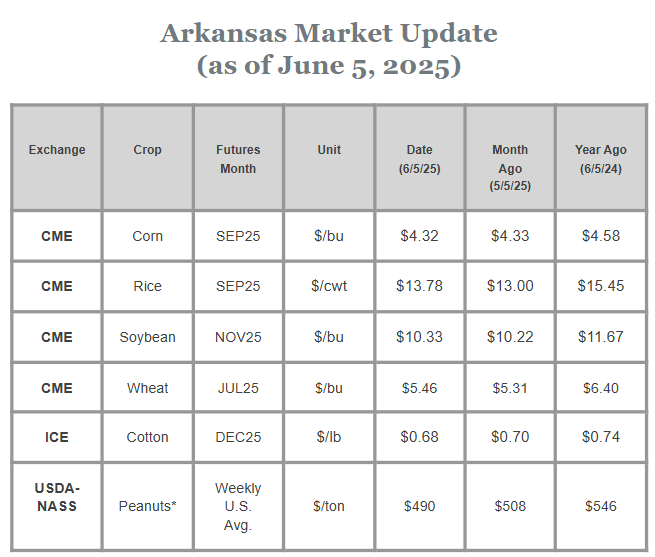
This means that urea is worth more than ammonium nitrate. If I use the input chart from above I will use the price of $560 urea and $410 ammonium nitrate. I understand that prices may be higher than this right now, but I will use these numbers in this example. That makes urea $0.28 per pound and ammonium nitrate $0.205 per pound. So 100 pounds of urea costs you $28.00 per acre and 135 pounds of ammonium nitrate is going to cost you $27.68 per acre. So even though ammonium nitrate is cheaper per ton, at those prices it is actually the same price.


Again, I don't care if you want to use ammonium nitrate or urea, but just realize that you can't compare them price wise per ton. You have to break them down to price per pound and realize you have to use more ammonium nitrate compared to urea.

Rushes

Dr. Hannah Wright-Smith, Extension Weed Specialist


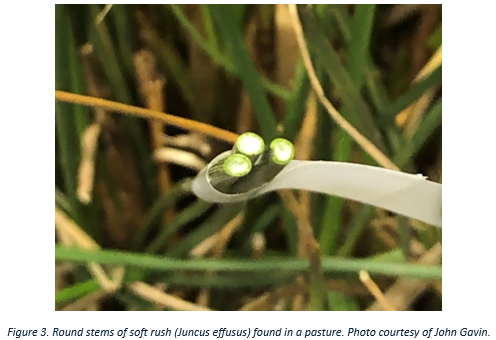
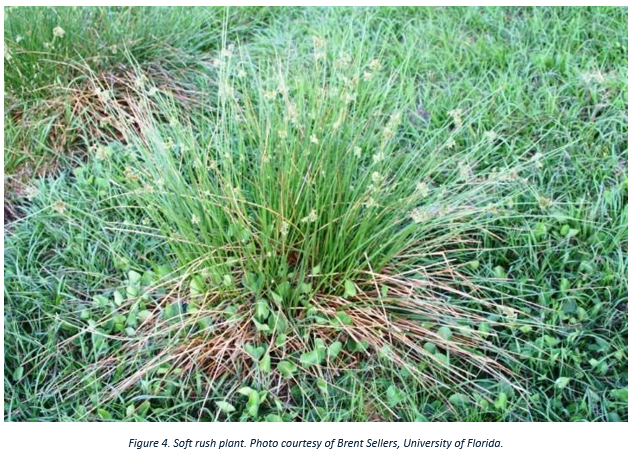
Soft rush and other rush species we see in pastures are perennial, clump-forming plants with round stems (Figs. 3,4) and pointed leaves that can reach up to 5 ft in length. They are prolific seed producers and can spread by both seed and rhizomes (underground stems). Rushes thrive in moist, boggy areas and easily outcompete forage grasses like bermudagrass in these low-lying areas. Cattle will typically not graze rush species and while mowing can be effective in reducing seed production, it will only temporarily control the plant. Effective herbicide control of rushes is limited to 2,4-D at 4 pt/A or a wiper application of a glyphosate solution. If possible, it is recommended to withhold grazing for 6 months following application to prevent regrowth or new seedling establishment. If you find your field being overtaken by soft rush, you may consider addressing underlying drainage or fertility issues in conjunction with herbicide applications to reduce the occurrence over time. 

Weed of the Week


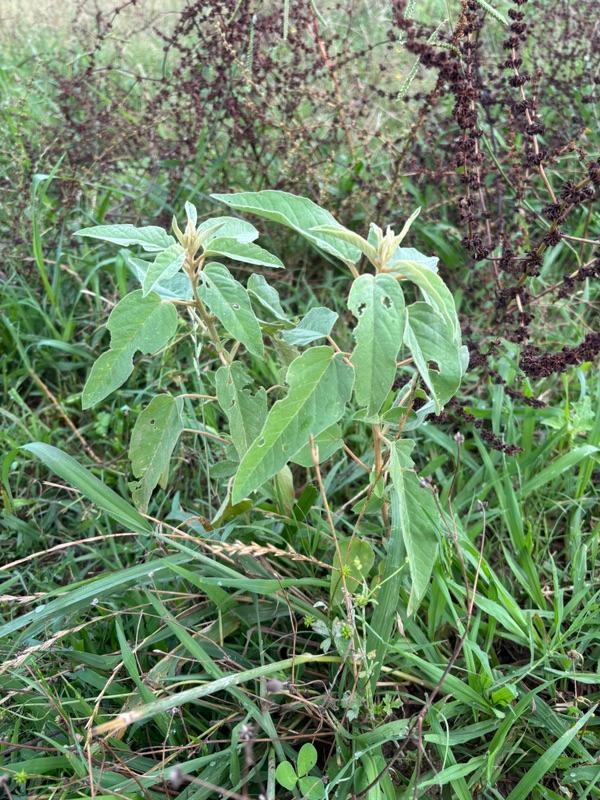
This week's weed of the week is good old Goat Weed. Officially I should be calling this one Woolly Croton. If you look in the MP44 weed control publication it will be listed as Woolly Croton, but I am going to call it what everyone else knows it by which is Goat Weed.


Goat weed is very common on most Faulkner County pastures. It is actually the second most asked about weed behind buttercup. It has a very distinct smell that I personally can't stand. I usually can smell it before I come up on it. Cattle will avoid Goat Weed but doves love it.


Along with buttercup, this is one of the easiest pasture weeds to control. Apply 2,4-D amine at 1 to 2 pints per acre in May or early June when it is less than 12 inches tall. Metsulfuron (Patriot), Grazon P+D, and GrazonNext also control this weed.

Livestock Market Report


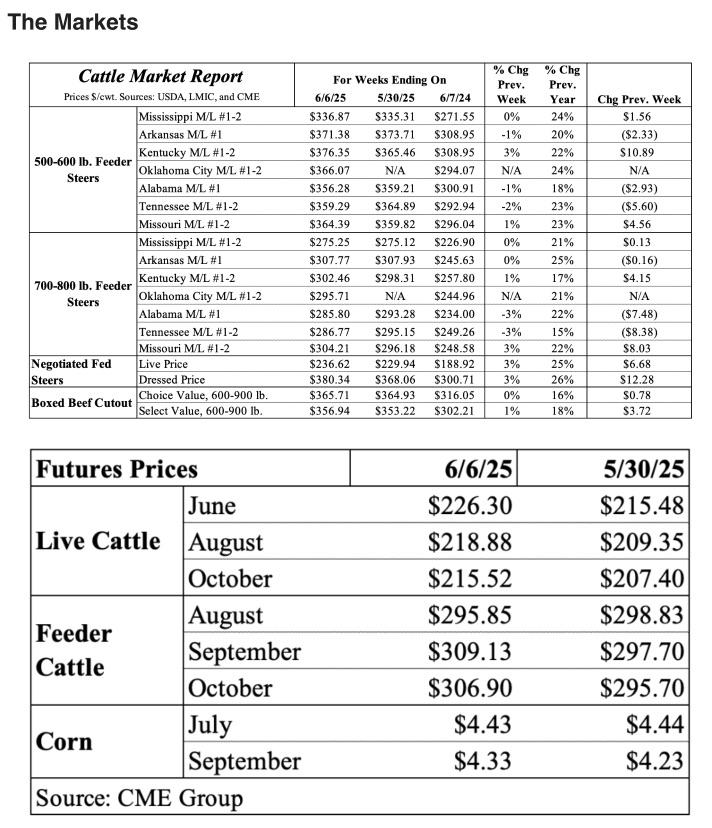
The weekly livestock market report is available on the Arkansas Department of Agriculture website.

Sign up for Text Alerts


You can now sign up for text alerts from me throughout the year. I have two areas you can sign up for which includes Faulkner Livestock or Faulkner Ag (Row Crop Updates). To sign up you can follow one of these links or use the QR Codes below.

Faulkner Livestock


Use either the QR Code or this link:

https://slktxt.io/10lLe

Faulkner Ag (Faulkner Row Crops)


Use either the QR Code or this link:

https://slktxt.io/10lLc

Pursuant to 7 CFR § 15.3, the University of Arkansas System Division of Agriculture offers all its Extension and Research programs and services (including employment) without regard to race, color, sex, national origin, religion, age, disability, marital or veteran status, genetic information, sexual preference, pregnancy or any other legally protected status, and is an equal opportunity institution.

Contact Kevin Lawson, County Extension Agent–Agriculture, Faulkner County | Kevin Lawson