Newsletter — July 23, 2026 | | |
POLTICAL NEWS
POLICY
ECONOMY
ON THE LOCAL FRONT
RETAIL THEFT & PUBLIC SAFETY
IN THE NEWS
| | |
Retail Action Council announces first round of 2026 endorsements
With Washington's Primary Election set for Tuesday, August 4, 2026, Washington Retail Association’s Political Action Committee, the Retail Action Council, is proud to announce its first round of candidate endorsements for the 2026 election cycle.
Every candidate on this list has earned an endorsement that reflects our confidence in their leadership and their understanding of the issues that matter to retailers, their employees, and the customers they serve in their communities. From public safety and organized retail crime to taxes, regulation, and the overall cost of doing business in Washington, these candidates have demonstrated that they listen to Main Street and act on what they hear.
All of the Retail Action Council's first-round endorsements in legislative races go to incumbents - lawmakers seeking reelection to their current seats, or current members of the House running for a seat in the Senate. These are legislators with proven records, and we know how they lead because we have worked alongside them in Olympia.
Washington's high court sees rare turnover this year, with five of its nine seats up for election in 2026 — an outcome that will shape how state law is interpreted for years to come. In the race for Position 4, the Retail Action Council is proud to endorse Judge Sean O'Donnell for both his depth of experience and his reputation for fairness.
Judge O'Donnell has served 13 years on the King County Superior Court, including as Chief Criminal Judge and Chief Family Court Judge, and was elected President of the Superior Court Judges' Association by his peers statewide. Before taking the bench, he spent 12 years as a King County Senior Deputy Prosecutor, prosecuting Washington's first human trafficking cases and gaining firsthand insight into the public safety challenges facing retailers and their communities. Widely regarded as a fair and even-handed, he is backed by judges at every level of Washington's courts, law enforcement, victims' advocates, and leaders across the political spectrum. Because only two candidates filed for Position 4, the race will be decided in the November general election.
More Endorsements Coming After the Primary
The Retail Action Council will release a second round of endorsements following the August 4 primary. That round is likely to include open-seat races, where the primary will help clarify the field.
If you are a Washington Retail member and would like to recommend a candidate for endorsement, or if you are a candidate and would like to be considered for endorsement, please email info@washingtonretail.org.
Make Sure You're Ready to Vote
Make sure you're ready to vote in the August 4 primary: visit VoteWA.gov to update your registration (by July 27), find your legislative district and voters' guide, and track your ballot's status. Ballots are mailed starting July 17 and arrive automatically if you're registered. Return yours postmarked by August 4 or in an official drop box by 8 p.m. on Election Day.
We encourage Washington Retail members to support these candidates. View the full list of endorsements here, and visit each candidate’s website to learn more about their experience, priorities, and campaign.
Full Endorsed List
| | |
Initiative to repeal WA ‘millionaires tax’ qualifies for November ballot
Initiative 645, a measure seeking to repeal Washington’s new high-earners income tax, has qualified for the Nov. 3 statewide ballot after receiving enough valid voter signatures, according to the Secretary of State’s Office.
Supporters of the initiative submitted more than 500,000 signatures earlier this month, exceeding the 308,911 signatures required for a measure to qualify. A random sampling review of petitions confirmed enough valid signatures, allowing the measure to move forward to voters this fall.
The initiative would repeal the 9.9% tax on annual household incomes exceeding $1 million that was approved by the Legislature and signed into law by Gov. Bob Ferguson. The tax is scheduled to apply to income earned beginning in 2028, with the first payments due in 2029. State officials estimate the tax could generate $3 billion or more annually, with most of the revenue supporting the state's operating budget, including K-12 education and other public services.
Supporters of I-645, including the Let’s Go Washington campaign, argue the measure would protect families and businesses from an expansion of the state income tax. Opponents contend that repealing the tax could reduce funding available for health care, childcare, education, and other state priorities.
Gov. Ferguson has stated he would oppose any future expansion of the tax to individuals earning less than $1 million and noted that the income threshold is adjusted annually for inflation.
The ballot measure is also being challenged separately in court, with opponents arguing that the tax violates the state's constitution. That case remains pending and could eventually be considered by the Washington Supreme Court.
| | |
State reports first six months of unemployment payments during strikes
Washington's law allowing unemployment benefits for workers involved in labor disputes has now been in effect for six months, with more than 100 workers receiving assistance since the program launched on Jan. 1, 2026.
According to the Washington Employment Security Department, 138 workers have received benefits totaling nearly $506,000 over 642 weeks of payments. Eligible workers may receive up to six weeks of unemployment benefits after a strike begins, following a waiting period established in state law. Traditional unemployment benefits remain available for up to 26 weeks for workers who qualify under other circumstances.
The policy, approved by the Legislature in 2025, was the subject of significant debate. Supporters said the program provides temporary financial assistance to workers participating in labor disputes, helping cover essential expenses such as housing and food while negotiations continue. Opponents argued the change could encourage longer strikes and increase financial pressure on employers.
The number of recipients is expected to grow as employees participating in the ongoing strike at Hilton's Embassy Suites in Seattle have applied for benefits. Workers there began striking on June 18 while seeking higher wages, year-round health care coverage, and increased staffing. Hilton has said it remains committed to negotiating in good faith toward an agreement with the union.
The Employment Security Department does not identify employers whose workers receive benefits or disclose how many individual labor disputes have resulted in payments. Workers who are locked out by their employers are also eligible for the program. If a strike is later determined to have violated state or federal law, recipients may be required to repay benefits.
State law requires the Employment Security Department to issue annual reports evaluating strike activity and the program's effect on the unemployment insurance trust fund. The current law is scheduled to expire at the end of 2035 unless extended by the Legislature.
| | |
U.S. House passes Common Cents Act
The U.S. House of Representatives has passed the Common Cents Act (H.R. 3074), legislation that would establish a federal standard for rounding cash transactions if the penny is no longer in circulation.
The bill would create a consistent nationwide policy for rounding cash purchases to the nearest five cents, providing uniform rules for consumers and businesses. Electronic payments would not be affected under the proposal.
Supporters of the legislation say a standardized approach would help simplify cash transactions should penny production end while ensuring customers and businesses follow the same rounding practices across the country.
With House approval secured on July 14, the legislation now moves to the U.S. Senate for consideration. If the Senate also passes the bill, it would then be sent to the president for signature before becoming law.
The Common Cents Act is part of broader discussions about the future of the one-cent coin and efforts to reduce the costs associated with producing pennies while creating a clear and consistent framework for cash transactions.
| | |
State budget outlook faces renewed scrutiny
Washington’s latest revenue forecast shows the state’s current budget remains balanced, but it also highlights growing concerns about future budget pressures as economic growth slows and spending commitments continue to increase.
The June revenue forecast raised projected collections for the current 2025–27 biennium by about $554 million compared with the enacted budget, while lowering projected revenue for the 2027–29 biennium by approximately $461 million. The two adjustments largely offset each other, maintaining balance in the current budget. However, the forecast points to challenges ahead, including slower personal income growth, limited employment growth, and weaker-than-expected collections from sales, use, and business taxes.
The updated outlook also relies in part on one-time revenue sources, including higher-than-expected capital gains collections. Looking ahead, projected revenue for the 2027–29 biennium provides only limited capacity before expected spending exceeds available funds, raising questions about future budget decisions.
The forecast has renewed discussion among policymakers and business leaders about state spending priorities. Former Democratic Governors Christine Gregoire and Gary Locke recently raised concerns about the pace of budget growth and the need for greater fiscal discipline. Gregoire noted that the state budget has grown substantially since she left office, while Locke emphasized the importance of setting priorities and ensuring ongoing programs have sustainable funding sources.
State leaders have said recent tax increases were necessary to address long-term budget needs. However, the latest projections indicate that lawmakers will likely face difficult choices in future budget cycles, including evaluating spending commitments, revenue sources, and the sustainability of current programs.
| | Image: Jennifer Buchanan / The Seattle Times | | |
Kraken CEO raises concerns about Washington's business climate
Seattle Kraken President and CEO Tod Leiweke expressed concerns about Washington's fiscal direction during the Economic Future Solutions Summit hosted by the Association of Washington Business Institute and the Washington Roundtable.
Speaking on a panel with business leaders Denise Moriguchi of Uwajimaya and Kerri Schroeder of JPMorgan Chase, Leiweke said he believes many business leaders are increasingly concerned about the state's financial management and long-term economic outlook.
Leiweke emphasized that his concerns are not centered on the state's new tax on high-income earners, noting that he expects to pay the tax himself. Instead, he said he is worried about state spending, recent budget decisions, and what he described as growing uncertainty within the business community.
He pointed to recent reports from credit rating agencies that indicated Washington's financial outlook has weakened. Leiweke also questioned lawmakers' decision to use funding from an overfunded pension plan to help balance other areas of the state budget.
According to Leiweke, some business leaders are evaluating whether to expand or remain in Washington. He cited Starbucks' decision to expand operations in Nashville as one example of companies investing outside the state and suggested other businesses are having similar discussions.
Leiweke called on state leaders to adopt a long-term fiscal strategy that supports economic stability while maintaining Washington's values. His remarks contributed to a broader discussion at the summit about the state's competitiveness, fiscal outlook, and the factors influencing business investment decisions.
| | Image: Washington Policy Center | | |
Automatic gas tax increase takes effect in Washington
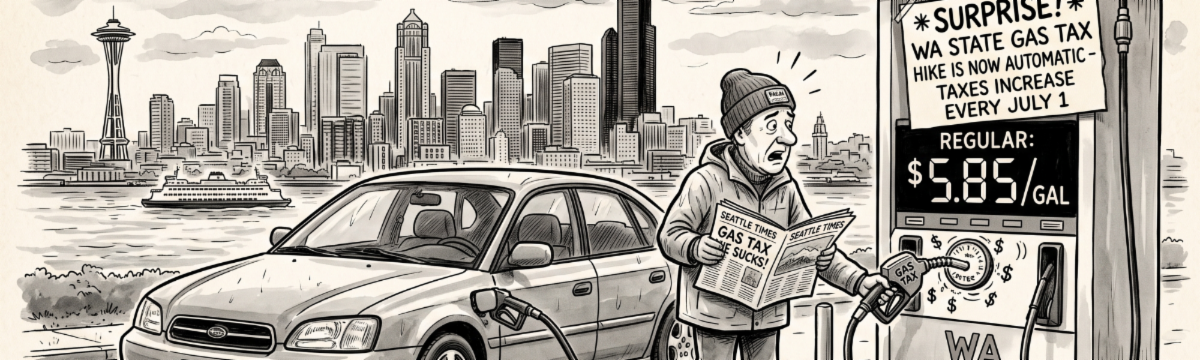
Washington drivers are paying more at the pump following the state's first automatic fuel tax increase, which took effect July 1. The increase stems from legislation approved in 2025 that indexes the state gas tax to inflation, allowing it to rise by 2 percent annually without additional legislative action.
The automatic adjustment was established under HB 2711, which was signed into law in March 2025. Beginning this year, the state gas tax will increase each July 1 based on the formula outlined in the law. Previous fuel tax increases required approval by the Legislature. Under the new system, future increases occur automatically without additional votes.
The state gas tax was previously increased by 6 cents per gallon in 2025, bringing the rate to 55.4 cents per gallon before this year's adjustment. Motorists also pay the federal gas tax of 18.4 cents per gallon, along with fuel cost impacts associated with the state's Climate Commitment Act. Together, these factors contribute to Washington having some of the highest gasoline prices in the nation.
Supporters of indexing the gas tax have said the approach provides a more predictable source of revenue for transportation projects and helps address long-term maintenance needs for roads and bridges as construction costs rise over time.
Critics argue that automatic increases reduce legislative oversight by eliminating the need for future votes on fuel tax adjustments. They also contend the process limits opportunities for public input on transportation funding decisions and places additional financial pressure on households already facing higher living costs.
The policy reflects an ongoing debate over how Washington should fund transportation infrastructure while balancing affordability concerns. As the annual adjustments continue, discussions are expected to focus on transportation investment priorities, the condition of the state's road system, and the long-term impact of higher fuel costs on residents and businesses.
| | |
Report highlights Washington’s changing business climate
The 2026 Competitiveness Redbook from the Washington Alliance for a Competitive Economy provides a data-driven look at the state’s economic performance, highlighting areas of strength while identifying challenges affecting Washington’s competitiveness.
The report points to continued strength in areas such as the state’s high-tech sector and export activity, but also notes slowing job growth and rising costs that may affect employers. Washington added 19,800 non-agricultural jobs last year, representing 0.5% growth and ranking 35th nationally. This compares with 56,100 jobs added the previous year and 109,000 jobs added a decade ago.
The report also examines Washington’s tax structure and business costs. According to the Tax Foundation, Washington ranks 45th nationally for overall tax competitiveness, with corporate taxes, sales taxes, and unemployment taxes among the least competitive in the country. CNBC’s rankings similarly place Washington near the bottom nationally for cost of doing business and business friendliness.
Additional cost pressures identified in the report include unemployment insurance costs, workers’ compensation expenses, minimum wage levels, and fuel taxes. Washington’s minimum wage remains the highest in the nation, while gasoline and diesel taxes rank among the highest nationally.
The report also highlights changes in one of Washington’s longstanding economic advantages: affordable electricity. While rates remain relatively competitive, industrial electricity costs have increased compared with previous years, moving Washington from the top-ranked state five years ago to seventh for industrial customers.
The report notes that these economic factors have broader implications because businesses contribute significantly to funding state and local services. According to the data, employers account for 49.6% of state and local tax collections, contributing approximately $10,100 per employee.
The 2026 Competitiveness Redbook is produced by the Washington Alliance for a Competitive Economy, a nonprofit research institute focused on improving the state’s economy and business climate. The full report is available here.
| | |
Prices drive early back-to-class shopping plans
Families are getting an earlier start on back-to-class shopping in 2026, with price concerns continuing to shape purchasing decisions even as inflation worries have eased compared with recent years.
According to new consumer research from the National Retail Federation (NRF), 78 % of shoppers expect school-related items to cost more this season. While that remains a significant majority, it represents an improvement from 2022, when 84 % anticipated higher prices during a period of peak inflation.
Household income continues to influence how consumers approach the shopping season. Families earning more than $100,000 annually report a greater decline in price concerns than they did four years ago and continue to account for much of the expected spending. Lower income households remain more cautious and are looking for ways to make their budgets stretch further as they prepare for the new school year.
Promotional events are expected to play a major role in purchasing decisions. About one third of back-to-class shoppers say they typically plan their purchases around summer sales, allowing them to take advantage of seasonal discounts before classes begin.
If prices exceed expectations, many consumers say they will adjust their shopping strategies rather than reduce the number of items they purchase. Planned approaches include comparing prices across multiple retailers and seeking lower-priced options at discount stores.
The findings suggest that consumers remain focused on value while taking a proactive approach to preparing for the upcoming school year. Earlier shopping, careful price comparisons, and strategic timing around seasonal promotions are expected to remain common themes throughout the back-to-class shopping season.
| | |
Summer shopping fuels ninth straight month of retail sales growth
Retail sales increased for the ninth consecutive month in June, according to the latest CNBC/NRF Retail Monitor powered by Affinity Solutions. The report points to a strong start to the summer shopping season, supported by seasonal promotions, early back-to-school purchasing, and continued consumer spending.
Total retail sales, excluding automobile dealers and gasoline stations, rose 0.33 percent from May on a seasonally adjusted basis. Compared with June 2025, unadjusted sales increased 9.41 percent. Core retail sales, which also exclude restaurants, increased 0.36 percent from the previous month and were 10.08 percent higher than a year earlier.
The National Retail Federation noted that the unusually large year-over-year gains reflect comparisons against weaker sales in June 2025. On a seasonally adjusted basis, total and core retail sales each posted gains of just over 4 percent compared with the same period last year. Through the first half of 2026, unadjusted total retail sales were up 6.81 percent year over year, while core sales increased 6.84 percent.
The Retail Monitor is based on anonymized credit and debit card transaction data compiled by Affinity Solutions rather than consumer surveys. Because it relies on actual purchase data, the figures are not subject to the monthly or annual revisions common with some other retail sales reports.
Most major retail categories posted annual gains in June. Sporting goods, hobby, music, and book stores led the way with an 18.53 percent increase from a year earlier. Electronics and appliance stores, clothing and accessories stores, digital products, and health and personal care stores also reported double-digit annual growth.
On a monthly basis, seven of the nine tracked retail categories recorded gains. Furniture and home furnishings, along with electronics and appliance stores, were the only categories to post slight month over month declines.
| | |
Seattle turns off stadium district surveillance cameras after World Cup
Seattle has deactivated 22 surveillance cameras in the Stadium District following the conclusion of FIFA World Cup events in the city. The cameras were temporarily reactivated in early June after the Seattle Police Department and FBI identified general but credible safety concerns related to hosting the international soccer tournament.
Seattle Mayor Katie Wilson said the cameras were only intended to operate during the World Cup because of the event’s global visibility and unique security considerations. No major incidents were reported near the stadiums during the tournament.
The city originally paused its surveillance camera pilot program in March amid concerns about privacy, data management, and the potential use of camera information for federal immigration enforcement. Some community members also raised concerns that disabling cameras could create additional public safety challenges.
An independent audit of Seattle’s police CCTV policies and practices is expected this fall. The Stadium District cameras will remain offline during the review, and the city will not activate additional cameras until the audit is complete. The mayor said the findings will be shared publicly.
Existing cameras in the Downtown Core, Chinatown International District, and North Aurora areas will remain operational.
The Downtown Seattle Association raised concerns about the decision, saying surveillance cameras are an important tool for law enforcement to investigate crimes and support public safety, particularly in areas with high visitor activity and major transportation connections.
Mayor Wilson said the city’s goal is to balance public safety needs with privacy protections and committed to continued transparency and community involvement as Seattle evaluates its use of surveillance technology.
| | |
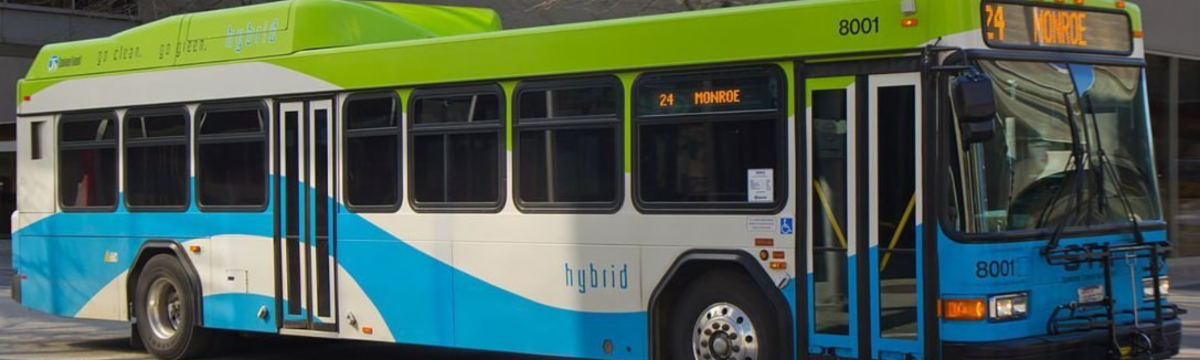
Spokane transit tax renewal heads to August ballot
Spokane County voters will decide in the August primary whether to renew a 0.2% sales tax that supports the Spokane Transit Authority (STA). If approved, the measure would extend the tax for another 20 years, maintaining a rate first approved by voters in 2016. The tax is scheduled to expire in 2028 and currently makes up part of STA's 0.8% local sales tax rate.
According to STA, sales tax revenue provides about 75% of its operating budget. Agency leaders say renewing the tax would preserve existing transit service, support future projects outlined in the Connect 2035 plan, and help maintain eligibility for state and federal grants that often require stable local funding. Officials also point to past investments made possible by the tax, including the City Line bus rapid transit system and the West Plains Transit Center.
The proposal has generated debate among local leaders and community organizations. Some business representatives and elected officials have expressed concern that the measure could compete with a potential future sales tax proposal aimed at funding regional criminal justice and public safety improvements. They also argue that voters may be reluctant to approve multiple tax measures.
Critics have also questioned whether the renewal is necessary, citing approximately $240 million in agency reserves. They contend that the available funding could support operations without extending the tax.
STA officials respond that much of the reserve funding has already been designated for long-term capital projects and strategic investments included in the Connect 2035 plan. They also note that the agency has historically avoided debt by saving for major infrastructure improvements and maintaining financial reserves.
Supporters of the measure say renewing the tax would allow planned transit improvements to move forward and continue expanding access to transportation. Opponents argue the proposal raises questions about budgeting priorities, financial transparency, and long-term accountability.
| | |
Pasco advances road project to support Broadmoor development
The City of Pasco is moving forward with a $3.8 million road project designed to support future growth in the Broadmoor development area while helping prevent the traffic congestion experienced along Road 68.
The proposed project would realign Old Harris Road, disconnecting it from Broadmoor Boulevard and extending it to Sandifur Parkway at Road 103. Current plans call for a three-lane roadway with one lane in each direction, and a center turn lane to improve traffic flow and access.
City officials say the project is intended to support long-term development in Broadmoor, a 1,200 acre master planned district in northwest Pasco near Interstate 182. The area is planned to include a mix of commercial, residential, medical, and hospitality uses, along with as many as 5,000 housing units.
The road improvements are also expected to provide greater certainty for developers seeking business commitments and tenant leases. As part of a proposed development agreement, developer Visconsi Group would dedicate the right of way needed for the new roadway alignment at no cost to the city by February 2027.
Funding for the project would come from two sources. Approximately $870,000 would be paid through transportation impact fees, with the remaining $3 million funded through Washington's Tax Increment Financing program. Pasco previously authorized up to $39 million in bonds to finance infrastructure improvements in the Broadmoor area, with repayment expected through future increases in property tax revenue generated by new development.
The proposed agreement also includes provisions to manage construction cost increases. The city would cover overruns of up to 10 percent above the engineer's estimate, while additional costs beyond that threshold would be shared with the developer. If bids exceed the estimate by more than 30 percent, the city could reject the bids and end the agreement.
The Pasco City Council is expected to consider the proposed agreement in the coming weeks.
| | |
Tacoma and Olympia review local wage and worker protection proposals
Cities across the South Sound are continuing discussions about potential changes to minimum wage policies and worker protections, with Tacoma and Olympia each reviewing options following recent public debates.
Tacoma city leaders are considering a proposal to raise the city’s minimum wage to $20 per hour, with Deputy Mayor Joe Bushnell gathering feedback from business owners, labor unions and other stakeholders. Options under consideration include an immediate increase to $20, a phased approach, or setting the city’s minimum wage at a level above the state requirement. Tacoma currently follows Washington’s minimum wage of $17.13 per hour.
The proposal could be placed before voters in November, although the city would need to meet an Aug. 4 deadline, or the City Council could choose to adopt a measure directly. Supporters say a higher wage could improve financial stability for workers and support local economic activity, while opponents have raised concerns about potential impacts on employers and nonprofit organizations.
The discussions follow a legal challenge involving a 2025 Tacoma ballot initiative that proposed a $20 minimum wage and additional worker protections. The measure remains before the Washington State Court of Appeals, with oral arguments scheduled for September.
In Olympia, city leaders are beginning a public process to examine worker protections and affordability measures after voters rejected a 2025 ballot initiative that would have increased the minimum wage to $20 per hour and established a Workers’ Bill of Rights. The measure received 44% voter support.
The Olympia City Council has directed staff to resume research and community engagement on topics including minimum wage, predictive scheduling and workplace safety. A three-phase review process is expected to continue through early 2027, including data collection, stakeholder discussions and potential policy recommendations.
Both cities have emphasized that the current reviews are intended to gather information and community feedback. No final decisions have been made on future wage or workplace policy changes.
| | |
Six organized retail theft cases move forward in King County court
Six defendants accused of organized retail theft appeared in King County court for arraignment as prosecutors continue to address a steady stream of cases involving repeated theft from major retailers across the region.
The cases involve allegations connected to Lululemon, Nordstrom, Target, Safeway, Ross Dress for Less, and Ulta Beauty locations. Prosecutors emphasized that these cases are different from typical shoplifting charges because they involve allegations of repeated theft or losses significant enough to rise to felony-level offenses. All defendants are presumed innocent unless proven guilty.
King County Prosecuting Attorney’s Office spokesperson Casey McNerthney said organized retail theft cases have a broader impact beyond individual businesses. He noted that retailers may respond to ongoing losses through increased security costs, higher prices, or, in some cases, store closures.
The cases come as Washington continues to face elevated concerns around retail crime. A Forbes Advisor study ranked Washington as the state most impacted by retail crime, citing high rates of theft compared with population share and significant losses tied to stolen goods.
The Washington Retail Association has estimated retail theft cost businesses approximately $2.7 billion in stolen merchandise in 2021, along with substantial impacts to state and local tax revenue. WR has supported efforts to strengthen tools available to law enforcement and prosecutors to address organized retail crime.
State lawmakers are also continuing discussions on potential reforms. Previous legislative proposals have focused on stronger penalties for coordinated theft operations and ensuring prosecutors have the resources needed to pursue these cases.
The King County cases will now move through the standard court process following the initial arraignments.
| | |
Digital fraud rings target retailers through tap-to-pay schemes
Organized retail crime is increasingly moving beyond traditional theft, with criminal networks using digital tools, stolen payment information and retail platforms to commit large-scale fraud, according to a recent CNBC investigation.
Law enforcement officials say some organized groups are using stolen credit card information and digital wallets to purchase gift cards at retailers, which can then be resold or used to purchase high-value goods for resale overseas. Investigators have linked some of these operations to Chinese organized crime networks, with officials estimating certain groups may generate significant profits through these schemes.
Unlike traditional retail theft, these crimes can occur through self-checkout kiosks, retail apps and online accounts, making them more difficult to identify. Fraudsters often obtain consumer information through phishing messages, fake payment notices and other scams designed to steal account credentials and credit card details.
Retail security experts say the growth of tap-to-pay technology and stored payment information in retail apps has created new opportunities for criminals. While convenience features improve customer experiences, they can also become targets when accounts are compromised.
Cases investigated across the country have involved a variety of retailers, including home improvement, apparel and general merchandise companies. Law enforcement agencies say these investigations can be complex because they often involve networks operating across jurisdictions.
Federal efforts, including Homeland Security Investigations’ Project Red Hook, are targeting gift card fraud and other digital retail crimes. Since 2024, the initiative has resulted in hundreds of arrests, according to officials.
Retail industry groups and law enforcement organizations continue to advocate for stronger collaboration and information sharing to address organized retail crime. A proposed federal measure, the Combating Organized Retail Crime Act, aims to improve coordination between retailers and law enforcement agencies.
CNBC.com
| | |
SPD operation leads to 13 arrests at Capitol Hill Walgreens
The Seattle Police Department (SPD) reported 13 arrests following a retail theft operation at the Walgreens location on 15th Avenue East in Capitol Hill.
The operation, conducted Friday, involved undercover SPD officers working with store loss prevention staff to identify individuals suspected of theft. According to SPD, arrests were made for a combination of theft-related offenses and outstanding warrants. Approximately $600 in stolen merchandise was recovered during the operation.
SPD said the effort is part of ongoing work with retailers to address theft and property crime concerns. In addition to arrests, officers may issue trespass notices that prevent individuals from returning to a business location, allowing for future enforcement if they violate the restriction.
Retailers across Seattle and other communities have continued to report challenges related to theft, safety, and disruptions affecting employees and customers. Law enforcement agencies have increased collaboration with businesses through targeted operations aimed at addressing repeat theft activity and improving safety in commercial areas.
The Capitol Hill Walgreens has been identified by local officials and community members as one of several businesses experiencing elevated theft and disorder concerns. The operation follows other recent SPD efforts in the East Precinct focused on addressing retail theft at high-impact locations.
Separately, Walgreens announced plans to reduce its store footprint nationwide, including the closure of its Central District location. The company continues to operate pharmacy locations on Broadway and 15th Avenue East in Capitol Hill.
| | |
NRF updates retail fraud taxonomy to address evolving threats
The National Retail Federation (NRF) has released an updated version of the NRF Retail Fraud Taxonomy, a resource designed to help organizations better understand, analyze and respond to fraud across retail environments.
Developed in collaboration with Target Corporation and the Chertoff Group, the updated taxonomy provides a common framework for describing fraud techniques, behaviors, detection strategies and mitigation approaches. The resource is intended to improve communication and coordination among retailers, technology providers, financial institutions, law enforcement and policymakers.
“Retail fraud has evolved: It is sophisticated, technology-driven and increasingly affecting different teams across business operations,” said Caroline Reppert, NRF vice president of artificial intelligence and technology policy and director of NRF’s Center for Digital Risk & Innovation. She noted that a shared taxonomy can help stakeholders identify emerging threats, exchange information and develop more targeted solutions.
The updated framework reflects the changing nature of fraud, including activity that occurs across both physical and digital environments. It recognizes that fraud actors increasingly use automation, online networks and specialized tactics to carry out operations.
The NRF Retail Fraud Taxonomy is intended to serve as a knowledge base that organizations can use for education, security assessments, team exercises and resource planning. By creating consistent terminology around fraud activity, the tool aims to support stronger collaboration and more effective fraud prevention efforts throughout the broader retail ecosystem.
Version 2.0 of the taxonomy was presented at the 37th Annual Association of Certified Fraud Examiners Global Fraud Conference in Boston. NRF said the resource will continue to evolve alongside changes in the fraud landscape.
| | |
Small business confidence trails national outlook in Washington
A new report from the National Federation of Independent Business (NFIB) finds that small business owners in Washington are less optimistic about current business conditions than their counterparts nationwide, with labor costs, taxes, and regulations ranking among their top concerns.
According to the 2026 NFIB Washington Small Business Economic Trends report, the state's Small Business Optimism Index stands at 94.5, compared with the national reading of 98.5. The report also found Washington businesses are less likely to plan for new hiring, with 5.3 percent expecting to increase employment compared with 15.4 percent nationally. Current job openings also trail the national average.
Labor costs emerged as one of the report's most significant findings. Nineteen percent of Washington respondents identified labor costs as their single greatest challenge, more than double the national rate of 8.5 percent. Business owners in the state also reported greater concern about government regulations and taxes than respondents across the country.
The report noted that only 6 percent of Washington small business owners rated their business as "excellent," compared with 12 percent nationally. Earnings trends also remained weaker than the national average.
Washington's unemployment rate of 5.1 percent and Employment Index of 99.8 both lag national figures, according to the report. While Washington continues to rank among the nation's strongest economies in overall gross domestic product and per capita income, the report suggests many small businesses continue to face challenges related to hiring, operating costs, and business growth.
The report concludes that small businesses, which employ about half of the state's private sector workforce, continue to face economic pressures that may affect expansion plans and future investment. It also notes that policymakers may look to the findings as they consider future decisions related to taxes, labor policies, and regulatory requirements that influence the state's business climate.
| | |
Washington Retail Association talks South King County Economy at leadership conference
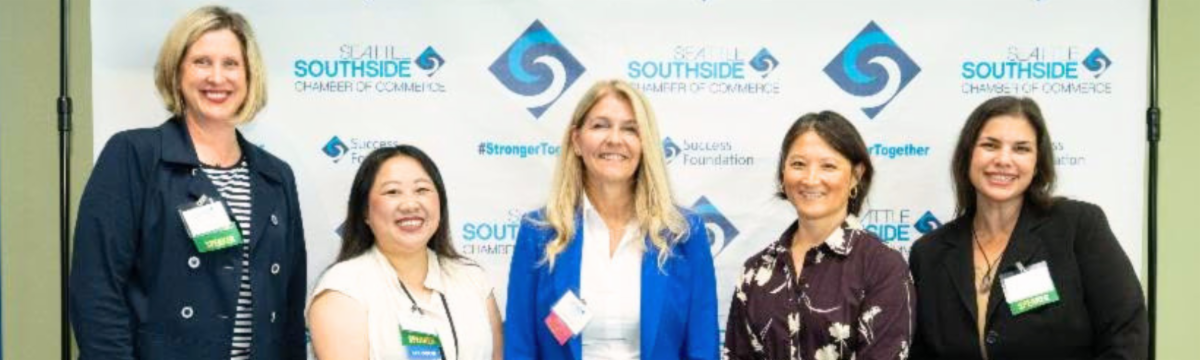
On Friday, July 10, Crystal Leatherman, Washington Retail Association’s (WR) Director of Policy & Government Affairs, represented the Washington Retail Association at the Seattle Southside Chamber of Commerce's Southside Leadership Conference at Highline College, joining a panel focused on the year ahead for the region's economy.
The conference drew business leaders, entrepreneurs, public officials, nonprofit professionals, and emerging leaders from across South King County for a day of learning, connection, and inspiration. With economic conditions, workforce challenges, and public policy all in flux, the day centered on a simple idea: leaders at every level are being asked to think differently, adapt quickly, and lead with purpose.
The session, "South King County Economic Outlook: What Leaders Should Expect in the Year Ahead," gathered perspectives from across the public and private sectors. Crystal shared the stage with Cathy Vue of the Port of Seattle, Senator Tina Orwall (D-33), and Representative Mia Gregerson (D-33), on a panel moderated by Des Moines City Manager Katherine Caffrey.
Together, the panelists examined the economic forces shaping South King County, from workforce and cost pressures to the policy decisions that will influence how businesses plan and grow in the year ahead. The result was a candid, forward-looking conversation, and a reminder of how much progress happens when the business community, elected officials, and regional partners are in the room together.
WR thanks the Seattle Southside Chamber of Commerce for convening such a valuable conference, and its fellow participants for a rich exchange of ideas. Conversations like these are how the region builds the partnerships it needs to meet today's challenges and seize tomorrow's opportunities.
| |
Washington Retail Association diversity statement
Washington Retail Association is committed to the principles of justice, equity, diversity, and inclusion. We strive to create a safe, welcoming environment in which these principles can thrive.
We value all people regardless of race, ethnicity, gender, religion, age, identity, sexual orientation, nationality, or disability, and that is the foundation of our commitment to those we serve.
| | |
Jan Himebaugh, President & CEO — 360.200.6450 — Email
Crystal Leatherman, Dir of Policy & Government Affairs — 360.200-6453 — Email
| | | | |