|
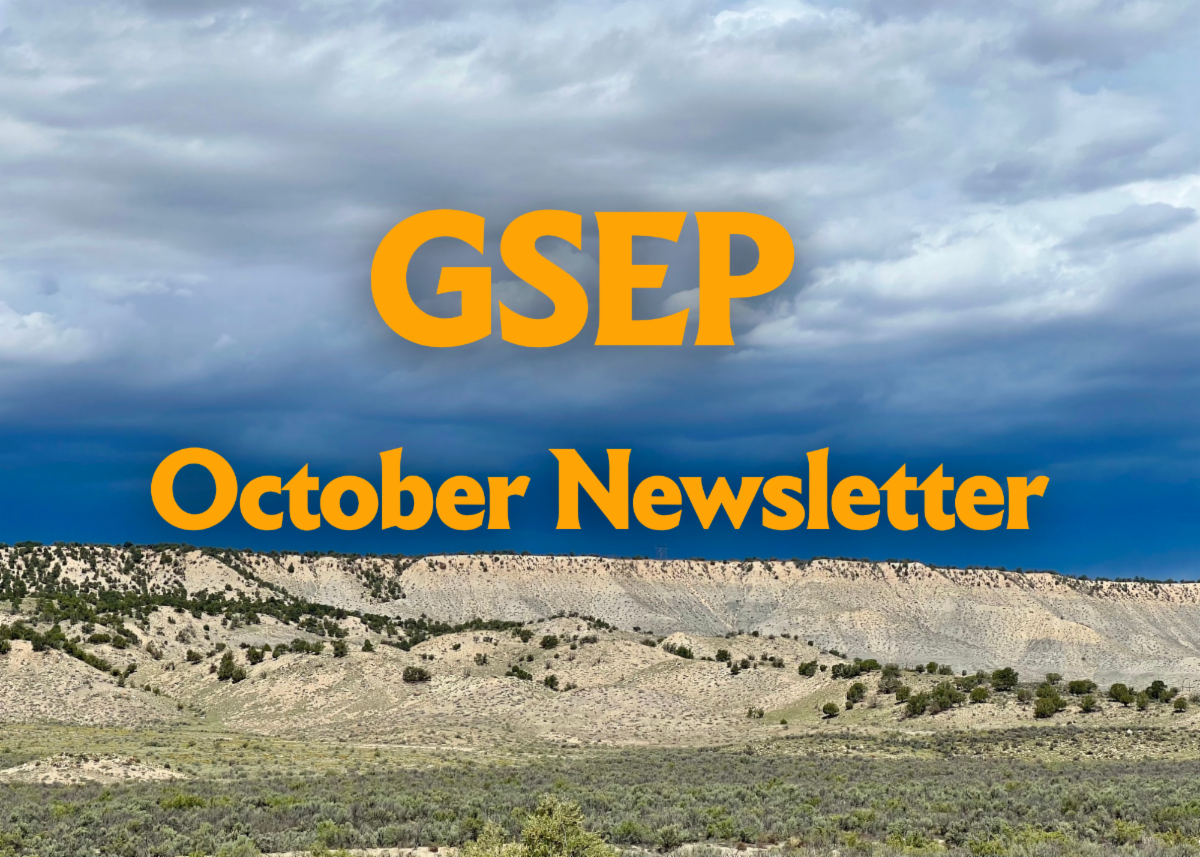
No longer part of the Grand Staircase-Escalante National Monument, this terrace of loose gravel sits atop an area with high potential for new contributions to paleontology. The geology visible on the ridge of this former part of the Monument originated during the late-early Pleistocene epoch and consists of alluvium (loose clay, sand, silt, and gravel) that was deposited by an ancient river some thousands to millions of years ago.
Photo provided by Jackie Grant, 2026.
| | |
Dear Supporter of Grand Staircase,
On September 18, 2026, a few of us marked the 30th anniversary of Grand Staircase-Escalante National Monument by taking a subdued walk through Lick Wash. We were subdued because, just days before on September 11, the full effect of Presidential Proclamation 11044 took hold. Not only did the proclamation shrink the Monument by 90%, it also opened it to mining claims, sale, and land transfer.
I should also note that, while we were subdued, we were also hopeful and working on solutions. Our restoration, stewardship, and native plant programs all continue to make the Monument and its connected landscapes better places. The downsizing of the Monument does not downsize our work or our impact.
I began to research the implications of Proclamation 11044, and learned some encouraging things. First, the current Resource Management Plan remains in effect until a new one is written, which will take one to two years. The existing Plan limits mining and various other extractive activities, which means that the currently designated 181,000+ acres of the Monument and the originally designated 1.87 million acres will maintain some level of protection for one to two more years.
Second, Presidential Proclamations generally do not overturn acts of Congress (unless Congress lets them). This means that there are sections of the Monument that Congress exchanged with the state of Utah that are generally immune to Proclamation 11044. This technicality is one reason why the 2026 boundaries of Grand Staircase-Escalante National Monument look so strange.
Third, Public Law 107-63 was enacted on November 5, 2001. Section 331 of this law banned the use of appropriated funds for oil, gas, coal, and mineral leasing or pre-leasing activities inside monument boundaries as they were drawn on January 20, 2001. This law provides the lands within the 1996 boundaries of the Grand Staircase-Escalante National Monument with another thin layer of protection.
Fourth, Judge Chutkan reopened our 2017 lawsuit that challenges the reduction in size of the Grand Staircase-Escalante National Monument. This means that we and many others were able to reopen existing lawsuits from 2017 and amend our complaint to address the massive 2026 size reduction of the Monument (90% smaller). We will learn more in November after the Tribes provide their input. In the meantime, the government has been ordered to provide all parties with at least 48-hours of notice prior to the commencement of any ground-disturbing activities.
Finally, you may have noticed our new website and emblem! The rufous hummingbird was chosen to symbolize our organization because of its indomitable spirit and connection to the Monument, which is centrally located within the hummingbird's 4,000 mile migration journey. You'll also notice that our hummingbird has five feathers extended in a protective position. The five feathers represent the five steps of the geologic encyclopedia known as the "Grand Staircase." The last piece of our new symbol is the star located in the curve of the hummingbird's neck. The star symbolizes the amazing night skies of the Monument, our relationships with the Indigenous Tribes who have been immersed in the land since time immemorial, and the importance of protecting public lands.
Keep your feathers up!
-Jackie
| | Your donations enable our stewardship, outreach, restoration, and native plant work across the Monument and its connected landscapes and watersheds. | | |
GSEP Newsletter:
October, 2026
New Administration, New Boundaries - Again
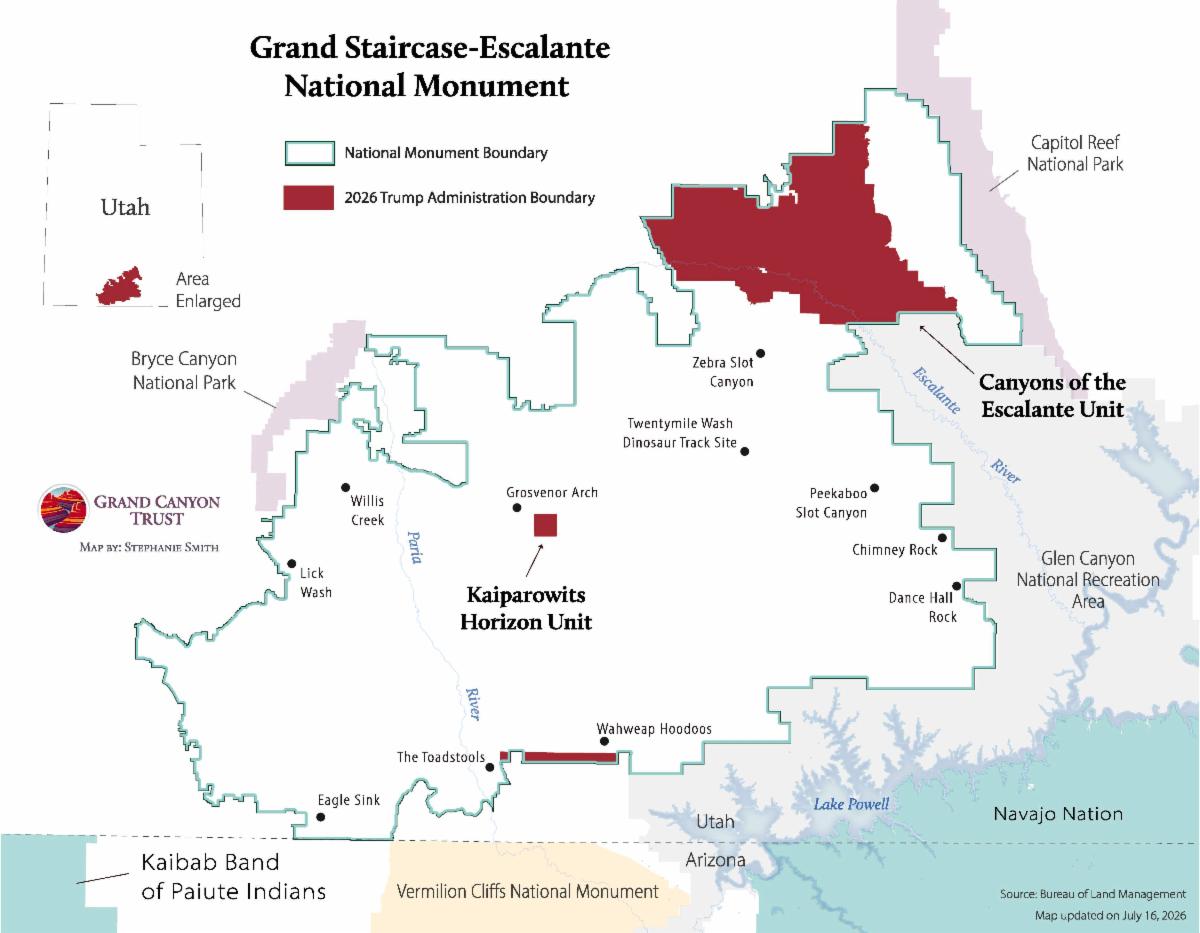
The Grand Staircase-Escalante National Monument has been officially diminished to 181,541 acres, which is a far cry from the size needed to protect such an incredible landscape. An issue of contention is whether the Monument was and is the smallest area compatible with the care and management of its protected resources and objects. This language, "smallest area compatible stems from the Antiquities Act of 1906.
| | |
Map of new Grand Staircase-Escalante National Monument boundaries shown in dark red with original boundaries outlined in blue-green.
Image courtesy of Grand Canyon Trust, 2026.
| |
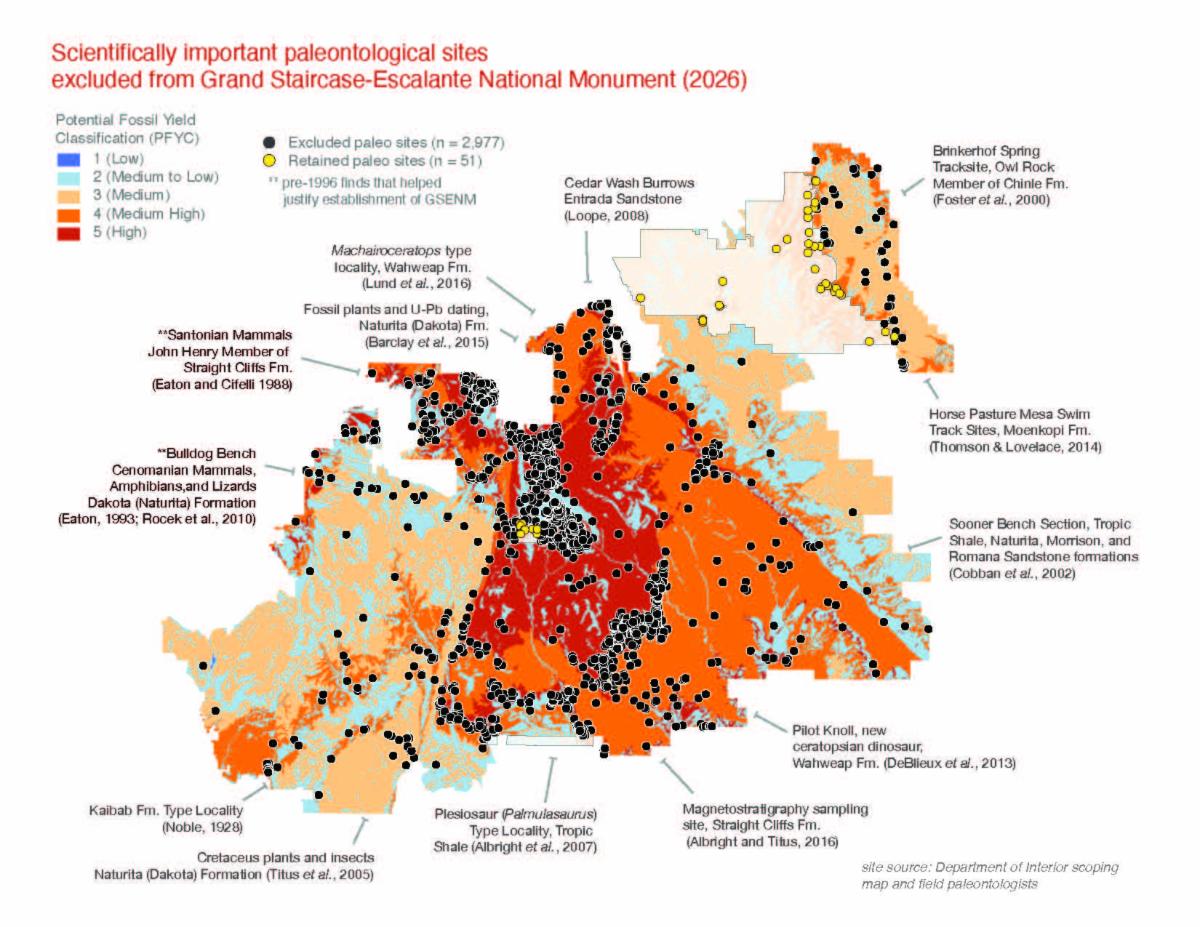
One reason why the Monument was designated in 1996 was to protect paleontological sites and allow scientists to learn about an enormous cross section of life on Earth that was preserved as fossils throughout the Monument.
Take a minute to carefully look at the next map. It's pretty complicated, but it shows:
- the new Monument boundaries in pale peach,
- fossil sites that are protected by the new boundaries as yellow dots,
- fossil sites are no longer protected by Monument designation as black dots, and
- the potential for future significant fossil yields from low (blue) to high (dark red).
To me, the map very clearly shows that the original size of the Monument is the smallest area compatible with the care and management of paleontological resources. It might even be a little too small!
| | |
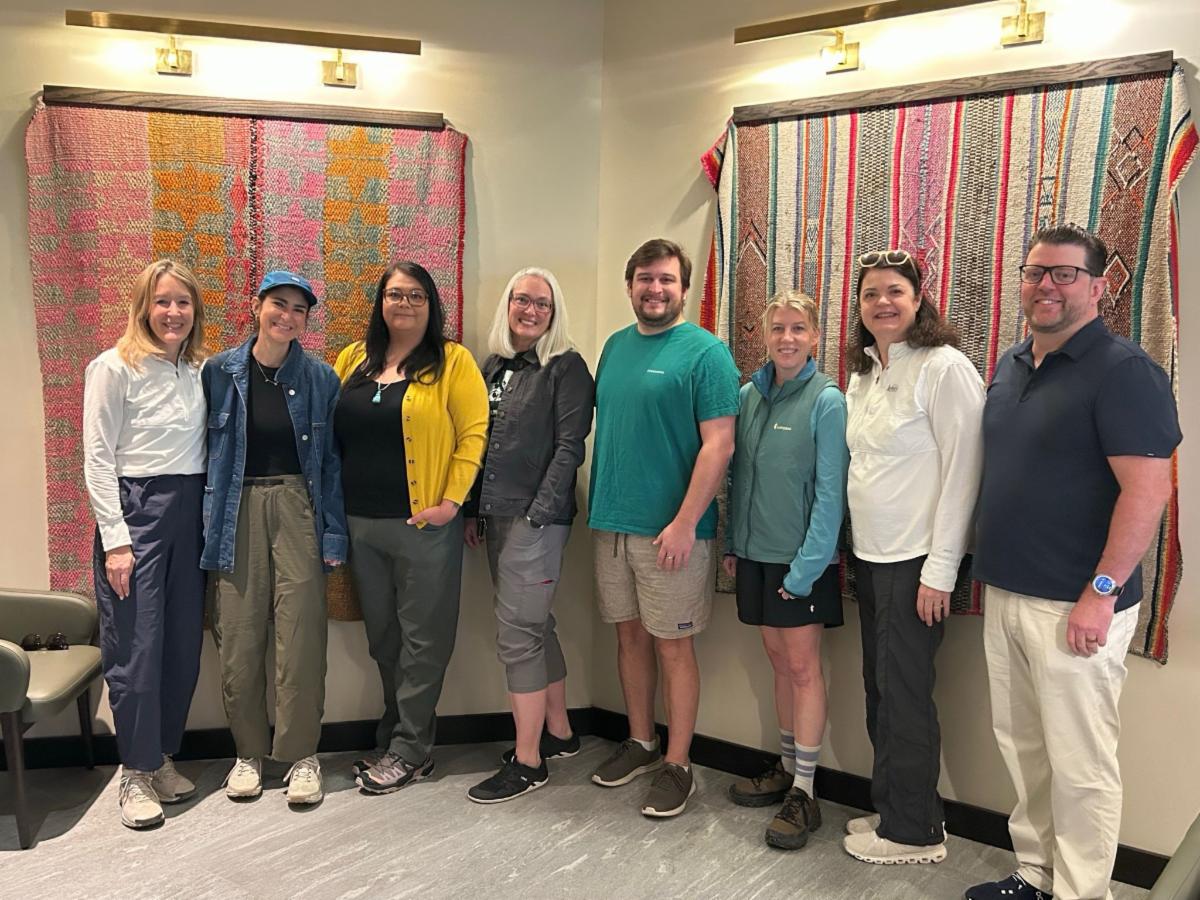
Members of REI's leadership team meets with a few supporters of Grand Staircase-Escalante National Monument and Bears Ears National Monument. From L-R: MB Laughton (REI President and Chief Executive Officer), Kim Waldmann (Chief Commercial Officer), Autumn Gillard (Grand Staircase-Escalante Inter-Tribal Coalition), Jackie Grant (Grand Staircase Escalante Partners), Michael Garlid (Bears Ears Coalition), Abby Jacobs (Chief Marketing/Communications Officer), Susan Viscon (Chief Impact Officer), and Alex Boian (Director of Government and Community Affairs).
Photo provided by Alex Boian, 2026.
| |
REI Co-op and REI Cooperative Action Fund Supports Grand Staircase Escalante Partners
On October 7, I had the great pleasure of joining colleagues from the Grand Staircase-Escalante Inter-Tribal Coalition (Autumn Gillard) and Bears Ears Inter-Tribal Coalition (Michael Garlid) to talk with REI's President and CEO, MB Laughton, and her incredible, approachable, and inquisitive leadership team. They were curious to know about all three of our organizations, the challenges we face, and our perceptions of the future of national monuments in Utah.
We discussed the implications of the new mining claims that popped up before and after September 11, 2026 because these claims could be grandfathered into any restored monument boundaries in the future. All three organizations were proud of our public programs and how we engaged local residents and visitors in our work on both monuments. We ended breakfast by sharing how each group is responding to Proclamation 11044: litigation, advocacy, and communications.
On a separate note, this spring, the independent, but related REI Cooperative Action Fund, awarded $50,000 to Grand Staircase Escalante Partners in support our work as advocates for and stewards of Grand Staircase-Escalante National Monument and its connected landscapes and watersheds. Thank you REI Cooperative Action Fund!
If you'd like to learn more about the day, REI's stance on public lands, or President and CEO Laughton's thoughts, please read more on LinkedIn and her piece in Time Magazine: Access to Public Lands Should Unite All Americans.
Deep thanks to REI Co-op's leadership team for taking the time out of your retreat to meet with local nonprofits.
| | |
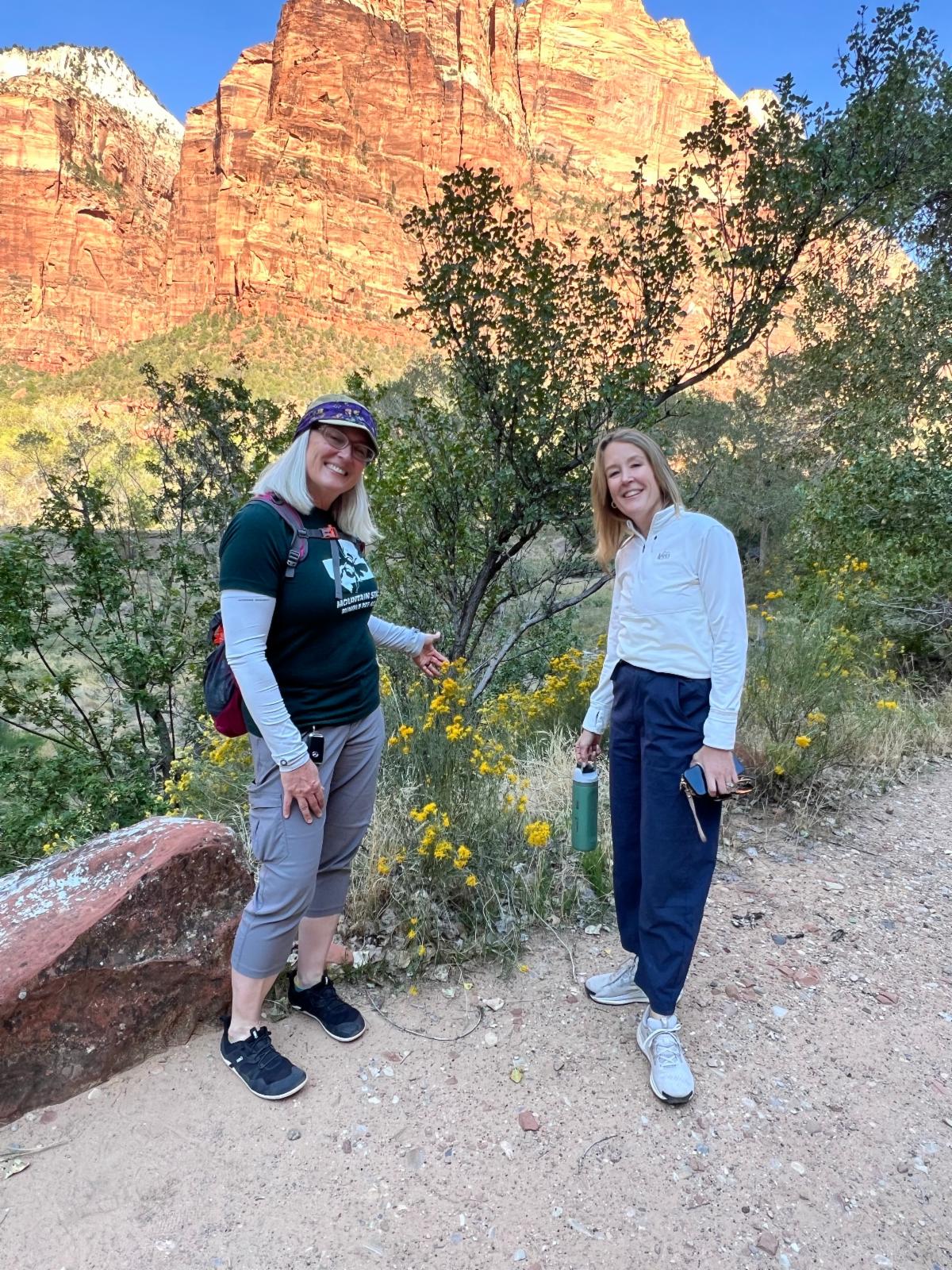
Jackie (left) and MB (right) take a minute to "touch grass" in Zion National Park.
Photo provided by Alex Boian, 2026.
| |
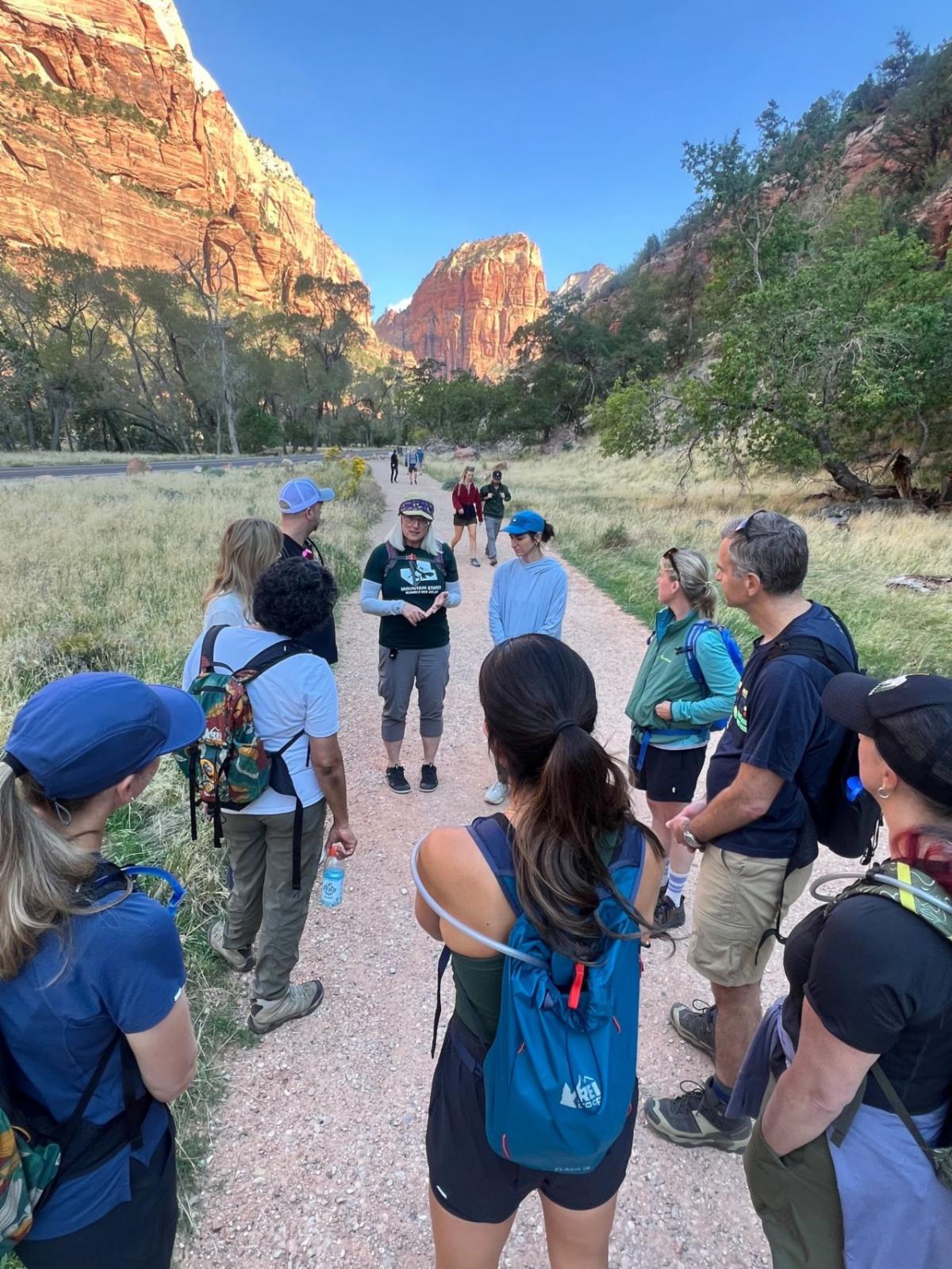
Our executive director, Jackie (center), couldn't resist sharing a few facts about Zion's native plants during the hike.
Photo provided by Alex Boian, 2026.
| | | |
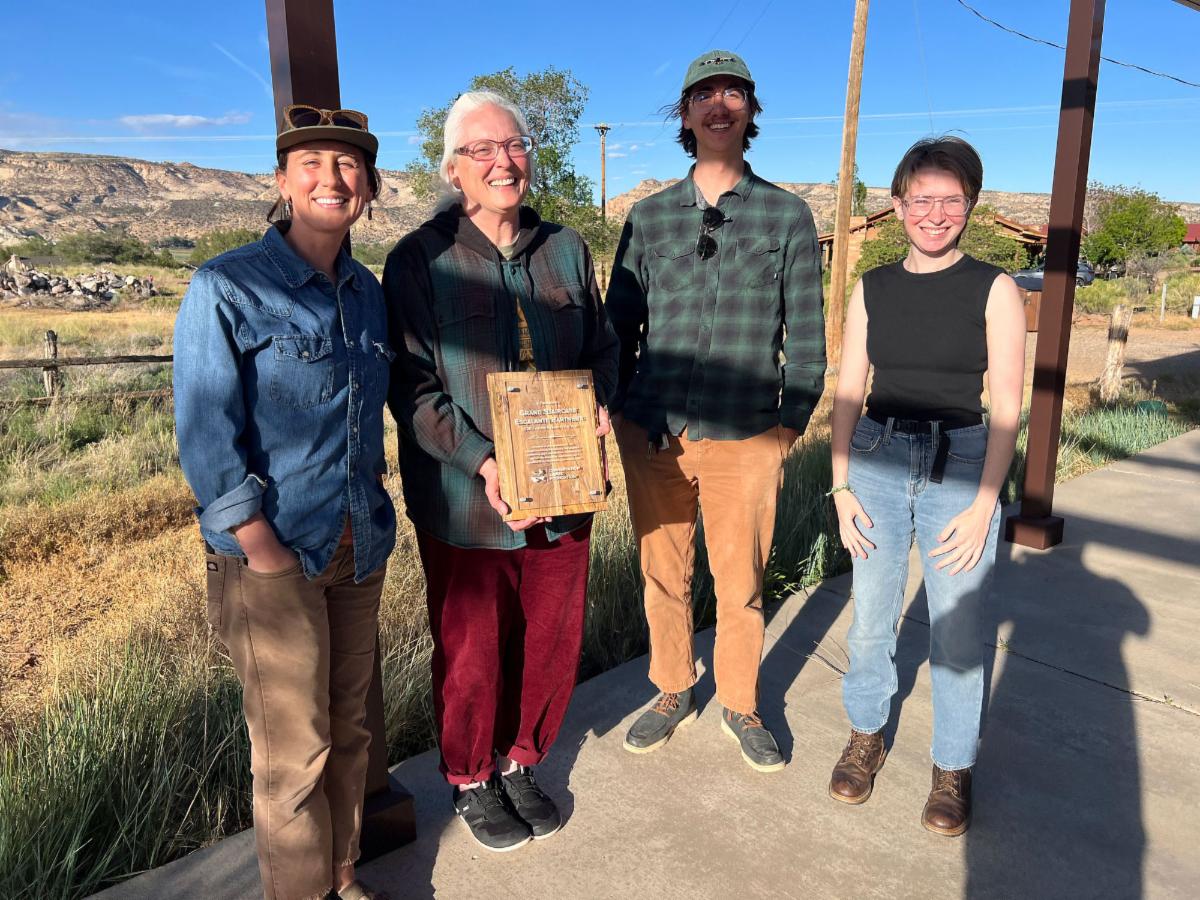
GSEP wins Friends Group of the Year!
Earlier this year, GSEP won the Friends Group of the Year Award to recognize its 2025 work as Friends Group to the Grand Staircase-Escalante National Monument. In the 2026, GSEP staff were able to reinvigorate all programs and develop a new Native Plant program for the organization. The award recognized GSEP partnerships with Tribes such as the basketry workshop and development of the Grand Staircase-Escalante Inter-Tribal Coalition. The award further acknowledged other partnerships and projects developed to support the Monument such as the partnership with Utah’s Great Basin Research Center and Seed Warehouse, taking the lead on the Utah Native Seed Network, and GSEP’s project to replace worn trailhead signage on the Monument. Support GSEP in 2027 as we keep working on these projects and more!
| | |
New GSEP staff and Executive Director with the Conservation Lands Foundation Friends Group Network Friends Group of the Year award.
Photo provided by GSEP Staff, 2026.
| |
Job Opening Alert!
We are hiring for a Wyss Fellow at Grand Staircase Escalante Partners! This is a two-year term limited position to work on our campaign to restore the National Monument. Learn more and apply by October 30.
| |
In the News: Paiute Community Garden
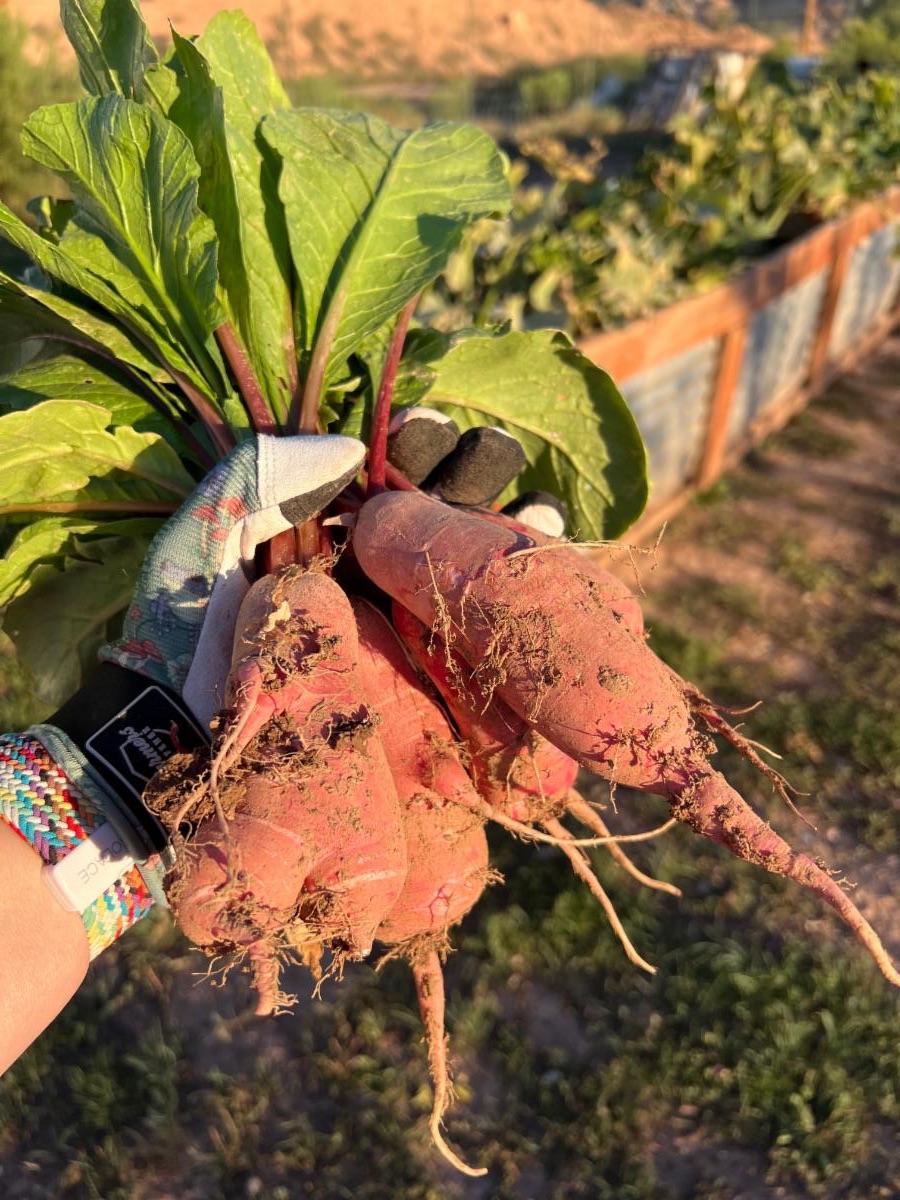
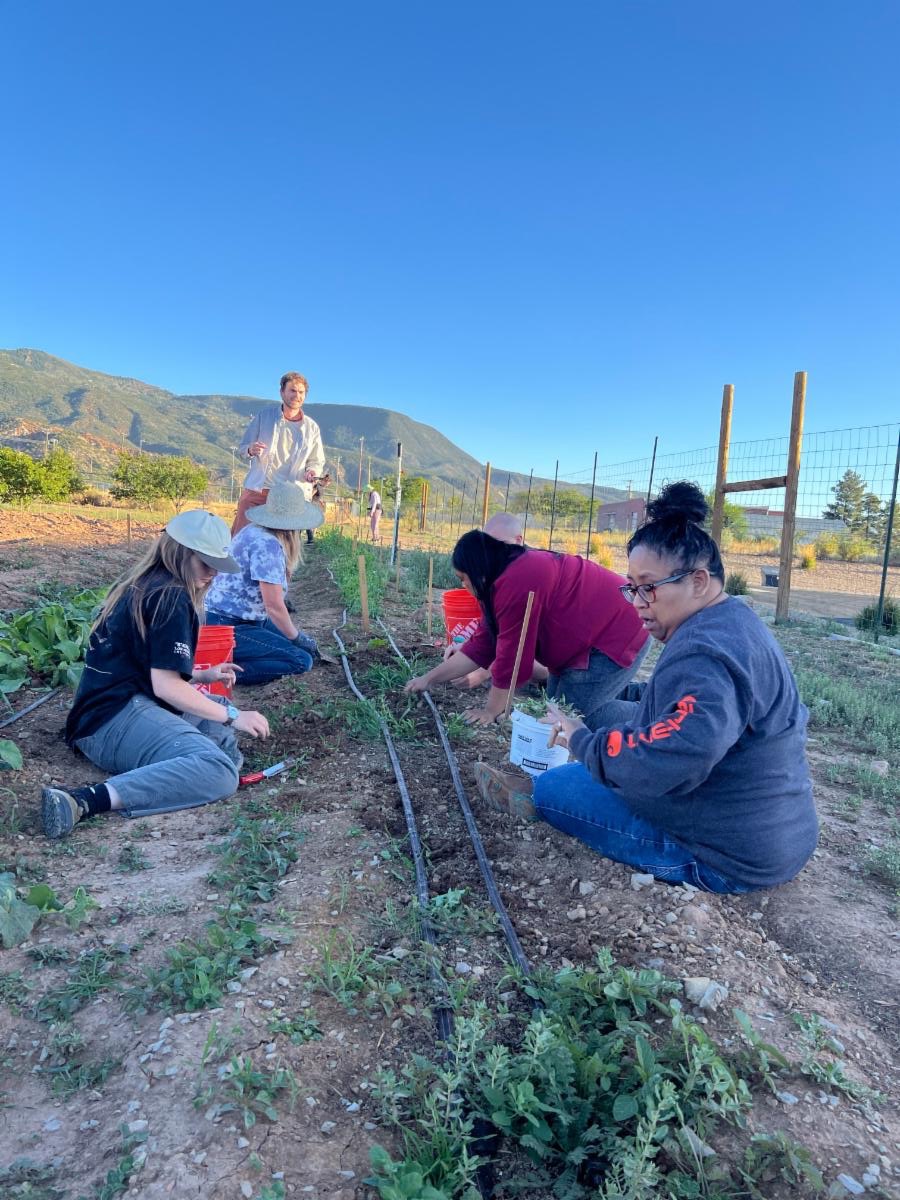
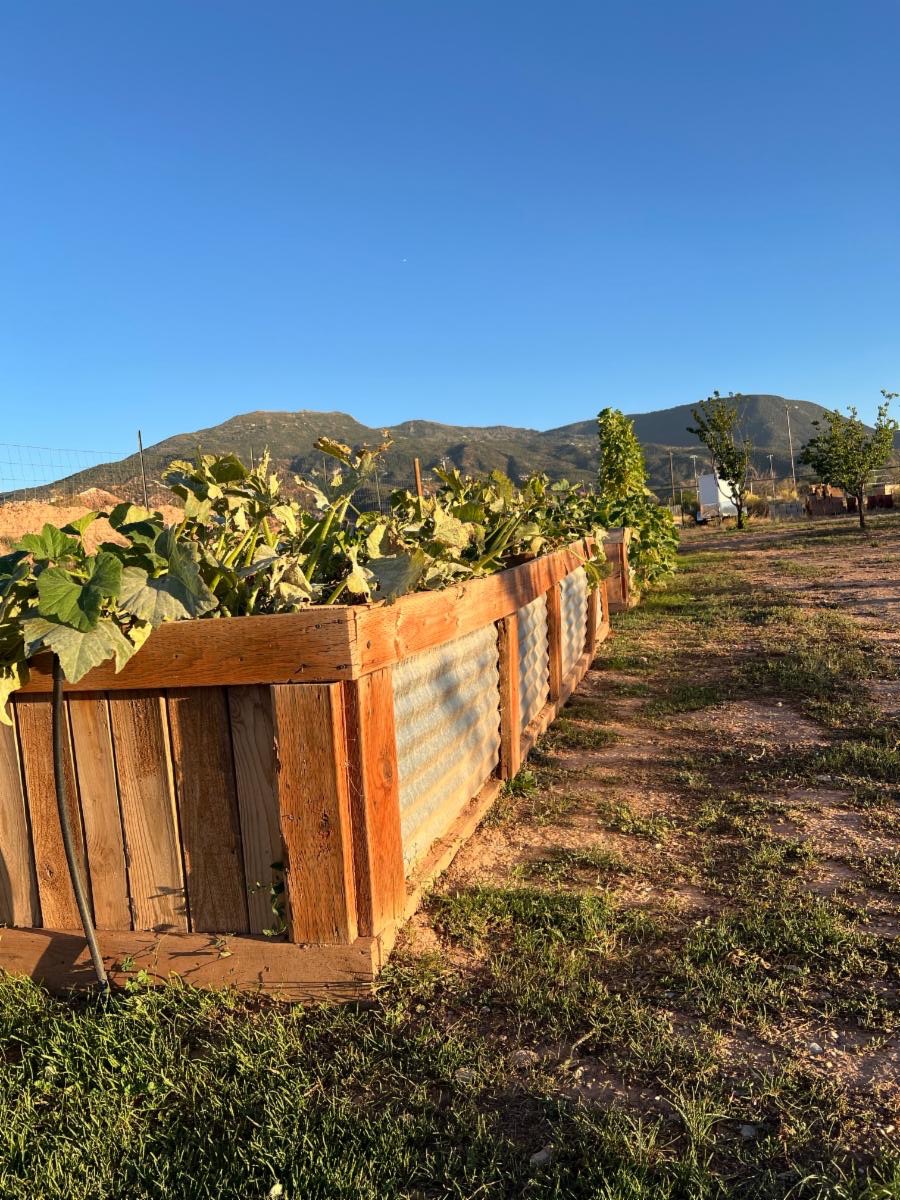
Our partnership with the Paiute Indian Tribe of Utah was recently featured in the Cedar City News. Our Rocky Mountain Research Station Coordinator, Tyson Fullmer, is the lead for this collaborative project with the Paiute Indian Tribe of Utah and the Cedar City community. The goal is to bring people together by our connections to food, native plants, and the land.
| | Paiute Community Garden. Photos by Jackie Grant, 2026. | |
PlantFest 2026!
PlantFest is a collaboration between the Utah Native Plant Society and a community of plant-loving people from Idaho to Utah. PlantFest was a great success this year, and GSEP was proud to participate. GSEP's Native Plant Program Manager, Zach Earl, was the event's primary organizer through his role as a volunteer board member of the Utah Native Plant Society.
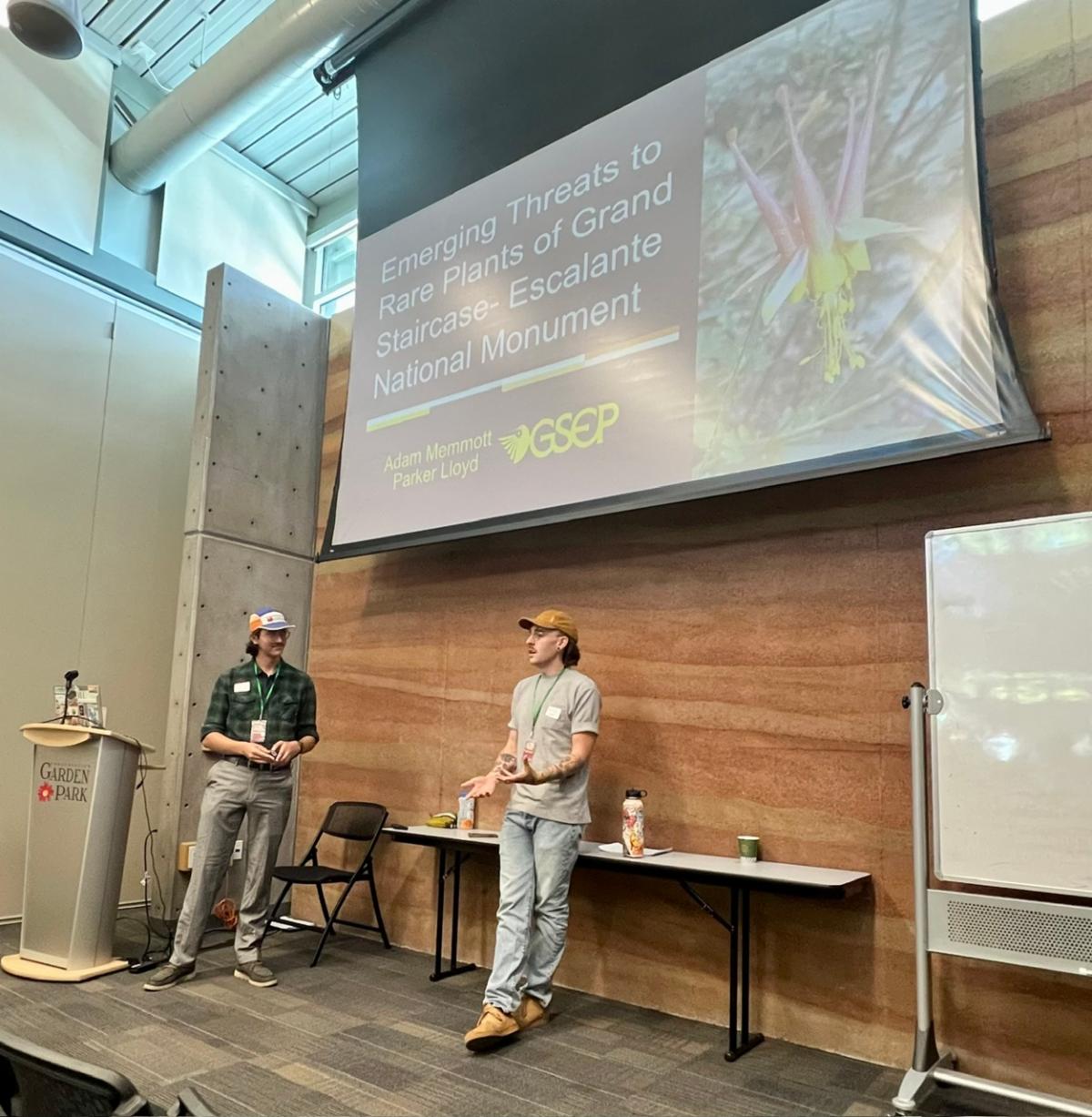
Our Executive Director, Jackie Grant gave Friday's keynote to over 140 attendees, and social media influencer, Justin Davies gave Saturday's keynote to over 160 attendees! Pretty good attendance for 8:30 in the morning! Two of GSEP's seasonal seed technicians, Adam Memmott and Parker Lloyd, presented on the emerging threats to plants on the Monument as a result of the 90% reduction in size this year. Kaylee Vinson, a GSEP seasonal seed technician helped visitors learn about GSEP's work at our table and encouraged dozens of visitors to sign up for our newsletter. Zach Nielsen, a GSEP seasonal seed technician, gave a great presentation about photographing plants in the wild.
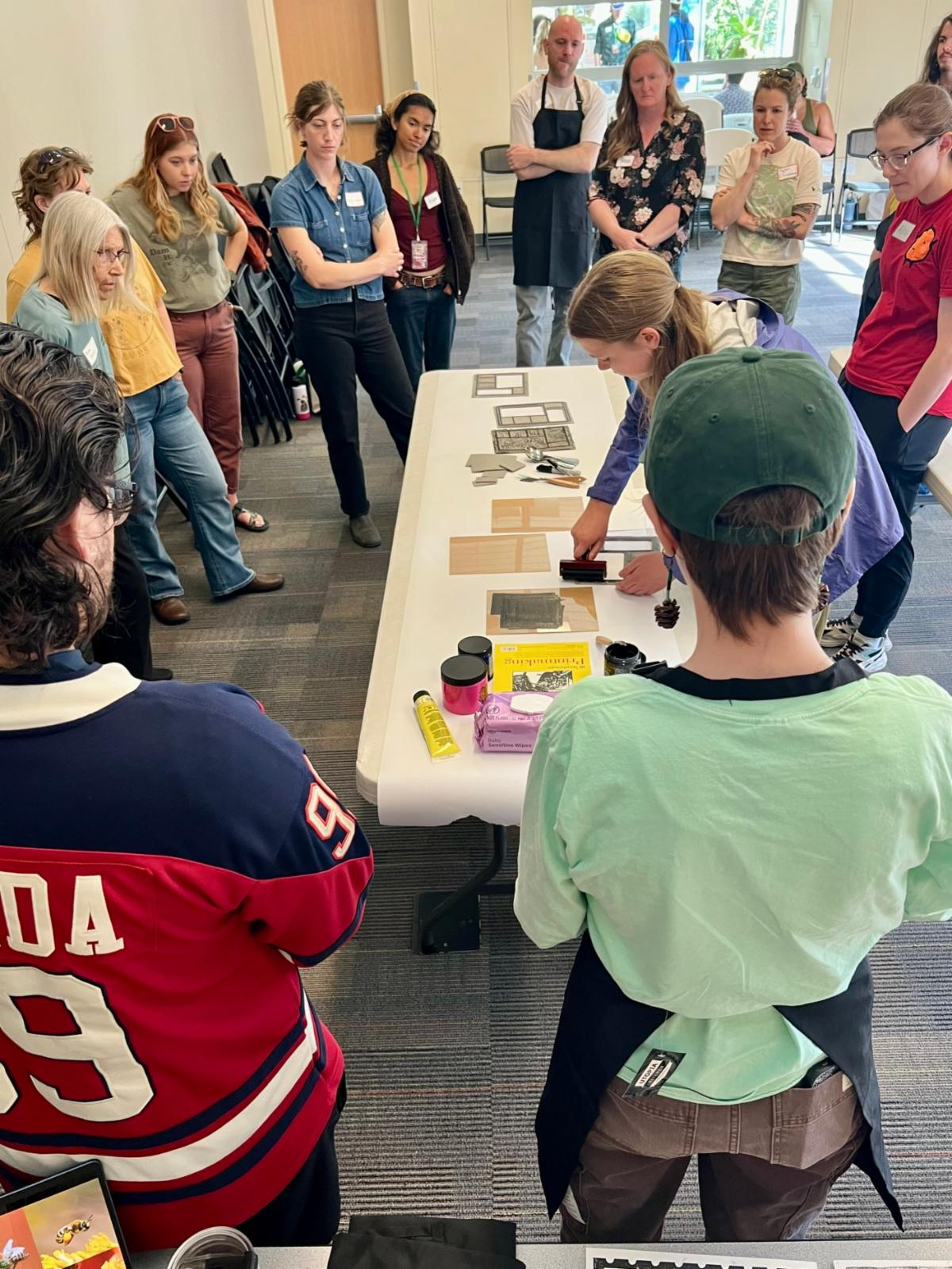
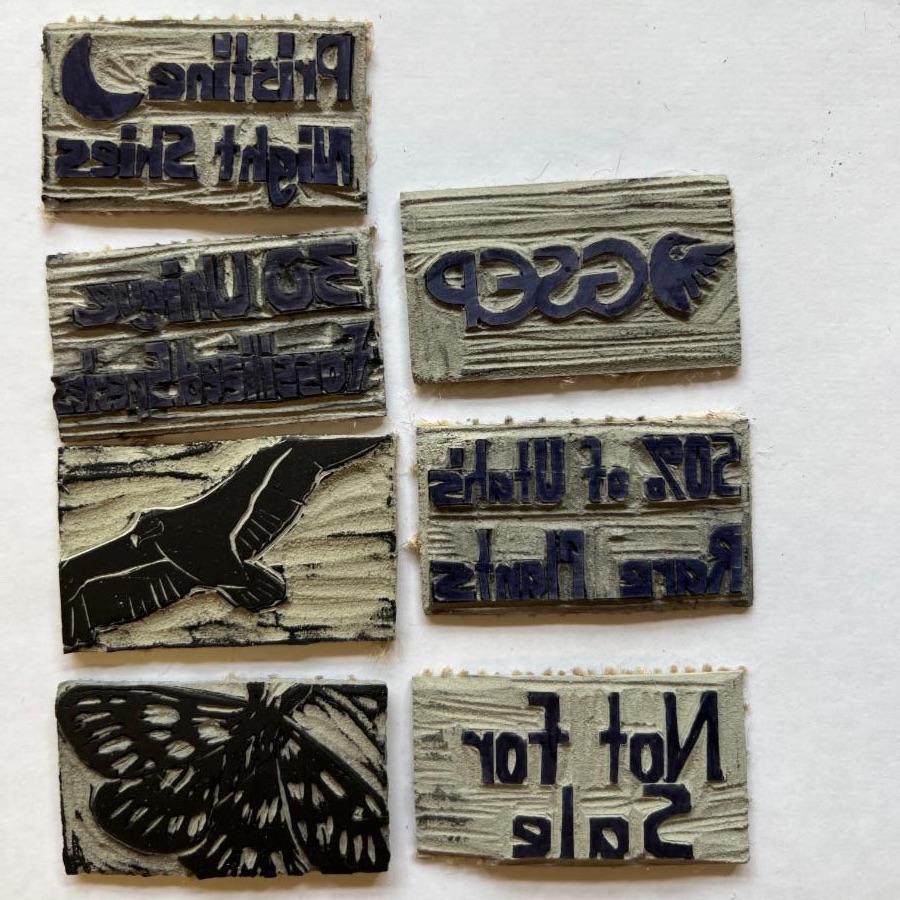
We also partnered with two local artists, Rose Torres and Sarah Cutting, to gauge interest in a bigger Arts Advocacy project for the Monument. Rose and Sarah prepared a series of linocut blocks that reflected themes related to Grand Staircase-Escalante National Monument. Workshop participants were able to use the blocks to create unique, but structured pieces of art that will eventually become postcards that send messages of support for the Monument. You can see some of their work below and in this video of the final product.
| | PlantFest 2026. Photos by Jackie Grant, 2026. | |
Why do YOU care about Grand Staircase?
GSEP Board member emeritus and fabulous author and photographer, Steve Trimble, shared his thoughts about the Monument on Instagram, and we are sharing them here with you because they were so good. Thanks Steve!
| |
BLM Announces Winter Hours for Grand Staircase
The Bureau of Land Management Paria River District’s visitor centers and contact station will be shifting their hours of operation beginning in November and effective until March.
Winter hours of operation and closure are as follows:
Paria Contact Station will close on November 15 and remain closed until mid-March. Overnight permit pickup will be at the Paria River District Headquarters, located at 669 US Hwy 89a, Kanab, UT 84741, Monday through Friday, 8 a.m. to 4:30 p.m., excluding federal holidays.
Escalante Interagency Visitor Center will be closed on weekends starting November 13, open Monday through Friday, 9 a.m. to 4 p.m., excluding federal holidays.
Kanab Visitor Center is open seven days a week, 8 a.m. to 4 p.m. It will be closed in observance of the following federal holidays: Thanksgiving Day (Nov. 26), Christmas Day (Dec. 25), and New Year’s Day (Jan. 1).
Big Water Visitor Center will be open Thursday through Sunday, 8 a.m. to 4 p.m., beginning November 1. It will be closed in observance of the following federal holidays: Thanksgiving Day (Nov. 26), Christmas Day (Dec. 25), and New Year’s Day (Jan. 1).
Cannonville Visitor Center, is closed and will remain closed until further notice.
| |
PAWtners!
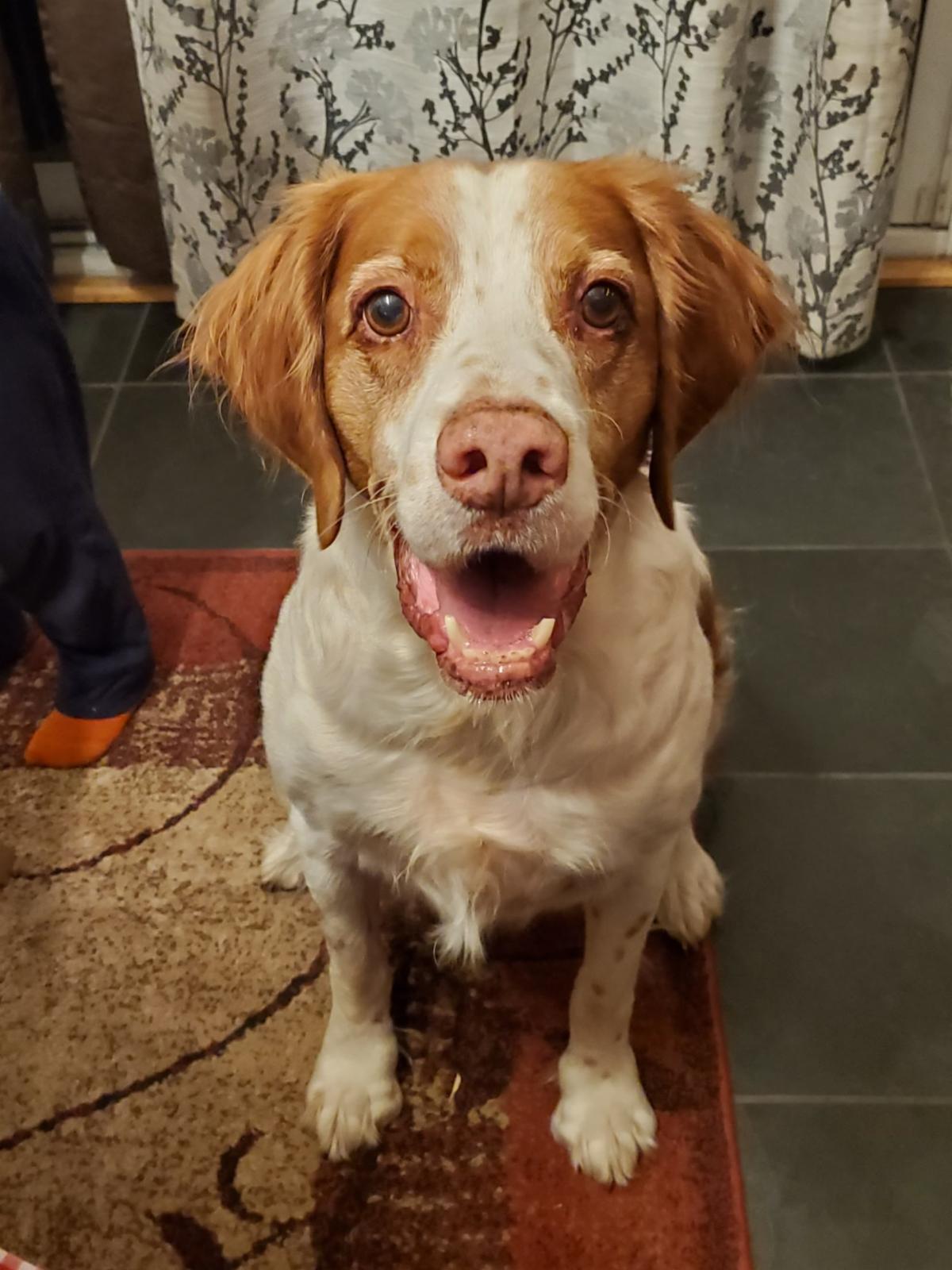
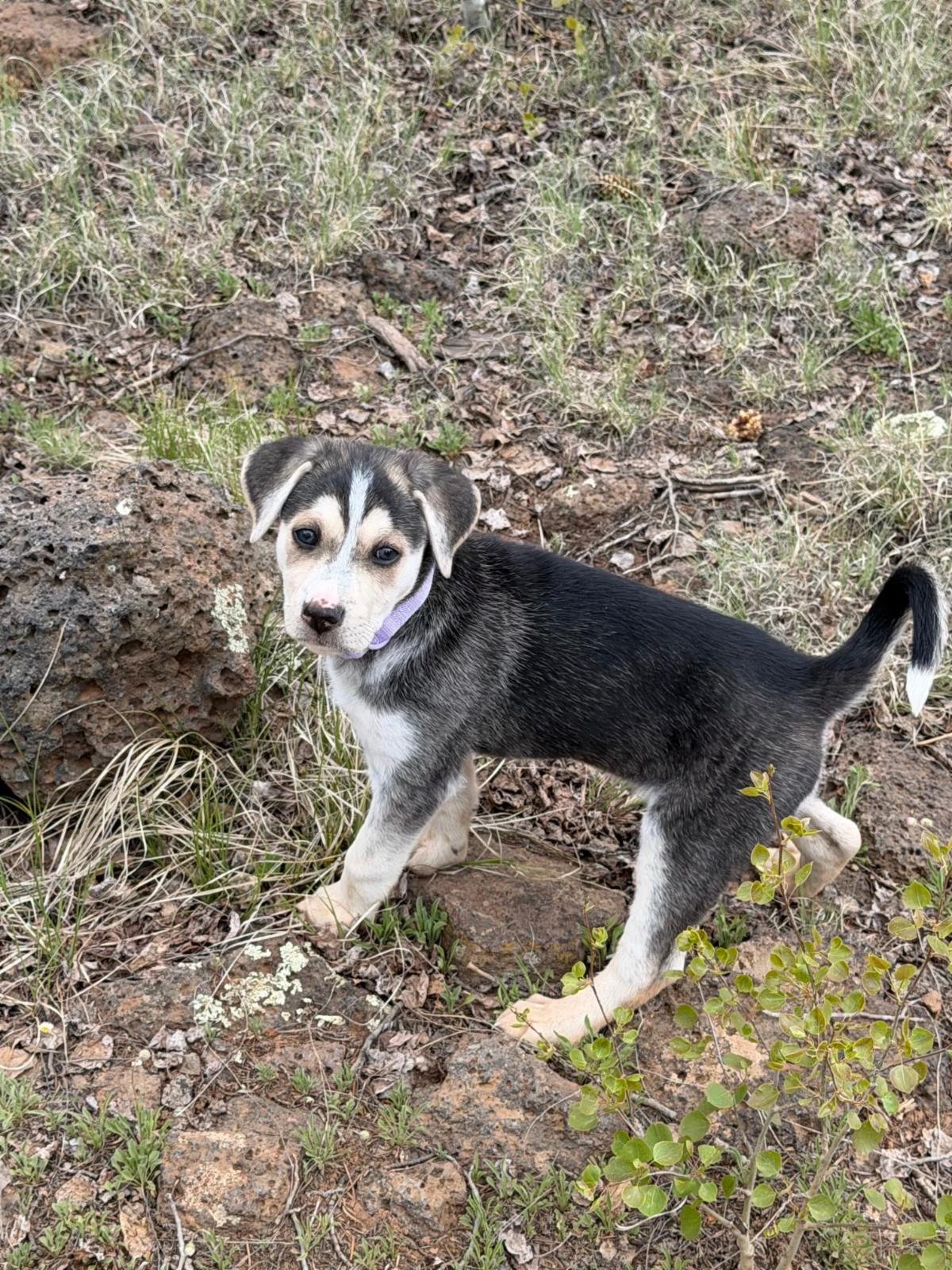
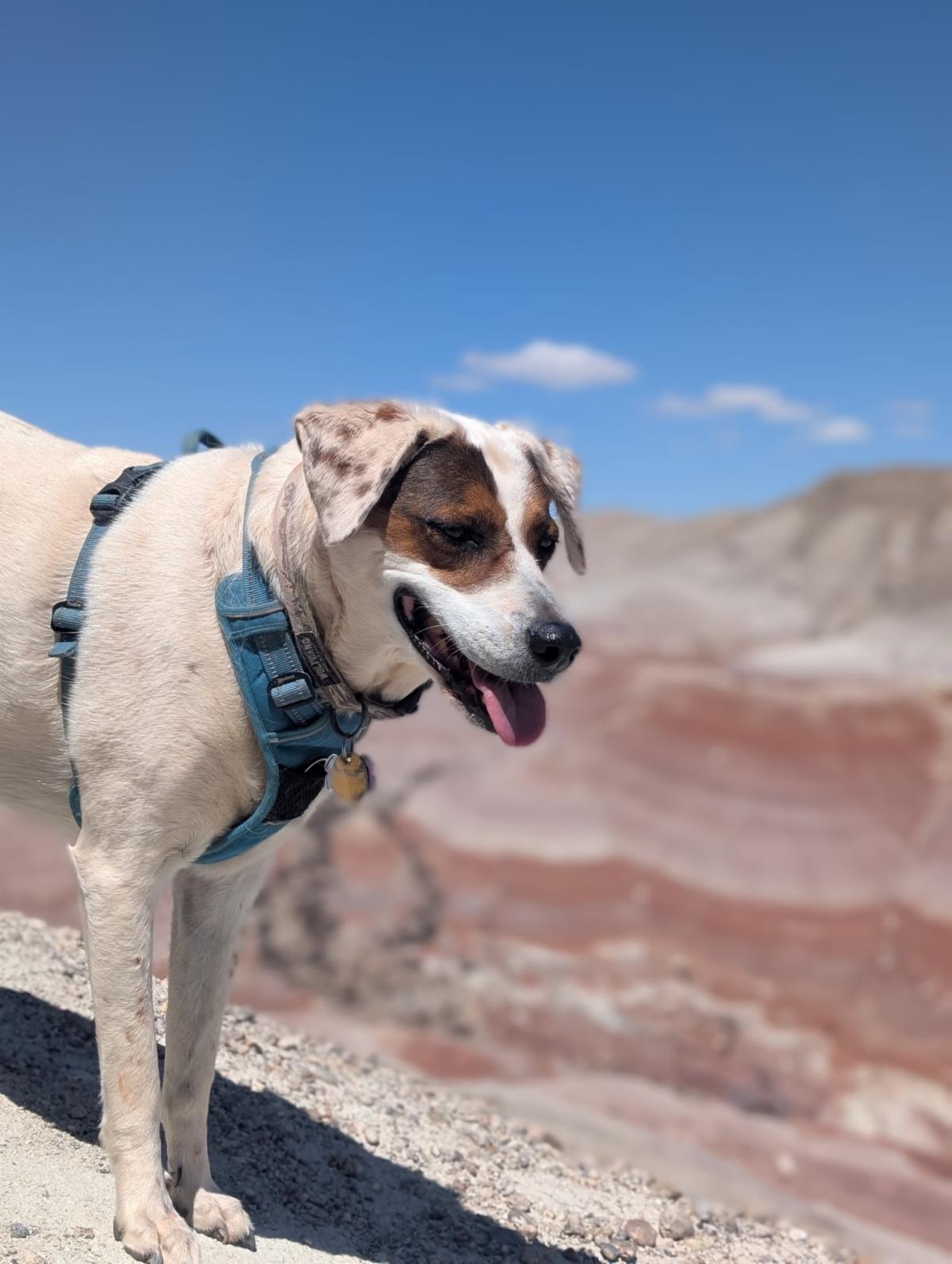
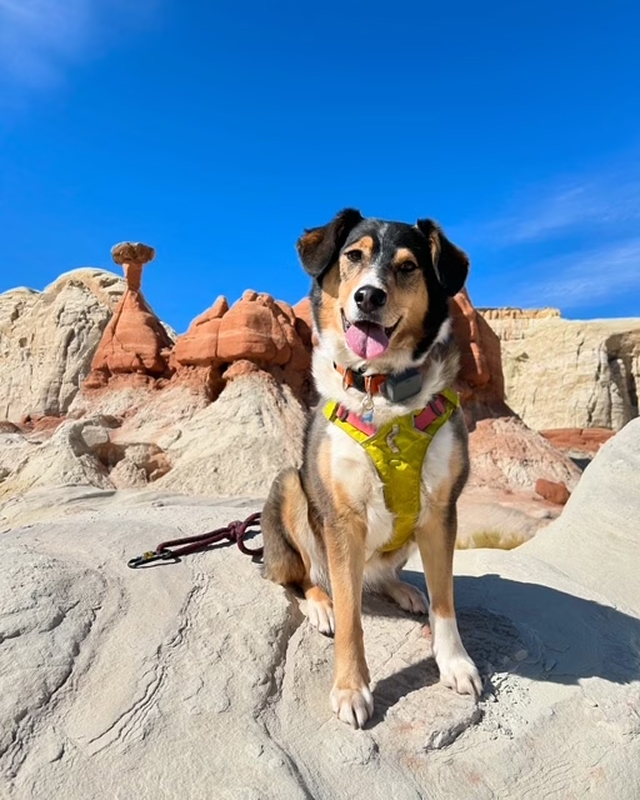
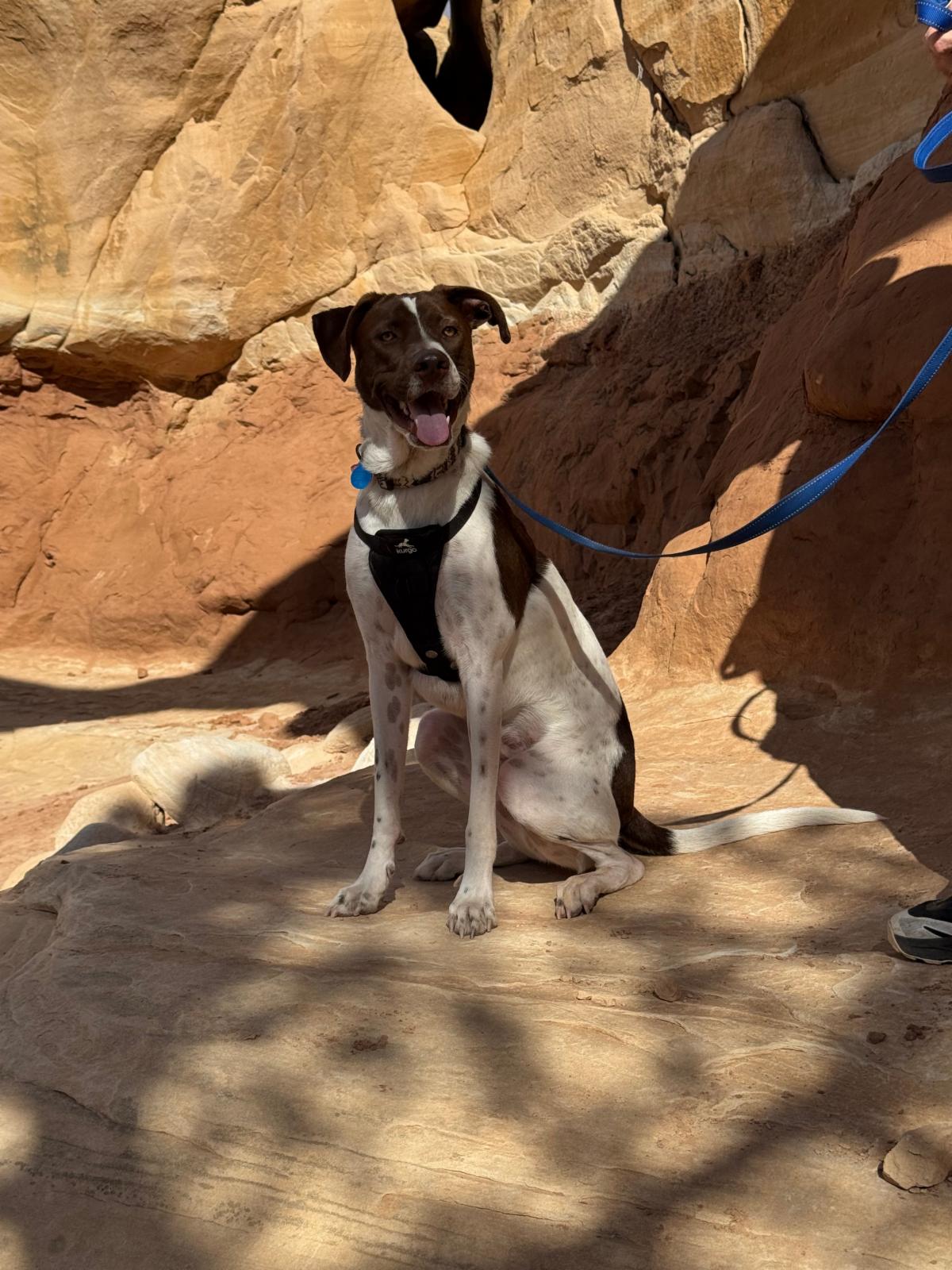
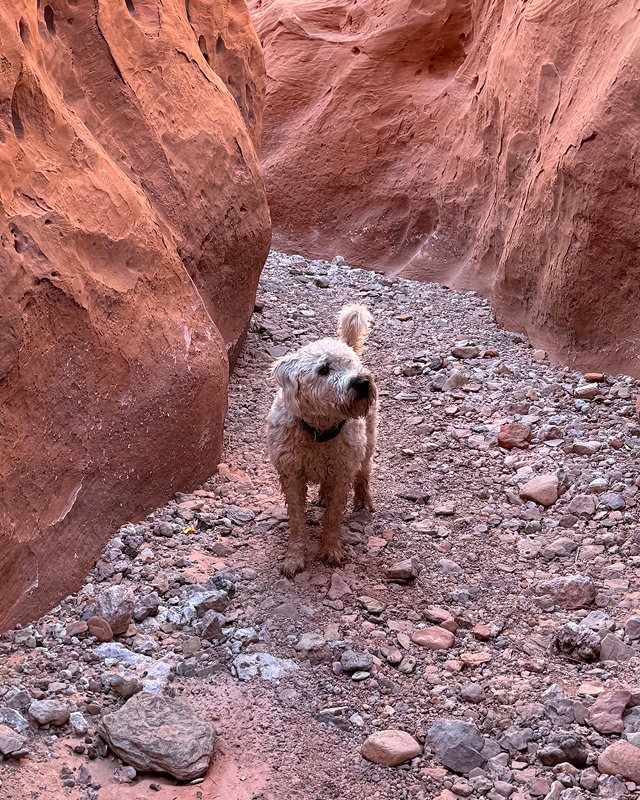
Welcome to new PAWtners! Your Monument companion can be a PAWtner too, for a $25 annual donation. In return, you will receive a special PAWtners sticker, your pet's photo in our gallery, and a digital toolkit about pet safety.
Becoming a PAWtner means your four-legged friend joins a community of animal lovers who care about Grand Staircase-Escalante National Monument. Our program informs visitors about hazards specific to the region, explains pet etiquette expectations, and recognizes the pet that has made your trips to the Monument so special. Your donation helps support conservation, education, and stewardship efforts to ensure these lands and the adventures they inspire last for generations to come.
| | Welcome Phytosaurus (Phyto)! | | | We want to hear from you! | | |
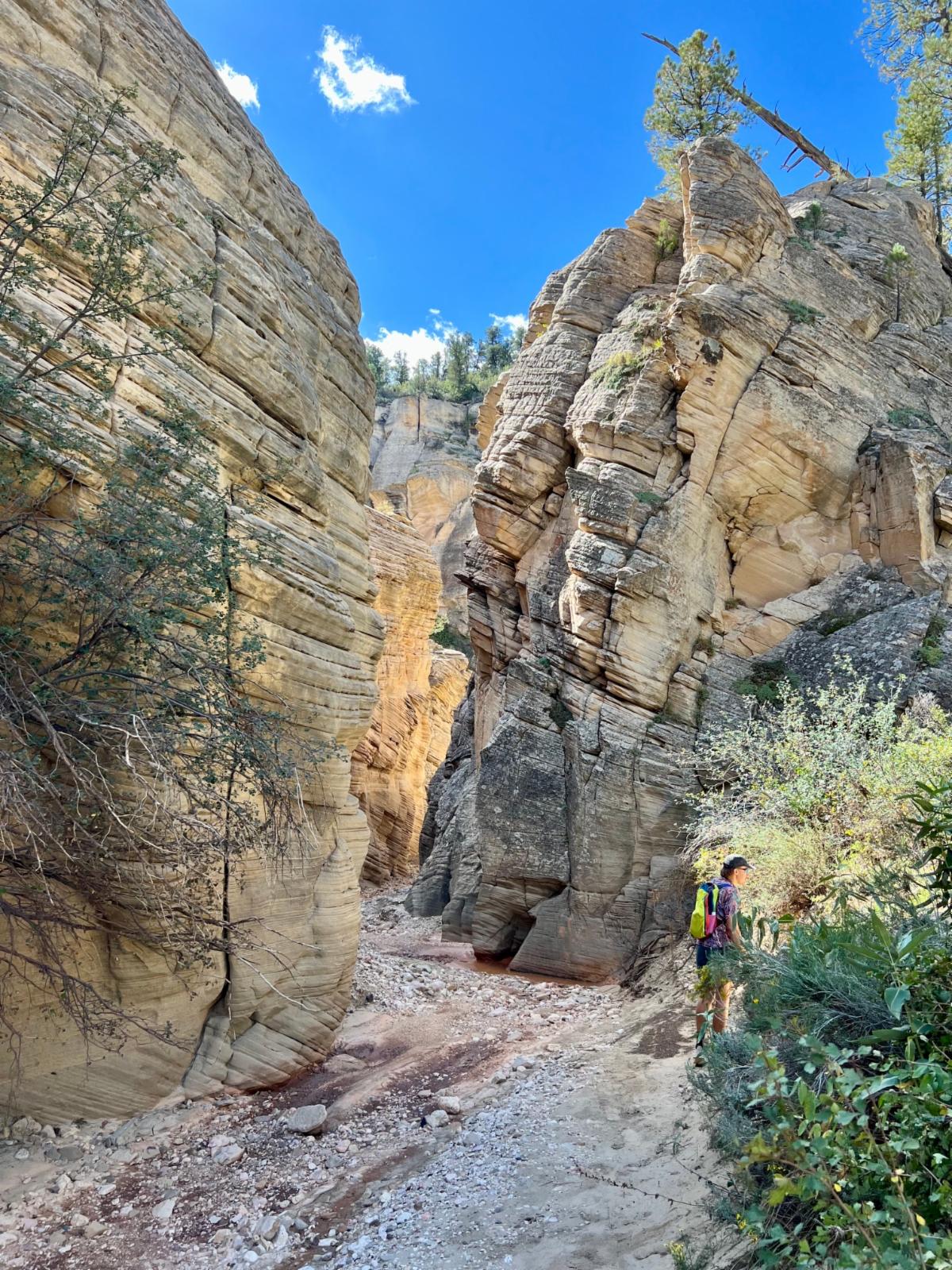
Lick Wash is a special place on the Skutumpah Terrace section of the land formerly known as the Grand Staircase-Escalante National Monument. It is home to a lovely hike that starts in the Gray Cliffs geologic formation and traverses through Navajo sandstone (aka White Cliffs) and eventually flows all the way to Rte. 89 on the south side! Some geologists think that the formation of this extensive wash was facilitated by the nearby Paunsaugunt fault. The fault is visible at the start of Lick Wash. A few rare and sensitive plant species live in Lick Wash, which means that Lick Wash should still be protected by Monument status.
Some photos of our GSENM 30th Anniversary Walk are below. Have a look then please provide us with some feedback about Lick Wash in the survey about proposed BLM trailhead improvements that follows. Note that there was a mistake in the original proposal that accidentally situated improvements within a Wilderness Study Area. The mistake was rectified in the final Decision of Record issued by the BLM.
| | |
A subtle glow ahead tells us that Lick Wash is about to bend in the direction of the sun.
Photo by Jackie Grant, 2026
| | |
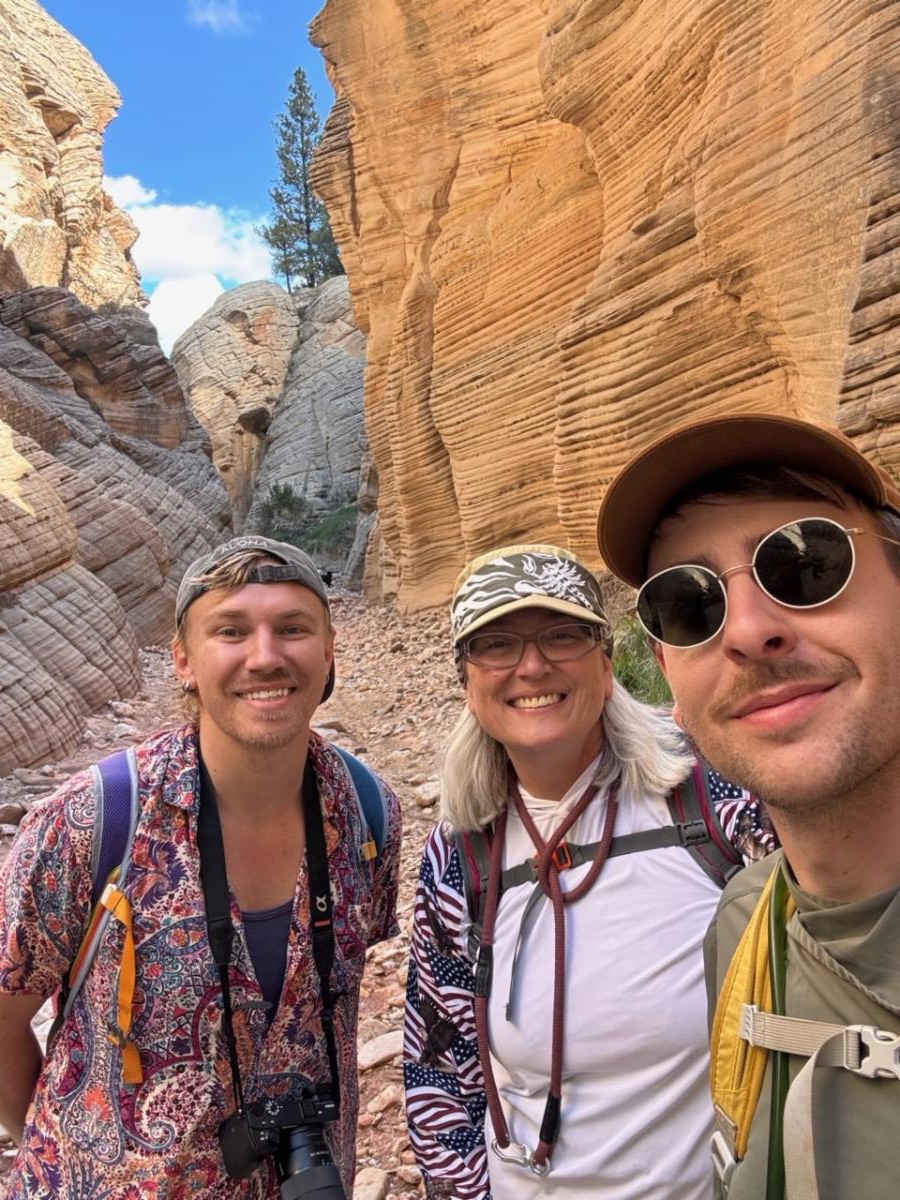
Zach, Jackie, and Parker mark the 30th Anniversary of GSENM.
Photo by Parker Lloyd, 2026
| | |
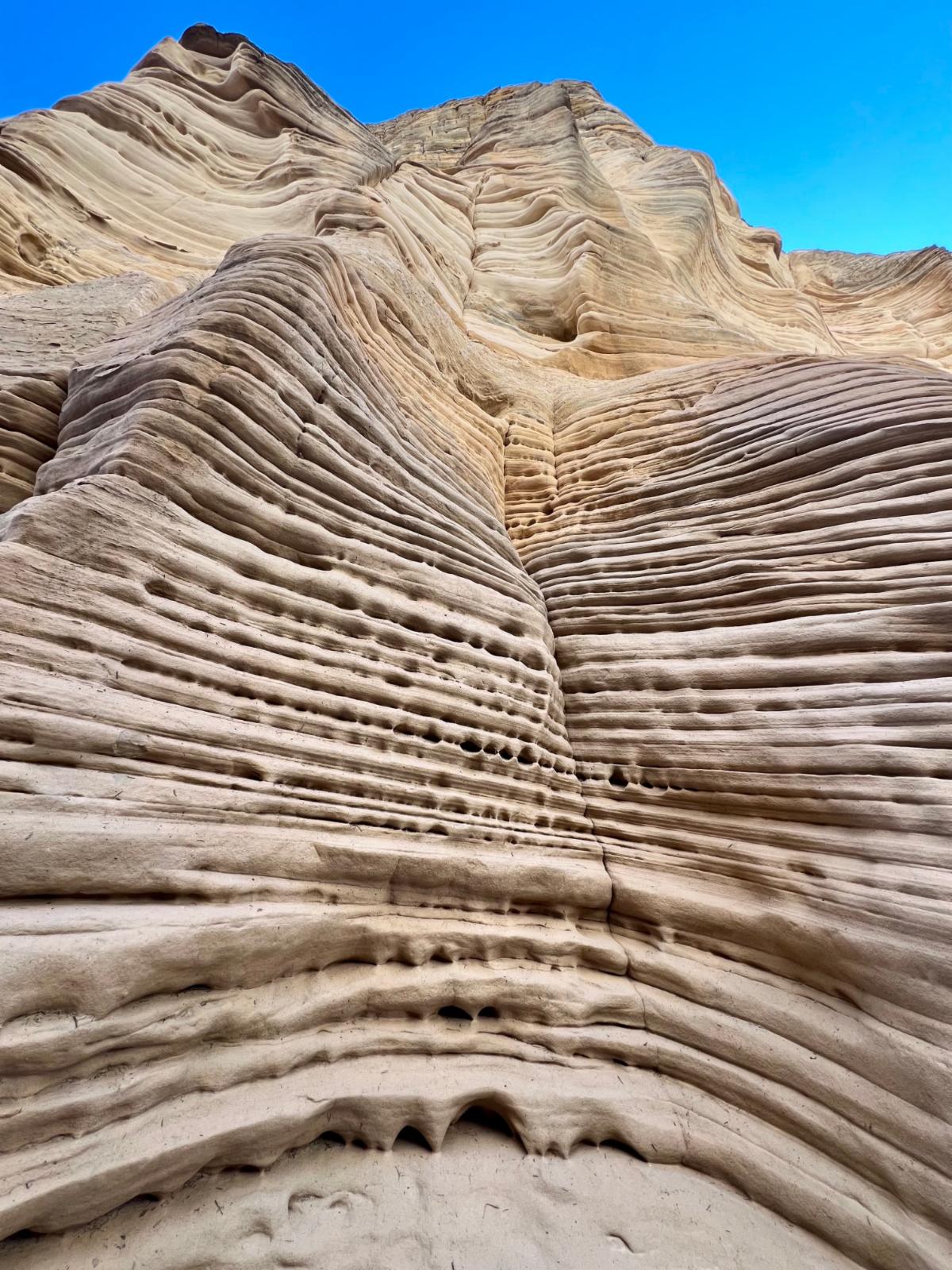
Unusual patterns of erosion contribute to the special and unique structure of the canyon walls at the start of Lick Wash.
Photo by Jackie Grant, 2026
| |
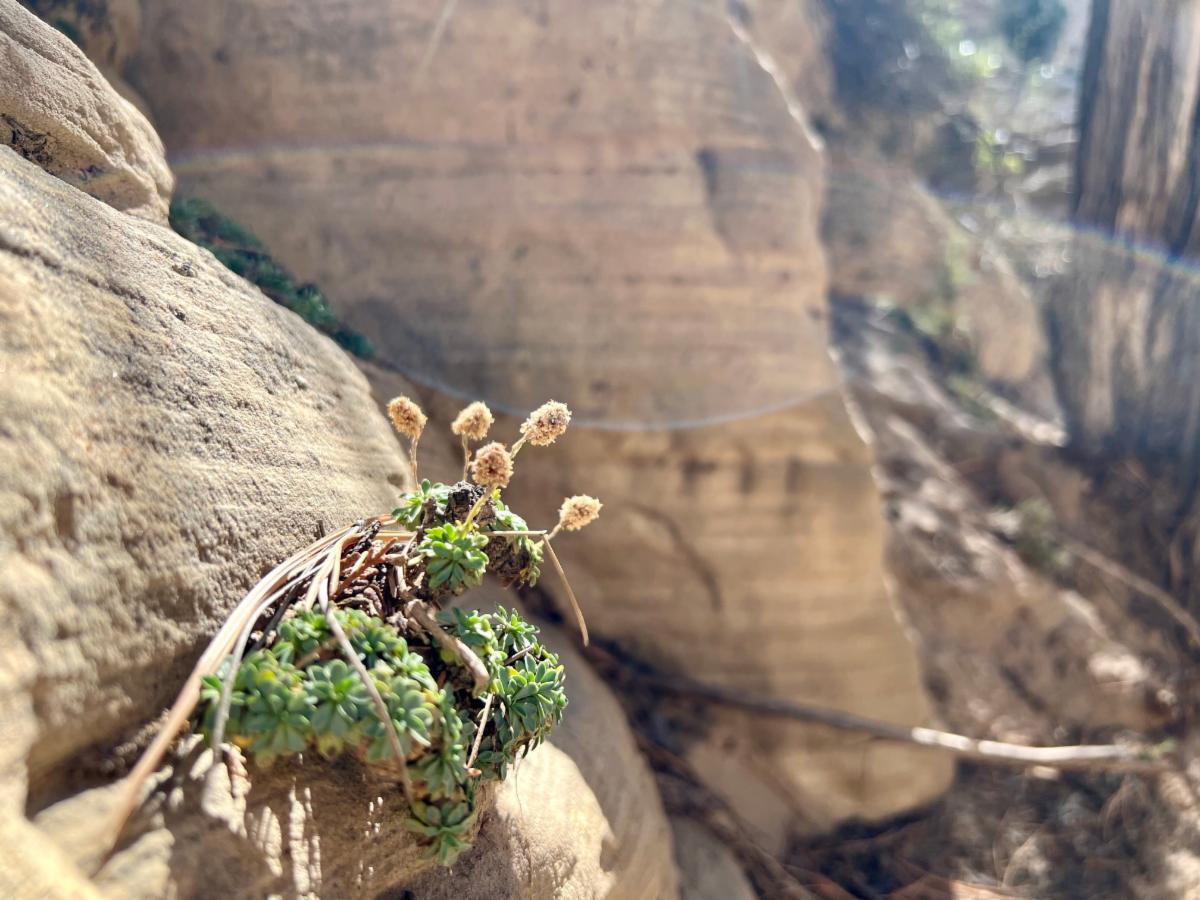
Rock spiraea (Petrophytum caespitosum) takes advantage of the cracks and crevices that dot the sides of Lick Wash. It's difficult to imagine how these tough little plants survive on such a small amount of water.
Photo by Jackie Grant, 2026
| |
| The BLM is planning for some trailhead improvements at Lick Wash. Which would you prioritize? | | | | |
Thank you for your ongoing support.
We couldn't do it without you!
Jackie Grant (she/her/hers)
Executive Director
| | |
Grand Staircase Escalante Partners | gsenm.org
| |
| | | |