BRHD Refocuses Case Investigation Efforts
to Those in Highest-Risk Settings
|
|
By the week of February 14, 2022, BRHD will change from attempting to investigate every case of COVID-19 and tracing all contacts to instead focusing on follow-up of outbreaks and cases in high risk settings.
BRHD will shift to prioritize responding to COVID-19 clusters and outbreaks in long-term care facilities and other congregate settings, healthcare settings, and other high-risk settings, and will focus follow-up with individuals most at risk for negative health effects from COVID-19. VDH and BRHD will continue to partner with K-12 schools on prevention strategies to reduce spread in schools so schools can remain open and safe. This response is more effective when a virus spreads very easily and quickly, and when many infected people do not have symptoms.
BRHD has been contact tracing for COVID-19 since March 2020. Although contact tracing was critical in helping mitigate the spread earlier in the pandemic, the latest Omicron variant has called for a reevaluation of our strategies. Between the high transmission rates and the increasingly asymptomatic cases, contact tracing every exposed individual is no longer feasible or fruitful in helping us stop the spread of COVID-19.
Case investigators speak directly to positive cases to share information on how to isolate and keep those around them safe. Due to the recent surge in cases, it has been more difficult than ever for containment staff to call each positive case reported, hence our need to focus on the highest-risk settings. We will slowly transition into this change over the next two weeks.
We encourage individuals to take appropriate actions if they suspect or confirm a COVID-19 infection. Free community test sites are offered every say throughout the District. Information about local COVID-19 testing is available on our website. Guidance on how individuals can notify their close contacts is available on the VDH website. Tools like COVIDWISE, Virginia’s COVID-19 exposure notification app, allow Virginians with a positive result to anonymously notify others who may have been exposed.
Getting vaccinated is the best way to protect ourselves from serious illness and hospitalization from COVID-19. If you have not gotten vaccinated or boosted and are eligible, please do so now. Do it for yourself, your family, and your community, including the health care workers we depend on when we truly need emergency care.
|
|
COVID Support Services for Those Who Test Positive |
|
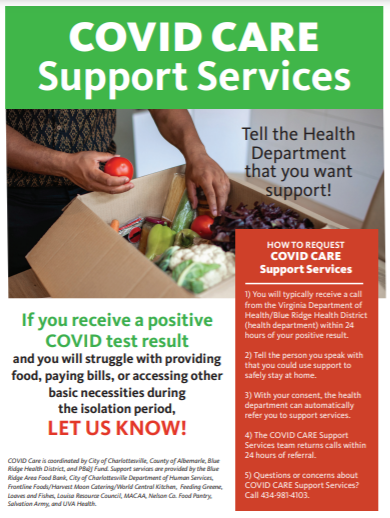
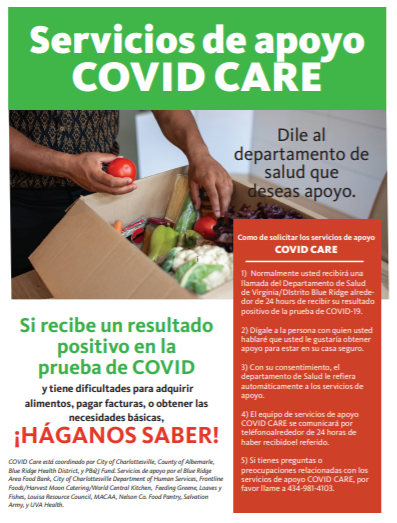
If you have tested positive for COVID-19 and are currently in isolation, we are here to help! The COVID Care Support Services program can connect individuals to organizations in the community that are able to offer assistance with food, paying bills, employment services, and other resources. Delivery of items such as food and other basic necessities are also available.
Want to enroll or get more information on this program? Call BRHD's Care Resource Coordinator at 434-981-4103.
|
|
Test & Go: Tuesday, February 1 |
|
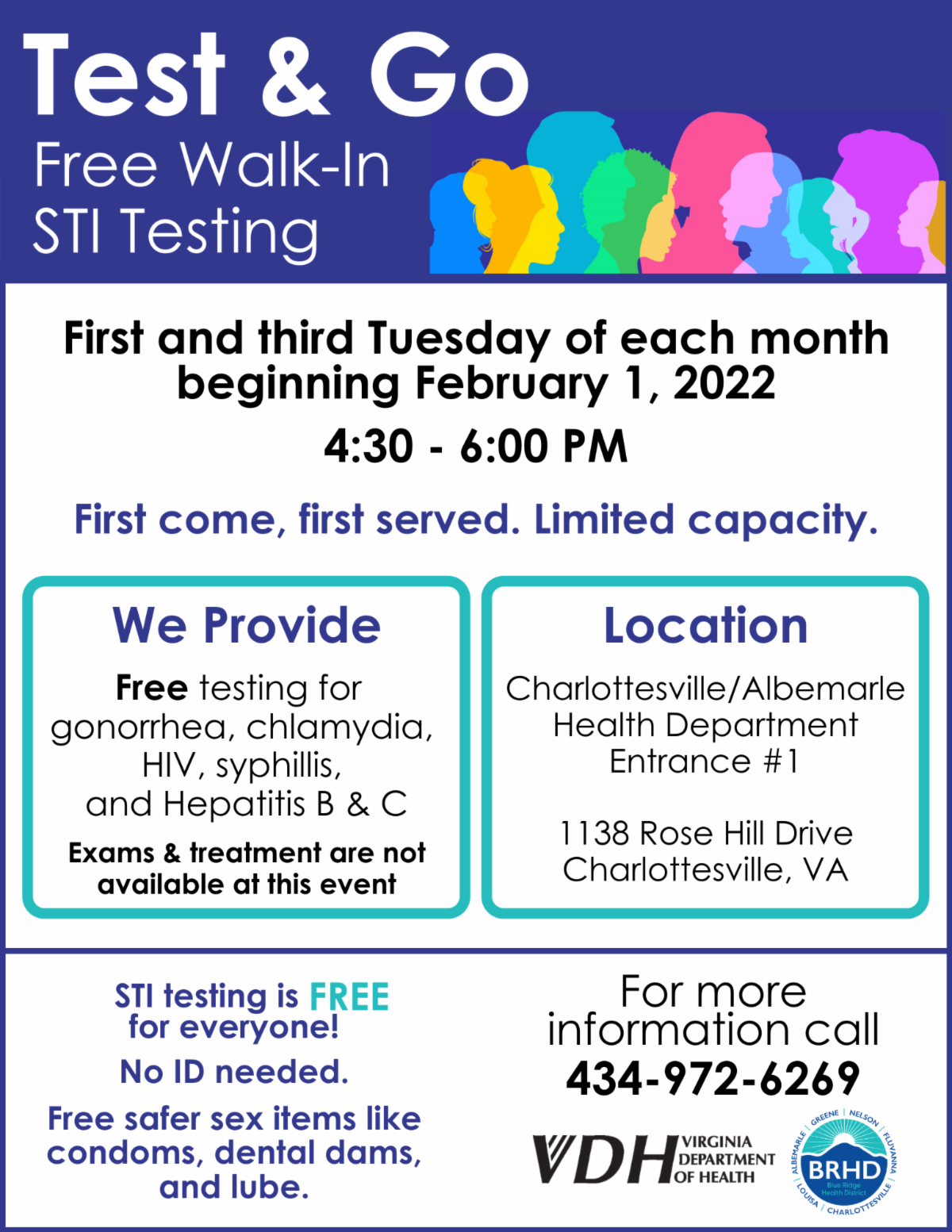
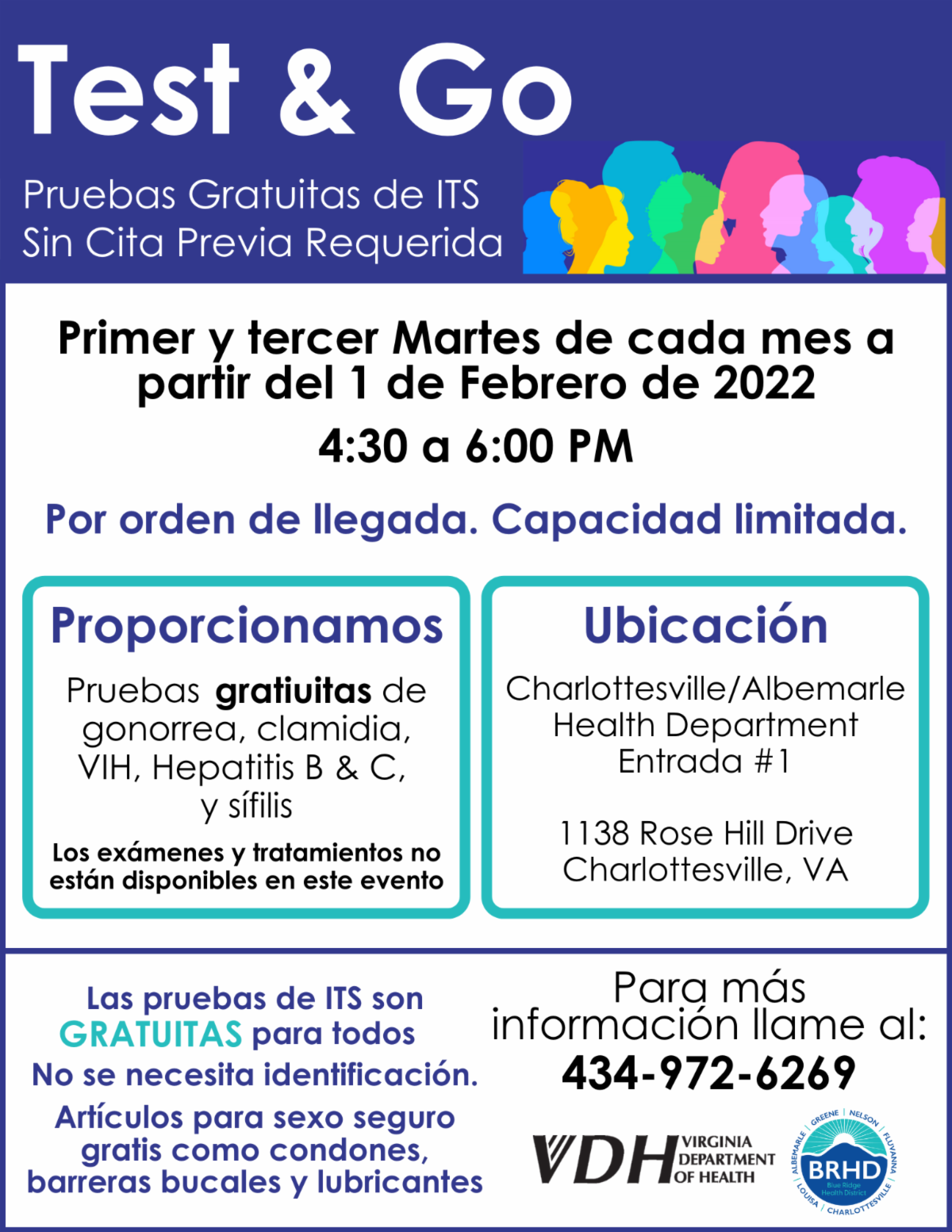
Has your winter been as hot as it has been cold? You might want to visit our first Test & Go of 2022! We will host free STI screenings on Tuesday, February 1 from 4:30-6:00pm at the Charlottesville/Albemarle Health Department (1138 Rose Hill Drive, Door 1). Walk in for a full screening of infections like HIV, Chlamydia, Gonorrhea, Hepatitis B and C, and Syphilis. We do not offer treatment at these clinics, but will schedule a follow-up for treatment if needed.
If you cannot make it to this week’s Test & Go, don’t worry: We will host this clinic the first and third Tuesday of each month from 4:30-6:00pm at the Charlottesville/Albemarle Health Department!
There is no ID or appointment necessary, but capacity is limited, so don’t wait too late to come in. Have questions? Give us a call at 434-972-6269.
|
|
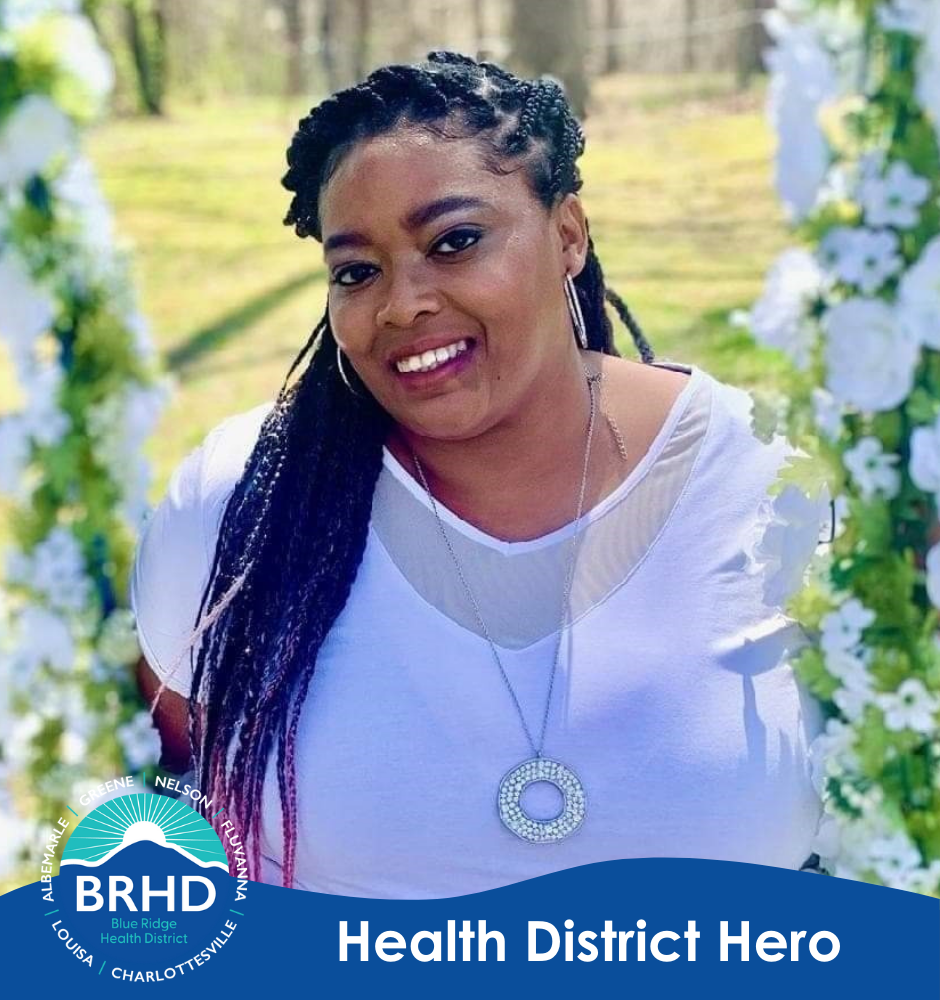
Each week, we will introduce you to one of our Health District Heroes so you can get to know the people working to keep you safe and healthy every day. This week, meet Tabitha Gaines, Environmental Health Office Support Specialist in Nelson County!
How long have you worked with BRHD?
May 2017
What is your job?
I take in and process onsite applications for well and septic requests, restaurant certifications, and vital records like marriage, divorce, death and birth certificates. I also help with registration and scheduling for WIC and other clinical services, and run the Car Seat and Safe Sleep programs.
Who are you outside of BRHD?
I love cooking, baking and crafting. I recently became a board member for the Fleetwood Community Center (my old elementary school) to help restore it and open it to business and the public. I love singing and have had the privilege to sing with several famous gospel singers like the Late Rev. Timothy Wright, the late Wesley Boyd of the Richard Smallwood singers, and Byron Cage.
|
|
February COVID Testing Schedule Now Available |
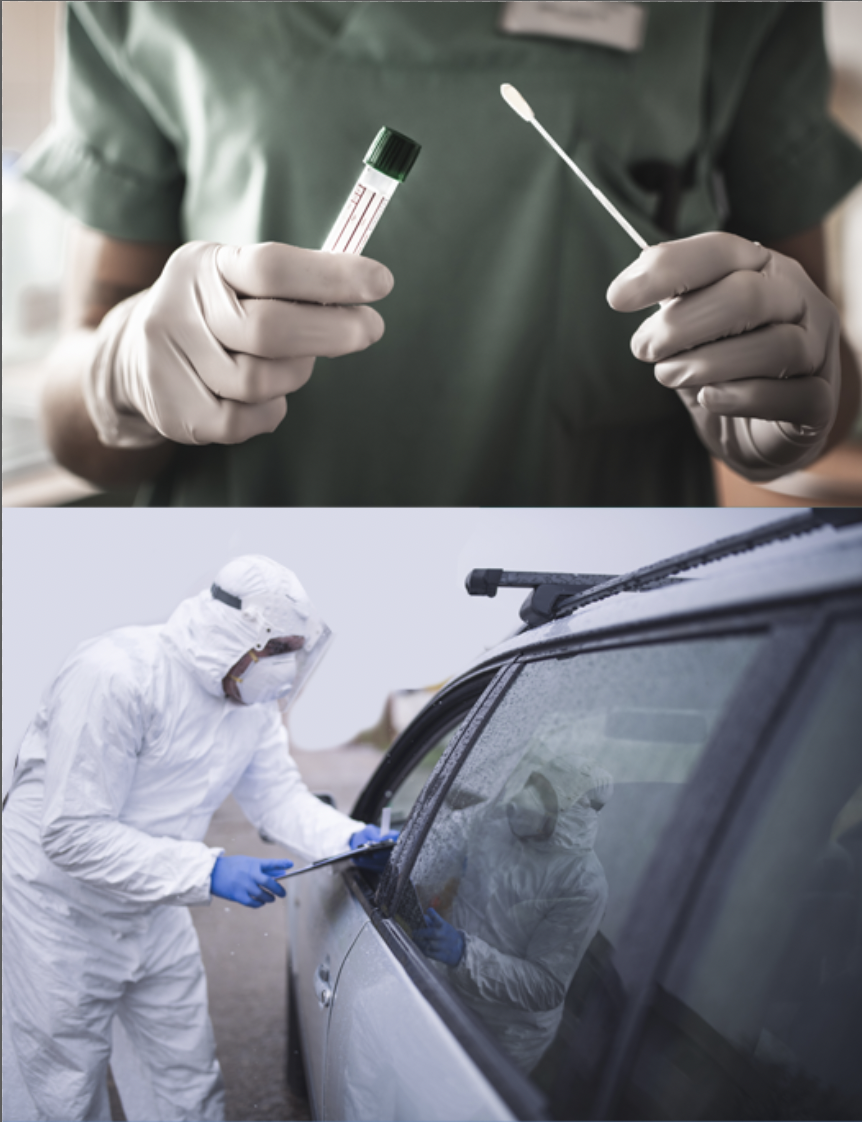
BRHD continues to host COVID PCR testing in each locality one day every week from 4:30-6:30pm. Appointments are not required, but may be made by calling the BRHD COVID Resource Hotline (434-972-6261 open M-F 8am-4:30pm) or self-registering on the BRHD website.
BRHD Testing Schedule:
-
Mondays: Greene County Health Department
-
Tuesdays: Louisa County Health Department
-
Wednesdays: Fluvanna County Health Department
-
Thursdays: Nelson County Health Department
-
Fridays: former J.C. Penney parking lot at Fashion Square Mall in Charlottesville/Albemarle
In addition to the above testing options, UVA Health offers free COVID-19 PCR tests:
-
Mondays: The Church of the Incarnation, 6:00-7:30pm
-
Tuesdays: Mt. Zion African Baptist Church, 5:30-7:00pm.
Next Molecular offers PCR tests at the former J.C. Penney parking lot in Charlottesville on Tuesdays 9:00am-1:00pm and Wednesday and Thursdays from 2:00-6:00pm.
Visit our testing webpage for updated information and testing schedules for February. You will also find a list of additional testing locations throughout the District should you need more options for testing.
|
Remember, vaccination is only one tool to end the pandemic.
We need to use them all in order to return to normal day-to-day activities.
Continue to wear face masks, maintain physical distance, wash hands frequently and properly, and limit indoor social gatherings.
|
|
|
|
|
|
|