e-Newsletter | November 9, 2024 | |
|
Moses Brown's Desk: A Travelogue
by Bethany Groff Dorau
| |
|
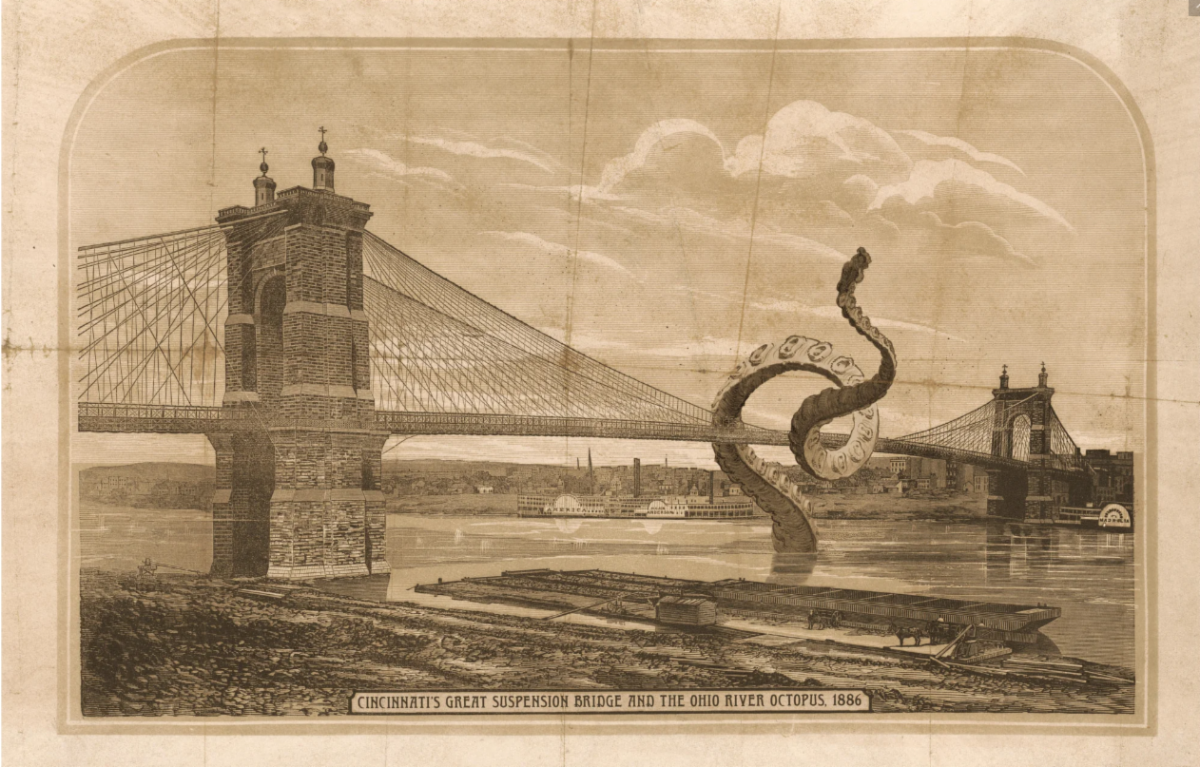
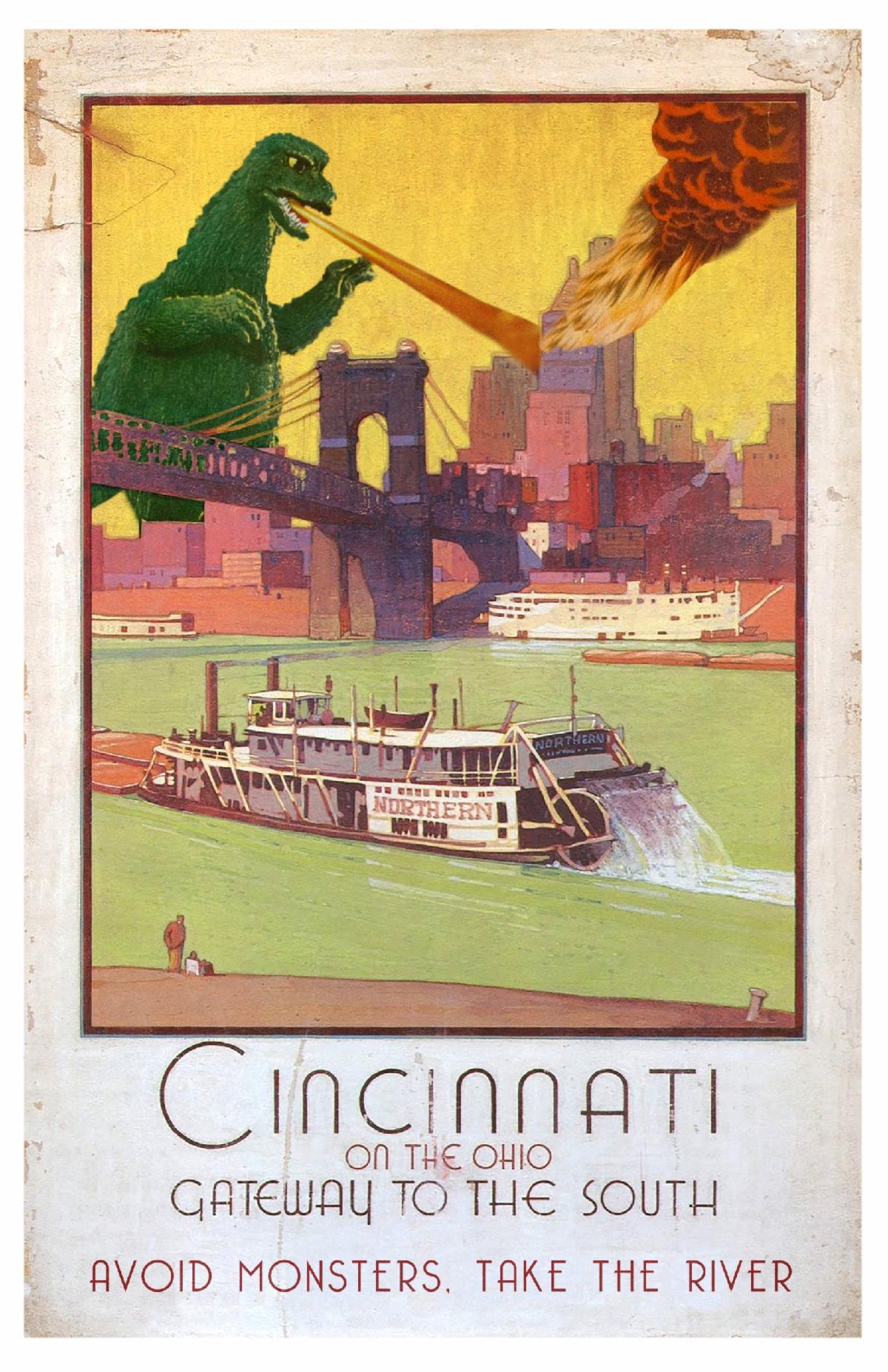
Bringing together the two main stops on this journey, this fanciful print from Alternate Histories, the Pittsburgh shop of artist Matt Buchholz, depicts Cincinnati's Roebling suspension bridge being savaged by a river monster. At a time when the truth can be elusive, I find Matt's creative "fake news" refreshing. Click on the image to see more of his creations. Used with permission.
Let me just begin by saying that I have never struggled to write this newsletter as much as I am struggling right now. I have no words of wisdom for us, nothing that seems to fit the occasion. People I love are afraid of what comes next for our deeply divided nation. I have always looked to the past to help me deal with the present, but I can’t seem to find my footing even in the research and writing I love. The newsletter articles in place before the election seem terribly naive and out-of-date, even though they were written last week.
And so, with apologies to all of you, I am going to write instead about a trip I took for the museum last weekend with my husband. At the very least, it will be recorded for posterity.
Read the title story following event announcements.
| |
Holidays at the Cushing House - 2024
Saturday & Sunday, December 7 & 8, 2024 10:00 a.m. - 4:00 p.m.
Visit the 1808 Cushing House and enjoy exquisite decorations, festive music and the company of friends and neighbors for two days of walk-through tours.
| |
Save the Date - Museum of Old Newbury Members Holiday Party December 8!
Sunday, December 8, 2024 4:00 p.m. - 7:00 p.m.
Save the date for the legendary Museum of Old Newbury Members' Holiday Party!
Check your membership status (call us and we'll gladly check for you), and come back to sign up on November 10!
| |
|
Solstice in the Cemetery: Night Walk Through Oak Hill
Saturday Dec 21, 2024 6:30 p.m.- 8:00 p.m.
| |
|
Moses Brown's Desk: A Travelogue
by Bethany Groff Dorau
| |
|
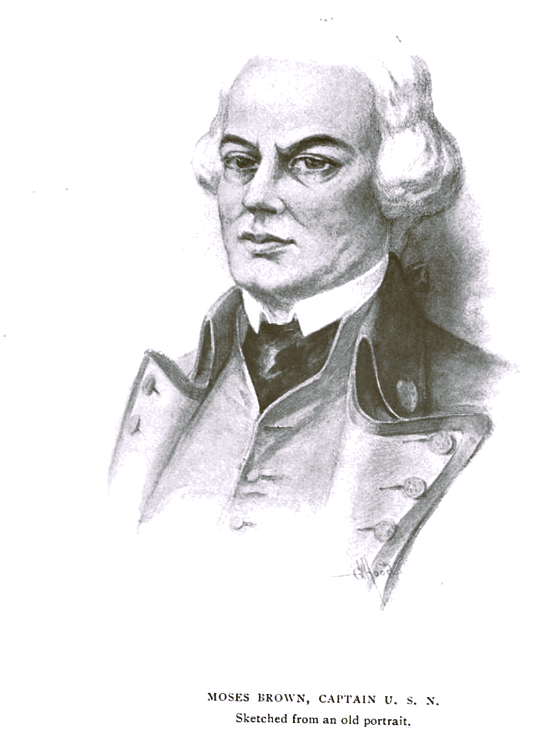
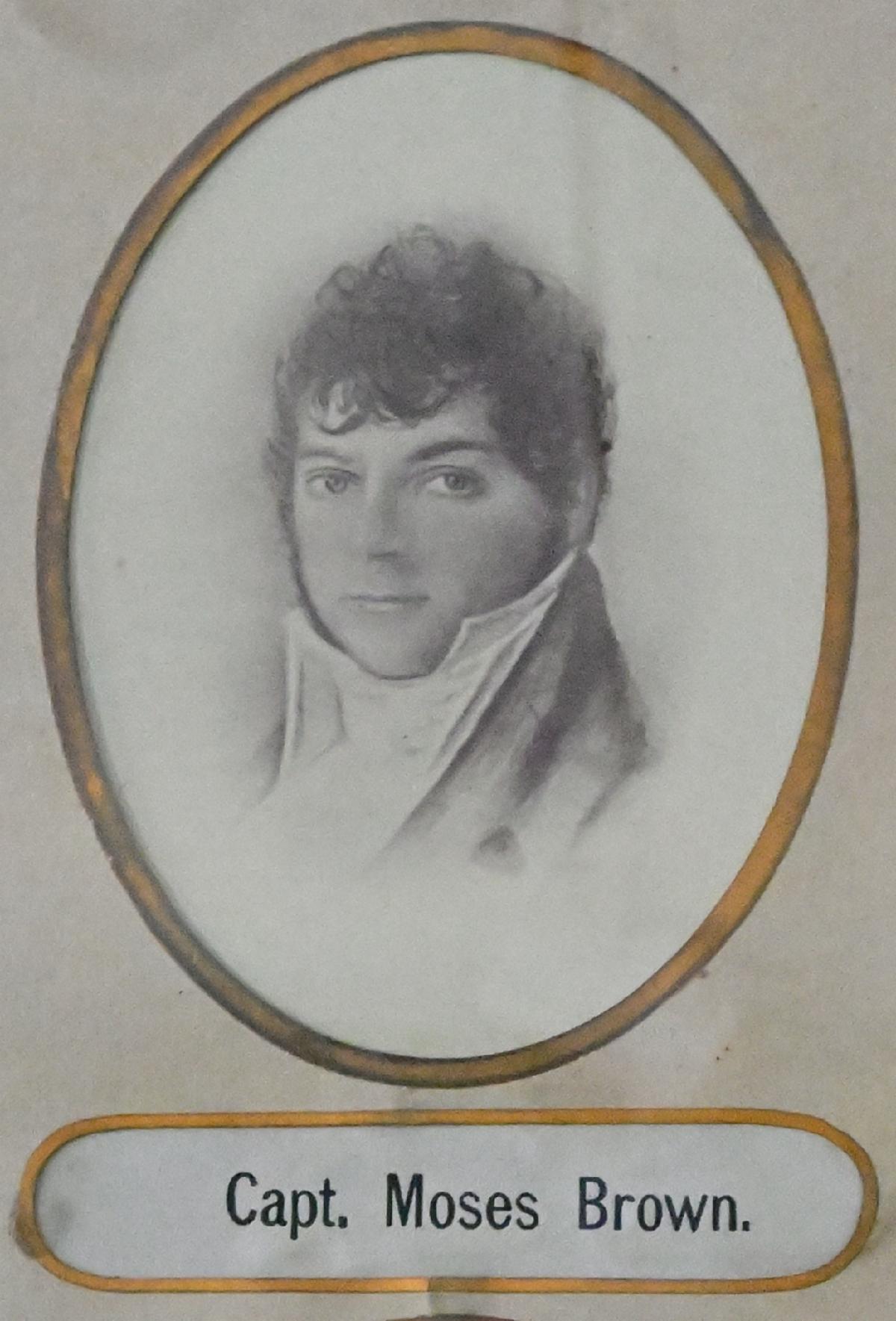
Top: This rather fanciful portrait of Newburyport's Moses Brown (1742-1804) is from the 1904 biography, Moses Brown, Captain U.S.N by Edgar Stanton Maclay.
Bottom: A more realistic image of the man is in the record of the members of the Newburyport Marine Society at the Custom House Maritime Museum. Photo by Bob Watts.
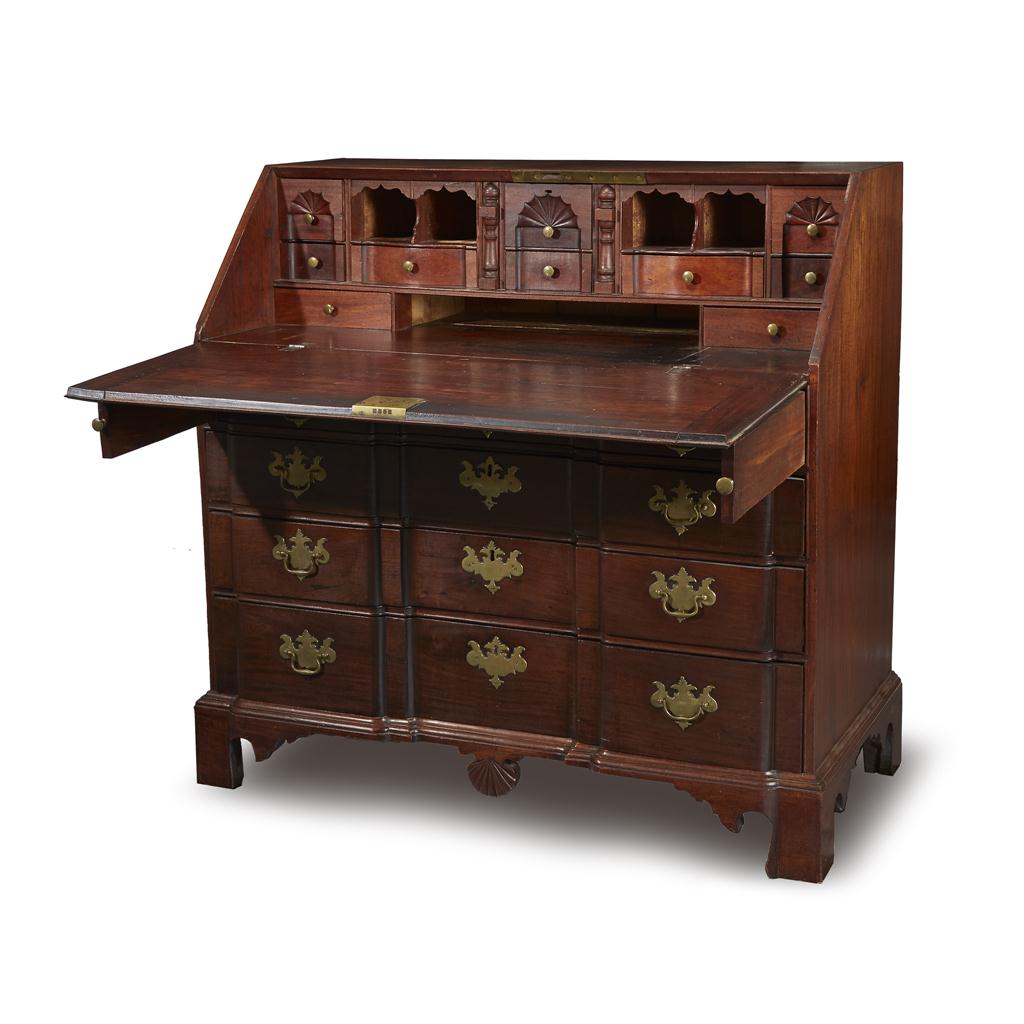
It all started with this guy. Well, to be fair, it started with Kem Widmer, who is on our collections committee and a notable expert on American furniture. Kem send a link to an upcoming auction item - a desk described as "A Chippendale Shell-Carved Mahogany Block-Front Slant-Front Desk". Though the auction catalogue described the desk as "Newburyport, c.1770", it had no information on the owner or maker of the desk. The only information available about its past was that it had been part of a private collection in Virginia.
| |
|
As is often the case when a group of Newbury(port) furniture lovers get together, another member of the committee, former director Susan Edwards, recognized this desk. It was owned by Moses Brown, she said. It was passed down in his family before being sold at auction in 2017.
And then the comedy routine began.
The punchline? There are two prominent Newburyport men named Moses Brown.
One is a famous merchant.
One is a famous naval officer and privateer.
They were both born in 1742.
They both owned nearly identical desks made by the same Newburyport family.
The other desk is in the Newburyport Public Library.
After a rousing game of "Who's on First" with the committee, we knew that this desk also needed to come home.
The case was made to all relevant parties - our parsimonious treasurer particularly - and we went for it, bid strategically, and won.
The catch? The desk was in Cincinnati, Ohio at the Freeman's Hindman auction house. So, we ship it, we thought. Shipping would be over a thousand dollars for a piece of this size and value, so that was a blow.
I decided to fetch the desk myself, with the assistance of my husband James, who is always game for an adventure and was very excited about visiting Cincinnati (great breweries!), and asked if we could stop in Pittsburgh on the way (great breweries!). Are you sensing a theme?
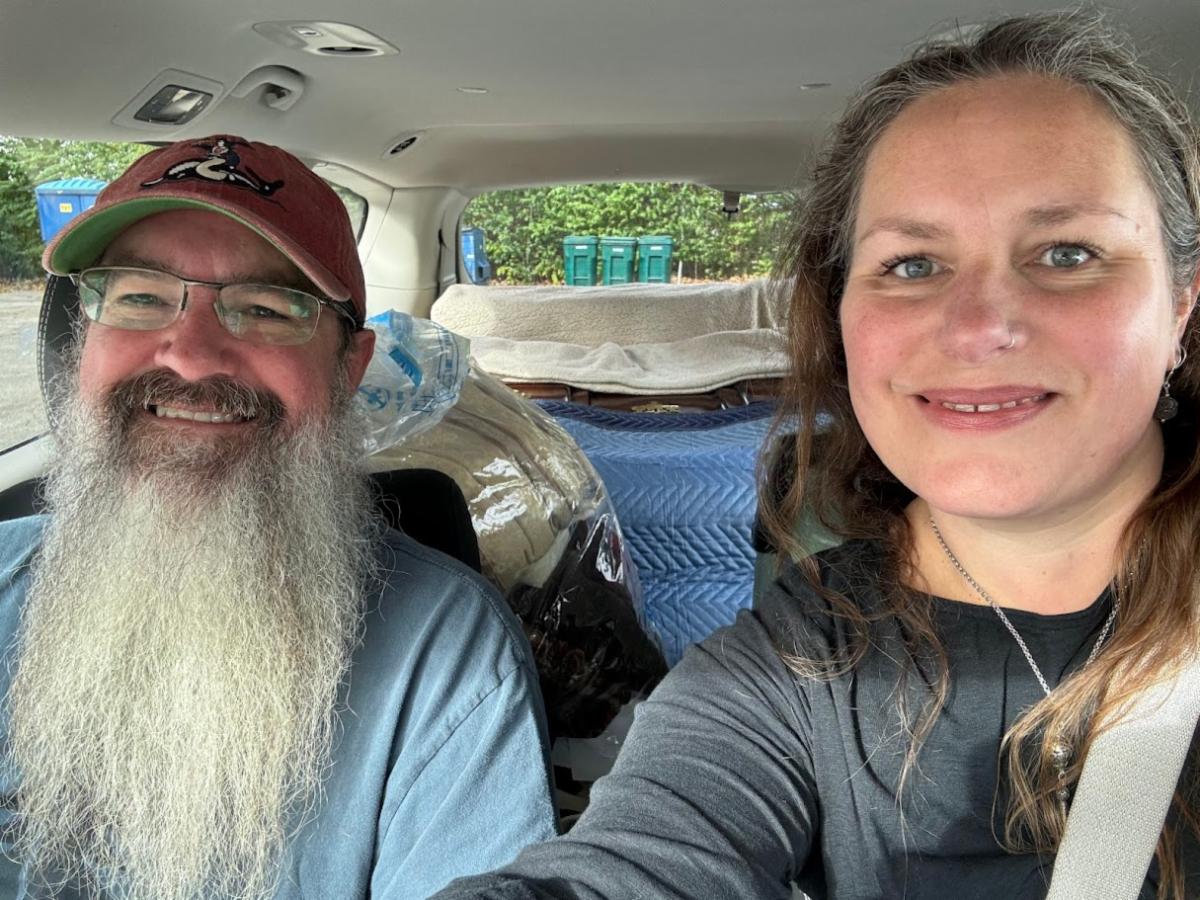
And so, on Saturday, November 2, having secured farm animal care for the weekend, we set off in the wee hours of the morning to Cincinnati, via Pittsburgh. It was 4:30 in the morning - we travel old-school, with a bag of snacks and a full bed set - pillows, blankets, etc., so one can sleep while the other drives.
| |
Let me just say, I was not prepared for the absolute onslaught of political signs on the highways of Pennsylvania. The billboards were about evenly distributed between pro-and-anti Trump along the major highways. It was interesting to note how clearly the signs reflected how the nation felt about Trump, not so much about how it felt about Harris. It was not until we reached Pittsburgh in the late afternoon that we began seeing a profusion of Harris/Walz signs. I am accustomed to taking note of political signs, but I don't often look to them for clues about the future. This time, I kept score. | |
|
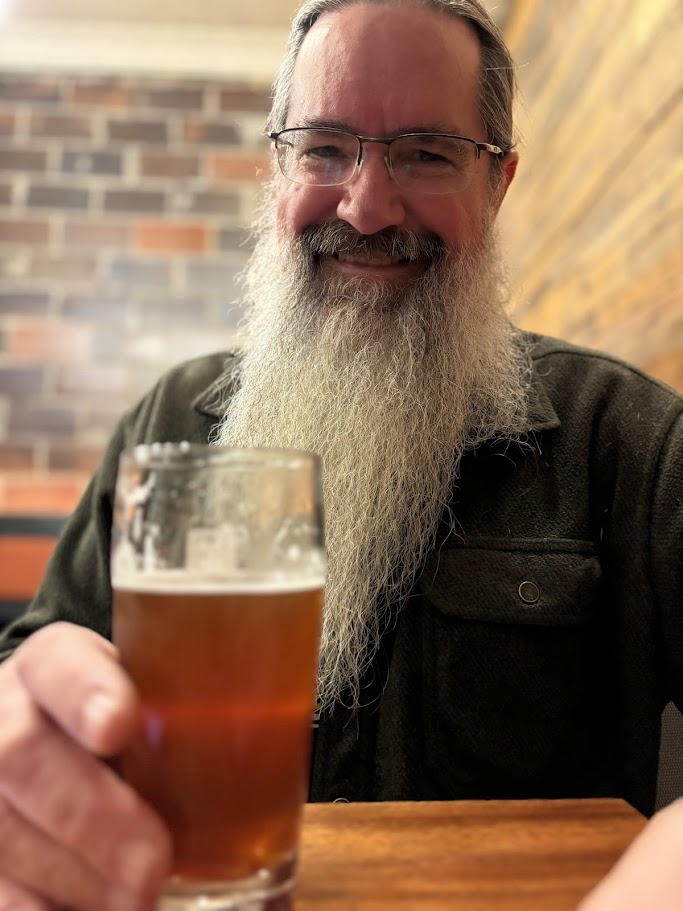
James enjoys his first beer of the trip, General Braddock's IPA at Pittsburgh's Brew Gentlemen.
Our first stop was, you guessed it, a brewery. James enjoyed a pint before we checked into our hotel - the delightful Drury Plaza Hotel. The welcome reception, the vast stretch of the room, the desk clerk calling a greeting whenever we walked by - it all seemed very mid-western. Copious drinks were offered during the welcome hour, along with a vast buffet of carbs and deep-fried everything. We sipped and snacked sparingly before heading straight up a cliff in a creaking wooden box.
| |
|
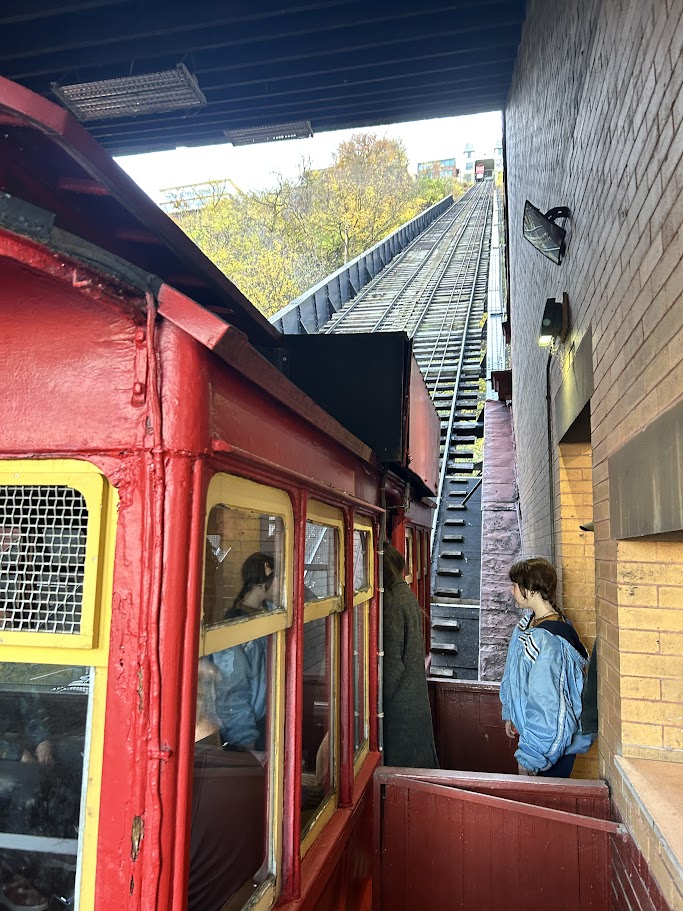
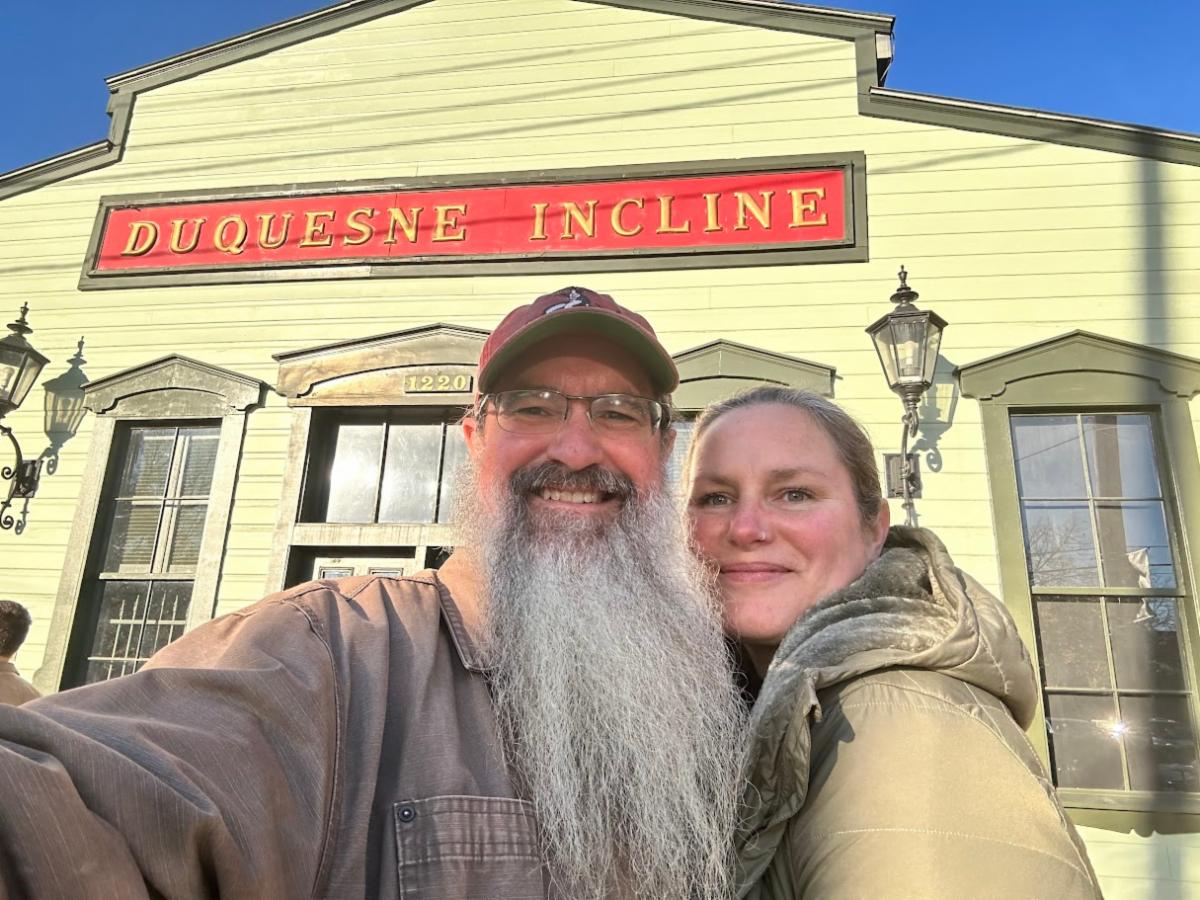
I am not a fan of heights. In addition, I know how easily old wooden structures fall apart. The Duquesne Incline, once used to haul coal, was opened in its current incarnation in 1877, the same year as the founding of the Museum of Old Newbury. It is also a National Historic Landmark, the highest designation of historical significance offered by the federal government.
And it is bloody terrifying. James came away with bruises up and down his arm as I clutched him in blind panic. Still, I have learned that the payoff is often worth the panic, and this was no exception.
| 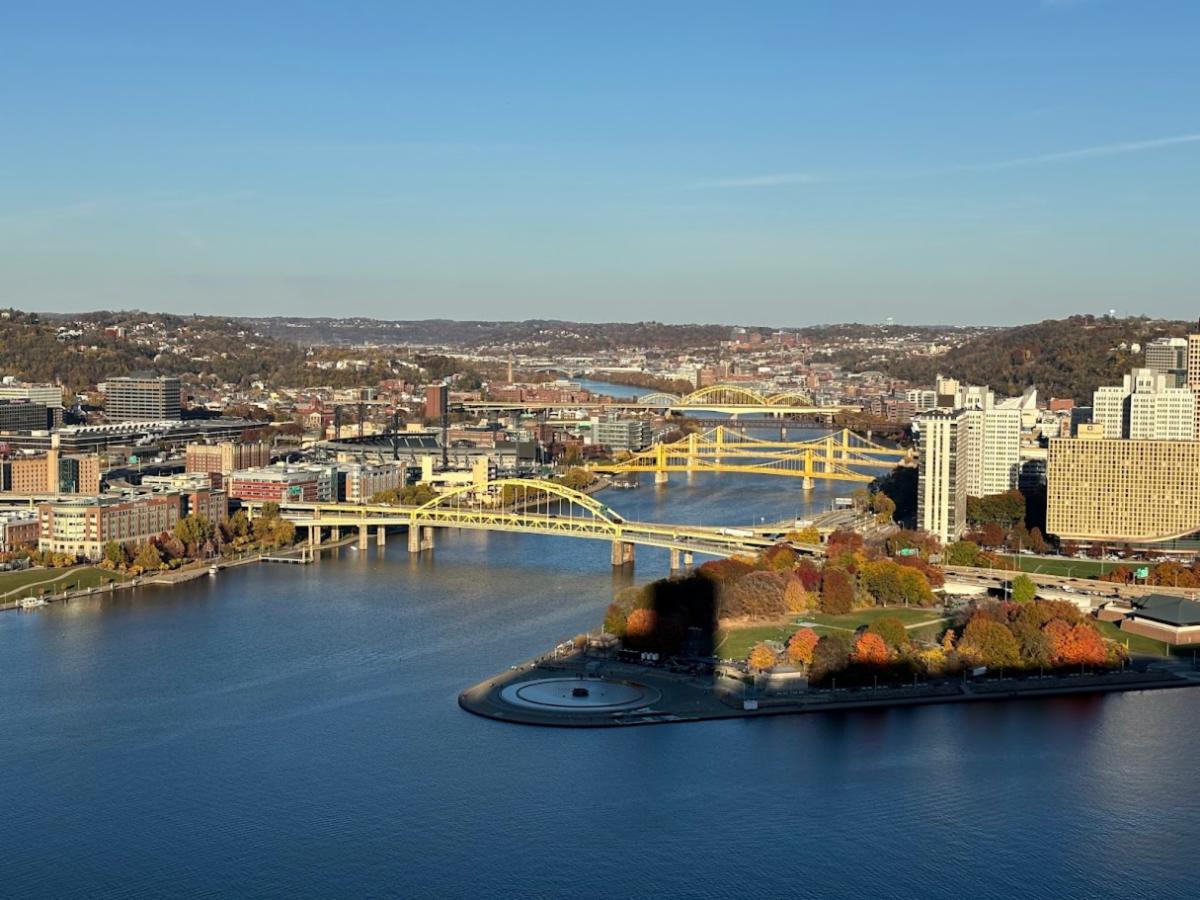 | |
The view of Pittsburgh from the top of Mount Washington showcases several of the city's 446 famous bridges - more than in any other city in the world, even Venice.
There were more breweries - one in a former church - and then a wander through the Strip District to the legendary Primanti Bros. for a sandwich piled high with coleslaw and French fries. In.the.sandwich. It is a week's worth of food between two mammoth slices of bread. Everything in Pittsburgh seemed oversized.
Later, as we sat on the wall outside our hotel, victorious hockey fans filed out of the Penguins stadium and meandered down the street in an orderly file, chatting amiably. Not a black eye or raised voice anywhere.
| 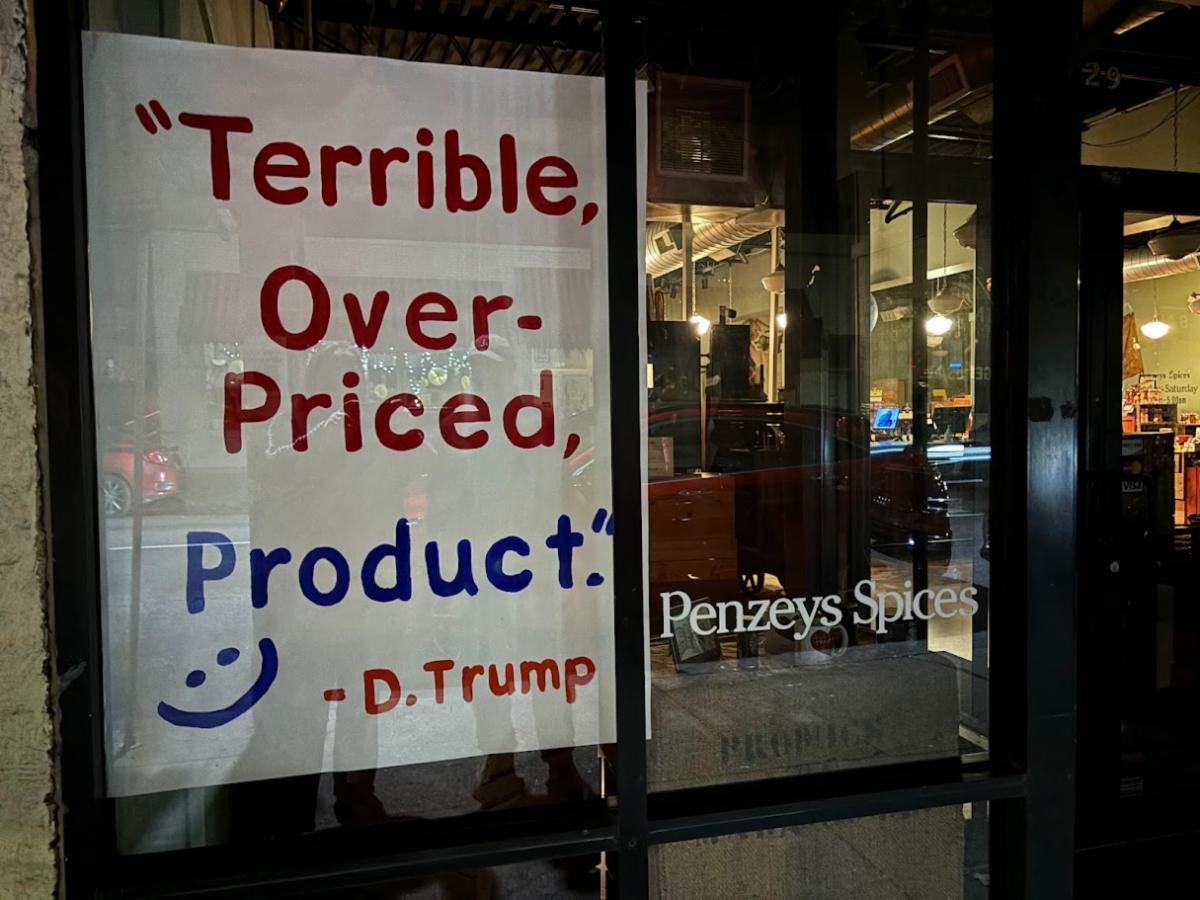 | Even in one of the the friendliest cities in the United States - it's been repeatedly ranked as such - there are signs, literally, of the national mood. Though MAGA hats and Ruth Bader Ginsberg t-shirts mingled smoothly in the streets, the signs outside the Pittsburgh Penzeys Spices shop were a bit more ominous. Bill Penzey, the owner of the Wisconsin-based company, has been an outspoken critic of Trump and the Republican Party, and he has paid for it with death and bomb threats and more. The Pittsburgh store, recently visited by Kamala Harris, had decided to clear out their merchandise and close on November 5, anticipating possible violence. Still, there was a bit of humor there as signs out front invited shoppers to a "loot the store" sale. | |
|
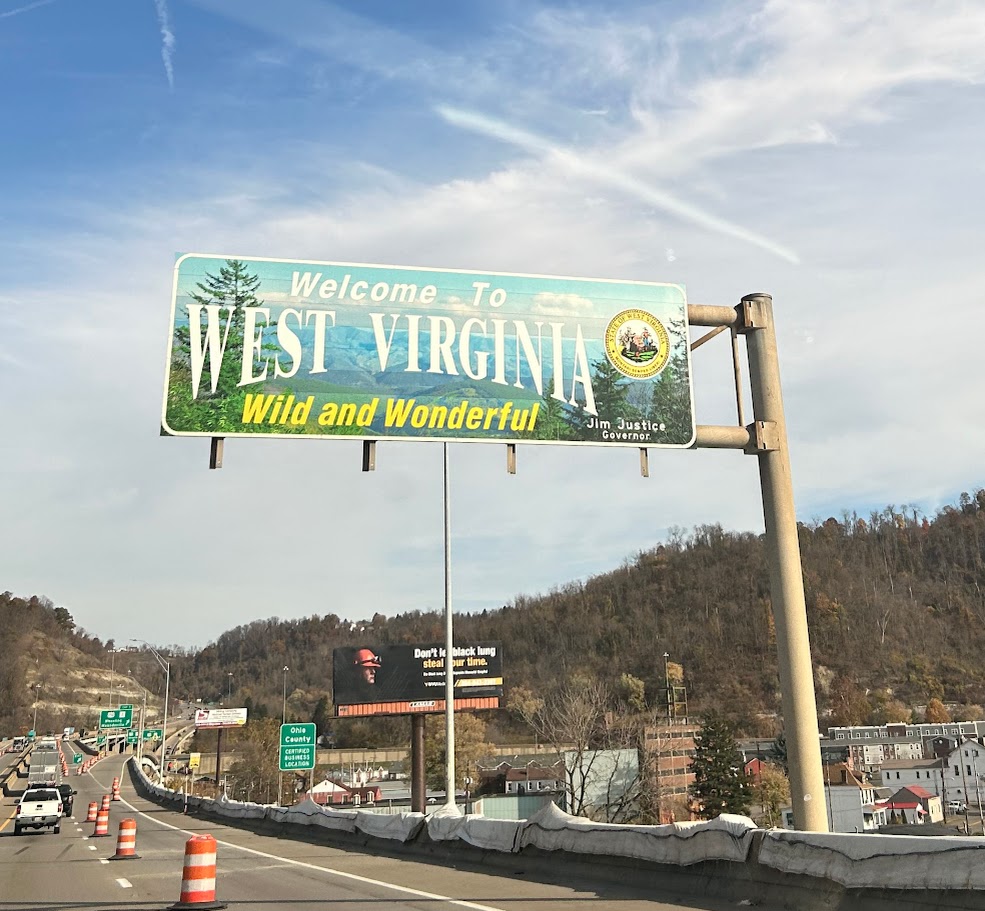
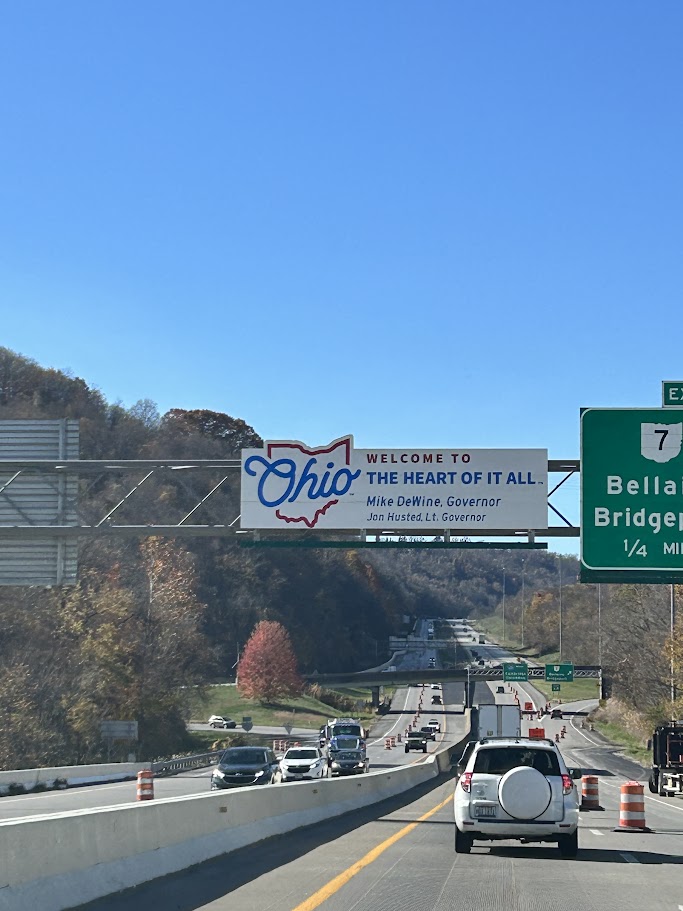
The next morning we headed to Cincinnati, passing through West Virginia, always an adventure.
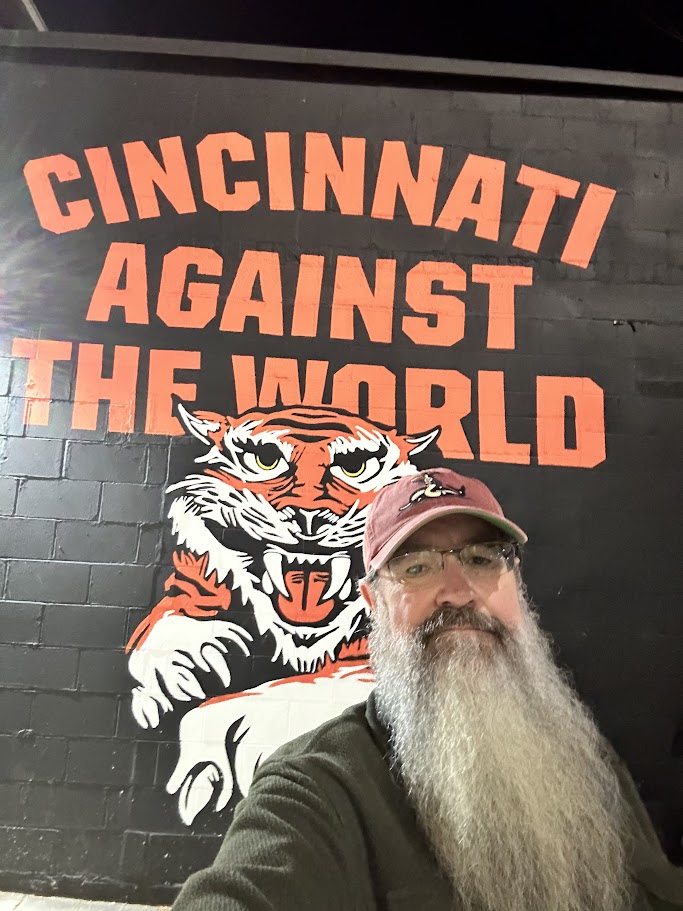
We have been to Cincinnati before, once, also to pick up an item from auction. It is one of James' favorite places in the country - affordable, walkable, friendly, and beautiful.
We checked into our hotel, a funky composer-themed house built for one of the former directors of the Cincinnati Symphony Orchestra. We were in the Mahler room. Coincidentally, I know a bit more about Mahler than I would have had I not worked at Historic New England's Gropius House for several years. Mahler's widow, Alma, a brilliant, beautiful flirt, married Walter Gropius in 1915 and then left him for writer Franz Werfel.
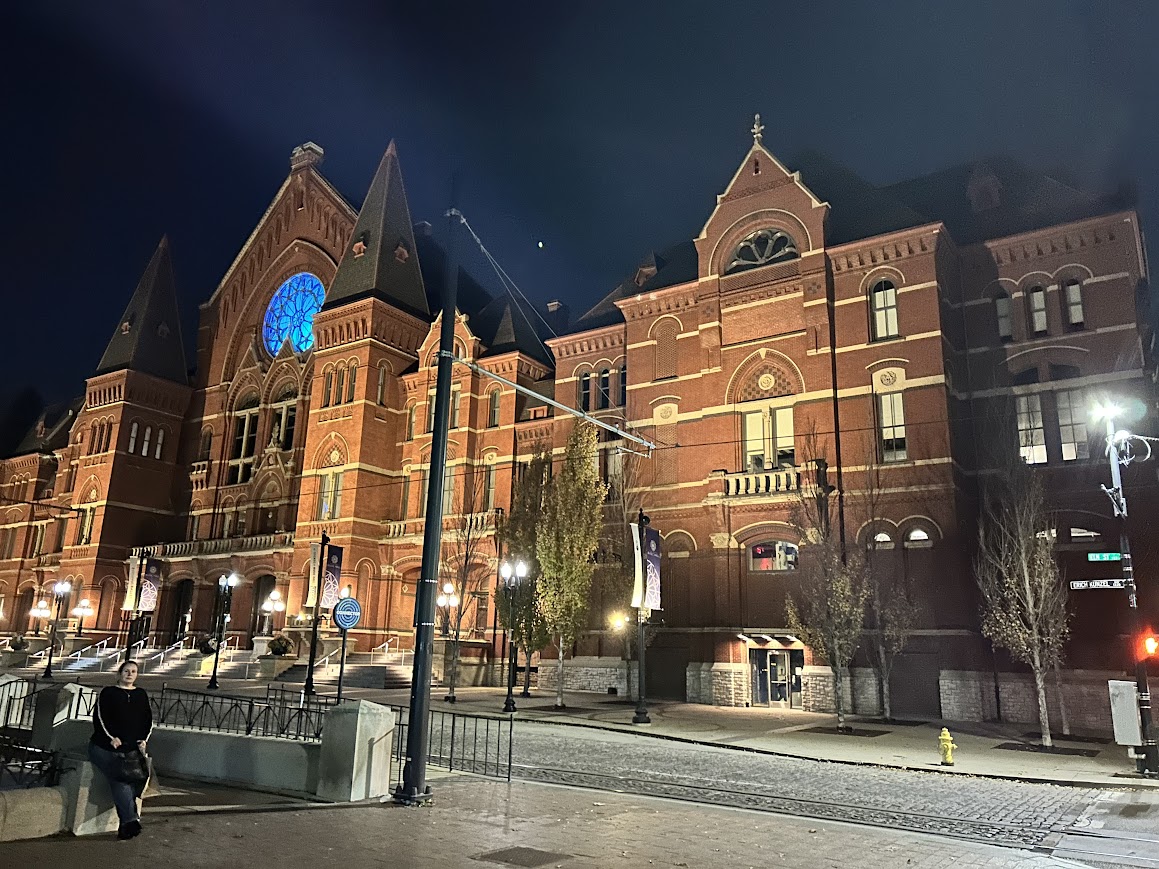
The gorgeous, expansive 1878 Symphony Hall is just across the street from the hotel and takes up an entire city block.
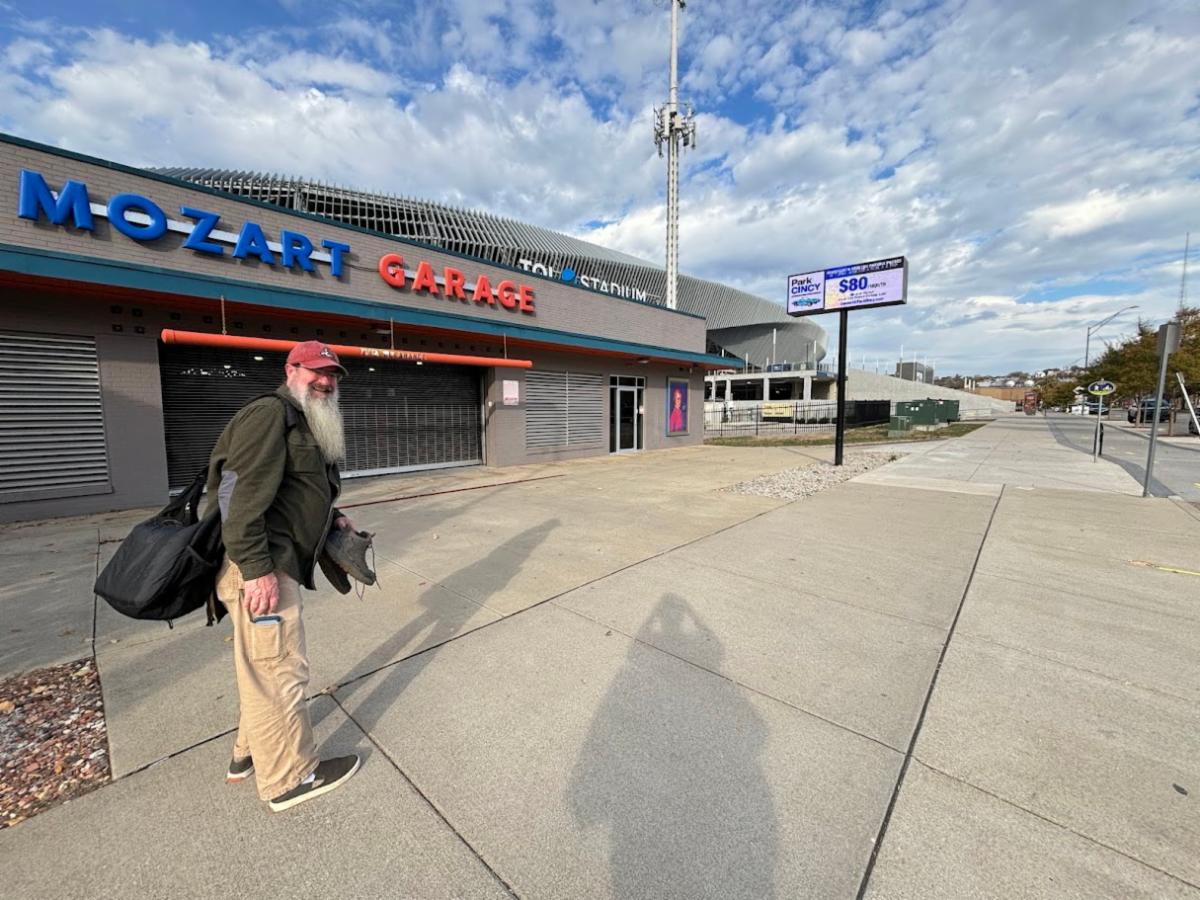
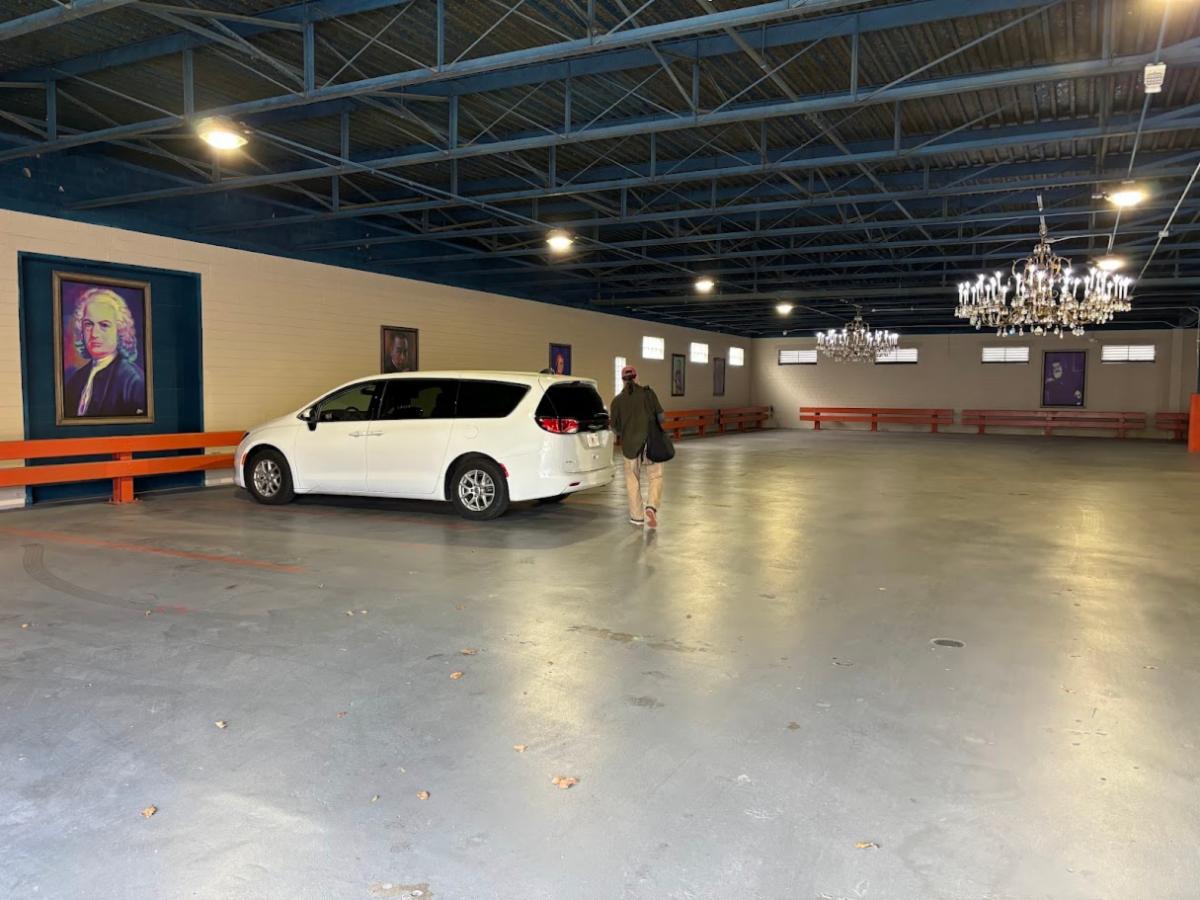
Even the parking garage was composer-themed. I channeled my fanciest friend Leana and parked the van in the Mozart Garage under a glittering chandelier.
| |
|
James and I do not vacation - we invade. We transitioned straight from child-rearing to farming, and rarely have more than a few days to string together. We make every minute count. After a beautiful meal at our favorite Krueger's Tavern, we hauled out to the Rheingeist Brewery, then took an Uber back for a nightcap at the Davidson, an old-school elegant restaurant with a massive bar and a delightful, pink-haired bartender.
The Uber drive to the Davidson is worth a mention. Upon hearing that we had only been to Cincinnati once before, Miguel decided we needed a full tour. He took an extra 20 minutes of off-the-clock time to drive us around to every sports stadium and around his favorite neighborhoods, explaining how the city has risen from stagnation and blight. He immigrated to the US when he was 15, and is so proud of what Cincinnati has become. To him, this is the promise of America. Work hard, take care of friends and strangers alike, make your city better than you found it, and America will embrace you. I hope his faith in our nation is justified.
| |
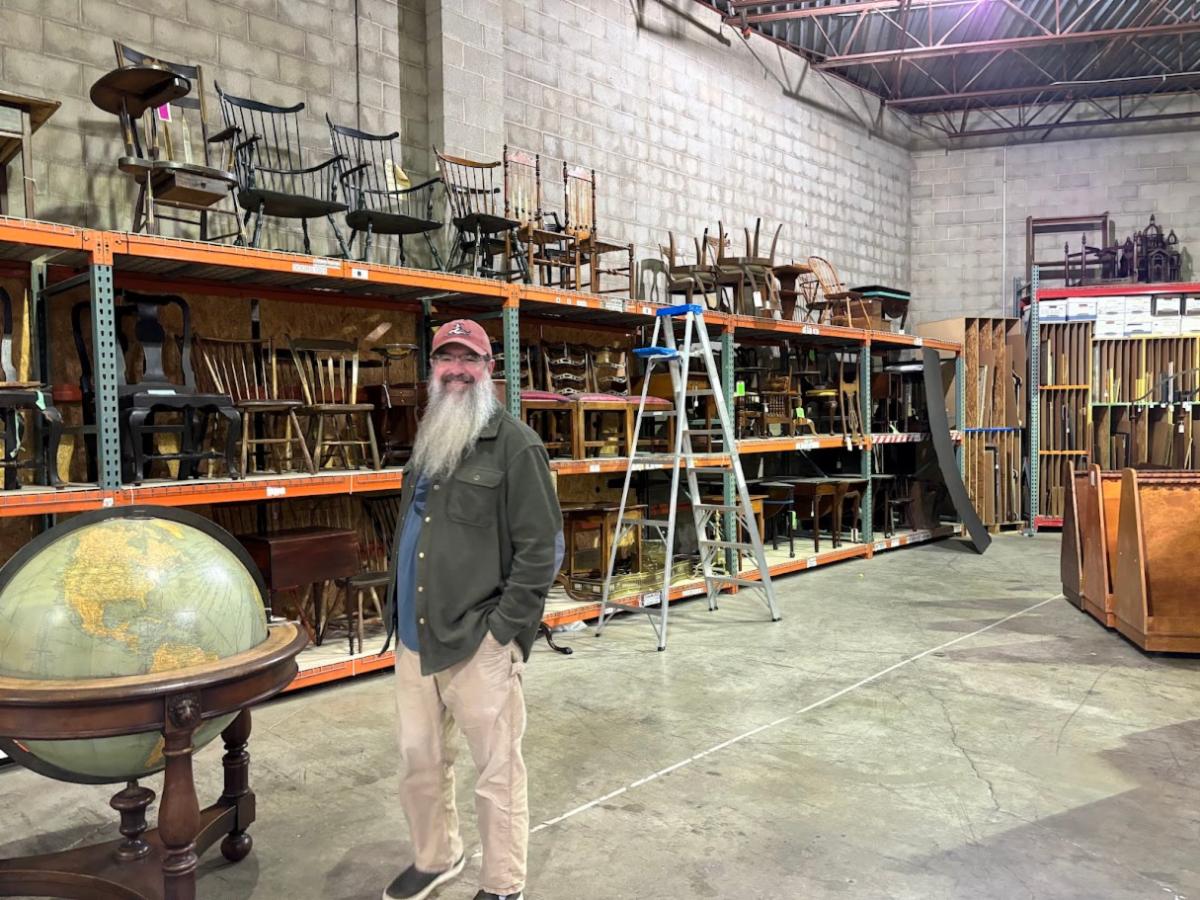
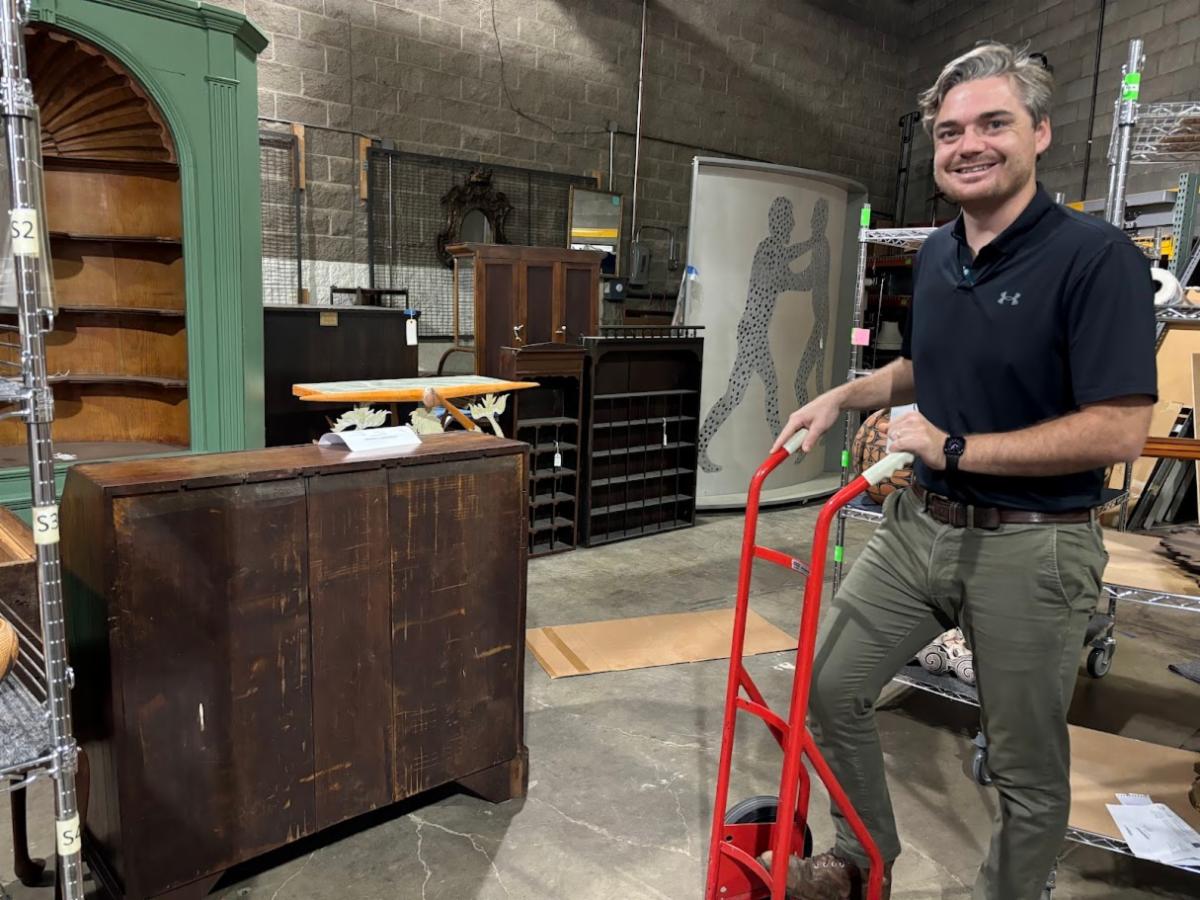
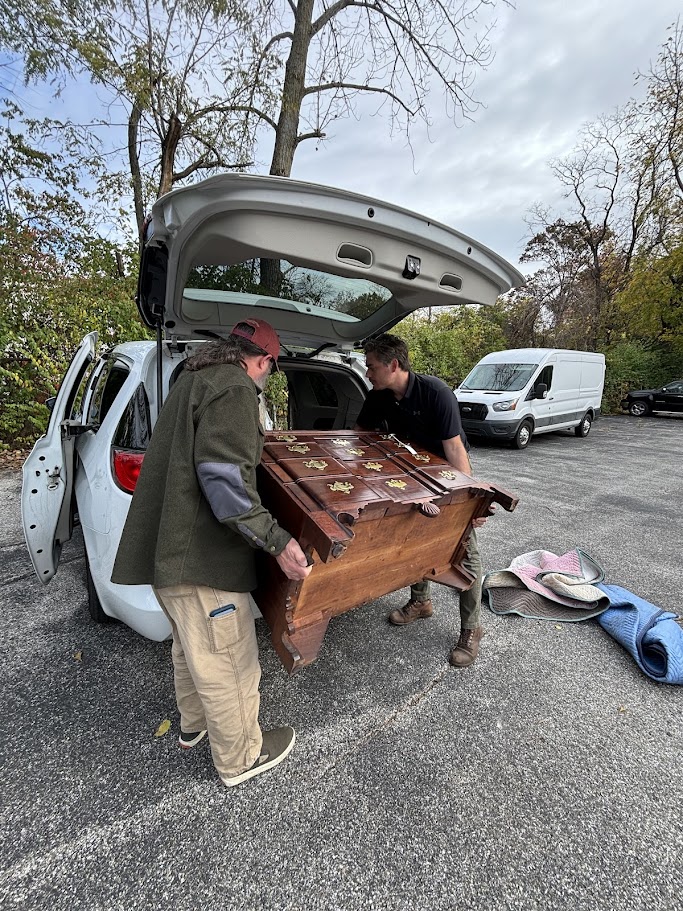
An auction house floor is a wonderland - a private museum where everything is ephemeral. James and I were welcomed by the Freeman's Hindman auction house early Monday morning, and allowed to wander unchecked through the storage area as they gathered our paperwork and prepared Moses Brown's beautiful desk for transport. James fell for a compact-car-sized globe which, lucky for me, was on its way to a new home. | |
|
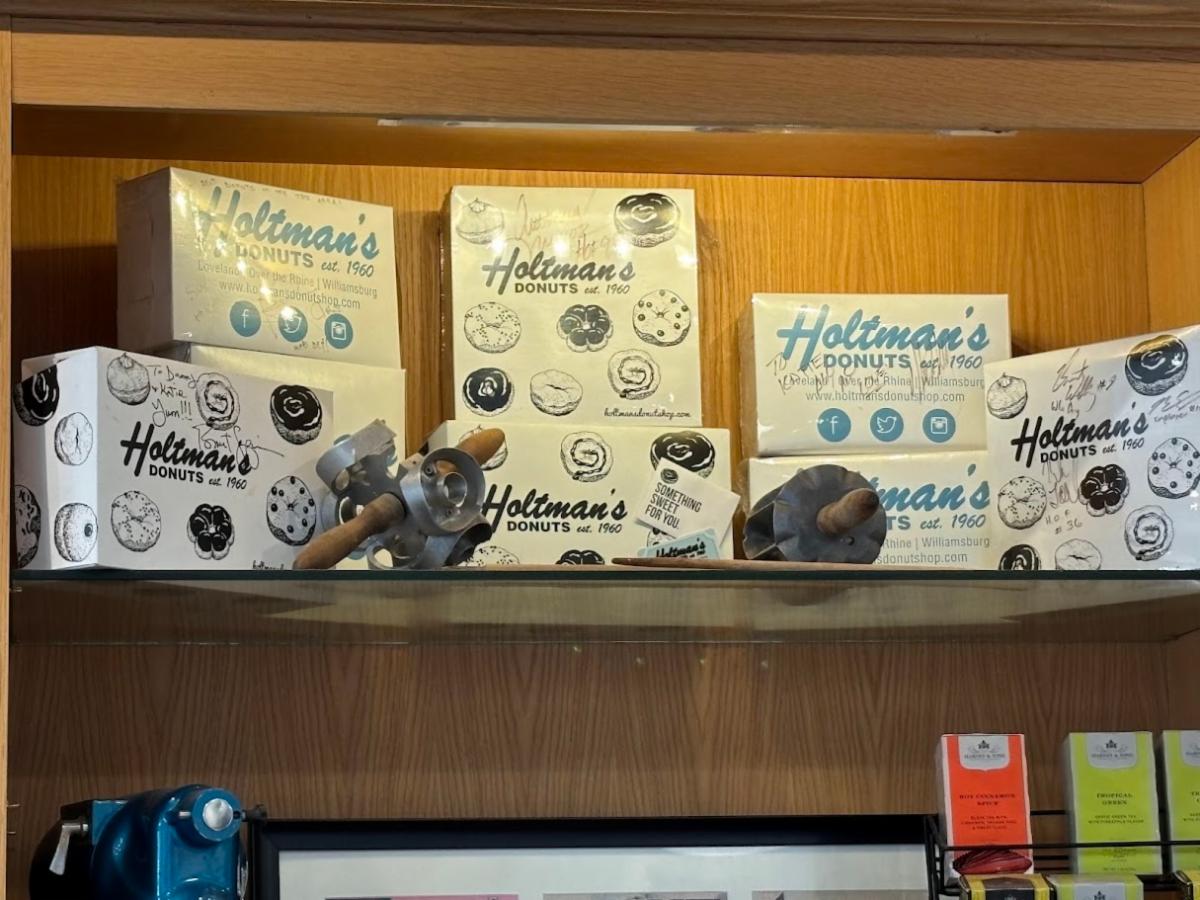
With Moses Brown's desk bolstered, padded, secured, and swaddled like a newborn baby, and fortified with a half-dozen Holtman's donuts, we set off for the long drive home. The soundtrack of our journey, for those of you wondering how we pass the hours, was the audiobook of Barbara Kingsolver's Demon Copperhead, about a boy growing up in Appalachia, followed by Hilary Mantel's The Mirror and the Light, about the political machinations of Thomas Cromwell during the later years of King Henry VIII. Those narratives seemed to haunt the conflicting messages—political, religious, and commercial— that dominated our drive.
From billboards announcing black-lung lawsuits for coal miners and Bible verses in West Virginia, to union endorsements of Harris and warnings to guard your neighbors’ civil rights in Pennsylvania, to an Amish buggy parked amid a sea of anti-immigration signs, our complicated national history isn’t past but present. It began to feel odyssean.
| 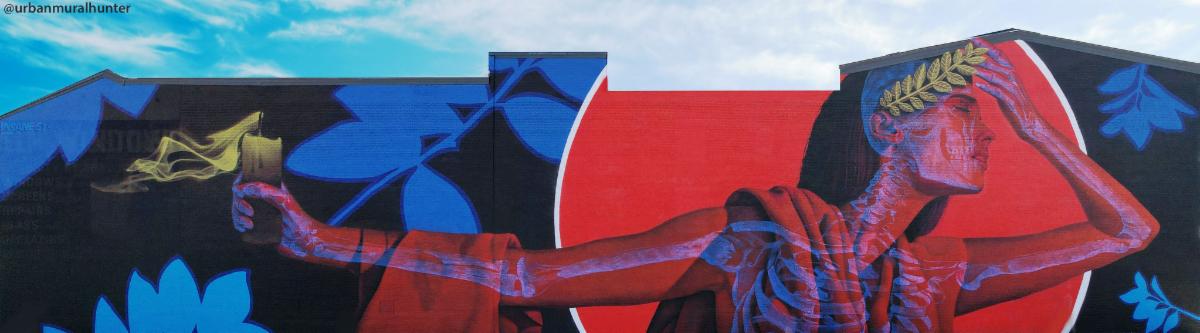 | |
The breathtaking "Euthenia" mural seen at 1539 Race Street in Cincinnati. Euthenia was one of the mythical three Graces, transitioning from life to death as the viewer passes by, a stark reminder of the passage of time.
Twenty-four hours later, having driven nearly half-way across the country and back, I was standing in line at the West Newbury town annex waiting to vote.
I wish I had some deep revelation to share with you all. I can only say that the desk is safely back home where it began, just up Fruit Street from the house where it was first used, in the town it was built. If that desk could talk, I wonder what tales it would tell of its long life and many travels. This desk saw the beginning of the American Revolution and has borne silent witness to every version of America since then, every step forward and stumble back.
And for me, I suppose there is a kind of comfort in that.
| |
Something Is Always Cooking ... | |
|
Weekday Lentil Soup
Despite recent balmy weather, chilly evenings still call for hearty, filling soups in our house. Between work, farm chores, and other obligations, however, cooking time is short.
This is a simple, one-pot soup. It's healthy (vegan, gluten-free, fiber-rich), reheats well, and can be made in the morning and left in the pot to heat for dinner. Best of all, it is ready to enjoy in about half an hour, but tastes like it's been simmering all day. You can change, add, subtract from this soup based on what's in the house - it is very forgiving. Leave the curry or the rosemary out or add sweet potatoes or cauliflower. I love it with a crusty, hearty bread, but I also sometimes scoop it with tortilla chips. Don't knock it til you try it!
-Bethany Groff Dorau, executive director
Ingredients:
2 Tbsp olive oil
2 cloves garlic, minced
1 small yellow onion, minced
2 large carrots, thinly sliced
1 zucchini, thinly sliced
4 stalks celery, thinly sliced
3 cups yellow potatoes, chopped into small cubes
1 cup frozen corn
5 cups vegetable broth
2 bay leaves
1 teaspoon thyme or more to taste
1/2 teaspoon rosemary or more to taste
1/2 teaspoon curry powder
1 cup uncooked lentils, rinsed
3 cups chopped Swiss chard, kale, or other hearty greens
Instructions:
- Heat a large pot over medium heat.
- Add oil, onion, carrots, zucchini, celery, potatoes, and bay leaves. Season with salt and pepper.
- Sautee for 7-8 minutes until tender and then add garlic, thyme, rosemary, and curry powder. Sautee for an additional minute until herbs are fragrant.
- Add vegetable broth and increase heat until all ingredients are simmering.
- Add lentils and stir.
- Reduce heat to low and simmer for 15-20 minutes until lentils are tender.
- Add greens and frozen corn, cover and cook for 4-5 more minutes.
- Salt and pepper to taste and enjoy!
| |
|
The tongue-in-cheek description of this print from Pittsburgh's AlternateHistories.com reads, "Due to the prominence of steamships and industry along the Ohio river, Cincinnati began to advertise itself as the Gateway to the South for both tourism and industry. The decision was twofold: it not only made good use of the burgeoning river industry, but also provided a safe alternative to the giant monsters who decimated the city's skyline on a regular basis."
Click the image to do the puzzle
| | |
Museum e-Newsletter made possible through the
generosity of our sponsors:
| |
| | | |