Week of June 1, 2026 | Vol. 16, Issue 22 | | |
Bourne Insights
A Week in Review
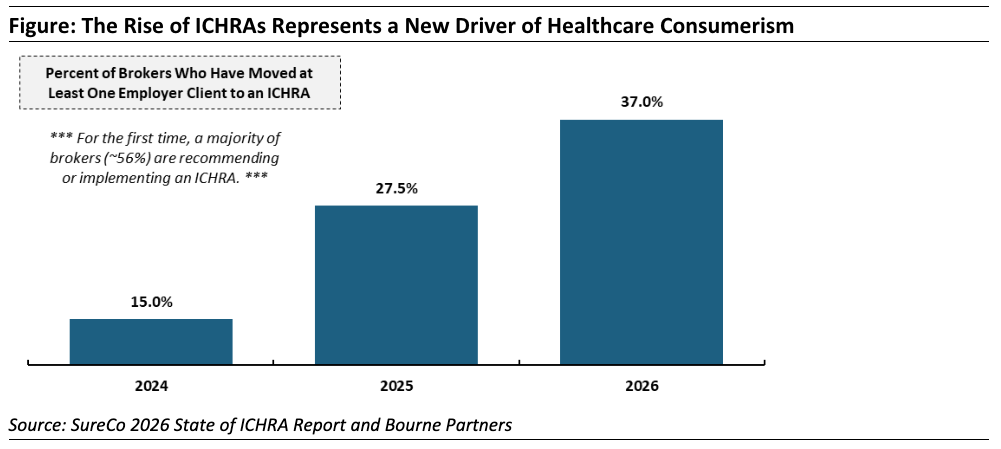
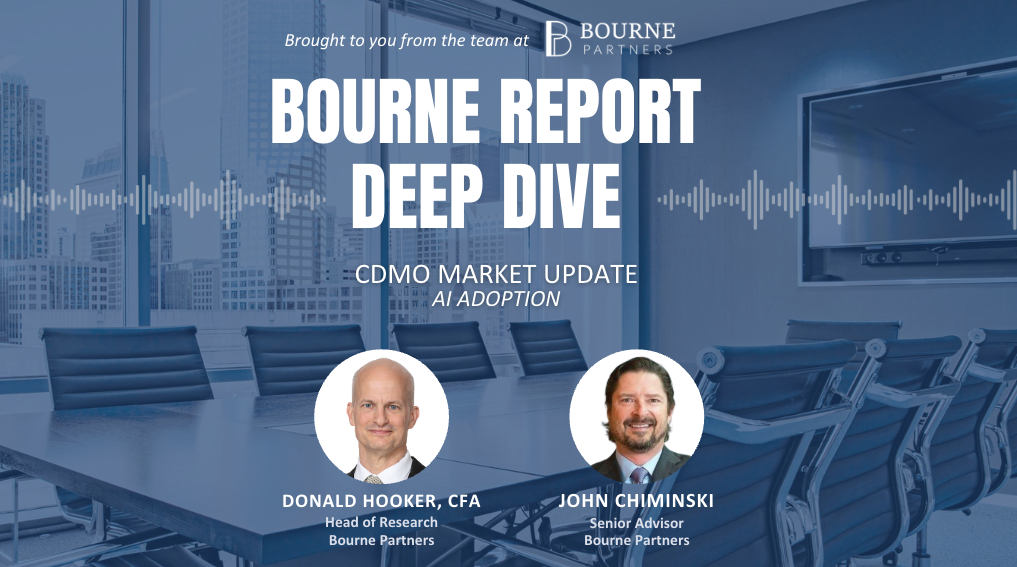
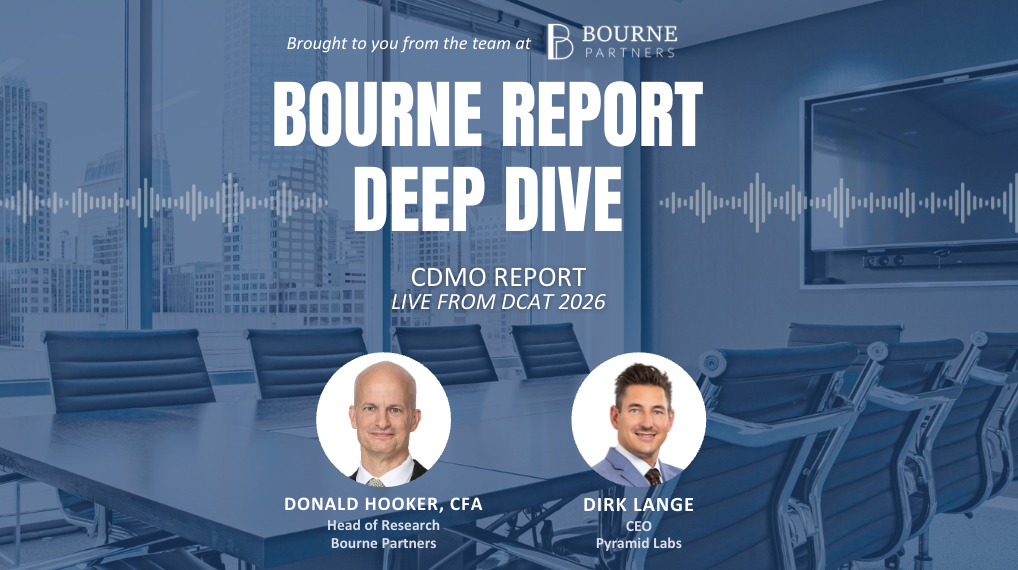
| | | | We are taking note of an emerging trend in employer-sponsored health coverage -- the rise of Individual Coverage Health Reimbursement Arrangements (ICHRAs). ICHRAs were created in 2020 to allow employers the option of giving pre-tax dollars to employees for them to purchase their own health coverage on the Affordable Care Act (ACA) exchanges (rather than offering a traditional employer/group plan). Data from the recent SureCo 2026 State of ICHRA Report suggests that we may be seeing an inflection point with respect to the use of ICHRAs. For the first time, over half (~56%) of brokers surveyed in the report are now recommending or implementing ICHRAs, and the percent of brokers who have moved at least one client to an ICHRA has more than doubled over the past two years — from 15% in 2024 to 27.5% in 2025 to 37% in 2026. Granted, this is still a very early trend as measured in lives covered, but it is growing rapidly, particularly among small/mid-sized employers. As such, we see the rising use of ICHRAs by employers as a potential new driver of the multi-year trend of employers shifting in decision-making and financial responsibility to their employees. Read More | | | | We are keeping a close eye on the growing dominance of Epic Systems (private) in the U.S. healthcare information technology (HCIT) landscape. In our opinion, any HCIT, pharma services, or real world evidence (RWE) vendor that does not have a credible Epic Systems integration strategy is facing an increasing headwind. Recent survey data from KLAS Research shows that Epic Systems is now the core electronic health record (EHR) software vendor for 43.7% of U.S. hospitals (versus 31.0% in 2021). In our view, Epic Systems is particularly strong among large and academic health systems resulting in Epic Systems having a ~56.9% market share as measured by hospital beds. These share gains by Epic Systems appear to be mainly coming at the expense of Oracle Health (formerly Cerner Corp). Oracle Health may continue to see market share pressure in 2026 (and 2027) since about a third of Oracle Health customers reported that Oracle Health is not in their long-term plans, according to data from KLAS Research. In our view, Oracle Health’s ability to stem this trend will depend on its success embedding artificial intelligence (AI) capabilities into its EHR platform. Read More | | | | ICON plc (NASDAQ-ICLR) belatedly reported 2025 financial results after completing an accounting review (initiated in October 2025) that showed improper adjustments were made to its services revenue (and related costs) in 2023, 2024, and 2025. As a result, ICON downwardly restated its historical reported revenues by ~1% and adjusted EBITDA by ~4% over this time period, on average. Management also initiated a more conservative policy for reporting bookings and backlog. Finally, ICON divested its previous acquisition of Symphony Health (to HealthVerity), reducing revenues by ~200 bps. Altogether, based on the restated financials, the new reporting methodology, and the divestment of Symphony Health, for 2026, management now expects revenues to decline by 1.2%-4.9% (midpoint: $8.15 billion) and adjusted EPS to decline by 12%-20%. By our models, this implies a sharp deterioration of EBITDA margins from 18.6% in 2025 to 15.7% in 2026 (implying: ~$1.3 billion). These are not great headline financial metrics. However, the good news is that ICON reported improving leading indicators in recent quarters -- including significant improvements in win rates with small/mid-sized biopharma sponsors. Read More | | | | Commercial health plans continue to struggle engaging with (and building trust with) their members, despite investments in digital and member engagement technologies. Data from the newly released J.D. Power 2026 U.S. Commercial Member Health Plan Study showed that the average overall member satisfaction score stagnated at 562 out of 1,000 (versus 563 in 2025 and 565 in 2024), essentially no progress over a three-year period. More specifically, only ~30% of surveyed members described their health plan as a “trusted partner” with respect to their health and wellness journey. In our view, rising premiums and out-of-pocket financial costs are a major cause of this stagnation. Over half (~53%) of surveyed members reported a monthly premium increase this year and about a third (~34%) saw a deductible increase. These two factors offset the gains from technology investments in member engagement. The survey data also suggests that claims resolution is a problem area with only ~30% of members saying that they had an “excellent” or “perfect” claims experience. Read More | | | | The Trump administration announced its final regulations on the No Surprises Act (NSA) Federal Independent Dispute Resolution (IDR) process. Under IDR, an out-of-network provider and a health plan must each submit a proposed payment for a disputed claim. A government-certified arbiter must then pick one of the two offers. This IDR process has been swamped with millions of disputes over the past four years, well above what policymakers had expected. Also, health plans have argued that a small number of providers and billing contractors have been gaming the process. Finally, health plans have pointed out that providers prevail in almost 90% of IDR cases with awards that are sometimes multiples of the comparable in-network rates. The final regulations aims to restore order in the IDR process by cutting the per-party administrative fee from $115 to $15, limiting batched disputes at 50 line items, requiring eligibility decisions within five business days, mandating standardized claim codes, and launching a new centralized “IDR Gateway” portal. Regulators estimate the changes will save health plans and providers over $500 million in administrative fees. Also, we think these new regulations may help curb ineligible filings and ease the bottleneck. Read More | | Bourne Partners Podcast - CDMO Series | | In connection with our latest CDMO market deep dive, we recently released two Bourne Report podcast episodes featuring perspectives from industry leaders. These conversations explore the evolving CDMO landscape, including trends in specialization, AI adoption, and strategic partnerships, bringing to life many of the themes highlighted in our report. Read More | | |
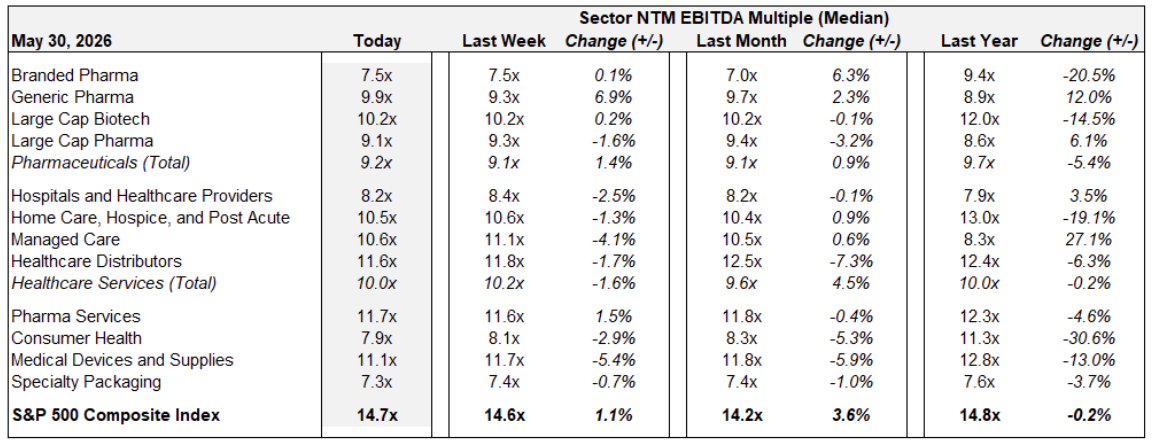
Note: Market values as of the close of business May 30, 2026
Source: S&P Global Intelligence
| | Active Banking Deal Contacts | | Select Banking Transactions | | | | |