|
February 28, 2025
Conventional wisdom suggests that timing the market is impossible. Many academics and pundits make this claim—often without truly doing their homework.
To be fair, much of what investors rely on simply doesn’t work. Reacting to headlines, following broad economic trends, or selling only after the market has already declined by 20%—none of these strategies offer much value.
Why? Because they are all backward-looking, responding to what has already happened.
As the saying goes, “The trend is your friend until it bends or ends.” I’ve found that market cycles can sometimes indicate when a trend is about to shift or conclude. Not always, but often enough to be worth paying attention to.
Not All Cycles Are Created Equal
Through my research, I’ve found that some market cycles are far more reliable than others. While the lunar cycle has been linked to emergency room visits and commodity price movements, it has little value in predicting stock market trends. Similarly, the four-year election cycle makes for a compelling narrative but ranks only 25th in statistical significance (based on data since 2000).
So, which cycle matters most?
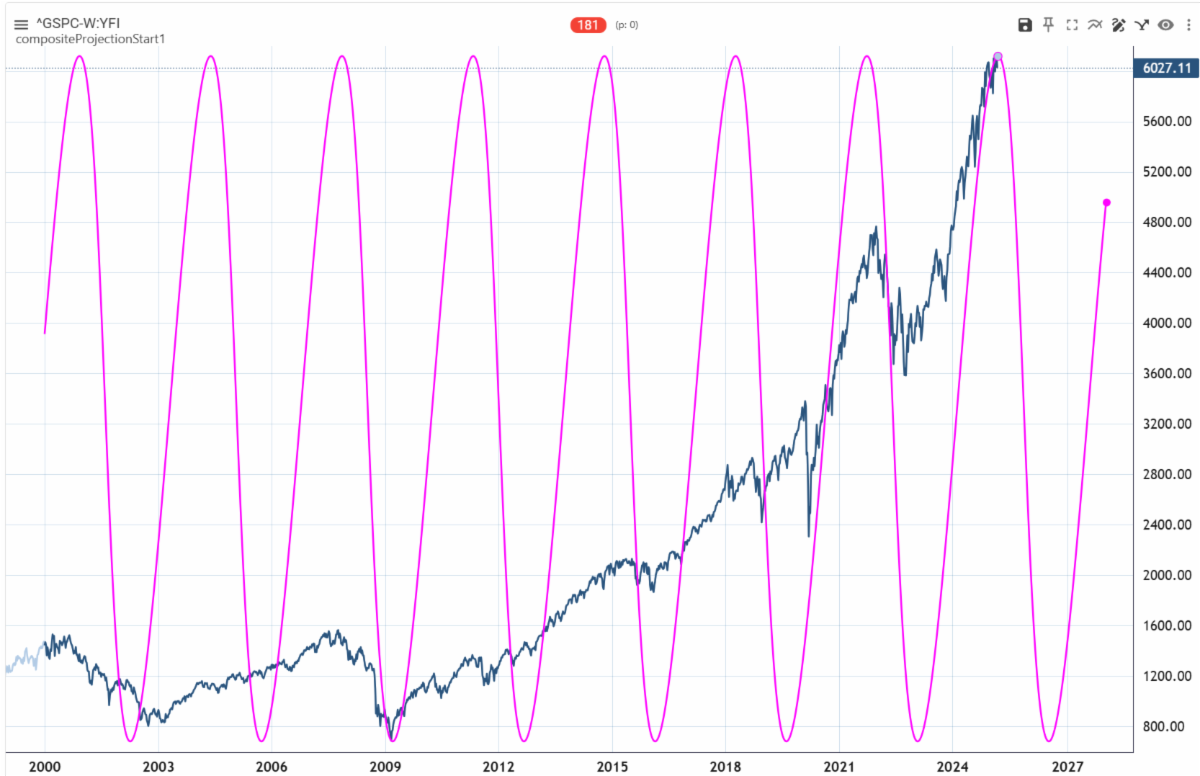
The 181-Week Kitchin Cycle
Originally discovered in the 1920s, the 181-week Kitchin cycle describes economic fluctuations driven by inventory build-ups and liquidations. A century later, it remains one of the most relevant market cycles.
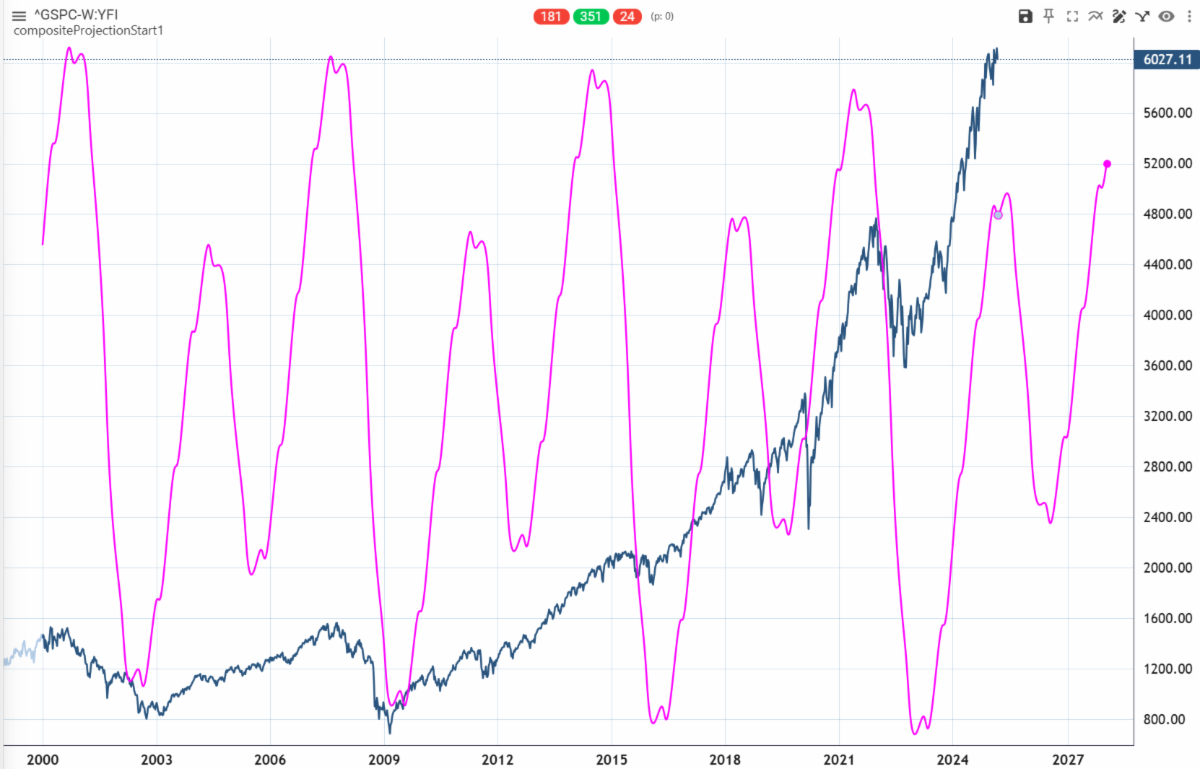
In the chart below, this cycle is represented in pink, while the S&P 500 index appears in blue.
|