Rail Workers Weekly News Digest
Number 13 - March 31, 2020
|
|
Below is a series of articles compiled over the previous week.
They are of interest to railroad workers.
|
|
Article 1 -
CORONAVIRUS NEWS
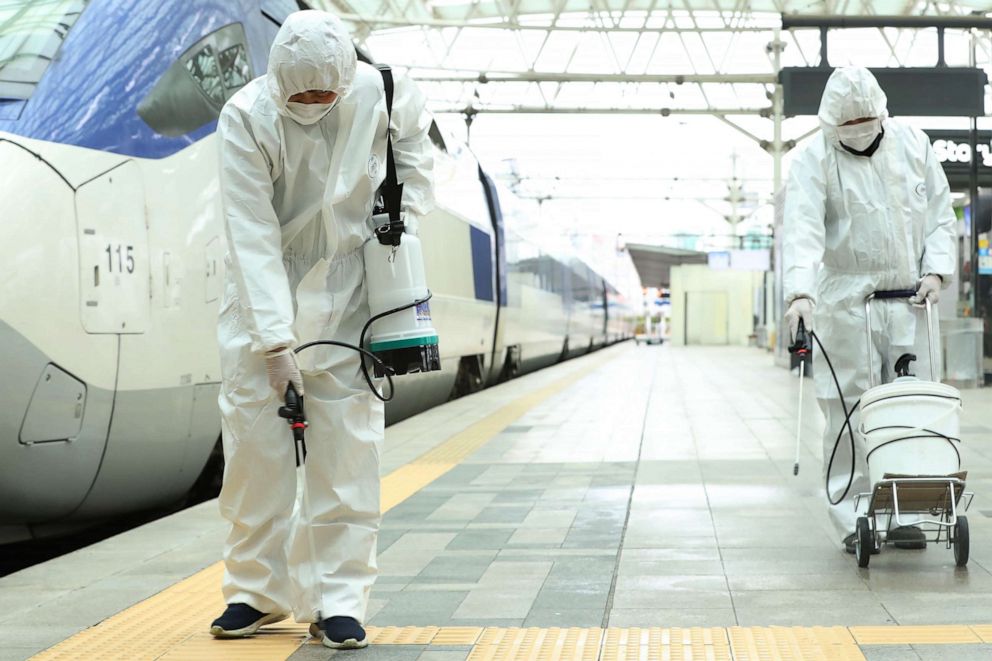
The last week has been a pivotal one for railroads and the Coronavirus outbreak. Perhaps the biggest news for rail workers was that on March 26th, the Federal Railroad Administration (FRA) announced it was granting a massive "waiver" of 14 Parts of Chapter 49, Code of Federal Regulations (CFR) that governs railroad movements in the United States. This important info is our lead link below under "RED ALERT."
|
|
Article 2 -
SUPPLY CHAIN NEWS
Today's Supply Chains: Too Lean
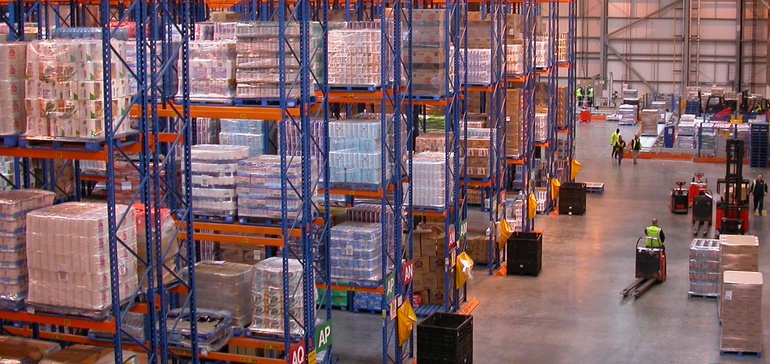
The COVID-19 pandemic has highlighted the dangers of just-in-time principles.
We called it "The Bubble."
It was a large, white, inflatable geodesic dome that typically held three standard sized tennis courts. It served as an alternative inventory location for my employer, a manufacturer of large capital equipment, when we ran out of room in our warehouses.
During the early 1980s, the production schedule was booming due to strong customer demand, and inventory was our friend. Large amounts of wire and cable, power supplies, electric and electronic parts, and pallets of custom machined parts were tucked away wherever there was a free spot.
Buy, buy, buy. We used the "we’ll need it anyway" approach to inventory management. And it worked. Production lines hummed, suppliers were ecstatic and material shortages were almost non-existent. No one paid attention to the economic clouds gathering on the horizon.
And then it stopped.
Boom times ended and customers canceled orders. Yet the inventory continued to flow in faster than we could cancel or defer it. The Bubble filled and we even stored material outside the warehouse under plastic tarps.
|
|
Article 3 -
MEDICAL PRIVACY NEWS
BNSF and Rail Labor Settle Dispute Over Employee Medical Privacy
BNSF Railway will change its medical leave of absence and return-to-work policies following a lawsuit filed by several rail labor unions, including the BMWED.
BNSF formerly required an employee to complete a detailed form, describing medical information about illnesses or injuries (including those unrelated to your absence from work), required a “blanket release” of all medical records and insisted a list of all medications currently prescribed (again including medication not related to the work absence) prior to reinstatement from medical leave.
After seven years of pending litigation, BNSF and rail unions have settled the dispute. The railroad company will now restrict the medical details needed to return to work to only the specific information relating to the reason medical absence and only as necessary to determine fitness for duty.
Your health and safety at work are vital and your rail labor unions recognize that your medical privacy is also important and worthy of protection. The BMWED is pleased we were able to reach this resolution with BNSF to protect your private health care information.
“We are happy with this resolution and its assurances to our members and their private health information,” BMWED President Freddie N. Simpson said. “Our members have a right to private health information staying private and this amended policy helps maintain that right.”
|
|
Article 4 -
RAILROAD RETIREMENT NEWS
RRB Labor Member message to Rail Labor
CHICAGO — The following is a message to Rail Labor from John Bragg, Labor Member of the Railroad Retirement Board:
The purpose of this notice is to update you on how COVID-19 is impacting operations at the Railroad Retirement Board (RRB). Be assured, while it is not business as usual, the agency remains open for business. Listed below are some of the more notable changes. Last week, my office sent a press release to rail labor on some of these topics which is attached again for your reference. Hopefully this message will include more detailed information for you and your members.
Field Service Operations:
Last week, my office sent a press release to rail labor advising that field offices are closed to the public. A copy of that release is attached for your reference (
https://www.ble-t.org/pr/pdf/NR2004.pdf
). Whenever possible, agency personnel, including field personnel, are working from home. Unfortunately, we expect delays with processing incoming work because as you know, much of our work is not automated. We receive applications and claims for both unemployment and sickness by mail and by fax. Because of safety concerns surrounding COVID-19, staff is only going into the office or to the post office on Tuesdays and Thursdays.
Self-Service Options:
Because of our concern regarding the delay in processing paper applications and claims, we are encouraging railroaders to set up myRRB.gov accounts on the RRB.gov website. I have attached information about all the services available through that account (
https://www.ble-t.org/pr/pdf/myRRB-one-pager.pdf
). Please feel free to share with your memberships. With that account, an employee can file for and submit claims for unemployment. A railroader can also submit sickness claims, though not the initial application. Usually, an initial sickness application is either mailed or faxed in from the employee’s doctor’s office to the agency at (312) 751-7185. If an employee is unable to do that or if delays persist, please contact my office at (312) 751-4905 and my staff will assist you in any way they can.
|
|
Article 5 -
LNG BY RAIL NEWS
Deregulating Rail Transportation of Liquefied Natural Gas
A new regulation from the Trump Administration may soon make it easier for U.S. companies to ship large quantities of liquefied natural gas (LNG), an increasingly valuable
product
. But the new regulation also carries great risks.
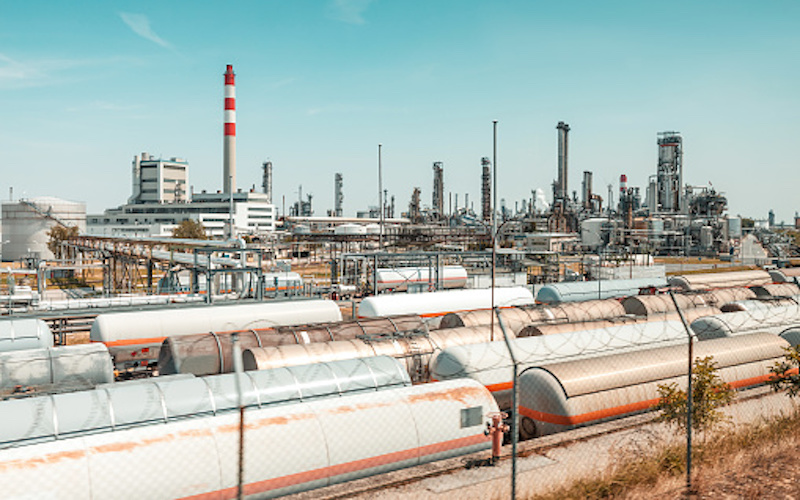
LNG is a cryogenic liquid—a substance that must be refrigerated below -90°C (-130°F) to maintain its liquid state. Since liquids are more compact than gases, large volumes of substances like LNG can be transported by freight trains.
PHMSA
states
that LNG is “odorless, colorless, non-corrosive, and non-toxic,” but safety concerns remain. LNG has traditionally been shipped by road or sea, and current regulations only
allow
the bulk transportation of LNG by rail after a shipper has obtained special approval from PHMSA or the
Federal Railroad Administration
. Observing that LNG is similar in nature to other substances that may be shipped by rail, the
Association of American Railroads
petitioned PHMSA to allow LNG to be shipped by rail in standard tank cars.
|
|
Article 6 -
FREIGHT TRAFFIC NEWS
Freight-rail traffic in Week 12 reflects falling demand for certain products
U.S. freight-rail traffic tumbled 8.6 percent to 459,966 carloads and intermodal units during the week ending March 21 compared with the same week in 2019, according to
Association of American Railroads
(AAR) data.
Impact of the coronavirus pandemic may be influencing rail traffic patterns, as railroads logged 224,048 carloads, down 5.4 percent, and 235,918 intermodal containers and trailers, down 11.4 percent during the week.
"Demand for rail service depends on the demand further down the chain for products railroads haul and on the ability of firms they serve to produce what is demanded," said AAR Senior Vice President John Gray in a press release.
For example, carloads of automobiles and auto parts fell considerably over the past week, as automakers have suspended manufacturing operations for the time being. Also, social distancing practices and job loss are keeping buyers out of auto showrooms. As a result, rail carloads of autos and auto parts "fell considerably this past week," Gray said.
|
|
Article 7 -
RAIL SECURITY NEWS
Class I Rail Employment Reaches Another Record Low
The Class I railroads in February employed the fewest number of workers in years as U.S. rail traffic continued its drop from year-ago levels.
About 127,634 individuals worked for the U.S. operations of the Class I railroads in February, a 12.5% decrease from February 2019 but only a 0.53% drop from January, according to data submitted to the
Surface Transportation Board
.
Of that total, headcount among train and engine employees totaled 51,451 individuals, plunging 16.8% from February 2019 but slipping only 0.5% from January. The train and engine employee category is typically more sensitive to fluctuations in market demand for rail, with headcount levels known to coincide roughly with network capacity needs.
These totals are the lowest since January 2012, the earliest date that FreightWaves has available. Data from the Bureau of Labor Statistics also reflect the headcount downturn
The decline in headcount levels comes as U.S. rail volumes continue their slump. In February, U.S. rail operations originated 927,084 carloads and 997,683 intermodal units, slumping 7.3% and 8.9%, respectively, according to the
Association of American Railroads
. Total rail traffic was down 8.1% to 1.9 million carloads and intermodal units.
Lower rail volumes and the railroads' transition to
precision scheduled railroading
, an operating model that seeks to streamline operations, have contributed to declining rail headcount. A question in the months ahead is will rail volumes drop even further should the coronavirus put even more pressure on rail volumes.
|
|
Article 8 -
INTERNATIONAL RAIL NEWS
German Rail to continue to pay workers impacted by coronavirus as German s
ervices cut back
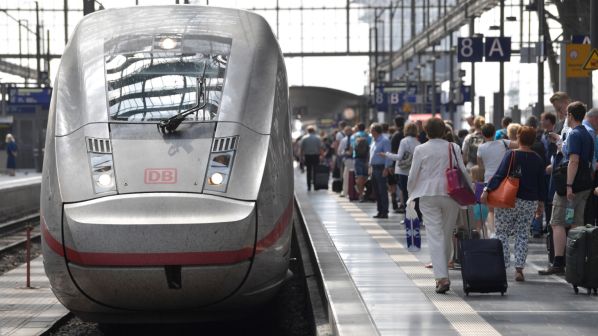
GERMAN Rail (DB) has concluded an agreement with two trade unions, EVG and GDL, confirming that there will be no layoffs as a result of the coronavirus pandemic.
The ‘Together Against Corona’ agreement also allows parents who do not have childcare cover following school and day care closures to take a total of 15 days leave fully paid. Workers unable to conduct their normal daily activities due to the disruption caused by the coronavirus measures and with no options available to continue activity remotely will also receive full pay.
DB, EVG and GDL say the emphasis is on protecting the
health of employees, their families and customers as much as possible while at the same time maintaining operation of the railway network for as long as possible in order to sustain transport services in Germany. The measures will remain in place until July 31.
“It is an important signal that we stand together in the crisis and go hand in hand for DB employees,” says DB’s HR director Mr Martin Seiler.
DB has acted to minimise the spread of coronavirus by installing plexiglass panes at travel centres at stations and only checking tickets on trains by sight.
Cross-border suspensions
Unlike other countries which have introduced reduced timetables in light of falling demand for services, DB reports that local, long-distance and freight traffic remains stable with restrictions only on cross-border traffic. Regional services are at the discretion of individual state transport authorities with services now reduced or suspended in Bavaria, Rhineland- Palatinate, Saarland, North Baden, North Rhine-Westphalia, Lower Saxony, Baden-Württemberg, and Hessen. Most reductions are likely to last until at least April 19.
|
|
MORE INTERNATIONAL RAIL NEWS
|
|
|
|
|
|
|