Weed Watch!
Colorado Weed Management Association
4th Quarter Newsletter 2020
|
|
As most, if not all of you know Colorado Weed Management Association's Winter Training will be virtual!
We have a great program full of expert speakers and will provide networking opportunities with both your peers and our sponsors.
While we will miss the opportunity to see all of you face to face, we have worked hard to ensure that the virtual training will fulfill your needs and expectations.
We looking forward to seeing you there!
Early bird deadline ends on November 5th!
|
|
You can help support CWMA with no additional expense to you or your program.
How? Amazon Smile. https://smile.amazon.com/ is a free donation program created by Amazon to give back to non-profit organizations across the globe. Supporting CWMA is easy! Just go to Amazon.smile when you are making purchases from the online retailer. Select “Colorado Weed Management Association” from the list of supporting non-profits. Once you have selected CWMA, any and all purchases you make on Amazon.smile will donate .5% back to our organization! If you have items sitting in your cart and have been waiting for the right opportunity, this is it! Anyone who shops on Amazon is able to donate to CWMA, not just CWMA members, so please feel free to share and spread the word!
|
|
CWMA Online Training for Continuing Education Credits!
Need credits? CWMA has you covered year round with online trainings approved by the Colorado Department of Ag!
Attend a live webinar or take an on-demand course that offer CEC’s, only $35 for members!
Coming Soon:
CWMA Live Webinar: Organic vs Conventional Weed Control Methods
Approved for 1 CEC in category 103 Agriculture Weed Control
Monday, November 9th
9:00-10:00am
On-Demand Online Courses Available Now:
-Long-Term Invasive Winter Annual Grass and Noxious Weed Control Facilitates Ecosystem, Pollinator, and Wildlife Habitat Restoration (107 Rangeland Pest Control)
-Aquatic Invasive Species Identification, Ecology, and Management (108 Aquatic Pest Control)
Click Here for the Complete Course Listing!
|
|
Weed Awareness Campaign
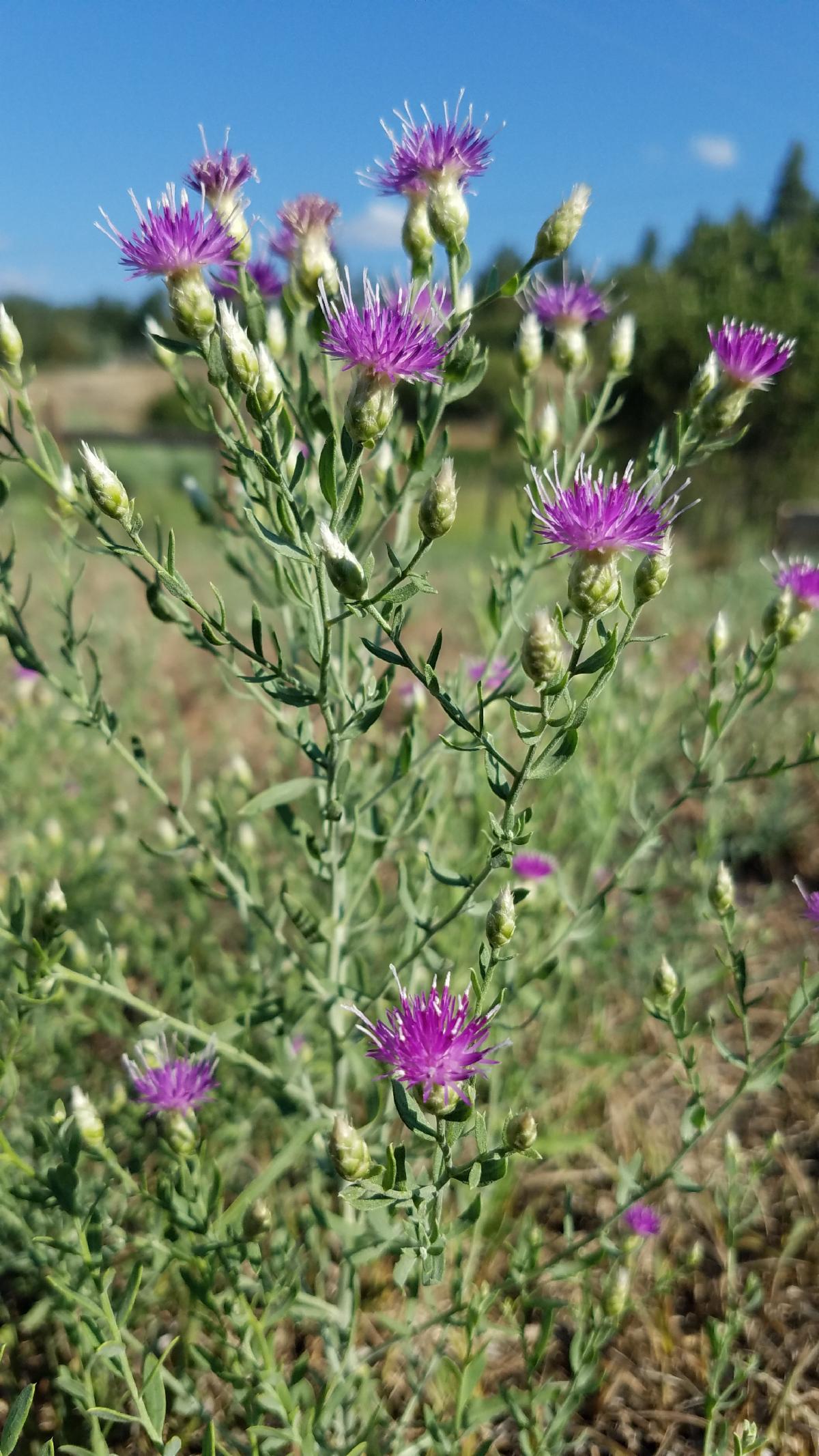
November Weed of the Month: Russian Knapweed (Rhaponticum repens)
|
|
Russian knapweed is a herbaceous perennial in the sunflower family (Asteraceae). Originally from Eurasia, it was introduced to North America in the late 1800’s as a seed contaminant in alfalfa. This List B noxious weed is found in many disturbed areas such as pastures, grasslands, and roadsides. Russian knapweed has been found in most counties in Colorado.
The leaves are generally 1½ - 4 inches long, attached to erect and branched stems. It has pinkish to lavender colored flowers and blooms from June to August. The flower heads have tan, rounded bracts with papery tips. Russian knapweed reproduces by seed but more often by its creeping roots. The roots can grow horizontally to about 15 feet and vertically to about 22 feet. New plants can easily form from root fragments as small as an inch.
|
|
Legislative Committee Update
by Casey Cisneros, Land Stewardship Manager Larimer County
Hello Colorado Weed Management Association Members!
I’d like to take this opportunity to re-introduce your Legislative Committee and preview what we anticipate we will be focusing on this upcoming year.
The CWMA legislative committee is tasked with informing Colorado weed management policy on behalf of you - the members. We do this by tracking legislation that affects your interests, actively lobbying for additional state resources, and providing crucial feedback on the administration of the Colorado Noxious Weed Act, the Colorado Pest Act, and the Colorado Pesticide Applicators Act.
The committee is comprised of CWMA members working closely with our lobbying team of Solomon Malick and Brett Moore, who represent the association’s values and interests in Denver, while the rest of us are busy in the field protecting and conserving Colorado’s natural resources. Our lobbying team has represented the organization going back to the start of CWMA's legislative program in 2009.
With the 2020 state legislative session wrapped-up for the year, the legislative committee is taking the first steps to create new organization policy document to help guide consistent decision making on matters affecting our membership. At times it is difficult to determine the policy stance that will benefit our members the most. The content of the new CWMA policy document will be guided by the membership. We want to know your thoughts on a variety of topics affecting your work as a weed manager, from local pesticide preemption, pesticide bans, proposed changes to the state Pest Act, and many others.
So, we are asking for your help. It is more important than ever to keep your membership current in 2021!
As the committee chair, please feel free to reach out to me with any comments or questions regarding CWMA legislative action by emailing cisnerct@larimer.org or calling (970) 498-5768.
|
|
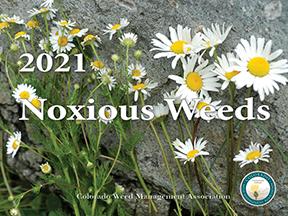
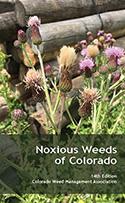
CWMA Noxious Weeds Calendar and Noxious Weeds of Colorado Booklets Available Now! |
|
Navajo State Park Helping with Project to Control Invasive Weeds
by Joe Lewandowski, Colorado Parks and Wildlife Public Information Officer
|
|
DURANGO, Colo. – Navajo State Park in southwest Colorado is famous for great boating, fishing and camping; but soon it could be renowned for its wasps.
Not the kind that pester you at picnics; but a much smaller sesame seed-sized species that sets up house inside the stems of invasive weeds and kills them. On a small plot 16-meters square on the east side of the park, specialists from the Colorado State Insectary are rearing gall wasps that can be used to control the pervasive Russian knapweed. Like many non-native plants, knapweed crowds out native vegetation, can quickly take over pastures and is poisonous to horses.
“It’s one of the worst weeds in the West,” explained Sonya Daly who works for the Insectary’s Biological Pest Control Program. The State Insectary is a division of the Colorado Department of Agriculture.
The Insectary has been working on using wasps for weed control since 2013. After receiving several thousand gall wasps from the U.S. Department of Agriculture, insectary staffers placed in numerous locations throughout Colorado to start nurseries. Those enable reproduction of thousands of wasps per year.
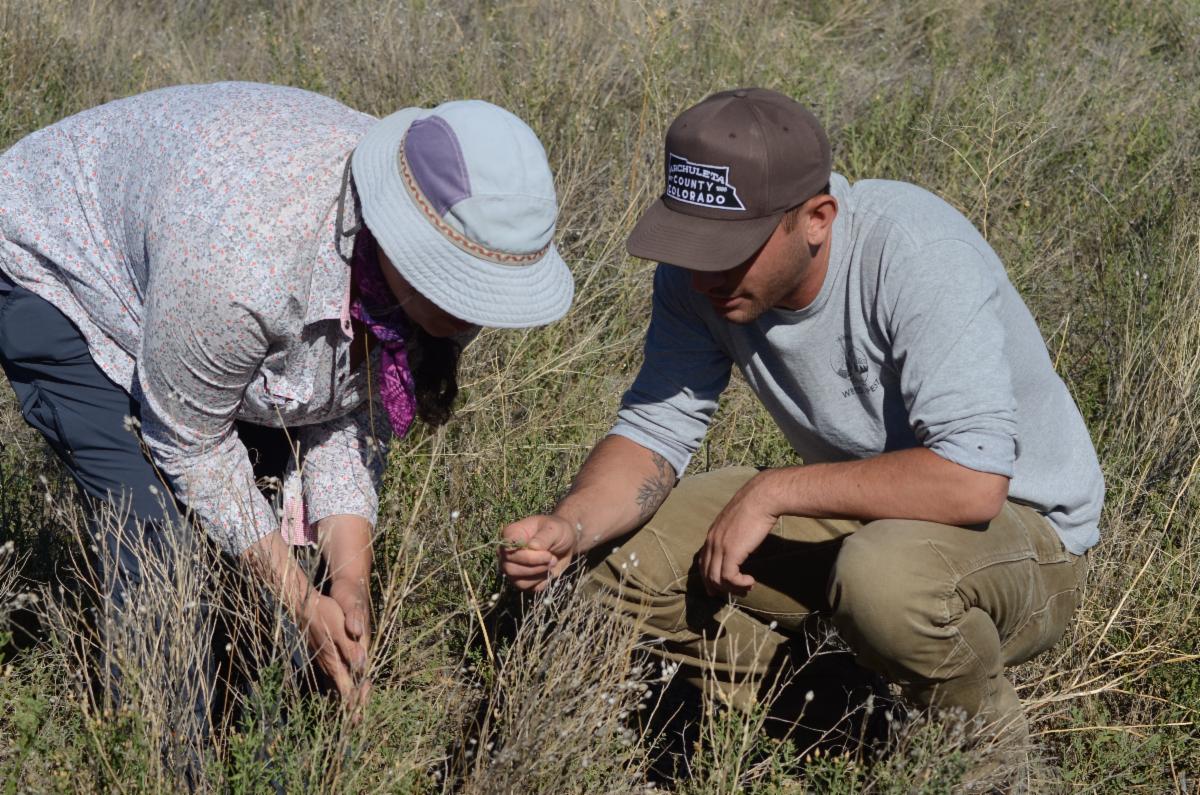
With a large supply of wasps available by 2018, Daly started contacting weed control specialists at every county in the state to tell them about the new biological control method. When she contacted Ethan Proud, Weed and Pest Supervisor for Archuleta County, he suggested releasing wasps at Navajo State Park which has a knapweed infestation.
In the spring of 2019, Daly placed 200 of the wasps at a plot on the east side of the park. The bugs burrow into the stems of the knapweed, feed on the plants and eventually kill them.
When Daly inspected the test plot ay Navajo State Park recently she found the wasps to be well established in the knapweed. In another year, she hopes to collect adult wasps and provide them to local property owners and other government agencies.
She’s also found success at 19 other release sites she’s monitoring throughout the state. In 2019, the insectary placed 100,000 wasps at 600 locations in Colorado and this year 200,000 wasps were released at 1,200 sites.
“We’ll never eradicate knapweed but we can decrease its seedbank by using the wasps,” Daly said. “We want to establish nurseries in every county in the state.”
Using biological controls like bugs to control invasive species cuts down on the use of pesticides and helps landowners and land managers save money by reducing the need to buy expensive chemicals. The insectary identifies and grows “host specific” insects that will not damage agricultural crops.
“We need to release the right agent on the right species,” Daly said.
Proud is also using mites from the insectary to battle bindweed. He’s now collecting the mites and distributing them to other private and public land managers.
Navajo State Park Manager Bryan Sandy hopes to someday hold a biocontrol collection and education event at the park for area residents.
“Weeds are a problem on the state park just like they are a problem on farms and ranches,” Sandy said. “We want to be good neighbors, we can cut down on our use of chemicals and we hope to become a source for the community.”
For more information about biological controls, go to the Colorado State Insectary website at
|
|
Promoting CWMA Membership:
How Can We Help?
Do you know someone that should be a member of CWMA? Learn all about CWMA benefits and membership types at www.cwma.org/membership. Use this information as talking points to encourage colleagues to join and get active with CWMA.
Or, perhaps you are unsure whether someone you know is already a member? Search for them in our directory located in the members-only online portal. You can also use this site to renew your membership, register for CWMA events, and update your contact information.
Need help promoting CWMA? Let us know how we can assist you.
Monica Groh, CAE
Colorado Weed Management Association
|
|
Eurasian watermilfoil (Myriophyllum spicatum)
by Elizabeth Brown
Elizabeth Brown Environmental
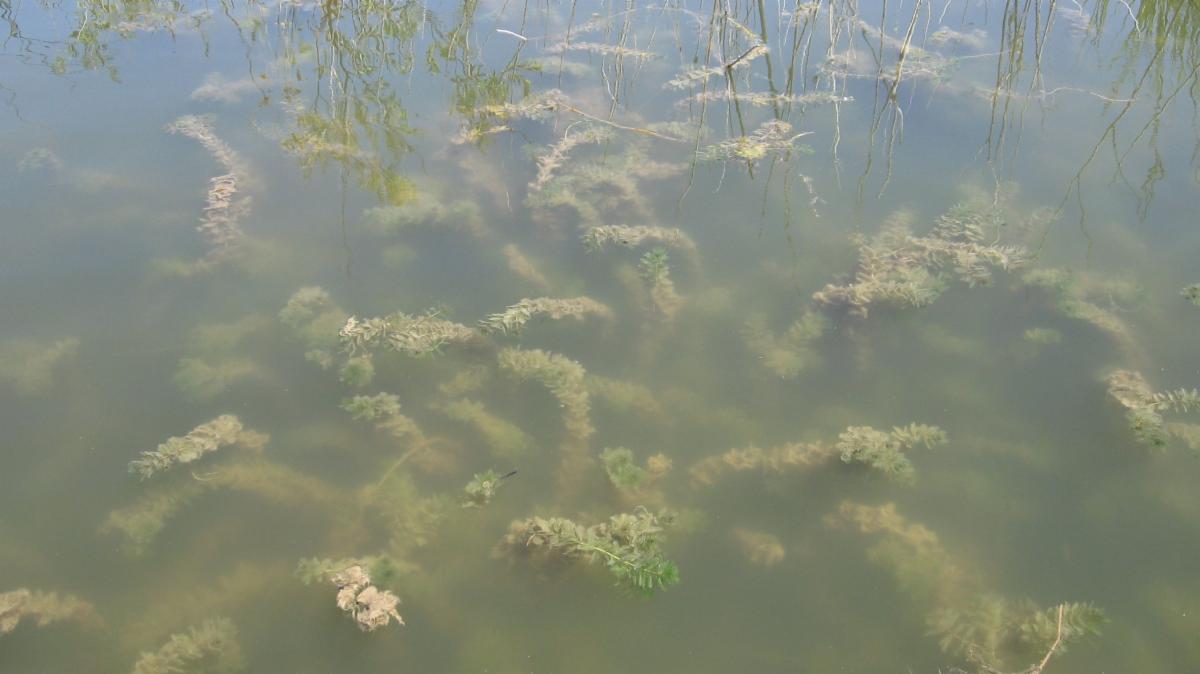
Eurasian watermilfoil (EWM) is an herbaceous aquatic plant that was introduced into the USA in the 1940s and is among the most destructive aquatic weeds known. The invasive plant is native to Europe, Asia, Africa, and Greenland. In North America, Eurasian watermilfoil is found nationwide. First detected in Colorado in the 1990’s, EWM continues to invade Colorado’s watersheds.
Also known as spike watermilfoil, this aggressive invader colonizes a variety of habitats, including both moving and standing waters. It grows rapidly at a rate of approximately one foot per week. EWM crowds out native species, disrupts the food chain, displaces wildlife habitat, and clogs waterways to the point of stopping or slowing the flow of water.
EWM can drastically alter a water body’s ecology by forming very dense mats of vegetation through the water column. These mats interfere with all forms of water-based recreation including swimming, fishing, watersports, and boating. It can also damage boats by wrapping around props and motors restricting their movement. EWM poses a safety risk to swimmers and has been a factor in drownings in the past.
EWM restricts oxygen in the water by preventing the wind from mixing the oxygenated surface waters with deeper water. The dense mats of vegetation increase the sedimentation rate by trapping sediments. EWM begins growth in the spring sooner than native plants and can shade out these beneficial species. While some fish and waterfowl will eat EWM, it is not considered to be a good food source.
Like other aquatic weeds, infestations of EWM reduce the flow in municipal, agricultural, and industrial water distribution systems, requiring costly control to maintain water transportation, storage, and delivery. EWM interferes with power generation and irrigation by clogging water intakes and trash racks. Here in Colorado, EWM has altered the chemistry of water bodies resulting in taste and odor issues in drinking water supplies. Dense mats of EWM impair aesthetic viewsheds and can reduce property values for homeowners.
EWM reproduces rapidly with vegetative runners and through fragmentation. It can infest an entire lake within a couple years following introduction to the system. In the late summer and fall the plants become brittle and naturally break apart. These fragments will float to other areas, sink, and start new plants. Eurasian watermilfoil will also grow from fragments created by boating or other disturbances during any time of year.
Once Eurasian watermilfoil becomes established within a water, it is difficult or impossible to remove physically or manually. Eurasian watermilfoil can be costly to control and difficult to eradicate. Controlling EWM typically becomes a perpetual maintenance activity following invasion.
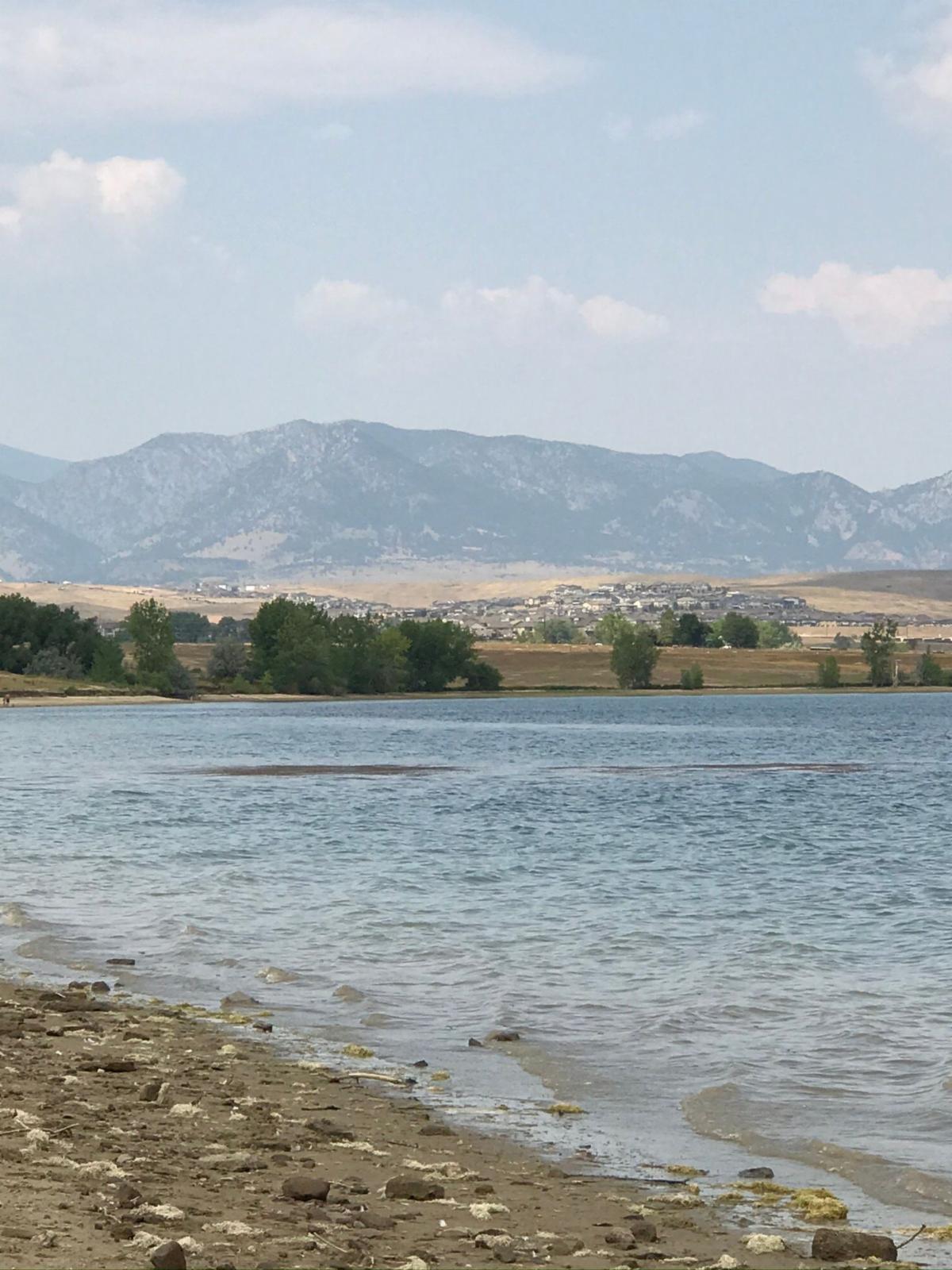
In Colorado, EWM was first documented in the Rio Grande in Alamosa in the 1990’s. The infestation is dense today and extends far into New Mexico. The City of Westminster detected EWM at Standley Lake Regional Park in 1999. The 1,200 surface-acre reservoir is the 3rd largest in the Denver Metro Area and is used for drinking water in the cities of Westminster, Northglenn, and Thornton. Westminster has been actively managing the EWM population utilizing biological control methods.
In 2004, the City of Boulder detected EWM in Boulder Creek. The City partnered with experts and volunteers to map the extent of the population. They implemented control measures from the top of the watershed through the city, with the help of volunteers, which included the use of benthic barriers and manual removal. They were successful in controlling the population within city limits. Unfortunately, the infestation is well established downstream and extends into the St. Vrain Creek through a complex web of jurisdictional and private ownership.
Today, EWM can be found up and down the Front Range through much of the Upper South Platte and Central Arkansas River Basins. There have been several efforts to create Cooperative Weed Management Areas at the watershed level to manage EWM collaboratively, but none have been successful in forming to date. Surveys conducted by the Colorado Parks and Wildlife’s (CPW) Aquatic Nuisance Species (ANS) Program staff indicate that the Eastern plains are still relatively free of EWM.
The West Slope also remains fairly free of EWM, other than in the Rio Grande River. The most recent detections have been by CPW near Durango over the last few years. A partnership has formed between CPW, La Plata County, La Plata Conservation District, and private landowners to control the species. The Colorado Department of Agriculture (CDA) provided a State Weed Fund grant for treatments in 2020.
EWM is a List B Noxious Weed in the CDA Weed Rules with a statewide management plan. EWM is also a prohibited ANS per CPW Park-Chapter 8 Regulations. While two state agencies have legal authority to manage EWM and other aquatic invasive plant species, neither has the capacity. The lack of state infrastructure with dedicated permanent staff to manage ANS plants or weeds is identified as a priority gap in the draft State of Colorado Aquatic Nuisance Species Management Plan (CPW, 2020).
If you detect EWM or any other ANS, please report it to Invasive.Species@state.co.us. The CPW ANS Program will verify the detection per regulation and will collaborate with CDA, the County, and other pertinent landowners or stakeholders to determine and implement the appropriate management response.
Remember to always clean, drain, and dry your boats, trailer, gear, and any equipment when playing or working in aquatic systems. It is not legal to transport watercraft over land with water drain plugs or aquatic vegetation on board per CPW ANS regulations.
Aquatic invasive plants pose a serious threat to the water infrastructure, natural resources, outdoor recreation, and economy of the State of Colorado. The good news is that most waters in the state are still free of harmful ANS weeds and prevention is the best defense. Bolstering state and local capacities to expand the existing early detection network and rapid response framework, along with providing coordination for the long term management of aquatic plants, is critical to maintaining the quality of life we have come to enjoy in the great state of Colorado!
|
|
Apply to Serve on the Redistricting Commissions Today |
|
Every 10 years, after each Census, Colorado redraws its congressional and legislative districts to account for changes in population. In 2018, Colorado voters approved Amendments Y & Z to create two new politically-balanced citizens commissions; one to redraw congressional districts and one to redraw legislative districts.
However, these new commissions will only work if fair-minded Coloradans step up to serve on the commissions! Private and Public Applicators can get involved to ensure we will have fair districts and fair elections for the next 10 years.
The Colorado Neighborhood Coalition is working to educate people on the redistricting/reapportionment process, the importance of serving on the commissions, and how to apply.
November 10 is the last day for individuals to apply There is a great “how-to” video explaining the process HERE. Colorado needs Impartial, folks who can help Build Consensus, with Strong Analytical Skills.
This is an important process that needs Rural representation. CWMA encourages any individual that feels passionate about this subject to apply. Please circulate to your friends, family, associates, and on your social media platforms.
|
|
Call for Submissions: Are You a Writer or Have a Story to Tell?
If you have a success story or event you'd love to share...we want to help!
Colorado Weed Management Association is always looking for new content, exciting stories in integrated management, and alerts on new weed species!
Send in an article, write up, or pictures and we can share them in our quarterly newsletter.
All submissions are subject to review.
Newsletter contributors do not have to be CWMA members.
|
|
President
Tina Travis
President Elect
Kayla Malone
Secretary/Treasurer
Casey Cisneros
Board of Directors:
Curtis Marshall
Derek Sebastian
Drew Marino
Ethan Proud
James Herman
John Coyle
jcoyle.02@gmail.com
Kayla Malone
Mike Auciello
Ron Mabry
|
|
Ex-Officio Members:
Steve Ryder
Mark Eike
Elizabeth Brown
Executive Director:
Monica Groh
7187 W. 79th Drive
Arvada, CO 80003
(303) 210-7077
|
|
|
How can CWMA work for you!
Do you want to make a difference with CWMA? Would you like to influence the direction that CWMA is leading? Join a committee!
Training - Kayla Malone
Communications - Ethan Proud
Education - Kayla Malone
Colorado 4 Healthy Landscapes (C4HL) - Ron Mabry
Legislative - Casey Cisneros
Membership - Mike Auciello
Publications - Tina Travis
Want to join a committee but don't know where to start? Contact us for more info!
|
|
Job Opportunities:
Looking to further your career in stewardship, conservation, and natural resources? CWMA shares job postings from natural resource employers!
To view job listings and descriptions, click here.
To post a job, click here.
|
|
|
|
|
|
|