Vol. 45 | April 2025 – 7 minute read

academic-connections-banner- short.jpg

Second Edition of Discovery at UT Southwestern

The 2025 edition of Discovery at UT Southwestern will be mailed this month to faculty and offices throughout our campus. Each story highlights the impactful work emerging across the spectrum of basic, translational, and clinical research against the backdrop of the collaborative scientific culture that sets our institution apart. 


Read about a multidisciplinary team that upended the traditional view of how healthy and cancerous cells acquire their supplies of purines. Their findings help explain how chemotherapy resistance occurs, among other insights. Learn about the development of a system in which nanocarriers direct genetic medicines to desired organs. Get to know how our research infrastructure, clinical resources, and robust connections with partner institutions enable large-scale clinical trials and quality improvement initiatives.


Discovery at UT Southwestern recognizes and celebrates the successes of our faculty and their teams. It also serves as a valuable recruitment tool.


If you would like additional copies of the scientific report, email your request to the Office of the Provost with the number of copies you wish to receive and a mail code.

Discovery Profile p. 2

Cancer Metabolism p. 6

Multi-Center Clinical Trial p. 12

View the Report
 

Update on NIH Facilities and Administration Funding

In February, the National Institutes of Health issued a 15% cap on indirect costs – or Facilities and Administration (F&A) rate – across all its grants. This was followed by a nationwide temporary restraining order from a U.S. District Court judge, followed by a preliminary injunction in March, that prevented imposition of the F&A cap.


The proposed 15% cap on F&A reimbursements would negatively impact our annual budget by $92 million. Even though the courts and Congress will determine the eventual federal support for research, it is essential for us to develop institutional actions that will ensure the continued vitality, excellence, and sustainability of research at UT Southwestern.


President Daniel K. Podolsky, M.D., has established a cross-functional task force that brings together administrative leaders and faculty to develop action items to achieve cost savings and greater efficiency to sustain our research enterprise. The group – co-chaired by W. P. Andrew Lee, M.D., and Holly Crawford, M.B.A – will present its recommendations to Dr. Podolsky in May.


Faculty Announcements

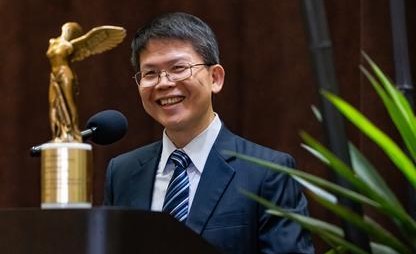
Dr. Wang Named President-Elect of APM

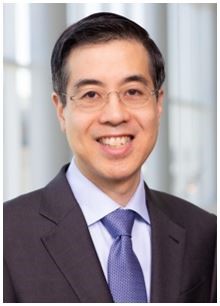
Thomas Wang, M.D., Professor and Chair of Internal Medicine, will serve as President-Elect of the Association of Professors of Medicine (APM).


Founded in 1954, APM represents chairs of medicine at medical schools and independent teaching hospitals as well as appointed leaders at medical schools and their affiliated hospitals in the United States and Canada.


Dr. Wang is the third Chair of Internal Medicine at UT Southwestern to lead the organization – a role that was also held by Donald W. Seldin, M.D., and Daniel W. Foster, M.D. He assumes this position at a time when there is a national debate over the future of departments of medicine, as several institutions have created standalone departments for large subspecialties such as cardiology or oncology.


An academic cardiologist and investigator, Dr. Wang will prioritize faculty development initiatives, efforts to balance clinical growth with scholarly and educational missions, and expanding the pool of physician-investigators.

Dr. Chook Recognized with the Marie Maynard Daly Award

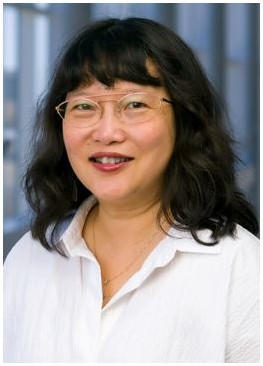
Yuh Min Chook, Ph.D., Professor of Pharmacology and Biophysics, is being honored with the Marie Maynard Daly Award from The Protein Society, a premier international organization devoted to furthering research and development in protein science. The award recognizes investigators conducting groundbreaking research at the interface of protein science and human health.


Dr. Chook studies protein transport. Her research combines structural biology, biochemistry, biophysics, bioinformatics, and cell biology to investigate a class of molecules called nuclear transport receptors that carry protein cargo into (importins) and out of (exportins) the nucleus, the cell’s command center. An interdisciplinary team led by Dr. Chook provided the world’s first image of the structure of an exportin attached to its protein cargo and the first images of how drug candidates block the exportin that explained their modes of action.


These advances in understanding the fundamentals of protein export and how potential drugs block this process have been instrumental to the development and FDA approval of the drug selinexor for treatment of multiple myeloma and relapsed and refractory diffuse large B-cell lymphoma. 

Dr. Nanes Wins AAD Young Investigator Award

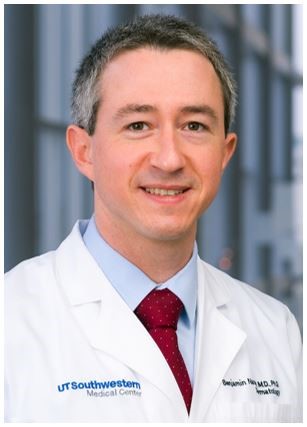
The American Academy of Dermatology (AAD) recognized Benjamin Nanes, M.D., Ph.D., Assistant Professor in the Department of Dermatology and the Lyda Hill Department of Bioinformatics, with the 2025 Young Investigator Award in Basic Science for his research on the cell biology of wound healing and epidermal remodeling.


Dr. Nanes showed that while wound-associated keratins promote wound closure, they do not do so through their canonical mechanical scaffold role. Instead, changing keratin expression modulates a signal transduction pathway to drive cell migration. This result expands our understanding of the keratin cytoskeleton from that of a simple mechanical scaffold to an organizer of cellular signals, coordinating tissue structure and function.


Ongoing work in Dr. Nanes’ laboratory aims to further unravel the signaling functions of keratins in contexts such as skin development, wound healing, and cancer, with the long-term goal of identifying entirely new therapeutic targets for skin disease.


By the Numbers: Student and GME Matches

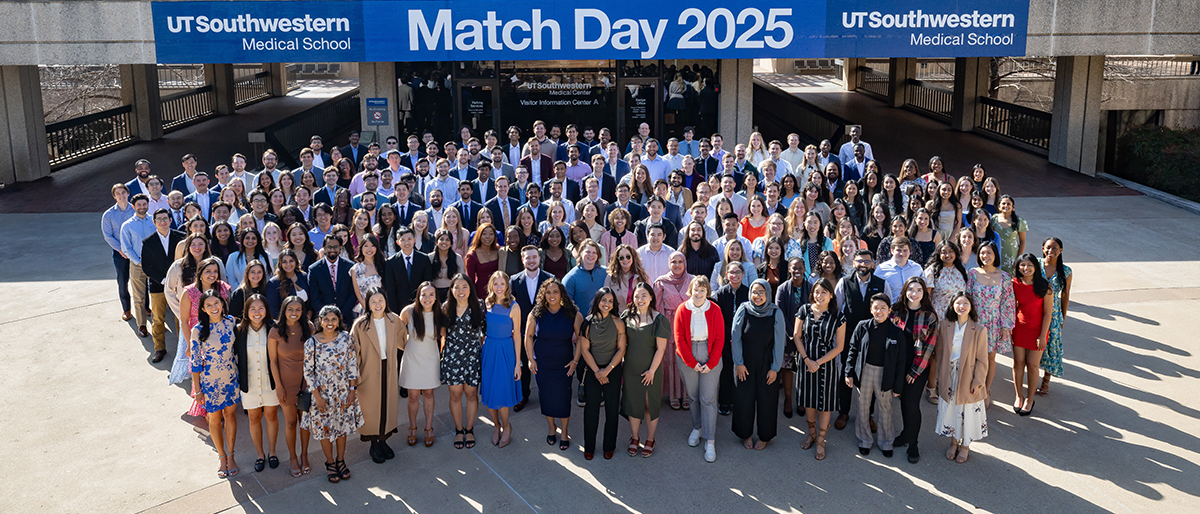
At UT Southwestern, Match Day is both a send-off of our Medical School students who will be stepping into residency and a welcome of trainees who will pursue their Graduate Medical Education (GME) in our clinical departments.


Student Match

Roughly 97% of UT Southwestern Medical School students matched to residency programs – well above the national average of 93.5%. Of the 222 students who matched in the Class of 2025, 75 will complete residencies at UT Southwestern, 117 will train in Texas, and the rest will disperse to institutions across the country.


Most popular specialty selections for UT Southwestern students included internal medicine, family medicine, pediatrics, anesthesiology, and psychiatry. View the full list of student matches by specialty and a recap of events.


GME Match

UT Southwestern offered 350 GME positions across 39 GME program tracks. Of those, 349 positions were filled by 206 trainees from institutions outside the UT System, 112 from institutions within our system, and 31 from international medical schools.  


Call for Nominations

Southwestern Academy of Teachers

The Southwestern Academy of Teachers (SWAT) facilitates the exchange of ideas and provides a platform for enhanced interactions among educators from all four UT Southwestern schools.


Nominees for SWAT membership must have a proven record of excellence in at least two of the following areas: (1) direct teaching; (2) instructional development, curriculum design, and assessment of learner performance; (3) advising and mentorship; (4) educational administration and leadership; and (5) educational scholarship and research.


Deans, Department Chairs, Center Directors, Program and Course Directors, and SWAT Members are invited to nominate faculty by submitting a letter to Jason Zafereo, Ph.D., Chair of the SWAT Membership Committee, by April 25.

2025 Regents’ Outstanding Teaching Award

The UT System is seeking nominations for the 2025 Regents’ Outstanding Teaching Awards (ROTA), which honors faculty who demonstrate exceptional teaching excellence and a commitment to the highest standards in all aspects of instruction.


The awards are bestowed in recognition of those who serve our students in an exemplary manner and as an incentive for others who aspire to such service. Detailed information on eligibility and required materials are available online.


Complete nomination packets should be combined into a single PDF file and emailed to Pamela Muñoz by May 1. An internal evaluation committee will review and recommend the top two nominees to the President’s Office for submission to the UT System. Award recipients will be notified in the fall.


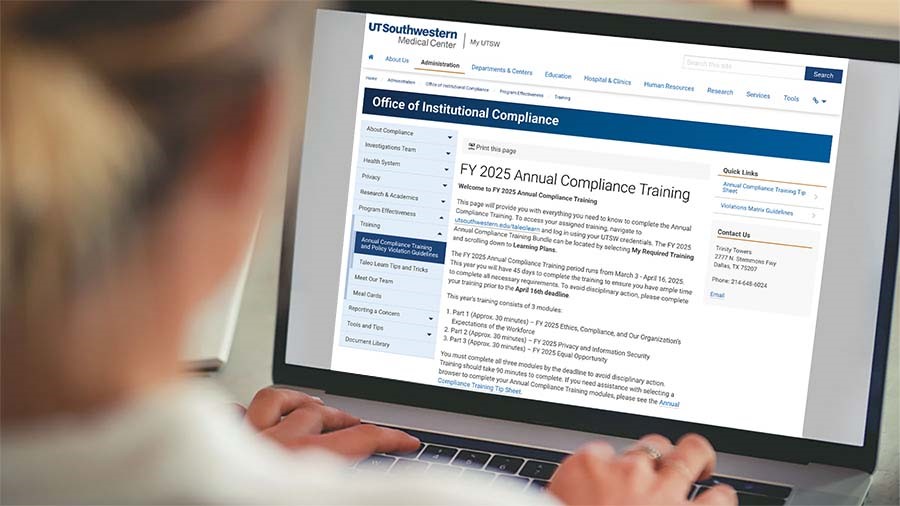
Complete Compliance Training by April 16

The annual mandatory compliance training consists of three modules that take approximately 90 minutes to complete. You should have received an email from Taleo Learn with the link. 


Those who do not finish all modules by the April 16 deadline will have email access restricted and face disciplinary action up to termination. Additional information is available on the Office of Institutional Compliance & Audit Services website (VPN or on-campus connection required).  


Important Dates and Upcoming Events

Carole Mendelson, Ph.D., Visiting Professorship

The Women in Science and Medicine Advisory Committee (WISMAC) invites you to attend a lecture by Gina Poe, Ph.D., Director of the UCLA Brain Research Institute and Professor of Integrative Biology & Physiology, Neurobiology, and Psychiatry.


Alfred G. Gilman Symposium on Education

‌This year’s theme, “A New Frontier: The Intersection of Medical Education and Artificial Intelligence,” will explore how AI is shaping the future of teaching and learning in medicine. 


Molecular Biology 30th Anniversary Symposium

Join us as we convene esteemed scientists, faculty members, trainees, alumni, and friends to reflect on the Department’s rich history and remarkable achievements.


Call for Abstracts: UT System AI Symposium in Healthcare

The symposium aims to bridge the gap between cutting-edge methodology and current day applications of artificial intelligence by bringing together researchers, clinicians, educators, students, and industry leaders.


Next Chapters Part 1: Late Career Transitions

Learn more about this new program that empowers faculty members to make informed decisions about transitioning into the final phase of their career.


Clinician-Educator/Clinician Track Workshop

This workshop will be an interactive discussion of criteria evaluated for promotion on the clinician-educator and clinician tracks.


Women’s Health Research Initiative Spring Forum

Join this interdisciplinary effort designed to connect basic, translational, and clinical researchers around common themes in women’s health across the lifespan.


Research Track Faculty Luncheon

Joan Conaway, Ph.D., Vice Provost and Dean of Basic Research, and Alyssa Hasty, Ph.D., Vice Provost and Senior Associate Dean for Faculty Affairs and Career Development, will host a luncheon for research track faculty to talk about the track and their career paths.


Successfully Obtaining an R (SOAR) Intensive R Grant Writers Workshop

The SOAR grantsmanship program provides junior faculty conducting basic, translational, or clinical research who are actively writing their R series NIH grants the opportunity to work with a coach to craft a fundable proposal.

Facebook  X  LinkedIn
View Archive
Share Feedback