“Adversity toughens manhood, and the characteristic of the good or the great man is not that he has been exempt from the evils of life, but that he has surmounted them.”
– Patrick Henry
“I didn’t know what the Marine Corps was. I had absolutely no idea, but I didn’t want to go back to Butte.”
-- LtCol John R. Stevens
“I really want that bottle.”
--LtCol John R. Stevens
|
|
S p e c i a l
-
E d i t i o n
|
|
FIRST MARINE DIVISION ASSOCIATION
|
|
Happy Birthday to
LtCol John R. Stevens
|
|
LtCol John R. Stevens
Celebrates 99th Birthday
|
|
Dear Members,
As we stay isolated, here is something for all us to celebrate:
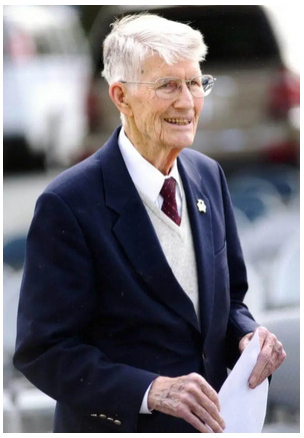
Longtime Association member LtCol John R. Stevens turns 99 years today, the 22nd of April.
Read his biography below. Some highlights: LtCol Stevens enlisted in 1939. He was at Pearl Harbor on December 7, 1941. In Korea he was in the Battles of the Pusan Perimeter, the Inchon Landing, and Chosin Reservoir. He served served 23 years in the Corps.
LtCol Stevens has long been generous to the Association with his time and donations. He served in the offices of President of Northern California Chapter (now Golden gate Chapter), Vice President (National), and Deputy Vice President West.
LtCol Stevens, congratulations on a long life full of achievements. You do inspire us. Please accept best Happy Birthday wishes from all the Association. You well deserve the bottle.
Semper Fi,
Jerry Johs
FMDA President
DJC
|
|
LtCol John R. Stevens Biography
|
|
A Marine for All Time
by Ned Forney
|
|
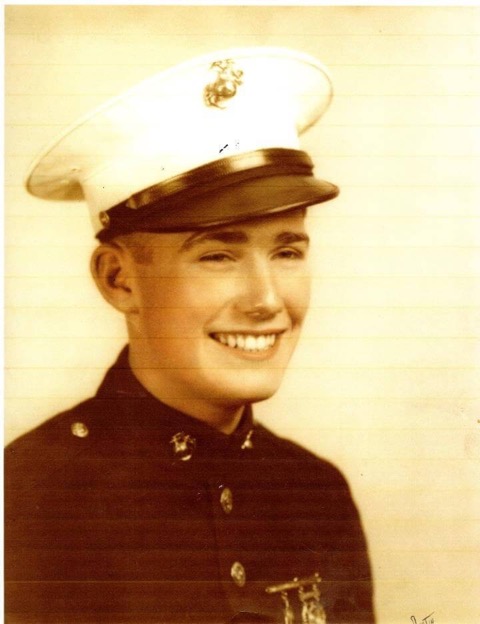
John Stevens' bootcamp graduation photo, 1939 (Photo credit: John Stevens).
|
|
John Stevens is 97 [99 on 22 April 2020]. Despite his age, however, the steely-eyed Marine who fought in World War II and Korea is still on a mission. He refuses to slow down. He’s determined to keep the legacy of the brave men he served and sacrificed with alive for future generations.
And he’s also determined to be the lucky Marine who gets to drink the “last man” bottle of cognac at the
Marines' Memorial Club
in San Francisco. “I really want that bottle,” he tells friends with a fiery look. And if his past ninety-plus years of beating the odds is any indication, he’ll get it.
During his 23 years as a Marine, Stevens went from private to lieutenant colonel and earned two Bronze Stars for heroism in combat. He served at Pearl Harbor on December 7, 1941; Okinawa during the last major battle of World War II; and the Inchon Landing, liberation of Seoul, and Battle of Chosin in 1950.
His incredible life of service to country and Corps is testimony to the millions of men and women of the “Greatest Generation” who dedicated their lives to saving America and the free world from fascism and communism.
A Poker Game and a Marine Recruiter
John Stevens was born on April 22, 1921, in Butte, Montana. He dropped out of high school at the age of 16 and joined the Civilian Conservation Corps (CCC), where he worked as a baker, lumberjack and fire fighter. After being discharged from the CCC in 1939, he returned to his hometown and, like many young men, found it hard to find a job. When he heard the Navy was hiring, he jumped on the opportunity and went to Salt Lake City to take his enlistment physical.
On the train to Utah, Stevens “sat up all night playing poker" and the next morning failed the eye exam. Discouraged, and regretting the money and opportunity he’d lost in the card game, he headed for home. But fate – and a Marine Corps recruiter – intervened.
“As I was leaving the office, a man in a blue uniform with a red stripe on the trouser leg caught me by the arm,” Stevens said. “Here are some chits for a meal and hotel room," the Marine told him. “Get a good night’s sleep and then come back tomorrow.”
“I didn’t know what the Marine Corps was. I had absolutely no idea, but I didn’t want to go back to Butte,” Stevens recalled. The rest is history. He enlisted in the Marines and never looked back.
|
|
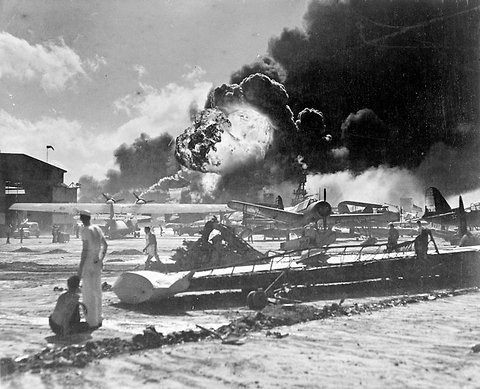
A day that will live in infamy, December 7, 1941. (Photo credit NY Times)
|
|
A Day That Will Live in Infamy
After graduating from bootcamp in San Diego, the 18-year-old Marine joined the 1st Marine Defense Battalion and was eventually sent to Midway Island and Pearl Harbor.
On the fateful morning of December 7, 1941, Stevens, recently promoted to sergeant, was awakened at 7 a.m. by loud explosions. Dashing outside, he witnessed firsthand the effects of bullets and shrapnel on the human body. “Japanese airplanes were dropping bombs and torpedoes on ships,” he remembers, “and then coming back and strafing the general area.”
“The attack was over in only two hours,” Stevens recounted in a speech he gave in 2009. “They were pulling bodies out of the harbor and bringing them over to the naval hospital and stacking them up like cord wood. It was a pretty terrible sight.” The devastating Japanese attack would forever change the 20-year-old Marine, his country, and the world.
The Battle of Okinawa
By 1942, Stevens had risen to the rank of master tech sergeant and been offered a field commission. He accepted the promotion, became a second lieutenant, and two years later was promoted to captain. He then joined the 1st Marine Division Signal Company, where he served as executive officer and worked with Navajo “code talkers,” native-American Marines who transmitted coded messages in the Navajo language and played a key role in helping defeat the Japanese.
A year later, Stevens was off the coast of Okinawa waiting for the largest amphibious operation of the Pacific War to begin. “As we approached Okinawa, we started receiving Japanese air attacks [kamikazes],” Stevens remembers. “It is very frightening to be aboard a ship when you’re under constant air attack,” he added. “There’s no place to hide. You can’t dig a hole and jump in.”
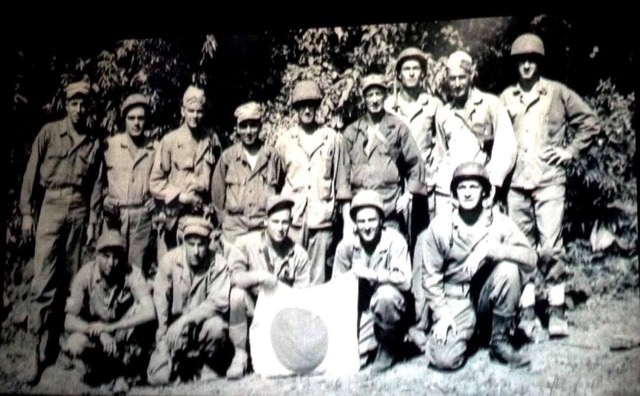
On April 1, 1945, the 24-year-old landed on Okinawa and spent the next three months fighting the Japanese.
The Battle of Okinawa
, Japan’s last attempt to destroy the US before an all-out assault on the mainland, was a hellish experience for every man, woman, and child on the godforsaken island.
When US forces finally secured the Japanese stronghold in late June 1945, over 12,000 Americans, an estimated 100,000 Japanese, and approximately 145,000 civilians were dead.
Less than two months later, the bloodiest conflict in history was over.
|
|
Captain Stevens (standing on far right) and his men at the Battle of Okinawa. (Photo credit: John Stevens)
|
|
The Korean War
In 1950, Stevens, now the commanding officer of Able Company, 1
st
Battalion, 5
th
Marines, was sent to Korea. “On 25 June, 1950, the day that the North Koreans launched their attack, I was on leave in Hollywood, California, when I received a telegram ordering me back to base,” he recalls.
Once again, America was mobilizing for war. “We had just 7 days,” he remembers, “to take in replacements, issue combat equipment, make out wills, take out allotments, and decide where our families would be living, among other details.”
On August 2, Able Company arrived in Korea. The unit was immediately sent to the Pusan Perimeter. At the Battle of Obong-ni, or “No-name Ridge,” as the Marines called it, Captain Stevens was awarded a Bronze Star for valor. During a “sudden and ferocious enemy attack,” the Marine officer rallied his men, repulsed the enemy, and reorganized his company for a counterattack. "His outstanding display of personal courage, devotion to duty and leadership was an inspiration to his command” (from award citation).
At midnight on September 6, Able Company was pulled from the front lines and told to begin preparing for an upcoming “secret” amphibious operation. The next day a new officer reported to the company: Lieutenant Baldomero Lopez. The 25-year-old Marine from Tampa, Florida, had volunteered to join the unit.
Landing At Red Beach
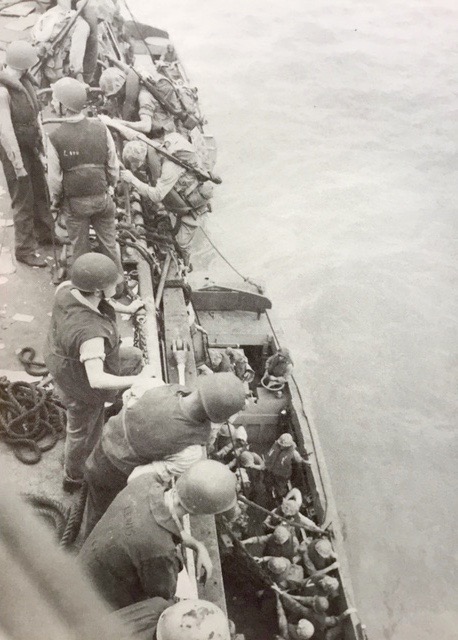
On September 15, 1950, D-day for the Inchon Landing, Stevens and his men climbed over the railings of their troop ship, the USS Henrico, and boarded landing craft for their 5:30 p.m. assault on
Red Beach
. As they raced towards the shore and “the first wave came within 30 yards of the seawall,” Captain Stevens radioed for US Navy Skyraider attack planes to make strafing passes along the beach.
Moments later, their landing craft slammed against Inchon’s rocky shore.
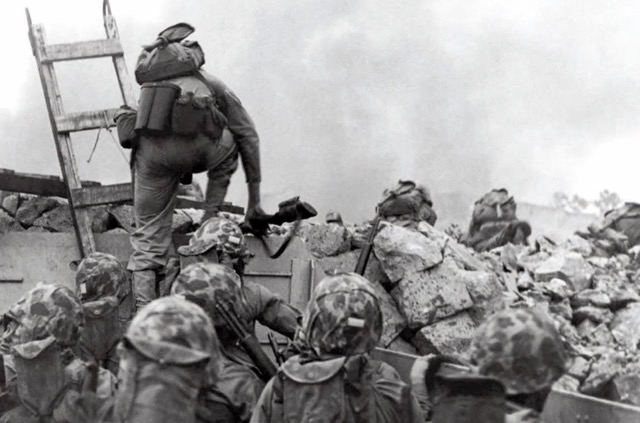
When Lt. Lopez, the 3
rd
platoon commander, and his men landed on the beach, there was no room to maneuver. The Marines immediately began taking casualties. For a brief moment the attack faltered.
|
|
Lt. Baldomero Lopez leading his men over the seawall at Inchon. (Photo credit: USMC)
|
|
Sacrificing So That Others Might Live
Realizing the situation was becoming desperate, Lt. Lopez stormed over the seawall into a hail of enemy fire, crawled forward, and pulled the arming pin from a hand grenade. Stevens later explained, “He [Lopez] got ready to throw the grenade into the bunker, and as he lifted his arm. . .he was hit in the right shoulder and chest by automatic weapon fire.”
The young Marine lieutenant swept his wounded right arm toward the grenade, pulled it under him, and “took the full impact of the explosion.” He died instantly. Lt. Lopez was posthumously awarded the
Medal of Honor
, becoming the first Marine of the Korean War to receive the nation's highest award for valor. “He had served just 8 days in Korea and less than 1/2 hour in combat,” Stevens said.
Minutes later, Able Company Marines took their objective, paving the way for subsequent waves of men to land at Inchon and repulse the enemy. In the 30-minute fight to secure just one corner of Red Beach, eight Marines from Stevens’ company had died.
Stevens and his men went on to fight in the streets of Seoul, land at Wonsan, make their way to the snow-covered mountains of North Korea, and take part in one of the most epic battles in Marine Corps history:
Chosin
. During his time in Korea, Stevens honorably served his men, his country, and his beloved Corps.
"Dogged Determination and Indomitable Spirit"
Twelve years after returning from the Korean War, LtCol Stevens retired from the Marines, settled in San Francisco, and began a successful business career that spanned four decades.
His memories of WWII, Korea, and the brave men he served with, however, stayed with him. In 2009, the
Korean War Memorial Foundation
(KWMF) was started in San Francisco, and Stevens immediately joined the effort to raise funds to construct a monument to the men who served, sacrificed, and died during the Korean War.
When asked about Stevens’ contribution to the project,
Gerry Parker
, Executive Director of KWMF, said, “John worked six, often seven, days a week, devoting himself heart and soul to the demanding mission of bringing the Korean War Memorial from dream to reality.” On August 1, 2016, the memorial was officially opened in San Francisco’s Presidio. “It now stands as a testament for all time to his dogged determination and indomitable spirit,” Mr. Parker proudly told me.
Mr. Stevens, please let us know where and when your 100
th
birthday celebration will take place. We’re looking forward to the party. And here’s to drinking that bottle of cognac. Cheers!
The author would like to thank LtCol John Stevens, Gerry Parker, and Gregg DeRego for their friendship and support in researching and writing this article.
|
|
Captain Stevens’ men leaving the USS Henrico troop ship for their rendezvous with destiny. (Photo credit: USMC)
|
|
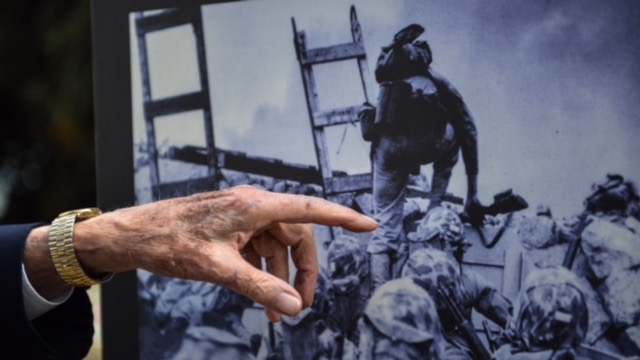
John Stevens pointing to his platoon commander in the iconic Inchon picture which is featured prominently at the Korean War Memorial in San Francisco. (Photo credit: Wayne Freedman, ABC 7TV News)
|
|
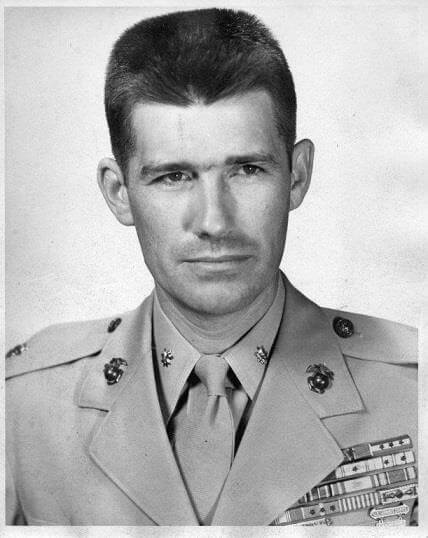
LtCol Stevens before retiring from the Marines. (Photo credit: John Stevens)
|
|
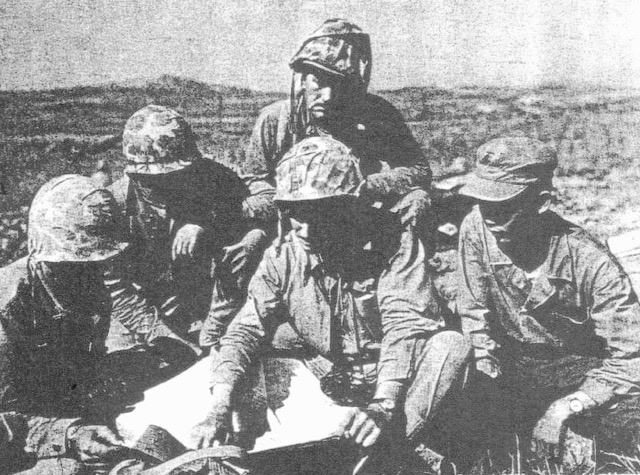
Captain Stevens (center pointing to map), with his platoon leaders and Korean interpreter, on the outskirts of Seoul. (Photo credit: US Marine Archives)
|
|
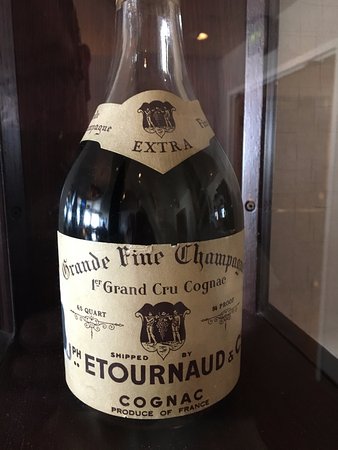
The bottle of cognac will be opened by the last surviving member of the 1st Marine Division who served in combat during WWII. It is under lock and key in a glass case at the Marines' Memorial Club in San Francisco. (Photo credit: Trip Advisor)
|
|
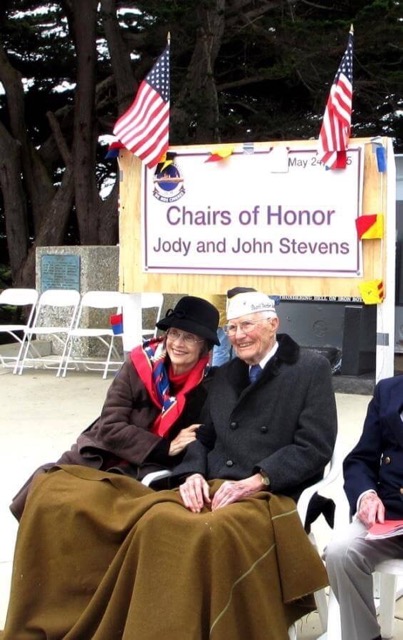
John with his wife, Jody. John has four children, seven grandchildren, and 12 great-grandchildren. (photo credit: John Stevens)
|
|
More about LtCol John R. Stevens
|
|
Click the buttons below read, watch, and hear more about
the legacy of LtCol Stevens.
|
|
The Semper Fi Fund is caring for veterans from all U.S. military service branches. See below for details of services provided.
|
|
From Veterans Affairs
What should Veterans do?
Any Veteran with symptoms such as fever, cough or shortness of breath should immediately contact their local VA facility. VA urges Veterans to call before visiting – you can find contact information for your
closest VA facility
.
Alternatively, Veterans can sign into
My HealtheVet
to send a secure message to VA or use
telehealth options
to explain their condition and receive a prompt diagnosis.
Upon arriving at VA, all patients will be screened for flu-like symptoms before they enter in order to protect other patients and staff. A VA health care professional will assist you with next steps once this screening process is complete.
At this time, VA is urging all visitors who do not feel well to please postpone their visits to VA facilities.
How to protect yourself
Currently, there is no vaccine to prevent the COVID-19 infection and no medication to treat it. CDC believes symptoms appear 2 to 14 days after exposure. Avoid exposure and avoid exposing others to an infection with these simple steps.
- Learn to use VA Video Connect through the VA mobile app store or by contacting your VA care team, before any urgent problems arise.
- Wash your hands often with soap and water for at least 20 seconds. An easy way to mark the time is to hum the “Happy Birthday” song from beginning to end twice while scrubbing.
- Use an alcohol-based hand sanitizer that contains at least 60% alcohol.
- Avoid touching your eyes, nose and mouth with unwashed hands.
- Avoid close contact with people who are sick.
- Stay home when you are sick or becoming sick.
- Cover your cough or sneeze with a tissue (not your hands) and throw the tissue in the trash.
- Clean and disinfect frequently touched objects and surfaces.
- Getting a flu shot is recommended.
|
|
MILITARY SERVICE RECORDS, AWARDS, AND UNIT HISTORIES
(See the attached pdf file, or go to the URL at bottom here)
A New Congressional Research Service Publication on U.S. Military Service Records, Awards, and Unit Histories
The Congressional Research Service has just published a short reference document that might be of interest to many:
The guide provides information on locating military unit histories and individual service records of discharged, retired, and deceased military personnel. It also provides information on locating and replacing military awards and medals. Included is contact information for military history centers, websites for additional sources of research, and a bibliography of other publications, including related CRS reports.
|
|
Headquarters Office (760) 763-3268
President Jerry Johs Email: geronamo0122@gmail.com
First Marine Division Association
P.O. Box 9000, Box # 902
Oceanside CA 92051
(760) 763-3268
|
|
Thank you for reading the Blue Diamond News. Please contact us with corrections, suggestions, and content you would like to see.
Semper Fidelis
|
|
|
|
|
|
|