|
Join ASIPP’s VoterVoice Campaign:
Fight Medicare Physician Payment Cuts!
ASIPP Members, Interventional Pain Physicians, and patients, we need your active participation to protect patients’ access to care! CMS has revealed the 2024 Physician Fee Schedule, and it brings ominous news. You can help preserve our patients’ access to care by promptly signing the sample letters below.
Physicians, click here to use VoterVoice to send a letter to your representatives online, or use this sample letter to send on your own. Get your patients involved by asking them to sign this letter, and then have them, or your staff, enter the letter into VoterVoice by clicking here.
| |
|
CMS has published the final rule for 2024 Physician Fee Schedule
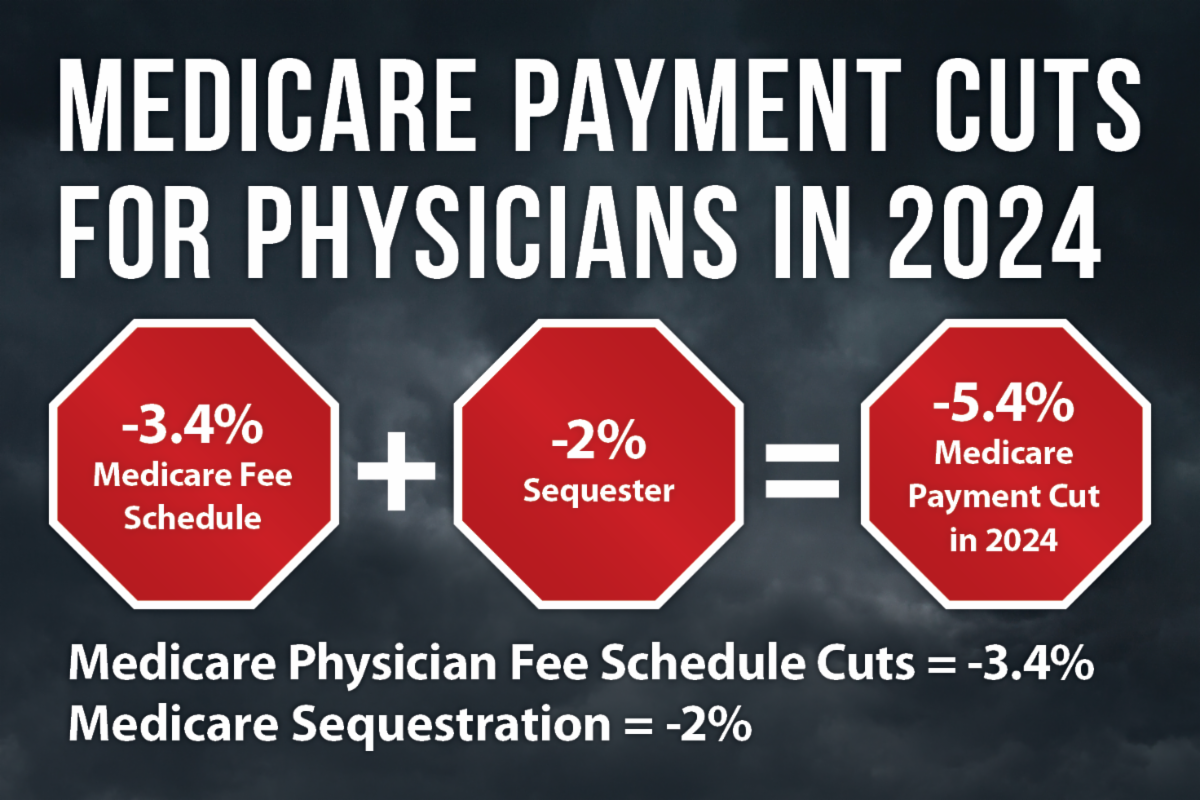
The final Medicare payment cuts include:
Medicare Physician Fee Schedule Cuts = -3.4%
- The Centers for Medicare and Medicaid Services are implementing a 3.4% decrease in payments in 2024 for services under the Medicare Physician Fee Schedule.
-
Medicare physician payment has been reduced 26% adjusted for inflation from 2001–2023.
Medicare Sequestration= -2%
- Medicare sequestration of -2% has now been extended through 2032, because of a temporary delay for 1½ years.
There is some good news. The 4% PAYGO cut is gone for this year. It will reappear next year.
ASIPP members in good standing can access the physician, ASC, and HOPD fee schedule, on the Members’ Only Website.
How you can take action:
-
VoterVoice: Click here to submit a physician letter online!
-
VoterVoice: Click here to submit a patient letter online!
-
If you choose to send your own letters, here is sample physician letter you may want to use: PHYSICIAN SAMPLE LETTER.
-
Ask your patients to sign this sample patient letter. Your patients or your staff can enter the letter into VoterVoice: PATIENT SAMPLE LETTER.
| |
Early Bird Registration is open for ASIPP Members!
Register now for 10% off!
| |
|
Compensation Is Key to Fixing Primary Care Shortage
Money talks.
The United States faces a serious shortage of primary care physicians for many reasons, but one, in particular, is inescapable: compensation.
Substantial disparities between what primary care physicians earn relative to specialists like orthopedists and cardiologists can weigh into medical students’ decisions about which field to choose. Plus, the system that Medicare and other health plans use to pay doctors generally places more value on doing procedures like replacing a knee or inserting a stent than on delivering the whole-person, long-term health care management that primary care physicians provide.
Read More
| |
|
Urgent Care Must Be Reexamined ... Urgently
Can't we improve primary care and emergency department visits so more patients go there instead?
Wouldn't it be better if we just fix what was broken, since we know how to do this?
In this Sunday's New York Times there was a full double-spread story opens in a new tab or window in the Sunday Business section about the importance and growth of urgent care centers and the role they play in healthcare. These facilities have blossomed over the past few years, and growth was only fueled and accelerated by the pandemic. Clearly, they provide an incredible service to patients, fitting a specific niche between primary care and the care needed in an emergency department.
But is this really something we need to have growing? Wouldn't it be better if we just made the other ends of the spectrum, both the primary care and the emergency department experiences, much better for all of those involved?
Read More
| |
|
Virtual
December 9 & 16, 2023
ABIPP Part I; ABIPP Path - Combined DCCPM/CSM virtual exam;
ABIPP Competency Exam in IPM; ABIPP Competency Exam in Regenerative Medicine
January 20, 2024
ABIPP Part I; ABIPP Path - Combined DCCPM/CSM virtual exam;
ABIPP Competency Exam in IPM; ABIPP Competency Exam in Regenerative Medicine;
Controlled Substance Management (CSM) Competency Exam
February 17, 2024
ABIPP Part I; ABIPP Path - Combined DCCPM/CSM virtual exam;
ABIPP Competency Exam in IPM; ABIPP Competency Exam in Regenerative Medicine;
CSM Competency Exam; DCCPM Competency Exam
In-Person
June 21, 2024
ABIPP Part II Practical Examination
Lab Venue: Oquendo Center, 2425 E. Oquendo Rd, Las Vegas, NV 89109
| |
|
In a recent essay, I marveled at the qualities that will set apart tomorrow’s physicians from previous generations. And while everything I wrote I believed to be true, I suppose I neglected a major concern, a big blind spot as it were. In order to become clinicians, medical students must first enter practice. That seems obvious, but a recent report gives reason to pause and reflect on medical students’ experiences and career trajectories.
The report, Clinician of the Future: 2023 Edition, was released by the health science and journal publisher Elsevier in October 2023. In all, 2,212 medical and nursing students from 91 countries were surveyed between April and May 2023. Findings also included two roundtable sessions with stakeholders and faculty in the U.S. and the U.K.
A quarter of aspiring physicians in the U.S. – double the percentage in the rest of the world – said they were considering quitting their studies, with many expressing concerns about their mental health and how they can find a satisfying balance between the demands of school and life.
Read More
| |
 | |
Award Specifics:
- Annual Research Grant awarded to two (2) residents in the amount of $2,500 each; and two (2) fellows in the amount of $5,000 each for one-year project in IPM.
- Projects must be IRB approved, submitted or in pending status
- Mentor supervised by an ASIPP member in good standing.
- Must not overlap with current ongoing studies.
Application Requirements:
-
Applicant and mentor curriculum vitae (CV current, and updated within 4 weeks of the application date)
- Project proposal should include: title, abstract, specific aims, research approach (Background, Methods, Statistical Analysis, Timeline)
- Detailed budget
- Detailed mentorship plan by the mentor
- Specify the role of any collaborators/co-investigators that might be involved in the study.
- Applicant must be ASIPP member (in good standing) and Recipients must maintain ASIPP membership for at least 3 years post-award.
Application Deadline: January 31st, 2024
Recipients will be notified at ASIPP's 2024 Annual Meeting in Dallas, Texas.
Program Administration:
Inquiries about the Manchikanti Grant should be directed to: Melinda Martin
For more information, click here.
| |
|
China Reports No 'Unusual' Pathogens Driving Pneumonia Cluster in Kids
Chinese health officials say the rise in respiratory illness is part of a continued surge
Chinese health authorities told the World Health Organization (WHO) that a surge in respiratory illness among children in the northern part of the country is simply part of a continued rise in infections since the lifting of COVID restrictions.
Authorities have not detected "unusual or novel pathogens or unusual clinical presentations," even in Beijing and Liaoning, where recent reports had raised concerns, the WHO said in a statement on Thursday.
On Wednesday, the global health body had asked China for "detailed information" on a rise in cases mentioned by posts on ProMED, an infectious disease news service run by the International Society for Infectious Diseases.
Read More
| |
|
Excellent opportunities for Residents & Fellows
at ASIPP's 2024 Annual Meeting:
-
Resident & Fellow Scholarship — Limited to 100
- Abstract Session (April 4, 3:30–5:30pm) and Podium Presentation for Best Abstracts during General Session (April 5, 3:30–4:15pm)
- Half-Day Session dedicated to Young Physicians in Interventional Pain Management
- Manchikanti Research Grant, awarding $2,500 to two residents each, and $5,000 to two fellows each
| |
|
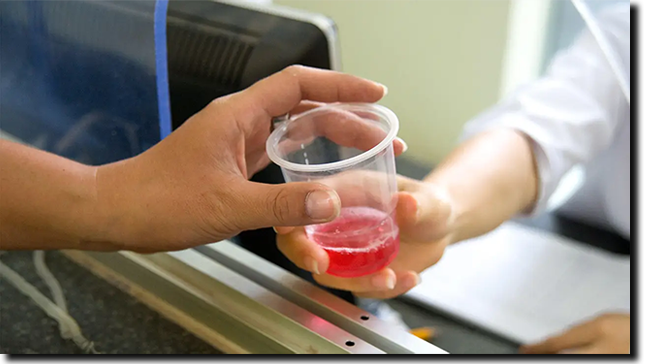
Proposed Methadone Treatment Legislation May Put Patients at Risk
We need evidence-based, safe, and effective solutions
Overdoses in the U.S. due to opioids are hitting devastating new levels as high-potency synthetic opioids like fentanyl and metonitazene rack the nation. Medication-assisted treatment (MAT) for opioid use disorder is a life-saving intervention with unmatched success in patient outcomes. This typically includes treatment with FDA approved medications, such as methadone or buprenorphine, along with counseling or behavioral health support.
However, I'm concerned that the Modernizing Opioid Treatment Access Act (MOTAA) risks worsening the crisis rather than solving it by dismissing decades of data showing MAT programs are the gold standard for opioid use disorder (OUD) treatment. MOTAA would eliminate the requirement for MAT's safety guardrails by allowing doctors to prescribe methadone outside of highly structured opioid treatment program (OTP) clinics.
As an addiction specialist working with patients in an office-based opioid treatment center, I see patients every day who are addicted to fentanyl. Like many of my fellow providers, I recognize the urgent need to increase access to treatment as this epidemic evolves. But I believe the approach laid out by MOTAA is unlikely to do so and risks patient and public safety.
Read More
| |
A new study challenges the traditional understanding of appetite control. The research reveals that our sense of taste, rather than signals from the stomach, plays a critical role in regulating how much we eat.
The study found that neurons in the brainstem respond to taste perception almost immediately to control food intake, a discovery that could influence the development of more effective weight-loss drugs like Ozempic.
This new perspective on appetite control underscores the complex interplay between taste and brain signals in managing eating behavior.
Read More
| |
Abstract submissions are open for
ASIPP's 2024 Annual Meeting!
The submission deadline is January 22, 2024.
Don't miss your chance to be part of an exceptional event,
sharing insights and discoveries that shape the future of pain management.
| |
The U.S. spends huge amounts of money on health care that does little or nothing to help patients, and may even harm them. In Colorado, a new analysis shows that the number of tests and treatments conducted for which the risks and costs exceed the benefits has barely budged despite a decade-long attempt to tamp down on such care.
The state — including the government, insurers, and patients themselves — spent $134 million last year on what is called low-value care, according to the report by the Center for Improving Value in Health Care, a Denver nonprofit that collects billing data from health plans across Colorado. The top low-value items in terms of spending in each of the past three years were prescriptions for opiates, prescriptions for multiple antipsychotics, and screenings for vitamin D deficiency, according to the analysis.
Nationwide, those treatments raise costs, lead to health complications, and interfere with more appropriate care. But the structure of the U.S. health system, which rewards doctors for providing more care rather than the right care, has made it difficult to stop such waste. Even in places that have reduced or eliminated the financial incentive for additional testing, such as Los Angeles County, low-value care remains a problem.
Read More
| |
“You can’t inject a horse tranquilizer and think nothing bad is gonna happen” to you, said Ty Sears, 33, a longtime drug user now in recovery.
Sears was referring to xylazine, a sedative used for animal surgeries that has infiltrated the illicit drug supply across the country, contributing to a steady climb in overdose deaths.
Sears divides his time between Burlington and Morrisville, a village an hour to the east. In Burlington, he visits clusters of drug users, offering water, food, and encouragement.
He has been there, been down, done time, struggled to adhere to treatment regimens. But this, he said, is different: first, fentanyl — estimated to be 50 to 100 times as potent as morphine — and now xylazine, and the life-threatening wounds and sores it can cause.
Read More
| |
Observational data suggest particular risk for hypertension and arterial disease
Longer use of attention deficit-hyperactivity disorder (ADHD) medication was associated with an increased risk of cardiovascular disease, particularly hypertension and arterial disease, a nested case-control study from Sweden showed.
Risk of cardiovascular disease rose with longer cumulative exposure to the drugs, peaking at 3 to 5 years of use (adjusted odds ratio [AOR] 1.27, 95% CI 1.17-1.39), Le Zhang, PhD, of the Karolinska Institute in Stockholm, and colleagues reported in JAMA Psychiatry.
When looking at the risk for specific diseases, only two were consistently elevated: hypertension (AOR 1.72, 95% CI 1.51-1.97, for 3 to ≤5 years; and AOR 1.80, 95% CI 1.55-2.08, for >5 years) and arterial disease (AOR 1.65, 95% CI 1.11-2.45, for 3 to ≤5 years), they reported.
Read More
| |
- ASIPP Members Only Site Information - | |
-
To log in for the first time you will need to click “forgot password” at the bottom of the login window.
- Check your email and then log in as directed.
-
If you have problems logging into your account, click here.
| |
|
Doctors, Scientists Boycott Journal for Publishing 'Sadistic' Animal Research
More than 1,100 experts signed a letter to boycott nutrition journal and its publisher
More than a thousand healthcare professionals and scientists are boycotting the journal Nutrients because it publishes "egregious animal experiments," according to a letter from the Physicians Committee for Responsible Medicine (PCRM).
Participants will not publish in or serve as reviewers for Nutrients or any journals from parent company MDPI, according to the letter. They charge that the journal "continues to publish articles that violate its own ethics policy not to publish animal experiments for which alternatives exist."
"When I became aware of the extensive animal use, especially where the objectives could have been achieved using human-based approaches, I decided to investigate further because I couldn't compromise my own ethics," Elizabeth Dean, PhD, a professor emeritus of physical therapy at the University of British Columbia in Canada, said in a press release.
Read More
| |
Pain Medicine Case Reports (PMCR) and Editor-in-Chief Alaa Abd-Elsayed, MD, PhD would like to invite you to submit case reports and case series to the PMCR journal. Your article will be published free of charge.
Open access journals are freely available online for immediate worldwide open access to the full text of published articles. There is no subscription fee for open access journals. Open access journals are no different from traditional subscription-based journals: they undergo the same peer-review and quality control as any other scholarly journal.
Interested in becoming a member of the PMCR Editorial Board?
Editorial board members are asked to review 2-6 manuscripts per year. Please submit your most up-to-date CV to sgold@asipp.org for consideration.
For more information or to submit your articles, click here.
| |
|
| CASE REPORT |
Dual Peripheral Stimulation of Musculocutaneous and Radial Nerves for Refractory Upper Extremity Pain: Case Report
Gabriel Howard, DO, William Naber II, DO, and Andrew Porter, DO
Abstract
BACKGROUND: Peripheral nerve stimulation has been available for many years, yet there is relatively little information available regarding stimulation of many of the large sensory and mixed nerves.
CASE REPORT: A 42-year-old woman presented to the clinic for a 10-year history of intractable left upper extremity and forearm pain following a motor vehicle accident requiring skin grafting. Based on the patient’s failure of more conservative therapy, a shared decision was made to pursue opioid sparing interventional modalities. Implantable radial and musculocutaneous nerve stimulators were chosen for this patient for ease of use and high likelihood of favorable outcomes.
CONCLUSIONS: Sequential radial and musculocutaneous stimulation provided a 45% and 50% reduction in pain respectively, with the summative reduction of pain from original presentation being greater than 72% relief in total.
KEY WORDS: Peripheral nerve stimulation, neuromodulation, musculocutaneous nerve, radial nerve, regional anesthesia, upper extremity pain, pain medicine, implantable stimulation
Read More
| |
|
| NARRATIVE REVIEW |
Compliance and Documentation for Evaluation and Management Services in Interventional Pain Management Practice
Laxmaiah Manchikanti, MD, Mahendra R. Sanapati, MD, Vidyasagar Pampati, MSc, and Joshua A. Hirsch, MD
Abstract
Evaluation of new and established patients is an integral part of interventional pain management. Over the last 3 decades, there has been significant confusion over the proper documentation for evaluation and management (E/M) services in general and for interventional pain management in particular. Interventional pain physicians have learned how to evaluate patients presenting with pain on the basis of their specialty training. Although modern training programs are introducing residents and fellows to the intricacies of E/M services and federal regulations, this has not always been the case. Multiple textbooks about pain management, physiatry, and neurology, and numerous journal articles have described the evaluation of pain patients, but they have not been specific to chronic pain patients and may not meet the regulatory perspective.
A multitude of these issues led to the development of guidelines in 1995 and 1997, which were highly complicated and difficult to follow. These also led to significant criticism from clinicians. Consequently, further guidance was developed to be effective January 2021.
The crucial concept in the present system of coding for E/M services is medical decision making, which includes 3 elements since 2021:
- The number and complexity of problems addressed
- Amount or complexity of data to be reviewed and analyzed
- Risk of complications and/or morbidity or mortality of patient management
In order to select a level of E/M service, 2 of the 3 elements of medical decision making (MDM) must be met or exceeded. This is in contrast to prior guidelines wherein for new patients, all 3 elements with history, physical examination and MDM , and for established patients have been met. For ease of appreciation, an algorithmic approach created by the American Medical Association (AMA), and Centers for Medicare and Medicaid Services (CMS) approved a new MDM table outlining all of the appropriate criteria.
This review systematically describes the changes and provides an algorithmic approach for application in interventional pain management practices.
KEY WORDS: Evaluation and management services, new patient, established patient, level of service, CPT coding, medical decision making, complexity of problems
Read More
| |
|
| NARRATIVE REVIEW|
Diet Composition’s Effect on Chronic Musculoskeletal Pain: A Narrative Review
Mark Kurapatti, BS, and Dominic Carreira, MD
Abstract
BACKGROUND: In the medical setting, clinicians frequently attend to patients with chronic musculoskeletal pain. Recent literature demonstrates diet may play a role in inflammation and musculoskeletal pain.
OBJECTIVES: The purpose of this narrative review is to present the most current literature on the effect of common diet regimes, additions, and eliminations on chronic musculoskeletal pain.
STUDY DESIGN: This is a narrative review of the literature on the effect of 1) Mediterranean diets; 2) vegetarian and vegan diets; 3) oils, seafood, and omega-3 fatty acids; 4) fruits; 5) spices and herbal teas; and 6) elimination diets on patient-reported musculoskeletal pain scores.
METHODS: In January 2023, the Google Scholar and PubMed databases were reviewed to identify research on the effect of common diet regimes and additions on self-reported pain outcomes in patients with chronic musculoskeletal pain.
RESULTS: A total of 32 original research articles and a systematic review were included and used to develop grades of recommendation. There is fair evidence that diverse, plant-based Mediterranean, vegetarian, and vegan diets may reduce musculoskeletal pain. Other dietary considerations, including adding marine oils, seafood, omega-3 fatty acids, antioxidant-rich fruits, and turmeric may also benefit patients with chronic musculoskeletal pain. There is poor-quality or insufficient evidence to support adding olive oil, ginger, or herbal teas to reduce pain. While eliminating aspartame and monosodium glutamate may reduce inflammation, there is poor-quality evidence that it reduces musculoskeletal pain.
LIMITATIONS: This narrative review is not systematic in nature; instead, it aims to provide a current update on the effect of various diet regimes, additions, and eliminations on chronic musculoskeletal pain. The studies in this review are limited in sample size, study period, and robust comparisons to controls. This review is limited to studies on patients with either rheumatoid arthritis, osteoarthritis, or fibromyalgia due to the lack of relevant literature on other musculoskeletal pain conditions.
CONCLUSIONS: Clinicians can play a role in the well-being of patients with chronic musculoskeletal pain through holistic interventions such as a dietary emphasis on plant-based regimes. Further research is necessary to elucidate the relationship between diet, inflammatory markers, and disease states, as well as the safety and contraindications of these dietary changes.
KEY WORDS: Pain, musculoskeletal, diet, fibromyalgia, rheumatoid arthritis, osteoarthritis, mediterranean, vegetarian, vegan
Read More
| |
|
ASIPP is now in collaboration with Curi Medical Liability Program
| |
|
Since this malpractice insurance program officially launched in November 2018, ASIPP has signed up hundreds of providers with an average savings of 30%. This is professional liability insurance tailored to our specialty and will stand up for us and defend our practices.
Curi is a full-service advisory firm that serves physicians and their practices. Their valued advice is grounded in your priorities and elevated in your outcomes. They are driven by a deep understanding of your specific circumstances in medicine, business, and life. To read a few important points to keep in mind about the program, including discounts, administrative defense, cyber coverage, aggressive claims handling, and complimentary risk management CME activities, visit our website.
| | |
|
Group Purchasing Organization Offer Better Pricing and Creates Added Value
ASIPP has formed a partnership with Henry Schein and PedsPal, a national GPO that has a successful history of negotiating better prices on medical supplies and creating value-added services for independent physicians. Working with MedAssets, PedsPal provides excellent pricing on products like contrast media that alleviate some of the financial pressures you experience today.
Learn More
| |  |
|
ASIPP, Fedora Billing,
and Revenue Cycle Management Partnership
ASIPP is now offering our members the benefit of a unique revenue cycle management/ billing service.
We have received a tremendous amount of interest in the ASIPP® billing and coding program.
Click here to learn more about the negotiated rate for practices and more!
| |
|
Like and follow ASIPP® on Facebook, X, and LinkedIn for the most
up-to-date news related to you, your practice, and your patients!
| | | | |