|
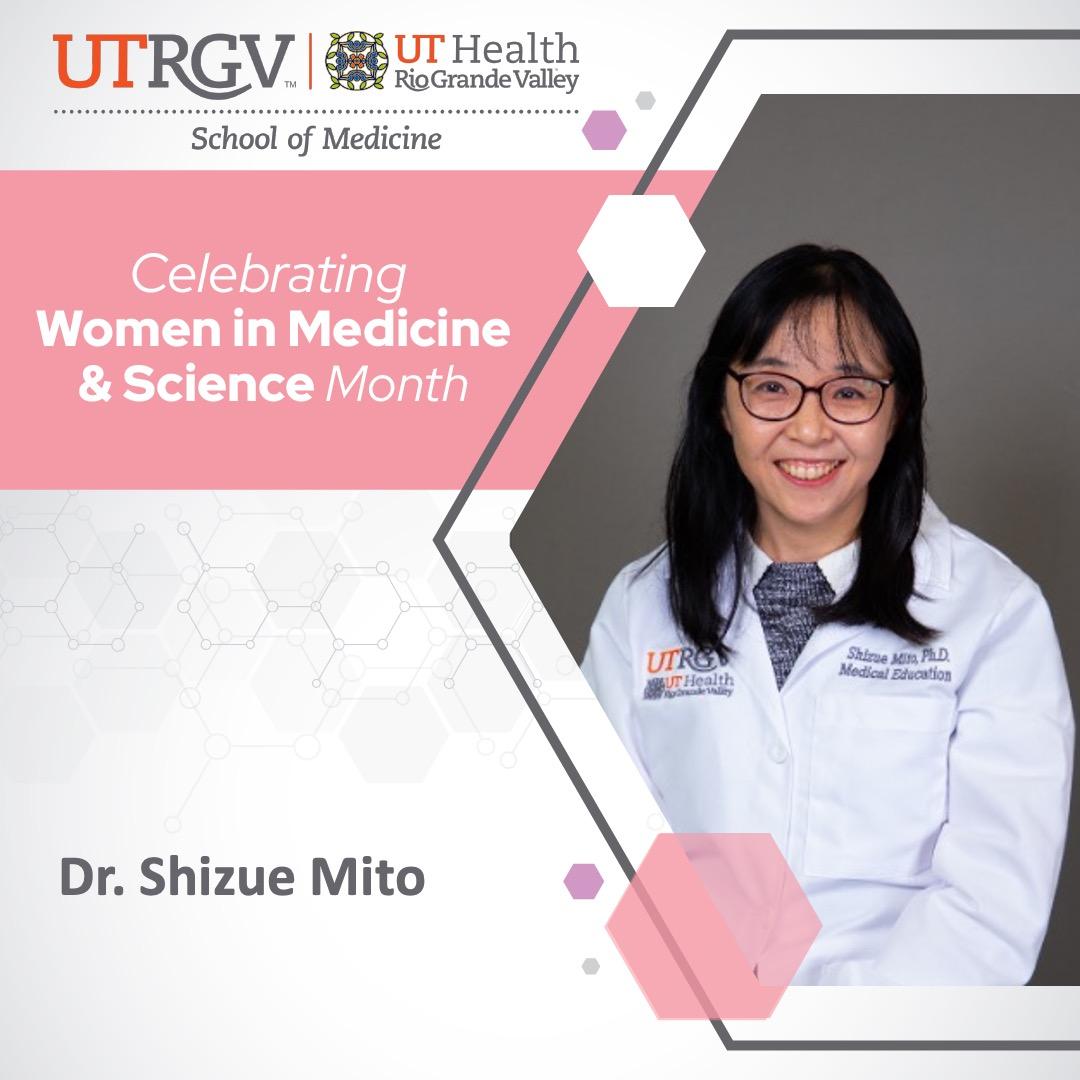
Today, we meet and celebrate:
Dr. Shizue Mito
Name and Last name:
Shizue Mito
Hometown:
Osaka, Japan
What school did you graduate from, and what degree did you graduate with?
Hokkaido University, Japan. PhD in Pharmaceutical Sciences
What inspired you to pursue a career in medicine?
Thanks to an inspiring chemist, who also happened to be my father, I came to love chemistry. His passion for the subject ignited a spark in me. Since I was a little girl, I had always wanted to be a chemist. When I was 16 years old, my mother was diagnosed with fetal leukemia and passed away within a year. I then set a goal: "I can make medicines to cure cancers by the power of chemistry!" In Japan, many Schools of Pharmacy have a route which is specialized in pharmacological chemistry. I fell in love with how these small molecules interact with our bodies to cure diseases!
What do you enjoy most about working at the UTRGV School of Medicine and UT Health RGV?
I love teaching and interacting with students. I love to see their excitement and success!
How has the landscape for women in medicine changed since you started your career?
When I was a Graduate Student in drug synthesis in Japan, I was the only female graduate student in the year, and I was called "unusual." Now, there are many more opportunities for women in medicine, and they are encouraged to choose whatever career they want!
What advice would you give to young women considering a career in medicine?
"All our dreams can come true if we have the courage to pursue them"—Walt Disney. I always remember this quote when someone discourages me.
What unique strengths do you think women bring to the medical profession?
Women's unique experiences and viewpoints will be strengths for patient care and patient-centered communications, contributing significantly to gender diversity.
|