Over three decades, Joan Anderson has often felt lousy...actually miserable -- sometimes for hours, sometimes for days. All too often her seemingly ever-present nausea graduated into nearly uncontrollable vomiting or retching. Hospitalizations became commonplace.
Anderson is one of about 5 million Americans diagnosed with gastroparesis, a stomach disorder in which food is digested more slowly than normal. In a typical digestive system, muscular contractions move food from the stomach through the digestive tract. But with gastroparesis, the stomach muscles work poorly or not at all, not allowing the stomach to empty properly. So serious is the resulting nausea and vomiting that standard medication can’t control the condition often caused by type 1 or type 2 diabetes. Frequently, the cause of the condition is unknown.
Detail oriented -- a paralegal by training -- Anderson, a type 1 diabetic, won’t say her life changed for the better two years ago. But she will tell you it was
22 months ago
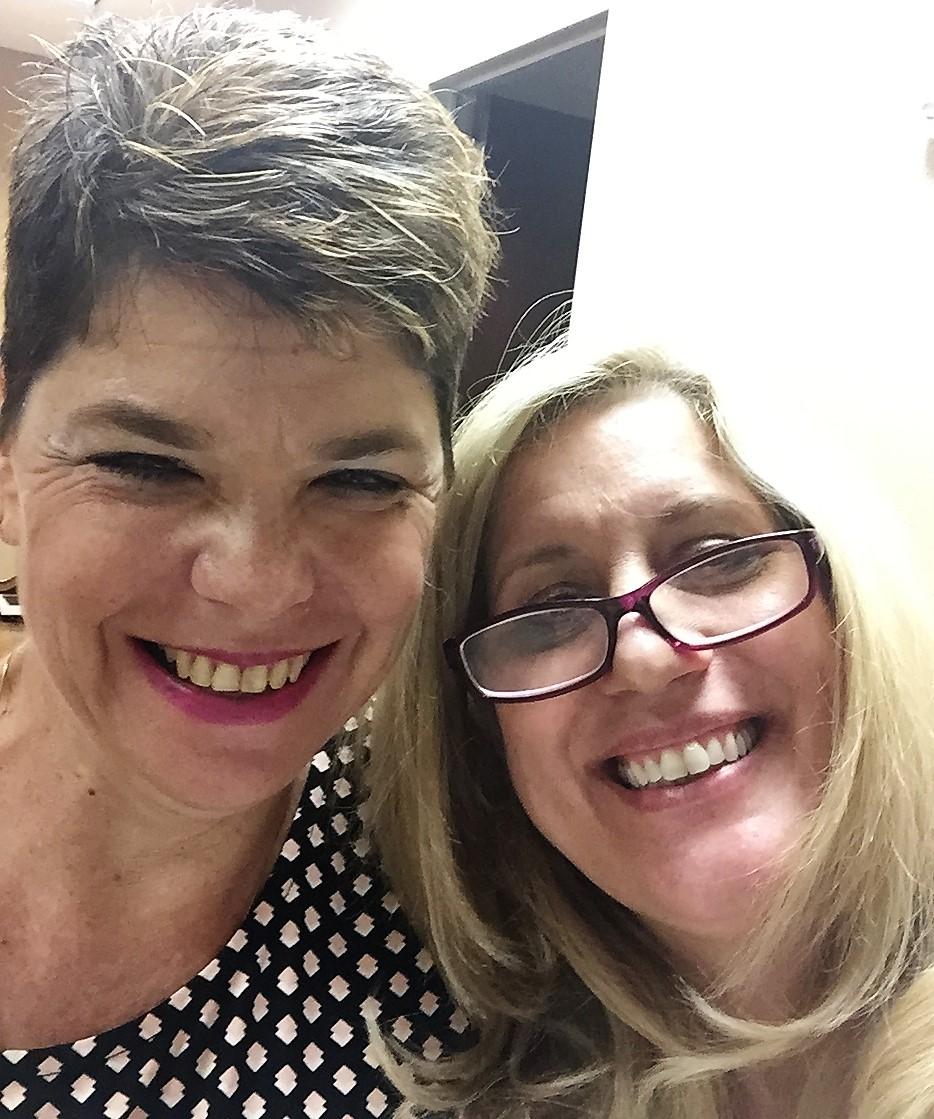
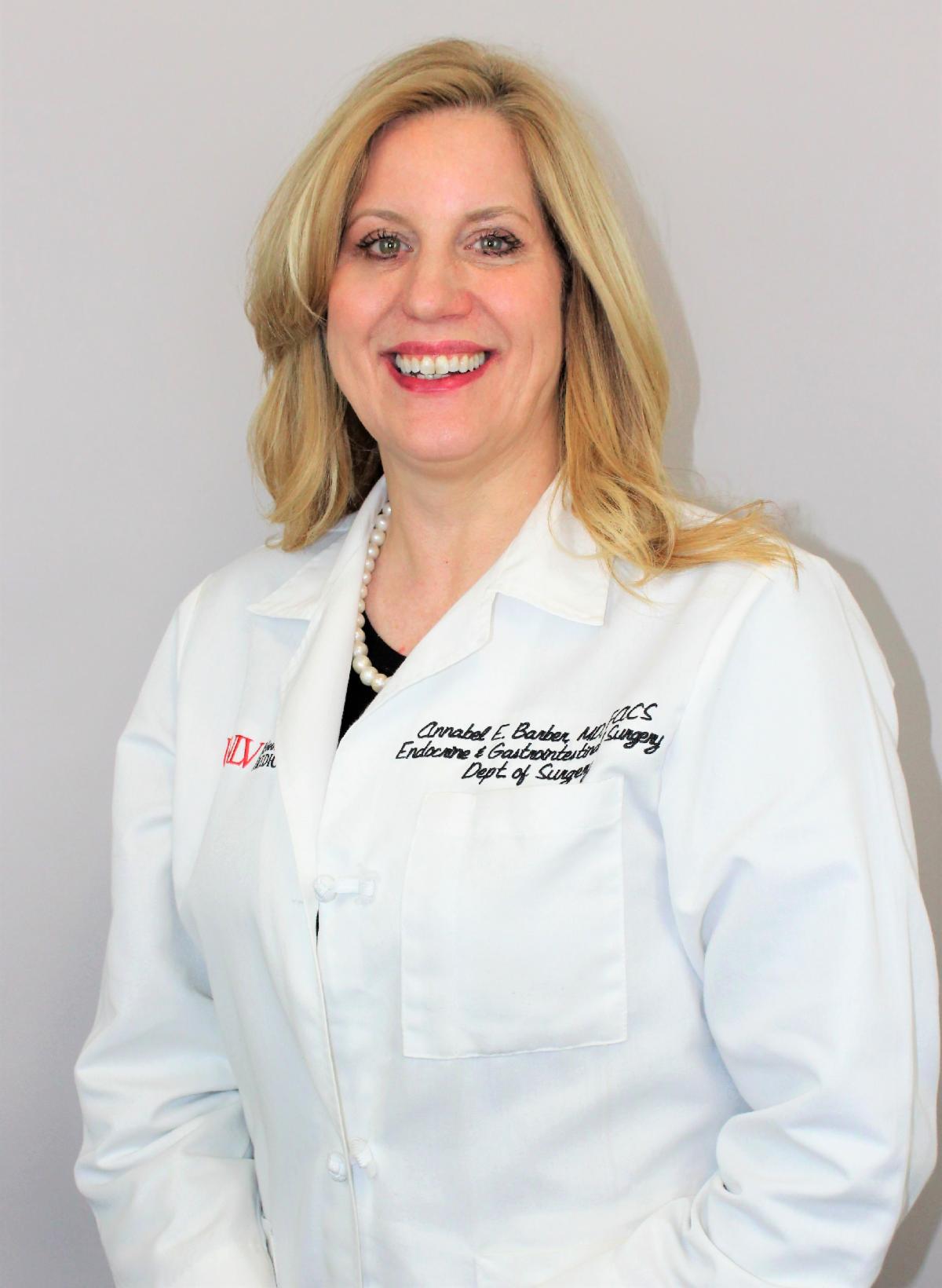
that Dr. Annabel Barber, a professor and chief, division of endocrine and gastrointestinal service for the UNLV School of Medicine, “single-handedly turned my life around, gave me a life again.”
“I thank God every night for her,” Anderson says.
What Barber did 22 months ago during a two hour procedure was robotically combine the surgical implantation of a gastric electrical neurostimulation system with a pyloroplasty. In other words, she inserted a small medical device called a neurostimulator into Anderson’s abdominal region -- it sends electrical pulses to stimulate the smooth muscles of the lower stomach to help control nausea and vomiting -- and she also widened the plylorus, an opening near the end of the stomach that allows food to flow into the duodenum, the first part of the small intestine.
“I’m so glad she’s doing better,” says Barber, who trains other doctors in the surgery. “That’s one of the things I like about being a surgeon. You can make a big difference very quickly.”
Anderson says she’s never seen a doctor with more compassion.
“I haven’t had to go to a hospital since that last procedure with Dr. Barber,” says Anderson, who often could not work because of her condition. “She developed a Mediterranean diet for me. She’s the first doctor who really listened to me. I now have an abundance of energy. I can work. It's amazing. All because of Dr. Barber.”
Andrew Dawe, a representative of Medtronic, the company that makes the Enterra neurostimulator, says that about 24 months ago it became standard of care to have the device and the pyroplasty done simultaneously. “The results are better,” says Dawe, who notes Barber is the top surgeon for the procedure(s) in the West, including California, Oregon, Washington, Idaho, Utah, Nevada and Arizona. “She has people coming from everywhere to see her. She’s one of the top 15 surgeons in America handling gastroparesis. She’s one of the few that does it all robotically. Her patients can often go home the same day. Few surgeons have her skill.”
Barber graduated from the University of Texas Medical School at Houston. She completed her general surgery residency at New York Hospital-Cornell University Medical College, where she was also a research fellow in surgical nutrition and metabolism. She has served as chief, general surgery clinics at University Medical Center and chief of staff at MountainView Hospital, where she was also chief of general surgery.