From the Station Director |
|
Over the past couple of months, I've been able to attend more meetings in different New Hampshire communities for whom New Hampshire Agricultural Experiment Station research makes a direct impact. After the past two years (with me joining UNH in July 2020), I have been trying to catch up on the opportunities to see and meet our diverse stakeholders around the state. It's been amazing to watch those moments of realization of the breadth, relevance and impact that the work our Station scientists bring to the communities across the Granite State.
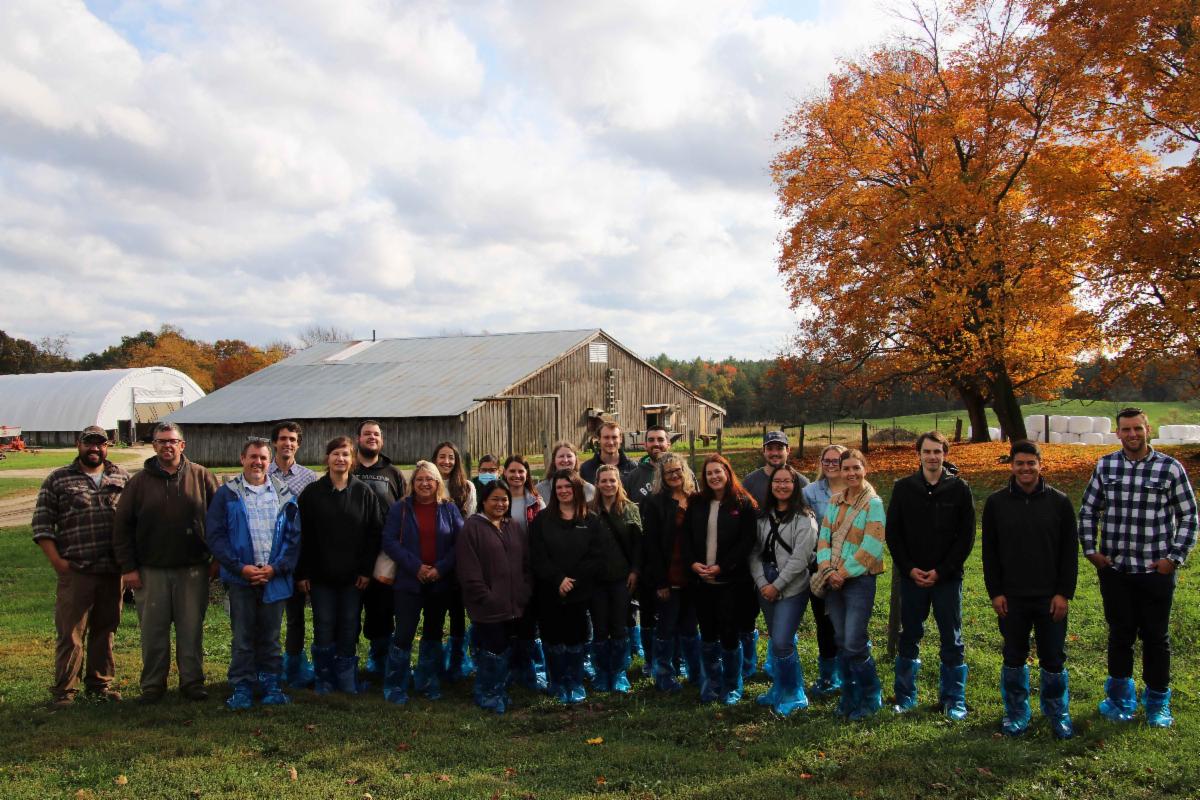
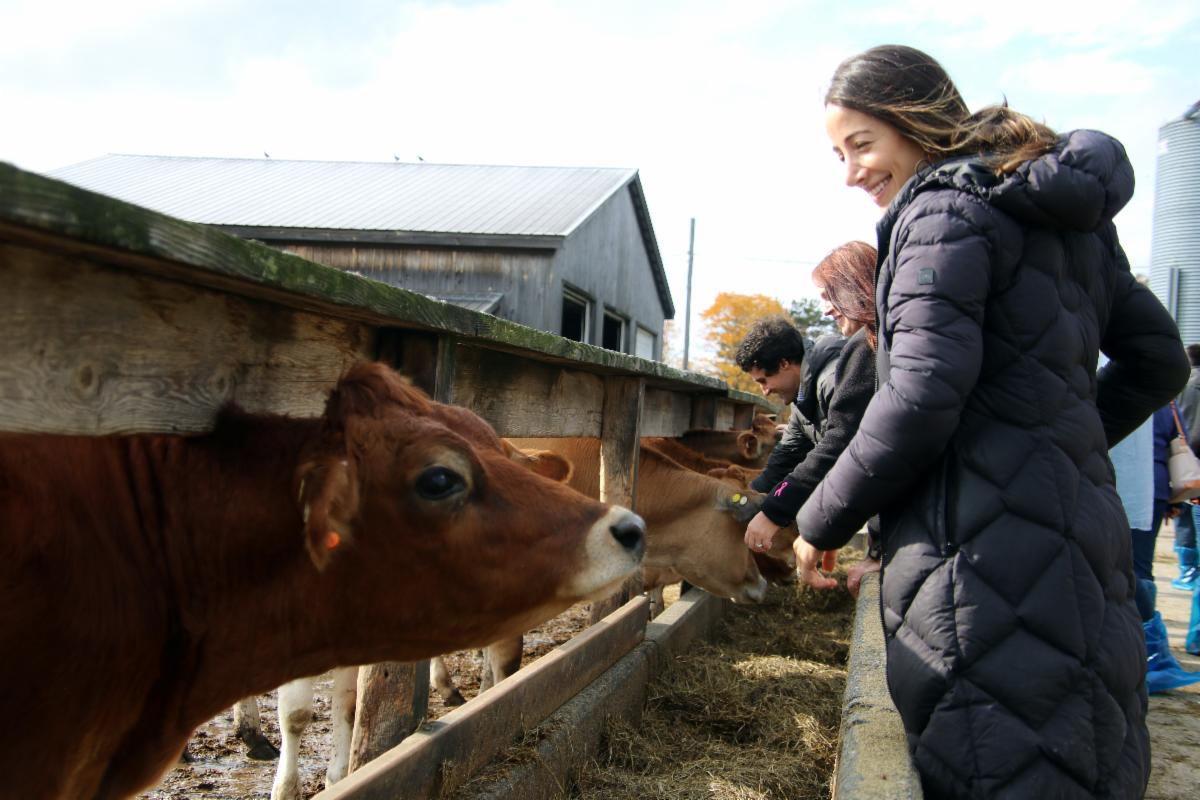
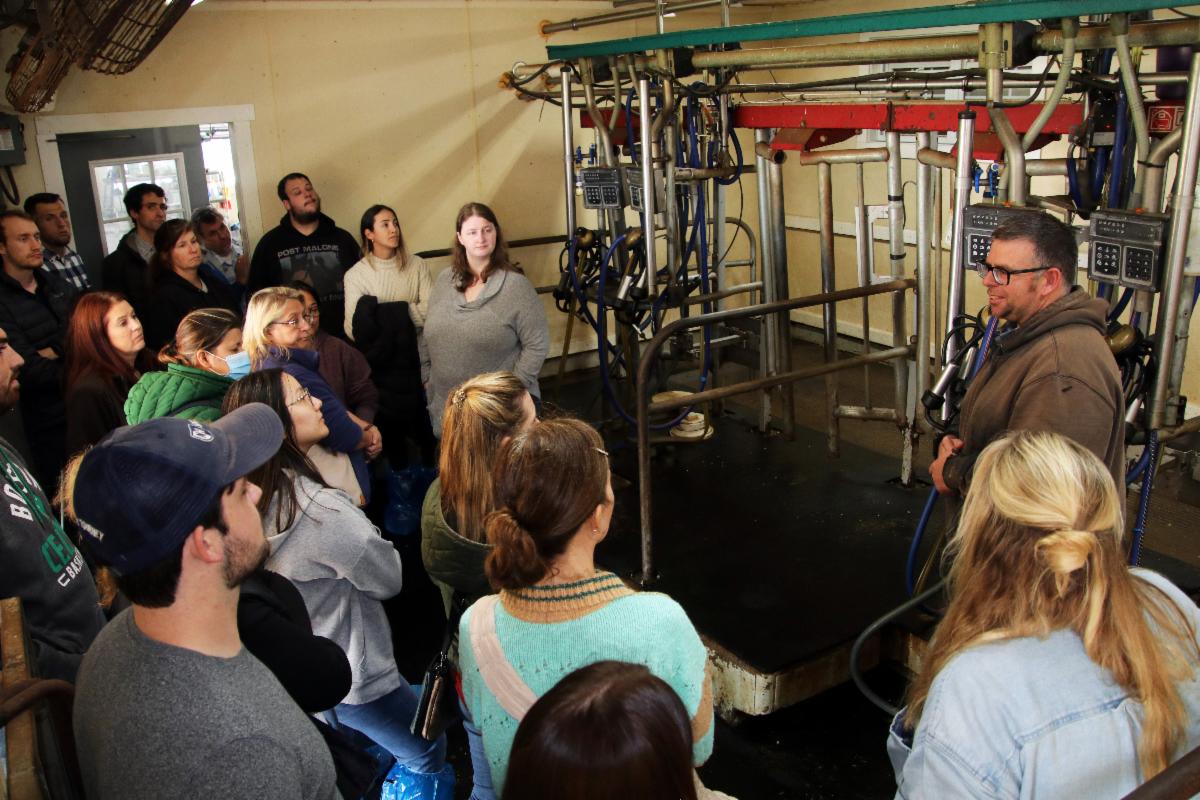
In mid-October, it was great to have new employees of Stonyfield Organic (right) visiting the UNH Organic Dairy Research Farm (ODRF). Stonyfield, one of the original supporters of the ODRF, continues to be a strong partner with the NHAES. They often bring their recent hires to our organic research dairy to have hands-on learning about what it takes to manage an organic dairy in the Northeast.
Enjoy fall in the Granite State and beyond, and I hope you're able to spend time with family and friends as we begin the holiday season. Thank you for your continued support of the NHAES!
Director, NH Agricultural Experiment Station
|
|
|
COLSA professor and NHAES scientist Becky Sideman is performing sustainable agriculture research with great benefit to both New Hampshire and New England. Her studies cover a wide variety of different fruit and vegetable products, including grapes, sweet potatoes, tomatoes and many more. This work helps strengthen local food networks by identifying and promoting the most effective local growing techniques. Watch the video.
|
|
|
|
|
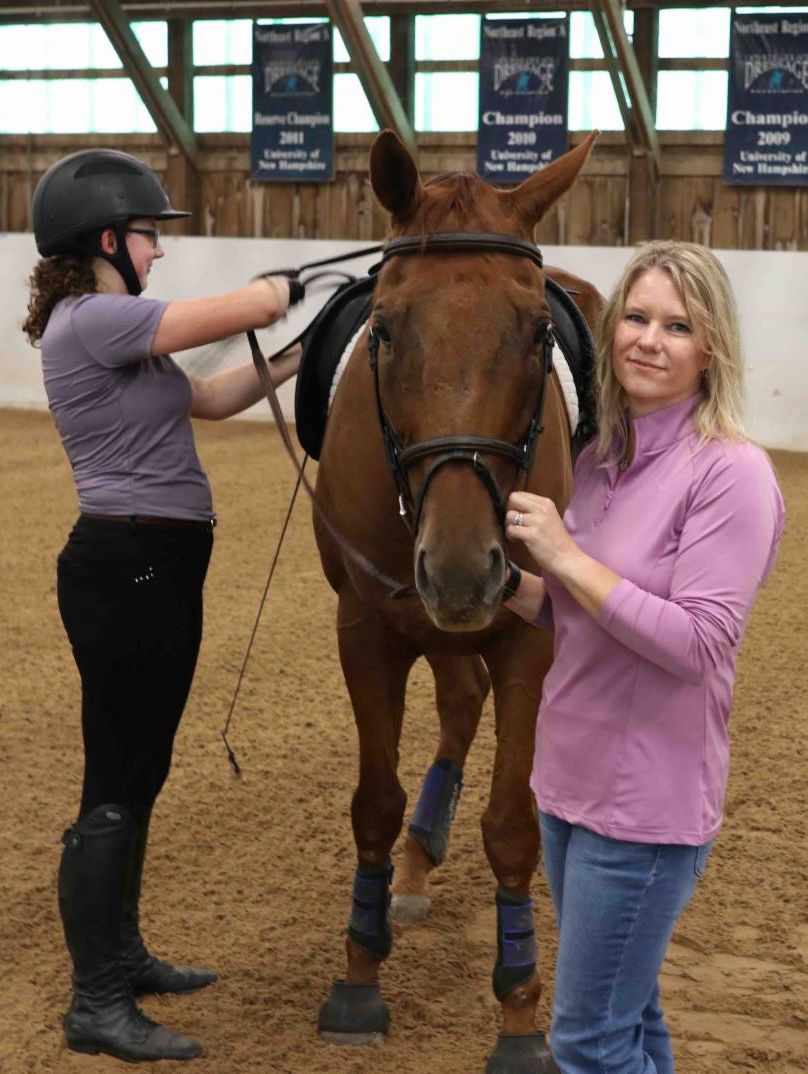
Rebecca Nelson spent more than two decades teaching riding lessons, organizing riding camps, and running her own boarding operations as owner/operator of Sunnybrook Farm in Maine. The recipient of a Bachelor’s in Equine Science and Master’s degree in Equestrian Education from William Woods University, she fondly recalls her time in higher ed, and says that experience was one of her main impetuses for accepting the position at UNH after retiring from running her own farm. Read more.
|
|
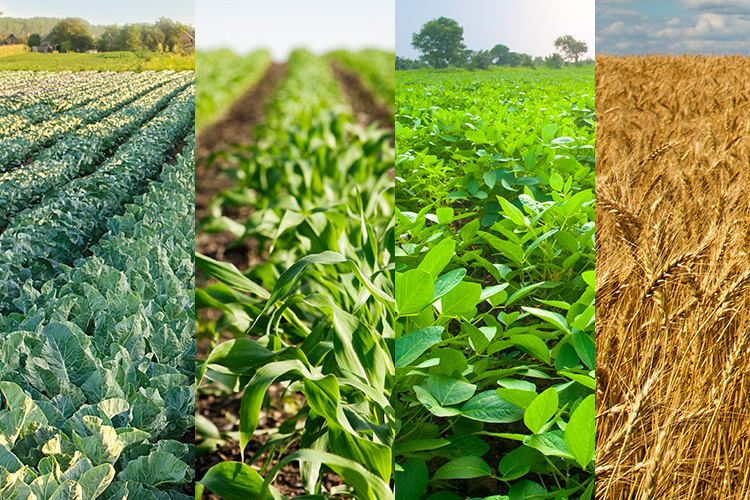
When it comes to crop rotations, complexity is key to boosting levels of nitrogen—a soil nutrient that is critical to crop production. However, new research from an international group of scientists—among them NH Agricultural Experiment Station scientist Stuart Grandy, a professor in the Natural Resources and the Environment department at UNH—shows that complex crop rotations can benefit levels of nitrogen even during droughts, when application of nitrogen fertilizers can be less effective. Read more.
|
|
|
|
Station scientist Scott Ollinger, director of the Earth Systems Research Center and professor of natural resources and the environment in the College of Life Sciences and Agriculture, was the recipient of the 2022 Excellence in Research Award at the University of New Hampshire's Faculty Excellence Awards ceremony Oct. 13. Read more.
|
|
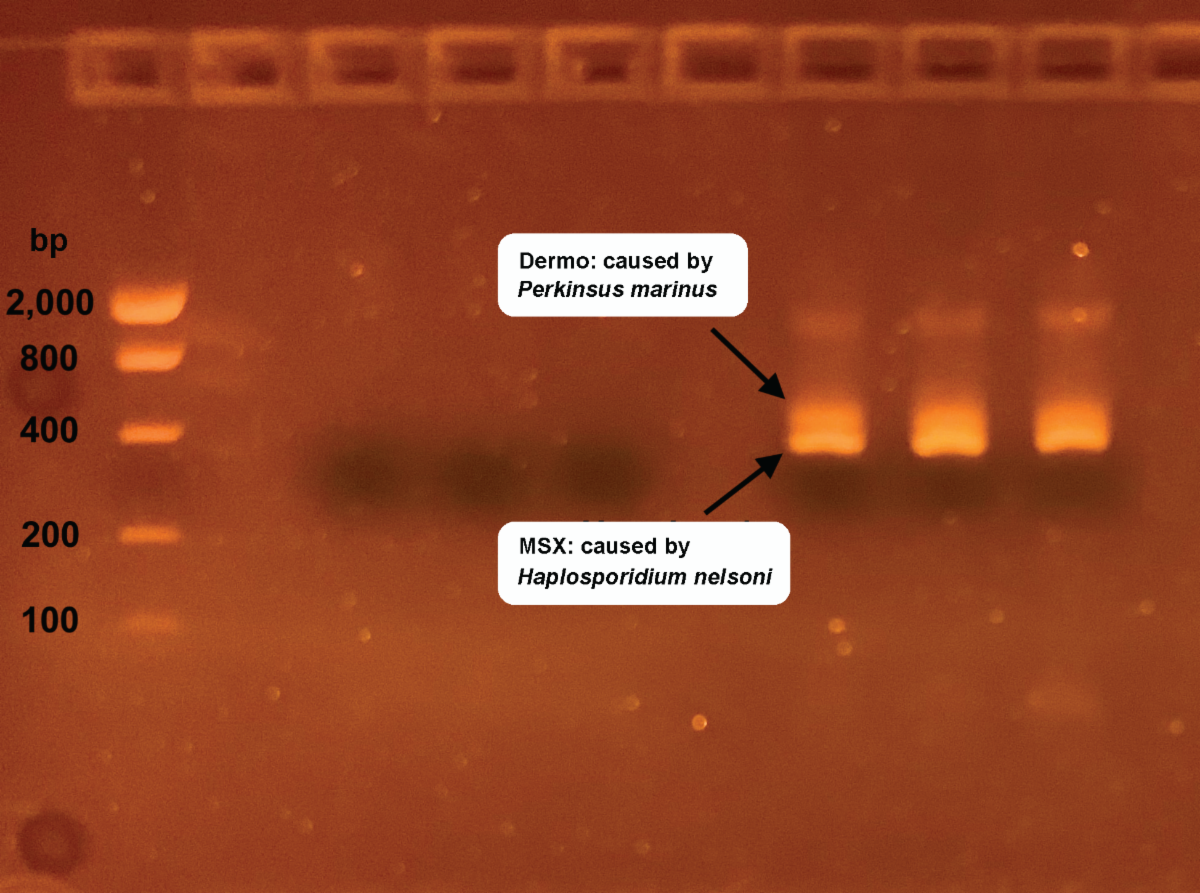
Eastern oysters, or Crassostrea virginica, are cultivated widely along the North American Atlantic coast for commercial and restoration purposes. Oysters in New Hampshire's Great Bay Estuary, as in many other locations, are under duress from a number of factors, including disease (MSX [Haplosporidium nelsoni] and Dermo [Perkinsus marinus]), over harvesting, habitat disturbance (siltation), and invasive organisms that either compete for space (tunicates, for example) or predate on them, like with green crabs and blue crabs. Read more.
|
|
|
|
Station scientists Sherman Bigornia and Maria Carlota Dao, and their research working with New Hampshire's Bhutanese refugee community, were recently profiled in this video from the Fall 2022 edition of Thrive magazine. Read more from Thrive online.
|
|
More Station News & Notes |
|
Upcoming COLSA Seminar Series
|
|
Follow NHAES on social media: |
|
|
|
|
|
|