Rail & Labor News from RWU
| |
Weekly Digest Number 51 - December 19th, 2023 | |
Welcome to the RWU Rail & Labor News! This news bulletin is produced and emailed out each Tuesday morning. We hope you find each week's news and information useful. If so, please share with co-workers, friends, and colleagues. If you like, you can sign them up to get all the news from RWU HERE. Or forward them the link. Note: If you read over this news bulletin each week, you will be sure to never miss the important news of what is going on in the railroad world from a worker's perspective!
| |
Editor's Note: Once again, hats off to ProPublica for their in depth no-nonsense investigative reporting. As any seasoned railroader can tell you - especially those who work for Class One freight carriers - this reporting is the tip of the iceberg of a deeply entrenched modus operandi of harassment, intimidation, and fear that the rail carriers wreak upon their employees. Great to see a news outlet collectively blow the whistle on this illegal behavior that is rife in the rail industry today. | |
|
Topher Sanders, Dan Schwartz, Danelle Morton, Gabriel Sandoval and Jessica Lussenhop / Dec 16
WHEN QUESTIONED BY federal officials or faced with an accident, the nation’s powerful freight railroad companies say they are among the safest employers in America and tout their injury records to prove it. But those statistics belie a troubling dynamic within the companies, ProPublica found: a culture that blames workers when they get hurt and motivates supervisors to go to extreme, and sometimes dangerous, lengths to keep injuries off the books.
| |
View the full series of articles this past year about rail safety from ProPublica | |
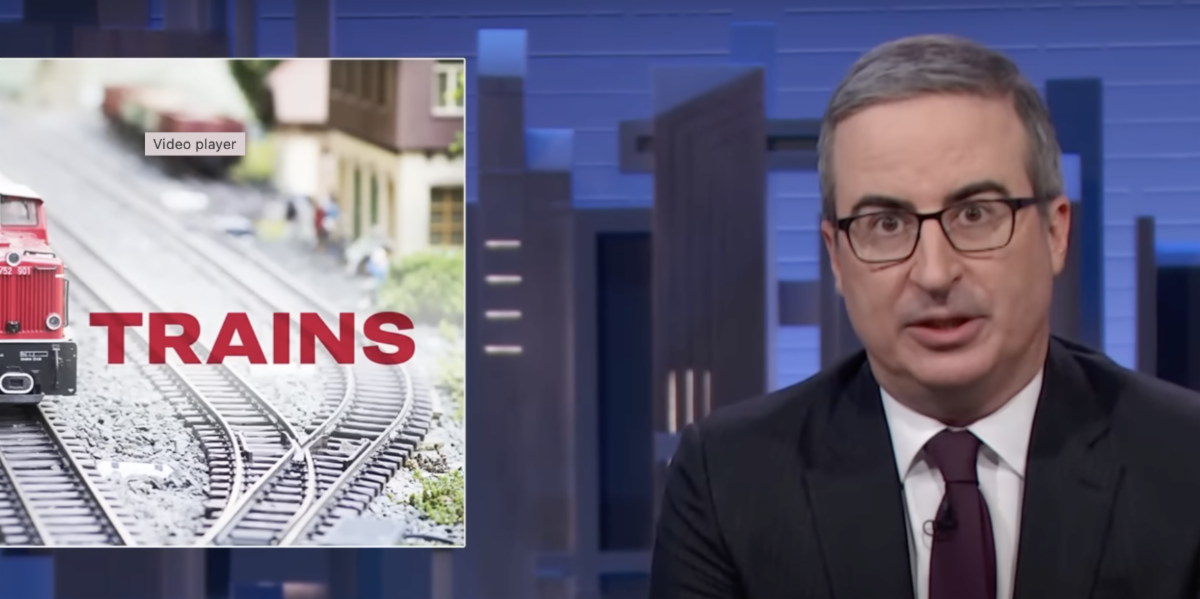
Editor's Note: This was forwarded as an RWU Special Bulletin last week and had already achieved nearly 3.2 million views in a matter of days! In case you missed it the first time around, please watch it and circulate it broadly. While those of us who work on the railroad might find some fault, and others may find the humor and language offensive, host John Oliver hits on so many of the basic safety issues that rail workers have pushed for years. Once again, our issues continue to percolate into the mainstream, and we continue to give the Class One carriers a black eye. NOTE: At 20:30 into the film, make sure to listen closely to the testimony on safety by none other than deceased rail CEO and PSR founder Hunter Harrison, preceded by locomotive engineer and RWU member Scott Wilcox.) | |
Editor's Note: Nearly 8 years after the fatal wreck of Amtrak #188 near Philadelphia, the episode may be finally drawing to a close. RWU has reported extensively over those years on the trials and tribulations of this engineer, drug through the mud by various PA prosecutors, vindicated and exonerated in the end. Unfortunately, Amtrak has balked at any kind of financial/legal support due to a technicality. | |
|
Nicholas Malfitano / Dec 15, 2023
The engineer of an Amtrak train that crashed and derailed in Philadelphia in 2015 looks to withdraw his suit against the transit company that pursued indemnification and restitution for costs he incurred in defending himself both civilly and criminally in proceedings stemming from the accident – in the interest of pursuing relief in a state court and preventing duplicative litigation.
|
|
Editor's Note: Many, perhaps most - if not all - of the items historically on "The List" were not implemented voluntarily by the transportation industry. Take the simple, easy and inexpensive recommendation that the rail industry implement "switch point indicators" to protect trains in "dark territory" at mainline track switches. This was recommended by NTSB in the aftermath of the Graniteville Train Crash disaster in 2005. The industry scoffed, never installed a single one. | |
|
Progressive Railroading / Dec 15th
The National Transportation Safety Board's Most Wanted List of Transportation Safety Improvements will end in 2023 after serving as the focus of the agency's safety advocacy efforts for nearly 35 years. "The Most Wanted List has served the NTSB well as an advocacy tool, especially in the days before social media, but our advocacy efforts must advance," said NTSB Chair Jennifer Homendy in a news release. "Freed from the structure of a formal list, the NTSB can more nimbly advocate for our recommendations and emerging safety issues."
| |
Editor's Note: No surprise here. In typical fashion, when the rail industry does not like what the feds have to say about its behavior, and when they make any attempt to rein in its inefficiencies, profiteering, rate gouging, poor customer service or anything else, the industry uses its deep pockets and powerful position to take actions like this one. | |
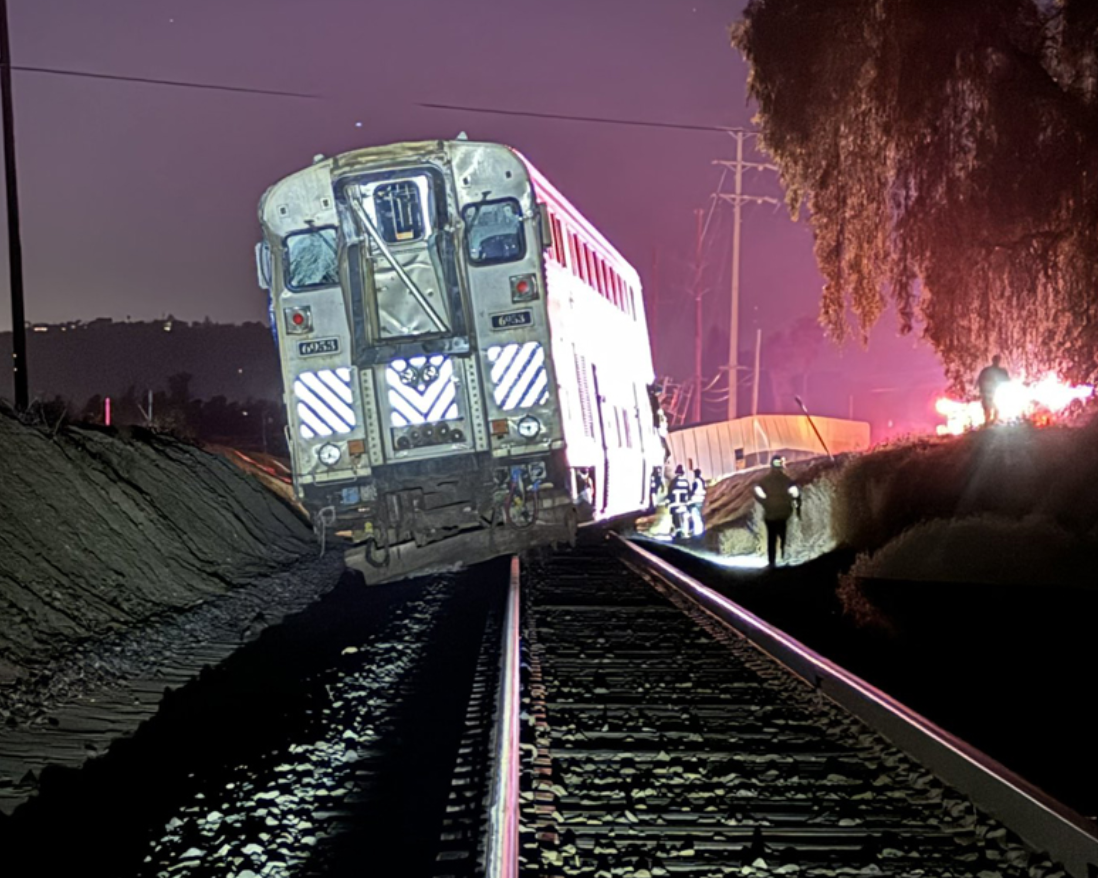
Editor's Note: Yet another passenger train derailing as a result of a grade crossing incident with a truck. How many more of these will take place in the years to come due to dangerous, improperly protected crossings? It is time that these crossings be closed, protected, or grade separated. | |
Trains Magazine / Dec 13th
SOMIS, Calif. — Five people were taken to hospitals for treatment after a Los Angeles-bound Amtrak Pacific Surfliner hit a truck at a grade crossing Tuesday, Dec. 12, derailing the train’s cab car. KABC-TV reports the collision occurred about 6:20 p.m. near the intersection of Sand Canyon Road and State Route 118 between Somis and Moorpark, Calif. Photos show an overturned semi-truck following the collision.
| |
Editor's Note: At a glance, this appears to be a step in the right direction. Had the government enacted proper rules earlier, the tragic runaway train wrecks at both Lac-Megantic (2013) and on Field Hill (2018) most likely would not have happened. | |
|
Trains Magazine / Dec 11th
The Canadian government has announced new rules regarding rail air brake inspection and maintenance, to take effect Dec. 1, 2025. The new changes to the federal Railway Freight and Passenger Train Brake Inspection and Safety Rules, announced on Friday, Dec. 8, require railroads to:
— Perform more robust brake inspections for heavy trains operating on a steep grade in cold weather;
— Develop and submit procedures related to those inspection requirements to Transport Canada;
— Strengthen requirements for maintenance of air brake cylinders.
| |
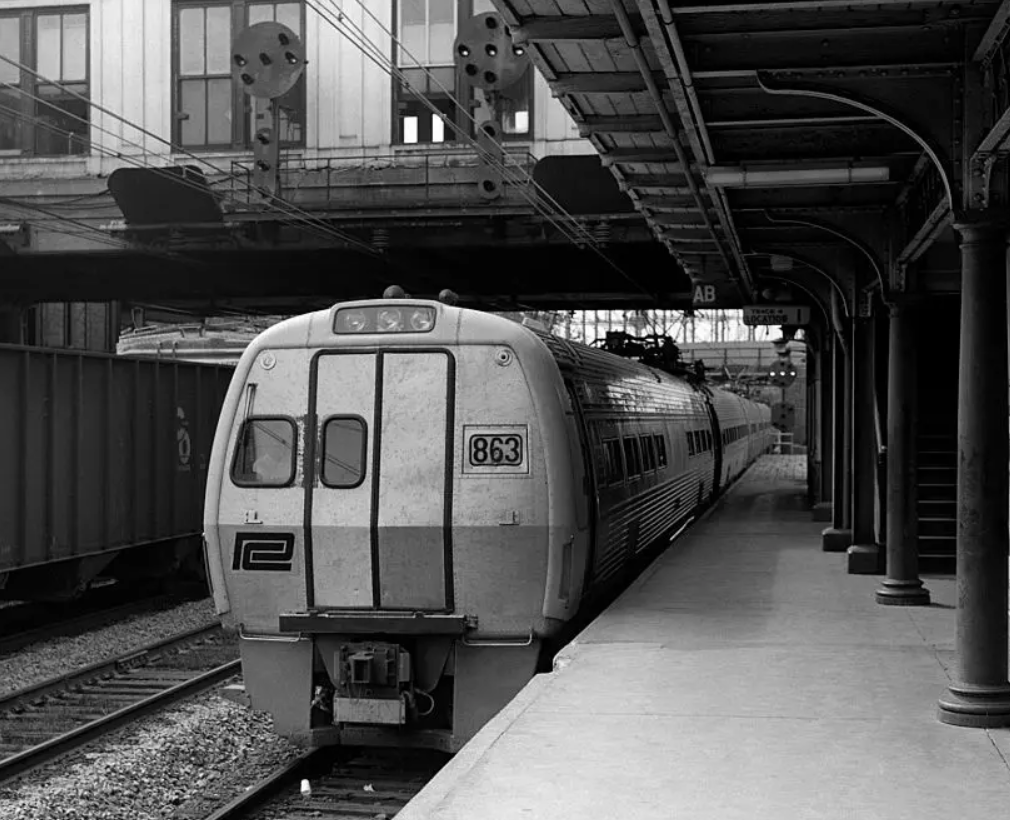
Editor's Note: This is an interesting piece about the failure of the U.S. to keep up with the rest of the world in terms of passenger rail. One glaring omission from the article is its lack of focus on the vehement opposition to passenger rail service expansion by the owners of those 140,000 miles of railroad track - the private freight rail carriers. | |
|
DAVID ALFF / DECEMBER 11
The 21st-century global boom in passenger rail projects has shown how fast trains can boost perception of the countries that run them. The U.S.’s frustrated pursuit of a bullet train, by contrast, reveals the perils of infrastructural compromises that make one set of tracks accommodate freight customers, commuters, and inter-city riders, and one train deliver profits while also serving the public good. Until public officials can decide what U.S. passenger trains should be—and who they must serve—the conditions that produced the star-crossed next-generation Acela project will temper the promise of American high-speed rail.
| |
Editor's Note: We have not seen such potential for a rail revitalization in half a century. Just imagine if we as a society had invested in rail the last 70 years the way we have in highways. We would have the greatest system of passenger rail in the world today. It is never too late! | |
|
Kea Wilson / Dec 11th
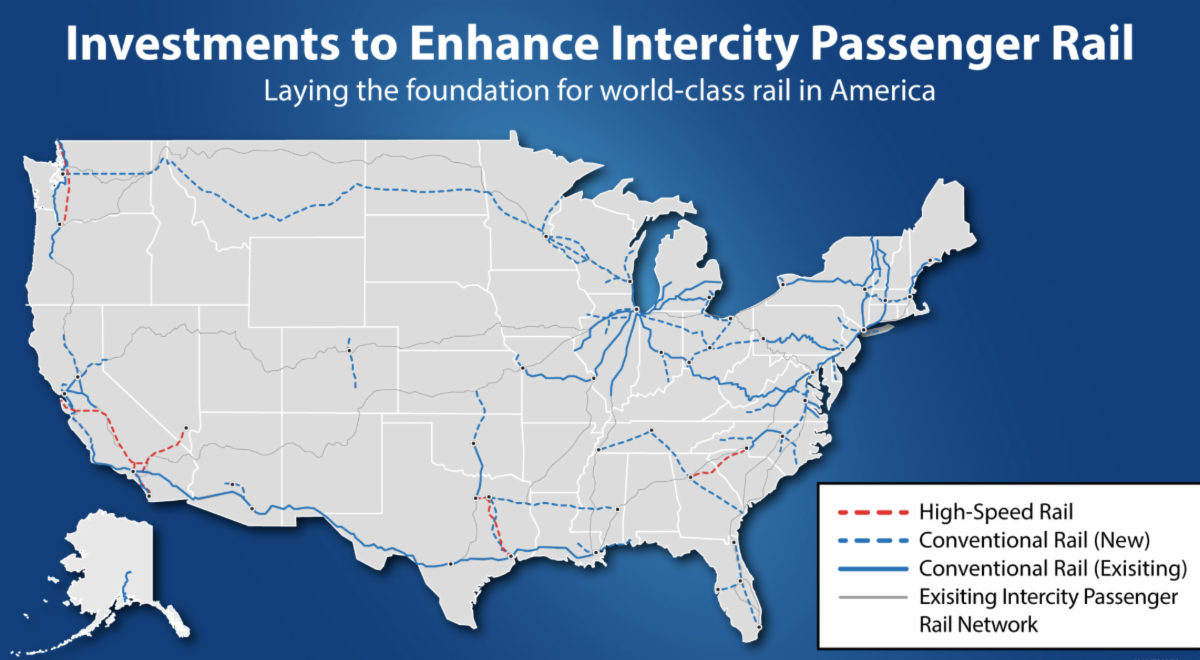
A new round of rail grants from the Biden administration could be planting the seeds for an interstate railway system that may someday rival the interstate highway system, some advocates say — and not just along the high speed rail corridors that will be its crown jewel. Corridor Identification and Development grants, which will devote $34.5 million to enhancing service in under-served regions — including the three largest U.S. metros that currently have no access to passenger rail at all. Phoenix, for instance, is receiving funding to explore its first-ever route (to Tucson), while Nashville is considering service to Memphis and Chattanooga, with an added connection to Atlanta; Columbus, Ohio, meanwhile, could secure links to Pittsburgh, Fort Wayne, and eventually Chicago.
| |
Editor's Note: The fact that ALL 12 members of the "Indigenous Council" have resigned speaks volumes about the lack of sincerity of CN's corporate pledge and commitment to change. | |
|
Progressive Railroading / Dec13
CN this week published a formal acknowledgment of the historical role railways played as instruments of colonial policies, as well as the intergenerational economic, cultural and social effects that these policies have had on Indigenous communities, according to a news release. But the 104-year-old company has "missed the mark" on reconciliation, they said, and that in order to have a better relationship with Indigenous Peoples, it must accept its past, take action and commit to change led by Indigenous business leaders, the statement said.
| |
Editor's Note: Yet another reason why cars - gas, diesel, electric or otherwise - are simply not the answer to the global climate and environment crisis. Trains - steel wheels on a steel rails - are! | |
|
FRED PEARCE / DECEMBER 4
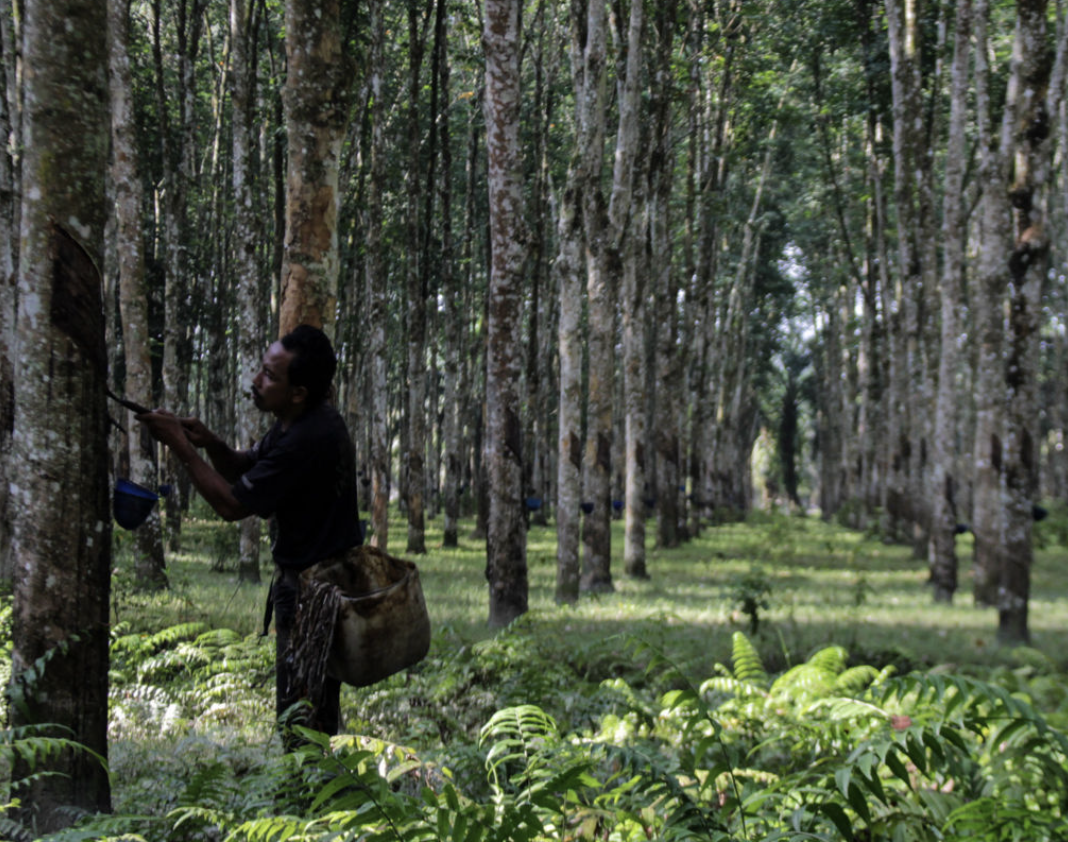
The growing market for rubber is a major, but largely overlooked, cause of tropical deforestation, new analysis shows. Most of the rubber goes to produce tires, more than 2 billion a year, and experts warn the transition to electric vehicles could accelerate rubber use.
| |
NEWS FROM AROUND THE LABOR MOVEMENT | |
Editor's Note: OSHA is a great idea at both state and federal levels. But when underfunded and understaffed, its mission subverted by corporate interests, it can be all smoke and mirrors, and fail to protect workers from unsafe workplaces. | |
|
Jordan Barab / Dec 15th
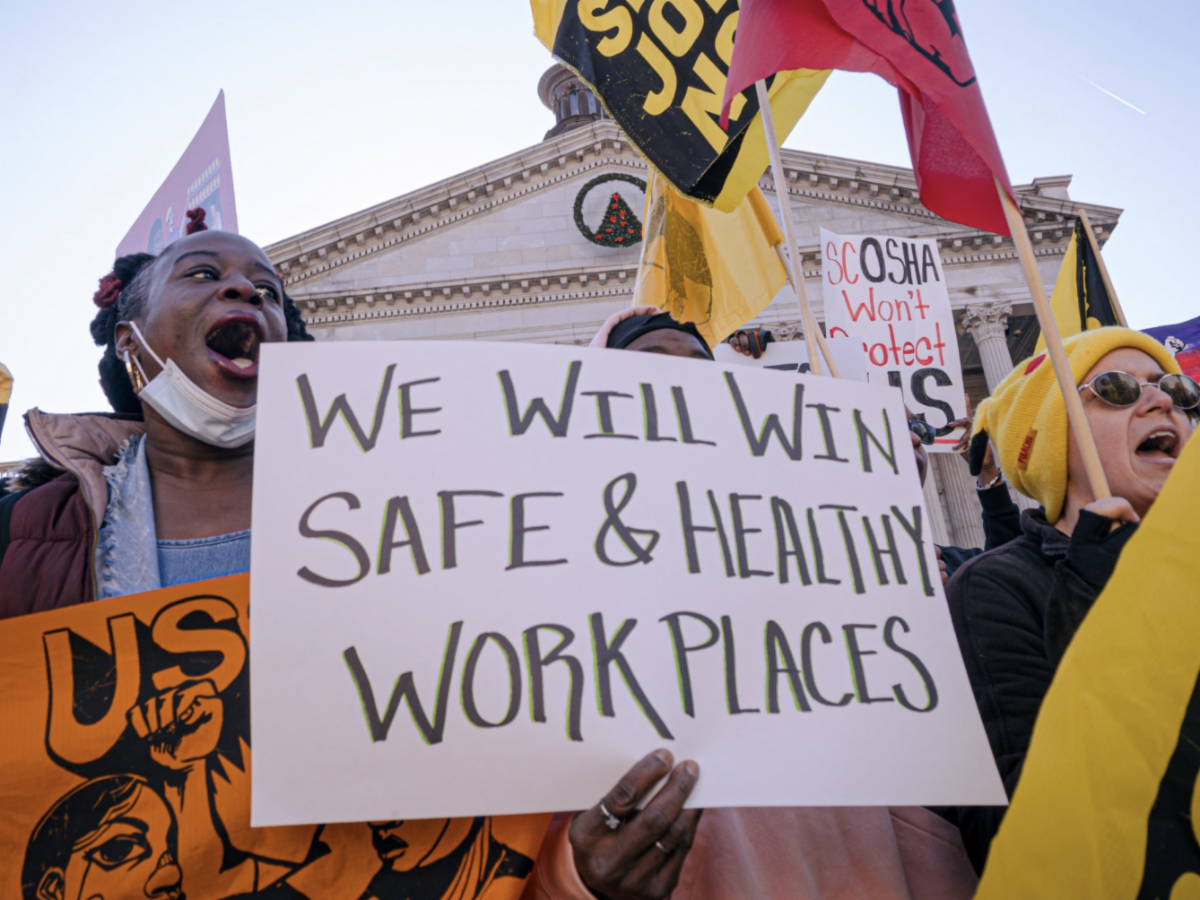
A labor union has petitioned federal OSHA to withdraw the state’s authority to run its own OSHA program. The union believes that federal OSHA can more effectively protect workers than the state’s OSHA program. In a petition sent to OSHA on December 7, the Union of Southern Service Workers (USSW), an affiliate of the Service Employees International Union (SEIU), requested that federal OSHA revoke South Carolina’s state plan “because the Plan has failed to maintain an effective enforcement program.” The union believes that federal OSHA can better protect workers than the state’s program.
| |
Editor's Note: The slogan of Railroad Workers United is "Solidarity - Unity - Democracy." We know that without the solidarity of the workers themselves, our power is limited. Likewise, without unity between unions, we are hamstrung, weak and divided. And there is the third leg of the stool - DEMOCRACY. Without it at every level of our unions, their true strength and power is squandered and cannot shine through. Members become cynical and bitter, dejected and demoralized. Leaders become aloof, conservative, and unimaginative, and fail to lead. Contracts are degraded. Corruption can become rife. Workers who want a strong union must always push for Solidarity and Unity and yes, Democracy as well! | |
|
Steven Ashby, Professor of Labor Studies, Chicago Labor Education Program, School of Labor and Employment Relations, University of Illinois at Champaign-Urbana
Any discussion of union democracy should begin with the obvious: labor unions are the most important vehicle to defend workers’ rights in the world. The world would be a far better place if every worker who wanted to could, without fear, join a labor union. Unions negotiate better wages and benefits than comparable non-union workers receive. Unions bring some element of democracy into an otherwise undemocratic workplace where the boss has unlimited power. A union grievance procedure brings a version of the Bill of Rights’ sixth amendment into the workplace –a worker accused of doing something wrong has due process rights.
| |
Editor's Note: Unions are moving forward on the question of a "just transition." RWU first adopted a position on support for just a transition in 2019. See the Resolution on the Green New Deal HERE. Auto workers, Teamsters, and others are jumping on board! Below LNS Editor Jeremy Brecher makes reference to the RWU Campaign for Public Ownership | |
|
Letter from the Editor
As momentum builds in the US and worldwide for a transition to a climate-safe economy, workers in all industries need to develop strategies like the UAW’s to make it a Just Transition.
| |
Weekly Derailment Department | | | | |