REMINDER: YOUR SUBMISSIONS ARE ENCOURAGED | | |
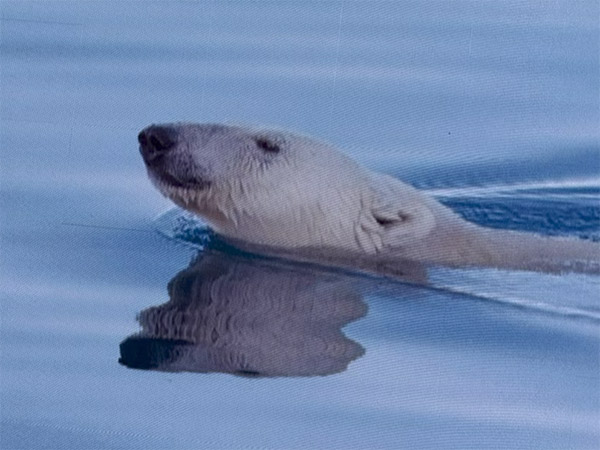
1. In Part 4 of Where's Beth?, my fellow passengers and I get a surprise visit from a polar bear swimming off the port side of the SH Vega as we depart Greenland and set sail for Iceland.
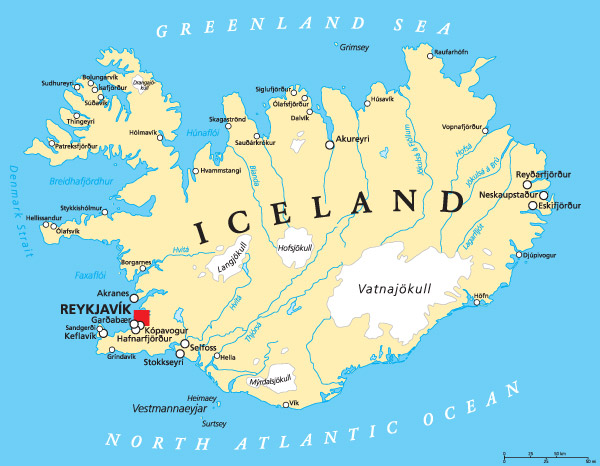
2. In Part 5 of Where's Beth? I find myself on the northwest coast of Iceland, where I spot a colony of arctic puffins and hike to one of Iceland's many beautiful waterfalls. I then move on to the capital city, where I visit Rykjavik's most prominent architectural landmarks, the Hallgrímskirkja Lutheran church.
3. Next, I have a short history of Iceland's Viking past, a timeline of significant events in Iceland spanning from the 10th to the 20th century, and the story of Iceland's national hero, Leif Erikson, who sailed to the west and discovered North America 500 years before Christopher Columbus.
4. In Around Town, I'm catching up on what's been happening in Tucson, where for the first time in 25 years, the city hosted the JCC Maccabi Games, an Olympic-style competition for Jewish athletes between 13 and 17 years old. This year's competition includes the inaugural addition of the Access program, which includes athletes with cognitive and developmental disabilities in the games.
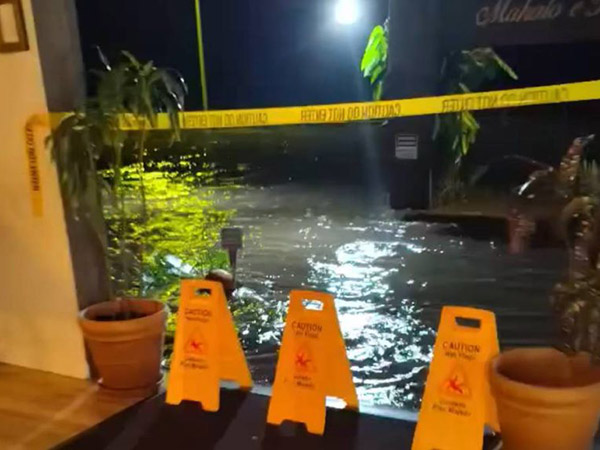
5. Tuesday's 8.8 magnitude earthquake on Russia's Kamchatka Peninsula caused a small tsunami to hit the town of Hilo on the Big Island of Hawai'i, causing minor flooding. Residents successfully evacuated low-lying areas.
6. This week's classic cartoon series post looks at Warner Bros.' introduction into animation with the creation of the Looney Tunes and Merry Melodies theatrical shorts.
| | Now, to this week's Flock. | | 1. Where's Beth? Arctic Cruise - Part 4 : Leaving Greenland | | I've been chronicling my cruise around the Arctic Ocean over the past two weeks. This week, I'm covering our departure from Greenland and my final destination, Iceland. Greenland had one gift left. As we headed out to sea on our way to Iceland, we spotted a polar bear swimming in the waters off the port side of our ship. | | Polar bears are excellent swimmers and surprisingly fast in the water, as you can see in this video from the ship. Everyone was quite excited to spot the apex predator of the Arctic. | |
2. Where's Beth Part 5: On to Iceland
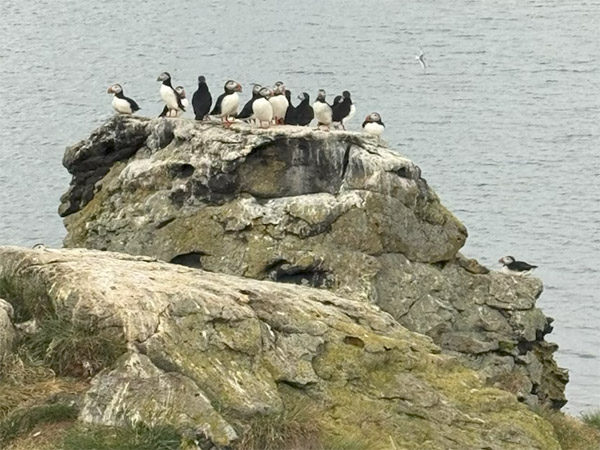
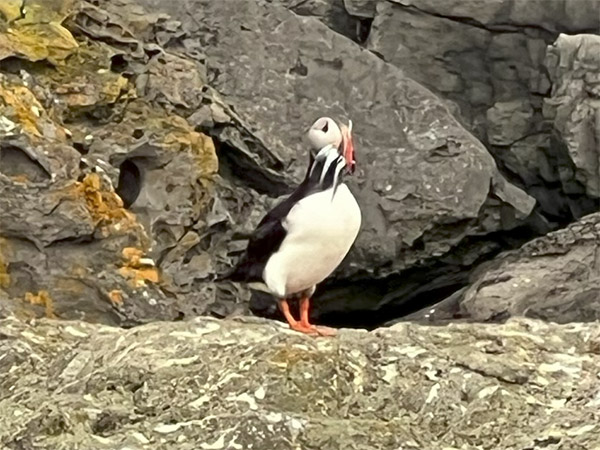
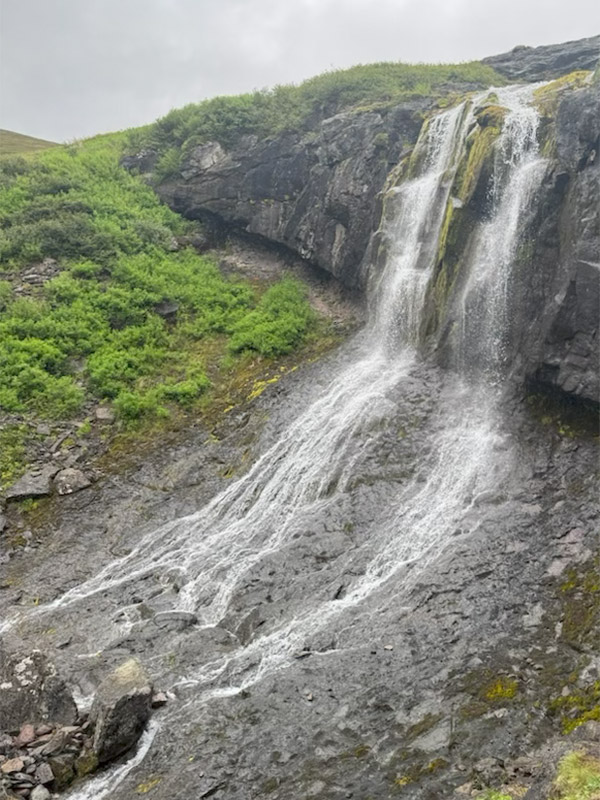
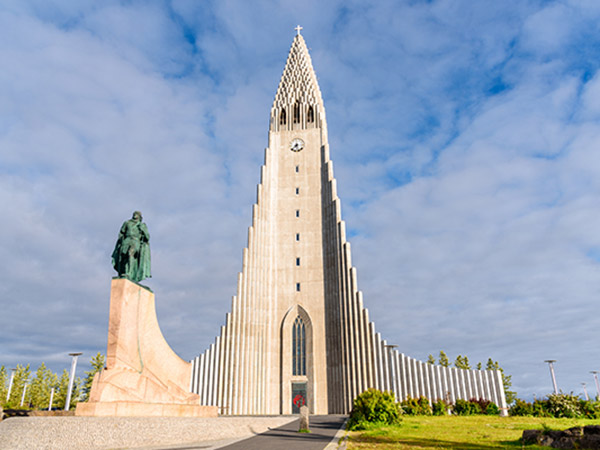
| | As our time in Greenland came to a close, it was time to sail east to our first destination in Iceland, the picturesque fishing village of Ísafjörður in the Westfjords region of northwest corner of the island where we docked in their harbor and were able to make some excursions through the beautiful Icelandic countryside and stretch our sealegs on solid land for awhile. I chose to join a three-hour hike through the countryside to a waterfall, and by luck, ran into a small colony of puffins near the coastline. After our visit here, we'll sail on to Reykjavík, the capital of Iceland. | | A small colony of arctic puffins basks on the shoreline cliffs, hunting for schools of small fish. | | A puffin holds its catch of sand lance in its mouth. Puffins have a uniquely hinged beak that allows the top half and bottom half to meet at different angles, along with a spiny tongue that helps them hold many fish without losing them. | After an hour-long hike, we reached the Bunarfoss Waterfall. | | One building in Reykjavik dominates the cities skyline and is a must see if you are visiting. The building is a work of art reflecting the natural beauty of Iceland inside and out. | | Hallgrímskirkja Lutheran Church | | |
Hallgrímskirkja Lutheran Church stands as an iconic symbol, majestically dominating the skyline of Reykjavík, the vibrant capital of Iceland. Named in honor of the revered poet and clergyman, Hallgrímur Pétursson, the church is a towering masterpiece, reaching a height of 75 meters, proudly claiming its status as the tallest church in Iceland.
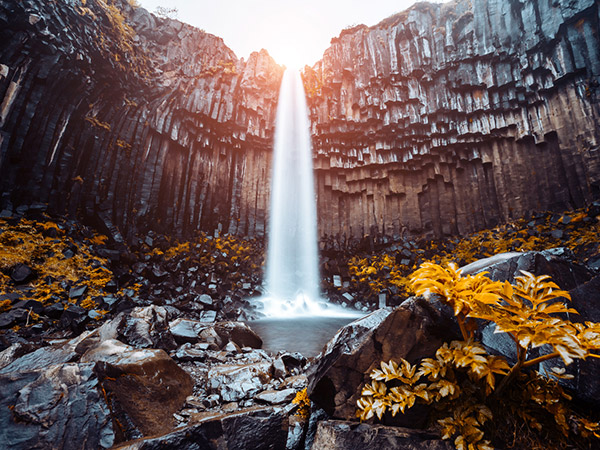
The Architecture and Brief History Embarking on its construction journey in 1945, Hallgrímskirkja reached completion in 1986. The church’s architectural marvel is attributed to Guðjón Samúelsson (1887 – 1950), a pioneering Icelandic architect and the first Icelander to receive formal education in architecture. Drawing inspiration from Iceland’s unique basalt rock formations, notably seen at Svartifoss Waterfall in Skaftafell National Park, the church stands as a testament to the nation’s geological wonders…
| | Svartifoss Waterfall, the inspiration for the Hallgrímskirkja church columns. | | |
For aficionados of architectural excellence, a visit to this landmark in Reykjavik is a must. The church’s tower not only offers an extraordinary panorama of the old city with its charmingly colorful houses but also provides a glimpse into the genius of Icelandic design. Ascending to the tower’s summit is easily accomplished through a brief elevator ride, highly recommended for an unparalleled visual experience.
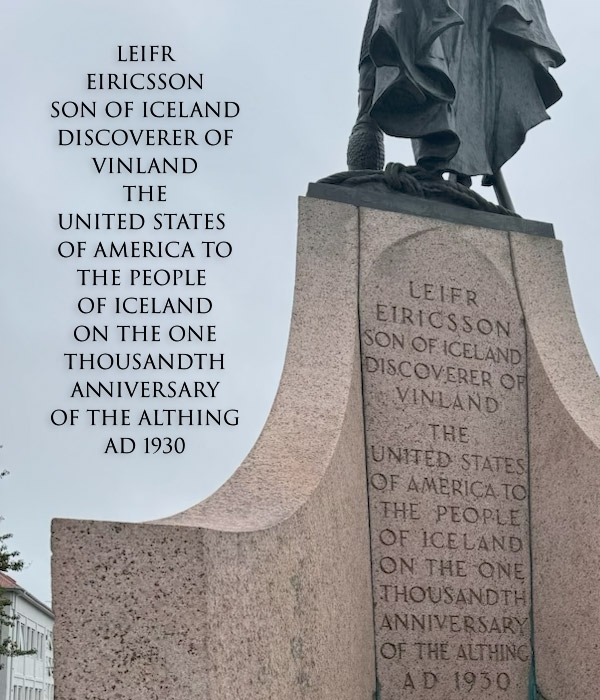
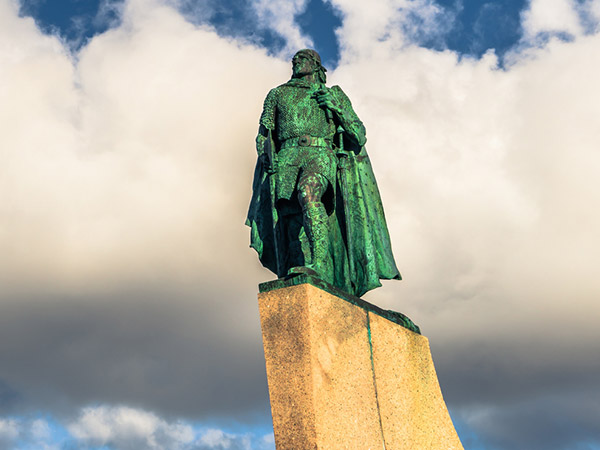
Situated on Skólavörðuholt Hill in central Reykjavik, Hallgrímskirkja serves as an unmistakable reference point in the cityscape. Its prominence makes it visible from afar, aiding travelers in navigating Reykjavik’s streets. The location also boasts a striking statue of Leifur Eiríksson, commonly known as Leif the Lucky, credited as the first European to set foot on North American soil, predating Columbus by approximately 500 years.
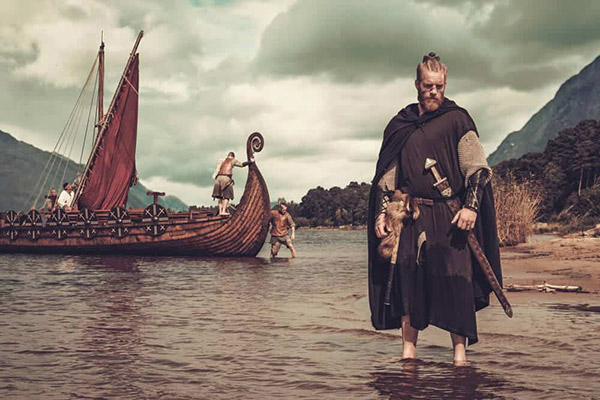
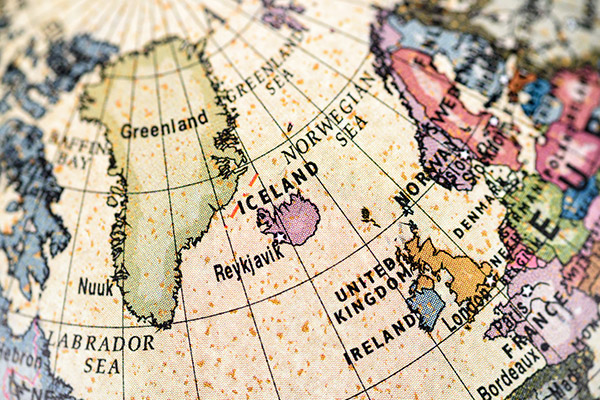
| | The inscription on the back of the Leif Erikson statue that was gifted to the people of Iceland from the United States Government to commemorate the one thousandth anniversary of the Althing in 1930. | | Settled by Vikings towards the end of the first millennium, and due in large part to its strategic location in the North Atlantic, Iceland's long history is intertwined with the other Nordic nations, Great Britain, and North America. | | Iceland’s Viking Past: The Settlements and The Sagas | | |
The Viking Age Settlements
If you traced the history of the Vikings in Iceland, you would eventually lead back to the island’s settlement. For a very long time, Iceland was uninhabited. There is a historical work by priest Ari Þorgilsson called the Íslendingabók (Book of Icelanders). It deals with early Icelandic history and chronicles the families who settled here. Icelanders use the modern-day, digital version to make sure they’re not dating a cousin!
According to the book, the settlement period started in 870 AD and lasted until 930 AD. While there is still some debate as to whether or not Irish monks lived on the island at the time the Vikings arrived, the official settlement date is 874 AD. This is when a Norseman named Naddod accidentally stumbled upon the island while sailing in the North Atlantic. Eventually, Norwegian families fleeing from cruel King Harald Fairhair began making their way to the newly discovered Iceland.
By 930 AD, much of the island has been settled and its ruling government had established the Althingi, the world’s oldest parliament…
It’s a large gathering of all the chieftains and powerful tribesmen who come together to make important decisions for the community. The Vikings who settled Iceland adopted (or rather, continued) this form of governance and established their Althingi at Thingvellir National Park.
| | The following is an abridged timeline of Icelandic history. | | Iceland profile - Timeline | | 870s - First Norse settlements on Iceland. Previous inhabitants were a small number of Irish monks. | 930 - An annual parliament - the Althing - established, to make laws and solve disputes. | 989 - Erik the Red takes settlers from Iceland to colonise Greenland. | 1000 - Iceland adopts Christianity. A golden age of Icelandic culture begins, producing great works of medieval literature. | 1262-4 - Icelanders recognise the King of Norway as their monarch. | 1380 - Norway and Iceland enter a union with the Danish crown. | 1402-04 - Plague hits Iceland, killing half the population. The plague returns in 1494-5 with similar fatalities. | 1550 - Catholic bishop, Jon Arason, captured and beheaded in his northern diocese. This marks the final victory of the Lutheran Reformation in Iceland. | 1602 - Denmark assumes a monopoly on all Icelandic trade. This continues for around 200 years. | 1700s - A period of decline in Iceland, with disease, famine and a volcanic eruption in 1783 reducing the impoverished population from 50,000 to 35,000. | 1814 - Norway enters union with Sweden; Iceland remains under Danish rule. | 1845 - The Althing meets again in Reykjavik. | | 1848 - Denmark's monarch renounces his absolute power; Denmark prepares to become a representative democracy. This raises questions about Iceland's status. | 1874 - Iceland given limited autonomy; the Althing has power over internal affairs. | 1904 - Iceland attains home rule; rule by parliamentary majority introduced. The country experiences rapid technological and economic progress. University of Iceland established in 1911. | 1918 - Iceland achieves full self-government under the Danish crown. Denmark retains control over foreign affairs only. The treaty is valid until 1943. | | 1940 - German forces occupy Denmark. British forces occupy Iceland. | 1941 - The United States takes over the defence of Iceland and stations thousands of troops in the country. | 1943 - The Treaty of Union with Denmark runs out, with Denmark still occupied by Nazi Germany. | 1944 - Icelanders vote in a referendum overwhelmingly to cut all ties with Denmark and become a republic. The Republic of Iceland is proclaimed on 17 June. | 1949 - Iceland becomes a member of Nato. | | |
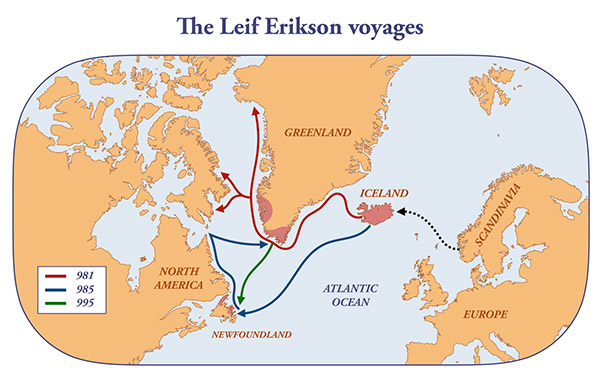
Leif Erikson (also spelled Ericsson, or Eiriksson) was the second of three sons of Erik the Red, who established a settlement in Greenland after he was exiled from Iceland. Leif Erikson's story was recorded in several different sagas, but the accounts they give are so different it is impossible to be certain of the details of his life.
He is thought to have visited Norway in around 1000 where he was converted to Christianity by Olaf I, who sent him back to Greenland to convert the settlers there. In one story, on his voyage to Greenland he sailed off-course and arrived in a place he called 'Vinland', because of the abundant grapes growing there, and the general fertility of the land. In another - the Groenlendinga saga - he heard of a land in the west from an Icelandic trader, and went to find it.
| The precise identity of Vinland remains uncertain, with various locations on the North American coast identified. In 1963, archaeologists found ruins of a Viking-type settlement at L'Anse aux Meadows, in northern Newfoundland, which correspond to Leif's description of Vinland. | |
4. Around Town: Tucson Hosts the JCC Maccabi Games
| | Now, back to what's been going on in Tucson. This past week, Tucson has had the honor of hosting the JCC Maccabi Games, an annual international Olympic-style sports competition for Jewish teenagers between 13 and 17 years old. The games are hosted by different Jewish Community Centers around North America each year, where teen athletes compete in a variety of sports, attend social and cultural events, and make new friends. This year, two cities host the games: Tucson(July 27 - Aug. 1) and Pittsburgh, PA (Aug 3 - 8). Tucson's games will feature the inaugural addition of the Access program, which includes athletes with cognitive and developmental disabilities in the games and will become a permanent part of the games. In another first for the Games, athletes competing in the Pittsburgh Games will be housed on the University of Pittsburgh Campus, creating an Olympic Village experience. | | Jewish teen athletes converge in Tucson for Olympic-style games | | |
Jewish teen athletes from the United States, Canada, Israel, Ukraine and Moldova have converged in the Old Pueblo to compete in Olympic-style events in baseball, basketball, co-ed flag football, soccer, volleyball, dance, golf, swimming and tennis.
It’s the first time in 25 years that Tucson is hosting the JCC Maccabi Games, which now feature the Access program, giving Jewish teens and young adults with cognitive and developmental disabilities the opportunity to participate.
| The Access program will now be a permanent part of the JCC Maccabi Games. | | “Oh we are so honored to have this here in Tucson, to be welcoming people really from around the world to participate in the games, to come see our beautiful community,” said Tucson JCC president and CEO Todd Rockoff… | | 2025 JCC Maccabi Games kick off with opening ceremony in Tucson | |
5. Natural Disasters: Tsunami hits the Big Island of Hawai'i
| | This past Tuesday, an 8.8 magnitude earthquake on Russia's Kamchatka Peninsula in the northern Pacific Ocean triggered tsunami warnings across the Pacific. Tsunami warnings were issued on the Big Island of Hawai'i, and residents responded by evacuating low-lying coastal areas. A small tsunami hit the town of Hilo causing minor flooding and limited damage. This is my home island, dear and close to my heart. My children were born on the island, and Mike continues to keep a small office on this wonderful island. I'm proud of the island's response to the tsunami. | | Hawai‘i County escapes a disaster, but lessons can be learned from tsunami response, coastline evacuation | | From: Big Island Now, By: Tiffany DeMasters and Kelsey Walling, July 30, 2025 | | |
Life on Hawai‘i Island has calmed down after a Tsunami Warning following an 8.8 magnitude earthquake in Russia on Tuesday, forcing the evacuation of residents and visitors from the coastline — and resulting in traffic gridlock for hours.
But before the first waves of the tsunami were expected to hit at 7:17 p.m. on Tuesday, most motorists were out of the inundation zones.
“For the most part, we achieved most of our goals,” Hawai‘i County Mayor Kimo Alameda said. “We got everyone out of the coastal areas by 6:15 p.m., which was great.”
On Wednesday, the limited damage was assessed and discussions already were underway on how to improve the traffic flow and speed up the process to those seeking higher ground.
While no major damages were reported, Hawai‘i County crews are still assessing the flooding that occurred in parts of Hilo, including water entering SCP Hilo Hotel, at 126 Banyan Way, from the nearby Reed’s Bay.
While water flowed into a few rooms on the first floor, SCP Hilo Hotel, formally the Hilo Seaside Hotel, remains fully open and operational.
| | Cleanup underway after tsunami floods seaside Hilo hotel | |
6. Cartoons: Early Warner Bros.
| | In the early 1930s, after the success Universal Studios was having with the Walt Disney-created Oswald the Lucky Rabbit series of animated shorts, Warner Bros. decided to create an animated series in part to compete with Universal Studios, and in part to market and leverage Warner Bros.' extensive music catalog. The two series that they created, Looney Tunes and Merry Melodies, would go on to rival animation giants like Disney Studios and become staples of American popular culture. | | The History of Warner Bros. Animation | | From LiveAbout, By: Christopher McKittrick, February 27, 2020 | | |
Some of the most iconic animated characters in film history, like Bugs Bunny, Daffy Duck, and Tweety Bird, were created by animators who worked at Warner Bros. In addition to entertaining multiple generations of children and adults, the animated shorts have won several Academy Awards and have been incredibly influential in the animation industry.
Origin of Warner Bros. Cartoons: Bosko, Buddy, and Beans the Cat
Warner Bros. Animation began when producer Leon Schlesinger, who was distantly related to the Warner Brothers who founded their namesake studio, hired a pair of animators, Hugh Harman and Rudolf Ising, veterans of Walt Disney's Kansas City cartoon studio. Schlesinger put them in charge of creating cartoon shorts for the Warner Bros.' feature releases. Harman and Ising created the character Bosko, who starred in the studio's first animated theatrical short: 1930's Sinkin' in the Bathtub. Because Walt Disney Productions had launched its Silly Symphony series of sound cartoon shorts the year before, Schlesinger dubbed his sound shorts "Looney Tunes," since these shorts initially involved music. Sinkin' in the Bathtub also included the first instance of a Warner Bros. character saying "That's all, folks!" to end a cartoon, which later became a trademark for the studio's character Porky Pig…
| | BOSKO - Sinkin' in the Bathtub (1930) | | |
After producing over 60 cartoons for Warner Bros., the Harman and Ising team split with Schlesinger over pay disputes in 1933. They took all of the characters they had created with them. Schlesinger formed Leon Schlesinger Productions to create cartoons for Warner Bros. and put together his own team of talent that worked in a small, cramped building on the Warner Bros. studio lot in Burbank (the building was later be dubbed "Termite Terrace").
The new star of Looney Tunes was initially the Bosko-like Buddy. Buddy was replaced as the main star of the series by another Bosko clone named Beans the Cat, who first appeared in the 1935 Technicolor short I Haven't Got a Hat. However, a much more important character also appeared in that short: Porky Pig. Though Porky was far more rotund than he would be in later years, in his very first appearance he already featured his trademark stutter. By the following year, Porky became the main star of Warner Bros. cartoons and was the studio's most successful character to date.
The new star of Looney Tunes was initially the Bosko-like Buddy. Buddy was replaced as the main star of the series by another Bosko clone named Beans the Cat, who first appeared in the 1935 Technicolor short I Haven't Got a Hat. However, a much more important character also appeared in that short: Porky Pig. Though Porky was far more rotund than he would be in later years, in his very first appearance he already featured his trademark stutter. By the following year, Porky became the main star of Warner Bros. cartoons and was the studio's most successful character to date.
| | Porky's Duck Hunt | First appearance of Daffy Duck - 1937 | | These Flock regulars are always here for you: | | Don't Be Shy: Share Your Stories! | | I'm looking forward to sharing more of your personal stories - oral, written, or otherwise, as we enter our third year. I'd so love to present them to The Flock, hit a mailbox below to share your story. | | Subscriptions & Idea Submissions
Reminder: Your submissions are always welcomed. | | |
Feel free to forward this email to a friend. If this was forwarded to you and you would like to receive your very own Flock Newsletter, you can sign up here. If you have any questions or suggestions for future Flock resources, don't hesitate to contact me.
Your fan and friend,
Beth
| | | The information and materials contained or referenced in this newsletter are for informational purposes only and not intended to be a substitute for professional medical advice, diagnosis, or treatment. Always consult a physician or other qualified medical professional with any questions you may have regarding a medical condition or treatment and before beginning a new health care regimen. Do not disregard professional medical advice or delay seeking medical advice or care based on anything contained in this newsletter. | | | | |