REMINDER: YOUR SUBMISSIONS ARE ENCOURAGED | |
|
1. I want to start this week by wishing everybody a Happy New Year! I hope you all have a joyous and prosperous 2025.
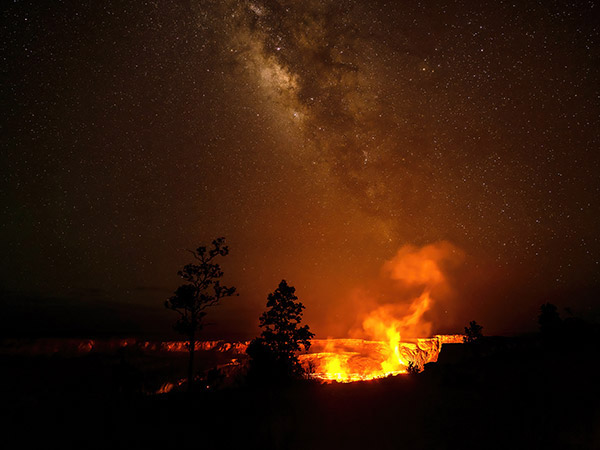
2. This past Monday, Kilauea on the Big Island of Hawaii began erupting for the third time in 2024, giving us one more show before the new year. I have some spectacular photos from the National Park Service along with details on the eruption.
3. Over the holidays, I got to discuss and learn more about AI (artificial intelligence) from some next genners . This got me interested in learning a little more about AI's history and future.
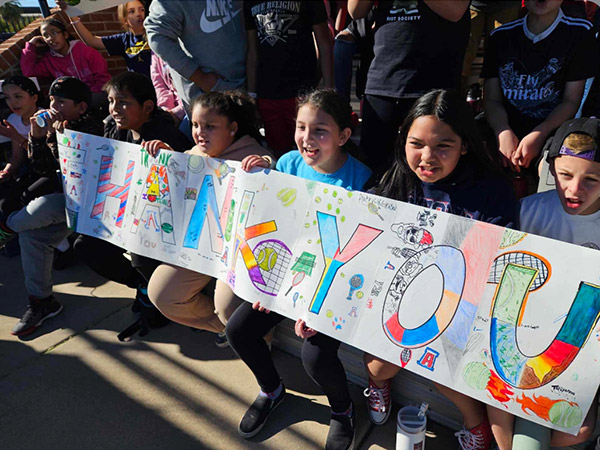
4. I have an update on the Tucson Community Tennis Program's UofA Day with the University of Arizona tennis team, and the class these kid's display showing us all how to say thank you. Thank you all.
5. In Wellness I'm looking at Cryotherapy this week, primarily as a therapy for sports injuries, joint & muscle pain, and swelling.
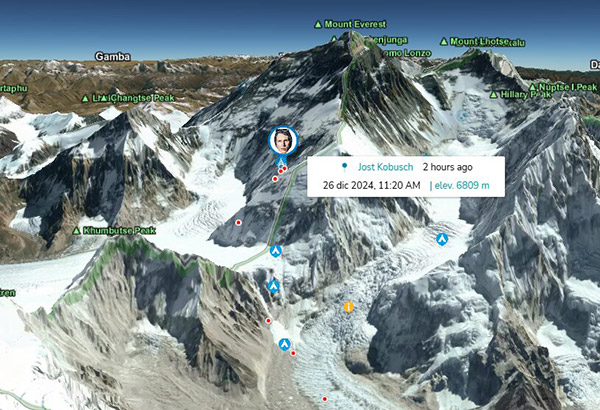
6. In Reaching High I have an update on the progress German climber Jost Kobusch has made on his attempt to at a solo winter summit of Mount Everest.
7. I haven't posted anything recently from our favorite spiritual teacher Dr. Hayward M. Fox, so I am getting one more of his wise aphorisms into The Flock before the end of the year.
| |
Now, to this week's Flock. | |
First off, I want to wish everybody a Happy New Year! I hope everybody had a nice holiday this week. This year was one of the rare occasions when Christmas and the first day of Hanukkah fell on the same day, this is only the fourth time this has happened since 1900. One of my readers let me know that there is a term for when Christmas and Hanukkah are celebrated together: it is the portmanteau Christmukkah. I had a wonderful holiday. I got to visit with family and had a great time. | |
2. Volcanoes: Kilauea Erupts Again
| |
photo: Janice Wei/ National Park Service | |
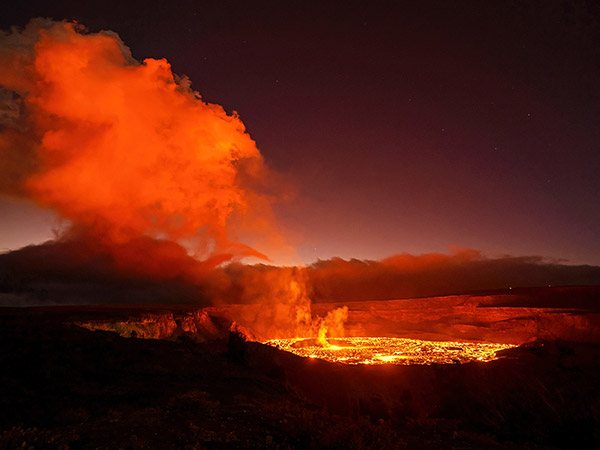
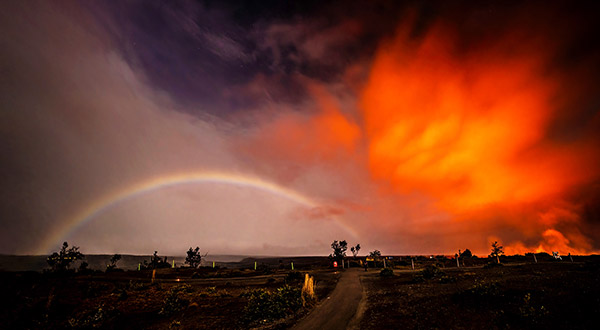
Pele is making herself heard again. Kilauea has been erupting regularly since 1985. After eruptions in June and September, this will be the third eruption this year. Air quality downwind of the crater has been affected by the eruption, but the designated observation area in Volcanoes National Park is upwind of the crater and remains open to the public. | |
Stunning photos show lava erupting from Hawaii’s Kilauea volcano | |
|
One of the world’s most active volcanoes spewed lava into the air for a second straight day on Tuesday.
The eruption of Kilauea volcano on Hawaii’s Big Island has stayed within the mountain’s summit caldera inside Hawaii Volcanoes National Park. No homes were threatened.
| |
photo: National Park Service | |
|
Molten rock began shooting from the volcano before dawn on Monday when fissures opened in the caldera floor and propelled lava 295 feet (90 meters) into the air. The red liquid formed tall fountains and then spread across 650 acres (263 hectares). The Hawaiian Volcano Observatory estimated the lava was about 1 yard (1 meter) thick.
Scientists expect activity to fluctuate in the coming days. The lava paused Monday afternoon but fountains reemerged Tuesday morning.
The eruption occurred in an area that’s been closed to the public since 2007 due to hazards including crater wall instability and rockfalls. Visitors to the park were able to watch the foundations at a distance from an overlook spot.
This eruption is the sixth in Kilauea’s summit caldera since 2020.
| |
photo: National Park Service | |
3. Artificial Intelligence: A History of AI | |
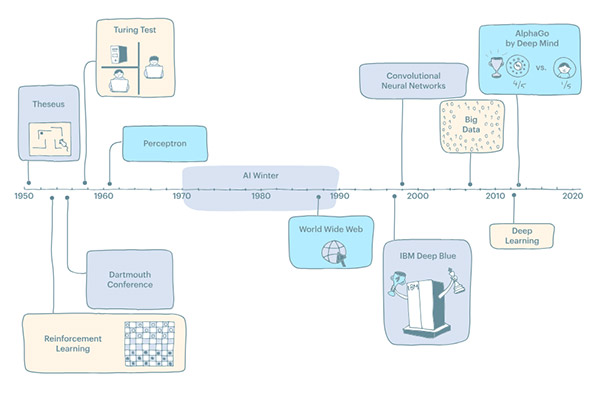
Over the holidays, I got into a discussion about AI (artificial intelligence) with the next generation and this got me thinking about just how long AI has been around. I did some digging and found the following series of article. | |
The highs and lows of AI, from antiquity to the present day. | |
|
The term artificial intelligence (AI) wasn’t coined until the mid-20th century, but the idea of building intelligent systems has fascinated human beings for thousands of years. It’s a concept that predates the industrial revolution and the invention of the first digital computer. It’s also been a frequent source of inspiration for creators of fantasy and science fiction.
Since it was formally defined in the 1950s, the field of AI has seen many ups and downs, excitements and disappointments, breakthroughs and stalemates. In the last few decades AI has made significant advances, but it has also failed to fulfill many of its early promises – so far, at least.
What we have seen is the creation of AI systems that have changed the way we think about human intelligence, and taught us new-found appreciation for its sophistication and complexity. In this article we will outline a brief history of AI, consider its key achievements, and also look at some of the lessons that have been learnt along the way.
| In philosophy, scholars across Greece, India, and China each arrived independently at the formalization of logical systems and deductive reasoning. Aristotle is typically considered the first logician in Western culture, and over the following centuries his ideas were developed by many others, including Euclid, father of geometry, and Al-Khwarizmi, whose name is the source of the word “algorithm”, which is the cornerstone of computer science. | |
4. Tennis: TCTP U of A Day 2024 | |
The Tucson Community Tennis Program is the best! They recently had their U of A Day. the participants got to meet and play with members of the University of Arizona tennis team. Everybody had a great time and once again showed their class by showing us all how to say thank you. | |
Our in-school players had an amazing time at the University of Arizona, training alongside the talented U of A tennis team! From one-on-one coaching to playing matches against college athletes, these kids got a taste of collegiate-level tennis and created memories to last a lifetime. | |
'Passion and joy': UA Tennis teams and (local) foundation teach tennis | |
Cryotherapy, in general, is the use of low temperatures in medical therapy. Cryotherapy in the form of cryosurgery is commonly used locally in dermatology where liquid nitrogen is used to remove or destroy abnormal skin tissue. Whole body cryotherapy, where the patient typically enters a cryotherapy chamber exposing the whole body to extremely cold temperatures is growing in popularity for treating sports injuries like muscle pain, sprains joint pain and swelling. | |
From: Healthline, By: Ana Gotter, November 20, 2023 | |
|
There is plenty of anecdotal evidence and research that cryotherapy offers health benefits. But whole body cryotherapy is still being researched. A healthcare professional can help figure out what’s right for you.
Cryotherapy, which literally means “cold therapy,” is a technique where the body is exposed to extremely cold temperatures for several minutes.
Cryotherapy can be delivered to just one area, or you can opt for whole-body cryotherapy. Localized cryotherapy can be administered in a number of ways, including through ice packs, ice massage, coolant sprays, ice baths, and even through probes administered into tissue.
The theory for whole-body cryotherapy (WBC) is that by immersing the body in extremely cold air for several minutes, you could receive a number of health benefits. The individual will stand in an enclosed chamber or a small enclosure that surrounds their body but has an opening for their head at the top. The enclosure will drop to between negative 200–300°F. They’ll stay in the ultra-low temperature air for between two and four minutes.
You can get benefits from just one session of cryotherapy, but it’s most effective when used regularly. Some athletes use cryotherapy twice a day. Others will go daily for 10 days and then once a month afterwards.
Benefits of cryotherapy
1. Reduces migraine symptoms
2. Numbs nerve irritation
3. Helps treat mood disorders
4. Reduces arthritic pain
5. May help treat low-risk tumors
6. May help prevent dementia and Alzheimer’s disease
7. Treats atopic dermatitis and other skin conditions
| |
6. Reaching High: Solo Everest Attempt - Update | |
Last week, I featured german climber Jost Kobusch as he began his winter solo ascent of Mount Everest. After one week he's made impressive progress up the west Ridge. | |
Jost Kobusch Racing Up Winter Everest | |
|
Jost Kobuch has started his climb on Everest at a remarkable pace. On his first foray, he passed the Lho La and is speeding up the West Ridge.
According to his tracker, the German climber reached 6,800m today and showed no intention to turn around yet. He is not far from both the West Shoulder, above the Western Cwm, and the second col, which lies right above Camp 2 on the normal route.
800 meters above schedule
According to his preliminary plans, Kobusch intended to fix some ropes on the mixed face leading to the Lho La (the col separating the west ridge of Everest and Khumbutse Peak) and pitch a Camp 1 there. As he explained in the Instagram video below, Kobusch prefers to access the Lho La on ice rather than by climbing on bare rock. He climbs the ice with no anchors. Once on top, he lays a rope down for rappelling and further climbs.
| |
7. Hayward M. Fox, Ph. D. : From Dr. Fox's Blog
| |
As we approach the end of 2024, I wanted to include one more pearl of wisdom from The Flock's favorite teacher and spiritual guide, Dr. Hayward M. Fox of the Institute of Personal and Transpersonal Knowledge, who reminds us, "We are not a product of our past." | |
We are not a product of our past | |
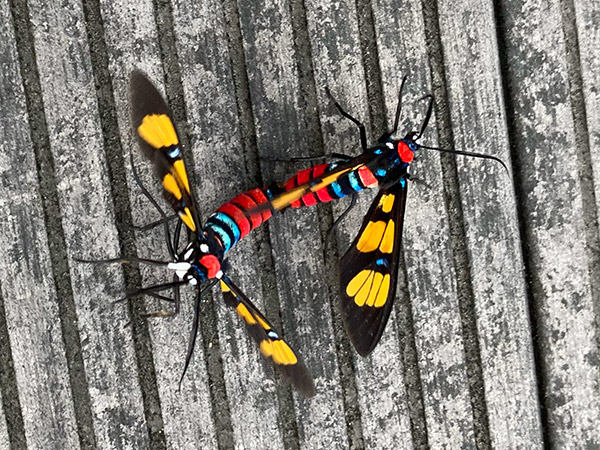
photo: Wasp moths, Euchromia polymena, submitted by a reader in Taiwan | |
These Flock regulars are always here for you: | |
In coming weeks: we'll be sharing more investigative articles from our roving reporter William George, original writing from Flock favorite Dino DeConcini. | |
Don't Be Shy: Share Your Stories! | |
I'm looking forward to sharing more of your personal stories - oral, written, or otherwise, as we enter our third year. I'd so love to present them to The Flock, hit a mailbox below to share your story. | |
Subscriptions & Idea Submissions
Reminder: Your submissions are always welcomed. | |
|
Feel free to forward this email to a friend. If this was forwarded to you and you would like to receive your very own Flock Newsletter, you can sign up here. If you have any questions or suggestions for future Flock resources, don't hesitate to contact me.
Your fan and friend,
Beth
| | |
The information and materials contained or referenced in this newsletter are for informational purposes only and not intended to be a substitute for professional medical advice, diagnosis, or treatment. Always consult a physician or other qualified medical professional with any questions you may have regarding a medical condition or treatment and before beginning a new health care regimen. Do not disregard professional medical advice or delay seeking medical advice or care based on anything contained in this newsletter. | | | | |