Welcome to this issue of the HEAL Data2Action (HD2A) Digest! Please share with colleagues, friends, and anyone else you know who might be interested in our work and encourage them to subscribe to our newsletter. | |
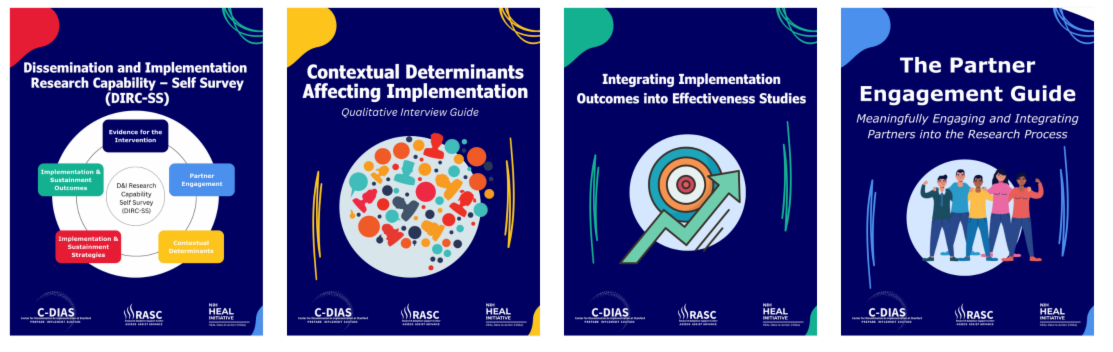
NEW! Implementation Guides and Measures | An essential part of ensuring that people have equitable access to the best addiction treatments is to develop interventions that are not only effective, but also are easily translated into practice. The Center for Dissemination & Implementation At Stanford (C-DIAS) and the Research Adoption Support Center (RASC) recently launched a series of Implementation Guides and Measures that are designed to support researchers and anyone seeking to effectively implement a health care innovation. Visit our website today to download the guides! | |
HD2A Presents at the 5th annual HEAL Initiative Investigator Meeting | |
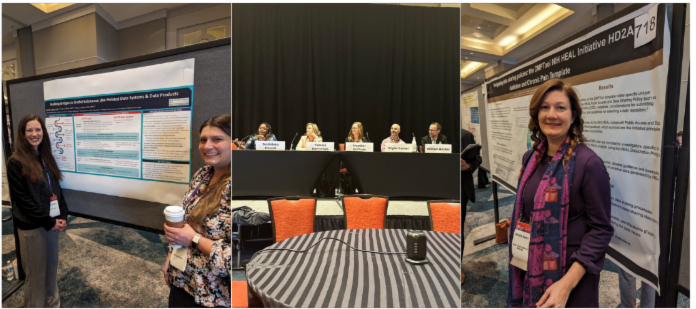
On February 7-8, 2024, the NIH HEAL Initiative hosted the HEAL Investigators Meeting. This gathering united HEAL grantees, federal officials, individuals with lived experience, and stakeholders. The event facilitated sharing research findings, discussing trends, addressing common challenges, and identifying opportunities to progress the initiative's goals.
During the two-day event, members from the HD2A network presented posters and were featured in panels where they discussed a breadth of topics including intervention implementability, meaningfully engaging partners, preventing overdose and so much more. Visit our website to see posters and a symposium from HD2A.
| |
The HD2A Board of Partners is a group of passionate individuals who provide insight, expertise and feedback with the goal of advancing the work of HD2A. In the fall, we added a new addition to our Board of Partners: Anthony Salandy of the Harm Reduction Coalition. Read about our new partner and the rest of the board here. | |
New Innovation/Acceleration Project and NIDA Additions | |
We recently welcomed a series of new members to the HD2A network. Keep reading to learn more about these passionate and impressive individuals. | |
|
Ashly Jordan is the newest MPI for the New York University innovation project. Dr. Jordan is an interdisciplinary epidemiologist with more than 15 years of applied public health practice and academic research experience. Dr Jordan’s work is grounded in social justice and in principles of equity and harm reduction. The aim of her work is centered on collaboratively developing sustainable and evidence-based policies and programs. She is focused on using rigorous and pragmatic research and program effectiveness assessments to identify the role of structural and intersectional inequities in producing and re-producing contexts that create disparate conditions that differentially privilege groups of people.
| |
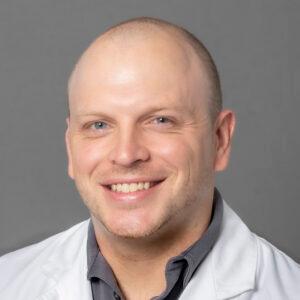 |  | Tanner Wright recently joined the CADENCE: Continuous and Data-Driven Care innovation project as an MPI. He is a board-certified general pediatrician at University of South Florida who works as a Neonatal Hospitalist at Tampa General Hospital specializing in the care of infants with in-utero exposure to medications and/or substances and is the Medical Director of the Promoting Early Developmental Interventions Clinic at Mary Lee’s House, a collaboration with the Healthy Start Coalition where parent-child dyads with elevated social risks are followed. He is a subject matter expert for the American Academy of Pediatrics "Maternal- Infant Health and Opioid Use Collaborative," and an invited technical consultant for the United Nations Office on Drugs and Crime (UNODC). Dr. Wright works closely with treatment centers and community resources to advocate on behalf of families affected by substance use. His research endeavors have led to multiple NIH clinical research sub-awards and CDC grants for work with caregiver-infant dyads affected by opioid use.
| |
 | | Sean Lynch is the new Program Official for all of the innovation projects. He works on administering a portfolio of research grants in topic areas such as the behavioral health workforce, telehealth, adolescents, mental health comorbidities, and service delivery in rural settings. Dr. Lynch has more than 15 years of experience in behavioral health services research and the evaluation of physical and behavioral health programs. He came to NIDA from the Substance Abuse & Mental Health Services Administration’s (SAMHSA) Center for Behavioral Health Statistics & Quality, where he worked on evaluation oversight activities related to mental health and substance use programs. At SAMHSA, he conducted behavioral health services research and his work has focused on quality of care measures, access to care, trends in service utilization and costs, and the behavioral health workforce. His research interest area is primary care behavioral health integration. He has published more than 30 articles in peer-reviewed social work, medical, and public health journals and delivered over 40 presentations at behavioral health services research conferences. Before coming to the federal government, he was a faculty member in the psychiatry department at the University of Florida-Jacksonville and he completed a postdoctoral fellowship in the Department of Pharmaceutical Health Services Research at the University of Maryland, Baltimore, School of Pharmacy. Dr. Lynch is a licensed certified social worker (LCSW) and he received his master’s and doctoral degrees in social welfare from UCLA.
| |
|
Shannon Nicks is the new Program Official for the Stanford University acceleration project. Dr. Nicks is coming to NIDA from Dayton Children’s Hospital where she served as Associate Director of Health Outcomes Research and conducted community based participatory research to improve patient and family health outcomes, address health disparities, and advance health equity. Previously, she was at Ohio University in the Department of Social and Public Health where she collaborated with minority and underserved communities to study social determinants of health and access to care as well as to promote health equity in outcomes related to cancer survivorship and rural health. Dr. Nicks earned her PhD and MPH with a concentration in Behavioral Science and Health Education from Saint Louis University in 2016 and 2011, respectively. She will be focusing primarily on NIDA’s prevention-focused healthcare portfolio and work related to social determinants of health.
|
|
REGISTER TODAY! Addiction Health Services Research Conference | |
You are receiving this email because you either subscribed to receive updates from us or someone you know thinks you'd be interested in our work. If this email was forwarded to you, please subscribe to our newsletter so you can continue getting updates. | | |
|
This work is supported by grant 1U2CDA057717
from the National Institute on Drug Abuse, National Institutes of Health.
|
| | | |