|
|
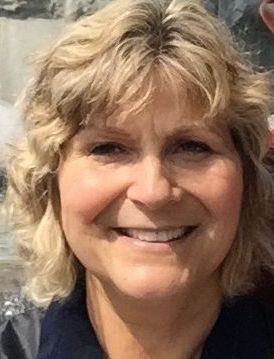
Spotlight on Manon Veilleux
|
|
Person living with myeloma, Support Group Leader, Advocate, and Patient Advisory Council Representative for Quebec
(Quebec City, QC)
|
|
Editor’s Note
:
I
n celebration of our 15t
h
Anniversary, the Spotlight section of Myeloma Matters has changed slightly. This year, our Spotlight Stars have been asked to share their stories alongside their relationship and involvement with Myeloma Canada. We hope you enjoy meeting our 2020 Spotlight Stars and that the new format provides you with information you didn’t know before.
To all of you who have shared your stories in the past, and those of you who continue to do so today, we are indebted...you are an inspiration.
(Please note that this interview was conducted before COVID-19, when in-person support group meetings were still going on.)
|
|
Manon, how did Myeloma Canada come into your life?
|
|
|
|
I had a stem cell transplant in 2014 and found Myeloma Canada then. I also had another stem cell transplant in 2018, and again went to Myeloma Canada for information. When I was first diagnosed, I had ordered books from the USA and around the world.
I also received information in a big box from my doctor, but I didn’t see any from Myeloma Canada; it wasn’t until 2018 when I was fully engaged with Myeloma Canada that I did.
In Quebec City, it was unfortunate that Myeloma Canada wasn’t widely known through the hospitals and doctors.
|
|
How is myeloma impacting your life?
Your priority becomes your health. Your values change;
you may work a little bit less. My husband is now retired and we get to spend more time together and travel. You also discover that people are there working hard to overcome this blood cancer, often because they lost a loved one too early. To see their determination to win over this drives you to join them.
|
|
In what ways has Myeloma Canada helped you through your myeloma journey?
|
Myeloma Canada provides you with credible information and their engagement in the process is most important.
Many people working with Myeloma Canada have been touched by myeloma. This makes it personal and very focused
on the specific disease of myeloma and not on other cancers. And I wanted to get involved in a group that focuses only on myeloma so that my efforts wouldn’t get lost in an ocean.
|
|
How do you contribute to advancing the cause of those affected by myeloma?
|
|
I became a support group leader in Quebec. I’m an advocate for credible information and we work very hard to reach people who have myeloma. We have started doing virtual meetings and InfoSessions.
People can participate through Zoom, and at any age! I know many people in their 70’s and 80’s that engage digitally if they can’t come to meetings in person. When we ask at a meeting who is online, almost everyone raises their hands. Now, with Zoom, people who aren’t online can call in, listen to the meeting, and participate. The only thing missing for them is the video aspect.
|
|
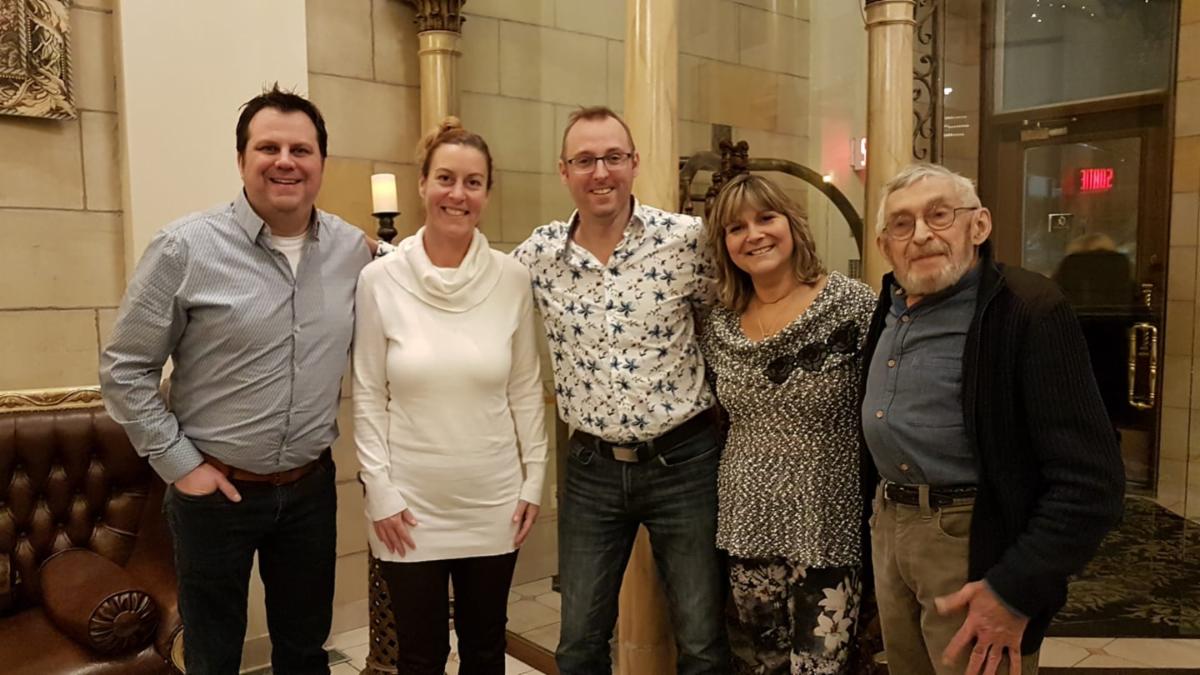
Manon with some of the support group leaders in Quebec, at the Granby InfoSession, January 2020.
|
|
Why do you feel Myeloma Canada is the best "medium" through which to advocate for those affected by myeloma?
|
|
There are many confidentiality rules in Quebec (and Canada). But, once someone is diagnosed with myeloma, the best scenario would be to ask whether they would like to receive information from Myeloma Canada, which is a credible source. Their email address could then be sent to Myeloma Canada. Myeloma Canada would then have a record of all newly diagnosed patients and know who to send information to.
|
|
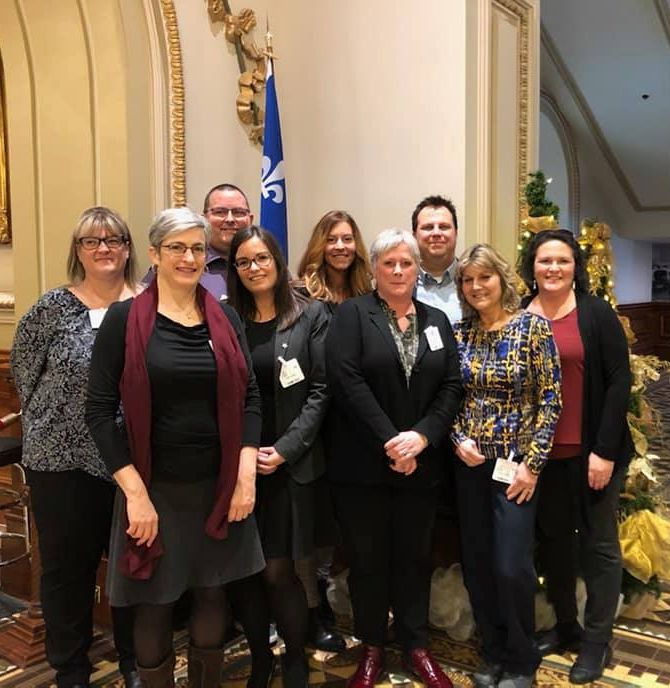
Awareness Day at the Quebec National Assembly in November 2019.
From left to right : Chantal Tardif, Véronica Gill, Daniel Sarrazin, Jessy Ranger
(Public Affairs & Communications Manager, Myeloma Canada), Vénus Bélanger, Martine Elias (Executive Director, Myeloma Canada), Jean-François Couture, Manon Veilleux and Julie Martel.
|
|
They could send the monthly newsletter plus excellent information like the Myeloma Patient Handbook, the new Stem Cell Transplant InfoGuide, and many more. This would be fantastic. If the patient ever wanted to opt out from receiving information, they could easily. When you are first diagnosed, you feel alone. Everybody’s alone and patients need information.
My goal and work is to encourage physicians and healthcare providers to provide this information to patients and families and get them connected with Myeloma Canada as soon as they are diagnosed.
|
|
I often have people call me several months after having been diagnosed, saying they just discovered us [Myeloma Canada]. After a lot of stress, they’re waiting for a transplant. If they would have had information on support groups in their region and about Myeloma Canada earlier, it would have considerably reduced their stress. To me, it should be given at the time of their diagnosis so they don’t feel alone.
|
|
If you had one wish for patients and their loves ones, what would it be?
Staying informed is part of the cure, part of the treatment. Everyone hopes for a cure but living well with myeloma is very important.
May I thank the Myeloma Canada team - and the late Aldo - for their fantastic work and wish them a happy 15
th
anniversary!!! But I also wish that they won’t be here to celebrate their 30
th
anniversary because the cure will exist by then ;-
)
|
|
Thank you for your time and insights Manon, and all you do alongside Myeloma Canada.
Thank you!
|
|
Editor’s Note:
To donate to Myeloma Canada, please visit
www.myeloma.ca
or call us toll-free at
1-888-798-5771
.
|
|
Follow us on social media for the most up-to-date information and resources:
|
|
|
|
|
|
|