REMINDER: YOUR SUBMISSIONS ARE ENCOURAGED | | |
1. Bindu's Corner: We have a stanza from Swami Vivekananda's poem, Song of the Sannyasin.
2. In Memoriam: The world lost another titan this week: Gloria Steinem, a pioneer of women's equality.
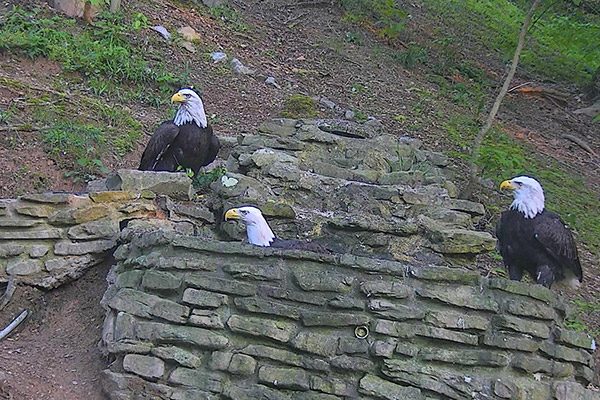
3. Birds: Who would have thought that, for the past 35 years, Dolly Parton's Dollywood theme park has sponsored the world's largest bald eagle sanctuary?
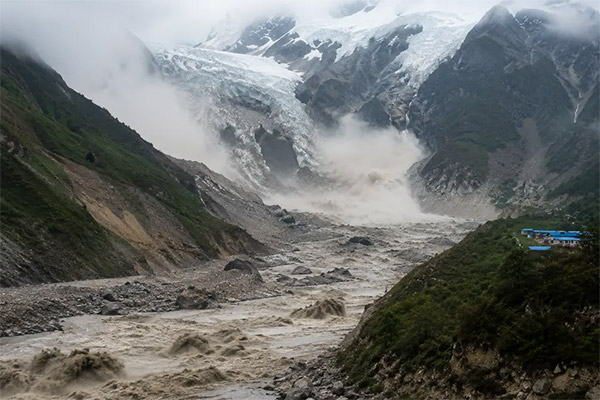
4. Natural Disaster: Scientists have begun to understand the dynamics behind last week's disastrous landslide and flood in the Himalayan mountains along the Nepal–China border.
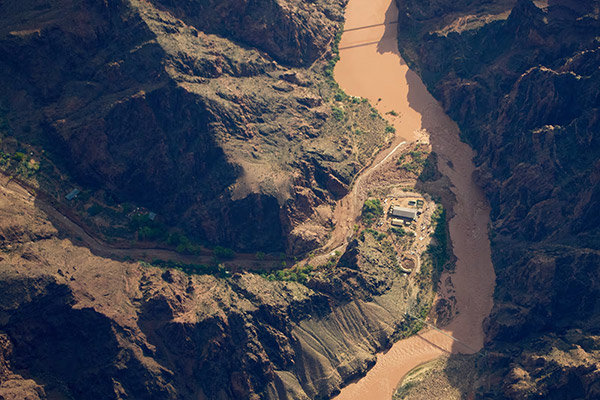
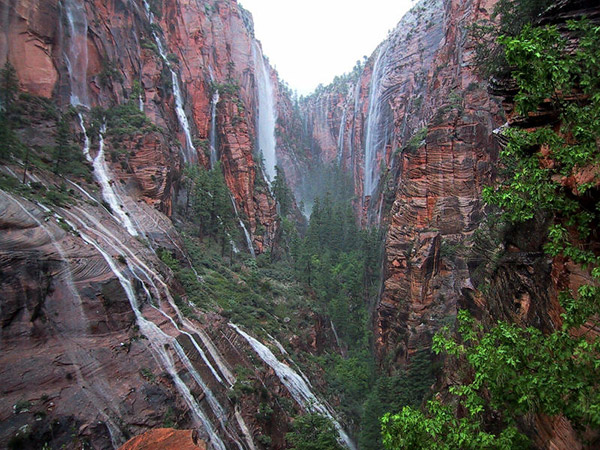
5. National Parks: Over the last weekend and into Monday, heavy Monsoon rains caused extensive damage, closing trails and roads in the Grand Canyon and Zion National Parks. Two fatalities have been confirmed in the Grand Canyon; Zion, luckily, reported no fatalities.
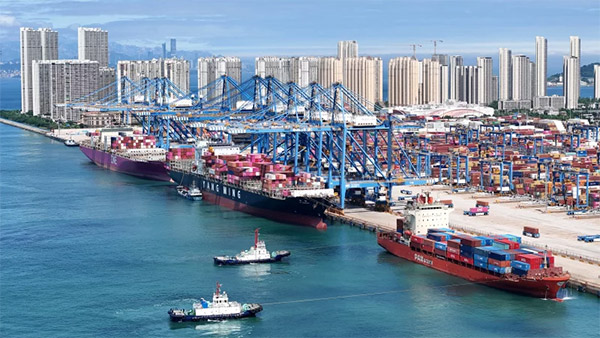
6. The Next Gen: Our very own William George was featured in three media reports recently, in which his analysis of shipping data helped shed light on unethical business practices, loopholes in federal trade policy, and Russia's evasion of international sanctions.
7. Weather: This year's strong El Niño climate pattern, which fueled Huricane Lala and Tropical Storm Moke last month, has spawned three concurrent hurricanes in the Pacific Ocean.
8. Around Town: Mark your calendars, the annual Tucson Reptile & Amphibian Show & Sale is just a month away.
9. Holidays: This Monday is Labor Day. I have a selection of labor quotes for this year.
10. Hayward M. Fox, Ph. D.: Read the latest post from Dr. Fox's blog.
| | Now, to this week's Flock. | | 1. Bindu's Corner: Song of Sannyasin | | The stanza below from the poem Song of the Sannyasin by Swami Vivekananda illuminates the Hindu concept of Sannyasa, choosing an ascetic path that eschews materialism in pursuit of spirituality. | | |
Have thou no home. What home can hold thee, friend?
The sky thy roof, the grass thy bed; and food
What chance may bring, well cooked or ill, judge not.
No food or drink can taint that noble Self
Which knows Itself. Like rolling river free
Thou ever be, Sannyâsin bold! Say —
“Om Tat Sat”
| | Bindu's daughter, Dr. Divya Shroff, shared this quote from a lecture on education by Swami Vivekananda in the 1890s. As an educator, I think it is timeless and still relevant today. | | |
“We need the kind of education by which character is formed, strength of mind is increased, the intellect is expanded, and by which one can stand on one’s own feet.”
— Swami Vivekananda
| |
2. In Memoriam: Gloria Steinem, 3.25.1934 — 9.2.2026
| | Equal rights pioneer Gloria Steinem passed away on Wednesday. She leaves a legacy of accomplishments that expanded opportunities for women throughout the world. | | Gloria Steinem, feminist icon and founder of Ms. Magazine, dies at 92 | From: CNN, By: Zoe Sottle & Chris Boyette, September 3, 2026 | |
Gloria Steinem, the American journalist and political activist who became the face of second-wave feminism in the late 1960s and early 1970s, has died at age 92, according to her verified Instagram account.
Steinem died Wednesday in New York City, “surrounded by some of the many who loved her,” the statement on social media said.
“Gloria’s near-century on earth were years well-lived, and she continued working for equality until the very end,” the statement read.
A Bunny’s Tale’
Born on March 25, 1934, in Toledo, Ohio, Steinem inherited an activist tradition. Her grandmother served as chair of the educational committee of the National Women Suffrage Association and also helped rescue members of her family, who were Jewish, from Germany during the mid-1930s.
Steinem graduated from Smith College and moved to New York in 1960, where she was often sexualized and dismissed while searching for reporting jobs in a male-dominated journalism industry. “We need a reporter, not a pretty girl,” she says she was told by an editor at Life…
The next year, the young writer worked undercover as a cocktail waitress at the New York Playboy Club – publishing a scathing expose of the low pay and working conditions for so-called “bunnies” at the club, including pressure to perform sexual favors.
The story, “A Bunny’s Tale,” effectively launched Steinem’s writing career. At the same time, it caused her to miss out on “serious journalistic assignments because I had now become a Bunny – and it didn’t matter why,” she wrote in a postscript to the article.
Political ascension
Steinem began parlaying the fame that came from her provocative writing to political organizing.
| | At a time when the nascent feminist movement was largely associated with White, middle-class women, Steinem made race and social class central to her thought and writing… | |
In 1972, she partnered with child care advocate Dorothy Pitman Hughes to co-found Ms. Magazine, thought to be the first national American feminist magazine, which is still published today.
Reflecting on her career in an interview with the New Yorker in 2015, Steinem said, “People are always asking me, ‘Who will you pass the torch to?’”
“The question makes me angry,” she went on. “There is no one torch – there are many torches – and I’m using my torch to light other torches. There shouldn’t have been a ‘first’ Gloria Steinem, and there won’t be a last one.”
| Feminist icon Gloria Steinem dies at 92 | | 3. Birds: Eagle Mountain Sanctuary | | After Dolly Parton's passing last week, I keep learning about the amazing things she did. I had no idea that since 1991 she had hosted the largest bald eagle sanctuary at her Dollywood theme park, where injured birds were rehabilitated and released back into the wild or received lifelong care if needed. | | Dollywood Says Goodbye to Eagle Mountain Sanctuary's Bald Eagles After 35 Years. | | |
Dollywood has been home to some very special residents for decades, but they're no longer living at the Tennessee theme park.
The bald eagles that called Dollywood's Eagle Mountain Sanctuary home for 35 years have officially moved on — and they're not coming back.
The change follows a storm that damaged the sanctuary earlier this year, leading Dollywood and the American Eagle Foundation to make a different plan for the birds' future.
What Happened to Dollywood's Bald Eagles?
In April, a storm damaged Eagle Mountain Sanctuary and three bald eagles escaped. One of the birds, Caesar, was found safely about two weeks later.
The eagles were moved to the American Eagle Foundation's 50-acre educational and conservation campus in Kodak, Tenn., about 15 miles from Dollywood.
Rather than move the birds back to Dollywood, the two organizations ultimately agreed that the Kodak campus would become their permanent home.
| | |
The Bald Eagles Were Part of Dollywood for 35 Years
The bald eagles became part of Dollywood in 1991, when the theme park and American Eagle Foundation began their partnership to introduce millions of guests to America's national symbol and educate them about protecting bald eagles and other birds of prey.
Dolly Parton was there when it all began. In April 1991, Parton, Al Cecere and Bob Hope participated in the Grand Opening Ceremony for Eagle Mountain Sanctuary, where they released a bald eagle into the habitat.
| | 4. Natural Disaster: Nepal Glacier Collapse | | Last week, a landslide in the Himalaya Mountains along the Nepal–China border caused a glacier to collapse, sending a massive flood of water and debris tearing through the Trishuli River valley, scouring hillsides and devastating roads, bridges, and whole villages, resulting in more than 1,000 casualties, with over 4,000 people still unaccounted for. My heart goes out to everyone affected by this disaster. I have visited the Himalayas and was always greeted with kindness and hospitality. | | What caused the Nepal flood wave? Here’s what we know | | From: CNN Weather, By: Laura PaddisoN, Angela Fritz, and Ivana Kottasová, August 27, 2026 | | |
Scientists investigating the cause of the devastating flash floods that tore through the Nepal-China border on Wednesday — swallowing towns, roads and bridges and causing significant loss of life — are zeroing in on the theory that the disaster was triggered by a huge glacier collapse and landslide.
Nepal is a hotspot for climate disasters as the planet heats up. Vast swaths of ice up in the Himalayas are melting, and rocky mountainsides are becoming less solid and more fluid.
Scientists are still working to determine exactly what caused the disaster, but here’s what we know so far.
A landslide-triggered flood wave
The first indication that something was amiss came at 8:37 a.m. local time, when the earth started shaking along the Nepal-China border, north of Kathmandu.
It was initially reported as an earthquake by the US Geological Survey's automated earthquake detection network, but later clarified the shaking was caused by an exceptionally powerful glacier collapse and debris flow, equivalent to a magnitude 5.2 earthquake.
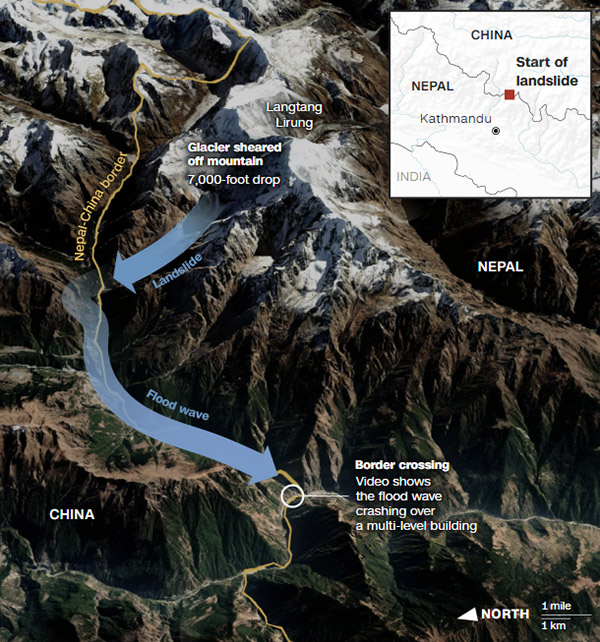
Comparing satellite images from before and after the disaster, scientists have established that an enormous chunk of glacier sheared off from high on a mountain. From there, it plunged to the river below — a roughly 7,000-foot drop in elevation, a CNN analysis shows, and the section of the glacier that fell was approximately 2,000 feet wide.
They believe a landslide may have happened at the same time, creating a deadly cascade of rock and ice, which tore down the mountainside and into the Lhende Khola River, a tributary of the Bhote Koshi River, which flows from China into Nepal, often through deep gorges.
| | |
Where the catastrophic Nepal-China landslide originated
The landslide and subsequent flood wave have left a path of destruction in Nepal's Rasuwa municipality, home to several hydropower projects and at least one border crossing point approximately 13 miles downstream.
| | The sheer force of the collapse melted the ice, and on its way, the torrent also picked up other waterlogged sediment, said Daniel Shugar, a geologist at the University of Calgary in Canada, who is part of the scientific group investigating the collapse. | | What Triggered Nepal’s Massive Debris Flow? Dr. Jeff Kargel Explains The Details
[31:44] | |
5. National Parks: Grand Canyon & Zion Floods
| | Bright Angel Canyon, damaged by flash floods, runs into the Colorado River in the Grand Canyon | Monsoon storms caused severe flooding in the Grand Canyon and Zion National Parks last weekend and into Monday. Two fatalities were confirmed in the Grand Canyon, and dozens of visitors had to be evacuated from Phantom Ranch as floodwaters destroyed bridges along the river. In Zion, the Virgin River rose as much as seven feet in one hour. | | Flash Floods Batter Zion, Bryce Canyon and Capitol Reef as Utah's Monsoon Turns Deadly at the Grand Canyon | | |
Monsoon storms battered southern Utah for five straight days last week, pushing rivers toward record highs in three national parks and closing trails and highways from Springdale to Torrey. Just across the state line, the same weather system produced the deadliest flooding the Grand Canyon has seen in decades, killing at least two people and leaving rescue crews racing to account for more than a dozen others.
Storms Pound the Region for Five Days Straight
The system rolled in on Thursday, Aug. 27, and kept building through the following Monday, triggering repeated flash flood warnings across Zion, Bryce Canyon and Capitol Reef. Ahead of Monday's peak, the National Weather Service office in Salt Lake City put southeastern Utah under a moderate, Level 3-of-4 risk for excessive rainfall, with forecasters cautioning that the most intense bursts were likely once the day warmed up and into the evening hours — a familiar pattern for late-summer monsoon activity.
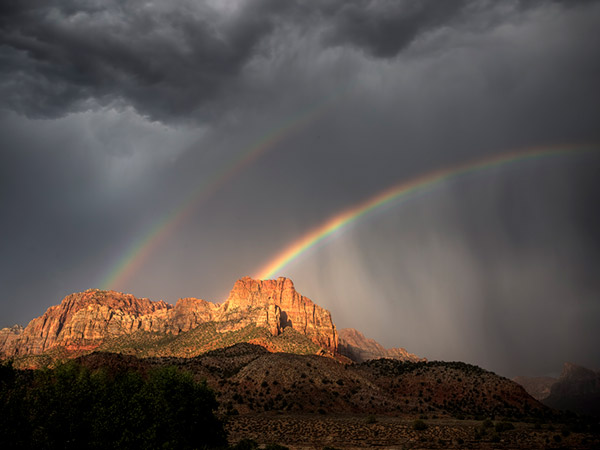
| | Water flows over canyon walls during heavy monsoon rains in Zion National Park. | |
6. The Next Gen: Keeping up with William George
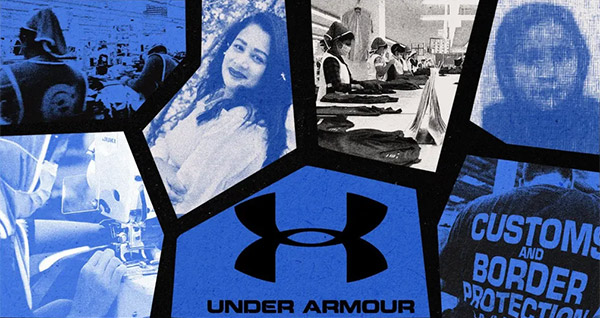
| | Our very own William George, Research Director for ImportGenius, is at it again. This week, I want to include three media reports in which he shared his insights on shipping. The First is an exposé from the British publication The i Paper on a major US sportswear brand's continued patronage of a Jordanian sweatshop whose products US Customs and Border Protection has banned for its treatment of workers. Next, William was interviewed on NPR's All Things Considered about tariff-avoidance techniques in a program on the snags the White House's economic tools are encountering. The third piece he contributed to was an extensive analysis of how Russia is using remote locations like the Maldives in the Indian Ocean to bypass international sanctions. This article made the front page of The Wall Street Journal. | | Under Armour clothes from sweatshop supplier banned after abuse and suicides | | US authorities announce they will seize imports from two factories after investigation revealed garments were made for sportswear giant by exploited workers | | |
Thousands of clothes made for the sportswear giant Under Armour are expected to be seized by US border guards, in response to an investigation by The i Paper which revealed suicides of sweatshop workers making the garments.
This week, US Customs and Border Protection (CBP) has banned imports from two Jordanian factories run by the Needle Craft group, one of Under Armour’s biggest suppliers, after confirming our findings from 2024.
This newspaper exposed how migrant labourers served “dehumanising” 16-hour days. They were paid less than promised and fined for not meeting excessive targets…
Under Armour under fire
Under Armour has continued to buy vast quantities of clothes from Needle Craft despite the suicide reports and serious concerns about forced labour, which CBP defines as “work performed involuntarily and under menace of penalty”.
America’s third-biggest sportswear brand has imported more than 200,000 containers of clothing from Needle Craft in the last year, according to border records collected by the trade-analysis firm ImportGenius.
These include thousands of T-shirts, shorts, tank tops and pullovers that have arrived in New Jersey and Georgia this month, all bearing its familiar UA logo.
Dominique Muller, UK policy lead at Labour Behind the Label, said this was “outrageous” after such “shocking abuses” which show that “workers are at the bottom of the pile”.
Scott Nova, executive director of the US-based Worker Rights Consortium, said: “If forced labour and worker suicides are not enough to stir Under Armour to take meaningful corrective action, is there any level of worker abuse it won’t tolerate?”
| | The White House's preferred economic tools are hitting snags | | |
Making America's economy stronger has been a top priority for President Trump in his second term. But two of the major tools his administration uses to protect economic security have run into snags.
The Trump administration has leaned heavily on export controls on potentially sensitive technology products and tariffs as part of their global economic strategy.
However, neither tool has been working as planned.
A bottleneck worth billions
The U.S. has an advanced export control regime that screens and sometimes blocks foreign countries from buying American products with a potential military use or which contain technology the U.S. is competing with other countries on.
Sean Stein, head of the US China Business Council, is quick to praise those tools in concept.
"Export controls are really important," he said in an interview. "Export controls are a national security measure that are sort of a check on what we trade."
But the American companies he represents —from pharmaceuticals to manufacturing —are frustrated with how they are working in practice.
The controls are enforced by a government department called the Bureau of Industry and Security, or BIS. Stein says the agency has been slow walking the export licenses needed by business to sell some of their products internationally.
"We've got cases that are waiting for more than a year," Stein said.
Normally, getting a license to export sensitive goods should not exceed 90 days, according to BIS' own policies. But an August survey conducted by the organization Stein represents found that of 31 American firms selling to China, 95 percent of companies said they are facing license delays.
That delay has resulted in lost sales, with American firms often losing out to Chinese competitors selling similar products or services…
Fraud and legal setbacks hit tariffs
Tariffs have been the other component to the Trump administration's economic toolkit.
But they have encountered legal challenges and setbacks. This past February, the Supreme Court struck down a large swath of tariffs enacted citing the International Emergency Economic Powers Act (IEEPA), arguing president Trump lacked the authority to use IEEPA during peacetime.
Meanwhile, the remaining tariffs face growing problems with fraud—particularly those on goods from China.
One major problem is transshipment, where goods are routed to hide their country of origin, before being shipped to the U.S., to avoid higher tariff rates…
Data also suggests importer intermediary companies may be underreporting the value of goods entering the U.S.
William George, head of research at trade data firm Import Genius, points to the $112 billion gap last year between the value of goods China says it exports to the U.S. and the much lower number the U.S. says it receives from China.
A gap could be caused by middleman costs or lower prices in China. But George said that's not necessarily happening here.
The average value of cargo containers from China to the U.S. has also been dropping, according to data provided to NPR by Import Genius as well as from Datamyne, a trade intelligence tool owned by logistics technology company, Descartes.
"This drop was outpacing what we would expect to see for traditional, normal shifting of supply chains in response to the tariff," says George. His analysis also found cargo values began dropping shortly after Trump's "liberation day" tariffs were announced last year.
"What that indicates to us is that there are sort of non-physical schemes at work to minimize the tariff burden," says George.
Non-physical, like fraud, with importing companies understating how much they are bringing in to the U.S., and therefore paying less tariffs.
| | The Island Paradise That Is a Secret Hub for Russian Sanctions Evasion | | The Maldives has become a pipeline for hundreds of millions of dollars in Western goods heading to Moscow | | |
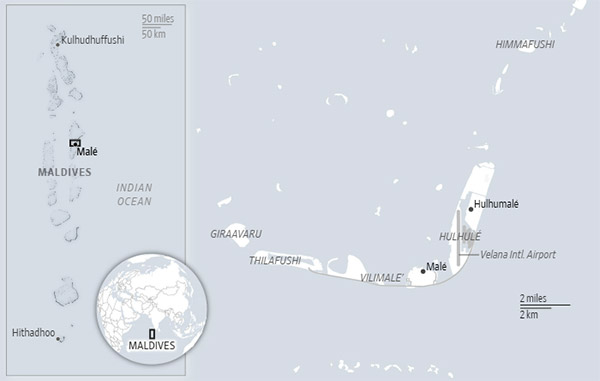
MALÉ, Maldives—The white sand beaches, turquoise waters and secluded luxury resorts of this South Asian archipelago attract millions of tourists each year. But a new trade has quietly emerged behind the postcard-perfect backdrop: a web of companies helping Russia evade sanctions.
Hundreds of millions of dollars in goods that are restricted or destined for sanctioned companies have changed hands at the airport, according to documents reviewed by The Wall Street Journal and interviews with Western officials. Some of these goods serve both civilian and military uses. The airport’s cargo holds are often filled with aircraft parts and electronic components, as well as other restricted goods, according to the documents and officials.
The amount of goods flowing through the Maldives is relatively small when compared with Russia’s biggest channels for sanctions evasion, including China, Turkey and the United Arab Emirates, which together account for about $15 billion in restricted Russian imports annually. But the flow of goods through the Maldives, which hasn’t previously been reported, shows how expansive Russia’s efforts to thwart Western restrictions are, turning even small and unexpected corners of the globe into channels for goods.
| | |
Through more than four years of war, Moscow has repeatedly shown that it can find the gaps in sanctions, leaving Western officials playing a game of whack-a-mole as they try to halt the flow of goods that sustains Russia’s war effort and economy.
The documents reviewed by the Journal—air waybills, a cargo manifest, and emails between logistics companies—paint a picture of how the system in the Maldives works.
Shipments that have transited through Malé include microchips that can be used for both civilian hardware and sophisticated missile guidance systems, optical instruments needed for satellites tracking enemy troop deployments, and high-strength aerospace rivets and bolts that are equally suited for a commercial jetliner as they are for a jet fighter or a long-range rocket.
Customs data from the Maldives shows a paltry amount of exports to Russia between 2022 and 2025—about $2,300 of tuna and $25 in leaflets and brochures. But Russian trade data collected by Import Genius, a U.S.-based research firm, shows that Russian imports from the Maldives, a country with virtually no industry, surged to more than $630 million in 2022—the year the full-scale invasion began—up from less than $7 million in 2021.
Russia imported $160 million in 2024, the last full year of data available from Import Genius. Import Genius Research Director William George said the figures probably understate the true volume of trade between the Maldives and Russia, pointing out that Russian authorities appeared to start censoring parts of the data in 2024 before blocking access entirely in early 2025.
Russia imported $160 million in 2024, the last full year of data available from Import Genius. Import Genius Research Director William George said the figures probably understate the true volume of trade between the Maldives and Russia, pointing out that Russian authorities appeared to start censoring parts of the data in 2024 before blocking access entirely in early 2025.
Documents reviewed by the Journal show that when a cargo initially lands, the name of the company exporting the goods appears on the air waybill, along with the supposed buyer. Once in the Maldives, however, a web of obscure local companies, such as Freight Care and Go Investment, help alter shipping documents and move the goods over the tarmac, making sure they never leave the airport and avoid formal entry into the archipelago.
Cargo is never categorized as imports and only goes through minimal customs checks before being shifted between aircrafts, officials said. A new air waybill is issued for the flight between Malé and Moscow’s Sheremetyevo International Airport. The new bill doesn’t list the name of the company that sold the goods, according to the documents and Western officials.
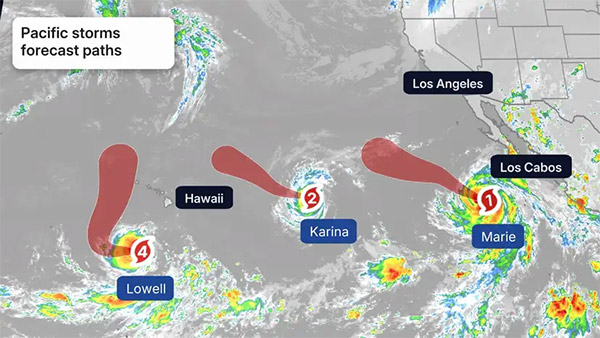
| | 7. Weather: Pacific Ocean Huricanes | | Three concurrent hurricanes in the Pacific Ocean make a rare weather phenomenon, with storms stretching from the Hawaiian Islands to the California coast. | | The science behind the Pacific's three hurricanes and what Lowell and Marie mean for the US | | The Pacific has recently roared to life while the Atlantic has been nearly crickets. Here's why. | | |
A tropical cyclone outbreak is ongoing in the Pacific with three fresh hurricanes – Lowell, Karina and Marie – all while the Atlantic is asleep.
The latest storms
From west to east, between Hawaii and Mexico, we have hurricanes Lowell, Karina and Marie.
Hurricane Lowell:
Lowell poses a threat to Hawaii early next week. Lowell became a short-lived Category 5 on Wednesday before weakening.
Hurricane Karina:
The middle child of the three hurricanes was once a Category 4 hurricane and was also temporarily in a rare group of hurricanes called annular hurricanes. Annular hurricanes are self-sustaining donuts of thunderstorms that are almost all eyewall with no outer rainbands that tend to survive much longer than other hurricanes over chilly waters. These are much more common in the Pacific than in the Atlantic.
Hurricane Marie:
The newest of the trio is likely to bring waves and additional moisture to the west coast of North America, including California and Arizona.
The stage is set: El Niño is here
A turbocharged warming in the Eastern Pacific makes it much easier for storm development across the Pacific. The climate phenomenon not only increases the temperature where these hurricanes form, but also causes air to rise across the basin.
You often see more storms form in El Niño and those that do form are more likely to be stronger.
But this isn't just your average El Niño – it is on track to be the strongest El Niño on record.
Forecasts expect 2-3 times the number of tropical systems near Hawaii and a significantly increased amount of activity through November closer to Mexico, too.
Tropical cyclone outbreaks
This burst of activity is called a tropical cyclone outbreak, which is defined as having three or more tropical storms or depressions form within a few days of one another in a relatively short amount of time in close proximity of each other.
This happens a couple of times a year in the Atlantic or the eastern Pacific, and it is very common in the Western Pacific.
This case is slightly different because it wasn't just tropical storms or depressions; all three developed into hurricanes.
In 2023, we had Gert, Emily, Franklin and Harold develop within 39 hours of each other in the Atlantic basin. They were all tropical storms. That was a record case and it is not at all common for so many storms to develop in such a short amount of time.
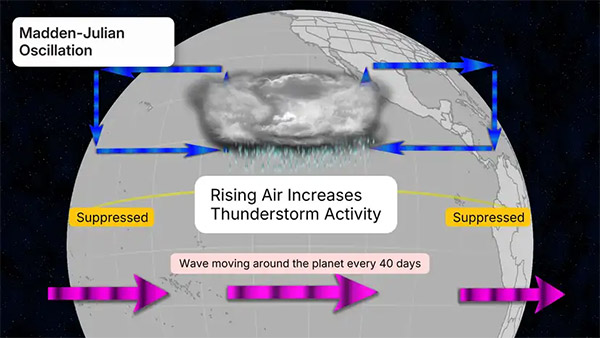
One of the reasons that these bursts in activity occur is that there is a traveling wave of upward motion in the atmosphere. When this upward motion is enhanced over a given spot, thunderstorm activity in the tropics gets an assist and makes the possibility of tropical storms forming more likely.
If you really want to impress your friends, you can tell them that the Madden-Julian Oscillation assisted in firing these three hurricanes up.
| | Diagram of the Madden-Julian Oscillation showing thunderstorm activity rising over a globe with suppressed zones and eastward wave movement every 40 days | |
What does this mean for the rest of the season?
On the grand scale, the simple answer is "What is in motion stays in motion."
Given El Niño, it will remain very active in the Pacific over the next few weeks while remaining relatively quiet in the Atlantic.
There will likely be more storms in both basins before the end of the season in November, but the number of such systems is likely to be higher in the Pacific.
| |
8. Around Town: Tucson Reptile & Amphibian Show
| | As a sulcata tortoise mom, I try never to miss the Tucson Reptile & Amphibian Show & Sale; it's a great, family-oriented early-fall event where you can find specialized reptile knowledge and resources not necessarily available at the average pet store. There's even a petting zoo for kids and brave adults. | | Tucson Reptile & Amphibian Show & Sale | | |
October 3 & 4, 2026
Pima County Fairgrounds, Old Pueblo Hall
11300 S. Houghton Rd.
Saturday 9:30 – 5:00, Sunday 10:00 – 4:00
| | |
The Reptile & Amphibian Show is one of the largest and most exciting reptile events in the region. Held annually at Old Pueblo Hall inside the Pima County Fairgrounds, the show spans approximately 60,000 square feet of fully indoor exhibit space.
Each year, vendors and exhibitors travel from around the country to participate in this unique gathering of reptile enthusiasts, breeders, educators, and families.
| |
9. Labor Day: Monday, September 7, 2026
| | To celebrate Labor Day in past issues of the Flock, I've posted about the holiday's history, the events that led to the first federal recognition of Labor Day, and how countries around the world acknowledge their workers. This year I've gathered some Labor Day quotes, and I want to wish all my readers a happy Labor Day. May you have a peaceful and restful day off; you've earned it. | | |
“Choose a job you love, and you will never have to work a day in your life.”
– Confucius
“Without labor nothing prospers.”
– Sophocles
“All labor that uplifts humanity has dignity and importance and should be undertaken with painstaking excellence.”
– Martin Luther King Jr.
“A man is not idle because he is absorbed in thought. There is a visible labor and there is an invisible labor.”
– Victor Hugo
“All wealth is the product of labor.”
– John Locke
“Labor was the first price, the original purchase-money that was paid for all things. It was not by gold or by silver, but by labor, that all wealth of the world was originally purchased.”
– Adam Smith
“Labor in this country is independent and proud. It has not to ask the patronage of capital, but capital solicits the aid of labor.”
– Daniel Webster
“Man is so made that he can only find relaxation from one kind of labor by taking up another.”
– Anatole France
| |
10. Hayward M. Fox, Ph. D.: From DR. Fox's Blog
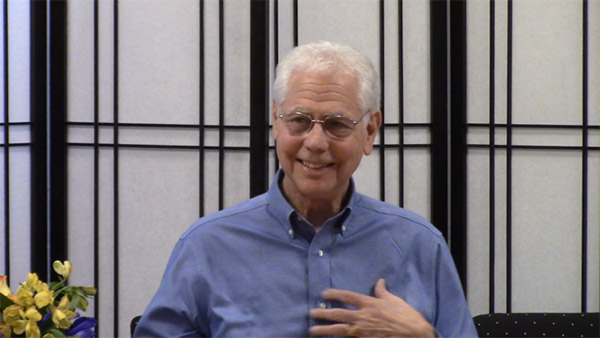
| | My gratitude goes out to Dr. Fox once again for allowing me to include his wisdom and insight in the Flock. Please visit Dr. Fox's website at the Institute of Personal and Transpersonal Knowledge and explore his past blog posts, videos, guided meditations, and study guides. | | These Flock regulars are always here for you: | | Don't Be Shy: Share Your Stories! | | I'm looking forward to sharing more of your personal stories - oral, written, or otherwise, as we enter our third year. I'd so love to present them to The Flock, hit a mailbox below to share your story. | | Subscriptions & Idea Submissions
Reminder: Your submissions are always welcomed. | | |
Feel free to forward this email to a friend. If this was forwarded to you and you would like to receive your very own Flock Newsletter, you can sign up here. If you have any questions or suggestions for future Flock resources, don't hesitate to contact me.
Your fan and friend,
Beth
| | | The information and materials contained or referenced in this newsletter are for informational purposes only and not intended to be a substitute for professional medical advice, diagnosis, or treatment. Always consult a physician or other qualified medical professional with any questions you may have regarding a medical condition or treatment and before beginning a new health care regimen. Do not disregard professional medical advice or delay seeking medical advice or care based on anything contained in this newsletter. | | | | |