Members of our Board of Directors urge Senator Casey to publicly support Adeel Mangi's U.S. Court of Appeals nomination; stand up to Islamophobia

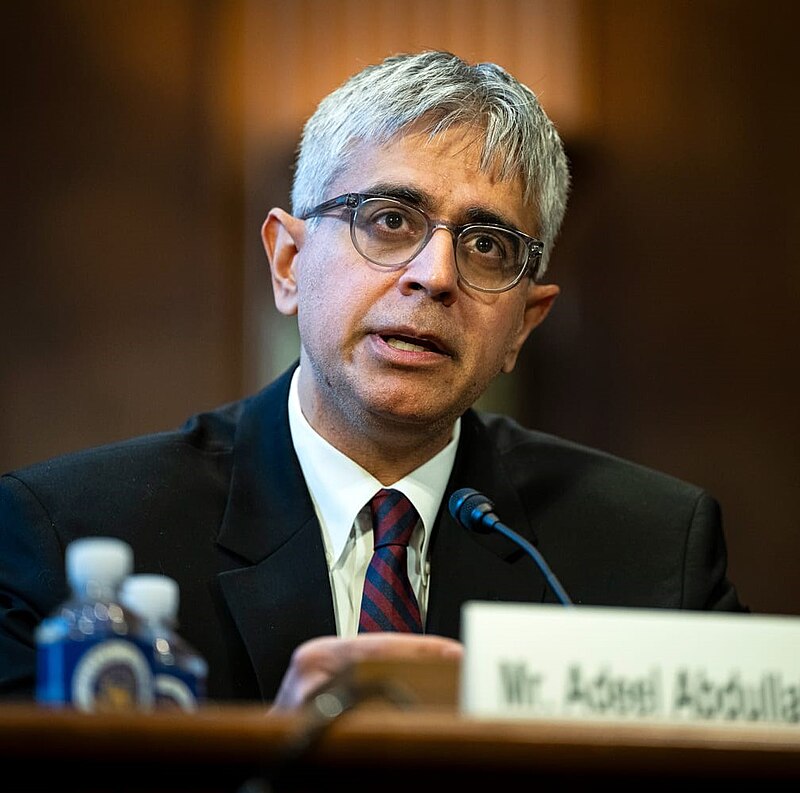
Adeel Mangi

Above: Adeel Mangi, via Wikipedia user Graeme Sloan - Sipa


Adeel Mangi, a partner at Patterson Belknap, was nominated by President Biden to serve on the U.S. Court of Appeals for the Third Circuit in Philadelphia. If confirmed, he would become the first Muslim American to serve as an appeals court judge.


In recent weeks, Mr. Mangi has faced a series of "guilt-by-association" accusations and attacks. On March 25, members of the Law Center's Board of Directors wrote a letter to Senator Casey, urging him to publicly support Mr. Mangi's nomination and denounce the disinformation campaign against him.


"We strongly support his nomination and are deeply disturbed by the outlandish, unfounded, and Islamophobic attacks he continues to face," our board members write. "We are all better off when there is a place on the federal bench for a jurist as capable as Mr. Mangi. In the face of these shameful attacks that threaten the quality and reputation of our judiciary, we cannot stay silent." Read the letter here.

"The time for single-year budget fights must end:" School funding updates

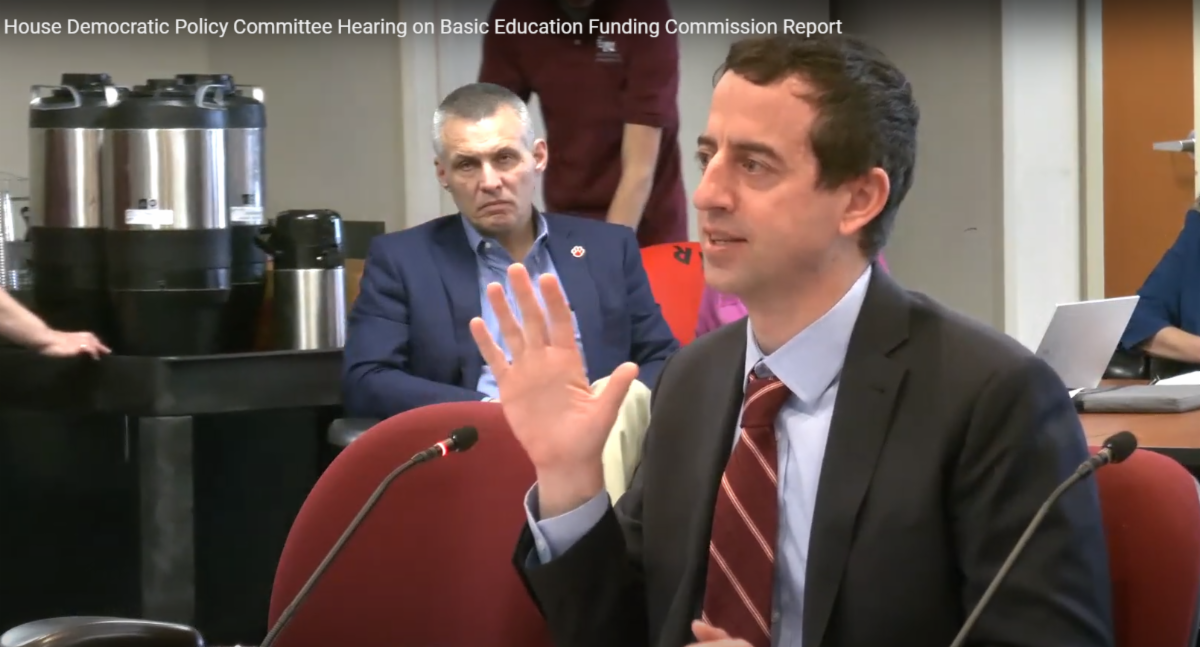
Our senior attorney Dan Urevick-Ackelsberg testifying to the House Democratic Policy Committee

Left: Our senior attorney Dan Urevick-Ackelsberg testifying to the PA House Democratic Policy Committee


On February 6, just before the one-year anniversary of the decision in our school funding lawsuit, Governor Josh Shapiro put forward a game-changing proposal for public education in his state budget address. "No one here should be OK with an unconstitutional education system for our kids," the Governor said--and he backed up those words with action.


He endorsed the work of the Basic Education Funding Commission, which released a plan to close school funding gaps in Pennsylvania by providing an additional $5.1 billion in state funding annually within seven years, targeted to students in low-wealth districts that have been deeply shortchanged, along with an additional $970 million for districts where local taxpayers have picked up the slack for insufficient state funding.


For the 2024-25 school year, Governor Shapiro's budget proposal would make a down payment on bringing the system into compliance, targeting $872 million to underfunded school districts where students have been denied sufficient resources. Governor Shapiro's proposal puts the plan for a constitutional school funding system in motion. View a spreadsheet showing the impact of this proposal, and the Basic Education Funding Commission's plan, on every school district in Pennsylvania.


This month, we continued to stand up for public school funding driven by student needs and children's potential, not by local wealth and Harrisburg politics.


On March 5, our senior attorney Dan Urevick-Ackelsberg testified to the Pennsylvania House Democratic Policy Committee on the transformative impact of the Governor's budget proposal and the need for a long-term plan for constitutional school funding.


“This single-year appropriation should not obscure the broader task in front of you all: to enact a plan that charts out a year-by-year plan for full constitutional compliance," he said. "The time for single-year budget fights must end.” Pennsylvania must enact year-by-year targets to ensure that the entire adequacy gap--the shortfall between the resources needed to fulfill students' fundamental right to education and the funding currently available in public schools--is filled. Read more here.


As we wrote in our joint statement with our co-counsel at Education Law Center-PA: "we have before us one—and only one—plan that answers the court’s command: the plan adopted by the Basic Education Funding Commission and affirmed today by the governor. "


It's time for all of us to help make this plan a reality. Laura Boyce, executive director of Teach Plus PA, made the stakes of this moment clear in the Pittsburgh Post-Gazette:


"If not now, with a historic court ruling and a $14 billion state surplus, then when? If not this plan, the only concrete plan that has been offered to address the lawsuit, then what’s the alternative that will pass constitutional muster? What are the costs of failing to adequately fund our public schools?"


Here are a few highlights of statewide press coverage:


Take action for strong public schools with PA Schools Work

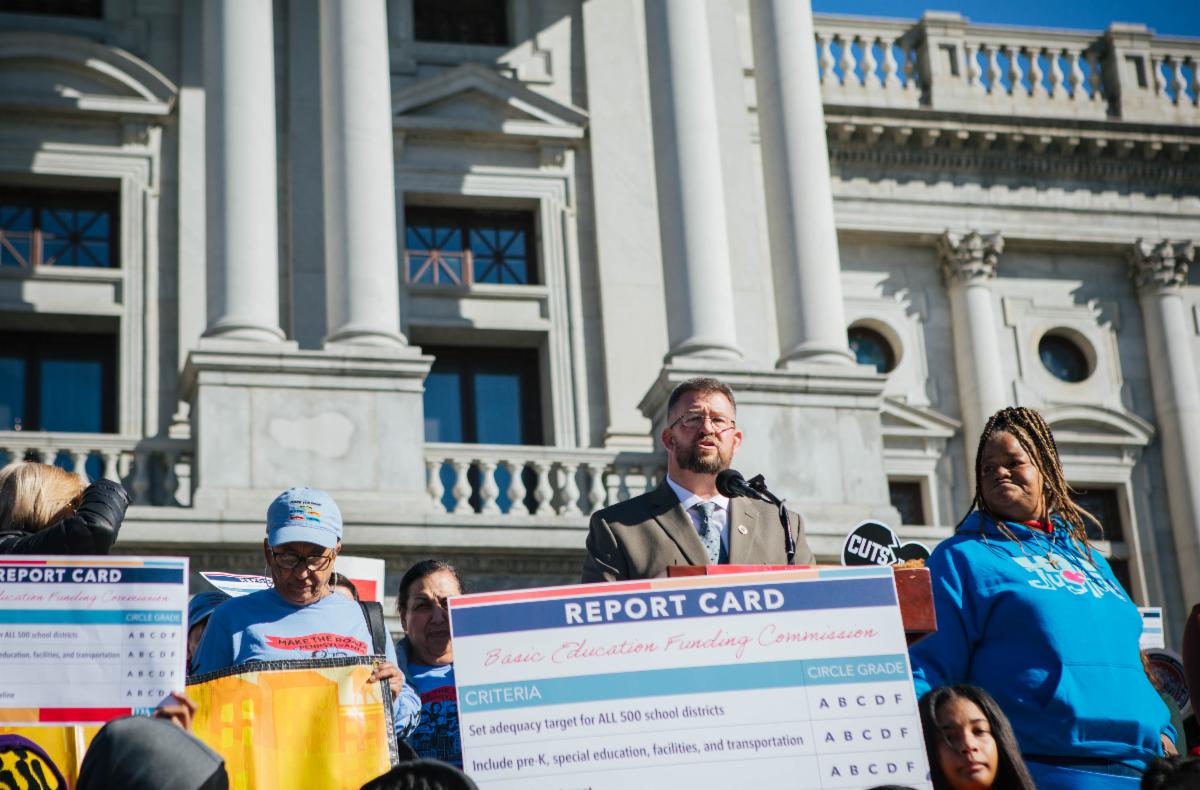
Superintendent speaking

Left: A speaker at a November PA Schools Work day of action in Harrisburg


There has never been a more important time to make your voice heard for fully and fairly funded public schools in Pennsylvania. PA Schools Work, a statewide coalition of educators, parents and advocates of which we are a proud member, has easy opportunities to make a difference.


Use this online tool to send a letter to your representatives in the General Assembly, urging them to pass Governor Shapiro's game-changing budget proposal for public education.


The PA Schools Work campaign will soon be holding virtual phone-banking sessions, talking to our neighbors about the importance of funding public schools--not just this year, but every year. Sign up as a potential volunteer here to learn about opportunities this spring make calls to Pennsylvanians. All volunteers will receive training and be connected with an easy-to-use automatic dialer, and you can make calls from your home!


On May 8, PA Schools Work will head to Harrisburg to meet with lawmakers to ensure that the General Assembly takes a first step toward constitutional school funding by enacting Governor Shapiro's full education funding proposal. If you are interested, sign up here. More information will be available closer to the event.

A disappointing Third Circuit decision for Pennsylvania mail-in voters

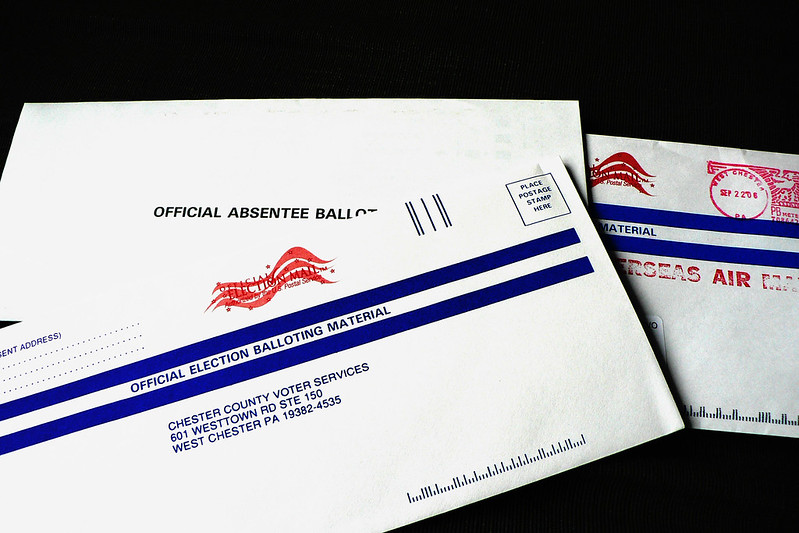
Absentee ballot envelopes

Left: Absentee ballot envelopes, via flickr user Brenda Anderson


In a disappointing decision for Pennsylvania voters, the Third Circuit Court of Appeals ruled on March 27 to uphold Pennsylvania's requirement that voters must mark the correct date on the outside of mail-in ballot envelopes in order for those votes to count, reversing an earlier District Court decision in a case brought by NAACP-PA. The case was sent back to the district court for consideration of an equal protection claim against the requirement, but the court rejected the argument that the requirement violates federal civil rights law.


In January, we represented SeniorLAW Center, an advocate for older Pennsylvanians, in an amicus brief in the case urging the court to strike down the handwritten date requirement. We argued that rejecting ballots for having an incorrect date--an immaterial clerical error that has no baring on a voter's eligibility--would violate the Civil Rights Act of 1964. Older voters are more likely to rely on mail-in voting, and an analysis by the Philadelphia Board of elections found that 14% of ballot envelopes with missing our incorrect dates came from voters in their 80s.


In a dissenting opinion, Judge Patty Shwartz cited our amicus brief, noting that our brief "cited a report finding that the types of errors and omissions that occurred in this case disproportionately disenfranchised minority voters." The Public Interest Law Center will continue standing up for voters throughout 2024.

Law Center in the News: NPR features our work standing up to discrimination against Housing Choice Voucher renters

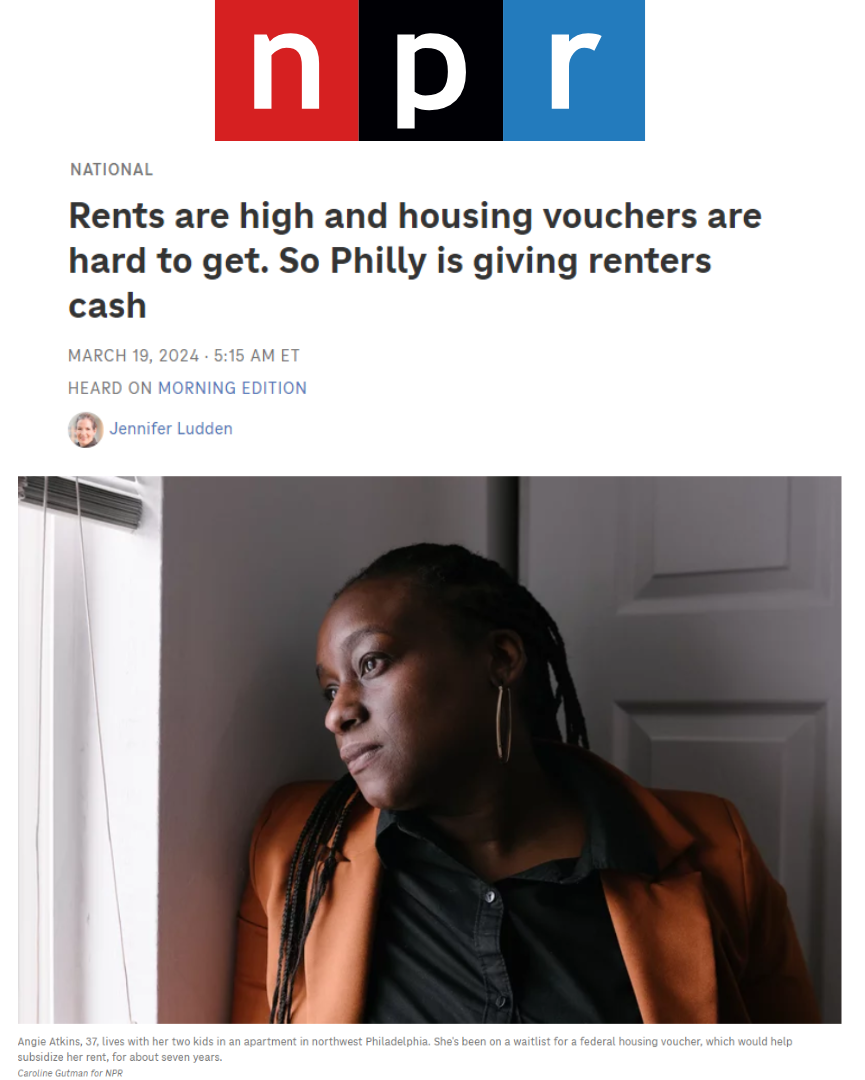
NPR source of income article screenshot

On March 19, NPR's Morning Edition profiled a pilot program in Philadelphia that provides cash assistance to 300 low-income renters, randomly chosen from the waiting list for Housing Choice Vouchers. 


Our Independence Foundation attorney fellow Madison Gray was quoted in the story discussing the widespread discrimination faced by the 22,000 Philadelphia renters who use Housing Choice Vouchers. We challenge this source of income discrimination, which is illegal in Philadelphia and fuels racial segregation and the concentration of poverty. Read the story here.


"Landlords might also accept vouchers in some neighborhoods but not others, says Madison Gray of The Public Interest Law Center in Philadelphia. The center reached a settlement with one landlord who took vouchers only in predominantly Black areas," reporter Jennifer Ludden wrote.


"Gray says it's discouraging for tenants who are excited to finally get a voucher and 'think that it could be the ticket to move out of slumlord housing and into high-quality housing, in a neighborhood that they've always wanted to live in. And that's not necessarily the case at all,' she says."

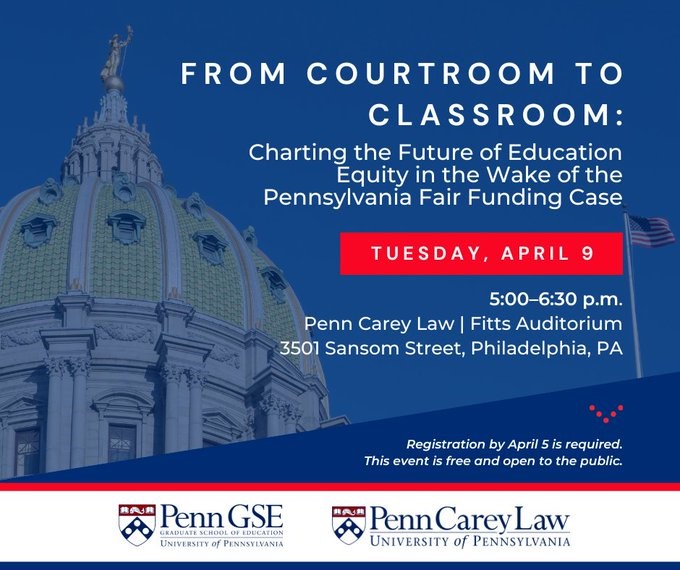
Join us April 9 at Penn Carey Law for "From the Courtroom to the Classroom"

On April 9, Penn Carey Law and the Penn Graduate School of Education (GSE) will hold their 2024 Goldberg/Christman bi-annual lecture in education law. "From the Courtroom to the Classroom: Charting the Future of Education Equity in the Wake of the Pennsylvania Fair Funding Case" will feature an in-depth panel discussion of the impact of the landmark ruling in our school funding case, which declared Pennsylvania's school funding system unconstitutional.


Our senior attorney Dan Urevick-Ackelsberg will be joined on the panel by Deborah Gordon Klehr, executive director at our co-counsel in the case Education Law Center - PA, and Superintendent Tony Watlington of the School District of Philadelphia. Their discussion will be moderated by Dean Katherine Strunk of Penn GSE. Register for this free event here. The lecture is open to the public.


When: Tuesday, April 9, 5:00 - 6:30 p.m. Space is limited; doors open at 4:30

Where: Penn Carey Law, 3501 Sansom Street, Philadelphia, PA.

Michael A. Fitts Auditorium.

Register here.

Law Center in the News: We consider the future of the Philadelphia Land Bank

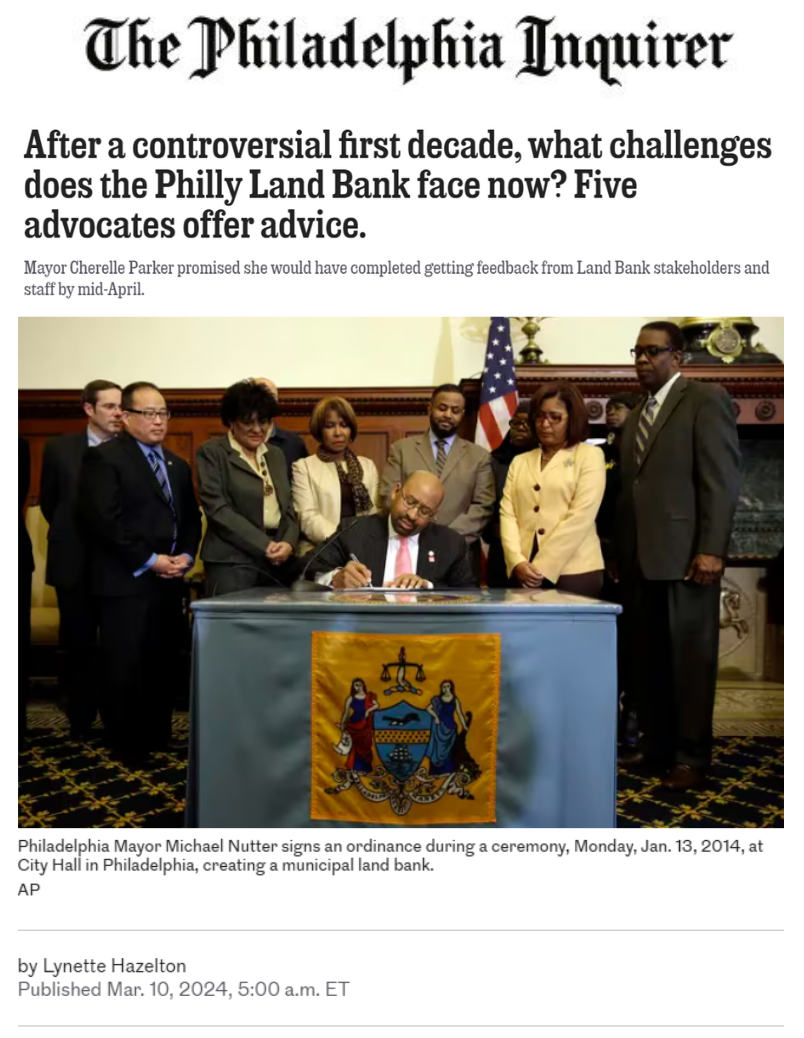
Land Bank inquirer article

The Philadelphia Land Bank turns 10 this year, and its mission of putting public and vacant land to use in ways that serve the public is as vital as ever.


On March 10, our staff attorney Sari Bernstein weighed in for the Philadelphia Inquirer on next steps ahead.


"'The [backlog] information is not public so it’s hard to get an actual count,' said Sari Bernstein, staff attorney at the Public Interest Law Center. But, Bernstein said [Neighborhood Gardens Trust]'s available metrics speak to the need for the Land Bank to clear its backlog and provide land security for community gardeners, many of whom have spent decades developing their gardens," reporter Lynette Hazelton wrote. Read the story here.

Make a Donation