|
When's the Best Time to Get the Updated COVID Shot?
Experts weigh in on timing and availability
As COVID-19 hospitalizations rise and the holiday season draws nearer, a familiar question lingers: when is the best time to get the latest shot?
Earlier this month, the FDA approved and the CDC recommended the updated mRNA COVID-19 vaccines that solely target the XBB.1.5 Omicron subvariant for people ages 6 months and up to prevent serious illness.
But some experts told MedPage Today that although it is a good idea to get vaccinated as soon as you can, there's more nuance to the question.
Read More
| |
REGISTER TODAY
Lab space is limited - reserve your spot now!
| |
Interventional Techniques in IPM
Review Course & Cadaver Workshop
| |
Regenerative Medicine
Review Course & Cadaver Workshop
| |
|
Opioid Overdose: Extended-release Injectable Buprenorphine Shines in Early Experience
Extended-release injectable buprenorphine (XR-BUP) in patients with opioid overdose can allow more time to access follow-up care while providing continued medication for a longer duration, according to early emergency department (ED) experience. The US Food and Drug Administration recently approved XR-BUP for the treatment of moderate to severe opioid use disorder.
A report on the early experience was published online on July 28 in the Academic Emergency Medicine.
The Emergency Department-INitiated bupreNOrphine VAlidaTION (ED INNOVATION) trial is a part of the NIH HEAL Initiative effort to expand access to opioid use disorder (OUD) medications in general medical settings, particularly EDs. It assesses the feasibility and effectiveness of the 7-day XR-BUP injectable for buprenorphine initiation in patients with untreated OUD. Approximately 1600 patients are enrolled to date from 28 diverse EDs in the United States, half of whom are receiving the XR-BUP formulation.
Read More
| |
|
Virtual
October 28 & November 11
ABIPP Part I; ABIPP Path - Combined DCCPM/CSM virtual exam; ABIPP Competency Exam in IPM; ABIPP Competency Exam in Regenerative Medicine
| |
|
CBT Linked to Reduced Pain, Less Catastrophizing in Fibromyalgia
In patients with fibromyalgia, cognitive behavior therapy (CBT) can reduce pain through its effect on pain-related catastrophizing, which involves intensified cognitive and emotional responses to things like intrusive thoughts, a new study suggests.
METHODOLOGY:
- The study included 98 female patients with fibromyalgia (FM), mean age about 42 years, who underwent a baseline neuroimaging assessment and were randomly assigned to CBT (where patients learned to identify negative thoughts and use cognitive restructuring to diminish pain-related distress) or a matched educational intervention (where patients learned about fibromyalgia and chronic pain); both groups had eight weekly individual 60- to 75-minute visits.
-
The primary outcome was the pain interference subscale of the Brief Pain Inventory (BPI); secondary outcomes included the BPI pain severity subscale, the Fibromyalgia Impact Questionnaire–Revised (FIQR), and the Pain Catastrophizing Scale (PCS), which includes subscales of rumination, magnification, and helplessness.
Read More
| |
|
Personality Disorders Linked to Increased Risk of Fatty Liver Disease
Non-alcoholic fatty liver disease (NAFLD), the most prevalent cause of chronic liver disease in affluent societies, is intrinsically linked with personality disorders.
The research uncovers a tri-fold higher likelihood of personality disorders in NAFLD patients, not correlating with other liver diseases or common mental health issues like anxiety and depression. While the knowledge and necessity of dietary control and exercise among NAFLD patients are prevalent, their adherence to such lifestyles is significantly impacted by unregulated eating behaviors and potentially external locus of control (LoC).
The study thereby accentuates the exigency of scrutinizing attitudes toward diet and exercise, aiming for motivational analysis and efficacious treatment in NAFLD management and post-transplant care.
Read More
| |
Abstract submissions are open for
ASIPP's 2024 Annual Meeting!
The submission deadline is January 22, 2024.
Don't miss your chance to be part of an exceptional event,
sharing insights and discoveries that shape the future of pain management.
| |
Plan Your Participation Now!
| |
|
Long COVID Blood Tests Show Distinct Immune and Hormone Function
Algorithm may help predict who gets long COVID
Long COVID patients had specific differences in immune and hormone function than other people, blood tests showed.
Compared with matched controls, people with long COVID had marked differences in circulating myeloid and lymphocyte populations, reported Akiko Iwasaki, PhD, of Yale University in New Haven, Connecticut, and co-authors in Nature.
Long COVID patients had exaggerated humoral responses directed against SARS-CoV-2. In addition, their antibody responses were higher against other pathogens that weren't SARS-CoV-2, especially Epstein-Barr virus (EBV).
Read More
| |
Happy International Medical
Graduates (IMG) Recognition Week!
| |
|
The GLP-1 Agonist Plateau No One's Talking About
Weight stabilization is no surprise to specialists, but for patients it's more complicated
The declines in body weight that patients experience with injectables like semaglutide (Ozempic, Wegovy) and tirzepatide (Mounjaro) are no exception to the concept that nothing lasts forever.
Eventually, everybody reaches a "plateau," even on newer GLP-1 receptor agonists. It's a phase at which the body reaches a new "settling point," specialists said, and weight, along with other metabolic markers like blood pressure and HBA1c stabilize, or fluctuate only slightly. For some, this may mean a gradual increase in appetite or "food noise"; others may be able to maintain their current state.
Studies have shown that, on average, this plateau happens at a little over a year with semaglutide. Even so, physicians say some patients are surprised to learn that there's a limit to what these medications can do.
Read More
| |
|
Why It Takes Forever to Get a Doctor's Appointment
BY ILANA YURKIEWICZ
Recently I faced consoling a patient of mine who couldn’t understand why I was unable to “hop on the phone” to discuss her new back pain. When she finally got an appointment with me weeks later, I decided to be honest. I shared that I had 1,300 patients who call me their primary doctor. After I’m done seeing patients at 5 PM, I tend to 50 to 100 messages and notifications. I take three to four hours of work home with me every night.
I didn’t share these stats to elicit sympathy, but soon our roles had reversed. My patient overflowed with apologies and demanded to know who was doing this to me.
This is the paradox that defines modern American medicine: Doctors are working harder and longer, all while patients can access us less. As a practicing internal medicine physician and oncologist, I believe we reached this unsustainable state due to fundamentally misaligned division of labor – between human and machine, between doctors and support staff, and between what is paid for and what good medical care requires.
Read More
| |
|
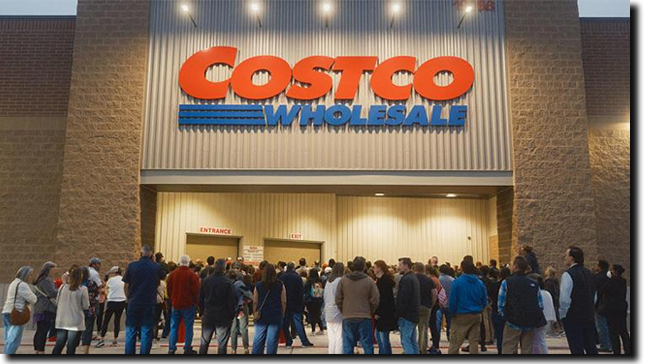
Costco now offering virtual medical care for $29
For just under the cost of six Costco rotisserie chickens — still $4.99 after more than a decade — members of the warehouse club can visit a doctor online.
Online marketplace Sesame is partnering with the retail "members only" giant to offer Costco members virtual primary care for $29 in all 50 states, the New York-based startup said Monday in a blog post.
The health care services listed via a link on the Costco Pharmacy's homepage include virtual checkups involving a standard lab panel and virtual follow-up with a doctor for $72, and virtual mental health visits.
Read More
| |
- ASIPP Members Only Site Information - | |
-
To log in for the first time you will need to click “forgot password” at the bottom of the login window.
- Check your email and then log in as directed.
-
If you have problems logging into your account, click here.
| |
|
Despite Taboo, Med Students, Doctors Use Substances Too
But if it becomes a problem, finding help can come with unique consequences
Some young European medical students and residents were recently candid with VICE Belgium about their off-duty substance use habits.
Using pseudonyms, VICE Belgium detailed how the young doctors partied regularly -- often using substances ranging from alcohol and cannabis to MDMA and cocaine. Despite some scary situations, as a whole they didn't think their substance use reached problematic levels.
"According to them, taking drugs is pretty common in the medical field, but people don't talk about it as that would call into question the sacred status of the entire profession," the article stated.
Read More
| |
Pain Medicine Case Reports (PMCR) and Editor-in-Chief Alaa Abd-Elsayed, MD, PhD would like to invite you to submit case reports and case series to the PMCR journal. Your article will be published free of charge.
Open access journals are freely available online for immediate worldwide open access to the full text of published articles. There is no subscription fee for open access journals. Open access journals are no different from traditional subscription-based journals: they undergo the same peer-review and quality control as any other scholarly journal.
Interested in becoming a member of the PMCR Editorial Board?
Editorial board members are asked to review 2-6 manuscripts per year. Please submit your most up-to-date CV to sgold@asipp.org for consideration.
For more information or to submit your articles, click here.
| |
|
| CASE REPORT |
Anatomically-Guided Botulism Toxin Injections for Enhanced Abdominal Muscle Relaxation Prior to Massive Inguinal Hernia Repair: A Case Report
Ryan M. Meral, MD, Reed W. Kamyszek, MD, Trishul Kapoor, MD, Raymond X. Panketh, MD, and Paul E. Hilliard, MD
Abstract
BACKGROUND: The use of botulism toxin A (BTA) to augment abdominal muscle relaxation for surgical hernia repair is well described. However, guidance on the anatomic considerations to facilitate safe and ideal abdominal wall BTA injection patterns is limited.
CASE REPORT: A 37-year-old man presented with a 26-cm inguinal hernia and abdominal content loss of domain. Due to high risk of incomplete abdominal closure, abdominal compartment syndrome, and prolonged postoperative ventilatory support, a multidisciplinary approach to surgical closure was sought with therapeutic input from a comprehensive pain clinic. The patient was injected with BTA into the bilateral internal and external oblique muscles 2 weeks preoperatively. The injection pattern design employed anatomic considerations for points of maximum abdominal wall tension and anticipated BTA spread. Subsequent muscle paralysis facilitated successful surgery with minimal tension upon closure.
CONCLUSION: This case supports the safe and effective use of BTA for enhanced abdominal wall relaxation prior to major inguinal hernia repair. When considering BTA therapy for abdominal muscle relaxation augmentation, the choice of injection pattern should include points of maximum tension and injections of close-enough proximity for BTA spread and overlap to maximize procedure benefit, regardless of the location or type of abdominal wall hernia repair.
KEY WORDS: Botulism toxin, abdominal muscle relaxation, hernia repair, inguinal hernia, regional anesthesia, case report
Read More
| |
|
| SYSTEMATIC REVIEW |
The Effectiveness of Medial Branch Blocks and Radiofrequency Neurotomy in Managing Chronic Thoracic Pain: A Systematic Review and Meta-Analysis
Laxmaiah Manchikanti, MD, Emilija Knezevic, Nebojsa Nick Knezevic, MD, PhD, Rachana Pasupuleti, MD, Mahendra R. Sanapati, MD, Rajesh N. Janapala, MD, Alan D. Kaye, MD, PhD, and Joshua A. Hirsch, MD
Abstract
BACKGROUND: Extensive research into potential sources of thoracic pain with or without referred pain into the chest wall has demonstrated that thoracic facet joints can be a potential source of pain confirmed by precise, diagnostic blocks.
The objective of this systematic review and meta-analysis is to evaluate the effectiveness of medial branch blocks and radiofrequency neurotomy as a therapeutic thoracic facet joint intervention.
METHODS: Systematic review and meta-analysis of randomized controlled trials (RCTs) and observational studies of medial branch blocks and the radiofrequency neurotomy in managing thoracic pain utilizing the Preferred Reporting Items for Systematic Reviews and Meta-Analyses (PRISMA) checklist was performed. A comprehensive literature search of multiple databases of RCTs and observational studies of medial branch blocks and radiofrequency neurotomy in managing chronic thoracic pain were identified from 1996 to December 2022 with inclusion of manual searches of the bibliography of known review articles and multiple databases. Methodologic quality and risk of bias assessment was also conducted. Evidence was synthesized utilizing principles of quality assessment and best evidence synthesis, with conventional and single meta-analysis.
The primary outcome measure of success was 3 months of pain reduction for medial branch blocks and 6 months for radiofrequency thermoneurolysis for a single treatment. Short-term success was defined as up to 6 months and long-term was more than 6 months.
RESULTS: This literature search yielded 11 studies meeting the inclusion criteria, of which 3 were RCTs and 8 were observational studies. Of the 3 RCTs, 2 of them assessed medial branch blocks and one trial assessed radiofrequency for thoracic pain.
The evidence for managing thoracic pain with qualitative analysis and single-arm meta-analysis and GRADE system of appraisal, with the inclusion of 2 RCTs and 3 observational studies for medial branch blocks was Level II.
For radiofrequency neurotomy, with the inclusion of one RCT of 20 patients in the treatment group and 5 observational studies, the evidence was Level III in managing thoracic pain.
LIMITATIONS: There was a paucity of literature with RCTs and real-world pragmatic controlled trials. Even observational studies had small sample sizes providing inadequate clinically applicable results. In addition, there was heterogeneity of the available studies in terms of their inclusion and exclusion criteria, defining their endpoints and the effectiveness of the procedures.
CONCLUSION: This systematic review and meta-analysis show Level II evidence of medial branch blocks and Level III evidence for radiofrequency neurotomy on a long-term basis in managing chronic thoracic pain.
KEY WORDS: Chronic spinal pain, thoracic facet or zygapophysial joint pain, facet joint nerve blocks, medial branch blocks, controlled comparative local anesthetic blocks, diagnostic accuracy, radiofrequency neurotomy
Read More
| |
|
| SYSTEMATIC REVIEW |
High- versus Low-dose Steroid Injection for Adhesive Capsulitis (Frozen Shoulder): A Systematic Review and Meta-analysis
Seong Jun Kim, MD, Jong Mi Park, MD, Junmin Song, MD, Seo Yeon Yoon, MD, PhD, Jae Il Shin, MD, PhD, and Sang Chul Lee, MD, PhD
Abstract
BACKGROUND: Intraarticular steroid injections are a commonly used and proven treatment for frozen shoulder; however, there is no scientific basis for a certified dose.
OBJECTIVES: This study aimed to identify the difference between high- and low-dose steroid injections treatments and suggest an appropriate dose.
STUDY DESIGN: Systematic review and meta-analysis.
METHODS: The MEDLINE, EMBASE, and Cochrane electronic databases were searched through February 15, 2023 for eligible randomized controlled trials. The effects of high- and low-dose steroid injections were calculated as standardized mean differences (SMD) in pain, shoulder range of motion (ROM), and functional improvement. The Grading of Recommendations Assessment, Development and Evaluation (GRADE) approach was used to evaluate evidence quality.
RESULTS: Four studies with 274 patients were included in the final analysis. The meta-analysis showed that improvement in pain (SMD, 0.10; 95% CI, -0.12 to 0.32), ROM (SMD, 0.07; 95% CI, -0.05 to 0.19), and functional improvement (SMD, 0.08; 95% CI, -0.10 to 0.26) did not differ significantly between the high- and low-dose steroid injections. Subgroup follow-up analyses also showed no clinically significant differences in SMD for pain, ROM, and functional scale measurement in any subgroups (after 3 weeks, 6 weeks, and one year). One article described that, although there was no significant difference in adverse events frequency between the high- and low-dose groups, flushing tended to occur more frequently in the high-dose group.
LIMITATIONS: Limitations are the small number of studies included in the meta-analysis, no disease stage considered, and a short follow-up period.
CONCLUSIONS: This meta-analysis suggests there are no significant differences between the high- and low-dose steroid groups in pain, ROM, or functional improvement. Therefore, considering the side effects of high-dose steroids, starting with low-dose steroids is recommended. However, further studies are needed to establish exact protocols according to disease severity.
KEY WORDS: Frozen shoulder, adhesive capsulitis, steroids, triamcinolone acetonide, injections, intraarticular, optimal dose, meta-analysis, randomized controlled trial
Read More
| |
|
ASIPP is now in collaboration with Curi Medical Liability Program
| |
|
Since this malpractice insurance program officially launched in November 2018, ASIPP has signed up hundreds of providers with an average savings of 30%. This is professional liability insurance tailored to our specialty and will stand up for us and defend our practices.
Curi is a full-service advisory firm that serves physicians and their practices. Their valued advice is grounded in your priorities and elevated in your outcomes. They are driven by a deep understanding of your specific circumstances in medicine, business, and life. To read a few important points to keep in mind about the program, including discounts, administrative defense, cyber coverage, aggressive claims handling, and complimentary risk management CME activities, visit our website.
| | |
ASIPP® has formed a partnership with Henry Schein and PedsPal, a national GPO that has a successful history of negotiating better prices on medical supplies and creating value-added services for independent physicians. Working with MedAssets, PedsPal provides excellent pricing on products like contrast media that alleviate some of the financial pressures you experience today.
| |  |
ASIPP® is now offering our members the benefit of a unique revenue cycle management/ billing service.
We have received a tremendous amount of interest in the ASIPP® billing and coding program.
Click here to learn more about the negotiated rate for practices and more!
| |
up-to-date news related to you, your practice, and your patients!
| | | | |