September 2026 Newsletter | | We are affiliated with national Elders Climate Action, a project of Elders Action Network. Check out our websites: ECA Mass and ECA national. | |
- ECA Mass Meetings: Chapter Meeting & Deep Dialogue
- Legislative Update
- Citizens Bank De-ICEed
- Drought Update
- Turf is BAD
- Starbucks Standouts
- Spotlighting Training
- Make Polluters Pay Update
- Community Choice Aggregation Training
- Too Hot to Ignore
- ECA Mass Members ACT in the Community
| | Melissa Hoffer, Massachusetts Climate Chief | | |
MONTHLY CHAPTER MEETING
TUESDAY, SEPT 8
At Noon, On Zoom
Climate Can't Wait - Let's Keep Pushing Forward!
Register here for Zoom link
Climate Can’t Wait! A Special All Member Gathering
- Taking stock of our climate action from local to statewide
- Welcoming member feedback and input
- Planning for advancing our action and advocacy
Welcome back to Action with ECA after our brief summer break. It's been HOT and we know Climate Can't Wait. Don't miss this opportunity to discuss members' achievements, their recent and ongoing advocacy efforts and ways to move our work forward!
We want to hear from you, especially stories of YOUR climate actions and advocacy.
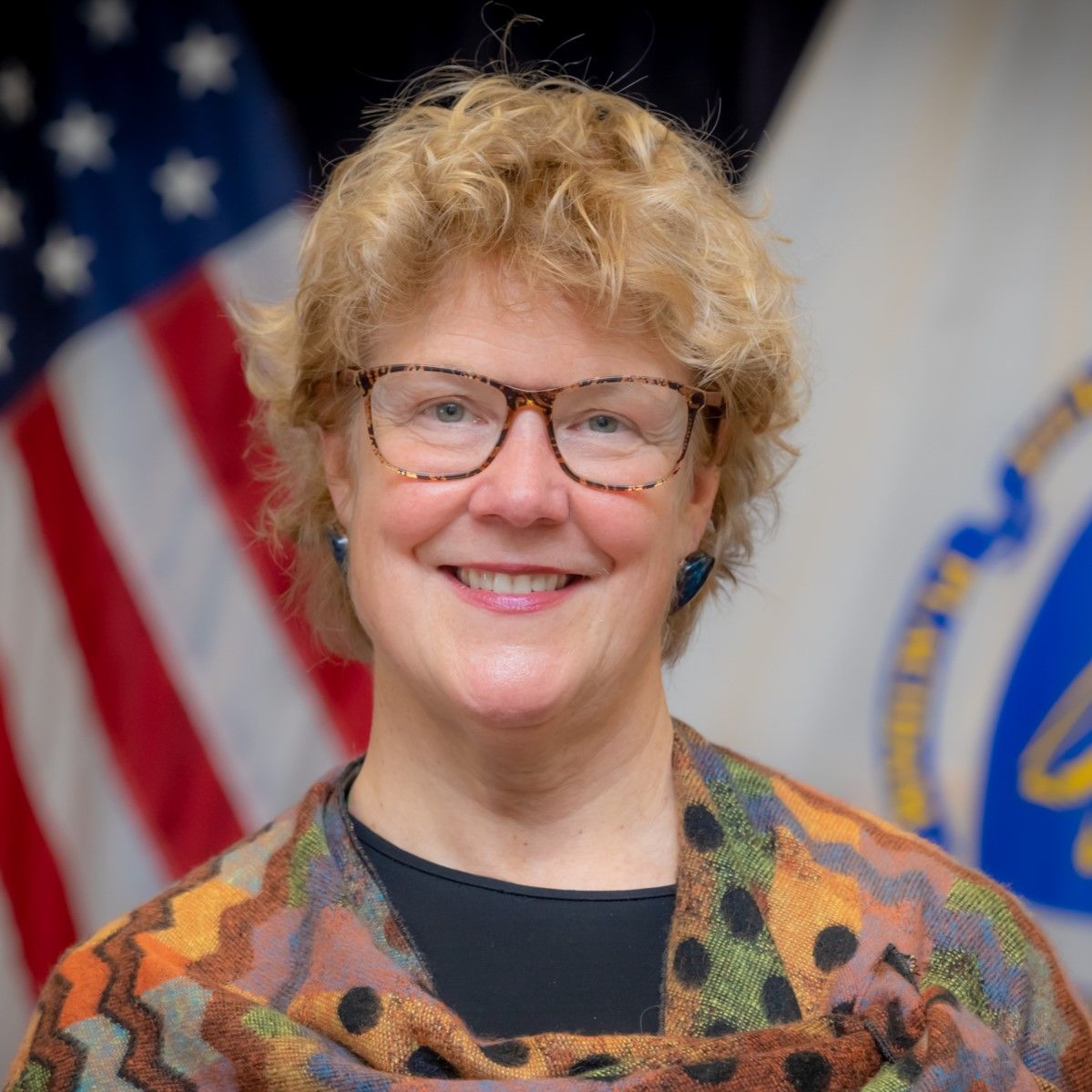
Climate Chief Melissa Hoffer will join us briefly to open our Chapter Meeting with her reflections on the critical contributions of grassroots action and advocacy to shaping and meeting our climate goals. Melissa Hoffer is Massachusetts’ first ever Climate Chief. She has held leadership positions in the EPA’s Office of General Counsel and served as Chief of the Environmental Protection Division in the Massachusetts Attorney General’s Office and as Chief of AG Healey’s Energy and Environment Bureau.
| | Legislative Update: Energy Bill Blitz & Energizing ECA Mass Advocacy | | |
Energy Affordability
ECA Mass is collaborating with the Massachusetts Coalition for Affordable Energy (MCAE) in a concerted effort to get several key components of the Senate Energy Affordability bill into a final bill that we expect to come out of the bill conference committee in October. It is likely the House members of the committee will be advocating for a narrow bill that does not include Gas System Enhancement Reform and other means to manage utility spending and profits. The House version also includes cuts to Mass Save and to support for climate programs that currently comes from Alternative Compliance Payments.
Coalition Plans and Website
The coalition has put up a website that provides the information we all need to understand what a climate-focused Energy Bill should look like. It includes position statements on Mass Save, Alternative Compliance Payments, and GSEP. Check it out! The Coalition is working hard on informing all legislators about its vision of an affordability bill and some members are aiming to sponsor a lobby day in late September that ECA Mass supports. Stay tuned for more information on that event. A big turnout will be critical to getting the energy bill we need.
Environmental Bond Bill
Our Plastics, Natural Solutions, and Finance Working Groups continue to advocate for several measures in the Environmental Bond Bill (also in committee) including a climate bank study, plastic bag reduction, municipal reforestation, and drought management. Look for Action Alerts and more info as we continue these efforts.
Energizing Advocacy
A legislative Task Team has been exploring ways to increase the engagement of ECA Mass members in advocacy of all kinds (mitigation and resilience efforts, legislation/regulation, etc.) at all levels (local, statewide, etc.). The September chapter meeting is designed to engage all members in this exploration.
Melissa Hoffer will be there to kick off the event with brief reflections on the importance and effectiveness of grassroots advocacy. We will then all respond to a few instant poll questions to see where the group stands on advocacy-related issues. Finally, we'll have plenty of time to discuss how ECA Mass can advance its advocacy efforts and those of its members on all levels. Here are some of the options that we may consider:
- Skills training and support for legislative advocacy
- District constituent teams to lobby legislators
- Action Hours for education and real time outreach to legislators
- Rapid Response Teams to increase response to Action Alerts
- Improving collaboration with allies
- Recruit more effectively to ECA Mass teams and provide orientation
- More education on state/local climate issues
- More support for local and community climate action
- Developing other new programs/activities
- Engaging in the movement for a more transparent legislature
Roger Luckmann
|
Citizens Bank De-ICEed:
A Successful Action Campaign
| | |
Sustained Resistance Works!
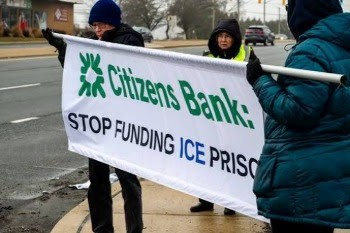
At a recent screening of the inspiring film Lightworkers at the Boston Public Library (part of the True North Action Alliance Boston Good Trouble Film Series), I spoke with Peyton Fleming. Peyton led the steering committee for the De-ICE Citizens Bank 175-group coalition that pressured Citizens Bank to end its financial ties to the country’s two largest private prison companies, CoreCivic and GEO Group, which operate dozens of ICE detention facilities nationally. My Brookline friends and neighbors were some of the first to take action, standing staunchly through the winter cold every week in front of our local branch of the bank. The steering committee had learned from friends who were involved with pressuring Avelo Airlines to end its nine-month-partnership with U.S. Immigration and Customs Enforcement last January, that the best way to succeed is by “sustained resistance focused on the supporting pillars,” as Peyton said. From that small group of people demonstrating against Citizens - the only bank providing $2.5 billion to bankroll those two businesses wanting to build new ICE detention centers - protest actions spread. The first one was in January in Minnesota, the week when Alex Pretti was killed. By March, the protest spread to seven states, and then on to 12 states, and by June there were actions occurring regularly in 140 communities nationwide!
Withdrawing Money Made Citizens Bank Notice
In April, some of the protesters had purchased stock in Citizens Bank, which allowed them into the stockholders meeting where they asked hard questions that rattled the board, enough to make that a pivotal moment. They also organized $25 million in planned withdrawals and threatened more. The city of Philadelphia was using the bank for billions in payroll which they threatened to withdraw. Two days after Jersey City withdrew their funds, the bank caved in to the protesters’ demands. ICE melted! Citizens Bank stopped bankrolling CoreCivic and the GEO Group. The bank put out a statement saying they acted for financial reasons, but who was it who forced the issue of those “financial reasons”? It was the Power of the People focusing their resistance actions on the pillars supporting what we wanted to change!
Democracy Starts at Home
When people ask, “What do protests accomplish?” this is a story to tell them. When your friends and relatives ask, “What do big demonstrations like NO KINGS do? Do they have any effect?” Tell them they should get out there and experience it for themselves - there are so many people who think and feel the way they do. Talk with your family because Democracy starts at home. Talk to all kinds of people. Build People Power now so we can call on it when needed. Pull in neighbors who are upset but don’t know what to do. Don’t make them feel they are wrong for not yet stepping up to participate - lead with love and empathy. Ask them, “How are you feeling about the things that are happening now?” Agree to watch the media that those you disagree with are watching - and ask them to watch a news stream you prefer. And stay tuned for OUTREACH OCTOBER with our collaborators!
Learn from history: DON’T BE SILENT. SILENCE IS NOT SAFETY.
Maiyim Baron
| Much of MA is Still in a Drought | |
As of last month, the state is continuing to classify some areas as a Level 2 Significant Drought. For example, Stow received only about 2 inches of rain in August, well below the region’s historical August average of 3.2 to 3.5 inches. And none of the rain we received impacted our falling groundwater. Our closest USGS groundwater monitoring well is in south Acton, and it showed no groundwater recharge whatsoever in August. Indeed, the groundwater level there continued to drop. This means that our private wells in Stow continue to be at risk of pulling up silty water - or even failing. Even if we have normal September rainfall, the groundwater in our area will likely follow the annual cycle of continuing to drop throughout the fall. (Recharge typically occurs only in the late winter and early spring, and that recharge occurs very slowly.)
What can we do? In a Level 2 Significant Drought, the state drought management plan calls for implementing strict measures that minimize the risk of well failures. The key strategy is to stop wasting water and to use it only for essential water uses. Nonessential outdoor water use – such as watering lawns, washing cars, and irrigating golf course fairways – is typically the largest source of water waste during a drought in a town like Stow. Eliminating these nonessential outdoor activities during a Level 2 Significant Drought reduces the daily strain on our groundwater.
Here is the actual language from the state’s Drought Management Plan: “Limit outdoor watering to hand-held hoses or watering cans, to be used only after 5 p.m. or before 9 a.m.” In a Level 2 Drought, our golf courses are to limit watering of fairways to only 60% of normal volume.
Let’s hope that when the state’s Drought Management Task Force meets in early September it does not increase our drought status to a Level 3 Critical Drought, which is where we were earlier in the summer. That would call for a complete ban on all nonessential outdoor water use.
Allan Fierce & Rick Lent
| Turf Fields - Bad for Us and Bad for the Earth | | |
As grandparents, aunts, and uncles, we’ll soon be cheering on family members playing sports on green fields. But in many instances, these fields will be made of green plastic and rubber, not green grass.
While synthetic turf looks good and is easier to maintain than grass, plastic turf fields leach chemicals that pollute the water and land around them. These toxic chemicals also endanger the health of those who play on these fields.
Read this recent account of a soccer goalkeeper in Newton whose experience playing on plastic fields has led her to become a vocal opponent of them. Her warnings are worth heeding.
Synthetic turf contains a mix of toxic substances including:
-
Crumb rubber infill made from recycled tires - this contains 96 identified chemicals; 20% of these tested chemicals are probably carcinogens and 40% cause breathing problems or skin irritation, according to a 2015 Yale study.
-
PFAS are "forever chemicals” - they do not break down. They have been shown to accumulate in our bodies. Exposure to PFAS is linked to hormone receptor-positive breast cancer, and these chemicals have been detected in breastmilk and the blood of newborn babies’ umbilical cords.
To keep children (and yourself) safer, do not eat or drink on synthetic turf fields, wash your hands and clothes after contact with the turf, and wear pants and long-sleeve shirts, if possible, while on it.
For more information see The Hidden Risks of Artificial Turf: What Every Parent and Community Should Know.
Also consider joining ECA’s Plastics Working Group which collaborates with allies on legislation to limit the installation of synthetic turf fields. Bills like these are part of ECA’s effort to lessen the production and use of plastics in our Commonwealth.
Melissa Ludke & Rick Lent
| |
Stop "Sustainababble" at Starbucks:
Join the Standouts Starting Sept 28
| | |
Starbucks claims the 8 million plastic cups it pumps out every day are recyclable. Yet when Beyond Plastics investigated Starbucks' sustainability claims, by putting trackers in 53 cups, not one made it to a recycling facility. With plastics responsible for about 5% of global greenhouse gas emissions, this deception is much more than a trash or pollution problem. In fact, recycling plastic is a false solution that perpetuates fossil fuel extraction to create more single-use plastics. This is why society needs to work on using LESS plastic.
We invite you to join Beyond Plastics’ National Week of Demonstrations, starting September 28, to call on Starbucks to reduce its plastic footprint by following its own sustainability claims: using reusable dishware on site and paper cups for takeout cold drinks. Gather a group of buddies to stand out at your neighborhood Starbucks to signal the media and Starbucks CEO, Brian Niccol.
Click here for more information and instructions.
Susan Abrams
| | |
What is spotlighting? Also known as birddogging, spotlighting is the practice of showing up at public events where elected officials are present, to ask them on-the-record questions about your issue and create public accountability. Sound scary? It can be, but this is a useful and essential tactic to build pressure on elected officials so come join in the fun! Better Future Project is hosting this training on Weds, Sept 30 at 6:30 PM to talk through the most intimidating parts of spotlighting and ensure you feel set-up for success.
This 90-minute training will review different types of spotlighting, review video of previous spotlighting tactics to pick out what works and what doesn't, and then we'll get into some role play. This is a great training for all activists, no matter your priority issue, so please spread the word!
This training will definitely be available online; TBD on an in-person component. Everyone who RSVPs will receive a Zoom link the morning of the training.
MORE INFO AND REGISTER HERE
Tina Grosowsky
| Make Polluters Pay Update | |
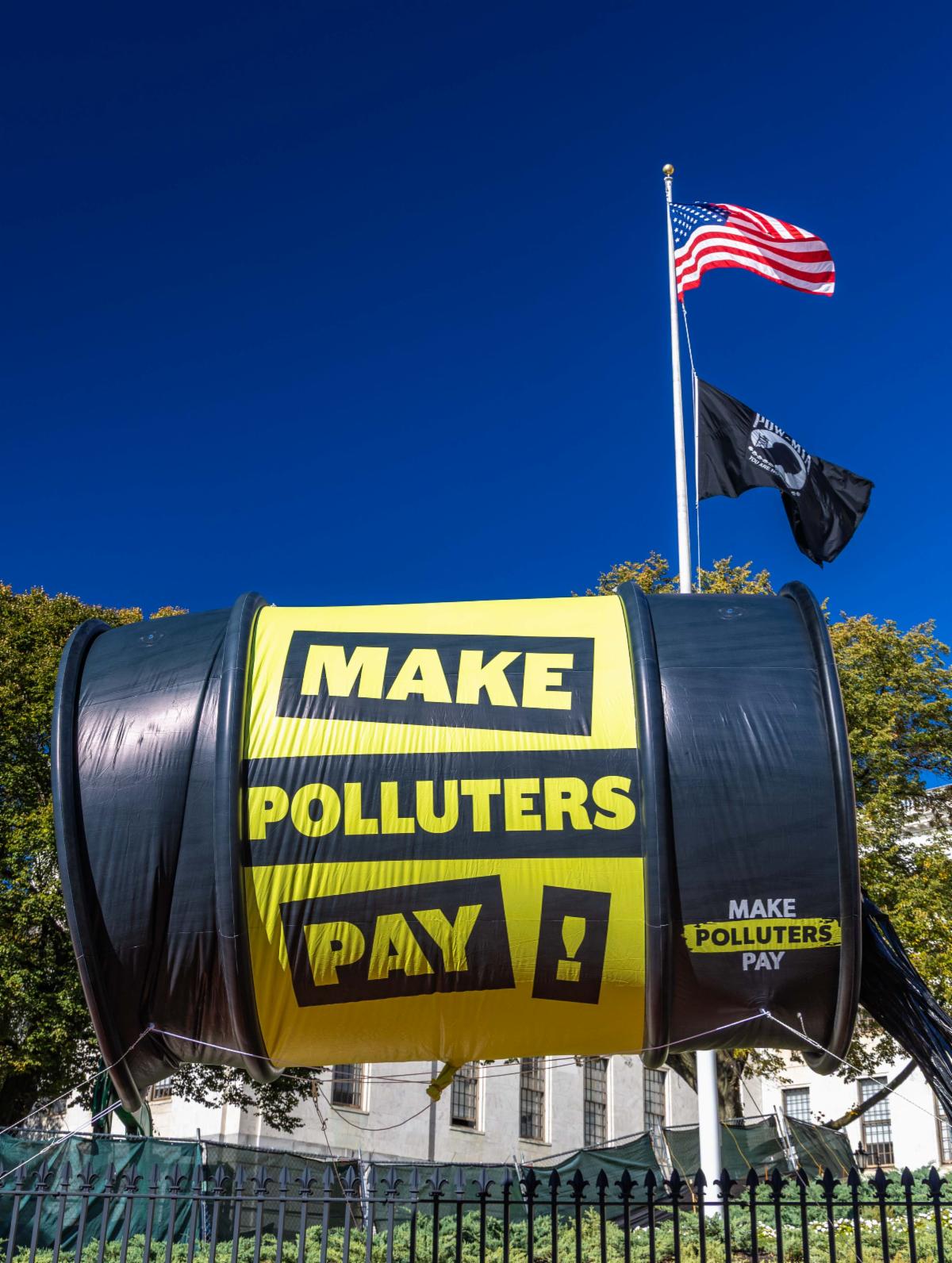
News hit Monday, Aug 31 that the federal judge in the Northern District of NY struck down New York's climate superfund law. This is a disappointing result, but only one ruling based on a controversial 2nd Circuit precedent. This decision does not impact Massachusetts since we are not in the 2nd Circuit; if anything, it only creates a greater sense of urgency to get our bill in front of the 1st Circuit here in Massachusetts.
For more info on the 2nd Circuit's disappointing decision and guidance on how to talk about it with your organizations and legislators, please see this memo put together by Fossil Free Media.
Tina Grosowsky
| |
Training: Community Choice
Aggregation Series
| | |
Triggered by the recent passage of a Community Choice Aggregation (CCA) bill in Maine, this training will be of interest to anyone interested in advancing the scope and functions of CCAs in other states. This is highly relevant for clean energy folks in ECA and our collaborators Third Act MA since CCAs, particularly their most recent model (CCA 3.0), can serve as a local conduit for developing new solar, battery, and other distributed energy resources.
Tune in for a free training series by Paul Fenn, the creator and pioneer of CCA across the US for over 30 years. Although this is a Maine-focused series, the information will give participants a solid grounding in CCA history, formation, and operation.
September 15 at 12 PM: General Background and History
September 22 at 12 PM: Key Formation Strategies and Possibilities
September 29 at 12 PM: Specific Pathways: Key Local Policy Decisions and Action Steps
Sponsored by the Maine Community Power Alliance and presented by Paul Fenn from localpower.com.
- What is CCA? What makes it the most powerful community-wide energy transition platform?
- What CCA models have been used by municipalities, and what did each accomplish?
- How can CCAs build both centralized and decentralized renewables, owned by the CCA, investors, or individual energy users?
- What is the right administrative approach to git varying conditions between cities, towns, and rural counties?
REGISTER HERE
Paul Fenn is the founder of Local Power, an organization that has led the development of a new community-based model for energy: Community Choice Aggregation. He is the creator of Green Bonds to finance local build-outs. Go HERE for an interview with Paul Fenn, featured in the Corporate Crime Reporter and HERE for a YouTube interview with Paul.
Maiyim Baron
| Climate Summer: Too Hot to Ignore | | |
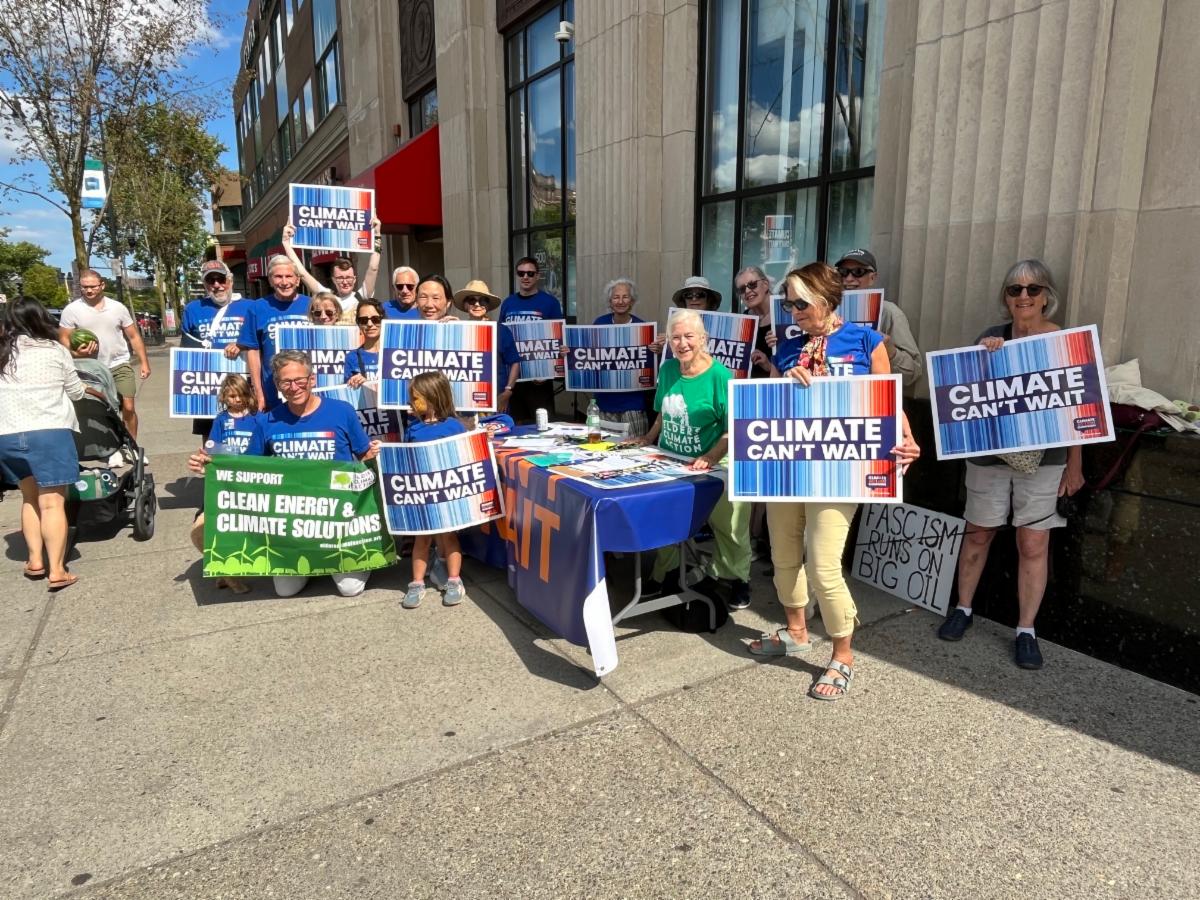
Collecting signatures
at our Standout in Coolidge Corner Aug 15
| | |
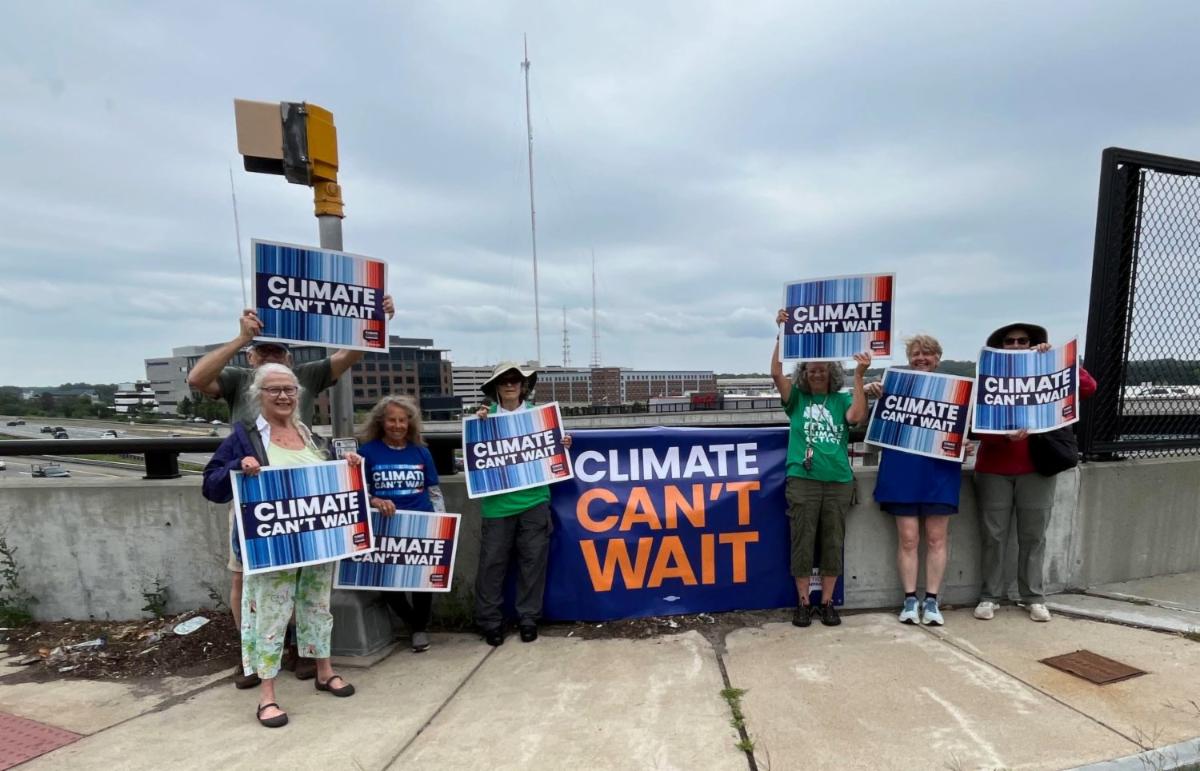
Our banner drop
over I-95 in Needham
| | |
In August, ECA Mass organized four events as part of the Climate Action Campaign national campaign, Climate Summer: Too Hot to Ignore. Conducted in 50 key Congressional districts nationwide, including MA-04 (Rep Auchincloss's district), the goal of the campaign was to demonstrate to Congressional Democrats the broad grassroots demand for climate action and to ensure that climate becomes a top priority in 2027.
Events included a Honk and Wave standout and petitioning in Coolidge Corner, and another in Needham which got enough notice to make the Needham Channel News, followed by our banner drop over I-95 in Needham on Aug 21 to catch the traffic out to the Cape on a Friday afternoon. We will follow through by delivering photos, petitions, and the video to Rep Auchincloss's Newton office this month.
Seth Evans
|
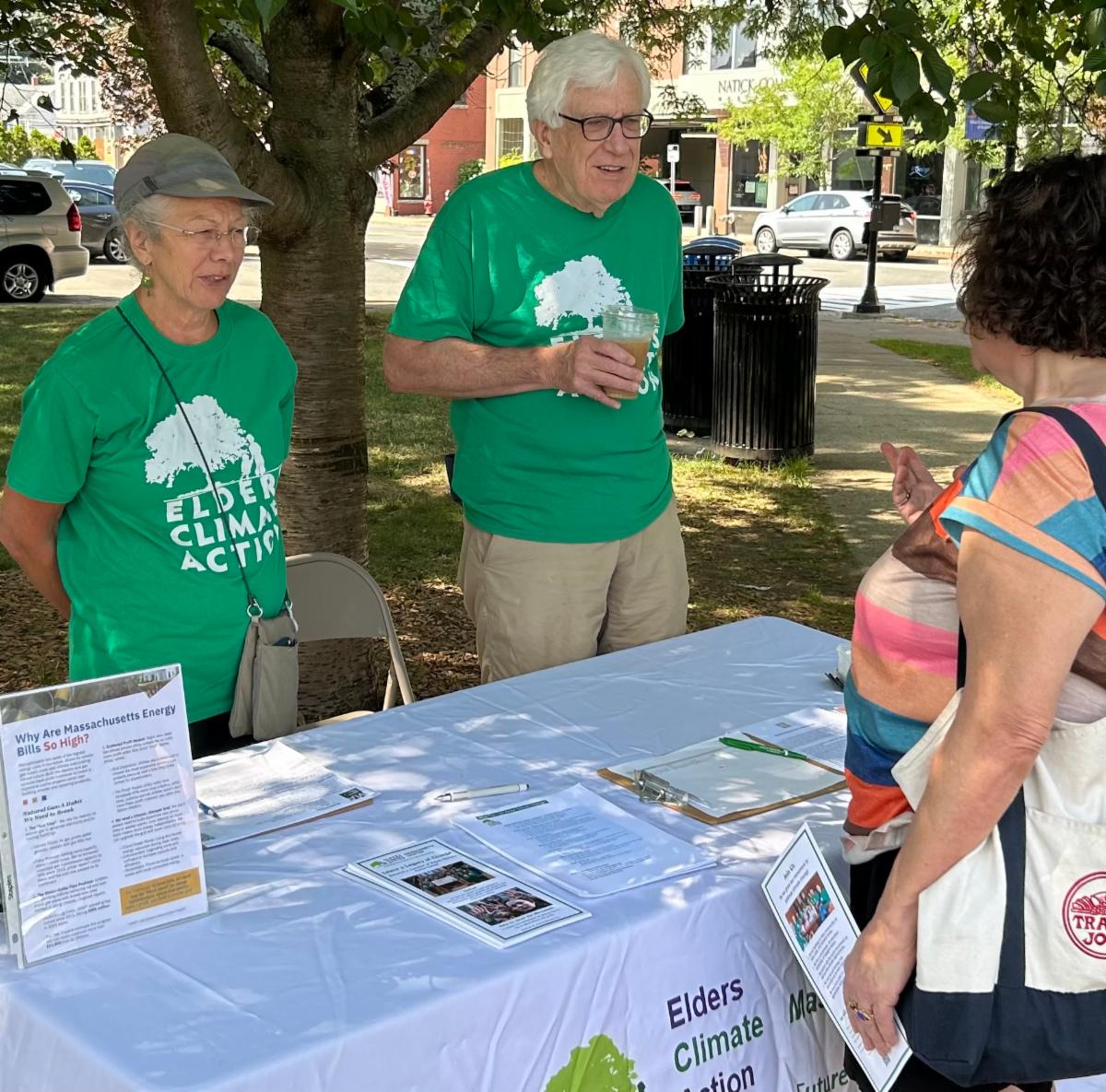
ECA Mass Members at
Natick Farmers Market
| | |
Tina Grosowsky and Roger Luckmann sharing
information at the Natick Farmers Market in July
| | Get More Involved & Join an ECA Team | | |
If you would like to become more involved with ECA Mass on one of our teams (Communication, Education, Legislative, Membership, or Research) please contact Tina Grosowsky, tgrosowsky@gmail.com.
Tina Grosowsky
| | |
We send announcements of our meetings and Action Alerts to eca-mass@googlegroups.com, which includes all those on our active list.
Please contact Dawn Edell if you want to confirm you are on our active list.
| | Did you miss a past meeting? | | |
Did you miss an ECA Mass Chapter Meeting or Deep Dialogue? Or do you want to share one with friends and family?
We have you covered! Videos of past chapter meetings are here and videos of past deep dialogues are here.
| |
WHAT ARE YOU READING?
Would you like to review a book for our newsletter?
| | |
This Newsletter is Published for Members and Friends of
Elders Climate Action - Massachusetts Chapter
ECA Massachusetts is a chapter of the national Elders Climate Action. We are a movement of elders committed to making our voices heard to change our nation's policies while there is still time to avoid catastrophic changes in the Earth's climate. Visit the ECA Massachusetts website, event calendar, and Facebook page to learn more about our chapter's activities and climate news. JOIN ECA MASSACHUSETTS AND STAY CONNECTED! Subscribe to our monthly newsletter, and for more active participation, sign up to receive Action Alerts and meeting announcements. Fill out our subscription form.
| | | | |