|
The Story of Welles Remy Crowther
As a child, my brother and I (Eli) often had questions about where our dad was going and what he was doing. Being from Pittsburgh, naturally, my mom was used to Mr. Rogers’ words in times of tragedy: “Look for the helpers”. She happened to come across the story of Welles Crowther and used it as a way to emulate that the work my dad, and many other brave men and women are doing, are those “helpers”.
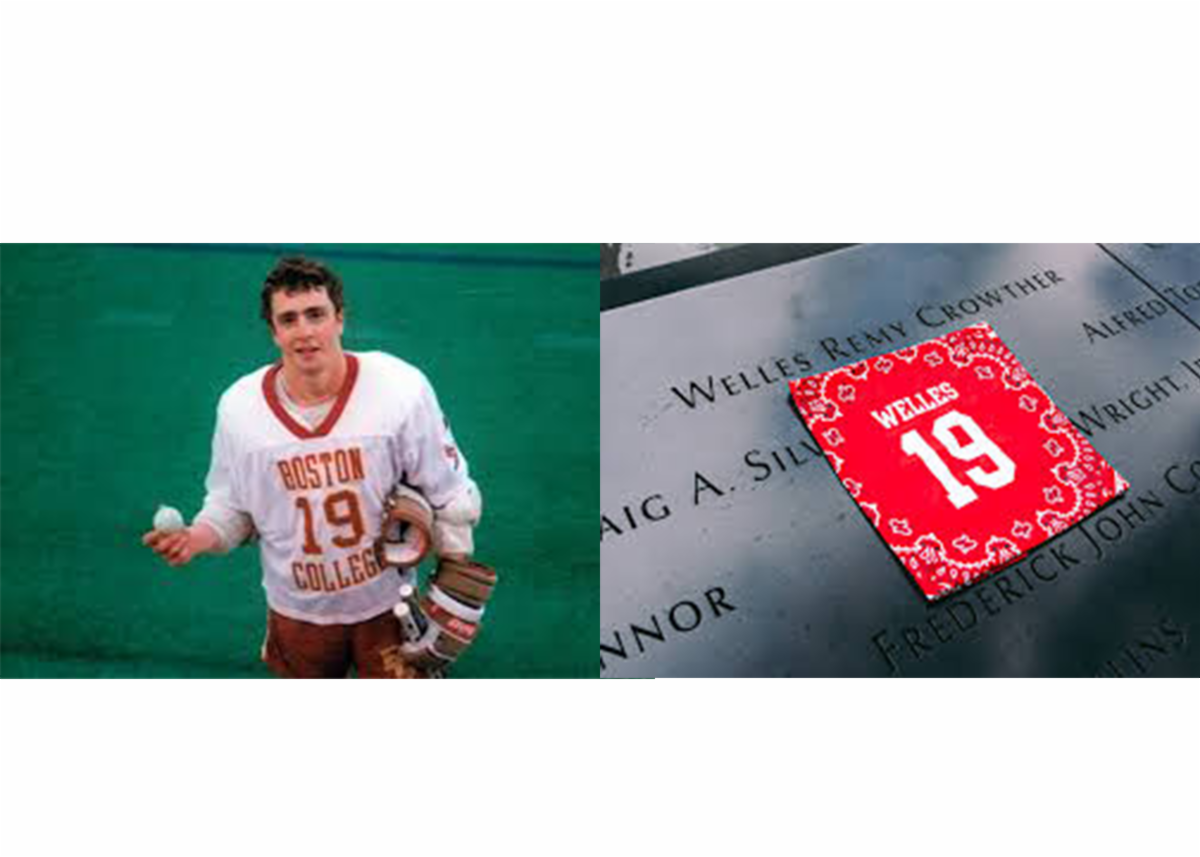
Crowther was born in Nyack, NY and, as most young men did, he found joy in playing every sport he could. As he grew older, he found his passions in the sports of hockey and lacrosse. Welles similarly grew up in a household that upheld the values of service where his dad served as a volunteer firefighter in Nyack, and Welles followed his father's footsteps, serving his community through high school. When he was young, his father gifted him a red bandana, and quickly became a staple for Welles in everything he did. In college, Welles would go on to play lacrosse at Boston College. Immensely loved by his teammates and peers, Welles was cherished for being the hardest worker and a great teammate on the field, and was an even better companion and friend off the field.
Upon graduating with a degree in economics, he would move back to New York and began working in the south World Trade Center as an equities trader. He was comfortable with what he was doing, but longed for something bigger than himself and more rewarding. It was always his dream to join the NYFD, where he could serve like his father and give back to the community that had raised him.
On September 11, 2001, Welles was working like usual on the 104th floor when a plane struck the tower between the 77th and 85th floor. Welles immediately left a message for his mother and told her that he loved her and that he was ok. Rather than getting himself down, he began focusing on getting others out of the tower because that’s the type of person Wells was. He helped direct people to the only operational staircase and even carried a woman down 17 floors on his back to get her to safety. As he did this, he donned his red bandana over his face to protect himself from all the smoke. Unfortunately, as Welles stayed in the tower to save more civilians, the tower collapsed.
A year later, on the one year anniversary of the attacks, Allison Crowther (his mother) was reading an article from the New York Times when she saw that several survivors claimed to be saved by a man wearing a red bandana. Allison immediately knew that it was her son. They did not know anything about this man, his background, what his goals were in life, but they knew they owed their life to this man. Welles’ legacy lives on in these survivors and in the sacrifice he made on that day.
What I like to remember about this story is that he was a regular civilian who put the lives of others before his own in a time of tragedy. His legacy as the “man in the red bandana” represents a prime exhibition of extraordinary courage and selflessness when the world needed it most: ultimately manifesting what it means to be a “helper”, in the words of Mr. Rogers.
This story has been crucial to my upbringing and my family watches this video every year to continually remind us to be one of the “helpers”. While that day has been cemented as one of the deadliest terrorist attacks on American soil, it serves as a reminder that there are people out there, like Welles, who put the lives of others before their own. Take some time to hug your loved ones and thank those who have made the ultimate sacrifice.
|