|
August 2026
Dear Colleagues,
At the Center for Adoption Support and Education (C.A.S.E.), we envision a world where all those connected to adoption, foster, and kinship care thrive. Achieving that vision requires ensuring that individuals, children, and families can access mental health professionals who understand the unique experiences of adoption, foster, and kinship care – and have the specialized skills to support both permanency and well-being.
That is why building an adoption-competent workforce is central to C.A.S.E.’s work. Across the country, we are working with states, systems, and partners to strengthen the workforce, expand access to specialized care, and build the infrastructure needed to sustain adoption competence over time. In June, C.A.S.E. CEO Debbie Riley, LCMFT, highlighted some of the ways this work is taking shape nationwide.
But building a workforce capable of meeting families’ needs does not happen through training alone. It requires sustained investment, strong partnerships, and systems that embed adoption competence into practice. As communities face workforce shortages, increasing behavioral health needs, and growing demand for specialized support, examples from the field can show what that kind of long-term systems change looks like in practice.
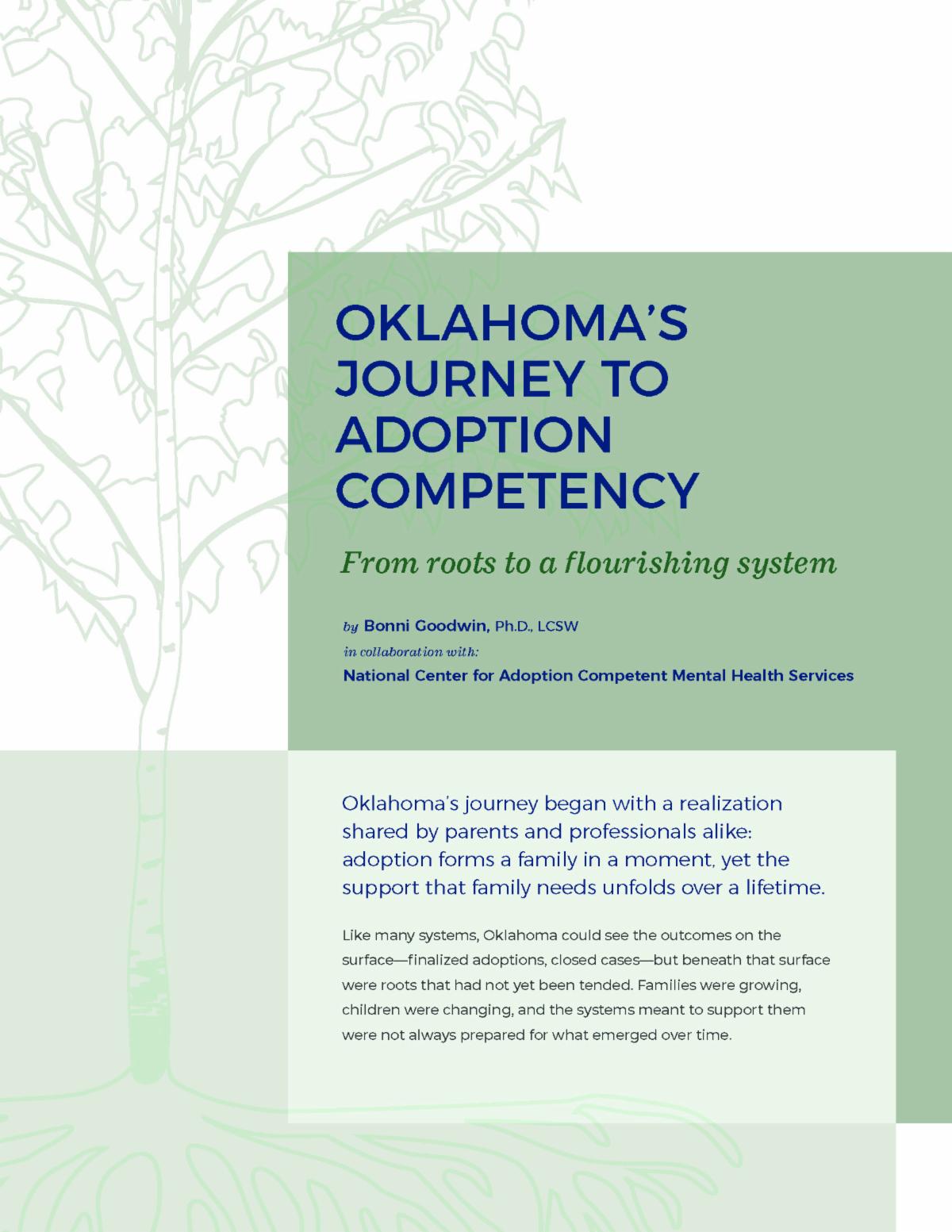
Oklahoma's decade-long journey offers one such example.
| |
|
|
Understanding Families Is Where Change Begins
OKLAHOMA INSIGHT:
"The message was consistent: families often felt abandoned after adoption finalization. Too often, families were being asked to explain adoption to the very systems meant to support them."
| |
The experiences described by Oklahoma families reflect a challenge we continue to hear across the country: adoption may be finalized, but the need for support does not end. Adoption, foster care, kinship care, and family separation can shape identity, relationships, and well-being across the lifespan, requiring systems that are prepared to respond as needs evolve. In C.A.S.E.'s recent State of Practice research reports, individuals across the United States and internationally shared similar experiences seeking adoption competent mental health support. The findings reinforced what families have long reported: support is more effective when professionals understand the realities of adoption, foster care, and kinship care.
Oklahoma's experience also reinforces a lesson shared across this space: lived experience is essential expertise. The voices and experiences of families did more than identify unmet needs. They informed decision-making, shaped service design, strengthened post-adoption supports, and helped ensure implementation efforts remained connected to the needs of children, youth, and families.
This principle continues to inform the field today. C.A.S.E. resources informed by such voices support conversations about identity, trauma, attachment, grief, and belonging. Expanding access to adoption competent support also means helping families find trained providers, which is why the National Directory of Adoption Competent Professionals serves as a resource for connecting families and professionals to adoption competent mental health services.
LEADERSHIP LESSON:
Systems change becomes apparent when families no longer have to explain their experiences to the systems designed to support them.
| |
Building Workforce Readiness
OKLAHOMA INSIGHT:
"The seed was planted—not in policy, but in people. What emerged was the beginning of a professional learning culture..."
| |
One of the clearest lessons from workforce development efforts nationwide is that training alone rarely changes practice. Learning is most effective when paired with ongoing support, opportunities for application, and organizational commitment. Oklahoma's journey began with the National Adoption Competency Mental Health Training Initiative (NTI), creating a shared foundation of understanding among child welfare and mental health professionals. While NTI helps establish core adoption competency across disciplines, many organizations also invest in advanced clinical specialization. For interested licensed mental health professionals, opportunities such as the Training for Adoption Competency (TAC)® provide in-depth preparation for assessment, treatment, and support of children, youth, and families experiencing adoption and foster care.
As adoption competency continues to expand across the field, attention is also growing to the role schools play in supporting children and families experiencing adoption, foster care, kinship care, and family separation. School-Based Mental Health Professionals Training and related resources can help educators, school counselors, and school social workers better understand and support students impacted by adoption, foster care, kinship care, and family separation.
LEADERSHIP LESSON:
Strong systems invest not only in training people, but in creating the structures that help new knowledge take root and grow.
| |
|
From Initiative to Infrastructure
OKLAHOMA INSIGHT:
"By 2024, adoption competency was no longer emerging—it was operational."
| |
Implementation matters as much as inspiration. Training can spark change, but sustaining it requires infrastructure, leadership commitment, accountability, and ongoing support. Lasting progress occurs when adoption competency becomes part of how a system operates, not simply an initiative it undertakes.
Oklahoma illustrates this principle in action. By 2024, adoption competency was embedded across the state's support system. In its first year of evaluation, the statewide PAS Clinical Team delivered more than 500 adoption competent clinical sessions, with families reporting meaningful improvements years after adoption finalization.
Cross-system collaboration also played a critical role. When professionals across child welfare, behavioral health, education, healthcare, and community services share a common understanding of adoption, loss, identity, attachment, and belonging, families are more likely to receive coordinated and responsive support.
Oklahoma's journey demonstrates that sustainable systems change is built over time and embedded in the way organizations operate. Embedding adoption competency into organizations, partnerships, and service delivery structures helps ensure the work endures through leadership transitions, staffing changes, and evolving priorities. Oklahoma's collaboration with the C.A.S.E. Academy further demonstrates how investing in emerging professionals through university partnerships, consultation, and learning cohorts can help strengthen the adoption competent workforce for years to come.
LEADERSHIP LESSON:
Sustainable systems change occurs when adoption competency becomes embedded in organizations, partnerships, service delivery structures, and workforce pathways rather than relying on individual champions.
| |
CONTINUE THE CONVERSATION!
What does it take to build readiness and sustain systems change?
Join Oklahoma leaders, partners, and C.A.S.E. to explore the decisions, challenges, and successes that shaped Oklahoma's adoption competency journey, and learn how those lessons can inform efforts in your own work.
| |
|
Join Dr. Bonni Goodwin, who helped lead Oklahoma's decade-long adoption competency initiative, along with Oklahoma partners and C.A.S.E. leaders, including representatives from the C.A.S.E. Academy and National Center, for a conversation about building and sustaining adoption competency across systems.
| |
|
During this webinar, we'll explore:
- How Oklahoma's readiness efforts strengthened adoption competency across systems
- The strategies, adaptations, and partnerships that accelerated progress
- How family and lived experience shaped decisions, services, and outcomes
- Lessons and practical approaches states, tribes, and territories can adapt to advance adoption competency and sustain systems change
| |
|
As we continue learning from leaders, professionals, families, and lived experts across the country, we look forward to sharing additional examples, insights, and lessons that can help strengthen readiness and advance adoption competency across systems.
We encourage you to join us in October for Building Readiness Together as we continue the conversation and share practical strategies for sustainable systems change.
Thank you for being part of this work to ensure that everyone connected to adoption, foster, and kinship has the support they need to thrive!
Sincerely,
The C.A.S.E. Team
| |
|
|
Share This Resource With Your Network
Know someone who would benefit from the information and resources in this newsletter? Help us extend our reach by forwarding this email to friends, colleagues, and professionals in your network. Click the button below to easily share this newsletter via email.
| |
The Center for Adoption Support and Education (C.A.S.E.) is a national leader in mental health, ensuring the well-being and permanence of children, families, and individuals connected to adoption, foster, and kinship care. We work across every level of the permanence ecosystem—delivering direct services, training professionals, and driving systems change—to ensure families stay together and thrive. Our approach is rooted in Adoption Competence: a deep understanding of the unique experiences shaped by loss, identity, trauma, belonging, and more.
Founded by families in this community, C.A.S.E. has been advancing this mission since 1998. We believe every child deserves lasting connection, and every family deserves the support to make it possible.
Learn more: adoptionsupport.org.
Did a friend forward you this email? Sign up for our emails today!
| |
| | | | | |