Professional Learning Newsletter | October 2026: October is Dyslexia Awareness Month

11/17 Workshop. Leveraging AI to support all learners with Alice Keeler. Register

10/29 Workshop. Register

Would you like this resource for FREE?


See below to learn more.

10/26 Online 3:30pm. Register


October is
Dysexia Awareness Month


Dyslexia is a language based learning difference that affects reading, writing, and spelling. It has nothing to do with a students intelligence. In fact, students with dyslexia often have incredible strengths in creative thinking, spatial reasoning, and big picture problem solving.


Use this Gemini Notebook with Dyslexia resources to support learners.

Instructional Strategies


  • Use Structured Literacy: Focus on explicit and systematic phonics instruction. Approaches like Orton Gillingham are highly effective.
  • Engage the Senses: Bring in multisensory learning. Have students trace letters in sand, use color coded tiles for spelling, or incorporate hand gestures for different sounds.
  • Preteach Vocabulary: Introduce new words and concepts before reading a text. Using graphic organizers like the Frayer Model helps build a strong foundation and connects perfectly to our active learning goals.
  • Break Instructions Down: Give directions one step at a time and pair verbal instructions with visual cues.

Classroom Accomodations

  • Embrace Assistive Technology: Allow the use of text to speech software, audiobooks, and speech to text dictation tools.
  • Rethink Reading Aloud: Never force a student with dyslexia to read aloud in front of the whole class unless they volunteer. Provide text in advance if they want to practice so they feel prepared.
  • Grade for Content: When assessing written work, grade the ideas and knowledge rather than marking them down heavily for spelling or handwriting errors.
  • Provide Guided Notes: Give students outlines or graphic organizers ahead of a lesson so they can focus on listening and understanding instead of frantic note taking.

Creating an Inclusive Environment

  • Adjust the Visuals: Use clean sans serif fonts. Increase line spacing and avoid cramming too much text onto a single page.
  • Focus on Strengths: Give students opportunities to shine in areas outside of reading, such as oral presentations, art, science experiments, or group leadership.
  • Allow Extra Time: Remove the pressure of the clock on reading assignments and assessments.

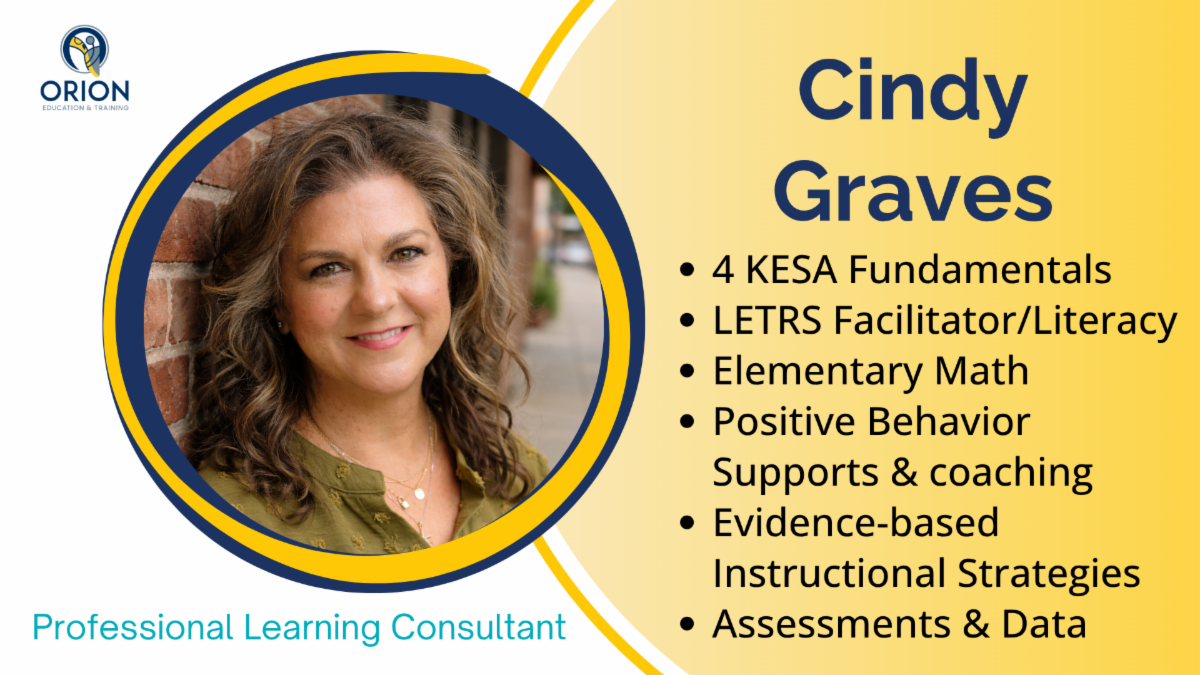
Work with Cindy

It is estimated that 40% of students are Dyslexic. Work with our Dyslexia expert Cindy Graves to provide training and instructional coaching.


Free Resource
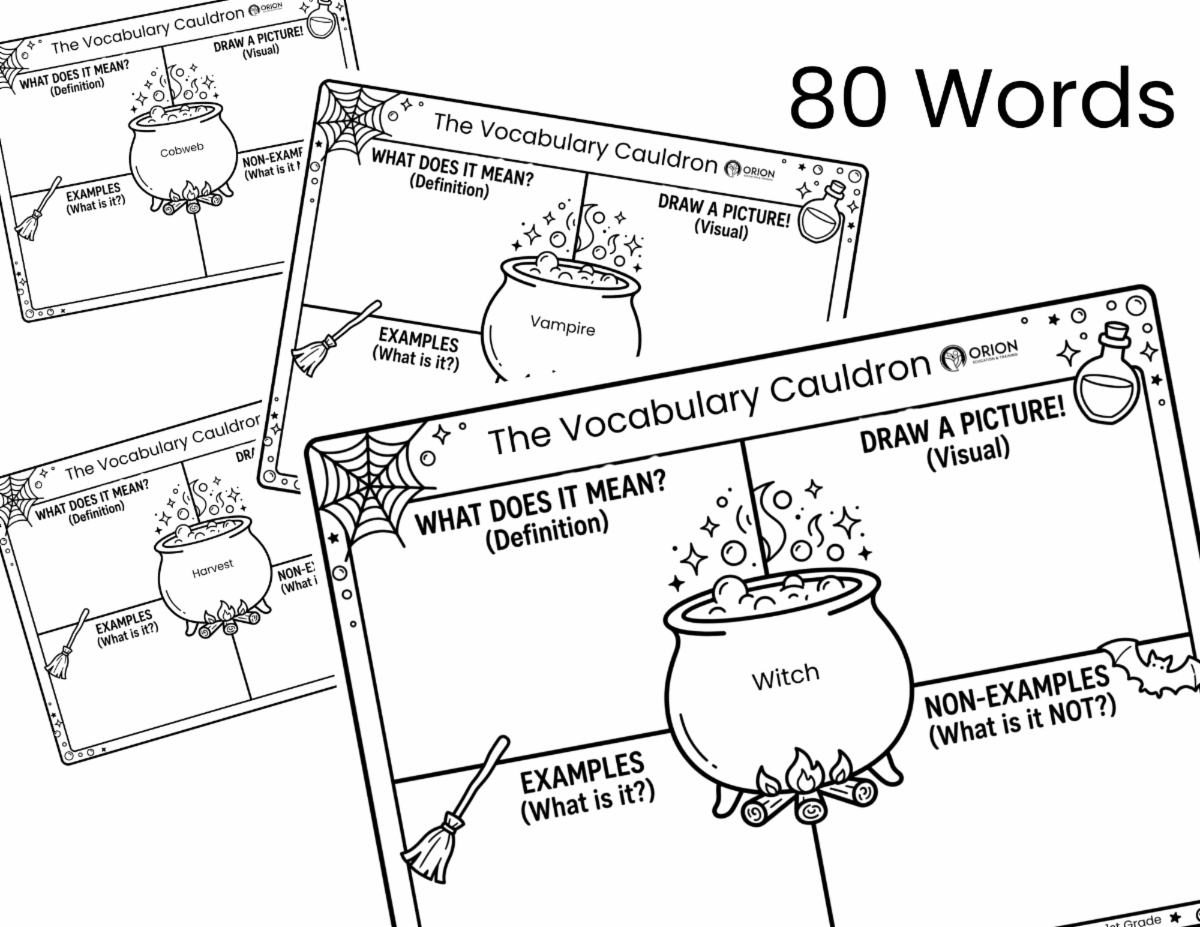
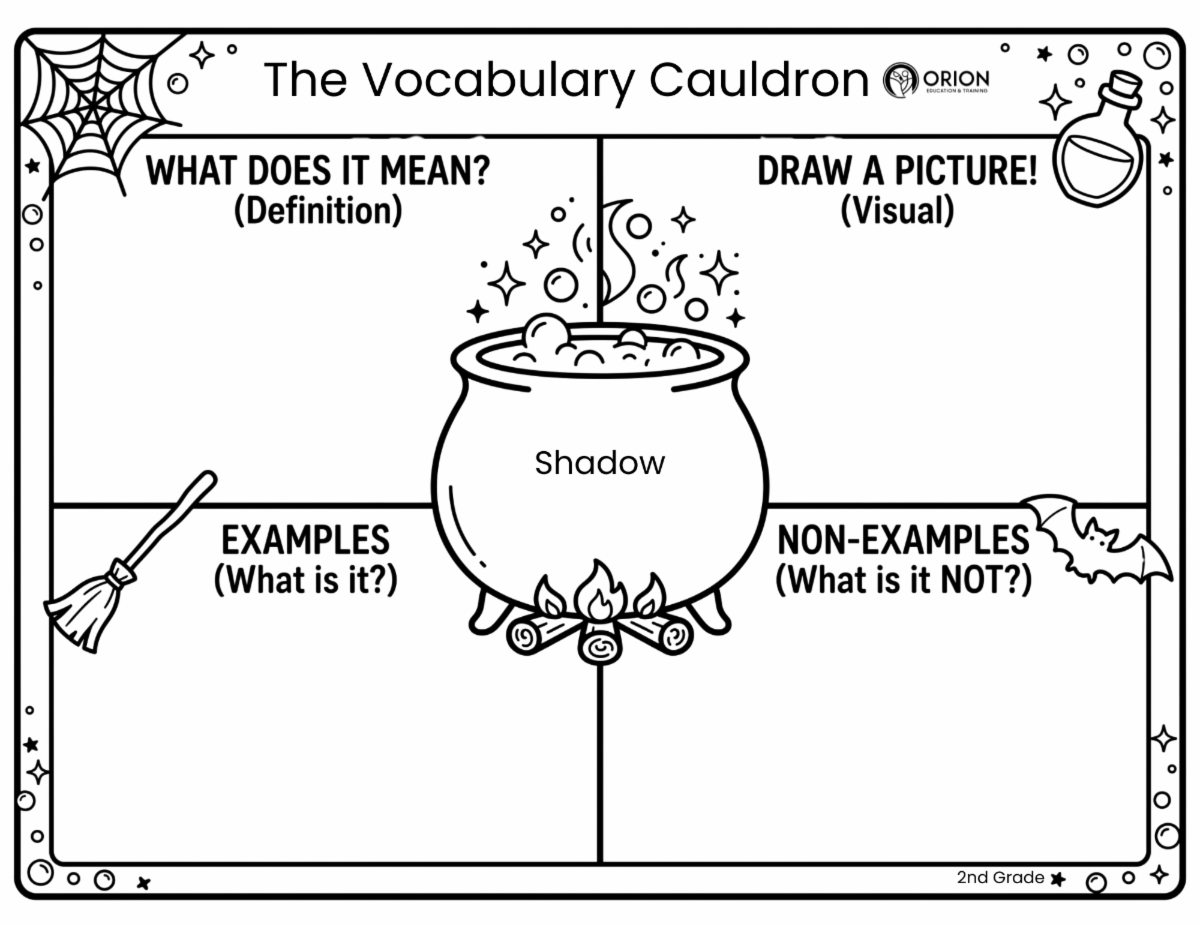
Vocabulary Cauldron


In supporting National Dyslexia Month, we have created some Frayer model templates to get into the spooky season.

Download available for a limited time.

Get ready for the spooky season with this Cauldron Vocabulary (Frayer Model) pack. Download the elementary word list for grades K to 7 or the middle/high school word list.


As Halloween approaches, it is the perfect time to brew up some engaging vocabulary lessons that go beyond the usual routine.


At Orion, we believe teaching vocabulary can be more than just having kids passively memorize lists or copy definitions out of a dictionary. Much of our approach centers on active learning, encouraging students to make sense of the words themselves. For vocabulary to actually stick, students need to engage with the words in different ways and connect new terms to what they already know.


By using methods supported by research, teachers can turn vocabulary lessons into a dynamic process where kids explore nuances, talk about meanings, and take ownership of their learning. True understanding takes a higher Depth of Knowledge, or DOK. We want students analyzing, categorizing, and applying words, rather than just remembering them for a quiz.


The Frayer Model is a helpful graphic organizer that fits nicely with our goal of getting kids to actively think about words. Instead of just writing down a definition, students interact with the concept from four different angles to really process what it means.


Here is a breakdown of how the four sections work:

  • Definition in their own words: Students take the formal meaning and translate it into kid friendly language. This ensures they understand it instead of just copying.
  • Characteristics and facts: Students figure out the key traits or visual clues of the word. This helps them grasp the context and how the word is used.
  • Examples: Students come up with synonyms or everyday situations where the word fits in action. This ties the new term right back to their own experiences.
  • What it is not: This section encourages critical thinking. Students list antonyms or related ideas that do not fit the definition at all. Figuring out what a word is not helps cement exactly what it is.


We enjoy using this approach because it naturally elevates the DOK level by moving kids past simple recall and into actual strategic thinking. It is also adaptable. You can use it in almost any subject, covering everything from science and history to math and reading. Plus, it is a useful tool for small group discussions so different types of learners can build meaning together as they stir up new ideas.


Orion Workshop
Teaching Grade-Level Content When Students Are Behind


Teaching grade level math when students lack foundational skills is exhausting. You already know there is no magic wand to erase learning gaps overnight. Yet the pacing guide keeps moving. So how do you teach rigorous content without leaving struggling students behind? This full day workshop focuses on practical scaffolding strategies for your everyday math lessons. Instead of falling into endless remediation loops, we will explore smart ways to keep grade level concepts accessible to everyone. We will leverage AI to quickly adjust task entry points, build visual supports, and adapt problem contexts in seconds. Join fellow math teachers for a realistic, encouraging deep dive into meeting students where they are while keeping expectations high.


November 17th 8:30am - 3:30pm


Coaching Corner

Your Way of Being Reflection


  • Can you experience the pressure in the room without rushing
    to relieve it?
  • Can you hear resistance without taking it personally?
  • Can you stay connected to your purpose when the conversations start pulling you somewhere else?


Learning how to “be” in these situations takes pre-thinking work on your part. Your state of “being” will have impact on how well coaching/facilitating brings impact to your work with others


Work with Brandi

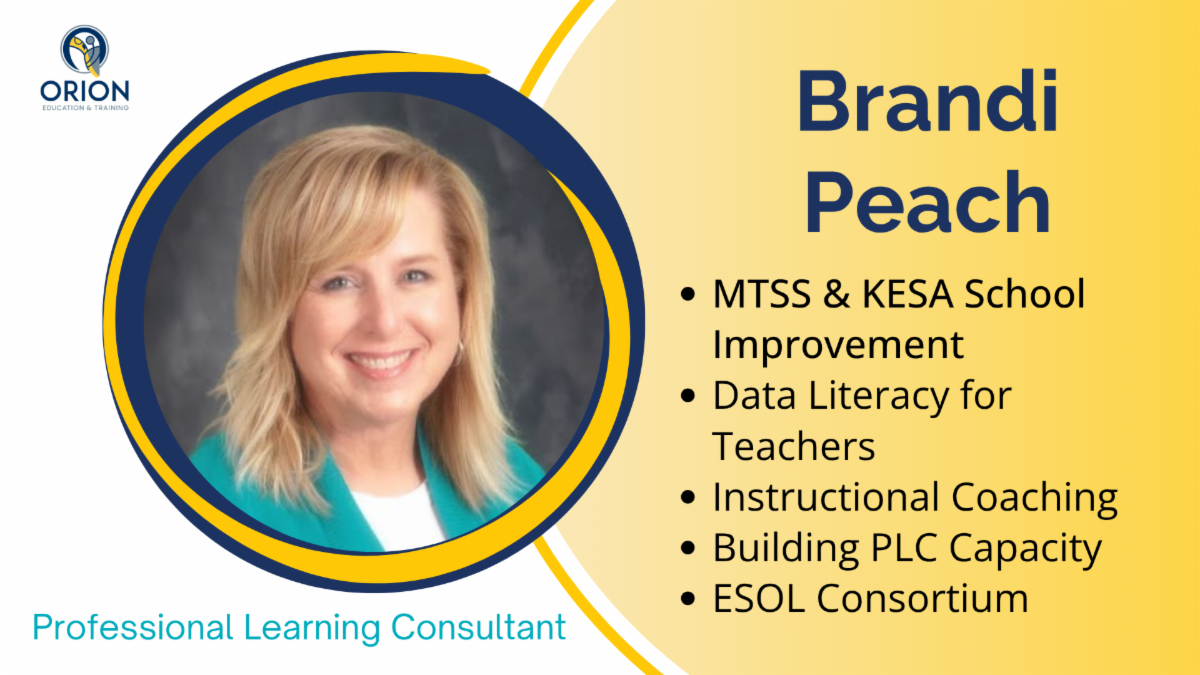
If you are looking to refine your instructional design, tackle a specific classroom challenge, or just want a fresh perspective on a lesson, we encourage you to connect with our instructional coach, Brandi Peach. Brandi is here to collaborate with you to build practical, engaging experiences for your students. Reach out to Brandi today to start the conversation!


LETRS Classroom Implementation

Making Core ELA Accessible to All with Scaffolds


We know that 95% of students can learn to read with good literacy instruction and tiered supports. We also know the recommendation that all students should have access to tier 1 instruction. But, HOW, do we help all of our students access tier 1 ELA instruction? 


Universal Design for Learning (UDL) scaffolds and supports focus on identifying barriers to students’ learning and scaffolds to overcome the learning. One of my favorite UDL scaffolds for students with expressive language issues is the use of mailing labels to turn cloze


Work with Ashley & Cindy

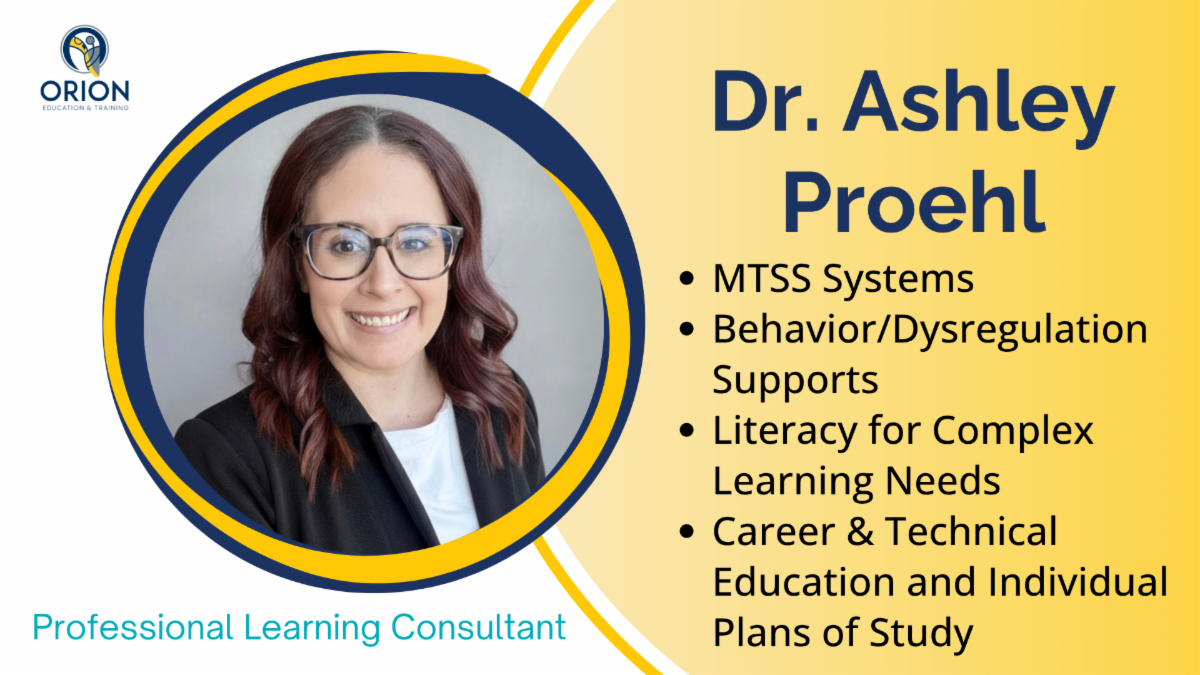
LETRS provides educators with a thorough understanding of the cognitive processes behind how students learn to read. Ashley and Cindy are available to guide you through the coursework and help you translate those concepts into practical strategies for your daily reading blocks. They offer a supportive environment to learn, ask questions, and refine your approach to literacy. Reach out to Ashley and Cindy to find out more about upcoming training opportunities and how they can support your professional growth.


Orion Online Workshop
Canva Bulk Create


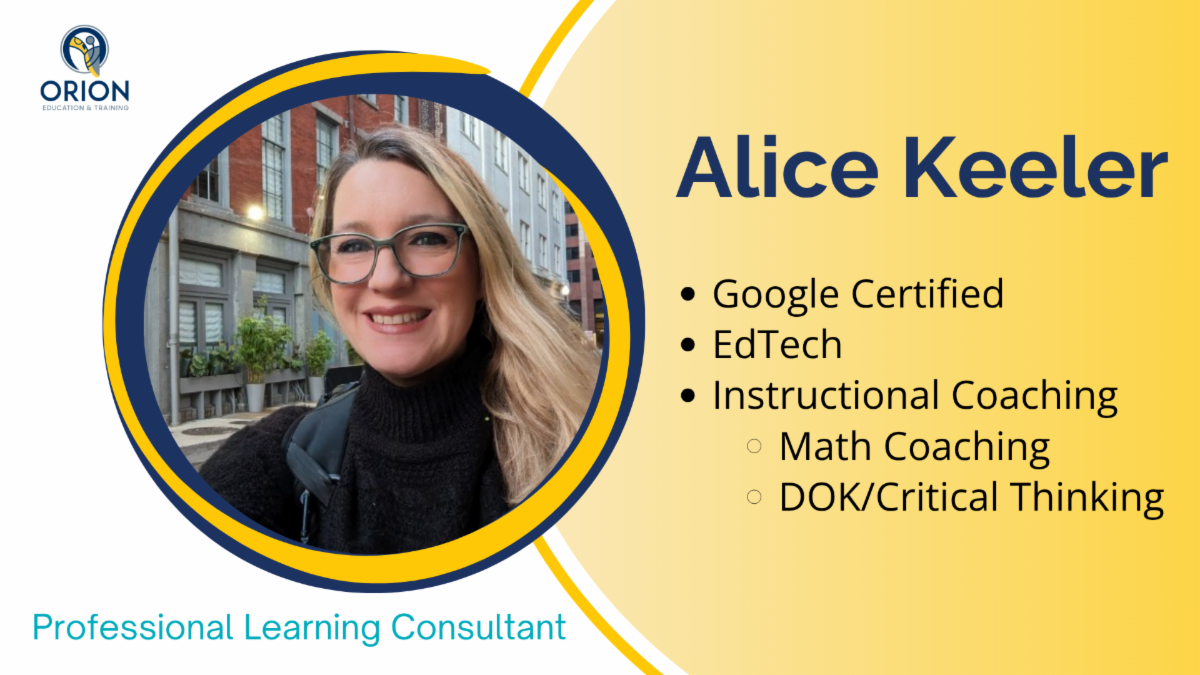
Join Alice Keeler for this ONLINE (FREE) webinar on using Bulk Create in Canva. Learn how easy it is to create multiple designs from a list. Take a list of student names and bulk create seasonal name signs. Take a list of vocabulary words and bulk create posters for your classroom.


Can't join live? Register to gain access to the recording afterwards!


October 26th 3:30pm


Sign up for Orion
Collabs


Orion Education and Training offers a variety of collaboration groups throughout the school year, providing educators and school professionals with opportunities to connect, learn, and grow alongside their peers. Designed for staff at all levels, including superintendents, administrators, teachers, business office personnel, technology staff, counselors, and support professionals, these meetings encourage networking, the sharing of best practices, problem solving, and professional learning. Our collaboration groups help participants stay informed on current issues, build meaningful professional relationships, and bring innovative ideas back to their organizations.


Curriculum Leaders

Designed for leaders who are passionate about instructional excellence and systemic growth.

Student Services

Counselors and social works exploring social emotional learning, family engagement strategies, MTSS, and IPS.

Google Workspace & AI

Educators explore practical ways to integrate Google Workspace and Google Gemini AI into everyday teaching.

Mathematical Practices

Educators explore actionable strategies to integrate the 8 Mathematical Practices into everyday learning.

Teacher Leader

Classroom educators who want to expand their influence, build leadership capacity, and drive continuous school improvement right from where they are.

Leaders in Literacy

Teachers and support staff who are passionate about strengthening literacy instruction through the Science of Reading, LETRS, and Structured Literacy.

CTE

Connects pathway teachers across districts to share resources, build industry partnerships, and collaborate.

Elementary School Principals

Leaders engaging in meaningful dialogue around instructional leadership, student needs, professional learning, and the day-to-day challenges unique to elementary schools.

Middle & High School Principals

Secondary principals to engage in purposeful collaboration around the unique challenges and opportunities of leading middle and high schools.

AP's & AD's

Assistant principals and athletic directors to come together in support of the dynamic and often demanding nature of their roles.

BOS (Business Office Support)

School district business office professionals supported to operate efficiently, compliantly, and strategically.

Meet the Professional Learning Team


Matt Ward

Director of Leadership and Business Development

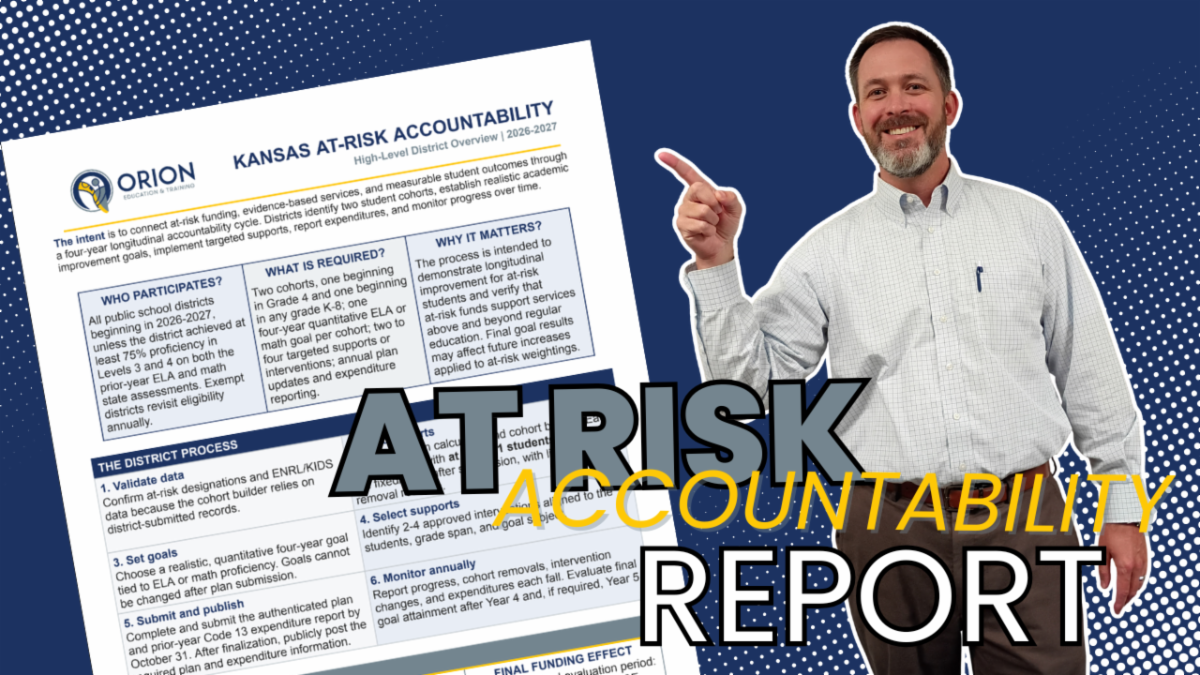
Learn more about how Orion can support "Kansas At-Risk Accountability."


Please share this newsletter with other educators and let us know what you'd like us to cover in the future.

For more information on partnering with the Professional Learning Team please email akeeler@orioneducation.org

Orion Education & Training offers a variety of onsite and online professional learning opportunities with new workshops available monthly.

To learn more, visit us at orioneducation.org and click WORKSHOPS,

or give us a call at 620-584-3300.