Newsletter — September 03, 2026 | | |
IN THE NEWS
POLICY
ECONOMY
ON THE LOCAL FRONT
POLTICAL NEWS
RETAIL THEFT & PUBLIC SAFETY
| | |
Governor Ferguson proclaims September 2026 Careers in Retail Month
Governor Bob Ferguson has proclaimed September 2026 as Careers in Retail Month, recognizing retail’s important role in Washington’s economy, workforce, and communities.
Retail is Washington’s second-largest private-sector employer, employing more than 330,000 people across the state. The industry is also fundamentally driven by small businesses, with 93% of retailers employing fewer than 50 people.
The proclamation highlights retail as an important entry point to economic opportunity for young workers, immigrants, veterans, and career changers. It also recognizes the importance of stackable credentials and career pathways, from high school and community college certificates to associate degrees, as outlined in the 2025 Retail Workforce Report to the Legislature.
Physical stores continue to play a central role in communities throughout Washington, accounting for 84% of retail sales. Retailers also support their communities through local chambers, school programs, youth sports, food banks, and hunger relief organizations.
The proclamation recognizes the industry’s ongoing commitment to employee and customer safety, including partnerships with local jurisdictions, law enforcement, and community organizations to create safe and welcoming retail environments.
Retail is also evolving as technology becomes increasingly integrated into customer experiences, supply chain management, and business operations. These innovations are creating new career opportunities that combine technical skills with traditional retail expertise.
Washington Retail Association thanks Governor Ferguson for recognizing the people, businesses, and career opportunities that make retail an essential part of Washington’s economy and communities.
| | |
Washington Retail Association’s retro program returns more than $772,000 to members
Washington Retail Association (WR) members participating in the Retail Services Retro program are seeing a significant financial benefit, with more than $772,000 returned to members through the first adjustment for the 2024-2025 plan year.
The Retro program is a safety incentive program designed to help Washington businesses reduce workers’ compensation costs through proactive risk management, safety, and claims strategies. For the first adjustment of the 2024-2025 plan year, participating retail businesses received a 12% adjustment, while participating auto businesses received a 25% adjustment.
In total, $772,325 is being returned to participating members, demonstrating the potential financial value of combining strong workplace safety practices with Retro participation.
Administered by Brown & Brown, a leading global insurance and risk management firm, the program provides participating businesses with personalized risk management services. These include proactive claims management, early return-to-work programs, loss analysis, risk assessments, and safety training.
The program is available exclusively to eligible WR members through Retail Services. By participating, businesses have access to risk professionals and data-driven strategies designed to help reduce workplace injuries, manage claims, and control operational costs.
For Washington retailers operating in a competitive environment, opportunities to improve safety while potentially reducing workers’ compensation costs can have a direct impact on the bottom line.
The latest Retro adjustment is welcome news for participating members and a tangible example of the value available through WR membership.
Interested in learning more about the Retro program or other membership benefits? Contact WR at info@washingtonretail.org or 360-943-9198.
| | |
New I-9 inspection notice requirements take effect October 1
Beginning October 1, 2026, all employers must notify employees within five business days of receiving a Notice of Inspection (NOI) of Form I-9 from a federal agency. The notice must be both posted and distributed to workers and any exclusive collective bargaining representative.
What the Notice Must Include: The notice needs to be in English AND the five most used non-English languages in Washington. And it must include:
- The Federal Agency
- Date of the NOI
- Types of records sought
- Contact information for a statewide organization providing advocacy related to immigration and refugee rights
- A copy of the NOI
Attorney General Guidance: On September 1, the Washington State Attorney General’s office announced they have published materials for employers to reference including required workplace poster, a model notice, and guidance on employer rights and responsibilities when immigration officials come to a workplace or ask for worker records. All of it is available in English, Spanish, Russian, Vietnamese, Ukrainian, and Chinese (Simplified Mandarin), so employers using the model notice do not have to arrange their own translations. An employer using this model notice is considered to have satisfied the notice requirements. All required materials can be found at https://www.atg.wa.gov/IWPA.
This notice must be put in a conspicuous place – where worker notices are customarily posted. The employer must also transmit the notice to workers directly using the primary method of communication that includes at least one of the following:
- Hand delivery
- Mail with proof of delivery
- Email with proof of transmission
- Text message sent telephonically which may include a link to the notice maintained on a webpage, with proof of transmission
Compliance Key: document public the posting and the individual notices, save the transmission proof, and if hand delivering ensure you have a signed record of receipt.
Once the inspection is complete, you will also have to provide notice within 5 business days of the results to affected workers and their representative – this means any workers where I-9 deficiencies have been found. The same rules apply on language, primary method of communications, etc., and must include a description of the deficiencies in the I-9 and scheduling options for correction.
If any one of these steps are missed – even if there is not material damage and there were no issues with the audit/inspection you may be subject to the Washington Attorney General enforcement of $500 for each instance where the employer failed to provide notice to a worker, courts can double the statutory damages if the violation is willful.
A private right of action also exists for violations with required damages of up to and including an amount equal to the actual damages or statutory damages equivalent to 40 times the hourly state minimum wage per plaintiff per violation, whichever is greater.
The guidance covers more than the notice requirements. It also walks employers through the workplace poster requirements, self-audits, warrants, worker records, and what to do if agents show up at your door. The full guidance is at atg.wa.gov/IWPA.
Federal Deadline Reminder: Two clocks start the moment you receive the Notice of Inspection. Federal law gives you three business days to produce the I-9s. State law gives you five business days to notify your workers.
This article is general information and not legal advice. Consult your legal counsel with direct questions about how these requirements apply to your business.
Review the bill as passed by the Legislature and signed into law or the bill summary.
| | |
Seattle Times Opinion: Seattle fair pricing ordinance could have unintended consequences
Aug. 28, 2026
By Ilona Lohrey and Marcos Wanless
Special to The Seattle Times
On Aug. 7, the Seattle City Council’s Human Services, Labor, and Economic Development Committee convened to discuss a new policy they call the Fair Pricing and Transparency Ordinance. The chair of the committee claimed the legislation would be a big win for consumers and a local solution to high grocery prices.
Unfortunately, the policy may drive prices even higher for consumers and could end the loyalty and discount programs consumers rely on to balance their family budget and make ends meet.
The legislation would ban “surveillance pricing,” also called algorithmic pricing. It’s a complicated way to say you get discounts based on your personal data — factors such as your income, demographic and shopping history, sometimes with help of AI and sometimes purchased from third-party brokers.
We agree that no retailer should use personal information to charge someone more. But Seattle’s retailers and grocers have told city leaders repeatedly over the past month that they are not using surveillance pricing. Even during the presentation in committee last week, the experts gave no examples of surveillance pricing happening in Seattle.
This legislation was put forward despite clear and consistent warnings from retailers and grocers that requirements in the current version of the legislation would still result in the inability of these businesses to continue offering loyalty programs and other discounts. Mayor Katie Wilson and Councilmember Alexis Mercedes Rinck’s staff have indeed made some changes to the proposal, exempting small grocers and adding carve-outs for some discounts. But flaws remain in the underlying bill.
If passed as is, the ordinance would require grocery retailers and online delivery companies to adopt technical requirements that create high legal risk if they continue to offer discounts and loyalty programs. This will impact those who rely on these programs the most during an affordability crisis — how is that fair?
There are better ways to help consumers through opt-in and opt-out options that allow individuals to choose how and if they want their purchasing data used by supermarkets and retailers.
With a growing number of family budgets stretched by the rising costs for everyday essentials, this policy further escalates the affordability gap for middle- and low-income families.
It’s not just about discounts in stores. Many grocers have fuel savings programs that offer relief to Seattle families paying some of the highest gas prices in the country.
We need legislation that incentivizes new grocers and retailers to invest in areas with growing food and pharmacy deserts, like those in Lake City and parts of South Seattle. Instead, this policy will create more barriers.
In fact, the best way to protect small businesses and consumers is to address pressing problems such as public safety, taxes and regulatory structures.
If the goal of this bill truly is to protect consumers, we are asking city leaders to put a pause on this, do additional research, and work with the grocers and retailers in good faith. A good example of a pricing ordinance is the Consumers Opposed to Surveillance Technology Ordinance, put forward by Portland City Councilmember Eric Zimmerman. (Read it here: st.news/cost)
While it’s unclear whether the legislation moves forward as-is or if the city will make changes, the compliance costs if this policy measure moves forward are guaranteed.
Trying to control prices through an experimental regulatory policy has never worked. The reality is that the implementation of the ordinance will only make an already-expensive city even more unaffordable.
Those costs ultimately mean fewer discounts, higher grocery prices and another reason for grocers and retailers not to invest in Seattle communities that already lack access to grocery stores.
Being the first to implement something should not override having the best policy that is workable and balances all interests.
Ilona Lohrey: is president and CEO of GSBA - Washington state’s LGBTQ+ and Allied Chamber of Commerce.
Marcos Wanless: is the founder and president of the Seattle Latino Metropolitan Chamber of Commerce.
| | |
Seattle considers limits on personalized pricing, coupons and discounts
Seattle is moving toward a proposed ordinance that would restrict grocery retailers from using consumers’ personal data to set individualized prices. If approved, the Fair Pricing and Transparency Ordinance would make Seattle the first U.S. city to regulate this type of pricing in grocery stores.
The proposal has drawn debate over whether personalized pricing practices raise costs for consumers or can provide savings through targeted discounts. Industry representatives argue the ordinance could create legal uncertainty and discourage retailers from offering discounts, coupons, loyalty rewards and other programs. Consumer advocates support restrictions on individualized pricing and say stronger enforcement provisions are needed.
The proposed ordinance would allow several types of discounts, including loyalty programs, volume-based discounts, manufacturer coupons and discounts based on broad categories such as student or senior status. It would apply to grocery retailers with at least 20 locations globally, as well as certain mixed-use retailers and delivery services.
Industry groups have raised concerns about the bill’s private right of action, which would allow eligible consumers to seek damages and civil penalties for violations. The proposal also would require covered retailers to retain pricing and discount records for three years.
The Seattle City Council is expected to vote on the ordinance in September following a committee meeting and consideration of amendments. If approved, the ordinance would include a one-year phase-in period.
The debate comes as federal regulators and several states consider or adopt measures addressing personalized pricing and the use of consumer data to determine prices.
| | |
Retail technology and pricing: Separating fact from fiction
Retail technology and pricing practices are receiving increased attention from Washington state lawmakers as policymakers examine loyalty programs, personalized pricing, consumer data, and electronic shelf labels.
Retail is a highly competitive industry, with more than 600,000 unique retailers nationwide. Retailers generally operate on thin margins and must respond to consumer demand, competition, and changing market conditions. Loyalty and rewards programs are one tool retailers use to compete, offering discounts and other benefits to customers who voluntarily participate.
Washington is among the states considering policies related to consumer data, algorithms, and personalized pricing. Retail industry representatives have raised concerns that broad or unclear definitions could unintentionally restrict loyalty and rewards programs that provide savings to consumers.
Electronic shelf labels are another area of focus. These digital price tags allow retailers to update shelf prices electronically, improving accuracy and helping employees manage inventory and online orders. According to the National Retail Federation, electronic shelf labels do not track individual shoppers or connect to consumers' devices to determine prices in real time. Store employees and managers control price changes.
Retailers already operate under numerous consumer protection requirements, including antitrust, privacy, civil rights, and truth-in-advertising laws. As Washington lawmakers consider additional regulation, the industry is examining whether targeted enforcement and narrowly tailored changes can address consumer concerns without limiting retailers' ability to compete and innovate.
Understanding how these technologies and pricing practices work in real-world retail settings can help inform the policy discussion and ensure consumer protections are balanced with retailers' ability to offer competitive prices and savings
| | |
Striking workers must complete job searches to receive unemployment benefits
As of August 23, 2026, workers receiving unemployment benefits while on strike are required to complete and document qualifying job search activities each week they claim benefits, according to the Washington Employment Security Department.
The requirement follows a determination by the U.S. Department of Labor that Washington’s previous exemption for striking workers did not comply with federal unemployment insurance requirements. Federal law requires unemployment claimants to be able to work, available for work, and actively seeking work each week they receive benefits.
Washington had waived the work search requirement for striking workers beginning January 1, 2026, after ESSB 5041 authorized unemployment benefits for eligible striking workers. The Employment Security Department had considered striking workers to remain attached to their employer and therefore exempt from work search requirements.
An emergency rule filed August 21 removed striking workers from the definition of workers considered “attached to an employer.” As a result, eligible striking workers must now meet applicable work search requirements.
The change applies to workers who were already on strike as well as those participating in future strikes. The department is developing additional guidance for affected claimants and plans to engage stakeholders as it develops permanent rules.
The department said the change was necessary to comply with federal requirements and avoid potential impacts to federal funding for Washington’s unemployment insurance program and employers’ federal unemployment tax credits.
| | Image: Hallie Balch/Let’s Go Washington | | |
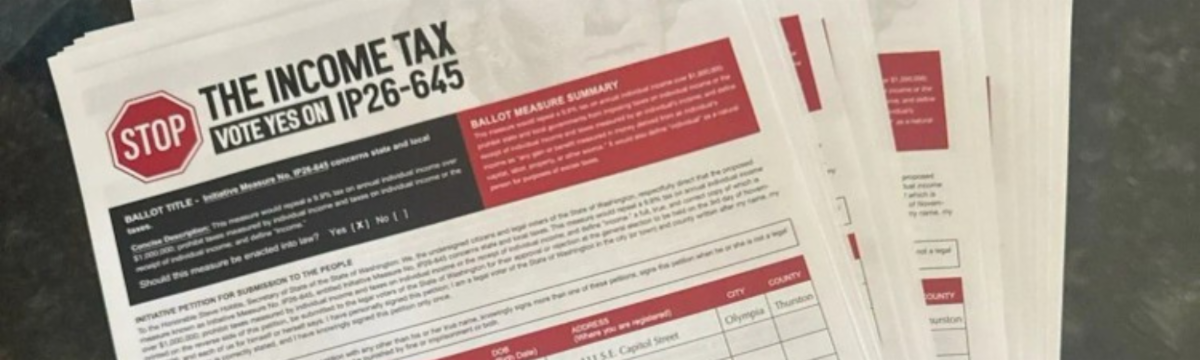
DOR anticipates challenges enforcing new income tax residency rules
Even if Washington voters reject an initiative seeking to repeal the state’s new income tax, the Department of Revenue expects significant work to determine how the tax will be implemented and enforced.
At an Aug. 24 meeting, DOR’s income tax advisory group discussed the challenge of defining who qualifies as a Washington resident and therefore is subject to the tax. Senior Assistant Director of Tax Policy Tim Jennrich said the department has identified numerous issues requiring further discussion and must develop recommendations on a relatively short timeline.
The 9.9% income tax applies to certain income above $1 million annually. Under Senate Bill 6346, residency generally is based on where an individual is domiciled during the tax year, with exceptions for people who maintain no permanent home in Washington, maintain a permanent home elsewhere, and spend no more than 30 days in the state.
Tax attorneys told the advisory group that determining domicile involves weighing multiple factors and can be difficult to apply consistently. Those factors can include an individual’s homes, time spent in different states, family connections, and charitable activity.
Experts also noted that Washington’s approach could create particular enforcement challenges for high-income individuals who maintain homes in multiple states and may not spend six months of the year in any one location.
The advisory group is required to submit two reports with recommendations to the Legislature’s fiscal committees in December.
| | |
Federal Medicaid changes prompt state funding discussions
Federal changes under H.R. 1 are reshaping how Medicaid works in Washington. State lawmakers have begun examining funding options in response.
Coverage Losses
Apple Health, Washington's Medicaid program, covers close to 2 million Washingtonians. The Health Care Authority projects 200,000 to 320,000 of them will lose coverage as the federal changes take hold. About 20,000 lose eligibility on October 1 under a narrower federal definition of who qualifies. Starting January 1, 2027, adults in the expansion population must document 80 hours a month of work to keep coverage, even though roughly 70 percent of Washington adults on Medicaid already work.
Financial Impacts
Medicaid payments to Washington hospitals are projected to fall by $6.2 billion through 2035. In the individual market, enhanced premium tax credits expired at the end of 2025, premiums rose 21 percent this year, and insurers have requested another 22 percent for 2027. All of it lands on a budget that was already short. Lawmakers closed a $2.3 billion gap in 2026 and expect another next session.
Legislative Response
On September 1, 2026, Sen. Marcus Riccelli (D-Spokane), Sen. June Robinson (D-Everett), and other Democratic lawmakers convened the FA2IR Health Summit to discuss health care access and affordability following federal changes under H.R. 1. Washington Retail attended alongside other industry associations, agencies, hospitals, insurers, labor, advocacy groups, and select employers. Organizers indicated the effort will continue through the fall and inform legislation in the 2027 session.
Implications For Retailers
Employer health benefit costs are projected to rise about 9 percent in 2027, the fourth consecutive year of near double-digit growth, and small group renewal rates requested for 2027 range from 8 to 20 percent. Beginning in 2027, employers should also anticipate employment verification requests tied to Medicaid work requirement compliance, which will fall to payroll and store management. Part-time and seasonal positions carry the highest risk of verification problems because of variable scheduling. Rising household spending on premiums and out-of-pocket costs may also affect discretionary income.
Washington Retail Association will continue to monitor this issue and provide updates to members.
| | Image: Nick Wagner / The Seattle Times | | |
Seattle Times Editorial: Lawsuit payouts are shortchanging state’s budget. WA needs tort reform
Aug. 9, 2026
By The Seattle Times editorial board
Washington state ended its fiscal year June 30 on the hook for a record-setting $614 million to cover legal fees, jury awards and settlements for its lawsuits and tort claims. As a self-insured state, the bigger those costs grow, the more they cut into budgets for services state government provides. The skyrocketing costs are unsustainable.
House lawmakers in Olympia had a chance to pass modest reforms to the state’s country-leading tort liability exposure; instead, they chose at their peril to ignore a Senate-passed bill that could have stemmed at least some of the bleeding. The House’s Civil Rights and Judiciary Committee, led by Rep. Jamila Taylor, D-Federal Way, didn’t even give the bill a hearing.
The ability of Washingtonians to seek redress for government wrongdoing can and should be preserved. But it also cannot be a blank check that shortchanges state and local governments from providing services that communities around the state depend on. And that’s where the state is headed without legislative action.
Here’s how the state got here: Washington’s waiver of sovereign immunity — which allowed it to be sued for damages — is broader than any other state, according to a recent report by the Washington State Association of Counties. And since 1967, when the immunity was waived, the state’s courts have continued to make it easier to bring claims against the government.
Fast forward to this past decade, when court rulings also eliminated the statute of limitations on childhood sexual abuse cases, often involving those in the foster system. Claims have ballooned against the state Department of Children, Youth and Families — from four in 2018 to 1,110 in 2025 — with nearly three in four of cases filed in 2025 for alleged misconduct before 2010. One recent Pierce County case resulted in a jury verdict totaling $117 million.
| | |
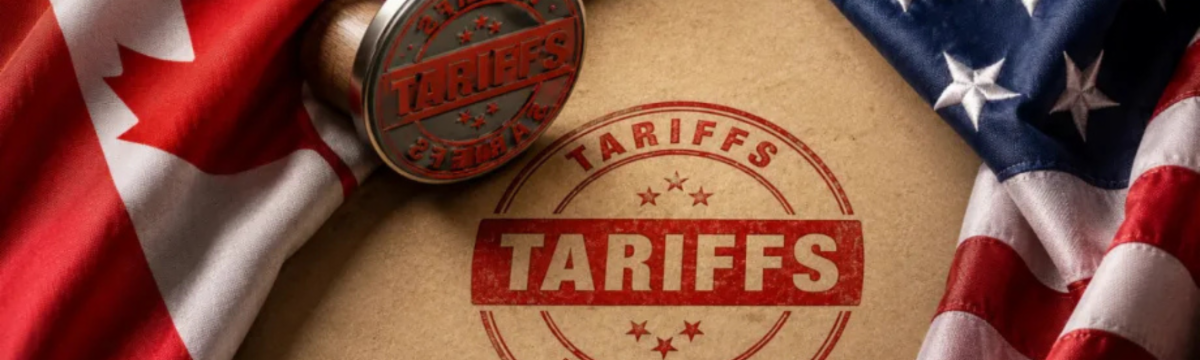
New U.S. tariffs renew trade concerns between Washington and Canada
New U.S. tariffs on Canadian imports took effect Aug. 22 after trade talks between the two countries broke down, raising concerns for Washington businesses that rely on cross-border trade.
The tariffs could reach 50% on about $20 billion worth of Canadian products, including alcohol, dairy and other goods, in addition to existing tariffs. Canada has announced plans to respond with tariffs on U.S. products beginning Sept. 8, including steel, dairy, appliances, electronics, pulp and paper, and farm machinery.
Washington is particularly exposed to changes in U.S.-Canada trade. The state imported about $8.5 billion in Canadian goods during the first half of 2026 and exported roughly $4 billion in goods to Canada during the same period. However, the immediate economic impact may be limited because the new U.S. tariffs affect only about 5% of Canadian exports to the United States. Energy products, which account for more than half of Washington's Canadian imports this year, are not affected by the new tariffs.
Trade experts say businesses may also be better positioned to absorb disruptions than during previous trade disputes. Many companies have diversified suppliers and markets after earlier tariff battles, making supply chains more resilient.
Still, uncertainty remains a concern for businesses as tariffs and potential retaliatory measures evolve. The extent of the impact on Washington will depend on which products are ultimately affected and how businesses respond to changing costs and supply conditions.
| | |
Employer health costs expected to rise
Employer-sponsored health care costs are expected to increase as insurers and employers face rising medical expenses and greater use of health services, according to a recently released study from health care research and policy firm KFF.
The study identifies several factors contributing to higher costs. Prices for medications, physician services, testing, and other medical care continue to rise, while increased utilization is also putting pressure on health plans. Insurers have also reported greater use of behavioral health services compared with previous years.
The study points to changes in enrollment patterns as another factor. Some smaller employers are moving toward lower-cost plans, particularly when they have younger workforces. As enrollment shifts, the cost of coverage can increase for groups that continue to offer more comprehensive plans.
Specialty drugs and biologics are also contributing to higher spending. Many newer treatments have limited or no generic alternatives, keeping costs elevated as their use expands.
Weight-loss medications, including GLP-1 drugs, are another area of increased attention. While many health plans limit coverage of these medications to conditions such as diabetes, their growing use and relatively high prices continue to affect health care spending.
Approximately 165 million Americans receive health coverage through an employer, although costs and coverage vary significantly among employers and plans. The study indicates that workers and employers across the country, including in Washington, should expect noticeable increases in health plan costs in the coming year.
Washington Retail Association (WR) is closely watching these trends and looking for practical solutions to help members manage rising health care costs. As health care remains a significant expense for employers, WR will continue exploring ways to support retailers and advocate for policies that help make coverage more affordable and sustainable for businesses and their employees.
| | Image: Spokane Valley Fire Department | | |
Retailers step up for Spokane wildfire recovery
As Spokane moves from emergency response into recovery following the Spokane Complex fires, retailers and other local businesses have stepped forward with financial assistance, essential supplies, discounts, and direct support for affected families. The Washington Retail Association (WR) thanks these businesses and their employees for responding when their communities needed them most.
Walmart and the Walmart Foundation committed $500,000 in grants and in-kind support to address immediate and long-term needs. Working with local organizations and agencies, the company is helping provide food, water, cleaning supplies, hygiene products, diapers, direct household assistance, and back-to-school essentials. A Spokane Walmart store is also providing space for nonprofit and community organizations assisting with recovery.
Lowe’s supported residents by distributing free totes containing cleanup and recovery supplies at its Spokane Valley store. Gap Inc. offered a 50 percent discount at participating Old Navy, Gap, and Athleta stores through August 16, while the Gap Foundation donated $50,000 to the American Red Cross.
Local businesses also found meaningful ways to help. Flatstick Pub offered free food and activities to displaced residents who needed a place to gather and recharge. The Garland Theater collected and distributed diapers, food, toiletries, blankets, clothing, and pet supplies. Plato’s Closet and Global Neighborhood Thrift provided clothing assistance and vouchers to residents affected by the fires.
These contributions reflect the important role retailers play in their communities, particularly during times of crisis. WR extends its sincere appreciation to every retailer, employee, and community partner helping Spokane residents recover and rebuild.
| | Image: Kemper Freeman, Jr., then chair and CEO of Kemper Development Co. in Bellevue, stands on a balcony in Bellevue Square. Ellen M. Banner / The Seattle Times, 2016 | | |
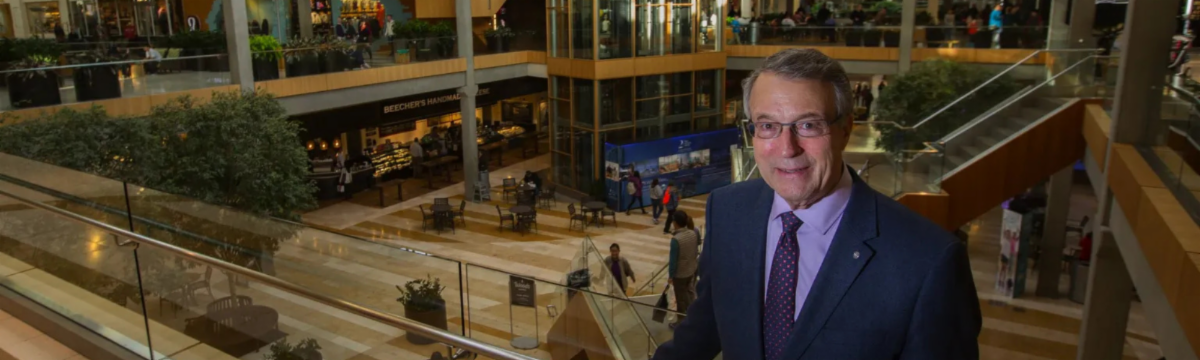
Bellevue Collection owner explores sale after 80 years
The Freeman family is exploring the sale of the Bellevue Collection, a 5.5 million-square-foot mixed-use complex in downtown Bellevue that has been under family ownership for 80 years.
The family’s Kemper Development Co. announced Friday that it will begin the process of seeking a potential buyer. The decision follows the retirement last year of Kemper Freeman Jr., who led the company for more than five decades, along with other factors. The family said it is seeking a buyer who values the property’s role in the community and can continue to enhance it.
A broker will be selected to begin the sale exploration process. No buyer has been identified, and the company has not indicated whether a sale is imminent.
Established in 1946, Kemper Development Co. developed what became Bellevue Square. The Bellevue Collection has since expanded to include Bellevue Square, Bellevue Place, Lincoln Square North and Lincoln Square South.
Today, the complex includes more than 200 shops, over 50 restaurants and entertainment venues, 1,100 hotel rooms and 12,500 parking spaces. Tenants include national and international brands as well as local businesses.
Company CEO Jim Melby credited Freeman with developing the property into a major retail and mixed-use destination that has contributed jobs, tax revenue, and community support for arts, health, education, and family-focused organizations.
Kemper Development Co. said operations at the Bellevue Collection will continue as usual during the sale exploration process, with scheduled events continuing through the end of 2026.
| | Image: Representative Mari Leavitt | |
Courage PAC launches to support community and economic priorities
Representative Mari Leavitt (D-28) has announced the launch of Courage PAC, a political action committee focused on supporting candidates and policies that its organizers say will strengthen the economy, improve community safety, and support the well-being of Washington communities.
According to the PAC, its early priorities include expanding housing options and supporting responsible development; reducing regulatory barriers and improving access to capital for small businesses; and investing in workforce development, apprenticeships, education pathways, childcare, and early learning.
Courage PAC also plans to focus on public safety, including support for law enforcement, first responders, community-based safety programs, violence prevention, and coordination among public safety and health care providers. Other priorities include expanding access to behavioral health and substance-use treatment and strengthening services for military members, veterans, and military families.
The PAC says it intends to build political capacity to support candidates, conduct grassroots campaigns, and elevate community perspectives. Its organizers describe the effort as supporting leaders who are willing to take positions on issues they believe are important to their communities.
Courage PAC is seeking financial contributions to support its activities. Donations can be made online or by check payable to Courage PAC and mailed to PO Box 64128, University Place, WA 98464. The organization can be contacted at couragepacwa@gmail.com for additional information or opportunities to participate.
| | |
Questions raised over data behind Seattle diversion program
A Seattle-created program that diverts people accused of low-level drug offenses away from jail and into community-based services is facing renewed scrutiny over how its outcomes have been measured and reported.
Eric Zimmerman of the Washington Policy Center argues that a widely cited statistic from an early evaluation of Law Enforcement Assisted Diversion (LEAD) incorrectly described a 58% reduction in arrests. Zimmerman contends the original University of Washington research measured reduced odds of arrest and did not establish a 58% decrease in arrests. He is calling for independent reviews and more consistent, transparent reporting by jurisdictions that fund LEAD.
Zimmerman also questions claims related to employment, housing and recidivism, citing differences between LEAD’s reported outcomes and results from some subsequent evaluations.
LEAD founder Lisa Daugaard acknowledged that the 58% figure was misstated but said the underlying finding remains meaningful. She said LEAD has continued to expand because law enforcement agencies, prosecutors, community partners and participants have found the program effective. Daugaard also disputed some of Zimmerman’s findings, including his characterization of housing outcomes.
The University of Washington said an early report incorrectly used the term “likelihood” instead of “odds” when describing the statistical findings. The university said those errors are being corrected and defended its broader evaluation of the program, while offering to help ensure the research is accurately represented.
The dispute highlights broader questions about how diversion programs measure effectiveness and communicate results to policymakers, communities and the public.
| | |
Four arrested after alleged shoplifting incident in Kent
Four people were arrested Aug. 9 after Kent police responded to a report of suspected shoplifting at a retail store.
Police said officers arrived around 10:50 p.m. after an employee reported that four people were gathering clothing and placing merchandise into bags and shopping carts. According to police, a 29-year-old Tacoma woman left the store carrying clothing and dropped the merchandise when she saw officers in the parking lot.
A second Tacoma woman, 24, reportedly exited through the first set of doors without paying before returning inside and removing unpaid merchandise from her purse. Police said the other two suspects, a 40-year-old Tacoma woman and a 27-year-old Lakewood man, had also passed points of sale with unpaid clothing. They dropped the merchandise after seeing the other suspects detained.
Police initially were told the four did not know each other, but one suspect later said they had arrived together in the same vehicle. Officers reported finding drug paraphernalia inside the vehicle and had it towed while seeking a search warrant.
All four suspects were detained. Two had outstanding warrants and were booked into the SCORE jail facility. Because of the amount of merchandise involved, police referred the case to detectives for further investigation.
| | |
The Elephant in the Dome podcast examines Washington’s organized retail crime crisis
Organized retail crime is the focus of a recent episode of The Elephant in the Dome, hosted by Senator Chris Gildon.
The episode features Washington Retail Association guests Jan Himebaugh and Crystal Leatherman, who discuss the growing challenges retailers face from organized retail theft. The conversation examines how organized retail crime can extend beyond individual theft incidents and connect to broader criminal networks.
Himebaugh and Leatherman also discuss the impact of organized retail crime on businesses and communities and explore potential policy and enforcement approaches aimed at strengthening accountability and addressing the underlying networks involved.
The 24-minute episode, titled The Cost of Crime: Unpacking Washington State’s Organized Retail Theft Crisis, provides an opportunity to hear directly from retail industry representatives about the issue and the challenges facing retailers across the state.
Watch: YouTube
Listen: Podcast episode
| |
Washington Retail Association diversity statement
Washington Retail Association is committed to the principles of justice, equity, diversity, and inclusion. We strive to create a safe, welcoming environment in which these principles can thrive.
We value all people regardless of race, ethnicity, gender, religion, age, identity, sexual orientation, nationality, or disability, and that is the foundation of our commitment to those we serve.
| | |
Jan Himebaugh, President & CEO — 360.200.6450 — Email
Crystal Leatherman, Dir of Policy & Government Affairs — 360.200-6453 — Email
| | | | |