﷽


𑗌 The Light of Ahl al-Bayt: Sayyida Zaynab (ع)

Born in 626 CE in Medina to Sayyidina Ali (ع) and Fatima al-Zahra (ع), and named by her grandfather Prophet Muhammad ﷺ, Sayyida Zaynab (ع) was the sister of Imams Hasan and Husayn (ع). Known for her wisdom, eloquence, and strength, she became a teacher, spiritual guide, and leader among women.


After marrying her cousin Abdullah ibn Ja‘far (ع), she led a life of seclusion and scholarship—until the tragedy of Karbala, where she witnessed the martyrdom of her brother Imam Husayn (ع) and became the voice of truth amidst tyranny. Her fearless sermons in Kufa and Damascus shook the hearts of oppressors and preserved the legacy of Ahl al-Bayt.


Driven out of Medina by the Umayyad regime, she settled in Egypt, where she became known as Sahibat al-Shura (the one whose counsel is sought), and Umm al-Masakeen (mother of the destitute). Her home was a refuge for the needy, and her gatherings became centers of knowledge.


Her poetic wisdom reflected deep reliance on Allah:


"Many have slept and many have awoken,

Thinking about matters that may or may not come to pass.

There is a God that has satisfied you yesterday,

And Who will satisfy you tomorrow.

So keep worry away from you,

For carrying worries is madness."


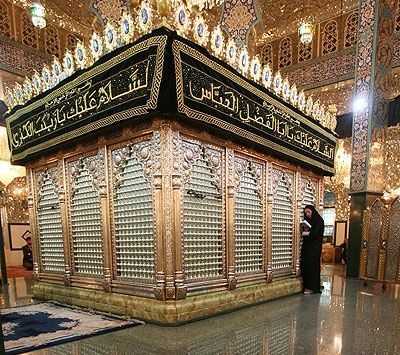
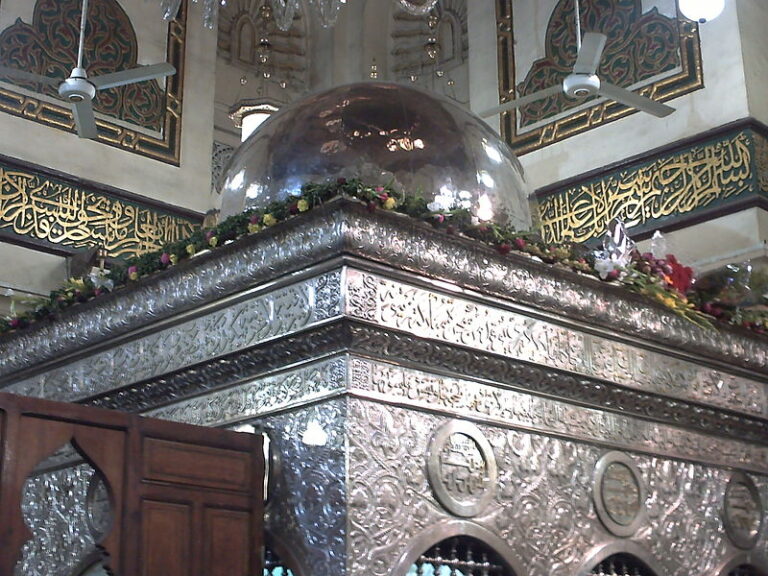
She passed away at age 57, on 15 Rajab 62 AH, and today her blessed shrines in Cairo and Damascus remain sites of spiritual connection and solace.


🕊 May her legacy inspire us to stand with truth, serve with compassion, and trust in Divine decree.


Sayyida Zainab's shrine in Damascus

Sayyida Zainab bint `Ali’s shrine in Cairo.


Sayyida Zaynab Bint Fāṭimah’s (ع) Courageous Stand

From the Sands of Karbala

by Imam al-Tabari


After the brutal martyrdom of Sayyidina al-Ḥusayn (as), the surviving members of his family— sister Sayyida Zaynab (as), his daughters and his ill son, ʿAlī ibn al-Ḥusayn (later known as Zayn al-ʿĀbidīn)—were taken as captives to the court of Ibn Ziyād, the governor of Kufah. Abu Mikhnaf narrates a harrowing encounter from that moment.


When Zayn al-ʿĀbidīn stood before the governor, he was asked: “What is your name?”


“I am ʿAlī ibn al-Ḥusayn,” he replied.


Mocking him, the tyrant said, “Did Allah not kill ʿAlī ibn al-Ḥusayn?”

The young Imam responded, “I had a brother named ʿAlī. The people killed him.”


“Allah killed him!” the tyrant insisted.


But the Imam stood firm in tawḥīd:


“Allah takes the souls at the time of their death, and no soul can die except by Allah’s permission.” (Qur'an 3:145)


When the governor ordered his execution, it was Sayyida Zaynab who rose—grief-stricken but unwavering in her courage.


She embraced her nephew and cried:


“O son of Ziyād, have you not spilled enough of our blood? If you kill him, then kill me with him!”


Her words pierced the hearts of all present. The governor was silenced, amazed by the power of the unconditional love of kinship. He eventually relented:


“Leave the boy. Go with your women.”


From this moment of deep grief emerged a legacy of light: the steadfastness of Zaynab and the dawning sainthood of Zayn al-ʿĀbidīn, the "Nūḥ of the Sayyids."


The Fruit of Divine Love

Shaykh Nour Kabbani

Streamed live on July 10, 2025

Why do people come here, to the zawiyah? That desire comes to the heart, and that drives us to the places we want to go. This is what moves human beings from where they are to what they are seeking. So, what do we speak about here?


ٱتْلُ مَآ أُوحِىَ إِلَيْكَ مِنَ ٱلْكِتَـٰبِ وَأَقِمِ ٱلصَّلَوٰةَ ۖ إِنَّ ٱلصَّلَوٰةَ تَنْهَىٰ عَنِ ٱلْفَحْشَآءِ وَٱلْمُنكَرِ ۗ وَلَذِكْرُ ٱللَّهِ أَكْبَرُ ۗ وَٱللَّهُ يَعْلَمُ مَا تَصْنَعُونَ


Recite what has been revealed to you of the Book and establish prayer. Indeed, prayer should deter ˹one˺ from indecency and wickedness. The remembrance of Allah is even greater. And Allah ˹fully˺ knows what you do.


Surah Al-Ankabut 29:45


Even when two people sit together, they are in sohbat, remembering Allah and reciting from His Holy Book. One person speaks and the other listens; they both benefit from remembering the knowledge, speaking of Allah ﷻ, by Allah ﷻ, to Allah ﷻ.


وَلَكُمْ فِي ٱلۡأَرۡضِ مُسۡتَقَرّٞ وَمَتَـٰعٌ إِلَىٰ حِينٖ


“And for you on Earth will be a dwelling place and provision for a time.”


Surah Al-Baqarah (2:36)


In this ayat, Allah ﷻ is speaking to Adam ع and Eve ع, and their entire progeny, which is all of mankind. They descended from the heavens to settle on Earth for a fixed period. Our time on Earth is limited, because the time of death is set. The physical body of Adam ع settled on Earth, and the heart of Adam settled inside his physical body, and in the heart is where the Love of Allah ﷻ dwells. So the Love of Allah ﷻ is in the heart, which is in the body, which is on Earth. The Qalb (heart) is the Earth of the Love of Allah ﷻ.


Awliyallah have said, one of the (many) meanings behind Adam ع eating from the Forbidden Tree, was that he wanted to reach the higher levels of Jannah. That higher level can only be reached through the tears of yearning. There is no crying in Jannah, you already have everything you need. So when Adam ع ate from the tree, the seed of Divine Love settled in his heart.

But why was this tree's fruit forbidden? Because Allah ﷻ said, if you taste from this fruit, you will yearn for Me. You are already in Paradise, so why would you want this yearning for True Love? It's agony when your Beloved is far from you.


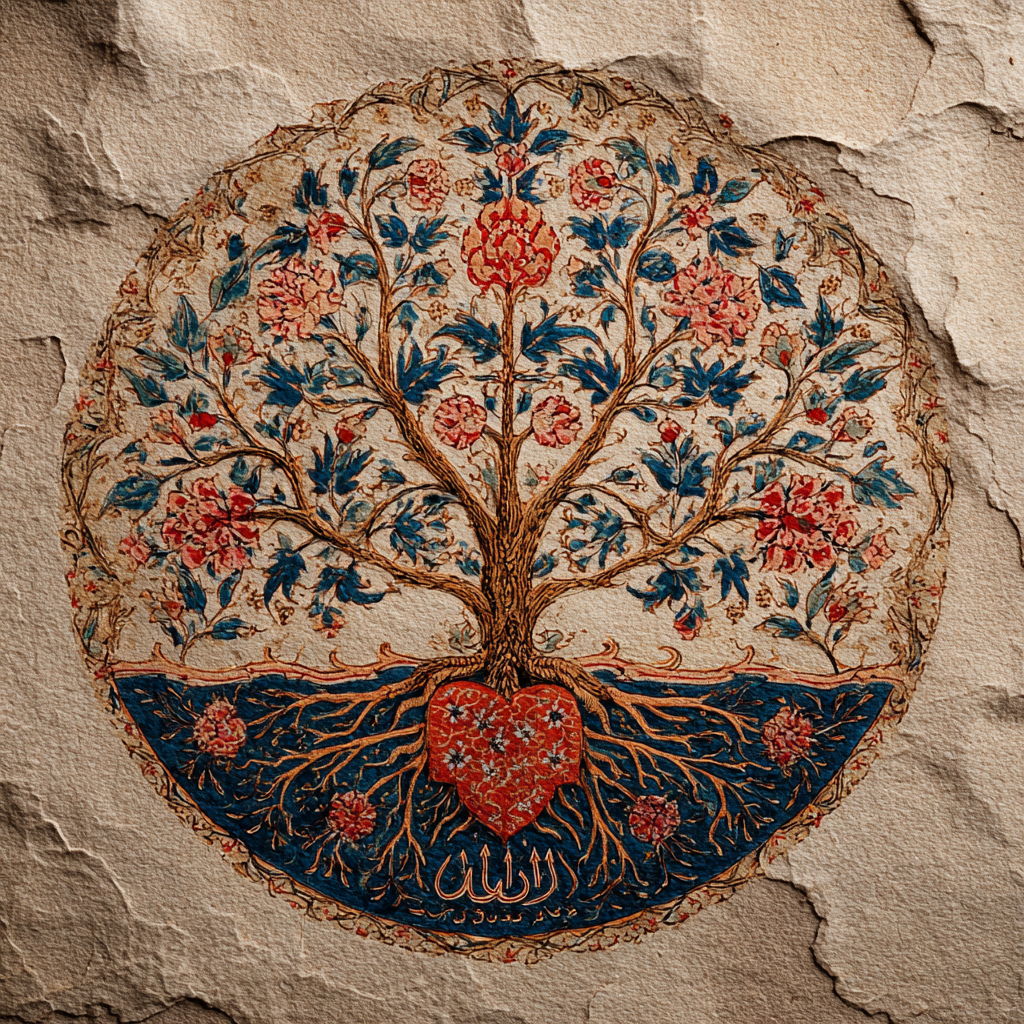
So it is with this Divine Love in the heart that drives seekers to their destinations on this Earth. It's the Love of Allah ﷻ that draws people here to the Zawiyah. While we are here on this Earth, we must find ways to make the Divine Love grow in our hearts. It grows from a seed, into a tree, and that tree will give you fruits. When you taste from these fruits you will find the muhabba, love of Allah, the marifah, the knowledge of Allah. The seeds bear fruits of various divine attributes. So if the tree gives the fruit of Kashf, the veils of the ego will be lifted. If it gives the fruit of mushahada, you will see and witness the Divine. If it gives wusul, you will arrive at the station of the Divine Presence. If it gives wisal, you will find direct connection to the Heavens, the Divine Headquarters. After connection, you will reach Kamal, which is Perfection. So how do you cultivate these trees? It is through La illaha ilAllah, Muhammad Ar-Rasullulah ﷺ, since we are living in the time of Prophet Muhammad ﷺ, the Last of the Messengers.


So while we are on Earth, we spend our time watering these seeds with La Illaha ilAllah and following the way of our Prophet ﷺ, until they grow into a trees with deep roots, a strong trunk, and branches that reach the heavens and give heavenly fruit. Before we came to this Earth, the Love that you tasted was forbidden to you because it causes you to suffer the pangs of separation, but it also drives you to find ways back to connection to the Divine Presence. Allah ﷻ commands the tree in your heart to give you the fruit of faith (iman) and knowledge (marifah), which will bring you back to Him. When you know about your Lord, you love Him, and you see Him with the spiritual eyes of iman. You worship Him as if you are seeing Him, sensing His presence everywhere. The moment you remember Allah ﷻ, you have reached Him, He no longer veils Himself from you.


We come to the Zawiyah to seek Knowledge of Allah and nurture the Love of Allah. We don't come here for dunya. This dunya is like a carcass, and the egos are like hyenas tearing flesh off of the dead body. We are here for something spiritual, more refined, to cultivate the fertile soil of our hearts.


Everyone is free to go anywhere they like and befriend whom they like. People are free to go where their hearts take them.


وَلَا تُجَـٰدِلُوٓا۟ أَهْلَ ٱلْكِتَـٰبِ إِلَّا بِٱلَّتِى هِىَ أَحْسَنُ إِلَّا ٱلَّذِينَ ظَلَمُوا۟ مِنْهُمْ ۖ وَقُولُوٓا۟ ءَامَنَّا بِٱلَّذِىٓ أُنزِلَ إِلَيْنَا وَأُنزِلَ إِلَيْكُمْ وَإِلَـٰهُنَا وَإِلَـٰهُكُمْ وَٰحِدٌۭ وَنَحْنُ لَهُۥ مُسْلِمُونَ


"Do not argue with the People of the Book unless gracefully, except with those of them who act wrongfully. And say, “We believe in what has been revealed to us and what was revealed to you. Our God and your God is ˹only˺ One. And to Him we submit.”


Surah Al-Ankabut 29:46


Sit with anyone you like, in order to seek to Love of Allah and to make your seeds of Divine Love grow, until you taste the fruits directly. Don't let the seeds rot in dunya, don't leave them to the worms, rodents, and mold that is Shaytan, ego, and desires. Put them in the soil and learn how to grow them, because this is all you truly need. The Perfect One doesn't need anything except Allah and His Book, which contains endless secrets....


Listen to the full sohbat and uncover the secrets of this teaching for yourself.

 
Sayyida-Zainab image

This is the tomb of the sister of the two moons

The daughter of the imam and honorable parents

She is the daughter of al-Zahra’, the daughter of Ahmed (ر)

The light of existence and the Master of the two genus’

Of honorable lineage is the eloquent Zaynab (ع)

The morning sun and the daughter of the two worlds


On her complete submission to death, she said:


Matters are not in my hands, nor are the disposal of affairs,

I do not have control over the things that are I surmise,

For I have a Creator Who is my Provider; He does whatever He wills,

His knowledge of me preceded my creation.


From the Mazarat Misr


It is said that in Sham most of graves of Anbiya have been moved there by angels. And anyone who is buried outside of Sham they will be moved there, because it is Ard al-Mah’shar (the graves of resurrection). Most of Ahl al-Bayt are buried in Sham. And it is not out of coincidence that the maqaam of Sayyida Zaynab has been rebuilt in Sham where she is visited every day, thousands and thousands are doing pilgrimages there. Yes, and Ruqayya and many Ahl al-Bayt are buried it.


This is to show the symbol of:


قل لا أسألكم عليه أجرا إلا المودة في القربى


Say I do not ask you any reward in anything except to respect and take care of my family.


Shaykh Hisham Kabbani


Mashallah, we are grateful to our generous Sufilive donors! Your Ashura donations were multiplied manifold this 10 Muharram with Qurban meal distribution.

Continue to take protection and lengthen your life by giving today.


Visiting Fenton Zawiyah?

We created this Whatsapp group dedicated to helping visitors at Fenton Zawiyah. This group connects local mureeds who can host and welcome our visiting mureeds from out of town. Let us know when you are planning to visit, inshallah!


Build Your Naqshbandi Library


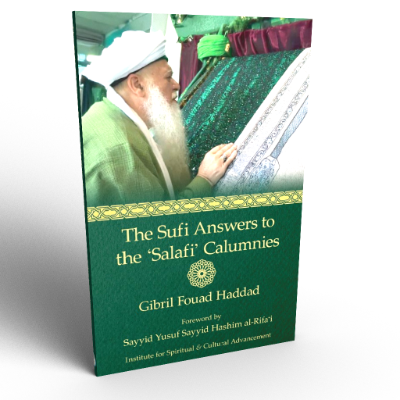
The Sufi Answers to the 'Salafi' Calumnies

Shaykh Gibril Fouad Haddad

A compendium of the Sunni proofs on the issues of tawassul (using intermediacy), tabarruk (getting blessings), ziyara (visit of graves), kashf (spiritual unveiling), karamat (miracles of saints) and the refutation of false accusations of “excessive love of the Prophet,” “grave-worship,” “forged hadiths” and more. The book came out in Arabic in Damascus in 2007. Here now, 18 years later, is its expanded and annotated English version.

  • Salafis accuse the Sufis of 'grave worship'. How should the Sufi respond?
  • Salafis accuse the Sufis of worshipping the saints? What is the reality of such a claim?
  • Salafis accuse Sufis of innovation in worship. Where does the truth lie?


Responding to vicious Salafi attacks against the likes of al-Habib Ali Jafri and other great mashaykh, Shaykh Gibril Haddad rebuts the false accusations of the Salafis with his adept and scholarly pen. Discover the correct Sunni answers to these slanders against the Sufis, as well as many other issues which Salafis loudly proclaim from the knowledgable scholars of the Muhammad Ummah.


[ EMAIL]  [SUFILIVE.COM]

Sufilive/ISCA is a 501(c)(3) nonprofit religious organization. Your contribution is tax-deductible to the extent allowed by law. Update your contact information BELOW in order to receive year-end tax-deduction documentation for tax purposes.